Conflicting information, confidently delivered
Two sources give opposite advice with equal certainty, and nothing on either page tells you which one has read the evidence.
About HairsnCares
Haircare is fragmented. People move between a search engine, a social feed, a marketplace, a clinic website and an ingredient list, and every one of those answers a different question well and the others badly. HairsnCares was built to join those parts together — understanding a concern, learning the science in plain language, comparing options, reading ingredients, seeing the safety considerations, building a routine that survives a normal week, and reaching a clinician when that is what the situation calls for.
This page is about the venture rather than the product: who is behind it, what they have committed to, where the boundaries sit, and which parts are still only an intention. It carries no user counts, no rankings and no awards, because none of those would be checkable by you.
“From first question to informed action — one connected hair journey.”
Two pages, two questions. Why HairsnCares explains what the platform can do and how its parts hand over to one another — read it if you are deciding whether the platform is useful. This page explains who is answerable, what they are obliged to and where the limits are — read it if you are deciding whether to trust it.
We will explain uncertainty rather than resolve it for you.
You find a page stating a clean answer on a question the evidence does not actually settle, with no indication that it is contested.
We will not guarantee regrowth, or predict how much you will get.
Any page, tool or product listing tells you what your result will be, or attaches a percentage to your outcome.
We will show you when a screen is the wrong tool.
A red-flag symptom returns product suggestions instead of an instruction to be examined.
We will not claim a capability we have not built.
Anything on this page describes a planned feature in the present tense. The register in section 19 is where each one is labelled.
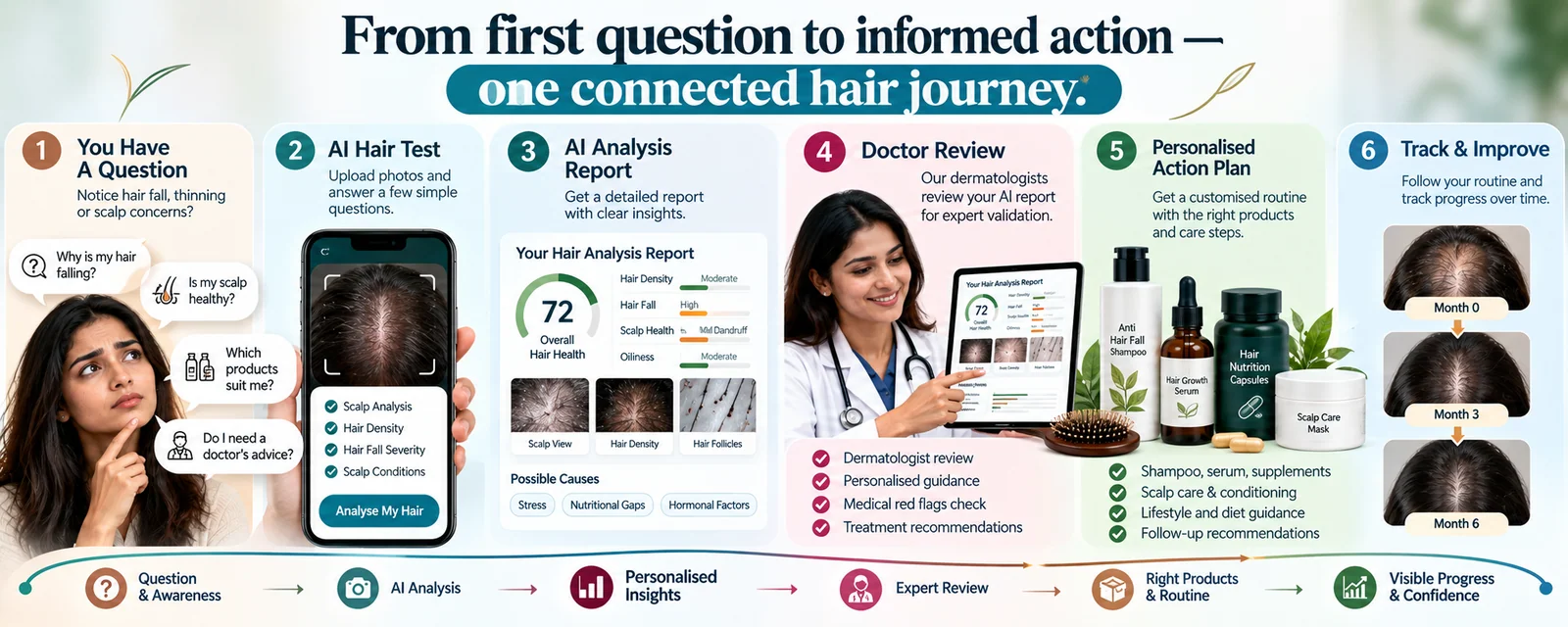
HairsnCares is a dermatologist-led hair intelligence and haircare platform. It brings together education, structured assessment, ingredient guidance, safety information, routine support, curated commerce, progress tracking and professional consultation pathways — so that people can make better-informed haircare decisions from the comfort of home.
It does not replace physical medical examination when one is necessary. Part of its job is to help you tell the difference: when self-care is a reasonable next step, and when being examined is the safer one.
It runs in four movements. First, why the venture exists and what it believes — sections 1 to 4. Then how it behaves: values, trust, what kind of organisation this is, and what was actually built — sections 5 to 14. Then who is accountable and what they have committed to, including the failure each commitment would look like if broken — sections 15 and 16. Then the limits: what the platform is not, what is still only planned, and where to check us — sections 17 to 22. If you read one section, read the commitments; if you read two, add the boundaries.
The pattern the venture was a response to, described without blaming anyone for it.
The venture did not begin with a gap in the market. It began with a pattern in a consulting room: people arriving with a carrier bag of products, a great deal of reading behind them, and no clearer idea of what was wrong than when they started. The information was not missing. It was unconnected, and nobody had told them which parts applied to them.
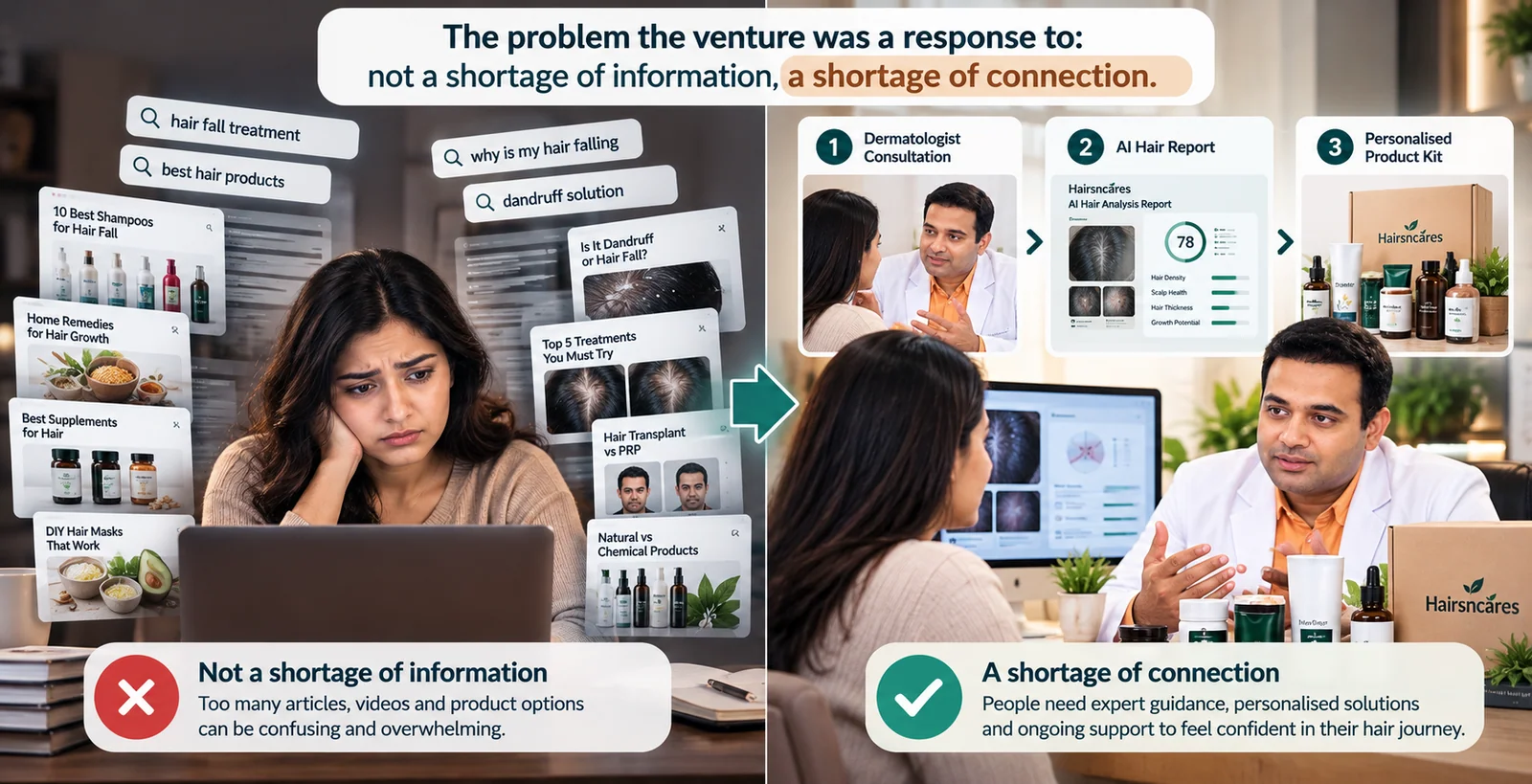
The left-hand chain is not a caricature. It is the order of events most people describe when asked what they have already tried.
Each step below carries what goes wrong at it. Select one to see.
Each step is reasonable. The sequence is what fails.
SearchYou start where everyone starts.
Two sources give opposite advice with equal certainty, and nothing on either page tells you which one has read the evidence.
A true statement about an ingredient becomes a misleading statement about a product, simply by leaving out the concentration, the vehicle and the condition it was studied in.
Full disclosure that almost nobody can read is disclosure in name only.
They are governed differently, evidenced differently and risk different things. Merging them serves the seller, not the buyer.
The commonest sequence in haircare is buy first, diagnose never. It is also the most expensive.
The caution exists on the clinical page and not on the page where the decision is actually made.
Which makes it impossible to tell later what helped, what did nothing and what caused the irritation.
Hair changes over months. Judged from memory, month four feels the same as month one.
Which matters more than it sounds, because a few causes of hair loss become permanent while you are still experimenting.
Outside the largest cities, the wait is not a week. Meanwhile the internet is open at three in the morning.
Slower at the start, and that is the entire point.
Six steps become seven, and the added one comes first. Everything after it is the same work done in an order where it can compound instead of cancelling out.
It is not a criticism of marketplaces, search engines or social platforms. Each does its own job well and none of them was built to answer a medical question about your scalp. The gap is structural rather than anybody's fault, which is also why filling it needed a different kind of thing rather than a better version of an existing one.
The capability argument for how the parts connect is on the Why page. This one is about why the venture exists at all.
Eight positions the rest of the platform is built to be consistent with.
People should not have to choose between medical clarity, understandable education and convenient access.
Those three things are usually traded against one another. Clinical accuracy arrives in language nobody outside medicine can use. Readable explanation arrives from sources with something to sell. Convenience arrives with the medicine taken out. The founding position of this venture is that the trade is not necessary — it is just harder to avoid than most people building in this space have been willing to find out.
Built around understanding. Designed for action.
One sentence, and the four things that have to be true for it to mean anything.
To make trustworthy hair education, structured guidance and suitable haircare access easier for every person — regardless of location, prior knowledge, or the ability to see a specialist immediately.
That last clause is the one that does the work. Plenty of good hair information already exists for a reader who has the vocabulary, the time and a specialist within reach. The mission is about everybody else.
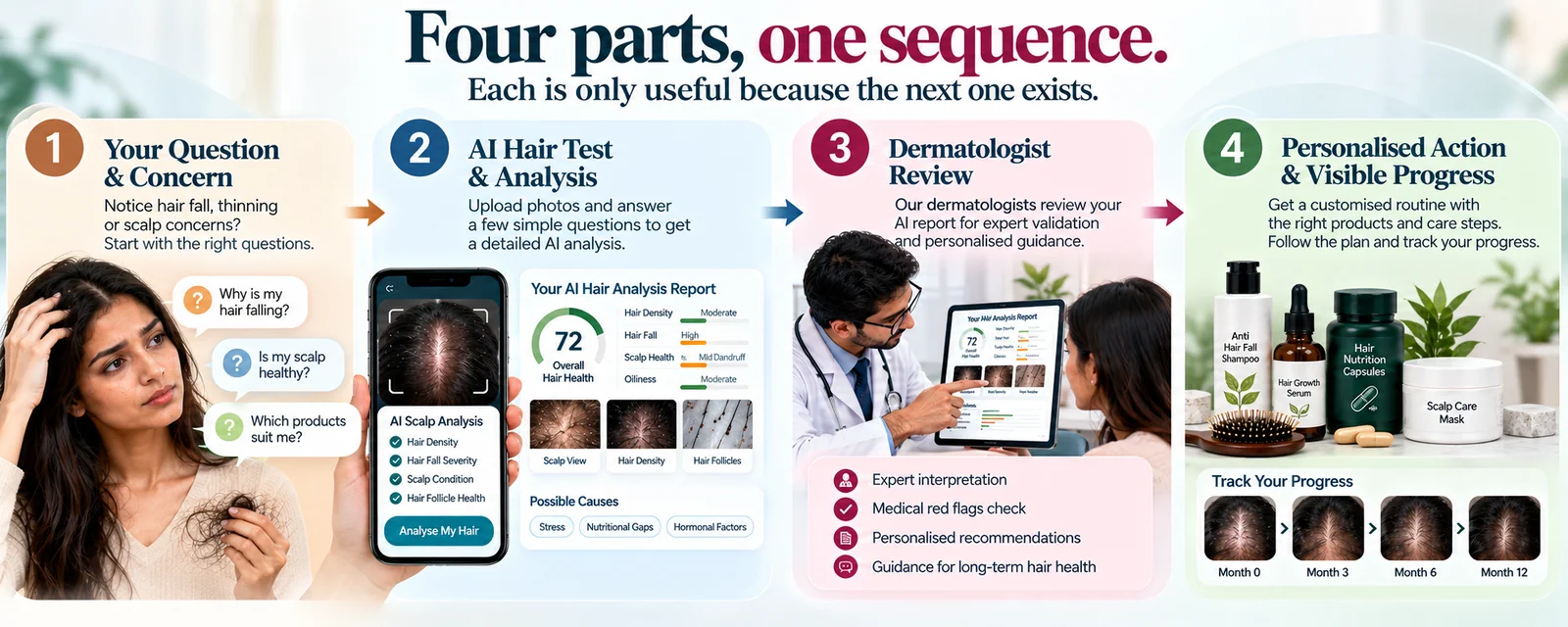
Translate dermatology, trichology, ingredient science and product formulation into language an ordinary reader can act on — without flattening the parts where the honest answer is that it depends.
Help people organise what is actually happening — symptoms, duration, pattern, triggers, what they have already tried — through structured assessment rather than a search box.
Join education to the things that follow from it: a routine, a suitable product, the safety information that applies, a way to track it, and a clinician when the digital path runs out.
Put people in a position to decide for themselves, using alternatives, effort, cost and limitations — rather than deciding for them and calling it personalisation.
They are sequential rather than parallel. Guidance without education produces compliance without understanding, which collapses the first time something unexpected happens. Connection without guidance is a shop. Empowerment without the other three is a slogan. Each step is only worth anything because the one before it happened.
The education library is the largest single expression of it, and it is open, free and requires no account.
Where this is going, with the planned parts labelled as planned.
To build a hair-health ecosystem people can actually trust and actually reach — where a person can understand their own hair, weigh the options responsibly, and get meaningful support without first needing to live in the right city.
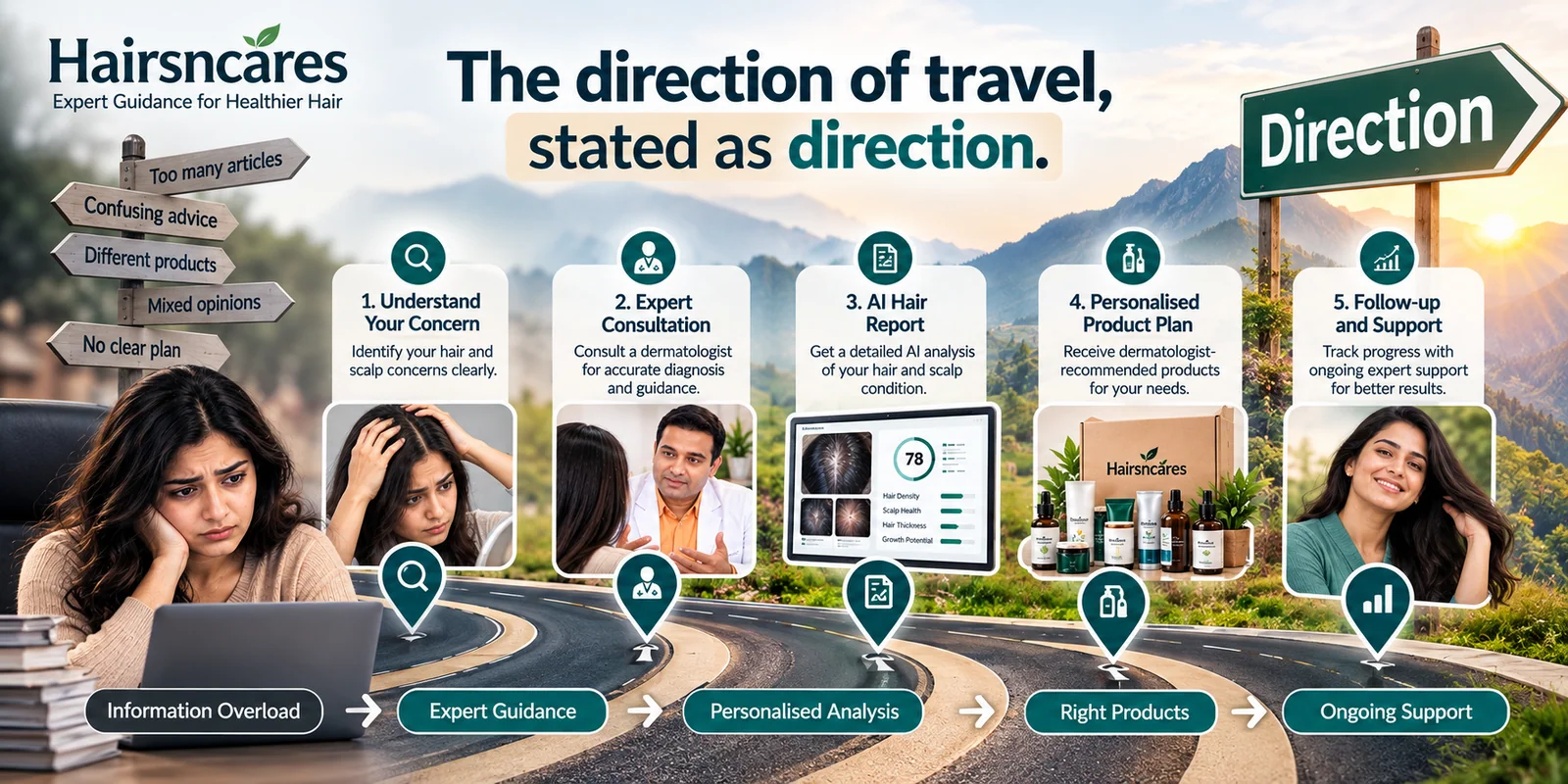
Each item carries its status. Nothing on this list is written in the present tense unless it is labelled Live, and the full register is in section 19.
An earlier draft of this vision described building the most trusted platform of its kind. We took it out. Trust is not a position you can award yourself, and a superlative on an About page is the exact species of claim this page exists to avoid. What we can state is the direction and what we have committed to on the way there — section 16 is where those commitments are, with the failure conditions attached.
Ten principles, each with the worked example that makes it checkable.
A value that cannot be violated is not a value, it is an adjective. Each of these is written so that you could tell if we stopped honouring it — and the example under each one is the specific place to look.
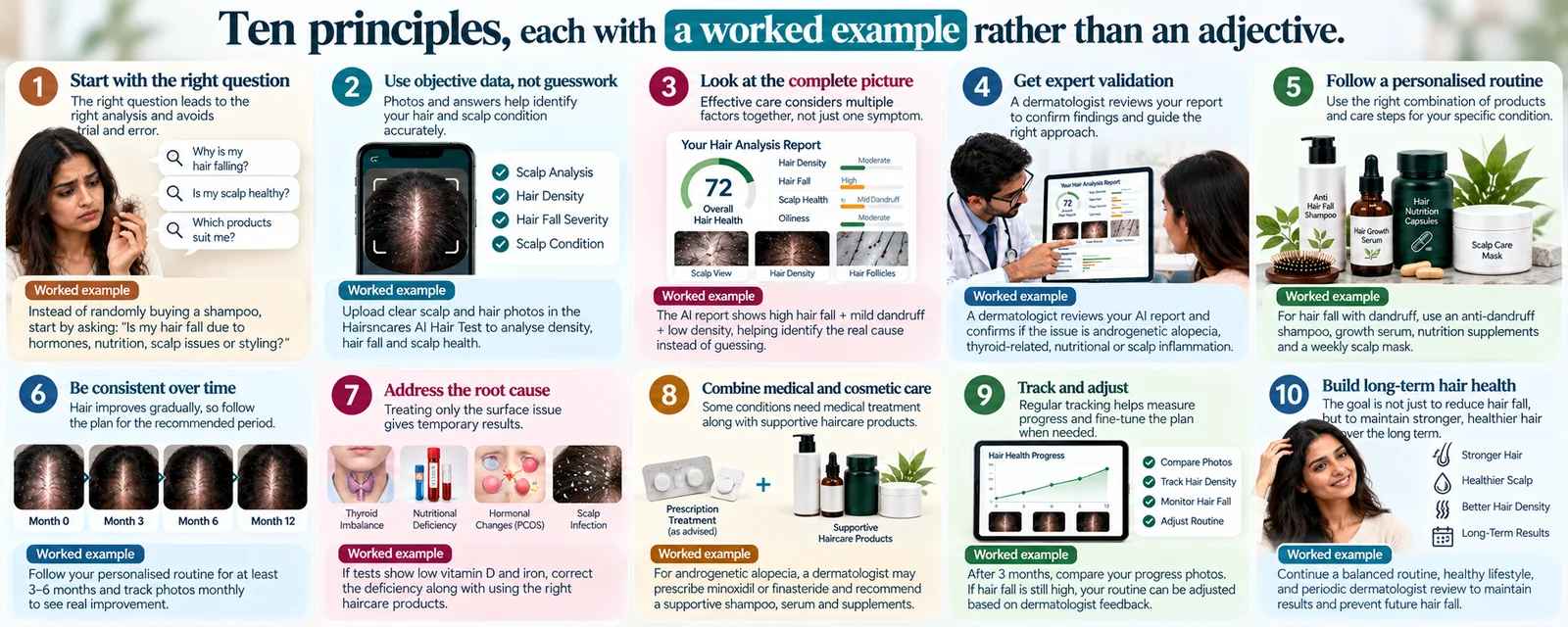
We explain the concern, the active ingredients, the realistic timeline and the limitations before we suggest buying anything.
We distinguish proven treatment, supportive care, cosmetic benefit and genuine uncertainty, and we say which one we are talking about.
Complex information becomes practical next steps — but never at the cost of a safety distinction that matters.
Cautions, interactions and red flags are stated clearly and never used to sell something.
Medical content, assessment logic and escalation pathways are shaped and reviewed by qualified clinical expertise, and the reviewer is named.
Digital tools organise, structure and explain. They do not claim certainty where examination, testing or clinical judgement is required.
Hair education and guidance should not depend on living near a specialist or being free during clinic hours.
People should be able to see the alternatives, the effort involved and the limitations before they choose — including the option of doing nothing yet.
Hair changes over months. We encourage consistency and realistic timelines instead of switching products every few weeks.
Content, tools and product information should change as evidence, regulation and user needs change — and corrections should be visible.
The commitments section takes the same idea further: every promise there is published with the breach it would look like.
The process, the review dates and the things that would count as failing it.
Trust is the one property an organisation cannot assert about itself. What it can do is make itself checkable — publish who reviewed what, when, against what standard, and what would have to be true for the claim to fail.
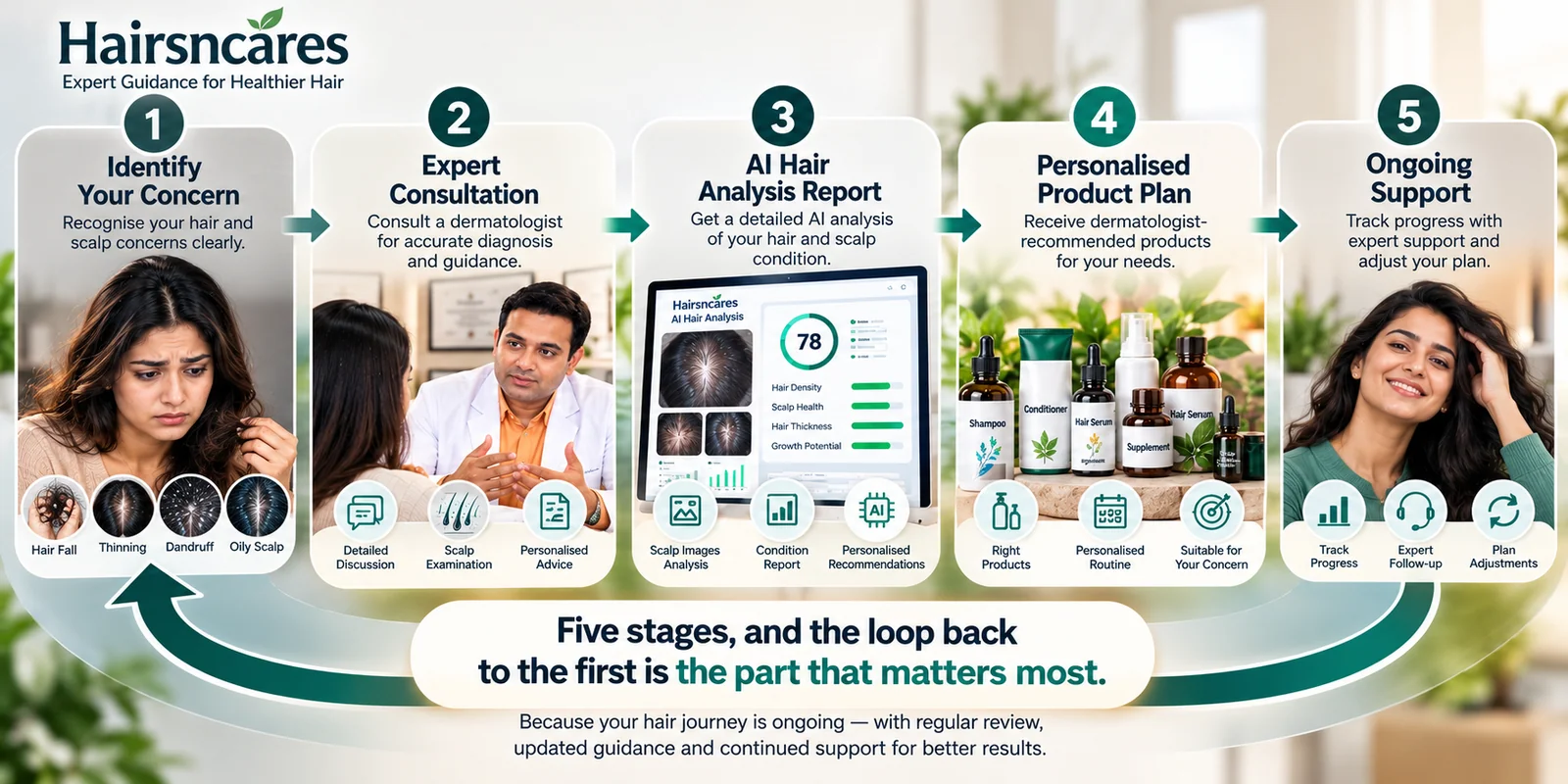
A qualified clinician reads the content against what it claims. Pages that carry clinical claims and no reviewer should not be published.
Every factual claim is traced to a source that actually supports it, and the safety information that applies is identified — including the parts that are inconvenient.
The content is rewritten for a reader who does not have the vocabulary, without removing the distinctions that carry risk.
The page is connected to what should follow from it: the related education, the safety page, the assessment, the consultation.
A review date is set and published. When evidence, regulation or labelling changes, the page changes and the date changes with it.
The editorial and medical review policies set out what a reviewer is actually signing off, and what they are not.
Not a feature comparison — a category question, which is the one an About page should answer.
This is not a comparison of features — that argument belongs on the Why HairsnCares page, which sets out what the platform does and how the parts hand over. The question here is a different and more basic one: what kind of thing is this? Because most of the confusion about HairsnCares comes from people reasonably assuming it is one of the six things below.
Each of those does its own job well. None of them was built to answer a medical question about your scalp, and each optimises for something that is not your understanding.
optimises for the transaction
It sells you the thing you searched for, efficiently, without asking whether it suits the concern you actually have.
optimises for the match
It returns what is most linked-to, which is not the same as what is most correct, and cannot ask you a follow-up question.
optimises for attention
It shows you what held other people's attention, which selects for confidence rather than accuracy.
optimises for a fluent answer
It produces something plausible on any topic, with no clinical governance behind it and no obligation to escalate.
optimises for the appointment
It explains what that clinic offers, which is the right scope for a clinic and a narrow one for someone still working out what is wrong.
optimises for depth on one axis
It goes deep on chemistry and stops before the part where you have to decide what to do on Monday.
Different platforms solve different parts of the journey. This one is built to connect them — and to say plainly where the connection stops.
HairsnCares is a dermatologist-led education and access platform that also sells haircare products. Both halves of that sentence are true and we would rather publish it than describe ourselves only by the flattering half. The commercial side funds the rest; the governance that keeps it away from the clinical content is set out in the commercial disclosure, and the boundary is the thing to hold us to rather than the intention.
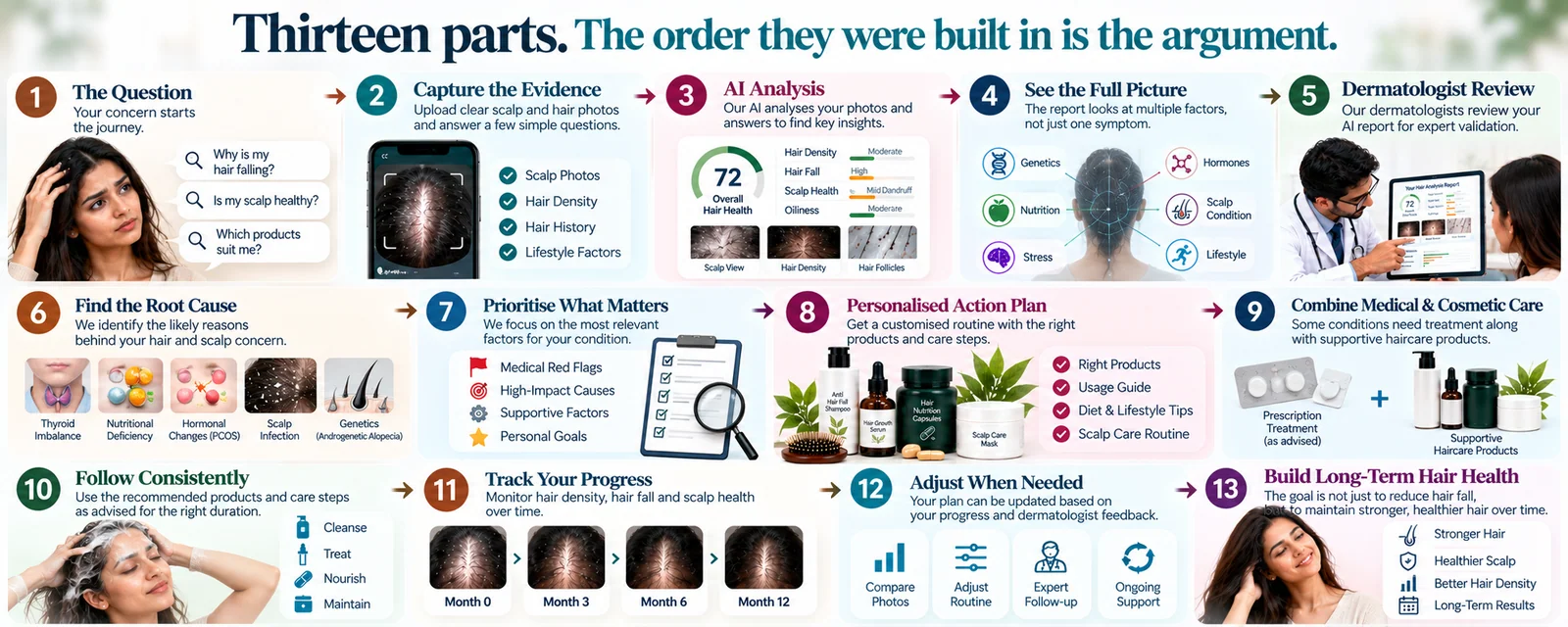
Thirteen parts, each with the problem it was a response to.
The Why page describes what each part of the platform does and what it hands to the next. This section answers the question that belongs here instead: what was built, in what order, and what was each one a response to? Because the sequence is the venture's actual argument — assessment and education came first, and commerce came after, which is either true of a platform or it is not.
Live
Every module carries one. Live means reachable now. In development means being built and not yet dependable. Direction means an intention with nothing behind it yet. The distinction is stated in words as well as colour, and the full register is in section 19. If you find a module described in the present tense without a label, that is an error worth reporting.
The mechanics of the handoff chain — what each module passes to the next — are set out on the Why page rather than repeated here.
Seven stages, and the point at which you should leave them.
Seven stages, written as what happens rather than as what we would like you to feel.
A structured hair and scalp assessment: pattern, duration, symptoms, what changed and when, and everything already tried.
Your answers organised — distribution, timing, possible triggers, and which of them are worth investigating rather than assuming.
Education matched to the concern, in plain language, with the uncertainty left in where it belongs.
Active ingredients, product categories and treatment pathways explained — including the ones that will not suit you and why.
Cleansing, treatment, nutrition, styling and safety arranged into something you can actually repeat.
Suitable products, educational tools and consultation options, without needing to be free at four o'clock on a weekday.
Documented over months rather than days, with escalation when the results or the symptoms call for it.
The assessment takes a few minutes and returns topics to discuss rather than a conclusion about you.
What home access is for, and the one thing it is not for.
Distance from a specialist changes what happens to your hair, and it should not. Outside the largest cities the wait for a dermatology appointment is measured in weeks or months, and the internet is open the whole time. That gap is where most of the bad decisions in haircare get made.
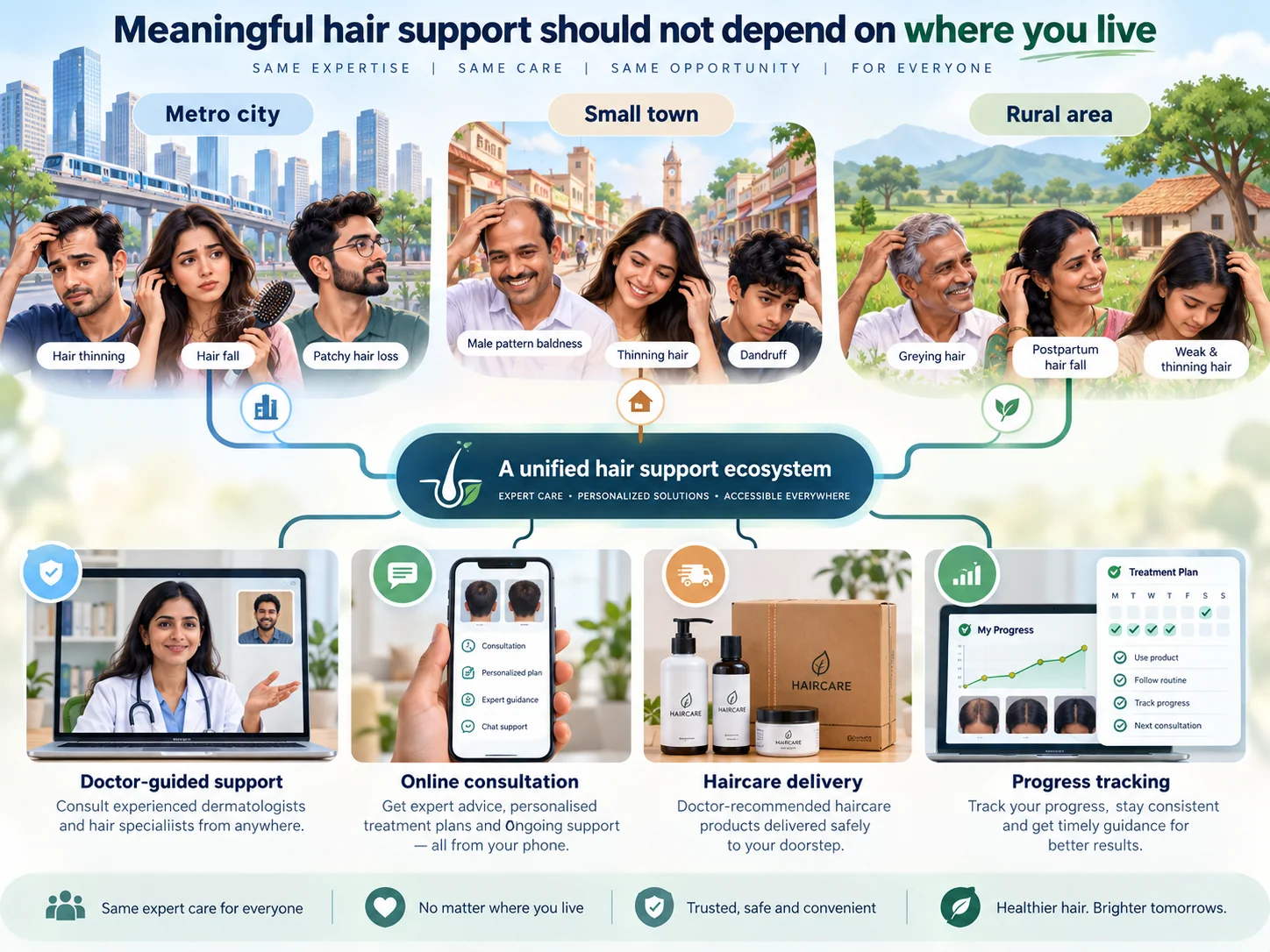
Home should be where understanding starts and continuity happens — not a substitute for examination when examination is what is required.
The assessment and the library both work from home, at any hour, without an account.
The test being: would this page be worth reading if the shop did not exist?
Education on most commercial health sites is a customer-acquisition channel wearing a lab coat: it exists to rank, to build familiarity and to end in a product. We would rather it were the product.
The practical test is simple and we would encourage you to apply it. Read any clinical page here and ask whether it would still be worth reading if the shop did not exist. Where the answer is no, the page needs rewriting.

How hair and scalp actually work, before anything about products.
What to do differently, and what to stop doing, in ordinary language.
What a diagnosis means, what treatment does, and what it cannot do.
Enough to choose, and enough to know when the choice is not yours to make alone.
Nothing that matters medically sits behind a sign-up. A paywall on a red-flag list would be indefensible.
What the tools do, what they refuse to do, and why the refusal is deliberate.
There is a version of this section on most health-technology sites that gestures at AI and implies rather more than it says. The useful version states the boundary in the same sentence as the capability, so here it is: digital tools are good at structure and bad at judgement, and hair medicine needs both.
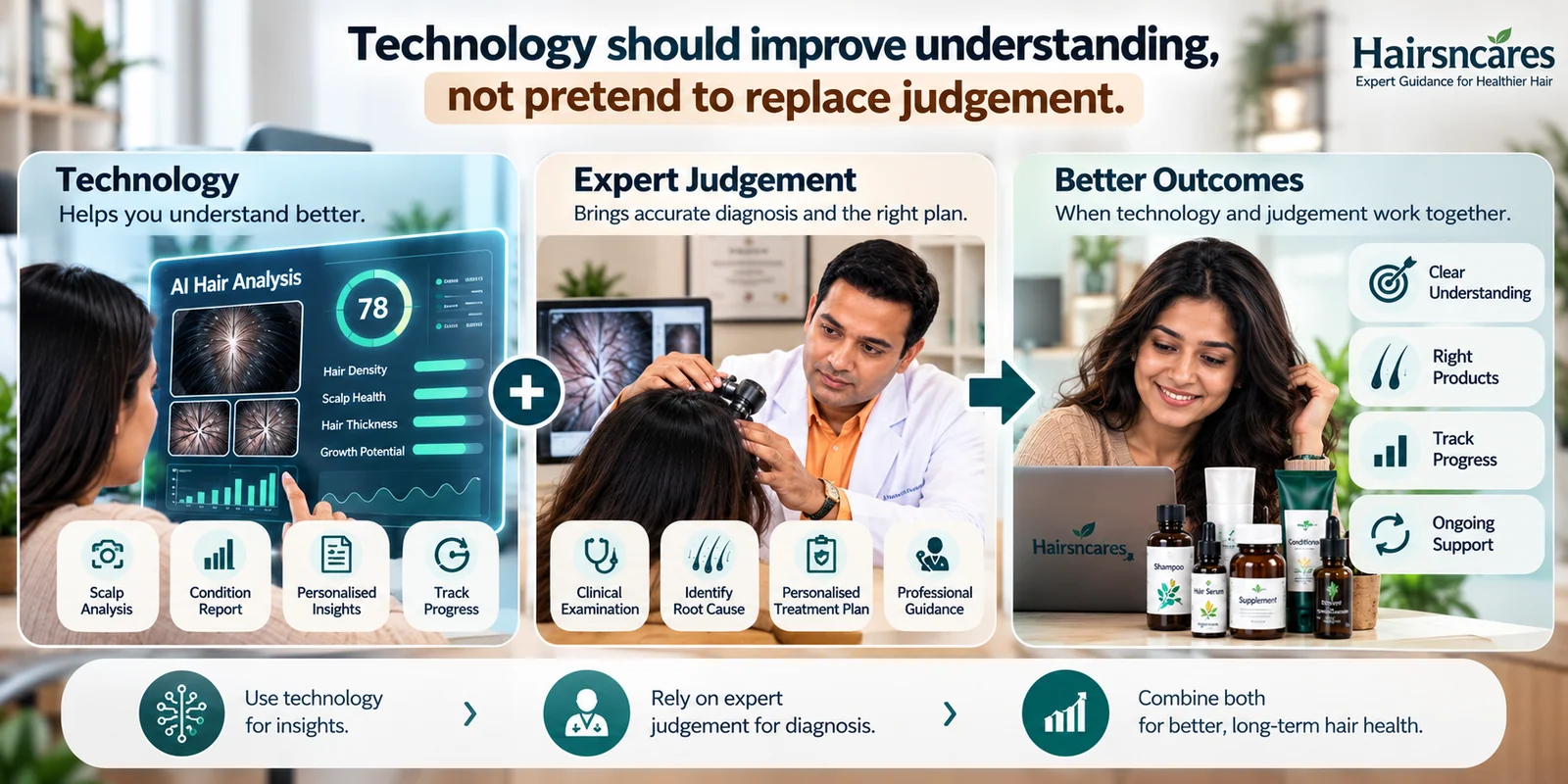
Structure · Simplify · Personalise · Connect · Track
Overpromise · Manufacture certainty · Hide risk · Replace judgement · Push purchases
No tool on the platform returns a diagnosis, and none returns a score standing in for one. They return topics, possibilities and questions worth asking. That is a design decision rather than a stage we have not reached: a number attached to your hair reads as a clinical finding however it is labelled, and it would be one we are not in a position to make.
Ten positions, and the seven questions every listing has to answer.
Selling haircare and explaining haircare pull in opposite directions more often than either side admits. The way we have tried to resolve it is not by pretending the shop does not exist, but by making every listing carry the reasoning that would let you decide against it.
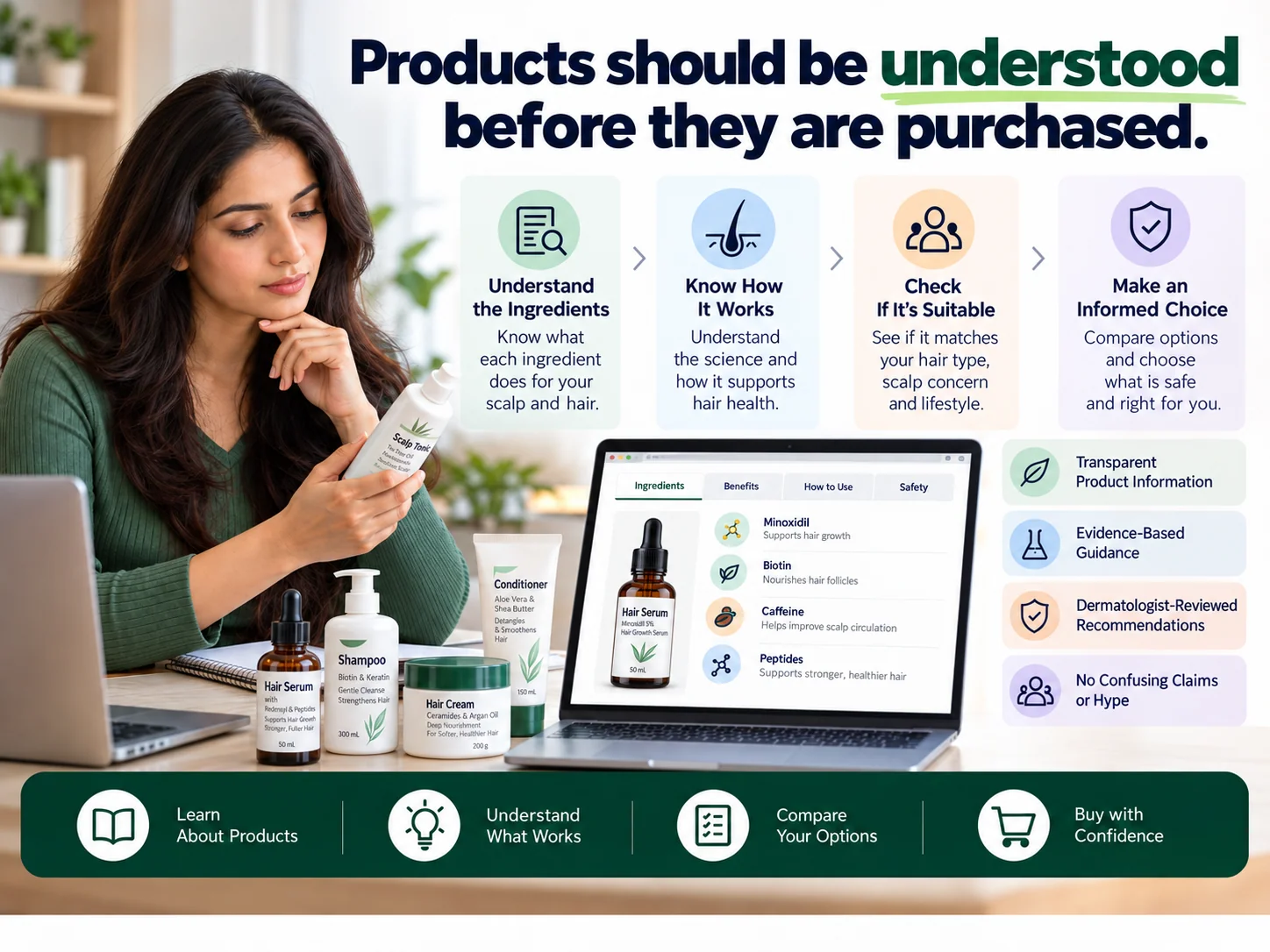
Discovery begins with what is happening to your hair, not with a category page.
Two products with the same active and different vehicles are different products, and the listing should say so.
Cosmetic, supportive, over-the-counter and prescription are governed and evidenced differently. They are not merged.
How to use it, how long before judging it, and what to do if it irritates.
The caution belongs on the page where the choice is made, not only on the clinical page.
Including cheaper ones, and including none.
Expensive does not mean stronger, better formulated or more appropriate for you.
Botanical ingredients cause allergy, irritation and interactions like any others.
Products interact with the rest of what you use, and stacking actives is how people end up with an irritated scalp and no idea which one did it.
Stated before purchase rather than after disappointment.
Find a page on this platform that recommends no product, a cheaper category, or a consultation instead of a purchase. If you cannot find any, then the boundary between the education and the shop is not working, and that is worth telling us about — it is one of the commitments in section 16.
Ingredient intelligence explains what an active is for, what supports it and who should be careful, independently of any product carrying it.
Eight points, and the reason they sit on the commerce pages rather than only on the clinical ones.
Safety is usually treated as a compliance layer applied after the commercial decisions are made. On a platform that sells haircare alongside explaining it, that ordering is exactly wrong — the safety information has to reach the page where the choice is made, or it is documentation rather than protection.
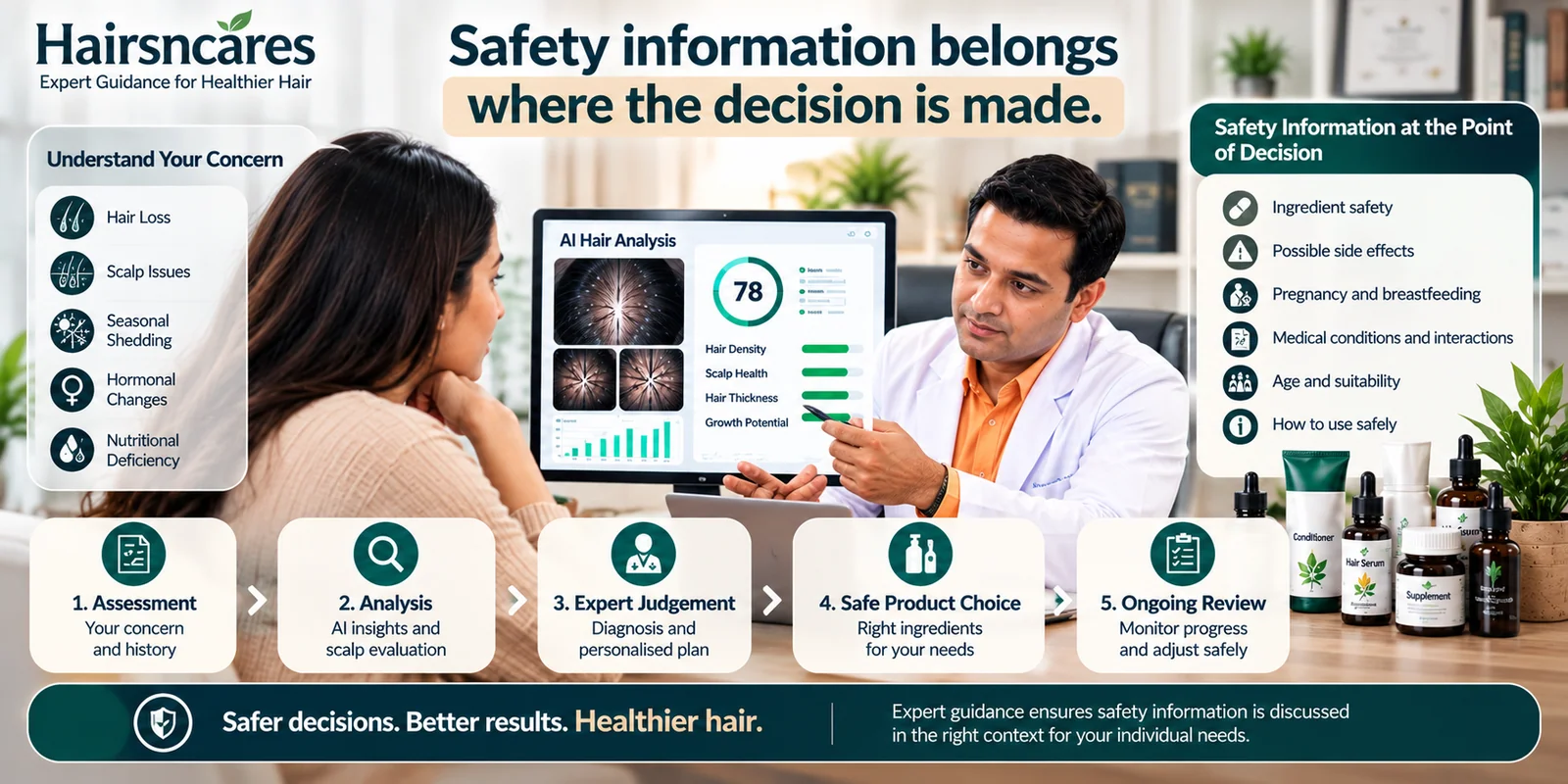
Prescription status is a supply rule set by a regulator, not a rating of how dangerous something is. It means someone qualified should assess whether it suits you.
Availability without a prescription reflects how a product may be supplied, not that it carries no cautions.
High-dose nutrients and herbal products are pharmacologically active. Several affect how other medicines behave, and several affect lab tests.
Not as a general caution, but specifically: several hair treatments have particular reproductive considerations that differ from one another.
Which is how people end up taking considerably more of something than they intended, without ever deciding to.
Burning, blistering, crusting or a patch of loss where a product sat is not something to push through.
Sudden patches, rapid worsening, pain, pus, bleeding, scarring or brow and lash loss all need examination.
Bring the actual bottles, or photographs of the labels. Recollection is not a medicines list.
The Rx safety page covers contraindications, interactions and what to disclose — and it issues no prescription and clears no medicine.
Who is accountable for the medical content, and what that accountability covers.

Dr. Amit S. Agarkar
MBBS · MD (Dermatology) · FCPS · DDV · Dermatologist, Trichologist and Hair Restoration Surgeon
The venture came out of a pattern visible from a consulting room rather than from a market analysis. The observations below are the ones that recurred often enough to be worth building something about.
HairsnCares was created to give people a clearer starting point. The aim is not to replace the doctor–patient relationship, but to help users arrive better informed, follow plans more consistently and recognise when professional care is necessary.
Clinical content across the platform is reviewed against the process in section 6. Reviewed pages carry the reviewer's name, the date of review and the date the next review falls due. This page was last reviewed on 30 July 2026 and is next due 30 January 2027.
Review covers whether the content is accurate, whether the safety information is present and correctly framed, whether the boundaries are stated, and whether claims are traceable to a source. It does not cover your individual suitability for anything, which requires a consultation. A reviewer's name on a page is a statement about the page, not about you.
Twelve commitments, each published with the failure that would count as breaking it.
Every About page carries a list of promises and almost none of them can be failed, because they are written as adjectives. A commitment you cannot detect the breach of is decoration. So each of these is published in three parts: what we will do, the specific thing you would see if we stopped doing it, and where to go and look.

We will explain uncertainty rather than resolve it for you.
You find a page stating a clean answer on a question the evidence does not actually settle, with no indication that it is contested.
We will not guarantee regrowth, or predict how much you will get.
Any page, tool or product listing tells you what your result will be, or attaches a percentage to your outcome.
We will keep education separate from diagnosis.
A tool returns a condition name as a conclusion about you, rather than a list of things to discuss with a clinician.
We will not present a cosmetic product as a medical treatment.
A shampoo, serum or supplement is described in language that implies it treats a diagnosed condition.
We will not hide a safety point to make a product easier to sell.
A contraindication, interaction or reproductive caution appears on the clinical page but not where the product is sold.
We will name the clinician who reviewed medical content, and date it.
A clinical page carries no reviewer name, no review date, or a date that never changes while the content does.
We will show you when a screen is the wrong tool.
A red-flag symptom returns product suggestions instead of an instruction to be examined.
We will publish what we do not know.
A page presents an unresolved question as settled, or quietly omits the part of the evidence that runs the other way.
We will not recommend on popularity or margin.
A product appears in a recommendation with no stated reason connecting it to the concern you described.
We will keep what you tell a tool inside your browser unless you choose otherwise.
A questionnaire answer appears in the page address, in an analytics event, or on a server you were not told about.
We will correct errors in public rather than quietly.
A substantive correction is made with no change to the review date and no record that the page previously said something else.
We will not claim a capability we have not built.
Anything on this page describes a planned feature in the present tense. The register in section 19 is where each one is labelled.
Trust is not a badge we place on a page. It is the standard we have to meet in every recommendation, article, tool and interaction.
If you find any of the breach conditions above actually happening on this platform, that is a reportable defect and not a difference of opinion. The contact page is the fastest route, and grievance redressal exists for the case where a first response has not resolved it.
Eleven things this platform is not, published at the same weight as the things it is.
A platform that claims no limits is either not being honest or has not thought about it. These are ours, and this section is deliberately as prominent as the ones describing what the platform can do.
HairsnCares is not:
Sudden patches of hair loss. Thinning that is getting rapidly worse. Scalp pain, burning, pus, crusting or bleeding. Shiny or scar-like areas. Loss of eyebrows or eyelashes. Hair loss in a child. Hair loss alongside fever, weight change or feeling unwell. Any of these should take you to a dermatologist rather than to a product page, and several of them are considerably more treatable early than late.
This page is not an emergency service. Nothing here is monitored in real time and no button on this page contacts anyone urgently. For anything that appears medically urgent, use your usual emergency route.
Where examination is what you need, that is what we would rather you did.
Stated as intent, with no impact figures, because we have none we could show you.
This section carries no impact figures, because we have none we could show you. What follows is stated as intent, and the language is deliberate: we aim to, we are working toward, our long-term direction. If you later see a number attached to any of this, it should come with a source and a method.
Social-impact sections are where health platforms most often start claiming things. “We have helped X people” is unverifiable from the reader's side, and unverifiable claims in a section about doing good are worse than none. The honest version is that these are the outcomes the venture is organised around, and whether it achieves them is not for us to announce.
One register, three states, and nothing described in the present tense that has not been built.
Everything the platform offers or intends, in one place, with its status attached. Live means reachable now. In development means being built and not yet dependable. Direction means an intention with nothing behind it yet. Nothing on this page describes a Direction item in the present tense.
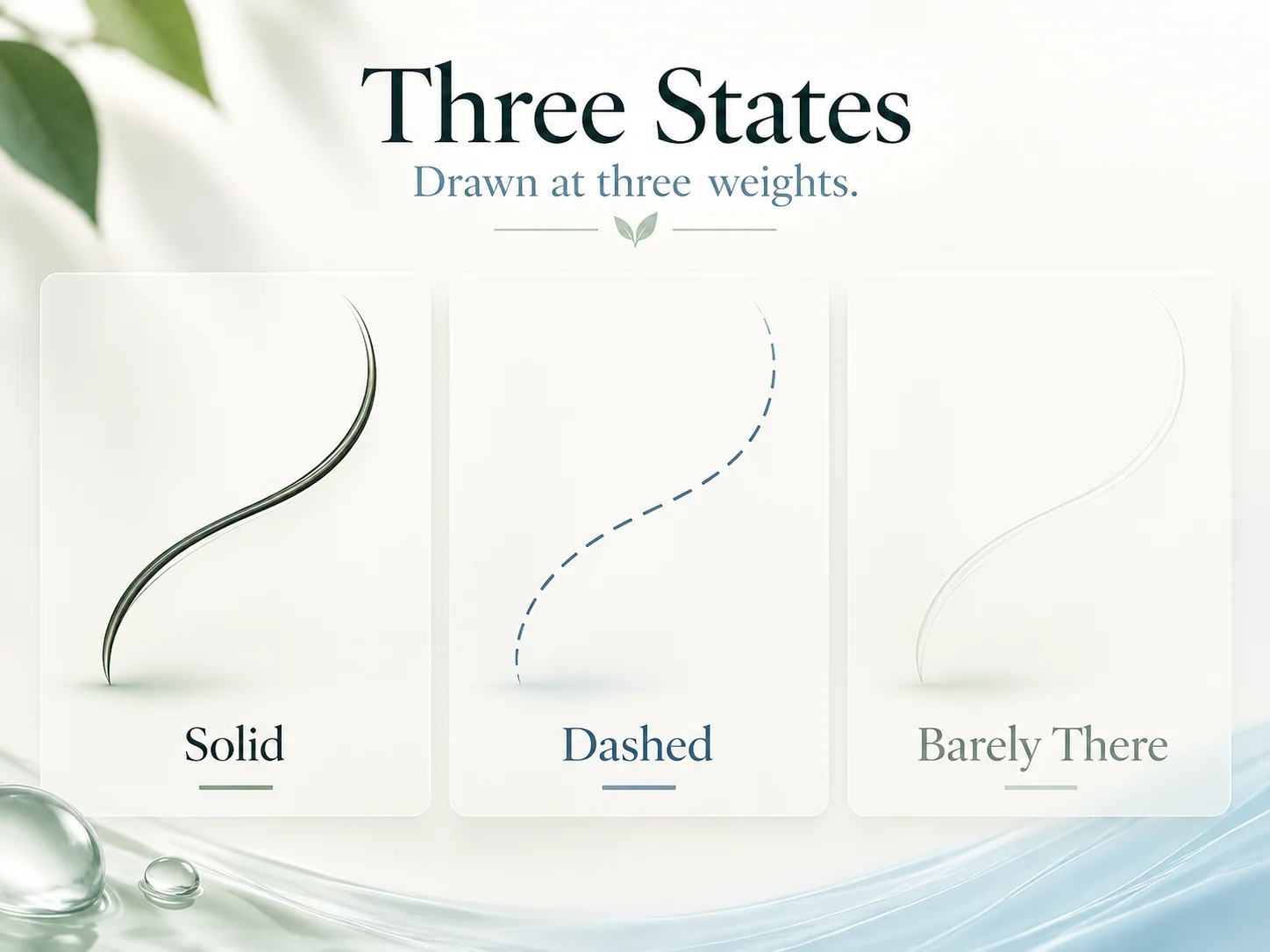
Every Live entry below is a link. Nothing else is. If an entry opens, the capability exists and you have just verified it yourself. If it does not open, it is not live yet — and a badge saying otherwise would be contradicted by the absence of the link beside it. The two signals are independent on purpose, so a wrong status is visible rather than merely wrong.
Showing all 20 entries.
Capabilities13 entries
A structured set of questions about pattern, duration, symptoms, triggers and what has already been tried.
Turns the assessment into a readable summary of concerns, possibilities to discuss and questions worth asking.
Structured education from hair biology through to treatment comparison, written to be read by a non-specialist.
Explains categories, formats, vehicles and what each is capable of.
Ingredient-level explanation: what it is for, what the evidence supports, who should be cautious.
Contraindications, interactions, reproductive considerations and what to disclose at a consultation.
Organises cleansing, treatment, nutrition and styling into something repeatable on an ordinary week.
Concern-first filtering with the reason for each result stated.
A curated catalogue with the medical and cosmetic categories kept visibly distinct.
A dated record of what you changed, when, and what happened.
Standardised photographs and review prompts at planned intervals.
A route from the education and the assessment into an actual consultation.
A defined path from digital guidance to in-person examination or procedure.
Directions7 entries
Structured learning paths across hair biology, treatment and formulation. The library is open now and is extended continuously.
Contraindication, interaction and medicine-education pages, with the prescription boundary stated on each.
Improved concern mapping and routine logic, with the reasoning shown to the user rather than hidden inside the recommendation.
Standardised photography guidance, adherence logs and review prompts at intervals that match how hair actually changes.
A smoother handover from education into an appropriate consultation, carrying the context with it.
Hair education for readers who would rather not read it in English. Stated as intent; none of it is available yet.
Improved availability of products and support outside the largest cities. Stated as intent, and dependent on things outside our control.
No entries with that status.
It is reviewed on the same cycle as the rest of this page — last reviewed 30 July 2026, next due 30 January 2027. A register that is not maintained becomes a more elaborate way of making the same unverifiable claims, so if you find an item marked Live that is not reachable, that is a reportable defect.
The documents that make everything above enforceable.
The documents that govern how this platform behaves. They are linked here rather than buried in a footer because they are the mechanism by which everything else on this page is enforceable.
Where a policy already exists at a different route, point the link at the existing document rather than publishing a second copy. Proposed slugs are used for the ones that do not exist yet; a governance link that resolves to a 404 is worse than an absent one, so these should be checked before this page goes live.
Understanding, education, action, continuity.
Four moments, in the order they actually happen.
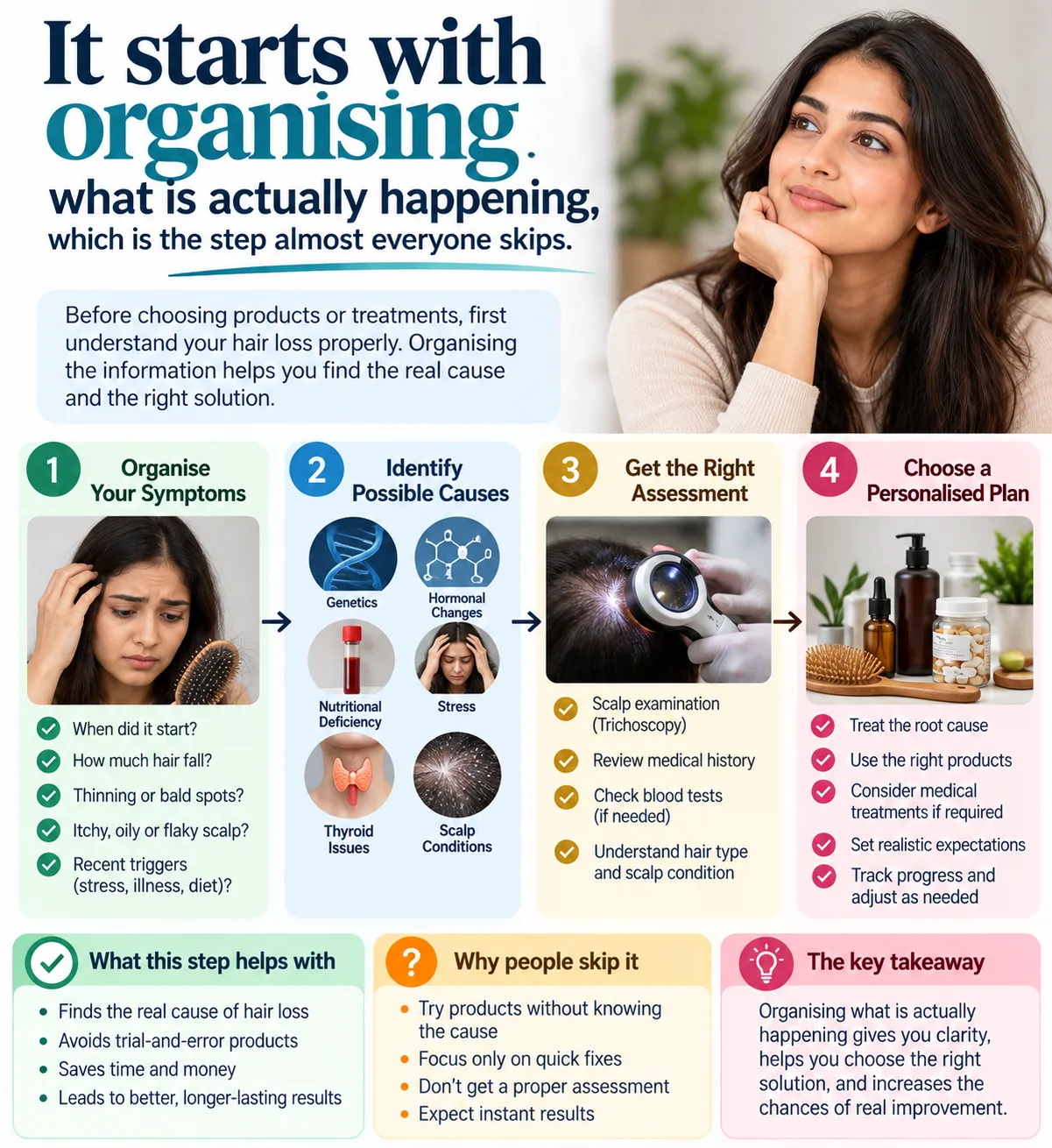
It starts with organising what is actually happening, which is the step almost everyone skips.
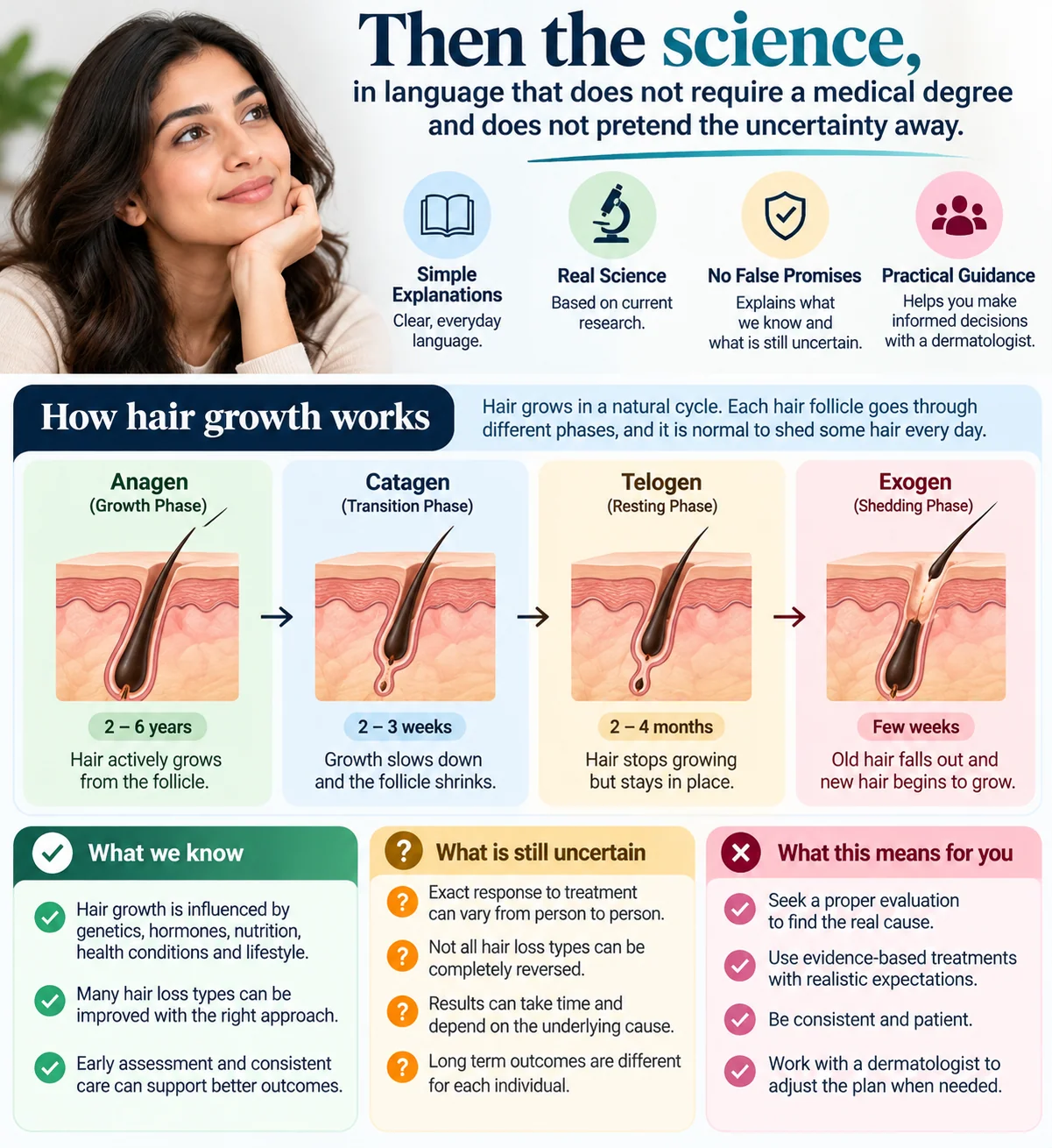
Then the science, in language that does not require a medical degree and does not pretend the uncertainty away.
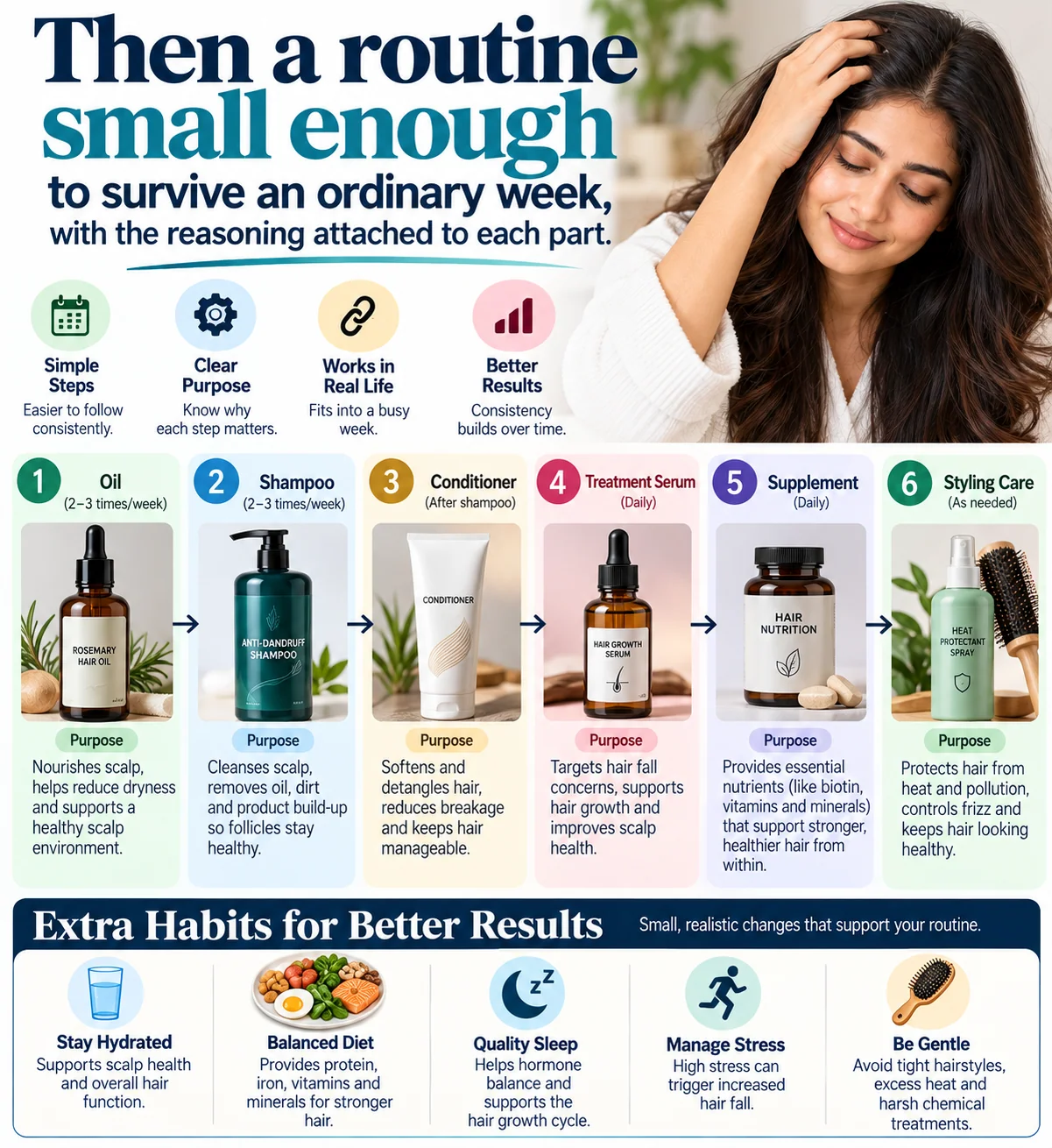
Then a routine small enough to survive an ordinary week, with the reasoning attached to each part.
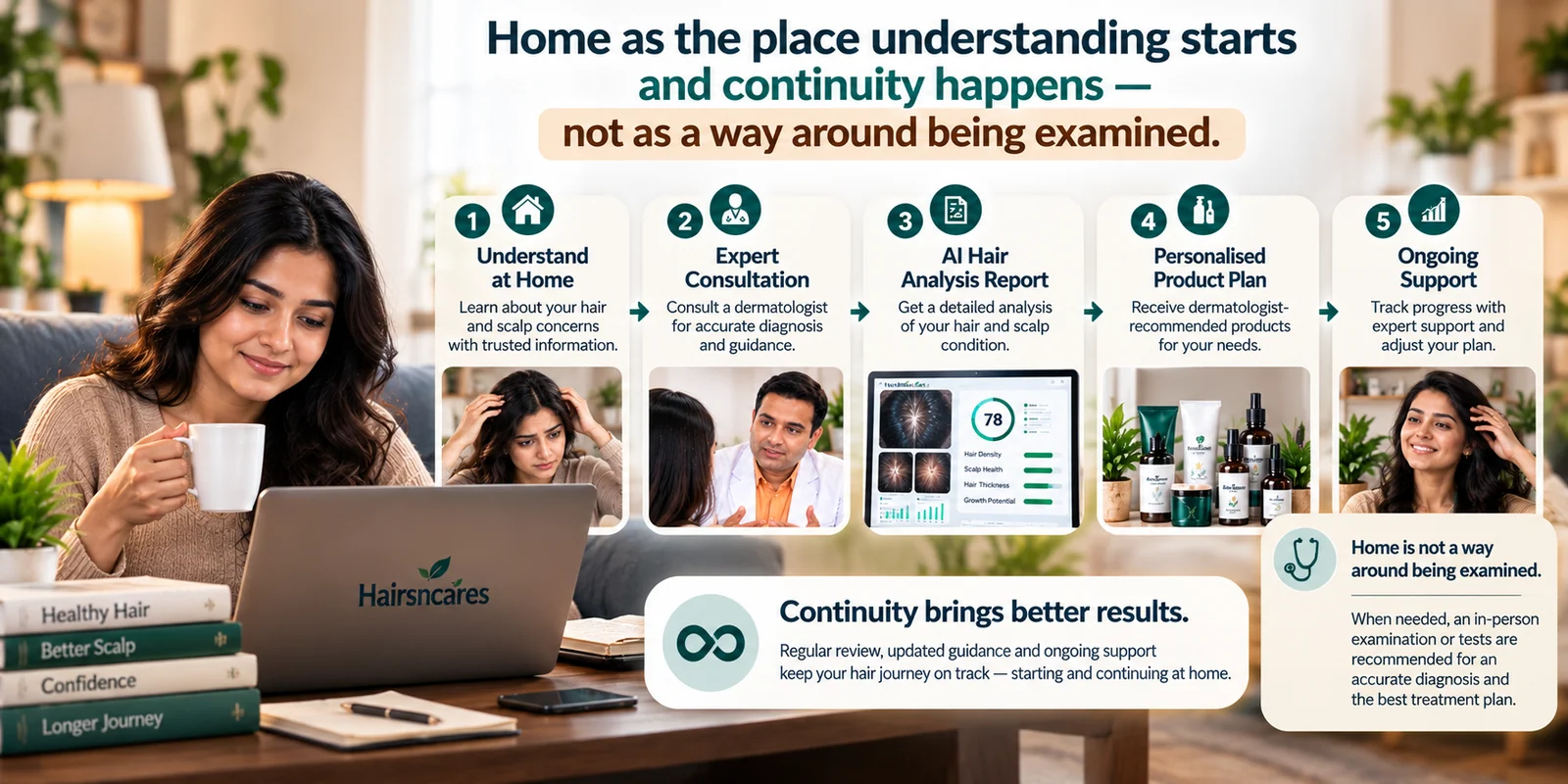
Then months rather than days — and a route to a clinician at the point where that is the right next step.
21 questions across 5 areas. The capability questions are answered on the Why page.
These are the questions only an About page can answer. The capability questions — what the assessment returns, how recommendations are produced, what the platform costs, how it compares with a general chatbot — are answered on the Why HairsnCares page, and we would rather link to that answer than publish a second version of it here.
Because the individual pieces of good hair information already existed and none of them were connected. A person could find a decent explanation of the hair cycle, a decent ingredient breakdown and a decent product, and still have no way to tell whether any of the three applied to them. The venture exists to join the parts up — and, just as much, to say clearly where the joining stops and a clinician has to take over.
A dermatologist-led education and access platform that also sells haircare products. We would rather state that plainly than describe ourselves only by the flattering half. The commercial side is real; the governance that keeps it away from the clinical content is described in our commercial disclosure, and the boundary is the thing to hold us to.
No. HairsnCares is not a clinic and does not examine anyone. It can connect you to a consultation, and where in-person care is what you need it should tell you so rather than keep you on the platform. If you want the capability detail — what the assessment returns, how recommendations are produced — that is set out on the Why HairsnCares page.
Because we cannot verify them to you. User counts, consultation totals, city coverage and rankings are the easiest things in the world to write and the hardest for a reader to check, which makes them worth very little on an About page. What we have published instead is a list of commitments with the failure each one would look like if we broke it, so you can check us against something specific.
Clinical content is reviewed by Dr. Amit S. Agarkar, MBBS, MD (Dermatology), FCPS, DDV, and reviewed pages carry his name, the date of review and the date the next review is due. Where a page has not been clinically reviewed, it should not be carrying clinical claims.
It gets corrected and the review date changes, so that the correction is visible rather than silent. Our corrections policy sets out the route. If you have found something wrong, the contact page is the fastest way to tell us and we would rather hear it.
You should not simply take our word for it, which is why the commitment register on this page states the breach: a product appearing in a recommendation with no stated reason connecting it to the concern you described. Every recommendation should carry that reason. Where one does not, that is the thing to report.
That is the intended boundary, and it is the one most worth testing. Clinical pages should reach conclusions that sometimes cost us a sale — recommending no product, recommending a cheaper category, or recommending a consultation instead. If you cannot find examples of that, the boundary is not working.
No, and no tool on the platform is built to. Distinguishing pattern thinning from diffuse shedding from a scalp condition needs someone looking at your scalp, often with tests. The tools return topics, possibilities and questions to ask. That is a deliberate limit, not a stage we have not reached yet.
See a dermatologist rather than starting with this site. Sudden patches, rapidly worsening thinning, scalp pain, pus, crusting, bleeding, shiny or scar-like areas, loss of eyebrows or eyelashes, or hair loss in a child all need assessment. Some causes are far more treatable early than late, and a few become permanent if left.
No, and we will not predict your result either. That is one of the commitments on this page, with the breach stated: any page, tool or listing that tells you what your outcome will be, or attaches a percentage to it.
Then it should say so and point you elsewhere. That is what the boundaries section is for, and it is the part of this page we would most like you to read. A platform that has something suitable for every visitor is not being honest about its scope.
Yes — that is the design intent. Education, structured assessment, ingredient and safety information, routine planning and consultation pathways are all reachable without travelling. Home is meant to be the starting point for understanding and the place continuity happens, not a way of avoiding an examination that is genuinely needed.
No. The library is open and requires no login. Nothing that matters medically sits behind a sign-up, because a paywall on a red-flag list would be indefensible.
Tell us, through the contact page. A disagreement about a clinical point is useful to us in a way that praise is not: either the page is wrong and needs correcting, or it is right and is not explaining itself well enough. Both are worth knowing. If a first response has not resolved it, the grievance redressal route exists for exactly that case.
There is education covering both, written to help you recognise when hair change is part of a wider picture that deserves investigation. Neither is something a website should manage on its own: hormonal and postpartum hair concerns are assessed clinically, and the content is written to get you to that assessment better prepared.
There is an online consultation pathway, and where in-person examination or a procedure is what you need, the intent is that you are pointed there rather than kept online.
Section 19 of this page carries a status register: every module and roadmap item is labelled Live, In development, or Direction, in words as well as colour. Anything labelled Direction is an intention and nothing more. If you find a capability described in the present tense anywhere on this page without that label, it is an error and we would like to know.
No, and we have tried hard not to write them as though they were. A roadmap is a statement of direction, subject to evidence, regulation and resources. The only things on this page written as obligations are the commitments, and those are about conduct rather than features.
That page explains what the platform can do and how the parts hand over to one another. This one explains who is behind it, what they have committed to, where the boundaries sit and what is still only an intention. If you are deciding whether the platform is useful, read that one; if you are deciding whether to trust it, this one is the relevant page.
Through the contact page, which is also the right route for a correction. If a first response has not resolved something, the grievance redressal route exists for exactly that and is linked in the governance section.
No questions match that search. Try a shorter word, or clear the filter to see all 21.
Ask a dermatologist directly, or tell us what is missing — a question we have not answered is a gap worth knowing about.
Five sources, each with the date it was read and the statement it is cited for.
This page makes few clinical claims, and the ones it does make are listed here with what supports them. Each source was read from the publisher’s own site rather than from an aggregator, and each entry states the date it was read and which statement on this page it is cited for — because a reference list that does not say what it is supporting is decoration.
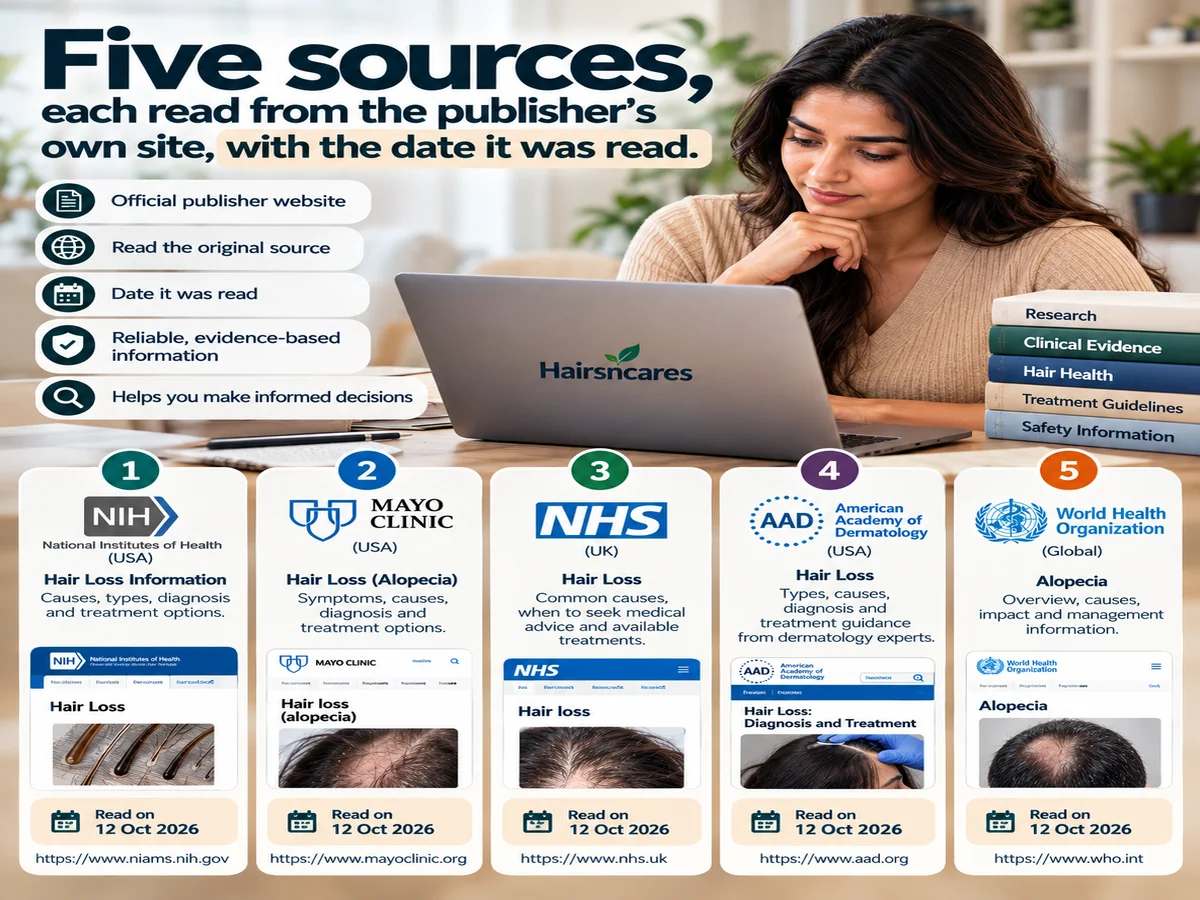
No source is cited for a claim it does not make, and nothing here supports a statement about the platform itself — our own governance, review process and status register are not the sort of thing an external body can vouch for, so they are published as checkable commitments and a status register instead. Those are the mechanisms that do the work an external citation cannot.
Six routes through this page, if you would rather not read it end to end.
Choose one and the page will take you there.
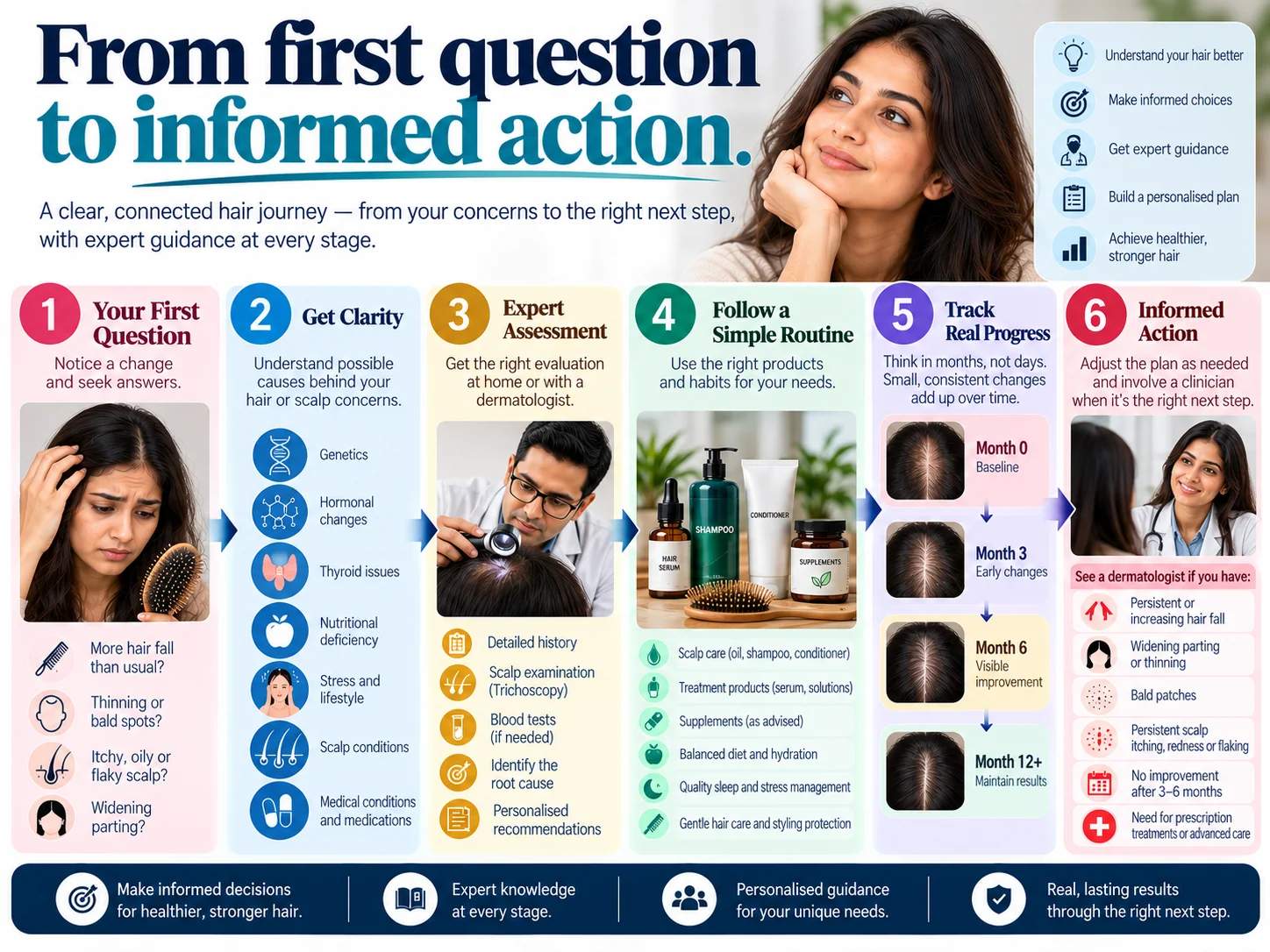
The future we are building
HairsnCares exists to help people move from confusion to clarity, from random products to purposeful routines, and from delayed action to better-informed decisions. We believe education, technology, responsible commerce and medical expertise can work together — without replacing the human judgement that good care requires.
Understand first. Choose responsibly. Follow consistently.
HairsnCares provides general educational information, digital decision-support tools, product information and access pathways. It does not diagnose medical conditions or replace an individual consultation with a qualified dermatologist. Sudden, patchy, painful, scarring or rapidly progressive hair loss requires direct medical assessment.
HairsnCares provides educational information, decision-support tools and access pathways. It does not replace individual medical diagnosis, physical examination or emergency care.
This page is not an emergency service and is not monitored in real time. No button on this page contacts emergency services. Seek urgent medical care for severe or rapidly worsening symptoms, breathing difficulty, fainting, severe allergic reaction, or any situation that appears medically urgent.
HairsnCares sells haircare products. That commercial activity funds the education, and the governance intended to keep it away from the clinical content is set out in our commercial disclosure and product listing standards. This page carries no product listing, no price and no add-to-cart control.
This page publishes no user counts, consultation totals, city coverage, market share, rankings, awards or outcome percentages. That is deliberate rather than an omission: none of those could be verified by a reader, and an About page is where unverifiable claims most often go unchallenged. What is published instead is a set of commitments with their failure conditions, and a status register separating what exists from what is intended.
Where to go next on Hairsncares for this topic.
Your cart is empty