NATURAL COSMETIC HAIRCARE OIL

Rosemary Oil for Hair Growth in India: Benefits, Evidence, Side Effects, Safety & Hair Oil Guide

Limited evidenceEssential oilDilute / patch test

Rosemary Oil is a popular natural haircare ingredient used in hair oils, scalp massage products and haircare routines. It may support scalp massage and cosmetic haircare, but it is not the same as Minoxidil and should not replace medical treatment for diagnosed hair loss. Essential oils should be diluted or used in formulated products — never applied undiluted to the scalp — and can irritate sensitive, inflamed or dandruff-prone scalps. Safe use, dilution, scalp tolerance and diagnosis matter. Screen the cause first with the AI Hair Test. Results vary.

  • Cosmetic haircare oil — not a medicine
  • Limited / cosmetic support
  • Not the same as Minoxidil; not a replacement
  • Dilute or use formulated — never undiluted on scalp
  • Can irritate sensitive / dandruff-prone scalps
🌿
Rosemary OilLimited evidence
CategoryCosmetic essential oil
EvidenceLimited / cosmetic
Best forScalp massage / length oiling (if tolerated)
Not the same asMinoxidil
Key cautionDilute; not for dandruff / sensitive scalp

Illustrative summary only. This is education, not a diagnosis or prescription; results vary and depend on your situation.
🩺
Doctor-reviewedMD Dermatology
AI Hair Testfree
🌿
Natural oilcosmetic
⚠️
Dilution-awarenever undiluted on scalp
🚚
India-widedelivery
Image slot
🩺
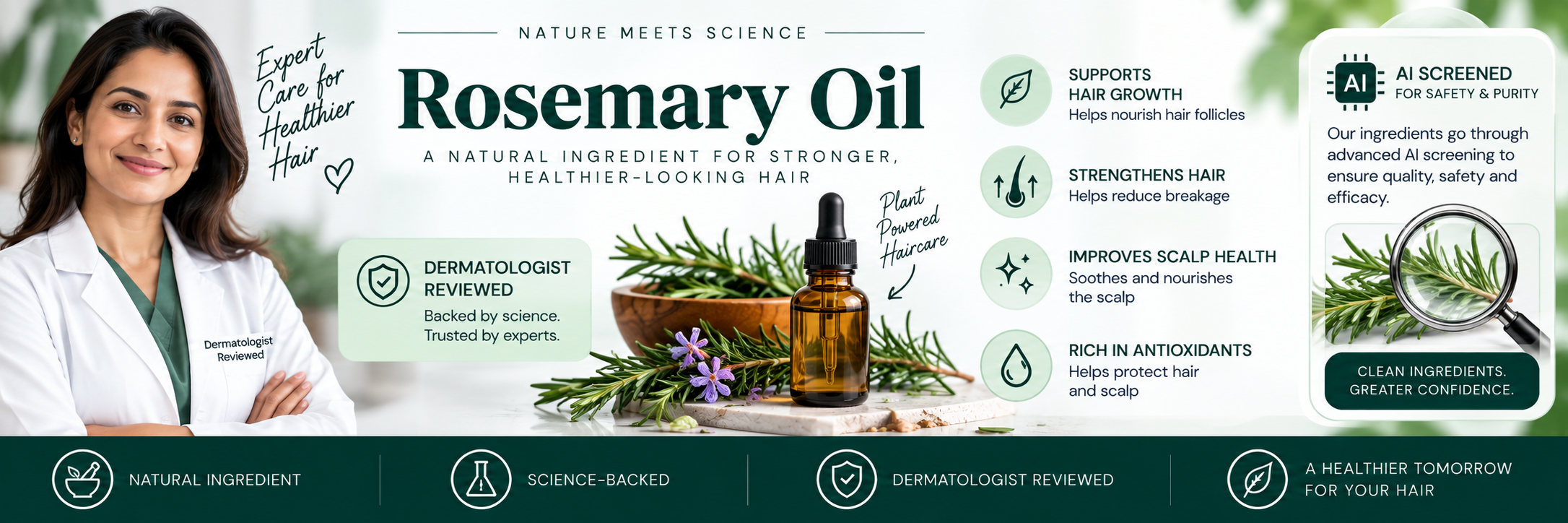
Doctor-reviewed ingredient guide — trust visualalt: "Dermatologist-reviewed rosemary oil guide and AI screening" · 1200×400 WebP · loading="lazy"
Quick Answer

Does Rosemary Oil help hair growth?

Rosemary Oil may support haircare routines and scalp massage in selected users, but it is not a guaranteed hair regrowth treatment and is not the same as Minoxidil. There is some interest in it as a natural option, but it should be used carefully, because essential oils can irritate the scalp, especially when undiluted or used on sensitive, inflamed or dandruff-prone scalp. It is an essential oil — best diluted in a carrier oil or used in a properly formulated product, never applied neat to the scalp — with limited, cosmetic-level relevance. It does not treat fungal infection, scarring alopecia, alopecia areata or severe hair fall, and it should not replace doctor-guided treatment for diagnosed pattern hair loss. So it may be a reasonable supportive, cosmetic choice for some people who tolerate oils, but progressive, sudden or patchy shedding needs proper diagnosis rather than relying on an oil. Patch test, dilute, avoid the eyes and broken skin, and be cautious if your scalp is oily, dandruff-prone or sensitive. Screen with the AI Hair Test, and see a doctor for anything progressive, patchy or medical. Results vary.

Use safely — and don't expect it to replace medicine. Rosemary Oil is an essential oil: dilute it or use a properly formulated product, and never apply undiluted essential oil directly to the scalp. It can irritate sensitive, inflamed, dandruff/seborrheic-prone or acne/folliculitis-prone scalps. Patch test first; avoid the eyes, eyebrows and broken skin. Use caution in pregnancy/breastfeeding, for teenagers/children, with essential-oil or fragrance allergy or asthma, and on a fresh hair transplant unless your surgeon approves. It is not a replacement for Minoxidil or doctor-guided hair-loss treatment; progressive, patchy or sudden loss needs a doctor.
The Basics

What Is Rosemary Oil?

Rosemary Oil is an essential oil derived from the rosemary plant, used in hair oils, scalp massage blends and cosmetic haircare. It is popular in natural haircare routines.

It should usually be diluted or used in a properly formulated product rather than applied as an undiluted essential oil, which can irritate or sensitise the scalp. It is not the same as Minoxidil.

It is not suitable for every scalp condition — oily, dandruff-prone, sensitive or inflamed scalps may react poorly to oiling. So it sits at the "limited / cosmetic support" tier: a supportive option for those who tolerate it, not a treatment for medical hair loss.
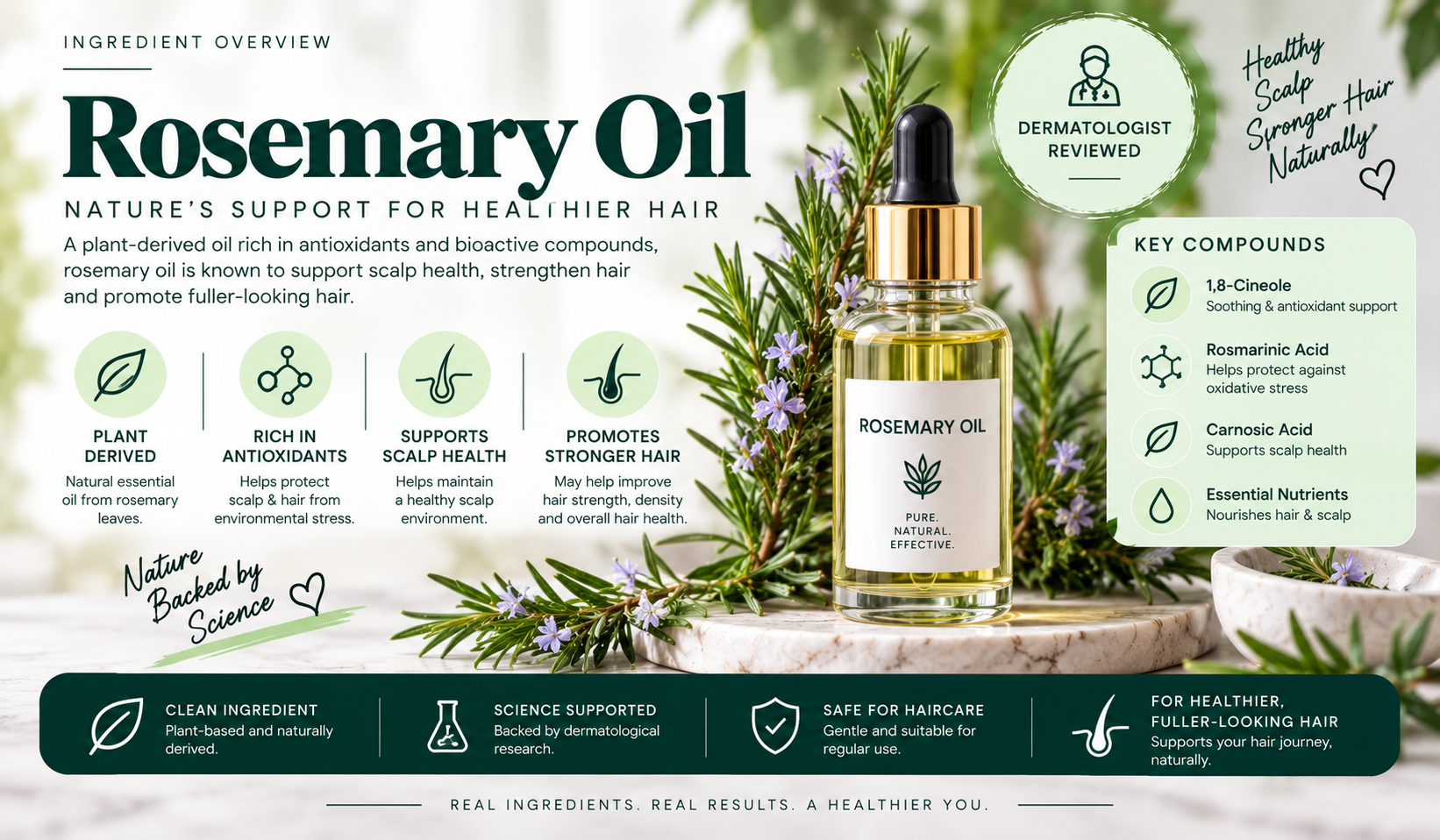
Image slot
🧪
Rosemary Oil — ingredient overview visualalt: "Rosemary Oil ingredient overview for haircare, dermatologist-reviewed" · 1200×700 WebP · loading="lazy"
Mechanism

How Rosemary Oil Works

Rosemary Oil is used to support scalp massage and a haircare routine, and may contribute to a scalp-care environment when used safely and diluted. This is a cosmetic, supportive role rather than a proven medical mechanism.

It does not directly replace medical hair-loss treatments such as Minoxidil, and it does not treat fungal infection, scarring alopecia, alopecia areata or severe hair fall.

Any benefit is variable and depends on tolerance and consistent, safe use — and diagnosis matters more than the appeal of a natural oil. Results vary.
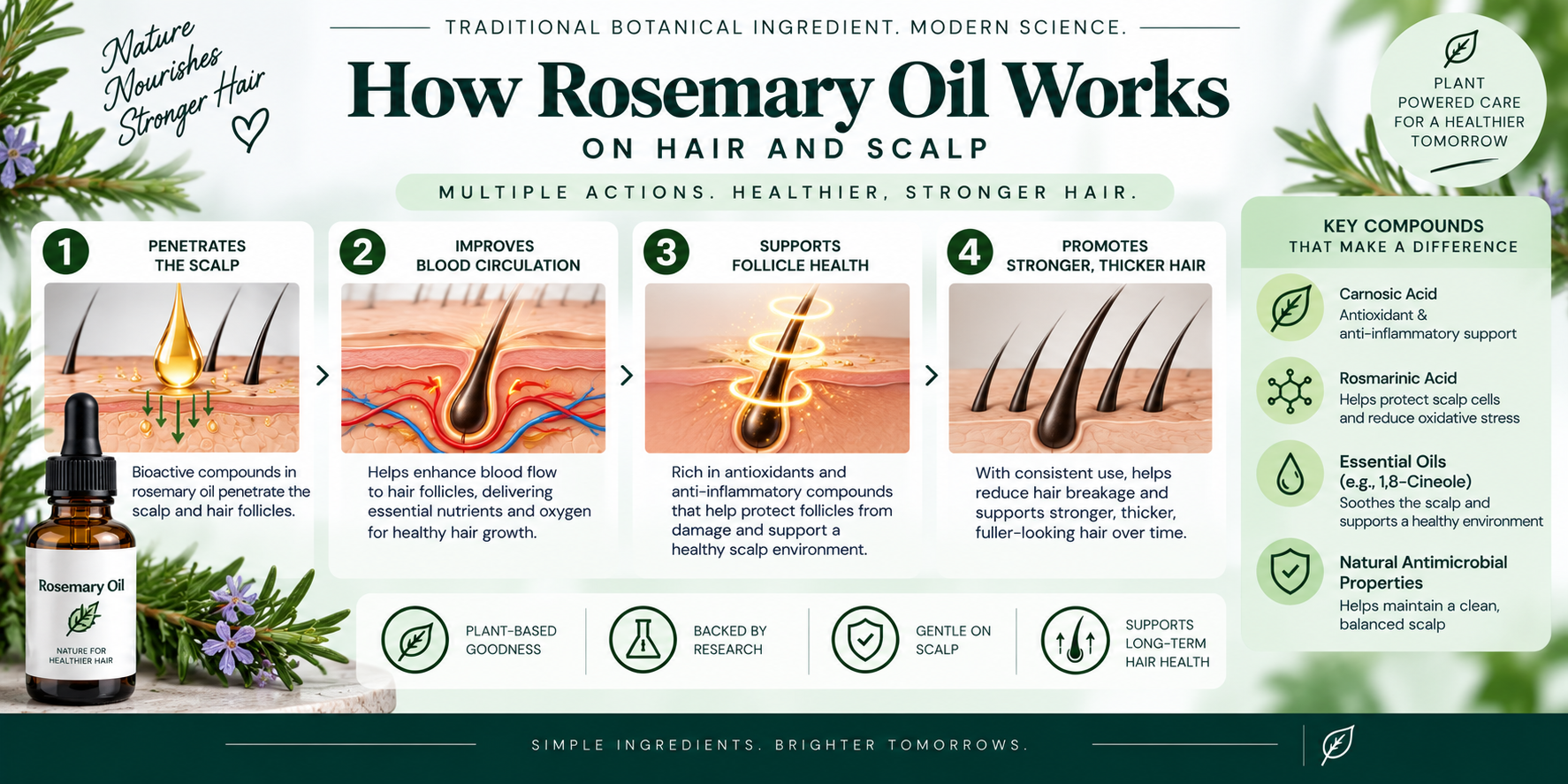
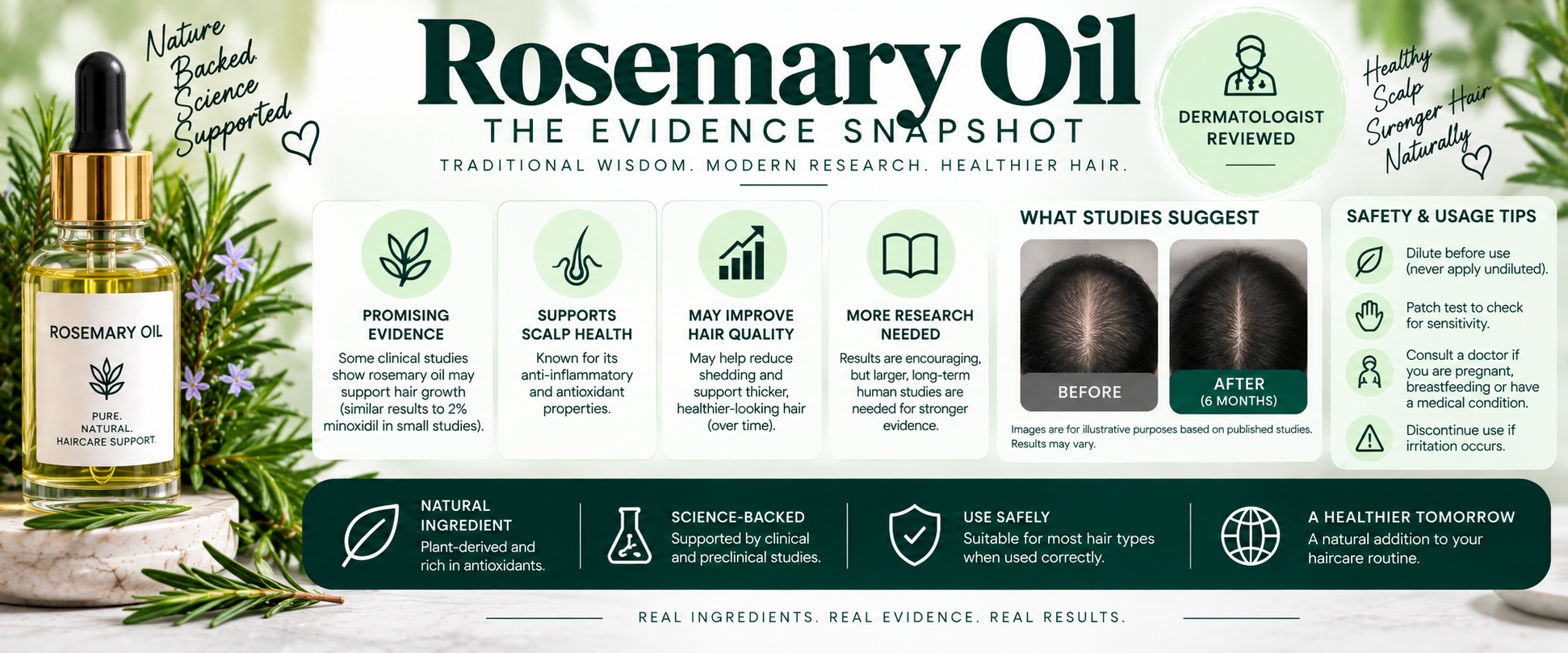
Image slot
⚙️
How Rosemary Oil works — mechanism visualalt: "How Rosemary Oil works on hair and scalp, illustrated" · 1200×600 WebP · loading="lazy"
Evidence

How Strong Is the Evidence?

Limited evidence Rosemary Oil

Best supported for
Mild cosmetic haircare support and scalp massage where tolerated, length oiling for dry hair, and natural-oil-preferring users with mild, non-progressive concerns — always diluted or formulated.
Not proven to
It is not proven to regrow hair, is not the same as or a replacement for Minoxidil, and is not a treatment for pattern, patchy, scarring, fungal or severe hair loss; oily/dandruff/sensitive scalps may not tolerate it.
Doctor guidance
Cosmetic; minimal for tolerated use. But progressive, patchy or sudden loss, scalp redness/burning/pus/crusting, scalp acne/folliculitis, suspected fungal/scarring conditions, pregnancy or fresh transplant need a doctor.
Image slot
📊
Evidence snapshot — visualalt: "Evidence level snapshot for Rosemary Oil in haircare" · 1200×500 WebP · loading="lazy"
Suitability

Best For

Mild cosmetic haircare support

Gentle, supportive haircare for mild, non-progressive concerns.

Scalp massage (where tolerated)

Diluted oil for scalp massage, if your scalp tolerates oiling.

Dry-hair length oiling

Oiling the lengths of dry hair, where suitable, rather than loading the scalp.

Natural-oil preference

For those who prefer oil-based products, used diluted or formulated.

Hair-shaft conditioning

Cosmetic conditioning support for the hair shaft.

Pre-wash oil routine

As a pre-wash oil, patch tested and used sensibly.

Caution

Not Suitable For / Use With Care

⚠️

Avoid or ask a doctor first

  • A sensitive scalp; scalp redness or burning
  • Dandruff / seborrheic dermatitis that worsens with oil
  • Scalp acne or folliculitis
  • Patchy hair loss; scarring alopecia suspicion
  • Fungal scalp infection
  • Pregnancy / breastfeeding (before essential-oil use)
  • Teenagers / children (undiluted essential oils)
  • Allergy to essential oils or fragrance
  • Asthma or fragrance sensitivity
  • Eye-area use
  • A fresh hair transplant (unless surgeon-approved)
  • Undiluted application to the scalp
🩺

See a doctor first if

  • Sudden, severe or progressive hair fall; patchy loss
  • Scalp redness, burning, pus, crusting or scaling
  • Scalp acne or folliculitis
  • Suspected alopecia areata, scarring or fungal infection
  • A reaction to the oil (burning, rash, itching)
  • Pregnancy, breastfeeding or a fresh transplant
  • Unclear diagnosis
🧪

How to use safely

  • Use properly diluted or formulated rosemary oil products
  • Do not apply undiluted essential oil directly to the scalp
  • Patch test first
  • Avoid the eyes, eyebrows and broken skin
  • Avoid heavy oiling if scalp is oily, dandruff- or acne-prone
  • Stop if burning, rash, itching or redness occurs
  • Do not use as a replacement for medical treatment
Usage

How to Use Rosemary Oil Safely

Use properly diluted or formulated rosemary oil products, and do not apply undiluted essential oil directly to the scalp. Patch test first, avoid the eyes, eyebrows and broken skin, and avoid heavy oiling if your scalp is oily, dandruff-prone or acne-prone. Use it sensibly — often as a pre-wash oil on the lengths or a gentle, tolerated scalp massage. Stop if burning, a rash, itching or redness occurs, and do not use it as a replacement for medical treatment. Progressive, patchy or sudden loss needs a doctor.

Not sure if this ingredient fits your situation? Screen the cause first.

Take AI Hair TestAsk a Hair Doctor
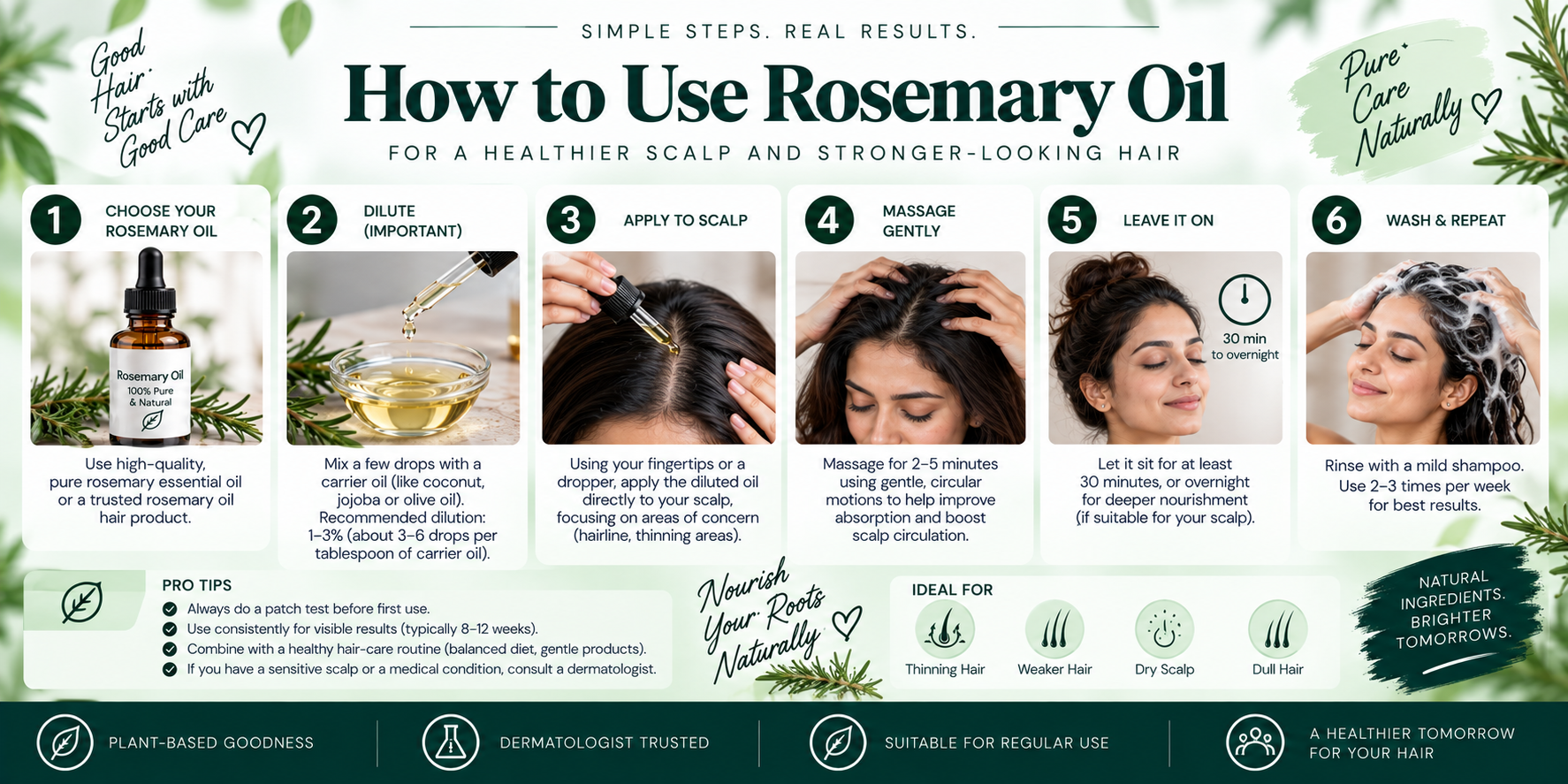
Image slot
📋
How to use Rosemary Oil — illustrated stepsalt: "How to use Rosemary Oil safely, step by step" · 1200×600 WebP · loading="lazy"
Safety

Possible Side Effects

As an essential oil, Rosemary Oil can cause local effects, especially undiluted, on sensitive or broken skin, or in those with fragrance or essential-oil allergies.

IrritationBurningItchingRednessContact dermatitisWorsened dandruff / folliculitis (some)Eye irritation if misappliedFragrance sensitivity

Dilution, formulated products, patch testing and avoiding the eyes and broken skin all reduce the risk of irritation, contact dermatitis or reactions. Those with oily, dandruff-prone, acne-prone or sensitive scalps, fragrance allergy or asthma should be especially cautious, and pregnancy/breastfeeding warrant checking with a doctor first. Stop and seek advice if you get burning, a rash or worsening symptoms rather than continuing.

Shop

Rosemary Oil & Haircare Products

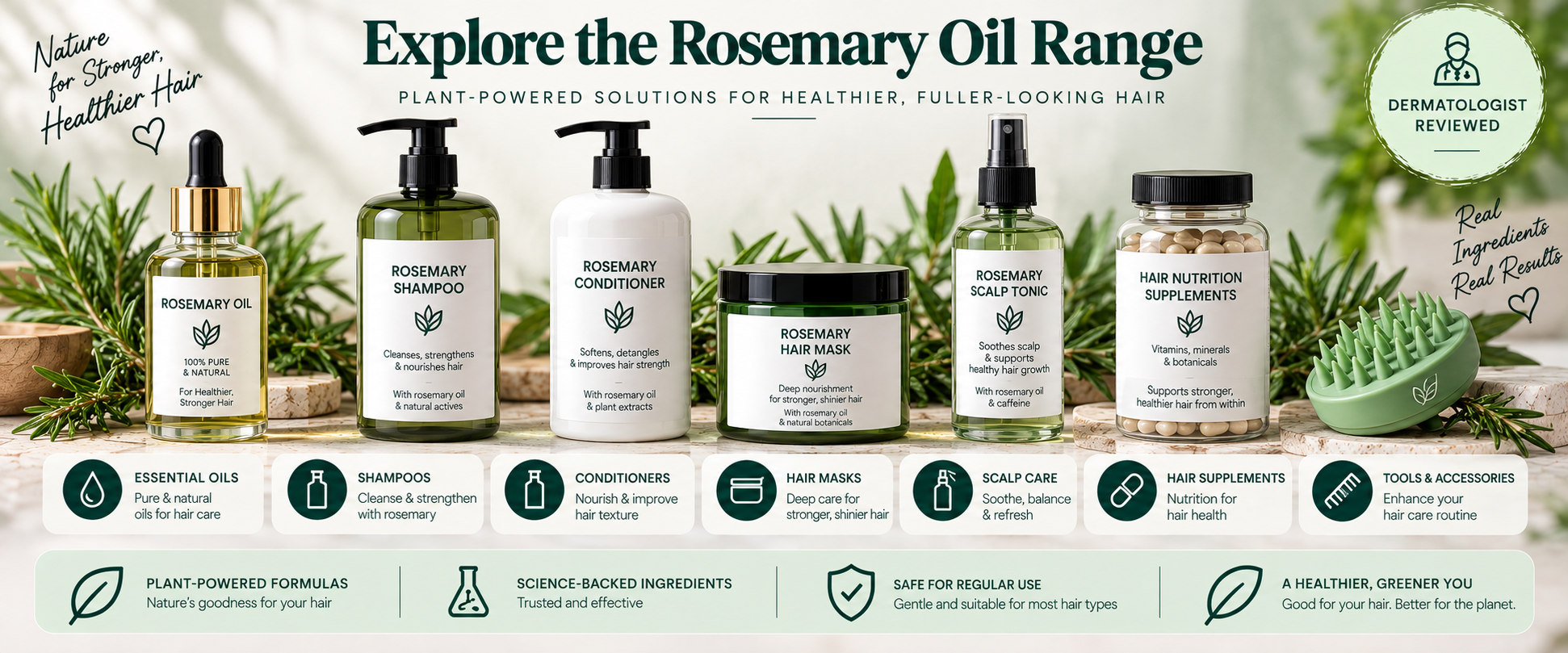
Formulated hair oils and cosmetic haircare where rosemary oil may feature — used diluted, not as a neat essential oil. Prices, ratings and stock are dynamic placeholders from the database and official label.

Catalogue connected · pin-code aware
View all 500+ products →
Products for this ingredient are being curated.

Rosemary Oil is a cosmetic haircare oil, not a medicine, not the same as Minoxidil, and not a guaranteed regrowth treatment. Use it diluted or in a formulated product — never as undiluted essential oil on the scalp — and be cautious with oily, dandruff-prone or sensitive scalps. Progressive, patchy or sudden hair loss, scalp disease, or scalp acne/folliculitis needs a doctor — not an oil. We do not fabricate prices, ratings, stock or reviews; these are dynamic placeholders from the official label and database. Results vary.
Want products matched to you? Use the finder or screen first.

Find My ProductsTake AI Hair Test
Image slot
🛒
Shop strip — related range flat-layalt: "Doctor-reviewed product categories related to Rosemary Oil" · 1200×500 WebP · loading="lazy"
Compare

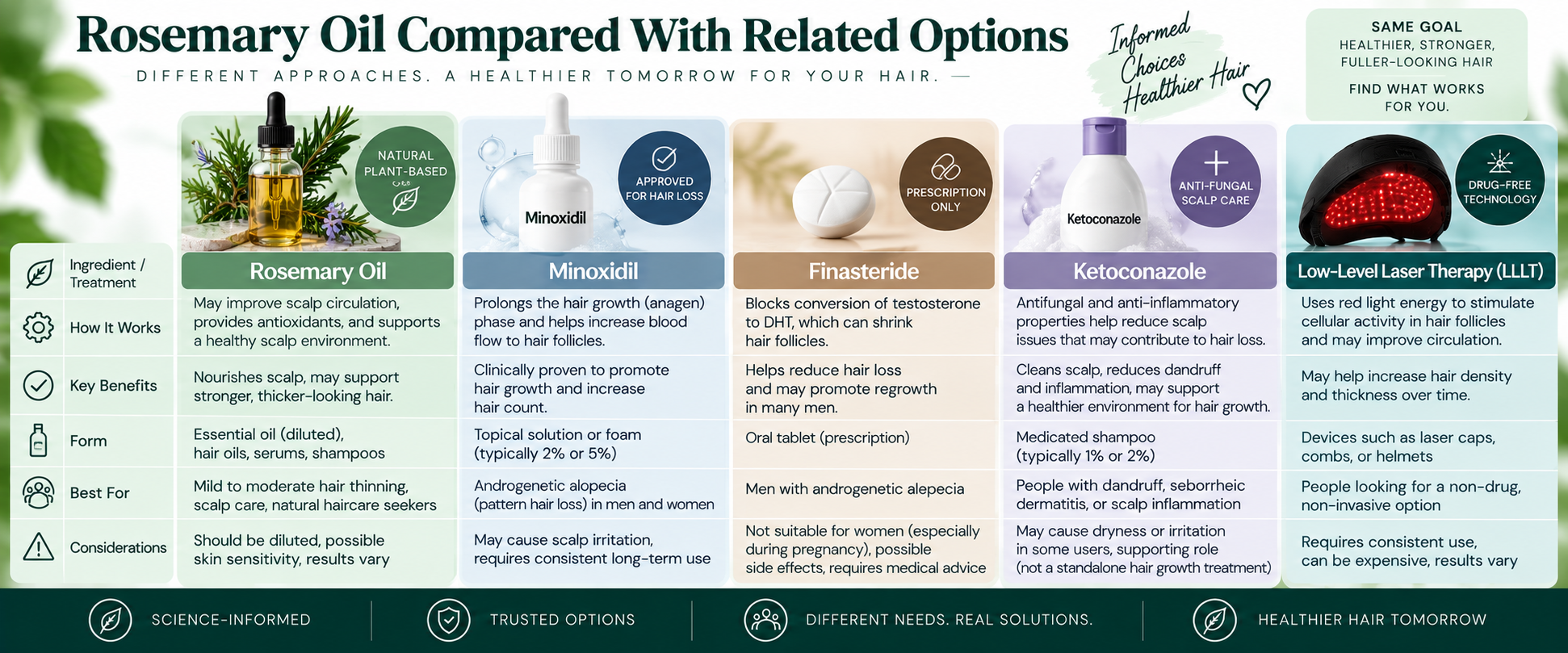
Rosemary Oil vs Minoxidil vs Hair Serum

How this ingredient compares with similar options. It points to a pathway; it is not a diagnosis.

FeatureRosemary OilMinoxidilHair Serum
CategoryEssential oilMedicineCosmetic serum
Medicine or cosmeticCosmeticMedicineCosmetic
Evidence levelLimited / cosmeticStrong (selected)Varies by active
Main roleScalp massage / haircareTreats selected pattern lossCosmetic support
Best forMild care (if tolerated)Selected pattern lossMild support
Doctor guidanceCosmetic; dilute / patch testRecommendedCosmetic; minimal
Irritation riskHigher (essential oil)Local; possibleLow (local)
Pregnancy / breastfeedingAsk a doctorAvoid / cautionCheck label / doctor
Not suitable forSensitive/dandruff scalp; undilutedSudden/patchy/scarring; pregnancy; teensPattern/patchy as sole care
PathwayHair oilMinoxidil productsHair serum
At a Glance

Baicapil vs Rosemary Oil vs Caffeine vs Niacinamide vs Minoxidil: What Is the Difference?

Baicapil, Rosemary Oil and Caffeine are mainly cosmetic/supportive haircare ingredients; Niacinamide is more scalp-barrier and comfort focused. Minoxidil is a medicine used in selected diagnosed pattern hair-loss cases. Choose by diagnosis, scalp type, severity and safety — not ingredient popularity alone.

FeatureBaicapilRosemary OilCaffeineNiacinamideMinoxidil
CategoryCosmetic activeCosmetic oilCosmetic activeScalp-support activeMedicine
Medicine or cosmeticCosmeticCosmeticCosmeticCosmeticMedicine
Evidence levelLimited–moderateLimitedLimitedModerate (scalp)Strong (selected)
Main roleCosmetic growth supportCosmetic / scalp massageCosmetic growth supportScalp barrier / comfortTreats selected pattern loss
Best for hair-growth supportMild supportMild supportMild supportNot its roleSelected pattern loss
Best for scalp comfortLimitedLimitedLimitedYesNot its role
Best for oily / dandruff-prone scalpNoUse cautionNoOil-balance supportNot its role
Doctor guidanceCosmetic; minimalCosmetic; dilute / patch testCosmetic; minimalCosmetic; minimalRecommended
Side-effect concernLow (local)Irritation if undilutedLow (local)Low (local)Local; rare systemic
Not suitable forPattern/sudden/patchy as sole careSensitive/dandruff scalp; undilutedPattern/sudden/patchy as sole careRed-flag scalp diseaseSudden/patchy/scarring; pregnancy; teens (without review)
Product categoryHair serum / tonicHair oilShampoo / serumScalp serum / careMinoxidil products
Image slot
⚖️
Comparison — visualalt: "Rosemary Oil compared with related options" · 1200×500 WebP · loading="lazy"
🩺
Doctor's Note

A Cosmetic Oil, Not a Substitute for Treatment

"As a dermatologist, I treat Rosemary Oil as a cosmetic haircare ingredient, not a substitute for medical hair-loss treatment. It may be useful for selected users who tolerate oils, but it can irritate sensitive or dandruff-prone scalps, and I see people make a flaky scalp worse by oiling it. Used diluted and sensibly, it can be part of a routine, but progressive, patchy or sudden hair loss needs diagnosis, not an oil — and it is not a replacement for Minoxidil. Patch test, dilute, and bring me anything that looks medical."

Reviewed by Dr. Amit Agarkar, MD DermatologyDermatologist & Hair Specialist · Last reviewed 1 June 2026

Progressive, patchy or sudden loss, scalp burning, pus or flaking that worsens with oil? See a doctor.

Consult Dr. Amit's Team
Evidence & Safety

Medical References Behind This Guidance

These references are provided for patient education and do not replace a dermatologist's diagnosis or individual medical advice.

AAD

Hair Loss: Causes & Treatment

Dermatologist-led overview of how hair loss is evaluated and the evidence behind common treatments.

View reference ›
NIH / MedlinePlus

Hair Loss Overview

Patient-education summary of common causes of hair loss and when to seek medical care.

View reference ›
PubMed

Peer-Reviewed Literature

Searchable index of peer-reviewed research on rosemary oil for hair loss.

View reference ›
Cochrane Library

Systematic Reviews

Independent systematic reviews assessing the evidence behind hair-loss interventions.

View reference ›
Questions

Frequently Asked Questions

Section image
FAQs — banner900×160 WebP
What is Rosemary Oil?
Rosemary Oil is an essential oil derived from the rosemary plant, used in hair oils, scalp massage blends and cosmetic haircare. It should usually be diluted or used in a properly formulated product rather than applied as an undiluted essential oil, which can irritate the scalp. It is not the same as Minoxidil and is not suitable for every scalp condition. So Rosemary Oil is a cosmetic haircare oil that may have a place in selected routines when used safely, rather than a medicine or a treatment for medical hair loss. Results vary.
Does Rosemary Oil help hair growth?
Rosemary Oil may support haircare routines and scalp massage in selected users who tolerate it, and there is some interest in it as a natural option, but it is not a guaranteed hair-regrowth treatment and is not the same as Minoxidil. Essential oils can irritate the scalp, especially when undiluted or used on sensitive, inflamed or dandruff-prone skin. So it may be a reasonable cosmetic, supportive choice for some people, but progressive or unexplained shedding needs proper diagnosis rather than relying on an oil. Results vary.
Is Rosemary Oil better than Minoxidil?
No, Rosemary Oil is not better than Minoxidil, and they should not be treated as equivalent. Minoxidil is a medicine with established evidence for selected pattern hair loss, while Rosemary Oil is a cosmetic essential oil with limited, supportive relevance. So they are not interchangeable, and the right choice depends on your diagnosis and goals rather than the appeal of a natural product. Results vary.
Can Rosemary Oil regrow hair?
Rosemary Oil should not be relied on as a guaranteed way to regrow hair. As a cosmetic oil, it may support a scalp-care routine and scalp massage in people who tolerate it, but it does not regrow hair the way a medicine targeting a specific cause might. So rather than expecting regrowth, it is more realistic to view it as a supportive cosmetic option. Results vary.
Can Rosemary Oil stop hair fall?
Rosemary Oil cannot reliably stop hair fall, especially when shedding has a medical cause such as pattern hair loss, telogen effluvium, thyroid problems, PCOS, iron deficiency or scalp disease. While a gentle scalp-care routine including a tolerated oil may feel supportive, an oil is not a treatment for the underlying causes of significant hair fall. Results vary.
How should Rosemary Oil be used on hair?
Rosemary Oil should be used either as part of a properly formulated product or diluted appropriately, not as an undiluted essential oil applied directly to the scalp. A patch test first is sensible, and it is often used as a pre-wash oil on the lengths or in a gentle scalp massage where tolerated. Avoid the eyes, eyebrows and broken skin, and avoid heavy oiling if your scalp is oily, dandruff-prone or acne-prone. Results vary.
Should Rosemary Oil be diluted?
Yes, Rosemary Oil as an essential oil should generally be diluted in a carrier oil or used within a properly formulated product rather than applied neat to the scalp, because undiluted essential oils can cause irritation, burning or allergic reactions. If you are unsure about dilution, choosing a ready-formulated rosemary oil product takes the guesswork out. Results vary.
Can I apply Rosemary Oil directly to the scalp?
You should not apply undiluted Rosemary Oil essential oil directly to the scalp, because concentrated essential oils can irritate or sensitise the skin and cause burning or reactions. Instead, use it diluted in a carrier oil or within a properly formulated product, and patch test first. If your scalp is sensitive, inflamed, dandruff-prone or acne-prone, even diluted oil may not suit you. Results vary.
Can Rosemary Oil cause irritation?
Yes, Rosemary Oil can cause irritation, itching, burning, redness or even contact dermatitis in some people, particularly when used undiluted, on sensitive or broken skin, or by those with fragrance or essential-oil allergies. Diluting it, using a formulated product, patch testing and avoiding the eyes and broken skin all reduce this risk. Stop and seek advice if you develop burning, a rash or worsening symptoms. Results vary.
Can Rosemary Oil worsen dandruff?
In some people, heavy oiling can worsen a dandruff-prone or seborrheic dermatitis-prone scalp, because oil can add to buildup. If you are dandruff-prone, a suitable anti-dandruff routine is usually more appropriate than oiling the scalp. Those with dandruff or seborrheic-prone scalps should be cautious with scalp oiling and consider whether it makes flakes worse, seeing a doctor for stubborn cases. Results vary.
Is Rosemary Oil safe for oily scalp?
For an oily scalp, heavy oiling with Rosemary Oil is often not ideal, because adding oil to an already oily, possibly dandruff-prone scalp can contribute to buildup. You may prefer to use rosemary oil mainly on the lengths rather than the scalp, or choose lighter scalp-appropriate products instead. Results vary.
Is Rosemary Oil safe for sensitive scalp?
If you have a sensitive scalp, Rosemary Oil should be used with extra caution. A patch test, proper dilution or a gentle formulated product, and avoiding application if the scalp is red or inflamed are all important. If your scalp reacts easily, even diluted essential oils may not suit you, and a fragrance-free, soothing approach may be better. Results vary.
Is Rosemary Oil safe during pregnancy?
If you are pregnant or breastfeeding, it is best to check with your doctor before using essential oils like Rosemary Oil, since advice on essential-oil use in pregnancy can vary. Many people prefer to be cautious with concentrated essential oils during pregnancy. Confirm with your doctor first, favour gentle, well-formulated options if advised, and avoid undiluted essential oils. Results vary.
Is Rosemary Oil safe for teenagers?
Teenagers can generally use suitable, diluted or formulated rosemary oil cosmetic products with sensible caution and a patch test, but undiluted essential oils should be avoided, and hair concerns in a teenager are better understood by considering the cause rather than relying on an oil. Significant, sudden or patchy hair loss, or a child's scalp problem, needs proper assessment rather than essential oils. Results vary.
Can I use Rosemary Oil with Minoxidil?
If you use doctor-guided Minoxidil, it is best to be careful about combining it with rosemary oil. Applying an oil and a topical medicine together can affect how the medicine sits on the scalp and oil may add to irritation. Keep them separate in your routine, avoid oiling an irritated scalp, and mention any oils you use to your doctor. Results vary.
Can Rosemary Oil be used for beard?
Rosemary Oil is sometimes included in beard oils as a cosmetic ingredient. A suitable, diluted or formulated beard product may be used for grooming and conditioning where tolerated, with a patch test first. However, it is a cosmetic option rather than a proven beard-growth treatment, and patchy beard loss can be a medical issue. Results vary.
Can Rosemary Oil be used on eyebrows?
Using Rosemary Oil near the eyebrows means working very close to the eyes, so great caution is needed. Essential oils can irritate the eye area badly if they migrate or are misapplied. If used at all, it should be well diluted or in a product designed for the area. Eyebrow thinning can also have medical causes worth assessing. Results vary.
Can the AI Hair Test suggest Rosemary Oil?
The AI Hair Test can help explore whether a cosmetic oil like rosemary oil might fit a mild haircare or scalp-massage routine, or whether your scalp is oily, dandruff-prone, sensitive or inflamed, where heavy oiling may not suit, and whether your pattern or symptoms point to pattern or medical hair loss needing a doctor. It reinforces that rosemary oil is cosmetic and not the same as Minoxidil. Results vary.
When should I consult a dermatologist?
You should consult a dermatologist if your hair fall is sudden or severe, patchy, progressive, or accompanied by a widening parting or crown thinning, if you have scalp redness, burning, pus, crusting or scaling, scalp acne or folliculitis, if you suspect alopecia areata, scarring alopecia or a fungal infection, or if your diagnosis is unclear. You should also seek advice before using essential oils in pregnancy or breastfeeding, or on a fresh hair transplant. Results vary.
Which Rosemary Oil product should I choose?
Choose a properly formulated or sensibly diluted rosemary oil product rather than a concentrated essential oil for direct scalp use, and consider your scalp type: lighter use or length-only application suits oily or dandruff-prone scalps, while gentle, well-formulated options suit sensitive scalps, with a patch test in all cases. Focus on a good overall formula with realistic cosmetic expectations. Product prices, ratings and stock are dynamic placeholders. Results vary.

Question not answered here? Ask Dr Aria for general guidance, or book a consultation.

Ask Dr AriaConsult a Doctor

Use It Safely — but Don't Expect It to Replace Medicine

Rosemary Oil is a popular natural cosmetic oil that some people enjoy in a scalp-massage or length-oiling routine. But it has only limited, cosmetic-level relevance, it is not the same as Minoxidil, and it is not a guaranteed regrowth treatment or a replacement for doctor-guided care. It must be diluted or used in a formulated product, never neat on the scalp, and it can irritate sensitive, dandruff-prone or acne-prone scalps. The smart move is to use it safely if you tolerate it, keep expectations realistic, and see a doctor for progressive, patchy or sudden loss or any scalp red flags. Use the AI Hair Test to clarify your situation. Results vary.

Medical disclaimer. This is educational content reviewed by a dermatologist. The AI Hair Test helps explore whether a cosmetic oil may fit a mild routine and flags when a doctor is needed, but does not diagnose, prescribe, endorse a brand, or replace a dermatologist. Rosemary Oil is a cosmetic haircare essential oil, not a medicine, not the same as Minoxidil, not a guaranteed hair-regrowth treatment, and not a replacement for doctor-guided pattern hair-loss treatment. Essential oils should be diluted or used in properly formulated products and never applied undiluted to the scalp; they can irritate sensitive, inflamed, dandruff-prone or acne-prone scalps. Use caution in pregnancy or breastfeeding, for teenagers or children, with essential-oil or fragrance allergy or asthma, around the eyes, and on a fresh hair transplant unless your surgeon approves. It should not be used as sole care for male or female pattern hair loss, alopecia areata, scarring alopecia, fungal scalp infection, telogen effluvium, thyroid or PCOS hair loss, or severe hair fall. See a doctor for progressive, patchy or sudden loss, scalp redness, burning, pus, crusting or scaling, or scalp acne/folliculitis. Side effects can include irritation, burning, itching, redness and contact dermatitis. Product price, stock, ratings and reviews are dynamic placeholders from the official label and database. Results vary.
Doctor-Reviewed Haircare Ingredient Guide

Rosemary Oil: Evidence, Safety & Best Use

A clear, dermatologist-reviewed summary of where Rosemary Oil fits in hair fall, scalp care, hair-growth support or product selection — without exaggerated regrowth claims.

Reviewed by DermatologistEvidence-TieredSafety-FirstIndia-Focused

Results vary based on diagnosis, consistency, formulation and scalp condition.
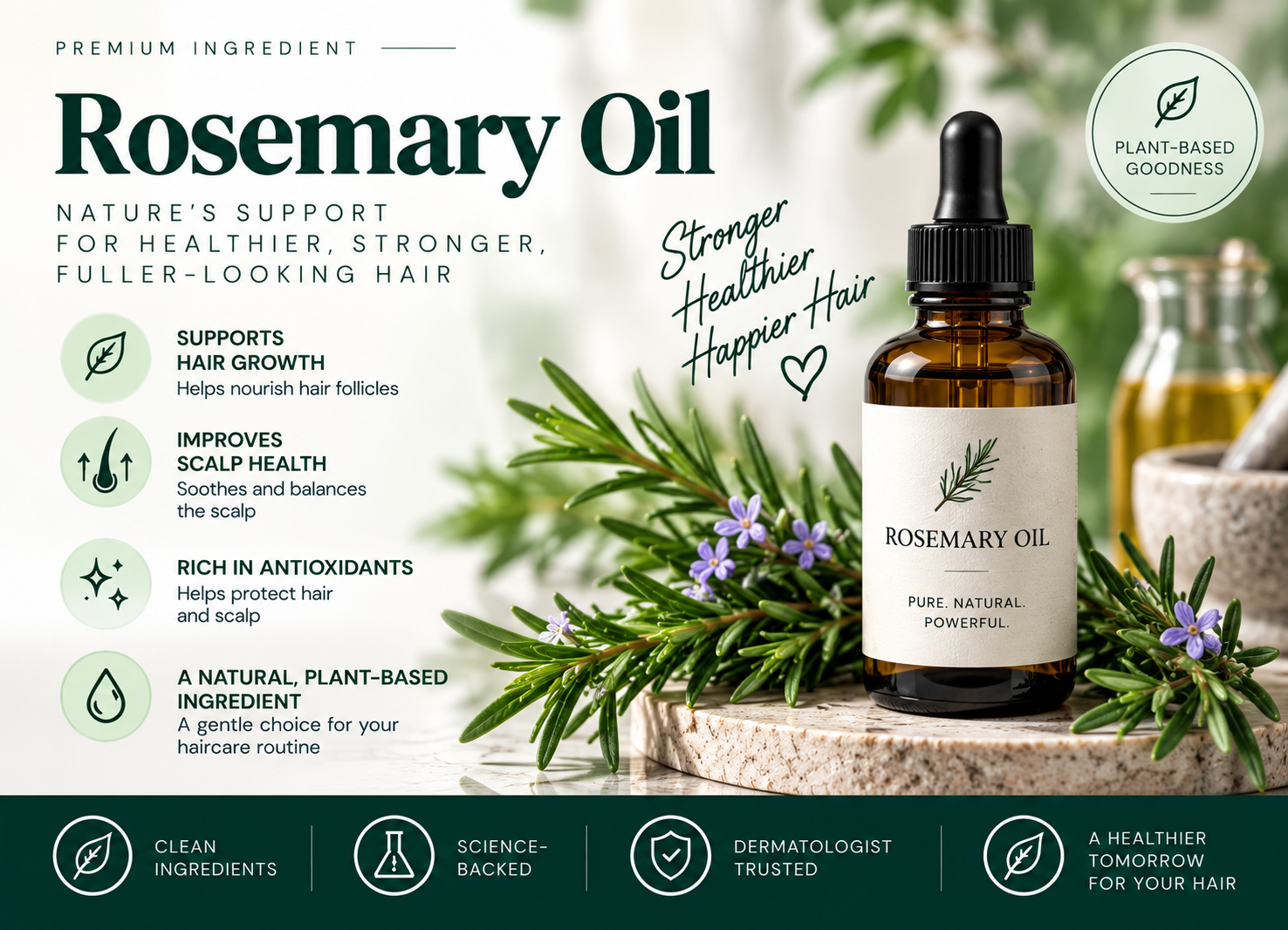
🌿
Rosemary Oil

Premium ingredient visual slot · 720×520 WebP

Quick Summary

Rosemary Oil at a Glance

What it is

Cosmetic hair & scalp oil

Best for

Supportive routine step with some early evidence in pattern loss

Evidence level

Cosmetic / limited–moderate (formula-dependent)

Doctor guidance

Optional; doctor-guided for medical loss

Medical Review & Editorial Transparency

Reviewed for Safety, Evidence & Honest Claims

🩺

Reviewed by: Dr. Amit Agarkar, MD Dermatology

Medical focus: Dermatology, trichology, hair loss, scalp disorders and hair restoration.

Last reviewed: 1 June 2026

Editorial promise: This page explains benefits, limitations, side effects and safe use without exaggerating hair-growth claims.

Content Transparency

Who, How & Why This Guide Was Created

Who created this guide?

Prepared by the Hairsncares editorial team and medically reviewed by a dermatologist experienced in hair and scalp disorders.

How was it reviewed?

Checked for ingredient role, evidence level, safety warnings, medical limitations and suitability for Indian haircare users.

Why was it created?

To help you choose ingredients safely and understand when a dermatologist diagnosis matters more than trying products randomly.

Evidence Grade

Evidence Grade for Rosemary Oil

ParameterAssessmentWhat it means
Evidence levelCosmetic / limited–moderate (formula-dependent)How strong the support is for this ingredient in hair or scalp care.
Best use caseSupportive routine step with some early evidence in pattern lossThe situation in which it may genuinely help.
Not suitable forPattern, patchy, scarring or fungal loss expecting a cure; undiluted useWhen a dermatologist diagnosis is needed before use.
Expected timelineCosmetic support over weeks–months; not a regrowth guaranteeResults vary based on diagnosis, consistency, formulation and scalp condition.
Suitability & Safety

Best For vs Avoid If

May be suitable for

  • Supportive routine step with some early evidence in pattern loss
  • People with a clear, non-emergency concern and realistic expectations
  • Use within a sensible, dermatologist-aware routine

Avoid or ask a doctor if

  • Hair loss is sudden, severe, patchy, painful or with scalp infection.
  • You are pregnant, breastfeeding, a teenager, or using prescription medicines.
  • You have an unclear diagnosis, scarring hair loss, fungal infection or active scalp disease.
Compare

Compare Rosemary Oil With Related Ingredients

Product Discovery

Explore Product Types Containing Rosemary Oil

Product results should be selected based on scalp type, diagnosis, sensitivity, routine compatibility and dermatologist guidance where needed.

Find Products After AI Hair Test
Visual Guide

Rosemary Oil Visual Guide

⚙️
How Rosemary Oil may support hair or scalp care.
🛡️
Safety and suitability depend on diagnosis and user profile.
📋
Routine compatibility matters more than random product use.
Quick Answers

Quick Answers About Rosemary Oil

Is Rosemary Oil good for hair growth?

Rosemary Oil may help in selected situations depending on its evidence level, diagnosis, formulation and consistency. It should not be treated as a guaranteed regrowth solution for every type of hair loss.

How long does Rosemary Oil take to work?

Timelines vary. Medicines and deficiency-based treatments may take months, while cosmetic oils or hydration ingredients may mainly improve feel, shine or manageability sooner.

Can I use Rosemary Oil without a diagnosis?

Cosmetic ingredients may be used carefully, but medicines, persistent hair fall, patchy loss, scalp disease or sudden shedding need dermatologist evaluation.

Can Rosemary Oil be combined with other ingredients?

Combination depends on scalp sensitivity, diagnosis, product type and whether the ingredient is cosmetic, supplement-based or prescription-guided.

Who should avoid Rosemary Oil?

People with allergies, irritation, active scalp disease, unclear diagnosis, pregnancy, breastfeeding or prescription-medicine concerns should check suitability before use.

Evidence LevelEssential Oil / Limited Evidence

Essential oil with limited cosmetic support and irritation risk. Must be diluted or used in a proper formulation.

AI Summary

Rosemary Oil for Hair and Scalp in Simple Terms

Rosemary Oil is an essential oil used in cosmetic hair/scalp products.

It may help with cosmetic scalp/hair support, diluted or formulated — but it should not be treated as a cure for every hair or scalp concern.

Bottom line: use this guide to understand evidence, safety and product suitability, then take the AI Hair Test or consult a dermatologist. Results vary.

Ingredient Type

Is Rosemary Oil a Medicine or an Essential Oil?

Rosemary Oil is an essential oil used in cosmetic hair/scalp products. It must be diluted or properly formulated and should not be used as a medicine.

Evidence-Safe Summary

What Rosemary Oil Can and Cannot Do

May Help With

  • Cosmetic scalp/hair support, diluted or formulated
  • A gentle option for some, with realistic expectations
  • Use within a properly made product

Cannot Promise

  • Minoxidil-like regrowth
  • Safety if used undiluted
  • Suitability for inflamed, sensitive or child scalp
  • Treating medical hair loss
Essential Oil Safety

Never Apply Rosemary Oil Undiluted on the Scalp

Rosemary Oil may irritate the scalp, especially if used undiluted or on inflamed, sensitive, dandruff-prone, acne-prone or broken skin.

  • Use only diluted or in a properly formulated product.
  • Avoid eyes, brows, broken skin and child scalp unless advised.
  • Be careful with fragrance allergy, asthma or sensitivity.
  • Do not use as a replacement for Minoxidil, Ketoconazole or doctor-guided treatment.
Not Minoxidil

Rosemary Oil Is Not a Minoxidil Replacement

Rosemary oil has some small, early studies and is a popular natural option, but the evidence is limited and it is a cosmetic essential oil, not a regulated medicine. It is not proven equivalent to minoxidil, and it cannot regrow hair in the way a medical treatment might. If you have real, progressing hair loss, an oil is not the substitute for assessment and proven options.

Compare in Rosemary oil vs minoxidil; browse hair oils and screen with the AI Hair Test.

Doctor-Guided Decision Matrix

Should You Consider Rosemary Oil?

Educational guidance, not a diagnosis. Results vary.

May Be Reasonable When

  • You want a diluted, cosmetic, natural option
  • Expectations are modest, patch-tested
  • It's not replacing medical care for real loss

Be Careful When

  • Using it undiluted
  • Fragrance allergy, asthma or sensitive scalp
  • Inflamed, broken or child scalp
  • Pregnancy, breastfeeding, teens or medical conditions

See a Doctor First When

  • Sudden or severe hair fall
  • Patchy hair loss
  • Progressive thinning
  • Scalp pain, pus, crusting, bleeding or thick plaques
  • Child scalp scaling
  • Suspected fungal infection, psoriasis, folliculitis or scarring alopecia
Related Ingredient Guides

Compare More Hair & Scalp Ingredients

Personalised Hair & Scalp Guidance

Does Rosemary Oil Fit Your Concern?

This guide is educational. For sudden, patchy, progressive or unexplained hair loss, or scalp pain, pus, crusting or thick plaques, screen with an AI tool or see a dermatologist.

Your Cart (0)

Your cart is empty

Subtotal0
DeliveryFREE
Total0
🔒 Secure📦 Free above ₹499↩ Easy returns
💬 Hi! I'm Dr. Amit — your Hair Intelligence consultant
🌿
1
🌿
Dr. Amit
Virtual Dermatologist · Hairsncares.com
Online
What are you shopping for today?
Select a category to begin
AI-powered scalp diagnosis · Hairsncares.com
📸
Scalp Analyser
Upload scalp photo · Get conditions, root cause, and matched product protocol
📷
Drop scalp photo here or click to upload
JPG, PNG, WEBP · Clear, close-up, well-lit photo

Your image is processed privately by our AI engine and saved securely with your account.