{{PRODUCT_IMAGE}}
{{VITAMIN_D_FORM}}{{PRODUCT_NAME}}
{{PRICE}} MRP {{MRP}} · {{DISCOUNT}}
{{STOCK_STATUS}} · {{RATING}} ({{REVIEW_COUNT}} reviews)
HairsnCares Clinical Nutrient Intelligence · Vitamin D & Hair-Loss Context
Vitamin D has important roles throughout the body and may be relevant in selected hair-loss assessments — but low Vitamin D is not the only cause of shedding, associations do not prove causation, and supplementation should be based on clinical context and appropriate testing.
25(OH)D is the main status test — not 1,25(OH)₂D. Excess Vitamin D can cause dangerous hypercalcaemia. There is no universal hair-growth Vitamin D target. This page will not provide a dose, a loading regimen or a guaranteed regrowth claim.
Explore Clinician-Guided Vitamin D Products →
Quick Clinical Answer
Vitamin D is a fat-soluble vitamin obtained through sunlight, food and supplements. Serum 25-hydroxyvitamin D [25(OH)D] is the principal laboratory marker for nutritional status. Lower 25(OH)D levels have been reported in some people with alopecia areata, pattern hair loss and diffuse shedding — but association does not prove cause. Correcting confirmed deficiency supports general health and may help when deficiency is genuinely contributing. It does not replace diagnosis-specific hair-loss treatment. Excessive Vitamin D intake can cause dangerous hypercalcaemia. No universal Vitamin D concentration optimises hair growth in every person.
Medically reviewed by Dr. Amit S. Agarkar — MBBS, MD Dermatology, FCPS, DDV · Reviewed 24 July 2026 · Next review July 2027 · Review methodology
Overview
A fat-soluble vitamin with a complex metabolic pathway, a relevant receptor in hair follicles, and a body of observational evidence that is real but not definitive. Here is the full, honest picture.
| Compound | Also called | Main role or context | Testing relevance |
|---|---|---|---|
| Vitamin D2 | Ergocalciferol | Supplement form; fungi/yeast source | Measured as part of 25(OH)D in most assays |
| Vitamin D3 | Cholecalciferol | Skin synthesis; supplement form; animal or lichen source | Measured as part of 25(OH)D in most assays |
| 25-Hydroxyvitamin D | 25(OH)D, Calcifediol | Liver conversion product; principal status marker | ✓ Correct routine nutritional-status test |
| 1,25-Dihydroxyvitamin D | Calcitriol, active Vitamin D | Kidney conversion; active hormone; prescription medical use | Not the routine nutritional-status test |
Vitamin D Biology
Understanding the pathway clarifies why a simple "take Vitamin D for hair" message misses the clinical complexity.
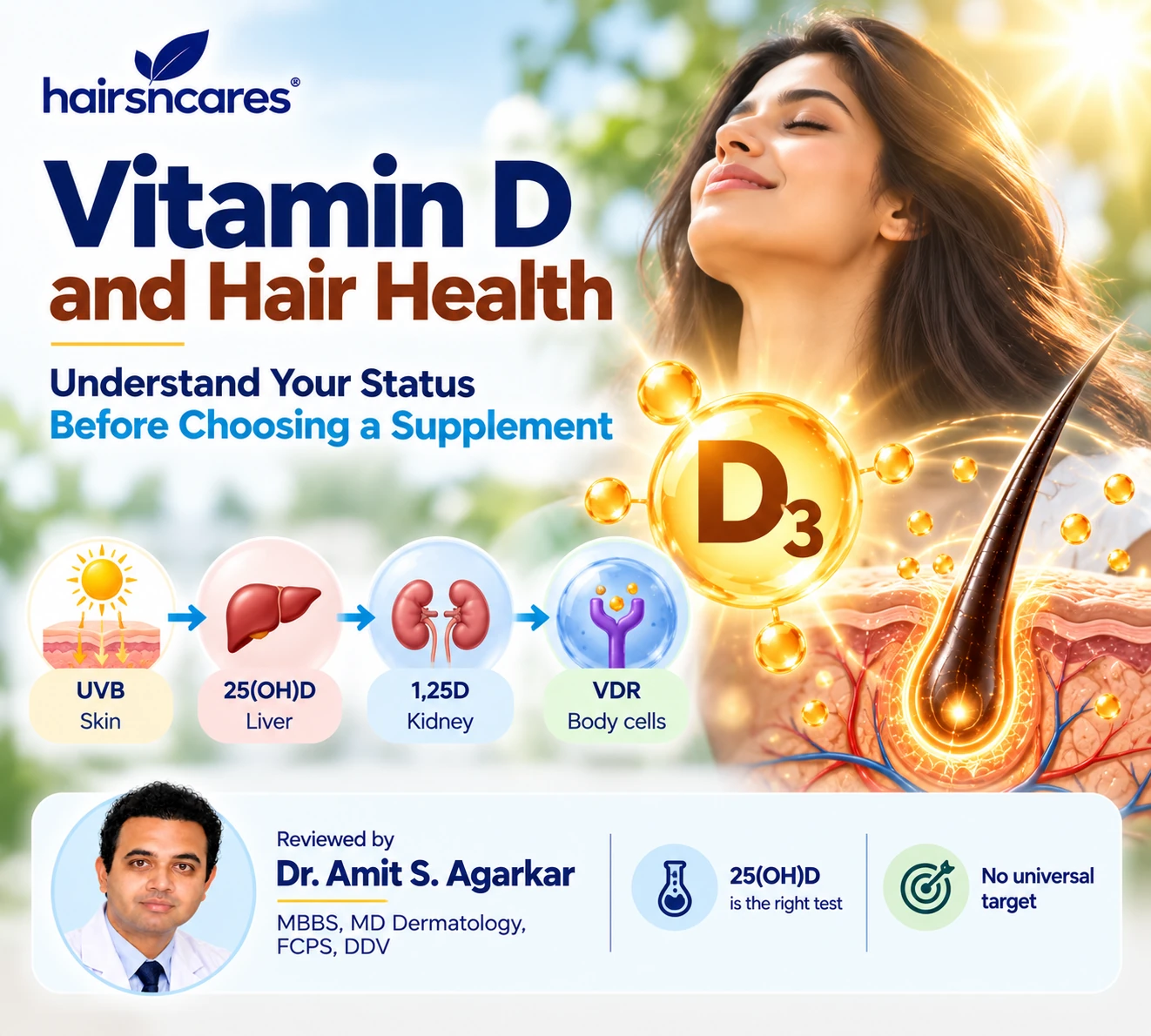
UVB radiation converts 7-dehydrocholesterol in the skin to pre-Vitamin D3, which isomerises to Vitamin D3. Food and supplements provide Vitamin D2 or D3.
The liver converts Vitamin D into 25-hydroxyvitamin D [25(OH)D]. This is the principal marker measured in blood for nutritional status assessment.
The kidney — and some other tissues — convert 25(OH)D into the biologically active hormone 1,25-dihydroxyvitamin D [1,25(OH)₂D] under tight hormonal regulation.
1,25(OH)₂D acts through the Vitamin D receptor (VDR) to regulate gene expression in target tissues including bone, immune cells, skin and hair follicles.
Vitamin D receptors are present in hair follicles. VDR signalling has biological relevance to hair-cycle biology. Genetic disruptions in VDR pathways (as seen in rare conditions) differ greatly from ordinary nutritional deficiency in adults.
Hair-Loss Evidence
Associations are real. Causation is complex. Supplementation is not a universal solution. Each condition requires its own diagnostic approach.
Studies have reported lower 25(OH)D in some alopecia areata populations, sometimes correlating with disease extent. These are observational associations. Vitamin D deficiency has not been established as the sole cause. Oral Vitamin D does not replace established treatment. Prescription topical Vitamin D analogues are a different category requiring dermatologist supervision — do not confuse these with consumer supplements.
Association reported. Causation not established. Professional assessment required.
See a dermatologist →Diffuse shedding has many triggers — illness, surgery, childbirth, weight loss, stress, thyroid disease, iron deficiency and nutritional inadequacy. Vitamin D assessment may be appropriate when clinically indicated as part of a broader work-up. Correcting low status does not guarantee immediate cessation of shedding. Hair-cycle recovery follows its own biology.
One of many possible factors. Testing appropriate in context.
Telogen effluvium guide →Observational studies have found lower 25(OH)D in some women with pattern hair loss. Pattern hair loss is strongly influenced by genetics and hormonal sensitivity. Correcting confirmed deficiency is reasonable for general health; Vitamin D does not replace Minoxidil or other evidence-based therapies.
Low D may coexist. Does not reverse genetic pattern.
FPHL guide →Pattern hair loss in men is primarily androgen-mediated and genetic. Low Vitamin D may coexist without being causative. Vitamin D does not counteract DHT sensitivity or reverse follicular miniaturisation. Appropriate treatment — Minoxidil, Finasteride, Dutasteride — should not be delayed in favour of Vitamin D supplementation.
Vitamin D does not replace androgen-blocking treatments.
MPHL guide →Postpartum hair shedding is a well-established physiological process. It typically peaks several months after delivery and resolves as the hair cycle normalises. Blood loss and nutritional changes may coexist, making iron and Vitamin D assessment reasonable in some cases — but Vitamin D correction will not eliminate physiological shedding.
Physiological process; supplementation for general health, not hair cure.
Postpartum hair guide →Scarring alopecias involve follicular inflammation and permanent damage. Vitamin D evaluation may be part of general health monitoring but does not reverse scarring or treat the underlying inflammatory process. Specialist dermatology evaluation and appropriate treatment are essential.
Specialist care required. Vitamin D is not a treatment.
Book specialist consultation →Expert notePatients often come in having seen a social media post claiming their Vitamin D level must be above 50 or 60 ng/mL for hair to grow. That is not evidence-based. The observational research does show associations between lower 25(OH)D and some alopecia conditions, but the methodology, populations and conclusions vary. My approach is to test when it is clinically indicated, correct genuine deficiency as part of a complete management plan, and not position Vitamin D as a standalone hair-growth supplement.
Laboratory Testing
25(OH)D is the test for nutritional status. 1,25(OH)₂D is not. Units matter. Context matters. No one number applies to everyone.
| Test | What it assesses | Routine status test? | Key consideration |
|---|---|---|---|
| Serum 25(OH)D | Nutritional Vitamin D status | ✓ Yes — the standard test | Results may be in ng/mL or nmol/L. Use the unit and reference range on your own report. |
| 1,25(OH)₂D (Calcitriol) | Active hormone form | ✗ Not the nutritional test | Tightly regulated; may be normal despite deficiency. Used for kidney, calcium and PTH questions. |
| Serum Calcium | Blood calcium level | Relevant when Vitamin D high | May be elevated in toxicity or certain conditions. Context dependent. |
| Parathyroid Hormone (PTH) | Secondary hyperparathyroidism | Sometimes ordered with 25(OH)D | PTH often rises as a compensatory response to low Vitamin D. |
| Kidney Function (eGFR) | Kidney health | Relevant in specific groups | Important before recommending Vitamin D in kidney disease patients. |
| Alkaline Phosphatase | Bone turnover marker | Sometimes relevant | May be elevated in bone-disease context; not specific for Vitamin D alone. |
| Phosphate | Phosphate balance | Sometimes ordered | Relevant in metabolic bone disease and kidney disease settings. |
Interactive · Educational only
Select the tests shown on your report to see what each generally represents. This tool explains — it does not interpret results or recommend doses.
Use the reference range and units on your original report. Discuss unexpected or abnormal results with a qualified clinician. This tool is educational only and does not diagnose deficiency or recommend supplementation.
Interactive · Educational triage only
Answer the questions below for an educational triage response. This is not a diagnosis, dose or prescription.
⚠ This tool provides educational triage only. It does not diagnose deficiency, recommend a dose or schedule, set a hair-growth target or replace dermatologist consultation. Always discuss results and supplement decisions with a qualified clinician.
Risk Factors
Risk factors indicate clinical context — not confirmed deficiency. The 2024 Endocrine Society guideline advises against routine screening in generally healthy adults without an established indication, including screening based solely on darker skin or obesity.
Indoor work, high-latitude living, heavy covering or consistently staying out of sun during peak UV hours.
→ Context for discussion during clinical reviewCoeliac disease, inflammatory bowel disease, bariatric surgery and other causes of fat-malabsorption reduce Vitamin D uptake.
→ Testing may be appropriate as part of broader nutritional reviewThe kidney is the main site for converting 25(OH)D to active 1,25(OH)₂D. Kidney disease can impair this step.
→ Specialist guidance required before any Vitamin D supplementationThe liver is the primary site for converting Vitamin D to 25(OH)D. Significant liver disease may affect this conversion.
→ Medical review requiredCutaneous synthesis declines with age. Older adults may need to pay more attention to dietary and supplementary sources.
→ Testing guided by overall clinical assessmentRequirements differ. Prenatal supplements often contain Vitamin D; additional supplementation requires obstetric guidance.
→ Obstetric team guidance; do not self-prescribe high dosesFat-soluble vitamins can be distributed into adipose tissue, potentially affecting circulating concentrations.
→ Testing in context of broader metabolic assessmentOrlistat, corticosteroids, some anti-seizure medicines and certain statins may affect Vitamin D levels or metabolism.
→ Pharmacist or clinician review when adding Vitamin DFew foods contain Vitamin D naturally. Individuals not consuming fatty fish, eggs, fortified milk or fortified plant beverages may have lower intake.
→ Dietary review with a dietitian for restrictive dietsFood & Sunlight
Select a source category to see what the evidence says — and what it does not guarantee.
Fatty fish (salmon, mackerel, sardines, tuna) are among the few foods with meaningful natural Vitamin D content, primarily as D3. Egg yolk contains some Vitamin D, though amounts vary with the hen's diet and exposure. Fish-liver oils (like cod-liver oil) are concentrated sources but also contain Vitamin A — excessive use carries Vitamin A toxicity risk independently of Vitamin D, and is not recommended as a hair supplement.
No food should be consumed in excess on the assumption it will correct established Vitamin D deficiency. Dietary sources may support maintenance but often cannot correct significant established deficiency alone.
Fortified milk, plant-based beverages, some breakfast cereals and selected yoghurts may provide meaningful Vitamin D — but fortification is not universal or standardised. In India, mandatory fortification regulations exist for certain products, but consumer-product labels must be read to confirm the specific product's content. Do not assume all milk or plant milks contain Vitamin D.
Vitamin D in fortified foods may be D2 or D3; label confirmation is needed. Combined contribution from multiple fortified foods should be considered before adding a supplement.
Mushrooms contain ergosterol, which converts to Vitamin D2 when exposed to UVB light. Commercially grown mushrooms are often cultivated in the dark and may contain negligible Vitamin D unless deliberately UV-exposed during production. Some producers now offer UV-exposed mushroom products with verified Vitamin D content — check the label. Mushroom Vitamin D is primarily D2 unless otherwise specified.
Dried and sun-exposed mushrooms may have more Vitamin D than fresh, commercially grown ones. Quantities needed to significantly improve status are likely impractical from mushrooms alone.
India's predominantly vegetarian dietary patterns and limited natural Vitamin D food sources mean dietary contribution from food alone can be low for many people. Fortified milk, fortified plant beverages and eggs (for non-vegetarians) provide the most reliable food-based Vitamin D in the Indian context. Traditional foods such as ghee, sesame or jaggery do not contain meaningful Vitamin D. Fish is a significant source for those who consume it.
Despite India's high solar intensity, studies have consistently found high rates of Vitamin D insufficiency — reflecting the combined effect of limited dietary sources, covering skin, air pollution and time spent indoors. This underscores the need for testing rather than assumptions.
UVB radiation reaching the skin can drive Vitamin D synthesis. The efficiency depends on latitude, season, time of day, skin pigmentation, age, the amount of skin exposed, covering, sunscreen use, glass and air quality. There is no universally safe minimum exposure recommendation because individual circumstances, skin sensitivity and UV intensity vary greatly. Sunburn and cumulative UV exposure carry skin-damage and skin-cancer risk. Tanning beds are not a safe Vitamin D strategy.
D2 vs D3 · Sources · Vegan Status
Select a category:
Ergocalciferol
Derived from fungi or yeast; vegan by origin. Can raise serum 25(OH)D status. Some comparative studies suggest D3 may be more effective at maintaining levels at equivalent doses; others show smaller or no difference in clinical practice. D2 is not useless — it is used in prescription-strength formulations and fortified foods globally.
Vegan-friendly active — verify capsule shellCholecalciferol
The most widely used D3 form in supplements. Typically derived from lanolin (wool wax). Not vegan. Not vegetarian (by strict definition, although many lacto-ovo vegetarians accept it). May be more effective than D2 at raising and maintaining 25(OH)D in some study contexts.
Not vegan — verify full product including capsuleCholecalciferol
A Vitamin D3 form derived from lichen (a composite organism, plant-fungal), used in vegan-certified Vitamin D3 products. The active ingredient is plant-compatible. The capsule shell and coating must also be vegan (HPMC rather than gelatin) for the finished product to be vegan. Manufacturer confirmation of both the source and the capsule is required. Product availability in India may be more limited than lanolin-derived options.
Vegan-friendly — verify full product specificationCalcifediol
The pre-formed 25-hydroxyvitamin D form used in some medical formulations. It bypasses the liver hydroxylation step and may be used in selected medical contexts such as certain liver or kidney conditions. Not a routine over-the-counter nutrition supplement and not appropriate for general hair-supplement self-selection.
Medical and specialist contexts onlyCalcitriol
The biologically active hormone form of Vitamin D. Used as a prescription medication for specific kidney conditions, parathyroid conditions and, in topical form (under trade names), for selected dermatological conditions including certain alopecias under specialist care. Not a consumer supplement and not appropriate for general hair-loss self-management. Topical calcitriol/calcipotriol for alopecia is a clinical treatment — do not confuse with consumer vitamin products.
Prescription medicine only — not a consumer supplementSupplement Safety
IU versus micrograms. Capsule shells. Duplicate exposure. Special populations. All covered here — without dose recommendations.
| Format | Notes | Key caution |
|---|---|---|
| Tablets or capsules (daily) | Most common consumer format; D2 or D3 | Confirm capsule shell material for vegan status |
| Softgel capsules | Oil-based for potentially better dissolution; often gelatin shell | Shell usually gelatin; vegan alternatives are HPMC-shell |
| Oral drops | Concentrated; drop count must be followed precisely | Drop concentration varies enormously between products; never estimate with spoons |
| Sachets (high dose) | Often weekly or monthly high-dose formulations | Require established indication and clinical supervision; not for general self-selection |
| Sprays | Sublingual or buccal delivery | Absorption evidence mixed; dose must still be confirmed |
| Chewable products | Often children's or palatable adult alternatives | Check the IU amount — some chewables are high dose |
| Vitamin D with Calcium | Bone-health combination | Combined calcium must be considered alongside dietary calcium; kidney stone history requires review |
| Vitamin D with K2 | Marketed for bone/cardiovascular support | K2 can interact with anticoagulants; does not eliminate D toxicity risk |
| Multivitamin | May already contain Vitamin D | Adding a separate Vitamin D product creates duplicate exposure — total must be reviewed |
Prenatal supplements often already contain Vitamin D. Adding a separate Vitamin D product requires confirmation that total intake is appropriate. High-dose formulations must not be self-selected during pregnancy. Obstetric guidance is essential.
Obstetric guidance requiredPaediatric dosing is age and weight specific. Adult sachets, softgels and high-dose drops must never be adapted for children. Accidental ingestion of adult Vitamin D products is a toxicity risk. Keep all Vitamin D products away from children.
Paediatric products only; clinician guidanceThese conditions can alter Vitamin D and calcium metabolism in ways that make standard supplementation inappropriate or potentially dangerous. Specialist medical review is required before any Vitamin D product in these groups.
Specialist guidance required firstDrug & Supplement Interactions
Do not stop a prescribed medicine to take Vitamin D. Discuss timing and compatibility with your pharmacist or clinician.
| Category | Possible interaction | Action |
|---|---|---|
| Orlistat (weight-loss medicine) | May reduce absorption of fat-soluble vitamins including Vitamin D | Pharmacist or clinician guidance on timing and monitoring |
| Corticosteroids | May reduce Vitamin D metabolism; chronic use may affect calcium balance | Review with prescribing clinician |
| Thiazide diuretics | Combined with Vitamin D may increase calcium concentration; kidney stone risk in susceptible individuals | Medical review before combining |
| Anti-seizure medicines | Some may reduce circulating Vitamin D levels; others increase metabolism | Discuss with neurology or prescribing team |
| Selected statins | Some statin metabolism may interact with Vitamin D pathways | Pharmacist review |
| Calcium supplements | Combined calcium and Vitamin D increases hypercalcaemia risk when overused | Total dietary + supplemental calcium must be considered |
| Magnesium supplements | Magnesium is involved in Vitamin D metabolism; interactions are generally positive but duplicate nutrient totals should be tracked | Assess total nutrient exposure |
| Other Vitamin D products or multivitamins | Duplicate exposure — unintentional megadose risk | Review all products containing Vitamin D; discuss total daily intake with a pharmacist |
| Anticoagulants (if also taking K2) | Vitamin K2 combined with Vitamin D/K2 products may affect anticoagulant therapy | Do not combine without haematology or clinician guidance |
Product Finder · Lab-Guided Discovery
Products load from the verified HairsnCares catalogue with accurate IU, µg, source origin, vegan status and prescription category. Nothing is invented.
{{PRICE}} MRP {{MRP}} · {{DISCOUNT}}
{{STOCK_STATUS}} · {{RATING}} ({{REVIEW_COUNT}} reviews)
{{PRICE}} MRP {{MRP}} · {{DISCOUNT}}
{{STOCK_STATUS}} · {{RATING}} ({{REVIEW_COUNT}} reviews)
{{PRICE}} MRP {{MRP}} · {{DISCOUNT}}
{{STOCK_STATUS}} · {{RATING}} ({{REVIEW_COUNT}} reviews)
Product data — IU and µg amounts, source origin, vegan/vegetarian status, capsule shell, prescription classification and pregnancy warnings — loads from the verified catalogue. Nothing is invented. Verify with the product label and pharmacist before purchase.
Lab-guided · deficiency and hair shedding
Explore →
Nutritional support · anaemia risk if deficient
Explore →
Mineral support · separate deficiency assessment
Explore →
B vitamin · lab interference caution at high dose
Explore →
Fatty acids · scalp and hair health context
Explore →
Macronutrient · hair structural material
Explore →
Safety · Toxicity · Myths
Fat-soluble vitamins accumulate. Toxicity is real. The myths below circulate widely on supplement websites but are not supported by evidence.
Contact local emergency services or a poison-control service immediately for suspected Vitamin D overdose or accidental child ingestion.
Review total Vitamin D from all sources. Discuss with pharmacist or clinician before continuing.
Stop supplementation. Seek medical assessment promptly.
Emergency services immediately.
"Everyone with hair fall needs Vitamin D."
Vitamin D is one possible consideration among many causes of hair loss. Testing requires an established indication.
"Low Vitamin D always causes hair loss."
Association is not causation. Low status may coexist with hair loss without being the sole or primary cause.
"Vitamin D3 directly regrows hair."
Correcting deficiency supports health but does not guarantee hair regrowth in any condition.
"Higher Vitamin D always means better hair."
Excess Vitamin D can cause serious hypercalcaemia — not more hair.
"A level above 50 is necessary for hair growth."
No universal hair-specific target has been validated.
"1,25-Dihydroxyvitamin D is the standard deficiency test."
Serum 25(OH)D is the principal routine status marker.
"Vitamin D2 does not work."
Vitamin D2 can raise 25(OH)D, though D3 may perform differently in some study contexts.
"Every Vitamin D3 product is vegan."
Most D3 comes from lanolin. Lichen-derived D3 can be vegan — verify source and capsule shell per product.
"Weekly high-dose sachets are safe for everyone."
High-dose regimens require an established indication and professional supervision.
"Sunlight is safe because it makes Vitamin D."
UV exposure also causes DNA damage and skin-cancer risk. Photoprotection remains important.
"Tanning beds are a safe Vitamin D source."
Artificial UV is not a safe nutrient strategy. Food and appropriate supplements provide alternatives.
"Vitamin D with K2 prevents all toxicity."
K2 has its own biological role but does not eliminate toxicity risk from excess Vitamin D.
"Vitamin D plus Calcium is ideal for every hair-loss patient."
Combined products require assessment of calcium intake and medical risk.
"One Vitamin D test explains the full hair-loss picture."
Diagnosis requires clinical history and scalp examination. A single blood test does not determine the hair-loss treatment.
"Vitamin D supplements work on hair immediately."
Laboratory correction and hair-cycle response follow different timelines. Months of patience are realistic.
"Hair supplements cannot cause Vitamin D overdose."
Duplicate intake from multiple products can create excessive Vitamin D exposure.
"Vitamin D may be relevant in selected hair-loss evaluations, but a low result does not automatically explain the diagnosis. The hair-loss pattern, laboratory context, medical history and risk of excessive supplementation must all be considered before choosing a product."
FAQs · Medically Reviewed
Evidence-grounded answers about Vitamin D and hair health — without doses, loading schedules or guaranteed regrowth claims.
Vitamin D is a fat-soluble vitamin — technically a group of related compounds — that the body obtains through skin synthesis after suitable UVB exposure, selected foods, fortified products and supplements. It plays important roles in calcium and phosphate regulation, bone health and a range of cellular functions. Vitamin D2 (ergocalciferol) and Vitamin D3 (cholecalciferol) are the two main forms encountered in supplements.
After being converted in the liver to 25-hydroxyvitamin D [25(OH)D] and then in the kidney and other tissues into its active form, Vitamin D supports calcium absorption, bone mineralisation, immune modulation and a range of cellular processes including those mediated through the Vitamin D receptor. Its biological importance is well established; how supplementation affects every individual outcome is an area of ongoing research.
Low Vitamin D status may coexist with certain hair-loss conditions, but association is not the same as cause. Vitamin D receptor signalling has biological relevance to hair-follicle physiology, and observational studies have reported lower 25(OH)D concentrations in some alopecia populations. However, low Vitamin D does not independently explain every case of shedding — hair loss has many possible causes including genetics, hormones, iron deficiency, thyroid disease, stress and other factors.
Correcting a genuine Vitamin D deficiency may support overall health, and this may have some bearing on conditions that can coexist with deficiency. However, supplementation is not a standalone hair-growth strategy — it does not replace diagnosis-specific treatment for alopecia areata, pattern hair loss or other conditions. The hair cycle's own biology means any improvement lags significantly behind laboratory correction.
Not reliably in every case, and not as a universal cosmetic strategy. Some individuals may see reduced shedding as part of a broader improvement when genuine deficiency is corrected. Vitamin D supplementation does not reverse genetic pattern hair loss, scarring alopecias or alopecia areata without appropriate targeted treatment. No study has established a universal regrowth effect from supplementation.
Studies have reported lower serum 25(OH)D levels in some groups of people with alopecia areata, sometimes correlating with disease severity or extent. These are observational associations — Vitamin D deficiency has not been established as the sole cause of alopecia areata, which is an autoimmune condition with a more complex aetiology. Oral Vitamin D does not replace established alopecia areata treatment and should not be promoted as a home cure. Topical prescription Vitamin D analogues are a different category of treatment and must not be confused with consumer supplement products.
Observational studies have found lower 25(OH)D in some people with female-pattern or male-pattern hair loss. The direction of causation is unclear — the association may reflect other shared risk factors. Pattern hair loss is primarily driven by genetics and hormonal sensitivity. Correcting confirmed deficiency is reasonable for general health; Vitamin D does not substitute for Minoxidil, Finasteride, Dutasteride or other clinician-selected therapies.
Serum 25-hydroxyvitamin D [25(OH)D] is the standard test for assessing nutritional Vitamin D status. It reflects contribution from sunlight, food and supplements. The other major form, 1,25-dihydroxyvitamin D (the active hormone), is not the appropriate routine test for nutritional status because it is tightly regulated and may remain normal until deficiency is severe. Clinicians may order the 1,25-form for specific kidney, calcium or parathyroid questions.
25-hydroxyvitamin D [25(OH)D] is produced in the liver from Vitamin D and measured in blood as the main indicator of a person's overall Vitamin D status. It may be reported in nanograms per millilitre (ng/mL) or nanomoles per litre (nmol/L) depending on the laboratory. 1 ng/mL = 2.5 nmol/L approximately. Always use the reference interval printed on your own report when interpreting results.
1,25-dihydroxyvitamin D [1,25(OH)₂D] is the biologically active hormone form produced in the kidney and other tissues. It is the form that acts through the Vitamin D receptor. It is tightly regulated and is not the standard test for assessing whether someone's Vitamin D intake or stores are adequate. Its measurement is primarily relevant for specific medical conditions involving calcium metabolism, kidney disease or granulomatous disorders.
No universal Vitamin D concentration for hair growth has been scientifically validated. Laboratories use different reference intervals. Clinical interpretation depends on health status, age, pregnancy, kidney function, bone risk and malabsorption. Promoting a specific threshold — such as 50, 60 or 80 ng/mL — as a universal hair-regrowth target is not supported by current evidence. The correct goal is to identify and address genuine deficiency for general health, not to chase an arbitrary cosmetic number.
The Endocrine Society advises against routine Vitamin D testing in generally healthy individuals without an established clinical indication. Whether Vitamin D assessment is appropriate in a hair-loss evaluation depends on the clinical picture — type of hair loss, other symptoms, risk factors and relevant medical history. A dermatologist is best placed to recommend appropriate testing as part of a complete assessment.
Vitamin D2 (ergocalciferol) is derived mainly from fungi or yeast. Vitamin D3 (cholecalciferol) is derived from animal sources (typically lanolin or fish liver) or, in some products, from lichen for vegan options. Both forms can raise serum 25(OH)D; some studies suggest Vitamin D3 may be more effective at maintaining levels, but both forms have value and clinical context matters. D2 is not useless, and D3 is not universally superior in every formulation.
Vitamin D3 may raise and sustain 25(OH)D more effectively than D2 in some comparative studies, but clinically significant differences can vary by dose, schedule and individual. D2 can raise Vitamin D status and is used widely. Do not assume every Vitamin D3 product is superior based on form alone — quality, dose, adherence, starting status and clinical indication are all important.
Not automatically. Most Vitamin D3 (cholecalciferol) supplements are derived from lanolin (wool wax) or fish-liver sources, which are not vegan. Some products use Vitamin D3 derived from lichen (a plant-like organism), which can be vegan — but this must be confirmed by the manufacturer. The capsule shell may also contain gelatin. Vegan status requires verification of both the active ingredient and the capsule or coating material for every specific product.
In principle, yes — UVB exposure can stimulate Vitamin D synthesis in the skin. In practice, the amount of synthesis varies significantly depending on latitude, season, time of day, skin pigmentation, age, clothing coverage, air pollution and the amount of skin exposed. There is no universally safe minimum exposure recommendation because individual circumstances differ and sunburn and chronic UV exposure carry their own risks. Food, fortified products and medically guided supplements can provide Vitamin D without UV exposure.
There is no universal answer. Vitamin D synthesis varies with geography, season, time of day, skin type, age, body surface exposed and atmospheric conditions. No specific duration can be safely recommended for everyone. For most people in India, some incidental sun exposure occurs as part of daily life, but this may not be sufficient for everyone. Assessment of Vitamin D status through testing, guided by a clinician, is more reliable than estimating sun exposure requirements.
Natural dietary sources include fatty fish (salmon, mackerel, sardines), fish-liver oil (with Vitamin A caution), egg yolk and UV-exposed mushrooms. Fortified sources may include some milks, plant-based beverages, breakfast cereals and selected foods — but fortification levels vary by product and country. Food labelling should be checked. In India, natural dietary Vitamin D content can be low and supplementation may be considered when clinically appropriate.
Only if Vitamin D deficiency or another clinical indication has been established through testing and professional guidance. Taking Vitamin D based on hair fall alone — without testing — risks unnecessary supplementation, which can contribute to toxicity in the fat-soluble vitamin that accumulates in the body. The American Academy of Dermatology advises nutrient supplementation for hair loss should follow confirmed inadequate levels, not blind supplementation.
Yes. Orlistat (weight-loss medication) can reduce fat-soluble vitamin absorption including Vitamin D. Corticosteroids may reduce Vitamin D metabolism. Thiazide diuretics combined with Vitamin D may increase calcium concentration risk. Anti-seizure medications and certain statins may affect Vitamin D metabolism. Multiple Vitamin D-containing products can create duplicate exposure. Always discuss existing prescriptions and supplements with a pharmacist or clinician before starting Vitamin D.
Yes. Vitamin D is fat soluble and accumulates in the body. Excess Vitamin D can cause hypercalcaemia (high blood calcium) which may result in nausea, vomiting, weakness, confusion, excessive thirst, frequent urination, kidney stones and — in severe cases — kidney injury, cardiac arrhythmias and other serious complications. Toxicity from sunlight exposure alone is extremely rare; it usually results from excessive supplement intake. Megadose or high-frequency dosing requires professional monitoring.
Symptoms of hypercalcaemia from Vitamin D excess may include nausea, vomiting, poor appetite, constipation, muscle weakness, confusion, excessive thirst, frequent urination, dehydration, kidney-stone symptoms and fatigue. Severe cases may involve cardiac arrhythmias, kidney injury and soft-tissue calcification. Suspected overdose — especially if a child has ingested an adult's Vitamin D product — requires immediate emergency or poison-control assistance.
Vitamin D with calcium may be clinically appropriate in selected users (bone health, documented deficiency with low dietary calcium) but is not appropriate as a universal hair supplement. Calcium intake from food and all supplements must be considered together. A history of kidney stones, hypercalcaemia or certain kidney conditions requires medical review before combined use. Vitamin K2 is sometimes combined with Vitamin D in supplements — it has its own biological role but does not eliminate the risk of Vitamin D toxicity and can interact with anticoagulant medications.
Seek professional assessment for any hair loss that concerns you — particularly sudden, diffuse or rapidly worsening shedding; patchy hair loss; scalp inflammation, pain or scarring; associated symptoms such as fatigue, weakness, excessive thirst, bone pain, thyroid symptoms or heavy menstrual bleeding. If you have known kidney disease, hypercalcaemia, malabsorption or other medical conditions, discuss Vitamin D testing and supplementation with your specialist before making any changes. Do not self-prescribe high-dose or weekly Vitamin D products.
Your individual test results, medical history and specific hair-loss diagnosis need a clinician’s assessment — not just a FAQ answer.
Your Next Step
Correct hair-loss diagnosis. Appropriate 25(OH)D testing. Laboratory context. Kidney and calcium review where relevant. Medication review. Dietary assessment. Source verification. Clinician-guided treatment when deficiency is established. Avoidance of duplicate products and megadoses. Patience with the hair cycle.
Medical Disclaimer: This HairsnCares guide is intended for general education and responsible product discovery. It does not diagnose Vitamin D deficiency, alopecia, telogen effluvium or any other hair-loss condition and does not replace advice from a qualified dermatologist, physician, endocrinologist, paediatrician, obstetrician, dietitian or pharmacist. Serum 25-hydroxyvitamin D must be interpreted using the original laboratory reference interval and the person’s clinical context. Do not begin, increase, stop or combine Vitamin D products without appropriate guidance when deficiency treatment, kidney disease, calcium disorders, pregnancy, childhood or prescription-strength products are involved. Excess Vitamin D can cause dangerous hypercalcaemia, kidney injury and other serious complications. Seek urgent medical or poison-control assistance for suspected overdose or accidental ingestion.
Your cart is empty