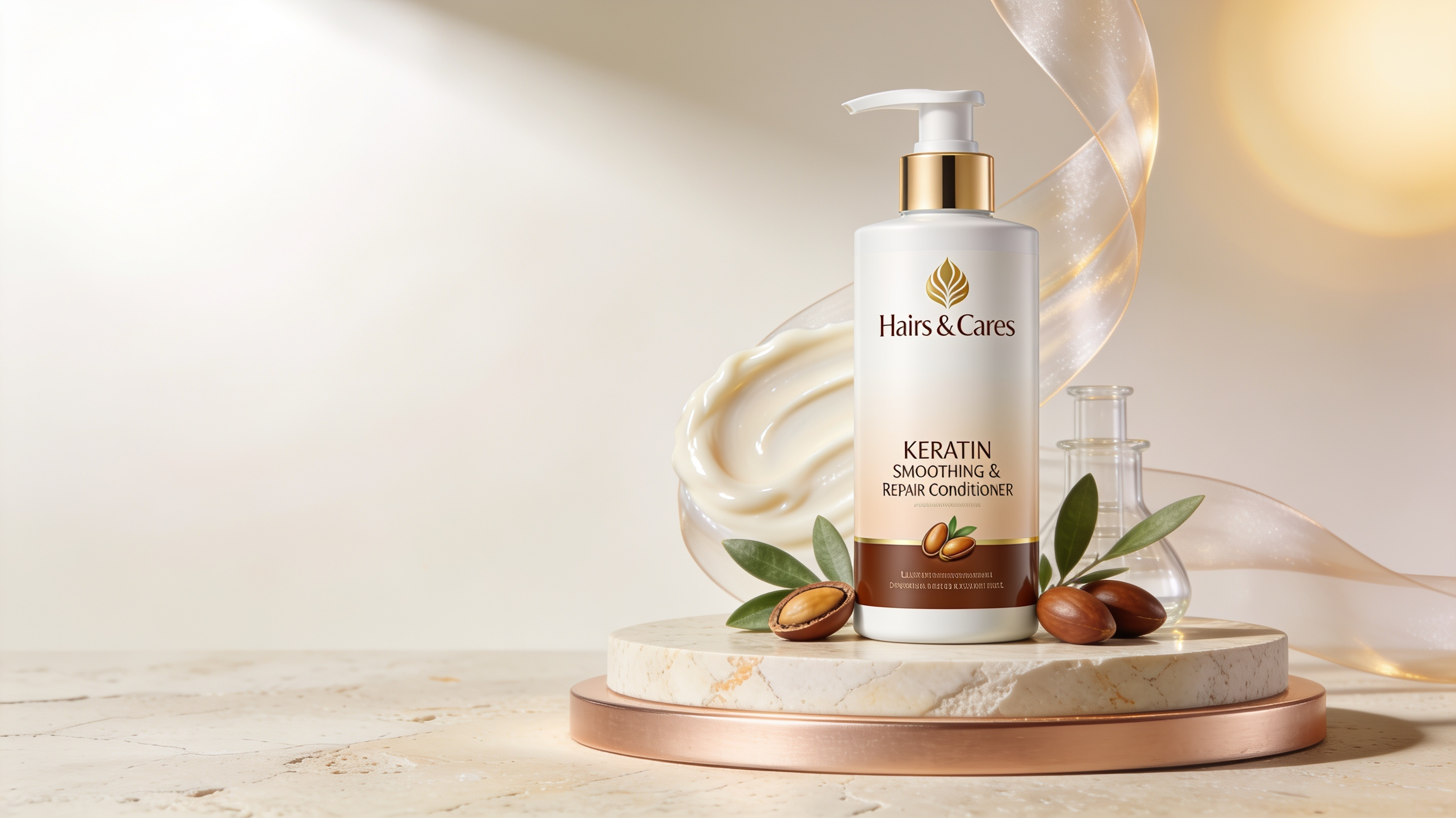
✕ Myth
Keratin conditioner regrows hair
✓ Fact
Keratin conditioner supports hair-shaft smoothness and breakage reduction at the lengths. It has no proven effect on the hair follicle and cannot stimulate hair regrowth or stop root-level shedding.
Keratin Silk Repair Atelier · Hairsncares
A dermatologist-guided conditioner guide for rough, frizzy, chemically treated, heat-damaged and breakage-prone hair — with keratin smoothing support, amino acid repair-care logic, protein overload safety and AI routine matching.
Educational product-selection guide. Keratin conditioner is a cosmetic hair-shaft product — it does not diagnose or treat medical hair loss. Results vary. Consult a dermatologist for hair fall or scalp concerns.
What keratin conditioner can and cannot do for frizz and damage
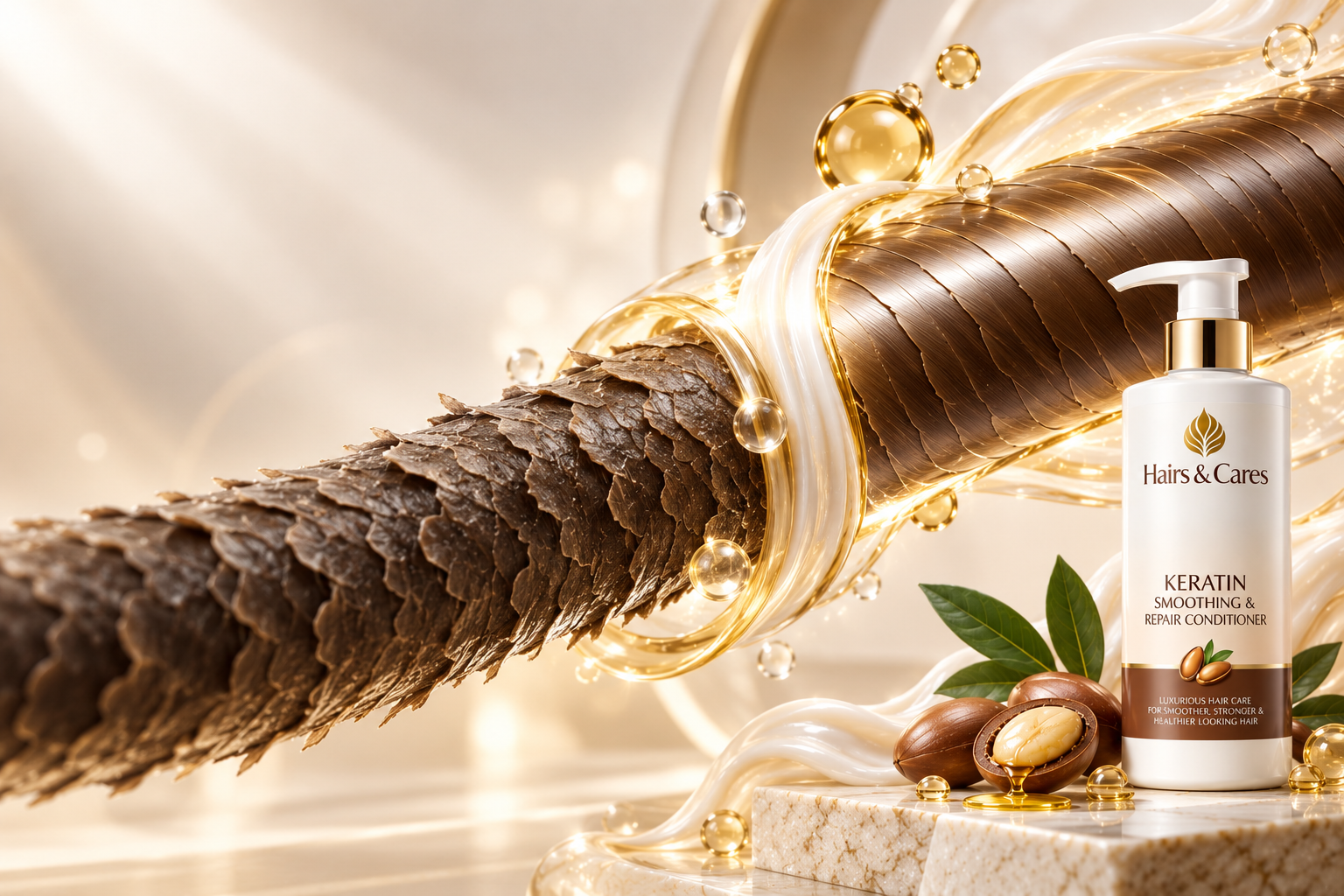
How hydrolyzed keratin coats and temporarily fills cuticle gaps
Keratin conditioner vs salon keratin treatment — key differences
Best hair types — frizzy, colour-treated, or chemically straightened
How often to use without protein overload in fine hair
Formaldehyde concerns — keratin conditioners vs salon treatments
Why keratin conditioner cannot permanently straighten or repair hair
When persistent frizz or damage needs professional assessment
Keratin smoothing and repair conditioner helps rough, frizzy, dull or damaged-looking hair feel smoother, softer and easier to detangle. It may reduce breakage caused by friction and dryness, but it does not treat root-level hair fall, regrow hair or permanently repair split ends. It is best used from mid-lengths to ends — especially for chemically treated, heat-damaged, colour-treated or frizz-prone hair.
Keratin conditioner deposits hydrolyzed keratin protein onto the hair surface, temporarily smoothing frizz, filling cuticle damage, and improving manageability. Unlike salon keratin treatments, it does not contain formaldehyde or permanently alter hair structure. It does not treat hair loss or cure scalp conditions. Results wash out after each use. Fine or low-porosity hair may feel weighed down with overuse.
Keratin conditioners are cosmetic hair-shaft support products. They can improve smoothness, manageability, shine and detangling feel in suitable hair types — especially rough, frizzy, heat-styled, chemically treated, colour-treated and breakage-prone hair. Benefits are mostly hair-shaft level. They do not treat androgenetic alopecia, alopecia areata, telogen effluvium, PCOS-related hair fall, thyroid-related hair fall or nutritional deficiency hair fall.
⚠️ Consult a dermatologist if hair fall is sudden, patchy, progressive, associated with scalp pain, pus, crusting, severe dandruff, postpartum changes, PCOS or thyroid symptoms or fatigue.
👨⚕️ Ask a Hair DoctorUnderstanding what keratin conditioner can and cannot do protects you from misleading claims.
People with frizzy, damaged, or colour-treated hair who want smoothing and repair benefits in a daily conditioner. Suits medium-to-thick textures best.
Professional keratin smoothing treatments, bond-repair services, or medical hair loss therapy. Conditioner-deposited keratin is cosmetic and temporary.
Frizz or damage worsens despite consistent use, hair becomes brittle or snaps, or you notice progressive thinning. Texture changes can signal hormonal or nutritional issues.
Five science-led mechanisms behind keratin, amino acid and repair-care conditioner formulations.
Keratin protein ingredients may temporarily coat or support the hair shaft outer layer, providing a smoother, more polished feel. This is a cosmetic effect that requires regular reapplication — it is not permanent structural repair.
Damaged hair has raised or rough cuticle scales. Conditioning agents including quaternary ammonium compounds and fatty alcohols may temporarily flatten the cuticle, improving smoothness, shine and light reflection — what creates the "salon smooth" look.
Amino acids such as cysteine, arginine, glutamic acid and hydrolysed proteins may support cosmetic repair-care positioning. They interact with the hair shaft and may improve softness and manageability feel depending on molecular weight and formulation penetration.
Conditioner can reduce friction-related breakage at the shaft — mid-lengths and ends snapping from combing, tangling or dryness. It cannot treat shedding from roots caused by androgenetic alopecia, hormones, nutrition or scalp disease. These are different phenomena requiring different approaches.
Hair needs both protein support and moisture balance. Too much keratin or protein without adequate moisturising ingredients can make some hair types — especially fine, low-porosity, curly or protein-sensitive — feel stiff, rough or brittle. Alternating with moisturising conditioner helps maintain balance.
Suitability depends on hair type, scalp type, protein sensitivity history and damage level.
Keratin conditioner is well-suited for rough, coarse, frizzy or unmanageable hair where smoothness and detangling are the primary concerns.
Best MatchRelaxed, permed, straightened, bleached or colour-treated hair often benefits from keratin conditioner repair-care support at the hair shaft level.
Best MatchFrequent heat styling — blow drying, straightening, curling — causes shaft dryness and roughness. Keratin conditioner may support manageability and smoothness in heat-styled routines.
Best MatchFine and low-porosity hair is more prone to protein overload, stiffness and buildup from keratin conditioners. Use lightweight formulas in small amounts on ends only — monitor for stiffness.
Use CautionCurly hair can be frizzy and benefit from keratin smoothing, but is also prone to protein overload disrupting curl pattern. Balance keratin use with moisturising conditioner and watch for curl rigidity.
Use CautionNever apply keratin conditioner to oily, dandruff-prone, acne-prone, folliculitis or itchy inflamed scalp. Scalp application can worsen buildup, pimples and dandruff. Apply only to hair lengths.
Avoid Scalp Application
9 dermatologist-guided steps to get the best results without scalp buildup or protein overload.
Cleanse scalp thoroughly before conditioning. Use anti-dandruff, mild or clarifying shampoo as suitable for your scalp — not based on hair type alone.
Gently squeeze water from lengths before applying conditioner. Dripping wet hair dilutes the conditioner and reduces its effectiveness on the shaft.
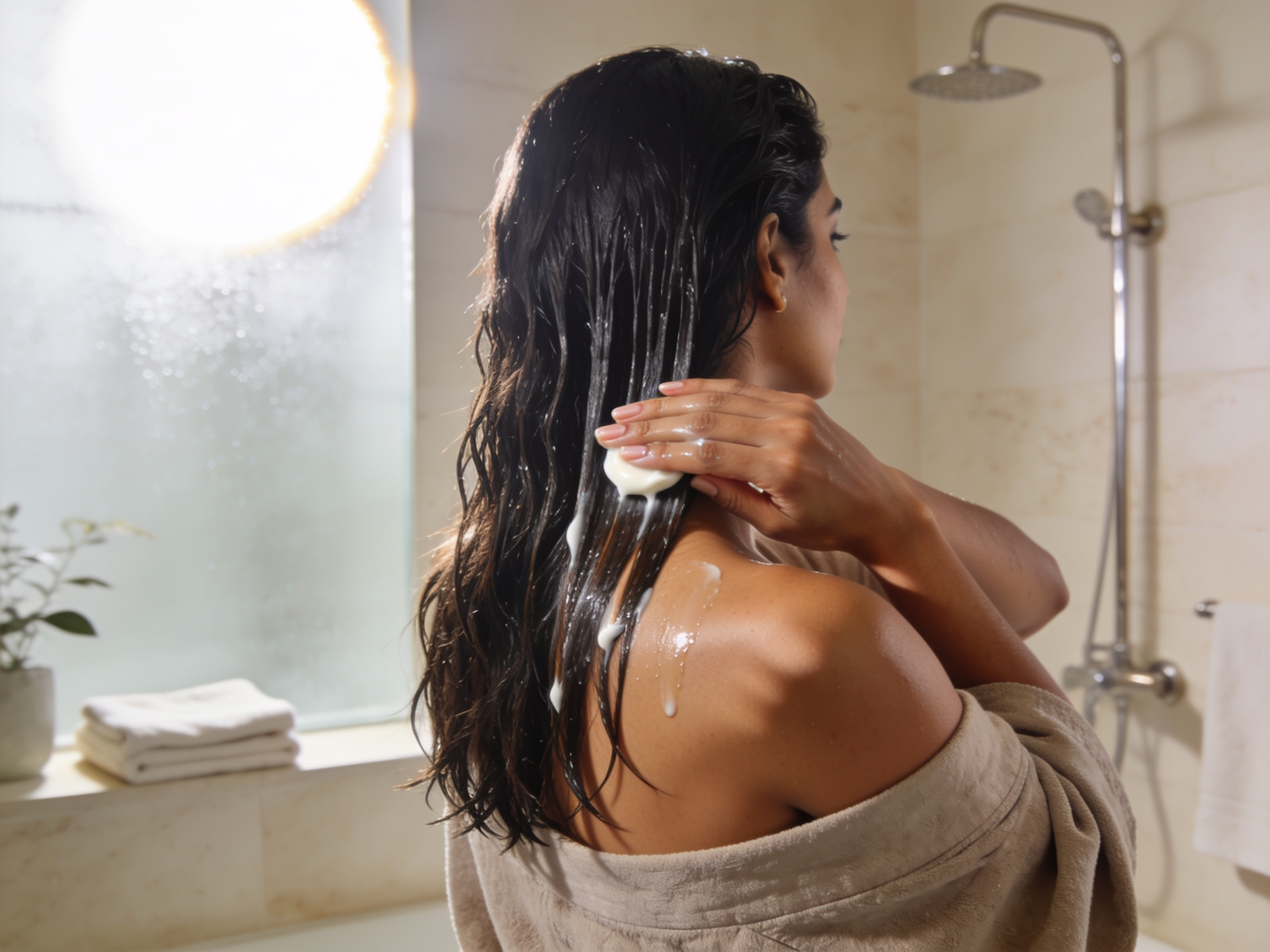
Apply keratin conditioner from mid-lengths to ends. Avoid the scalp unless the product label specifically states scalp-safe use. Scalp application can cause buildup, greasiness or pimples.
⚠️ Scalp caution: avoid if oily, acne-prone, dandruff-prone or post-transplant.
Fine hair needs a small, pea-sized amount on ends only. Thick, curly, rough or severely damaged hair may need more. Avoid loading excess product — more is not always better with protein conditioner.
Use fingers or a wide-tooth comb while conditioner is in the hair. Start from ends and work upward. Never yank through tangles — this causes the breakage the conditioner is meant to reduce.
Rinse-out conditioners typically require 1–5 minutes. Follow the product label — extended contact does not improve results and can increase heaviness risk. Deep repair masks have longer contact times specified on the label.
Rinse all conditioner residue well. Leftover product — especially near the scalp — causes buildup, greasiness and scalp pimples over time. Cool or lukewarm rinse helps maintain cuticle smoothness.
If hair becomes stiff, rough, straw-like or snaps more easily after using keratin conditioner — this is protein overload. Reduce keratin conditioner frequency and switch to moisturising conditioner for a few washes.
⚠️ Protein overload signal: stiffness, brittleness, worsening snap or curl rigidity.
If hair fall is sudden, patchy, progressive or accompanied by scalp pain — consult a dermatologist. No conditioner change addresses root-level hair loss.
⚠️ Protein Overload Quick Check
→ Reduce keratin conditioner and switch to moisturising formula temporarily.
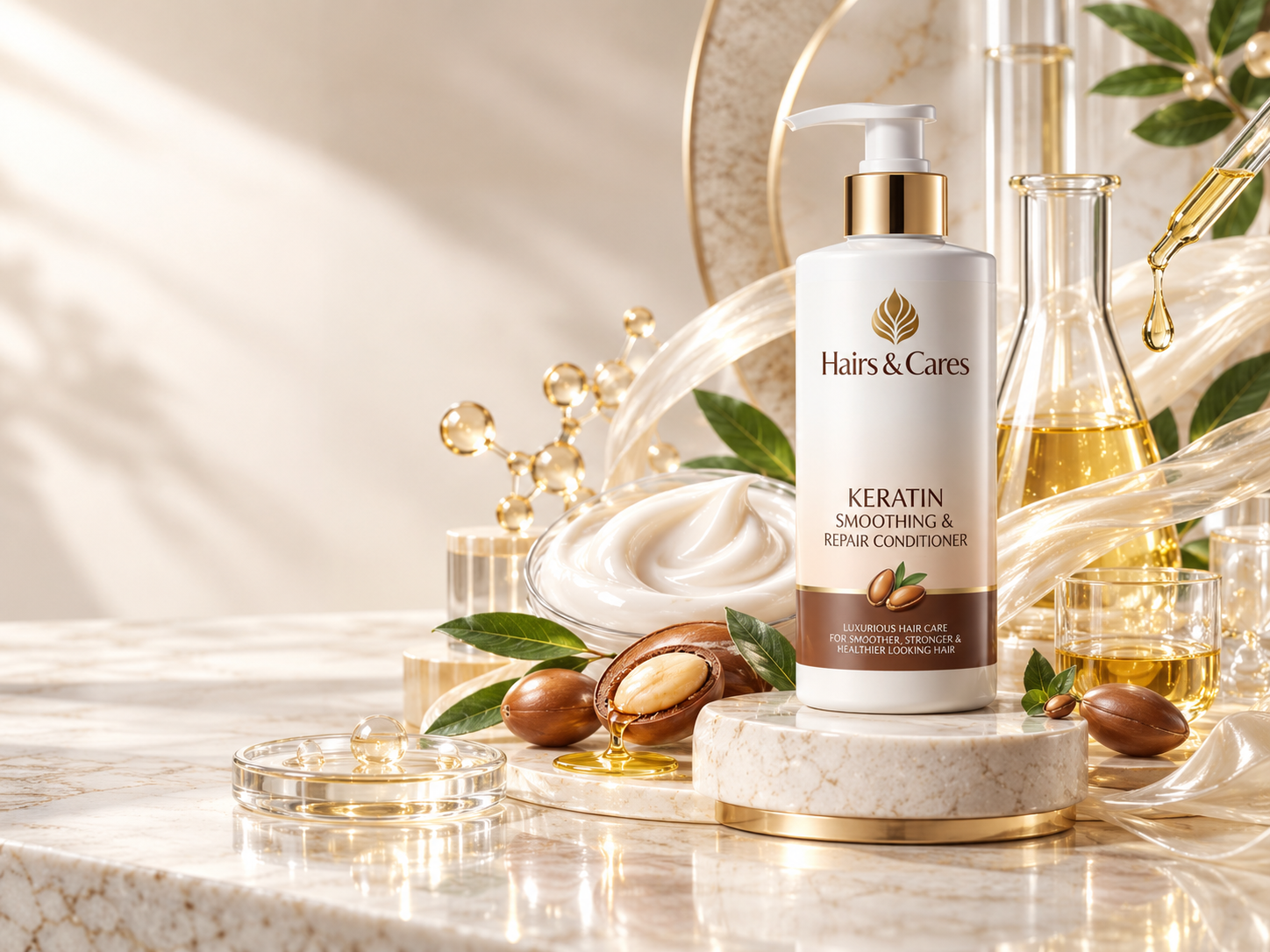
Dermatologist-curated keratin conditioner selection for frizz, damage, breakage and shine. Price available on product page.
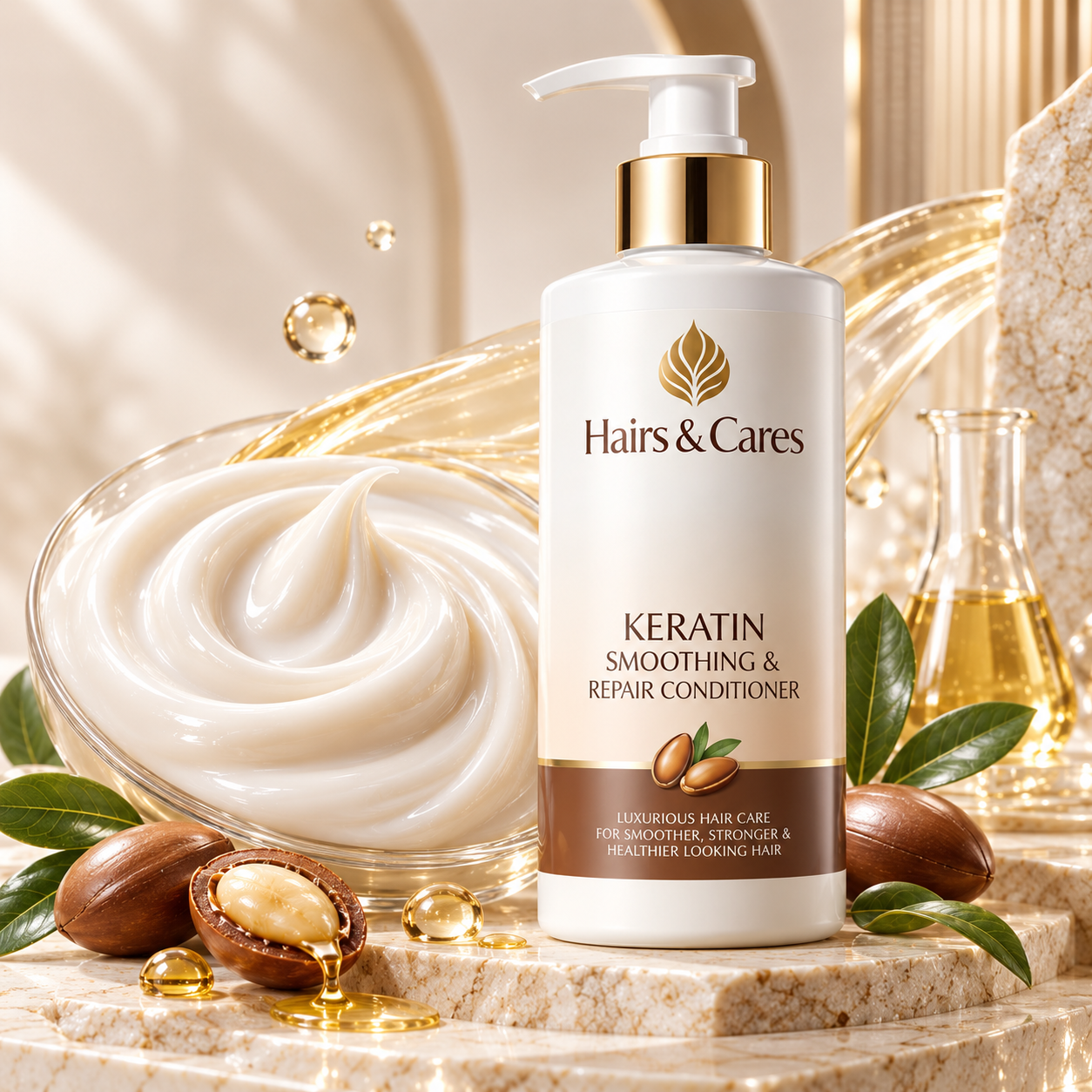
Build your repair routine with purpose — each bundle is matched to a specific hair need.
Choose the right conditioner type for your primary hair concern.
Our AI Product Finder assesses protein sensitivity, hair type, frizz level, damage history and routine needs to match the right keratin conditioner formula.
Identifies your scalp type — oily, dry, dandruff, sensitive — before recommending if and how to use keratin conditioner near the scalp.
Start Scalp Test →Matches the right keratin conditioner formula to your hair texture, frizz level, damage history, porosity, protein sensitivity and desired finish.
Find My Conditioner →Builds a personalised keratin conditioner routine — shampoo + conditioner + mask + leave-in frequency — matched to your hair type and damage level.
Build My Routine →Identifies whether your hair concern is breakage, shedding, damage or medical hair loss — so you know when conditioner is the right step vs when a doctor is needed.
Take AI Hair Test →Decodes keratin conditioner ingredient lists — identifies protein overload risk ingredients, silicone concerns, allergen flags and moisture-balance actives in your current product.
Decode Ingredients →More protein does not always mean better hair. Protein overload is a real and common side effect of over-using keratin or protein conditioners.
Misleading keratin conditioner claims are everywhere. Here is what the evidence actually says.
Keratin conditioner regrows hair
Keratin conditioner supports hair-shaft smoothness and breakage reduction at the lengths. It has no proven effect on the hair follicle and cannot stimulate hair regrowth or stop root-level shedding.
Keratin conditioner permanently repairs split ends
Keratin conditioner may temporarily smooth split ends, reducing their appearance. Split ends cannot be permanently repaired by any conditioner. The only permanent solution is trimming.
More keratin means better repair
Too much protein without sufficient moisture can make hair feel stiff, dry or brittle — protein overload. Balance is essential. Rotate with moisturising conditioner based on hair's response.
Conditioner should always be applied on the scalp
Most conditioners should be applied to mid-lengths and ends only. Scalp application can cause buildup, greasiness, scalp pimples or worsening dandruff — especially for oily, acne-prone or dandruff-prone scalp types.
Frizz means hair fall
Frizz is a hair shaft issue — raised or rough cuticles. Hair fall is shedding from the root. They are different. Conditioner can help frizz but does not address root-level hair loss.
Damaged hair only needs keratin
Damaged hair typically benefits from a full routine — moisture, conditioner, deep mask, leave-in serum and heat protection. Keratin alone without moisture balance can cause protein overload.
Keratin conditioner replaces salon keratin treatment
Keratin conditioner offers temporary smoothing support as a wash-day rinse-out product. Professional salon keratin treatments are different processes — heat-activated chemical restructuring — with different outcomes and protocols.
Conditioner can treat medical hair loss
Medical hair loss — androgenetic alopecia, PCOS-related, thyroid-related, nutritional deficiency — requires dermatologist diagnosis and appropriate treatment. No conditioner treats these causes.
No conditioner addresses these conditions. Delay in diagnosis worsens outcomes for medical hair loss.
Stop product and consult if any of these occur after conditioner use:
Evidence-guided answers from Dr. Amit Agarkar, Dermatologist & Trichologist.
Keratin smoothing conditioner temporarily improves smoothness, shine, detangling and breakage-prone hair feel in frizzy, rough, chemically treated, heat-damaged or colour-treated hair. It is a cosmetic hair-shaft support product — it does not regrow hair, stop root-level shedding or permanently repair split ends.
Yes — keratin conditioner is commonly used for frizzy hair to temporarily smooth the cuticle and reduce frizz appearance. Apply from mid-lengths to ends. Results vary by hair type and formulation. Protein overload can worsen frizz in fine or protein-sensitive hair types.
Keratin conditioner can support a cosmetic repair-care routine for damaged hair. It may temporarily smooth rough cuticles and reduce friction-related breakage. It cannot permanently reverse chemical or heat damage. Severely damaged hair often additionally needs a deep conditioning mask and leave-in serum.
Yes — keratin conditioner is well-suited for relaxed, permed, straightened or bleached hair where shaft roughness, dullness and breakage are concerns. Apply from mid-lengths to ends. Pair with a weekly repair mask for intensive care.
Yes — look for colour-safe or sulphate-free formulations. Keratin conditioner can support smoothness and reduce breakage in colour-treated lengths. Results vary by formulation and colour treatment type.
Keratin conditioner may help reduce friction-related breakage at the hair shaft by improving manageability and detangling. It does not address root-level shedding. If you cannot distinguish breakage from hair fall, consult a dermatologist for a correct diagnosis.
No. Keratin conditioner does not treat root-level hair fall. Androgenetic alopecia, hormonal hair fall, nutritional deficiency, postpartum shedding and scalp disease all require medical diagnosis and cause-based treatment — not conditioner selection.
No. Keratin conditioner cannot regrow hair. It supports cosmetic hair-shaft smoothness and breakage reduction at the lengths — it has no proven effect on hair follicle activity or root-level hair growth mechanisms.
Keratin conditioner may temporarily smooth and seal split ends, reducing their appearance. Split ends cannot be permanently repaired by any conditioner — the only permanent solution is trimming. Regular conditioning and heat protection prevent further splitting.
Keratin conditioner can temporarily improve the feel, smoothness and manageability of heat-damaged hair. It cannot reverse structural damage already done. Pairing with heat protection, reducing heat styling frequency and using deep conditioning masks improves outcomes over time.
Yes — protein overload from too much keratin or protein conditioner use can make hair feel stiff, dry, rough or straw-like. This is more common in fine, low-porosity, curly or protein-sensitive hair. Reduce protein conditioner frequency and add moisturising conditioner if stiffness occurs.
Protein overload occurs when too much keratin or protein builds on the hair shaft, causing stiffness, brittleness, snap-prone hair or rough feel despite conditioning. More common in fine, low-porosity, curly or protein-sensitive hair. Balance with moisturising conditioner and reduce keratin frequency.
Follow the product label or your dermatologist's advice. Most rinse-out keratin conditioners are used 2–4 times per week on wash days. If hair feels stiff or brittle, reduce frequency and rotate with moisturising conditioner. There is no single universal frequency recommendation.
Daily conditioning may suit some dry or thick hair types, but fine, oily-scalp or protein-sensitive hair may not tolerate daily keratin conditioner well. Follow the product label. Monitor for protein overload signs — stiffness, brittleness or snap — if using frequently.
No — unless the product label specifically states scalp-safe use. Applying conditioner to an oily, dandruff-prone or acne-prone scalp can worsen buildup, breakouts or greasiness. Apply to mid-lengths and ends only as a default.
Follow the product label — typically 1–5 minutes for rinse-out conditioners. Extended contact beyond the label does not improve results and may increase heaviness risk. Deep conditioning masks have longer contact times specified separately on the label.
Yes — rinse keratin conditioner thoroughly after the label-recommended contact time. Residue left near the scalp causes buildup, heaviness and scalp pimples over time. Cool or lukewarm rinse also helps maintain cuticle smoothness.
Yes — scalp application, large amounts or incomplete rinsing can cause product buildup on the scalp and hair shaft, leading to heaviness, greasiness or pore-clogging. Use a clarifying shampoo monthly if buildup is a concern, then re-moisturise with conditioner.
Fine hair is more prone to protein overload, heaviness and stiffness from keratin conditioner. Lightweight keratin formulas in small amounts on ends only are more suitable. Avoid heavy formulas on fine hair. Monitor for flatness, stiffness or reduced volume.
Curly hair can benefit from keratin conditioner for frizz and smoothness, but is also prone to protein overload that disrupts curl pattern and makes curls feel rigid. Balance keratin use with moisturising conditioner and monitor curl pattern response. Reduce if curls lose definition.
Low-porosity hair has a tightly closed cuticle and is more prone to protein buildup. Keratin or protein conditioners may sit on the surface causing stiffness, heaviness or straw-like feel. Moisturising conditioners are generally better suited for low-porosity hair.
Keratin conditioner focuses on smoothness, frizz reduction and polished finish — best for rough, frizzy, chemically treated hair. Protein conditioner focuses on strength-feel support for weak, limp or over-processed hair. Both carry protein overload risk. Choice depends on your primary hair concern.
Keratin conditioner suits smooth, polished, frizz-controlled finish for damaged or rough hair. Moisturising conditioner suits dry, thirsty, curly or protein-sensitive hair needing softness and hydration. Rotating both is often the ideal balance — especially if protein overload has occurred.
Keratin conditioner targets protein-based cuticle smoothing — best for damage-linked frizz in chemically treated or rough hair. Anti-frizz conditioner uses humidity-control agents — better for climate-related frizz in healthier or protein-sensitive hair.
Keratin conditioner is a wash-day rinse-out maintenance product for every wash. Hair mask provides deeper intensive conditioning — better for weekly repair-support of severe dryness or damage. For severely damaged hair, both may be used at different steps of the routine.
Yes — rinse anti-dandruff shampoo thoroughly, then apply keratin conditioner to mid-lengths and ends only. Do not apply conditioner to scalp if dandruff-prone. Continue anti-dandruff shampoo as directed — do not replace it with keratin conditioner for dandruff control.
Do not change any product on a post-transplant scalp without explicit clearance from your hair transplant surgeon. Follow your surgeon's post-operative protocol exactly for all products including conditioner.
Applying conditioner to the scalp can cause buildup, greasiness or scalp pimples. Some fragrance or preservative ingredients in conditioner formulations may cause scalp irritation or contact allergy in sensitive users. Stop and consult a dermatologist if any irritation, rash or burning occurs.
Stop if scalp itching, pimples, rash, burning or swelling occurs. Reduce or switch to moisturising conditioner if hair feels stiff, brittle or straw-like — signs of protein overload. Stop scalp application if dandruff, oiliness or scalp pimples worsen. Consult a dermatologist before resuming if severe.
Consult a dermatologist for sudden heavy hair fall, patchy bald spots, widening part, crown thinning, receding hairline, scalp pain, pus, crusting, severe dandruff, PCOS or thyroid symptoms with hair fall, postpartum hair fall or if hair fall worsens despite correct conditioner use.
Still unsure which keratin conditioner suits your hair type?
Take the AI Product Finder to match the right keratin conditioner to your hair type, frizz level, damage history and protein sensitivity — or consult Dr. Amit Agarkar directly.
Your cart is empty