💧
Dry Hair Softness
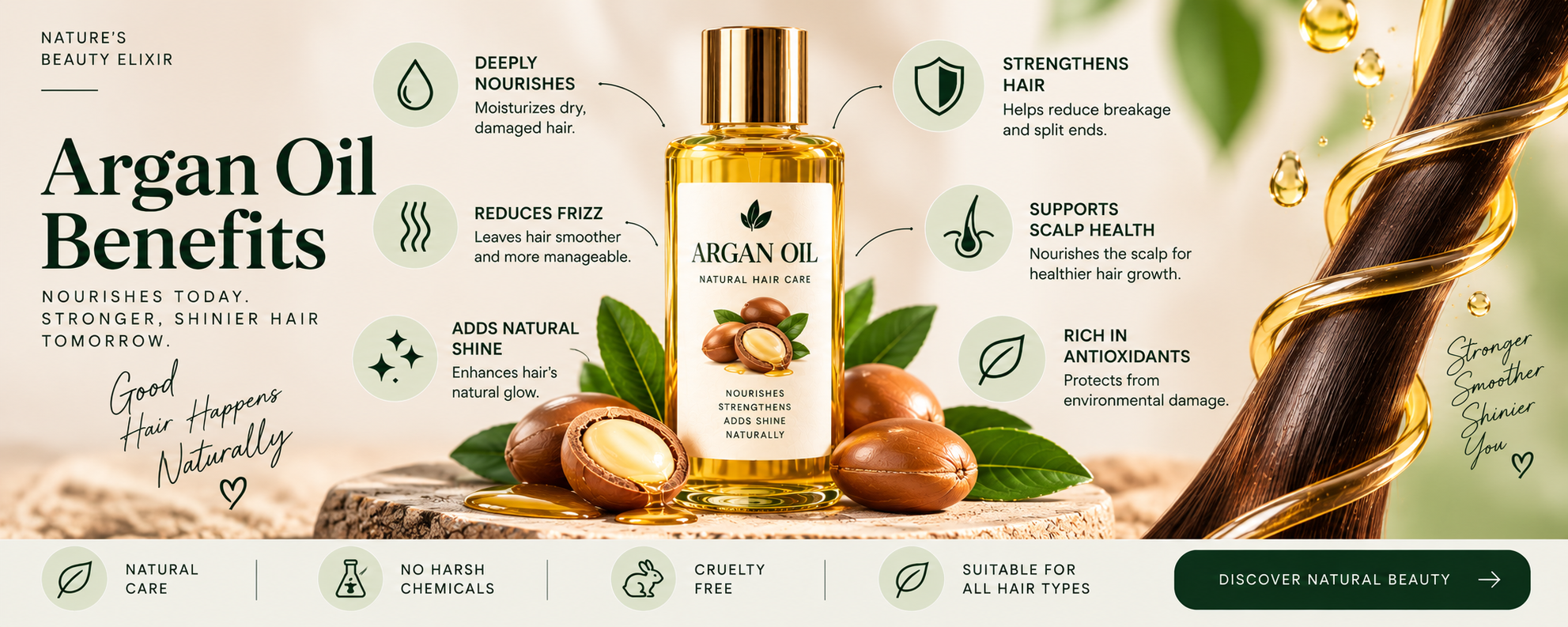
Argan oil's oleic and linoleic acids can penetrate the hair shaft and provide a conditioning layer that reduces the rough, brittle feel of dry, dehydrated hair lengths — particularly at the ends.
A dermatologist-guided guide to using argan oil safely for dry, frizzy, dull, damaged, heat-styled or color-treated hair — including benefits, scalp suitability, product selection, side effects and when hair fall needs medical evaluation.
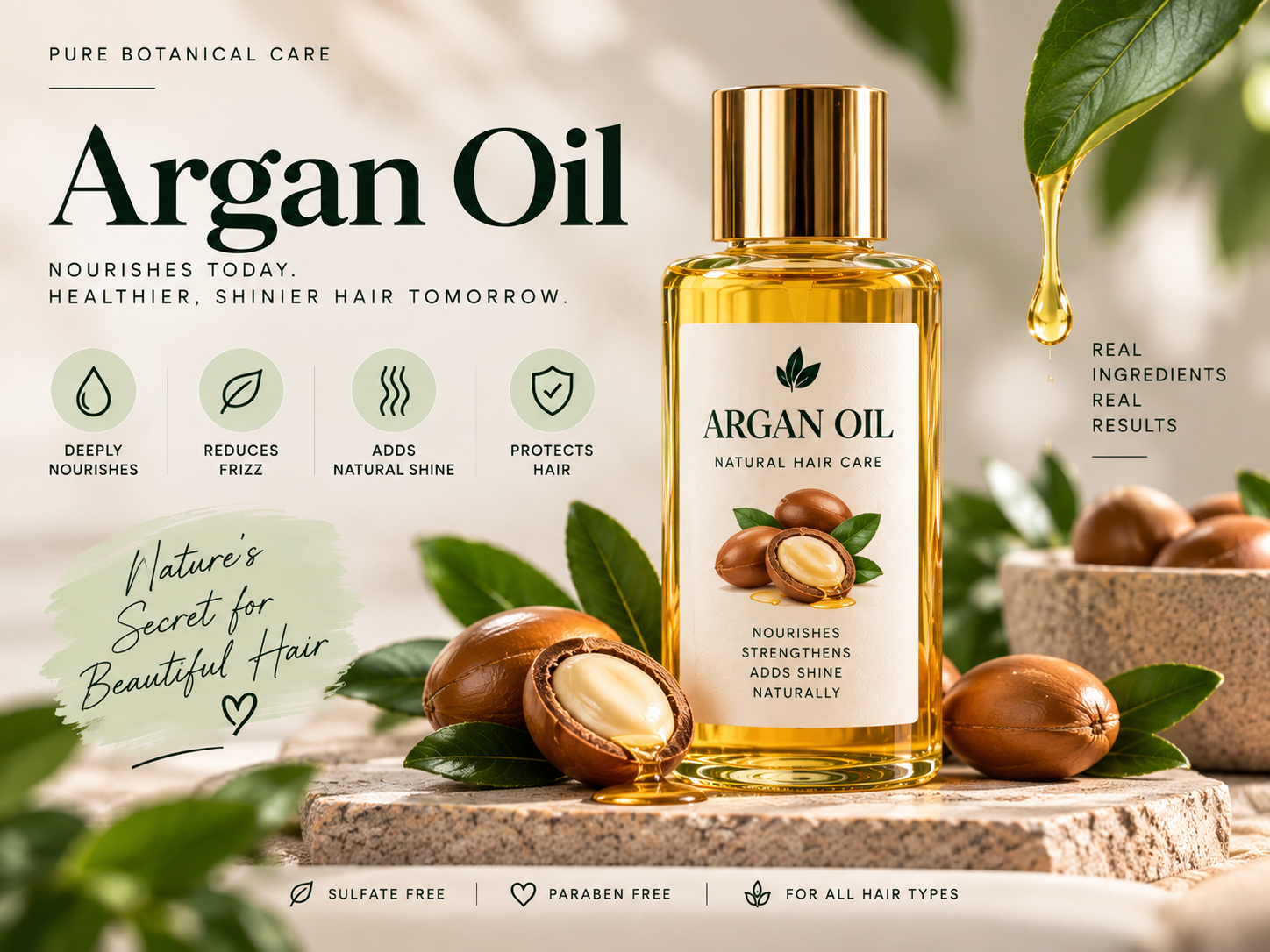

Argan oil is a well-regarded cosmetic hair oil primarily used for dryness, frizz, shine, smoothness, colour-treated hair and damaged lengths. Derived from the kernels of the Moroccan argan tree, it has a lightweight profile compared to heavier oils like castor and is rich in oleic acid, linoleic acid, and tocopherols. It can help improve the feel and appearance of the hair shaft, but it is not a proven medical treatment for progressive hair loss, baldness, alopecia areata, PCOS-related hair fall, thyroid-related hair fall, postpartum hair fall or nutritional deficiency hair loss. People with sensitive scalp, oily scalp, active dandruff, seborrheic dermatitis, folliculitis, scalp acne, eczema, psoriasis, painful scalp or sudden shedding should consult a dermatologist before applying oils to the scalp.
What argan oil can and cannot do for frizzy, dry hair
How argan oil works as a surface-level conditioner
Best application methods — serum, mask, or leave-in
Argan oil vs coconut oil, jojoba oil, and almond oil
Which hair types benefit and which may feel weighed down
Authentic Moroccan argan oil vs synthetic blends — what matters
Safe use on colour-treated and chemically processed hair
Scalp conditions where argan oil should be avoided
Argan oil is one of the most popular cosmetic hair oils globally, and for good reason. Its lightweight profile and fatty acid composition make it particularly effective at smoothing the hair cuticle, reducing frizz appearance, and improving shine in dry, dull, frizzy or damaged hair. Unlike thicker oils such as castor, argan is light enough to be used as a finishing serum on dry hair — not just a pre-wash treatment.
However, argan oil's role is fundamentally cosmetic and hair-shaft focused. It does not stimulate hair follicles, does not regrow hair, and is not a treatment for androgenetic alopecia, alopecia areata, or any medically diagnosed cause of hair loss. For oily scalps, heavy or frequent argan oil application to the scalp can worsen sebum buildup and aggravate conditions like seborrheic dermatitis.
Verdict: Argan oil is one of the best-supported cosmetic oils for dry, frizzy, curly, damaged, heat-styled and colour-treated hair. Use it mainly on hair lengths. It does not replace medical hair loss treatment and should be stopped if scalp irritation, rash, or increased shedding occurs.
Argan oil is a lightweight finishing oil rich in oleic acid and vitamin E that may help smooth frizz, add shine, and soften dry hair. It does not treat hair loss, stimulate new growth, or cure dandruff. Best used as a leave-in serum on damp mid-lengths and ends. Patch-test first; discontinue if scalp irritation occurs.
People with dry, frizzy, or colour-treated hair looking for a lightweight anti-frizz finishing oil. Ideal for fine-to-medium textures.
Medical hair loss treatment, anti-dandruff therapy, or scalp condition management. Argan oil is a cosmetic smoothing agent, not a treatment.
You experience progressive thinning, scalp flaking, or develop acne-like bumps after using argan oil on your scalp. Oil-based products can worsen folliculitis.
Argan oil is excellent for dry, dehydrated hair lengths. Apply to mid-lengths and ends as a pre-wash or finishing treatment for best results.
Excellent MatchOne of argan oil's strongest uses. Its cuticle-smoothing properties make it highly effective for taming frizz in dry, wavy or humidity-prone hair.
Excellent MatchWorks well for curl definition and frizz reduction. Use a small amount on lengths and ends. Avoid heavy scalp application.
Good MatchSuitable for improving manageability and reducing roughness in coloured or chemically treated hair lengths.
Good MatchArgan oil can support the feel of damaged or heat-styled lengths, but it does not repair structural hair damage or act as a heat protectant.
Cosmetic Support OnlyUse sparingly — even 1 drop too many can weigh fine hair down. Apply only to ends if using at all. Avoid scalp application.
Use Very SparinglyNot recommended for scalp application. Argan oil on an oily scalp can worsen sebum buildup and aggravate seborrheic conditions.
Avoid on ScalpAvoid scalp application. Active dandruff or seborrheic dermatitis requires antifungal treatment, not cosmetic oil. Use on lengths only if scalp is stable.
Avoid ScalpArgan oil does not treat hair loss. Progressive thinning, patchy loss or sudden shedding requires dermatologist evaluation.
See a DermatologistIf you are applying argan oil and notice increased itching, redness, pimples on the scalp, or worsening dandruff — stop immediately. These are not signs of “detox” or “purging.” They may indicate irritation, allergy, folliculitis or worsening of an existing scalp condition. Consult a dermatologist before resuming any oil application on an irritated scalp.
Argan oil is versatile — usable as a pre-wash treatment, leave-on finishing oil, or post-heat polish. The key is using the right amount for your hair type.
⚠️ Important: Do not layer argan oil over multiple scalp actives, minoxidil, anti-dandruff medicated products, scalp acids or irritating serums without dermatologist guidance. Apply to hair lengths; keep scalp application minimal if your scalp is oily or prone to buildup.
Apply a tiny amount to the inner wrist. Wait 24 hours. Do not use if redness, itching, rash or burning appears. Argan oil allergy is uncommon but possible, especially in those with nut or seed oil sensitivities.
Argan oil is highly concentrated. Starting with just 1–3 drops prevents the most common mistake — using too much and ending up with greasy, flat, or heavy-feeling hair.
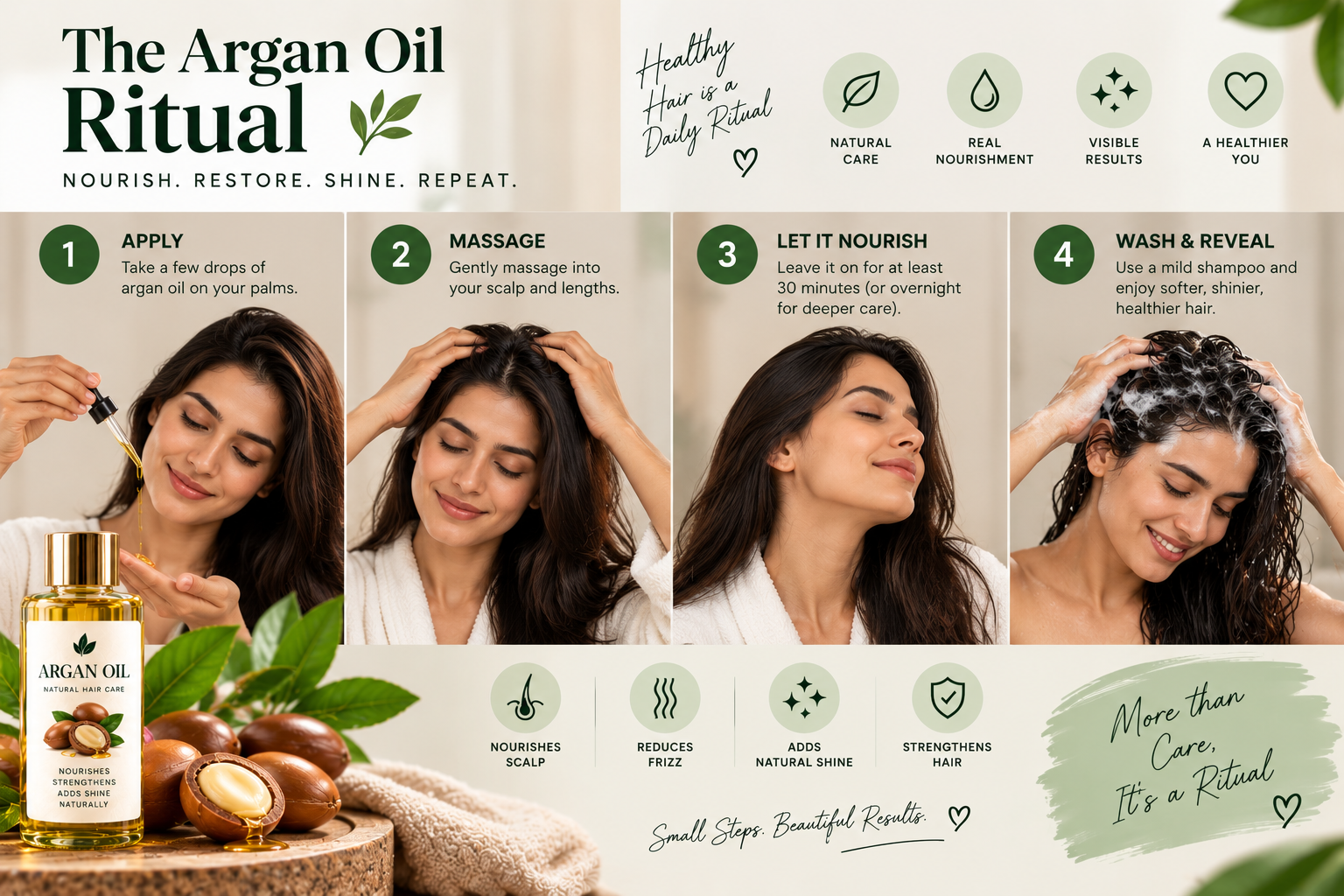
Warm the drops between your palms and apply to mid-lengths and ends — the driest, most damaged parts. Avoid heavy scalp application unless your scalp is very dry and non-oily.
For intensive dryness: apply 30–60 minutes before shampooing. For everyday finishing and frizz control: apply 1–2 drops to dry lengths and ends. Both approaches work — choose based on your hair's needs.
If your scalp is oily, dandruff-prone, acne-prone or folliculitis-prone, keep argan oil away from the scalp entirely. Product buildup on the scalp can worsen these conditions over time.
After pre-wash use, shampoo with a gentle or sulphate-free shampoo. Don't let argan oil accumulate on the scalp between washes. For finishing use, no shampoo is needed unless buildup forms.
Begin with 1–2 times weekly and adjust based on your hair's response. For finishing use, small amounts every 2–3 days may work well for very dry or frizzy hair. Stop if scalp irritation, buildup, or increased shedding occurs.
Scalp itching, redness, rash, burning sensation, folliculitis, worsening dandruff, product buildup, or unexpected increase in hair shedding occurs after using argan oil. Consult a dermatologist before resuming.
The most common mistake with hair oiling is leaving oil on for too long or sleeping with heavy oil overnight without proper washing the next morning. Prolonged scalp oil contact can clog follicles, attract dust and worsen dandruff in susceptible people. For most users, 30 minutes to 2 hours before washing is sufficient. Listen to your scalp, not social media trends.
| Oil | Best For | Evidence | Texture | Scalp Safety |
|---|---|---|---|---|
| Argan Oil | Dry, frizzy, colour-treated, heat-styled lengths; shine; smoothness | Good cosmetic evidence for shine and frizz; not for regrowth | Lightweight; easily absorbed | Well-tolerated on lengths; avoid oily/dandruff scalp |
| Coconut Oil | Dry/frizzy/coarse hair and pre-wash nourishment | Good — protein-loss reduction data | Medium; melts at body temp | Avoid oily or dandruff-prone scalp |
| Castor Oil | Dry lengths; thickness appearance; sealant routine | Limited — cosmetic/traditional use | Very thick; needs blending | Avoid oily/acne-prone scalp |
| Rosemary Oil | Growth-support scalp ritual; must dilute if essential oil | Emerging — one notable 2015 RCT | Light (when diluted) | Patch test; avoid active inflammation |
All oils listed are cosmetic supportive options. Medical hair loss requires proper diagnosis, investigation, and individualised treatment planning by a qualified dermatologist.

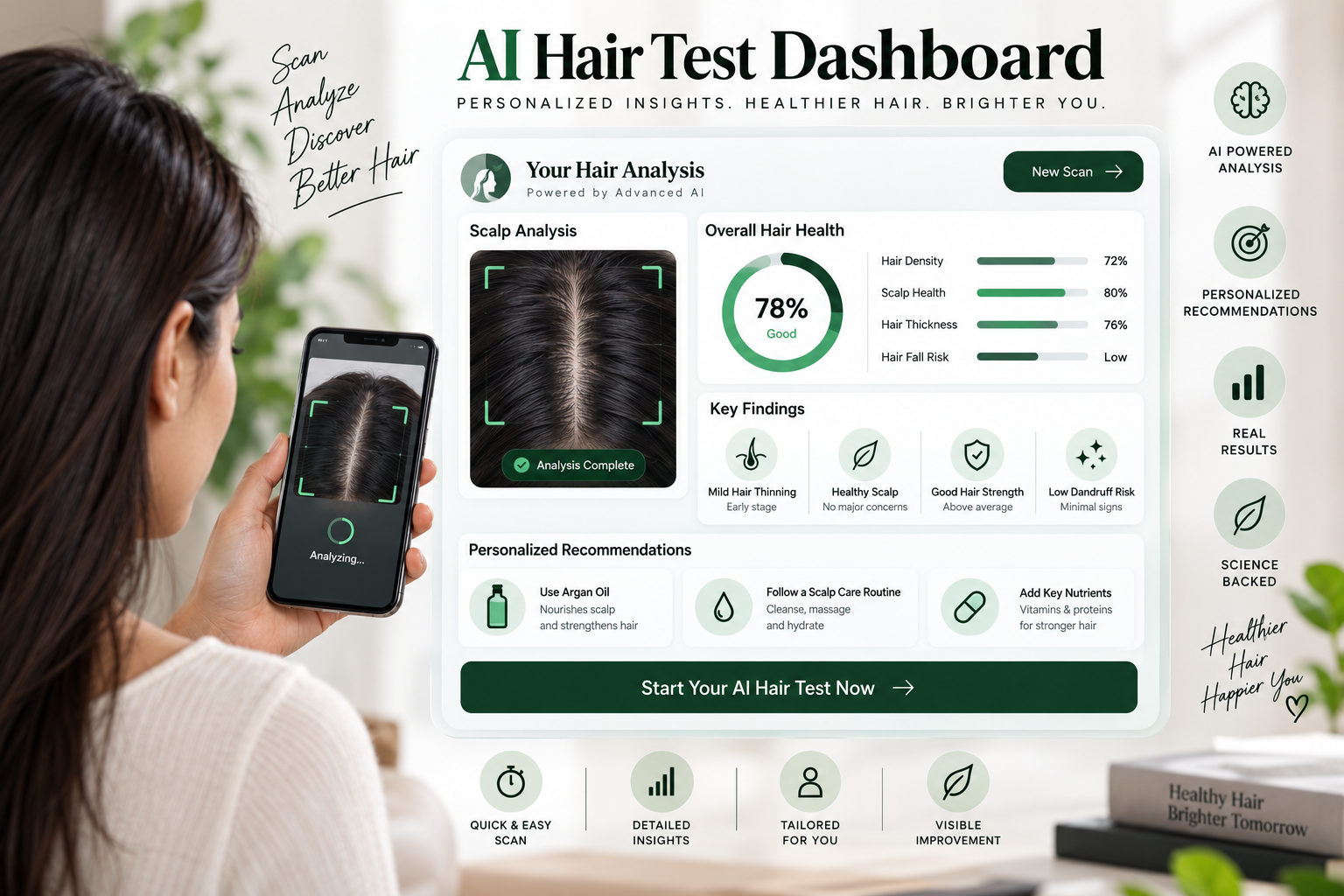
Before choosing an argan oil product, our AI Hair Test assesses your hair texture, scalp type, frizz level, dryness, colour-treatment history, dandruff status, sensitivity, product buildup tendency, and current treatment use — to guide you towards the right argan oil formula and application approach for your specific profile.
This tool provides screening and product-direction guidance only. It does not diagnose, prescribe, or replace dermatologist advice.
All products are cosmetic hair oils. Patch test recommended before first use. Argan oil products are not hair loss treatments.
Doctor-Reviewed Resources
Still have questions about argan oil and your hair type?
Ask a Hair Doctor →Argan oil's strongest evidence is cosmetic — improving hair feel, shine, smoothness and frizz appearance. Product formulation, fragrance, purity and individual scalp tolerance affect suitability. Evidence for medical hair regrowth should not be extrapolated from cosmetic oil research. All external links open in a new tab.
Search PubMed for peer-reviewed research on argan oil, hair shaft conditioning, contact dermatitis from cosmetic oils, and hair loss clinical evidence to assess the current evidence base.
Clinical guidance on hair loss types, causes, and evidence-based treatments — essential context for understanding where cosmetic hair oils fit versus medical hair loss management.
Clinical guidance on emollient oils in dry skin and hair care — provides dermatological context for cosmetic oil use on dry and damaged hair lengths.
Patient-facing guidance on hair loss diagnosis, causes, and treatment options — critical context for understanding when cosmetic oils are insufficient and medical evaluation is required.
Argan oil is a cosmetic supportive hair oil. It does not diagnose, treat, cure or prevent any medical hair loss condition. It is not a drug or a proven replacement for minoxidil, finasteride, anti-dandruff treatment, prescription hair loss therapy, PRP, GFC, or dermatologist consultation. This guide has been reviewed by Dr. Amit Agarkar, MD Dermatology. Consult a qualified dermatologist if you experience progressive hair thinning, bald patches, sudden shedding, painful scalp, scalp infection, severe dandruff, PCOS-related hair loss, thyroid-related hair loss, postpartum hair fall, medication-related shedding, or suspected alopecia. Do not substitute cosmetic oil routines for medically prescribed treatment. A patch test is recommended before argan oil use, particularly for those with known nut or seed oil sensitivities.
Your cart is empty