Above the Fold
Quick Answer: How Do You Care for Bleached Hair?
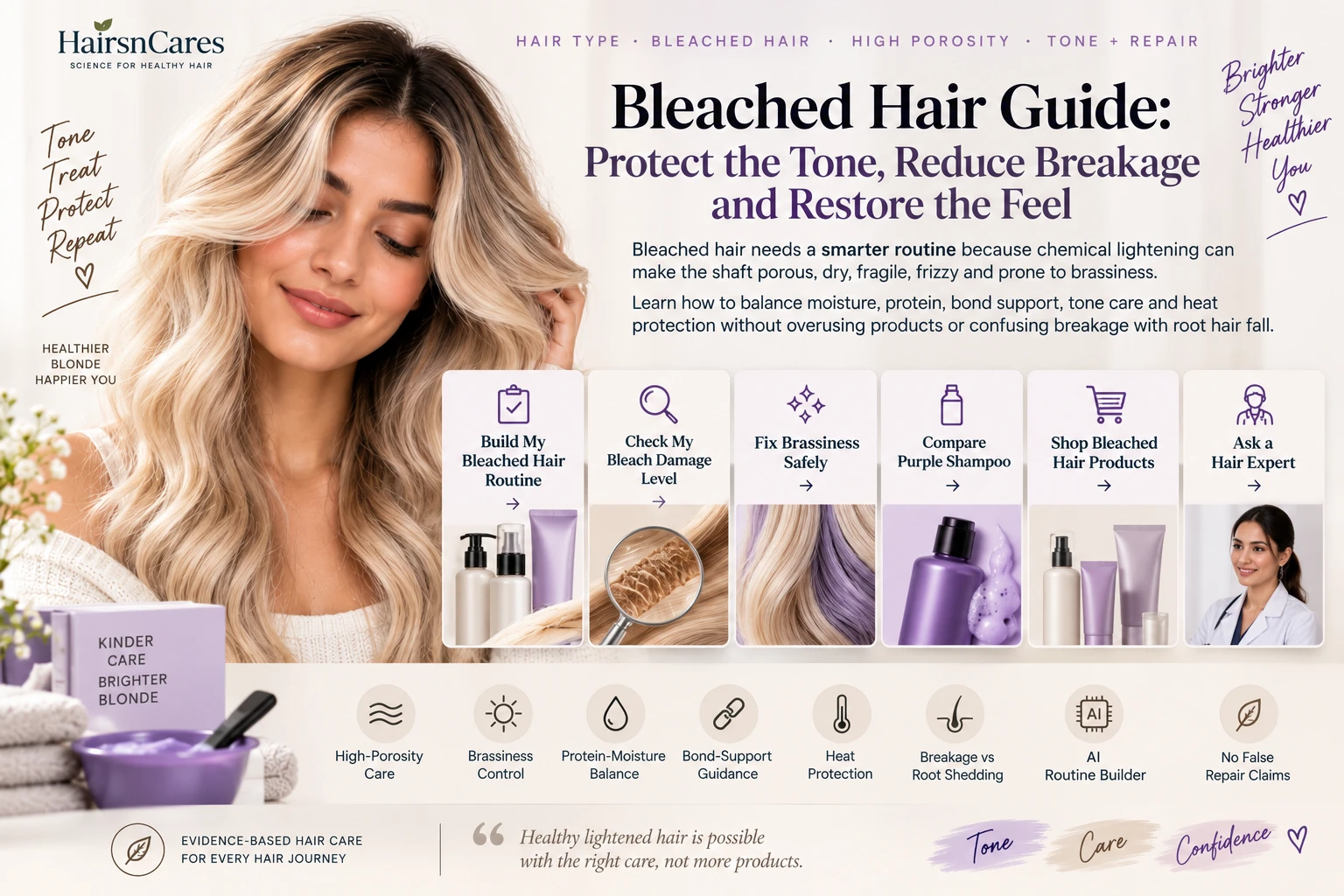
Bleached hair needs gentle cleansing, rich conditioning, weekly masks, leave-in protection, heat protectant, controlled toning, protein or bond-support products where suitable and regular trimming for split ends. Purple shampoo can reduce yellow brassiness, but it does not repair damage and can dry hair if overused.
Search Intent Alignment
What You'll Learn on This Page
- What bleaching actually does to the hair shaft
- How bleach damage differs from ordinary damage or colour fading
- How to tell breakage apart from root-level hair fall
- How to manage yellow or orange brassiness without over-toning
- How to balance moisture, protein and bond support
- How to build a realistic weekly bleached-hair routine
- Safety points around heat, sun, chlorine and re-bleaching
- When bleached-hair care isn't enough and a professional review is the next step
Understanding the Basics
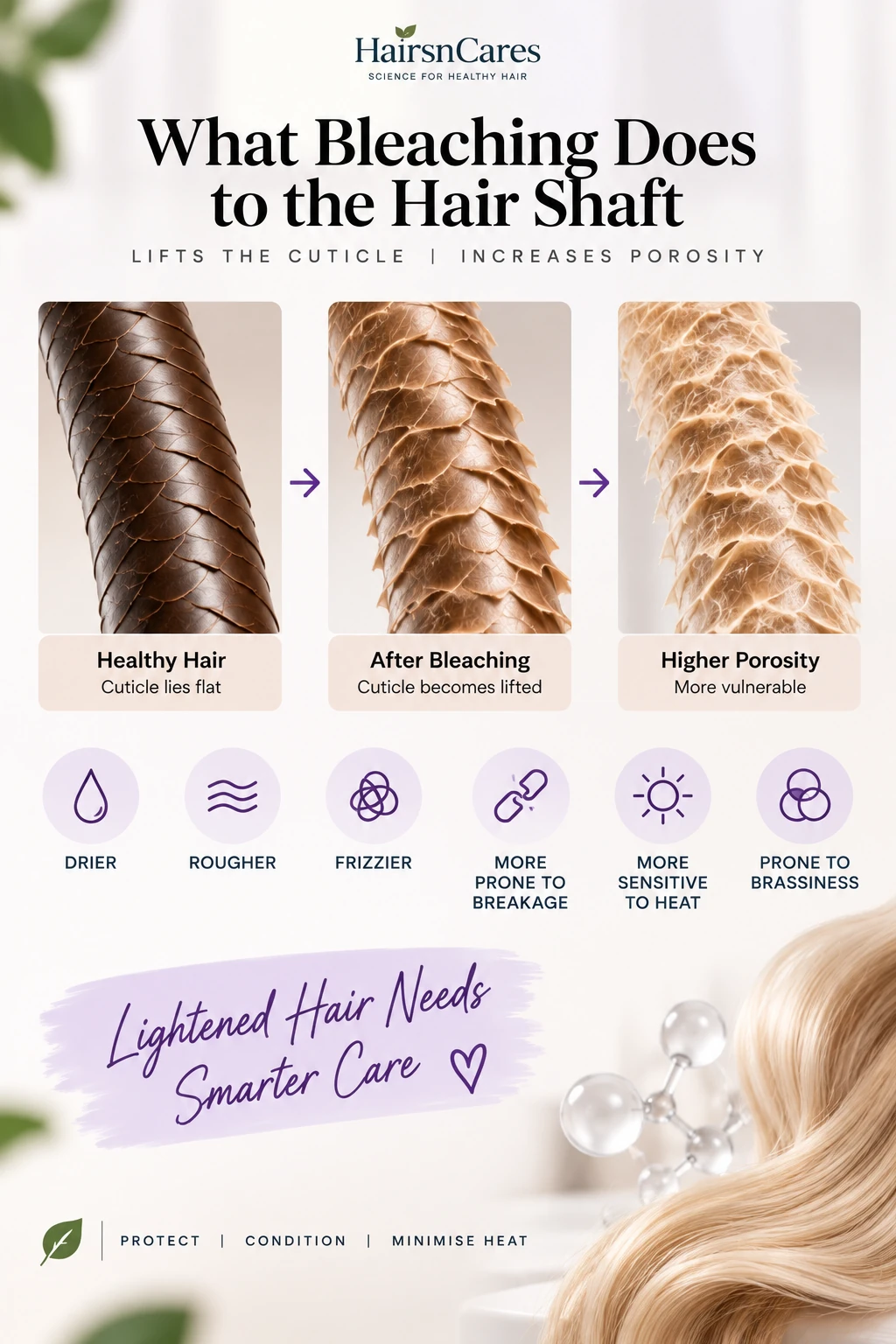
Bleaching Changes the Hair Shaft
Bleaching chemically lightens hair by altering pigment inside the shaft. During this process, the cuticle can become more lifted and the hair fibre can become more vulnerable. Bleached hair may become more porous, drier, rougher, frizzier, weaker, prone to tangling, prone to split ends, prone to breakage, more sensitive to heat, and more likely to fade or turn brassy.
"Bleach does not damage the hair root in ordinary shaft-lightening, but scalp burns or chemical irritation are medical concerns."
Know the Difference
Bleached Hair Needs a More Specific Routine
Bleach damage is mainly a hair-shaft concern. If hair is shedding from the root, falling in patches, thinning at the scalp or accompanied by scalp pain, pus, crusting or burns, it needs separate medical assessment.
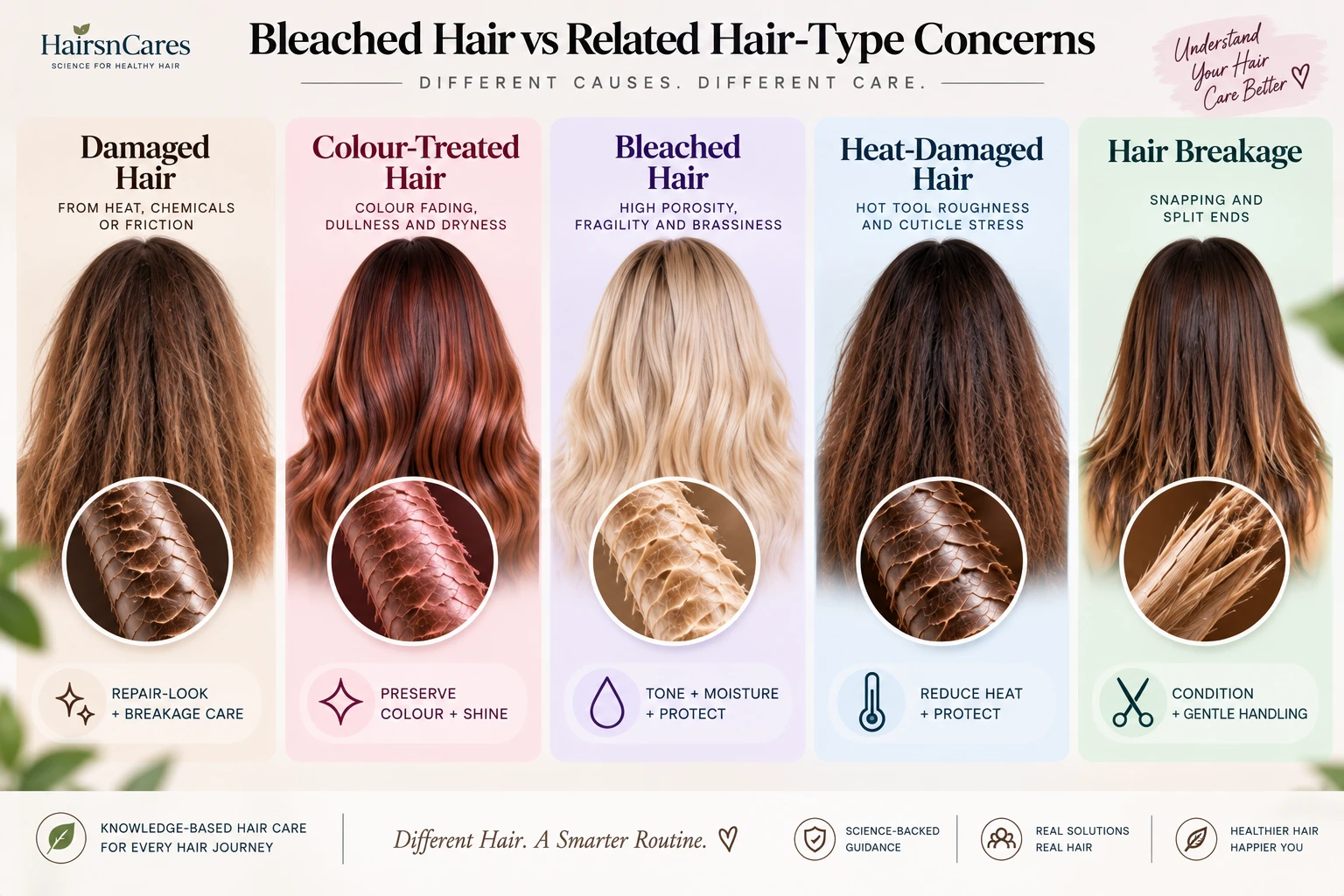
| Hair Type | Main Issue | Routine Priority |
|---|---|---|
| Damaged Hair | General shaft damage from heat, chemicals or friction | Repair-look routine and breakage control |
| Colour-Treated Hair | Colour fading, dullness and dryness | Colour-safe cleansing and shine protection |
| Bleached Hair | High porosity, fragility, brassiness and breakage | Tone care, moisture, bond support and heat protection |
| Heat-Damaged Hair | Hot tool roughness and cuticle stress | Heat reduction and protection |
| Hair Breakage | Snapping and split ends | Gentle handling, conditioning and trim plan |
Interactive Selector
How Damaged Is Your Bleached Hair?
Level 1 — Light Bleach Stress
Signs:
- Mild dryness
- Slight frizz
- Mild brassiness
- Manageable tangles
Routine:
- Colour-safe shampoo
- Conditioner every wash
- Light leave-in, heat protectant
Level 2 — Moderate Porosity & Breakage
Signs:
- Roughness, frizz
- Split ends, tangles
- Occasional snapping
Routine:
- Moisturising conditioner
- Weekly mask, leave-in
- Reduce heat, tone carefully
Level 3 — Severe Bleach Damage
Signs:
- Gummy or stretchy wet hair
- Snapping, very rough texture
- Multiple split ends
Routine:
- Stop further bleaching
- Professional review
- Bond support + moisture balance
Level 4 — Scalp or Chemical Injury
Signs:
- Burning, blistering, swelling
- Pus, crusting, severe redness
- Hair coming out from root
Routine:
- Stop products
- Medical review
- Do not re-bleach
Porosity Awareness
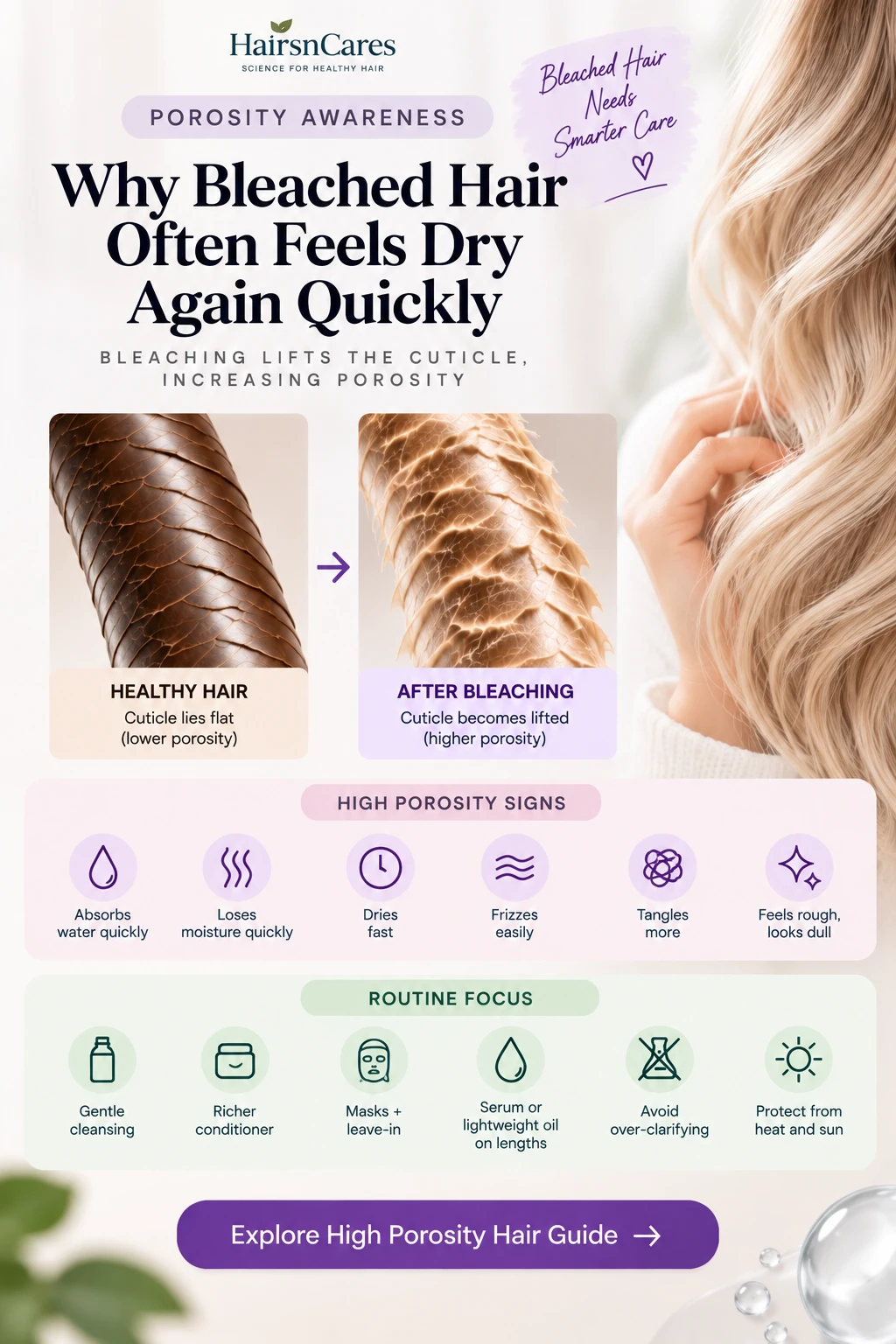
Why Bleached Hair Often Feels Dry Again Quickly
High Porosity Signs
- Absorbs water quickly
- Loses moisture quickly
- Dries fast
- Frizzes easily
- Tangles more
- Feels rough, looks dull
Routine Focus
- Gentle cleansing
- Richer conditioner
- Masks + leave-in
- Serum or lightweight oil on lengths
- Avoid over-clarifying
- Protect from heat and sun
Tone Care
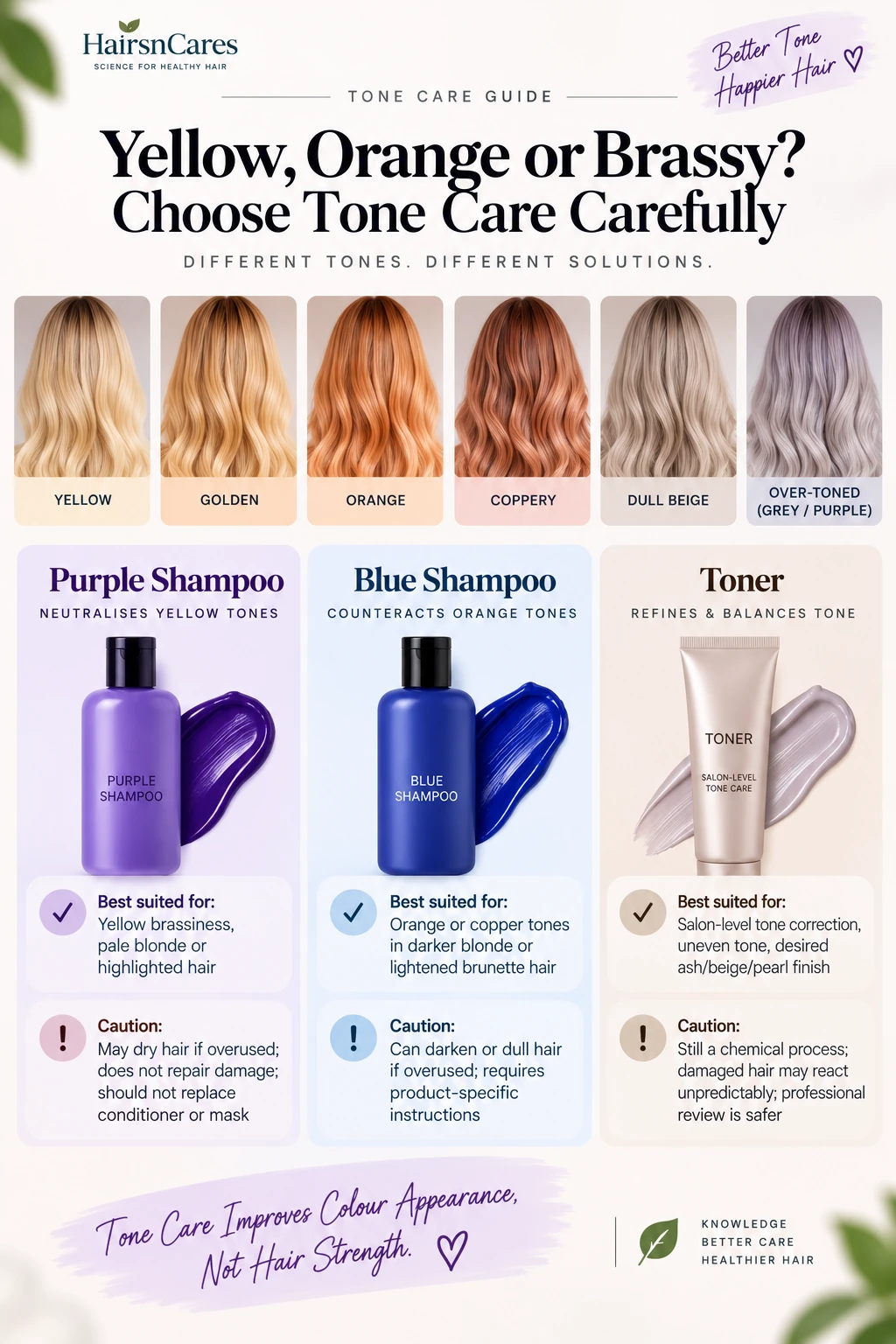
Yellow, Orange or Brassy? Choose Tone Care Carefully
Bleached hair can become yellow, golden, orange, coppery, dull beige, uneven, patchy, or even over-toned grey or purple. Tone correction improves colour appearance, not hair strength.
Purple Shampoo
Best suited for:
Yellow brassiness, pale blonde or highlighted hair
Caution:
May dry hair if overused; does not repair damage; should not replace conditioner or mask
Blue Shampoo
Best suited for:
Orange or copper tones in darker blonde or lightened brunette hair
Caution:
Can darken or dull hair if overused; requires product-specific instructions
Toner
Best suited for:
Salon-level tone correction, uneven tone, desired ash/beige/pearl finish
Caution:
Still a chemical process; damaged hair may react unpredictably; professional review is safer
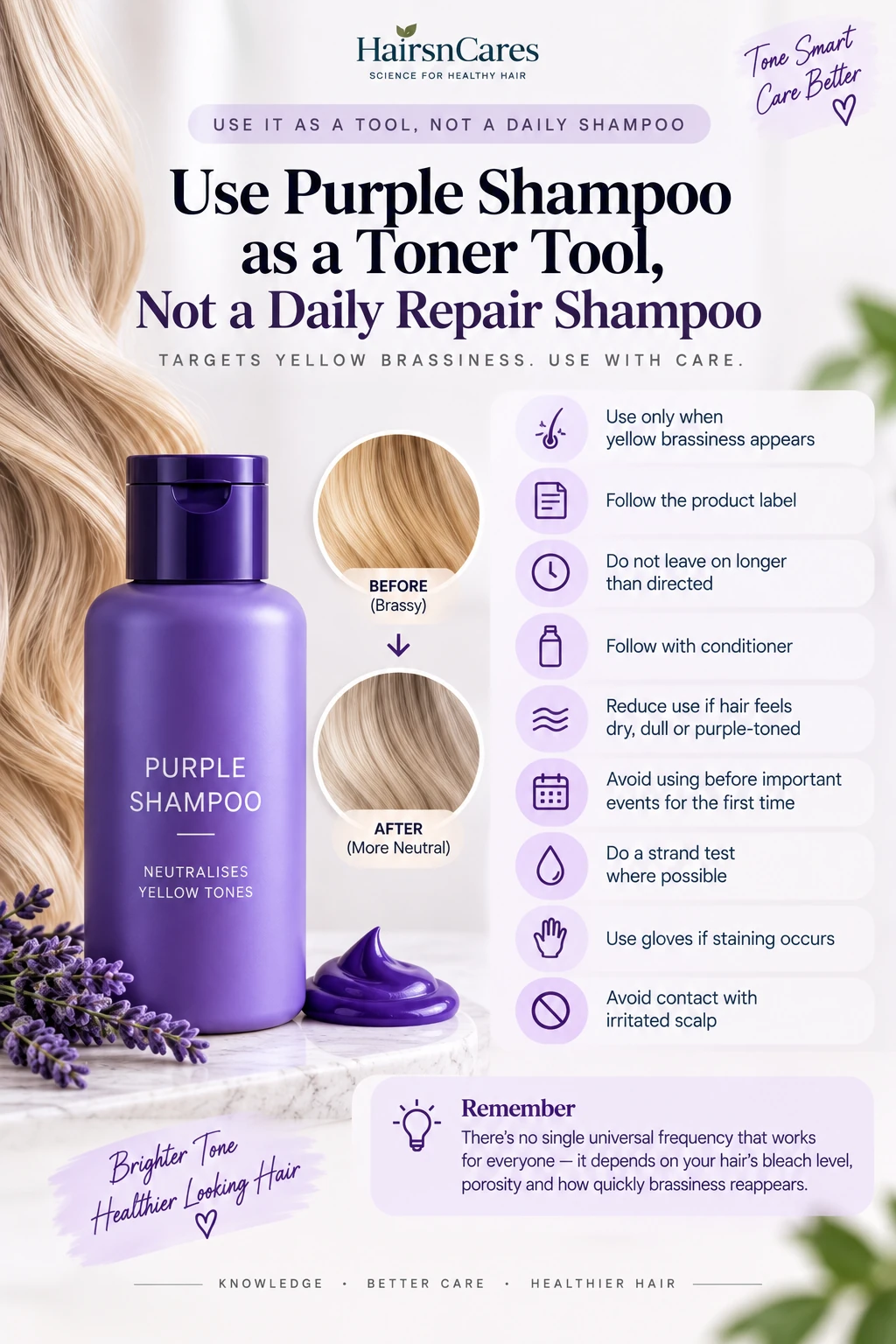
Use It as a Tool, Not a Daily Shampoo
Use Purple Shampoo as a Toner Tool, Not a Daily Repair Shampoo
- Use only when yellow brassiness appears
- Follow the product label
- Do not leave on longer than directed
- Follow with conditioner
- Reduce use if hair feels dry, dull or purple-toned
- Avoid using before important events for the first time
- Do a strand test where possible
- Use gloves if staining occurs
- Avoid contact with irritated scalp
There's no single universal frequency that works for everyone — it depends on your hair's bleach level, porosity and how quickly brassiness reappears.
Core Repair Principle
Bleached Hair Needs Balance — Not Product Overload
Use when hair feels:
- Dry
- Rough
- Frizzy
- Tangled
- Dull
Products:
- Hydrating conditioner
- Moisture mask
- Leave-in conditioner
- Serum, lightweight oil on ends
Use when hair feels:
- Weak
- Stretchy
- Limp
- Prone to snapping
Caution:
Too much protein can make hair stiff or brittle.
Use when hair is:
- Bleach processed
- Chemically weakened
- Prone to breakage
Caution:
Improves strength-feel and manageability; does not restore hair to virgin condition. Product claims must be verified.
Structured Routine
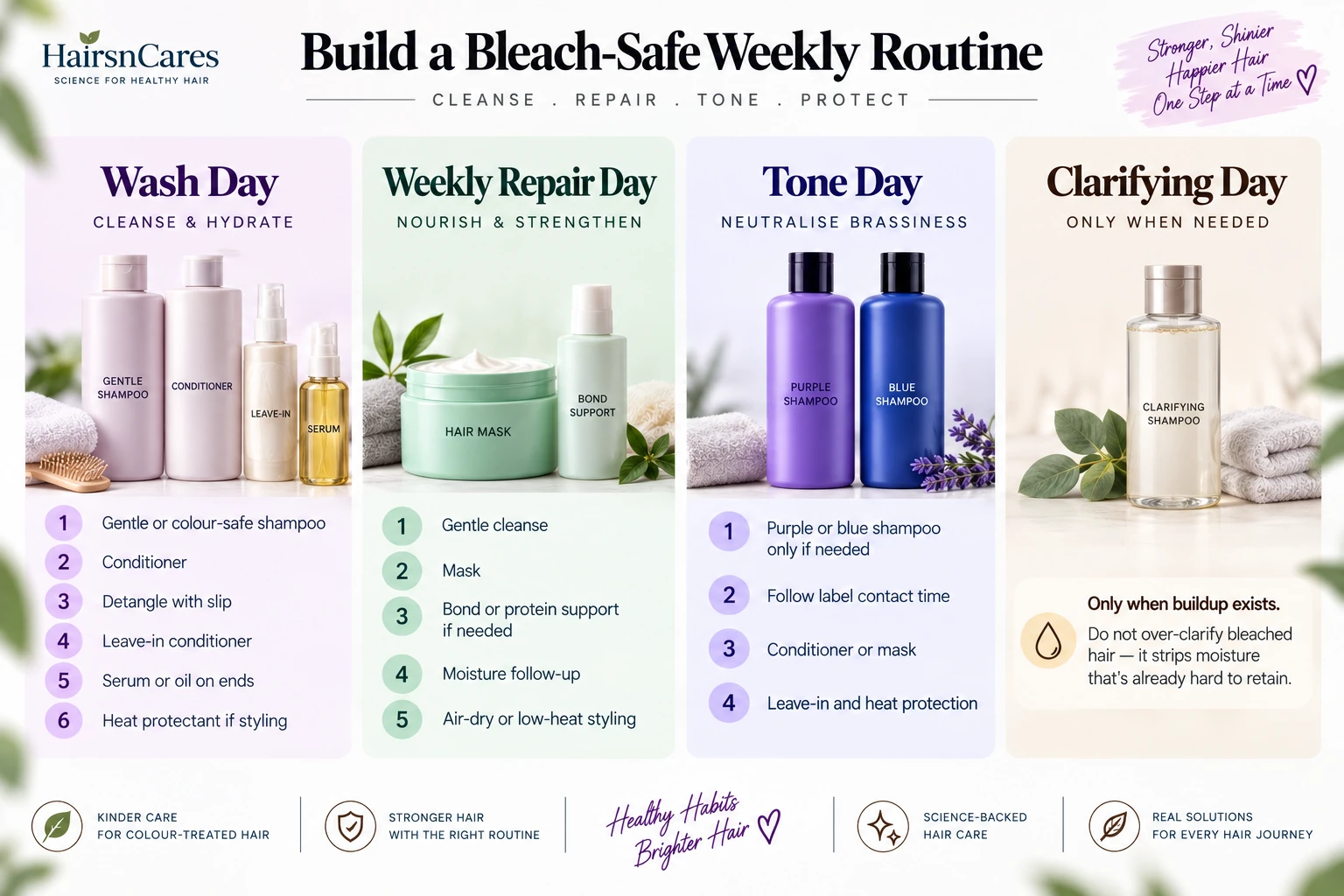
Build a Bleach-Safe Weekly Routine
Wash Day
- Gentle or colour-safe shampoo
- Conditioner
- Detangle with slip
- Leave-in conditioner
- Serum or oil on ends
- Heat protectant if styling
Weekly Repair Day
- Gentle cleanse
- Mask
- Bond or protein support if needed
- Moisture follow-up
- Air-dry or low-heat styling
Tone Day
- Purple or blue shampoo only if needed
- Follow label contact time
- Conditioner or mask
- Leave-in and heat protection
Clarifying Day
Only when buildup exists. Do not over-clarify bleached hair — it strips moisture that's already hard to retain.
Personalised Routine
Create a Bleach-Safe Routine Based on Your Hair Story
Answer a few questions to get a suggested cosmetic-care routine. This does not diagnose scalp injury or approve re-bleaching.
The AI Bleached Hair Routine Builder supports cosmetic routine planning only. It cannot diagnose scalp injury, prescribe treatment, permanently repair damage or approve re-bleaching.
Cleansing
Choose Shampoo Based on Scalp, Tone and Damage
Product categories
- Colour-safe shampoo
- Sulphate-conscious shampoo where suitable
- Moisturising shampoo
- Purple shampoo
- Blue shampoo
- Gentle clarifying shampoo
- Anti-dandruff shampoo if scalp needs it
Rules
- Cleanse the scalp, not only lengths
- Avoid harsh over-washing
- Don't use purple shampoo as your only shampoo if it dries hair
- Conditioner is essential after toning shampoos
- Scalp dandruff needs separate treatment
Conditioning
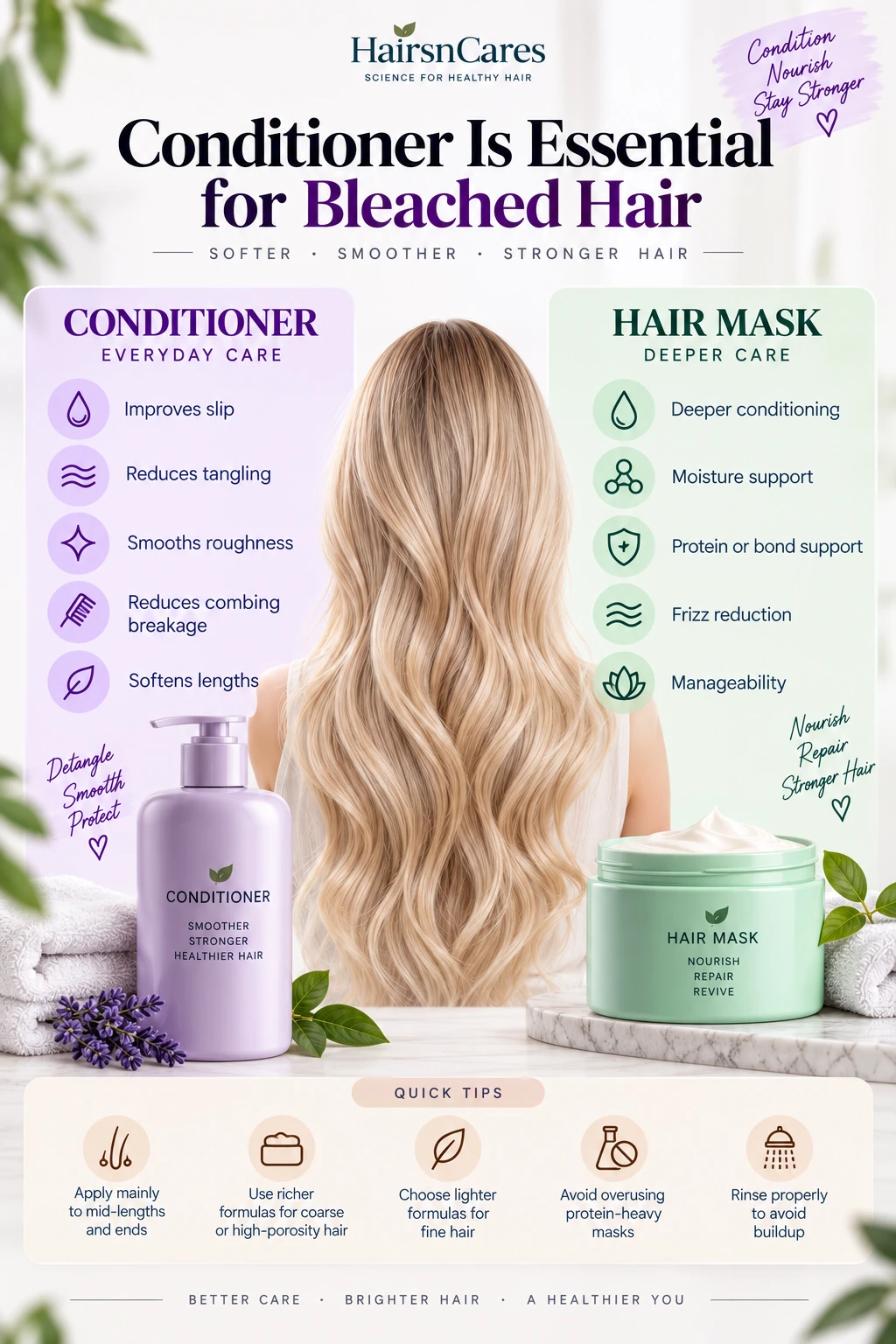
Conditioner Is Essential for Bleached Hair
Conditioner helps
- Improve slip
- Reduce tangling
- Smooth roughness
- Reduce combing breakage
- Soften lengths
Masks help
- Deeper conditioning
- Moisture support
- Protein or bond support
- Frizz reduction
- Manageability
Rules: apply mainly mid-lengths and ends; choose richer formulas for coarse or high-porosity hair; choose lighter formulas for fine hair; avoid overusing protein-heavy masks; rinse properly to avoid buildup.
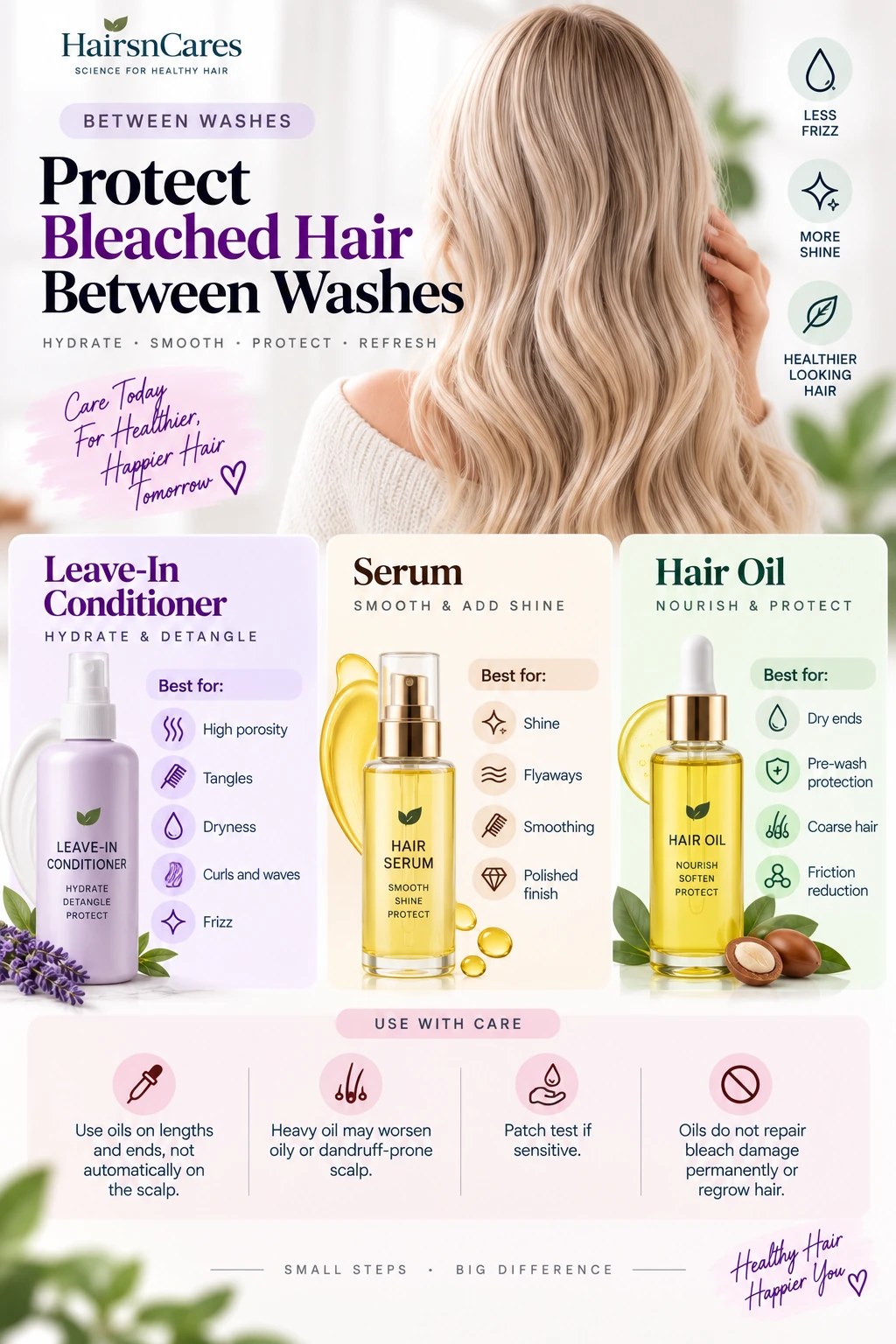
Between Washes
Protect Bleached Hair Between Washes
Best for:
- High porosity
- Tangles
- Dryness
- Curls and waves
- Frizz
Best for:
- Shine
- Flyaways
- Smoothing
- Polished finish
Use oils on lengths and ends, not automatically on the scalp. Heavy oil may worsen oily or dandruff-prone scalp; patch test if sensitive; oils do not repair bleach damage permanently or regrow hair.
Styling Safety
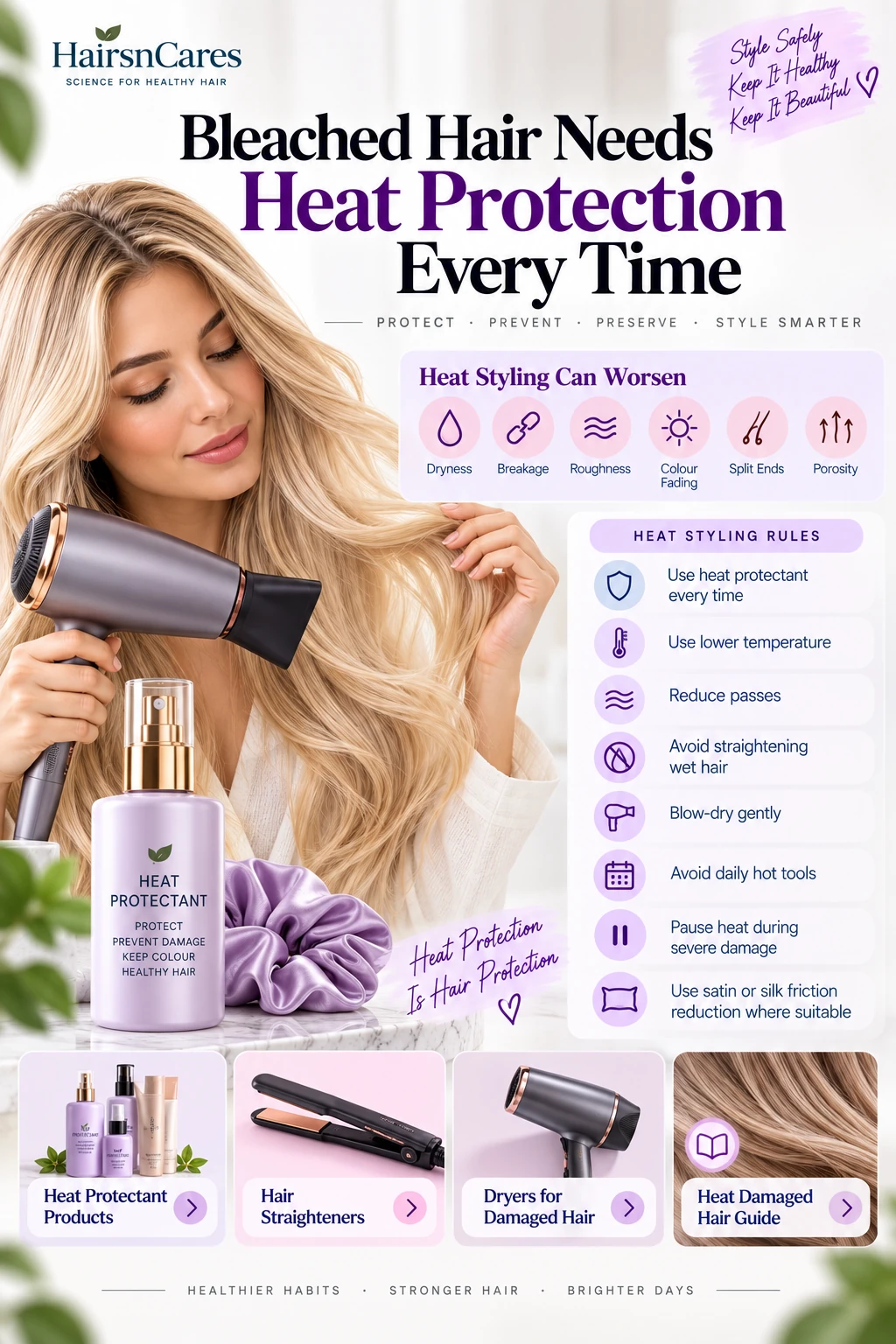
Bleached Hair Needs Heat Protection Every Time
Heat styling can worsen dryness, breakage, roughness, colour fading, split ends and porosity.
Rules
- Use heat protectant
- Lower temperature
- Reduce passes
- Avoid straightening wet hair
- Blow-dry gently
- Avoid daily hot tools
- Pause heat during severe damage
- Use satin or silk friction reduction where suitable
Environmental Protection
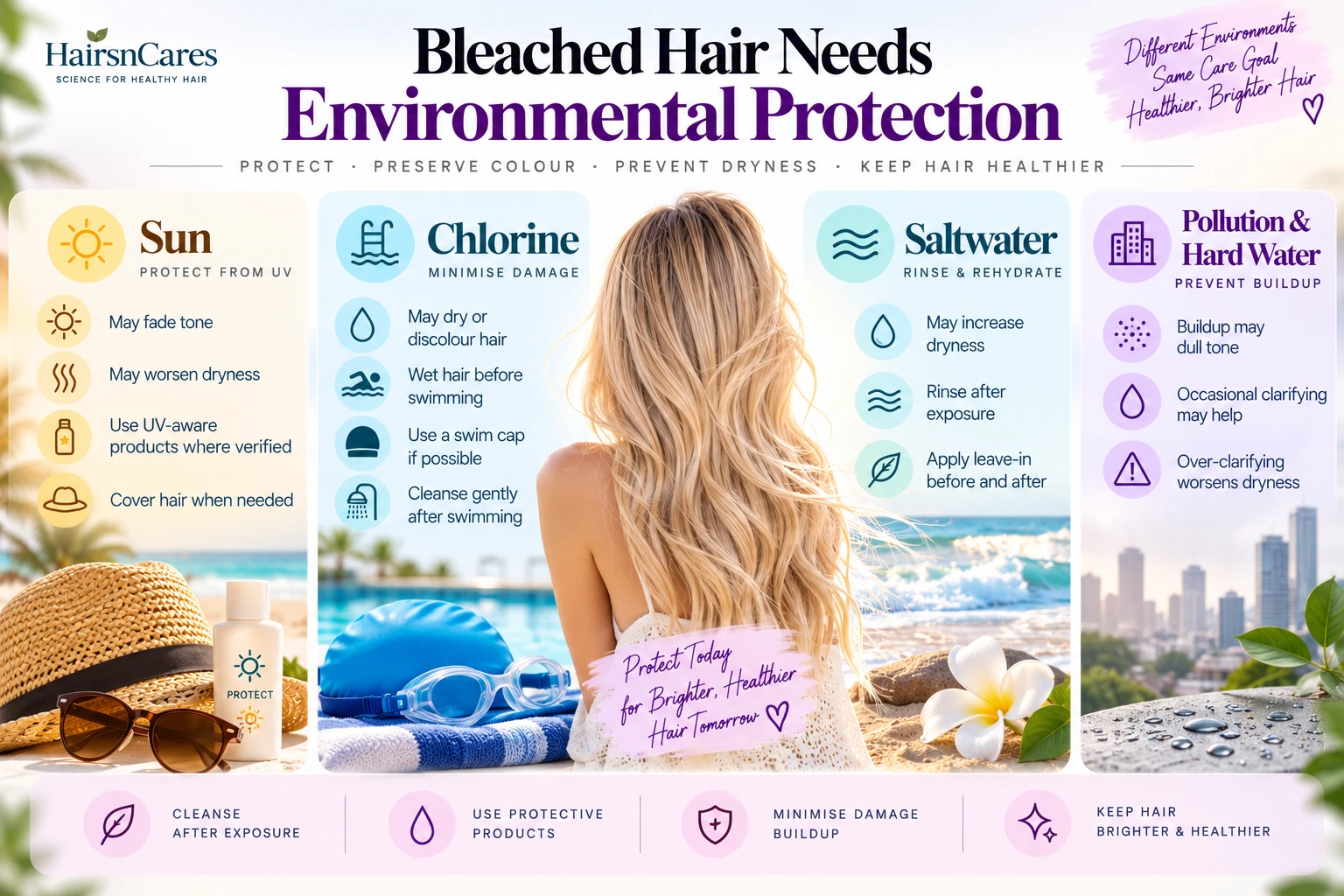
Bleached Hair Needs Environmental Protection
Sun
- May fade tone
- May worsen dryness
- Use UV-aware products where verified
- Cover hair when needed
Chlorine
- May dry or discolour hair
- Wet hair before swimming
- Use a swim cap if possible
- Cleanse gently after swimming
Saltwater
- May increase dryness
- Rinse after exposure
- Apply leave-in before and after
Pollution & Hard Water
- Buildup may dull tone
- Occasional clarifying may help
- Over-clarifying worsens dryness
Chemical Service Safety
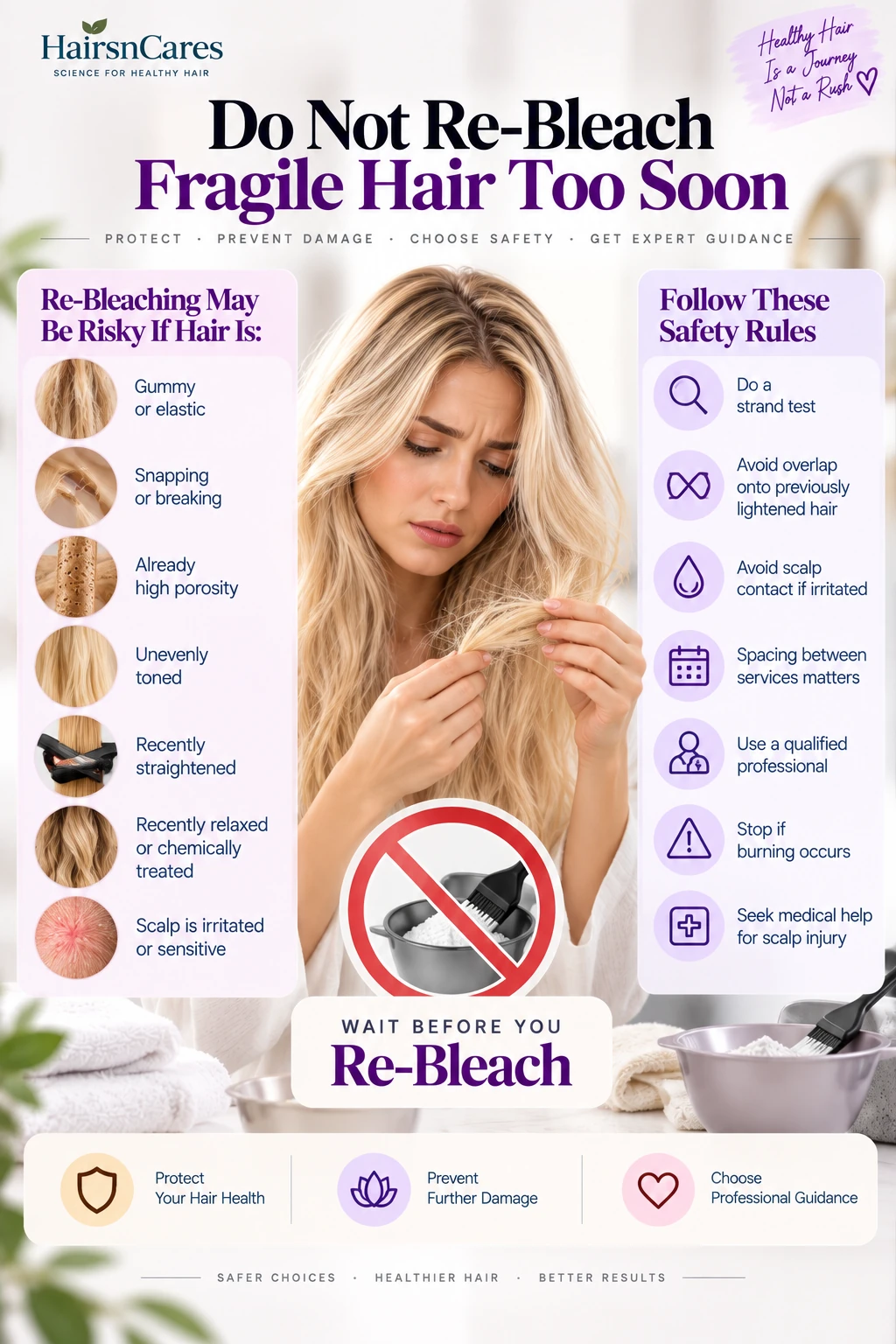
Do Not Re-Bleach Fragile Hair Too Soon
Re-bleaching requires professional judgement when hair is gummy, snapping, over-processed, already high porosity, unevenly toned, recently straightened, recently relaxed, chemically treated, or when the scalp is irritated.
Safety rules
- Strand test
- Avoid overlap onto previously lightened hair
- Avoid scalp contact if irritated
- Spacing services matters
- Use a qualified professional
- Stop if burning occurs
- Seek medical help for scalp injury
Texture-Specific Care
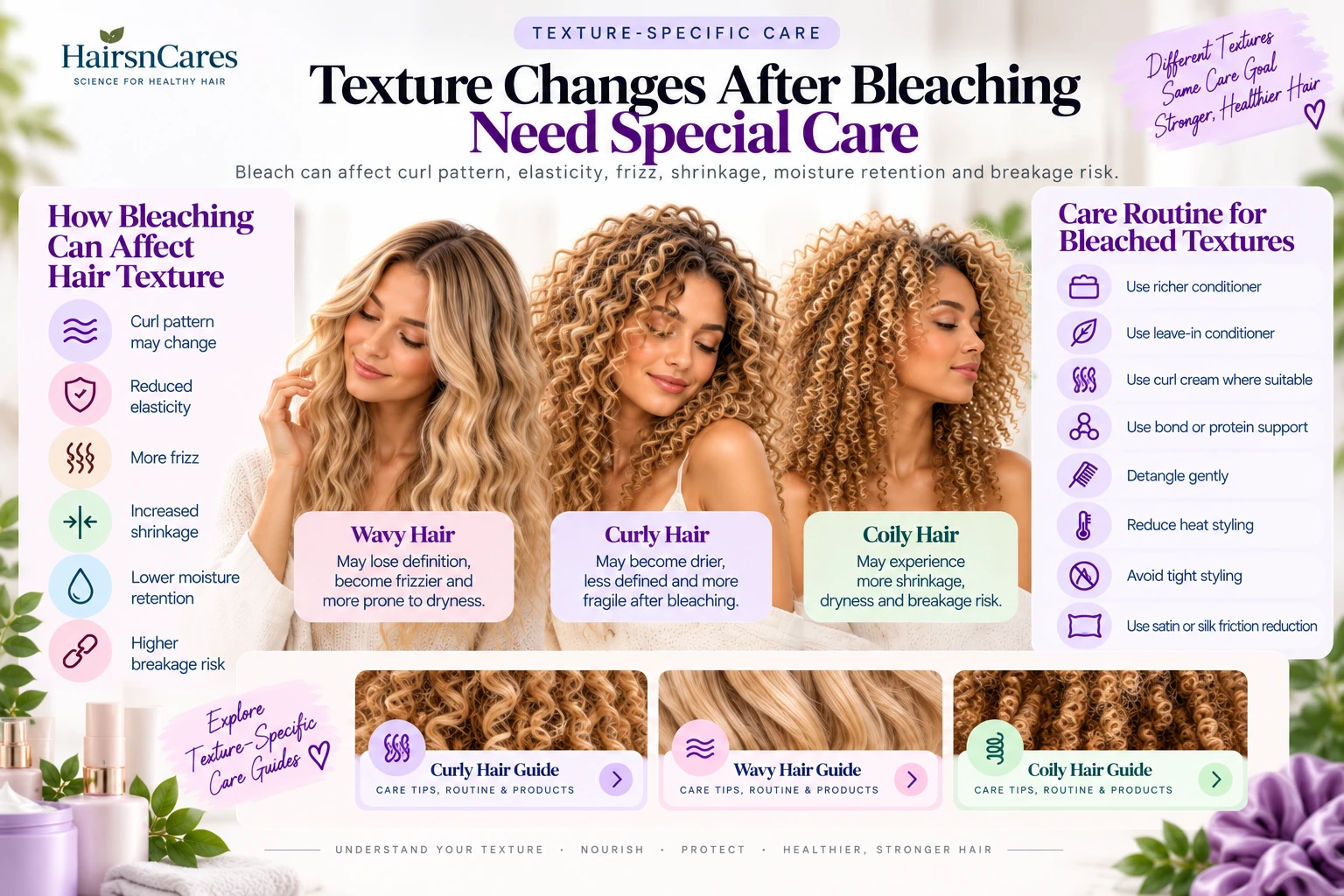
Texture Changes After Bleaching Need Special Care
Bleach can affect curl pattern, elasticity, frizz, shrinkage, moisture retention and breakage risk.
Routine
- Richer conditioner
- Leave-in conditioner
- Curl cream where suitable
- Bond/protein support
- Gentle detangling
- Reduce heat
- Avoid tight styling
- Satin/silk friction reduction
Product Weight Matters
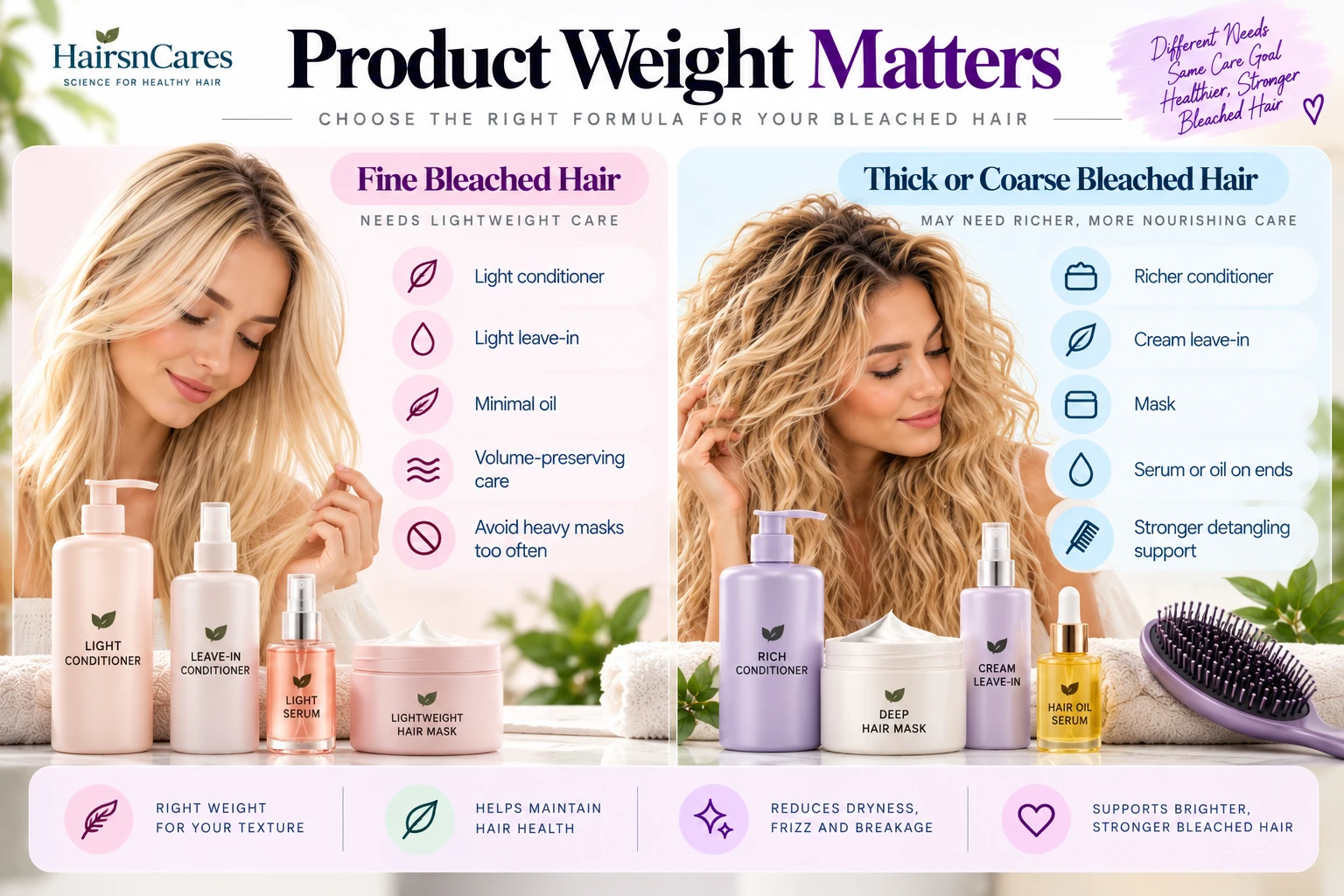
Product Weight Matters
Fine Bleached Hair
Needs:
- Light conditioner
- Light leave-in
- Minimal oil
- Volume-preserving care
- Avoid heavy masks too often
Thick or Coarse Bleached Hair
May need:
- Richer conditioner
- Cream leave-in
- Mask
- Serum or oil on ends
- Stronger detangling support
Ecommerce
Shop Bleached Hair Products by Tone, Damage and Texture
Filter by concern, product type, hair type and safety preferences.
*Sulphate-free and silicone-free labels are shown only when verified on the product database; unverified claims are not displayed.
Compare Without the Marketing Noise
Compare Bleached Hair Products Without Guesswork
Compare up to four products on tone target, moisture support, protein support, bond-support claims, heat protection and more. Products are never labelled "best" without verified criteria.
| Attribute | Product A | Product B |
|---|---|---|
| Product type | Purple shampoo | Leave-in conditioner |
| Tone target | Yellow brassiness | Not tone-focused |
| Moisture / protein | Product information not confirmed | Moisture-heavy |
| Bond-support claim | Product information not confirmed | Product information not confirmed |
AI Tool
Create Your Personal Bleach-Care Plan
The AI Bleached Hair Routine Builder above uses your inputs — brassiness tone, porosity, damage severity, heat frequency and more — to suggest routine categories, tone-control guidance and a trim recommendation.
Track Realistically
Track Tone, Texture and Breakage Separately
Track brassiness, tone fading, dryness, roughness, frizz, split ends, breakage, elasticity, wet stretchiness, tangling, shine, softness, heat frequency, purple shampoo use, mask use, trim date, scalp symptoms and root shedding.
Do Not Self-Manage These
Do Not Treat These Signs as Ordinary Bleach Damage
Recommend dermatologist or urgent review for:
- Scalp burning, blistering or swelling
- Pus, crusting or bleeding
- Severe redness or allergic reaction
- Chemical burn or severe pain
- Hair coming out from the root
- Patchy loss or sudden heavy shedding
- Eyebrow or body hair loss
- Persistent scalp itching or severe dandruff after bleaching
Recommend salon/professional colour review for:
- Uneven bleach or severe brassiness
- Over-toning or greenish tint
- Banding or gummy hair
- Major breakage or re-bleach planning
Avoid These
Mistakes That Make Bleached Hair Break Faster
Expert Note
Tone Care and Damage Care Are Different
"Bleached hair often needs two separate plans: tone maintenance and shaft repair-look care. Purple shampoo or toner may help brassiness, but dryness, breakage and high porosity need conditioning, protein-moisture balance, bond-support products where suitable, heat protection and gentler handling. If hair is shedding from the root or the scalp is painful after bleaching, seek medical review."
Reviewed by Dr. Amit Agarkar, MD Dermatology — Hairsncares
Suggested Medical References
Where to Read More From Trusted Sources
This page reflects general dermatology and cosmetic hair-science understanding. For deeper reading on hair-shaft structure, oxidative bleach damage and contact dermatitis from hair products, these are reputable starting points — search each organisation's site directly for the most current article, since we don't want to point you to a guessed or outdated link.
- American Academy of Dermatology (AAD)Patient guides on hair damage, chemical hair treatments and scalp health
- MedlinePlus (U.S. National Library of Medicine)Consumer-friendly overviews of hair and scalp conditions
- PubMedPeer-reviewed research on oxidative hair damage, porosity and cosmetic ingredient safety
- NHS (UK National Health Service)Condition overviews for scalp irritation, hair dye allergy and when to seek care
These are reference categories, not endorsements of specific articles. Always check the publication date and consult a dermatologist for advice specific to you.
Frequently Asked Questions
Bleached Hair Guide: FAQs
Browse by category, or open any question directly — every answer stays on the cosmetic side of the line, with medical questions pointed to a doctor.
Ready When You Are
Protect the Blonde. Repair the Feel. Reduce the Breakage.
Bleached hair needs tone care, moisture, bond support, protein balance, heat protection and gentle handling. Build a routine that protects your colour and reduces breakage — while treating scalp symptoms or root shedding as a separate medical concern.