Above the Fold
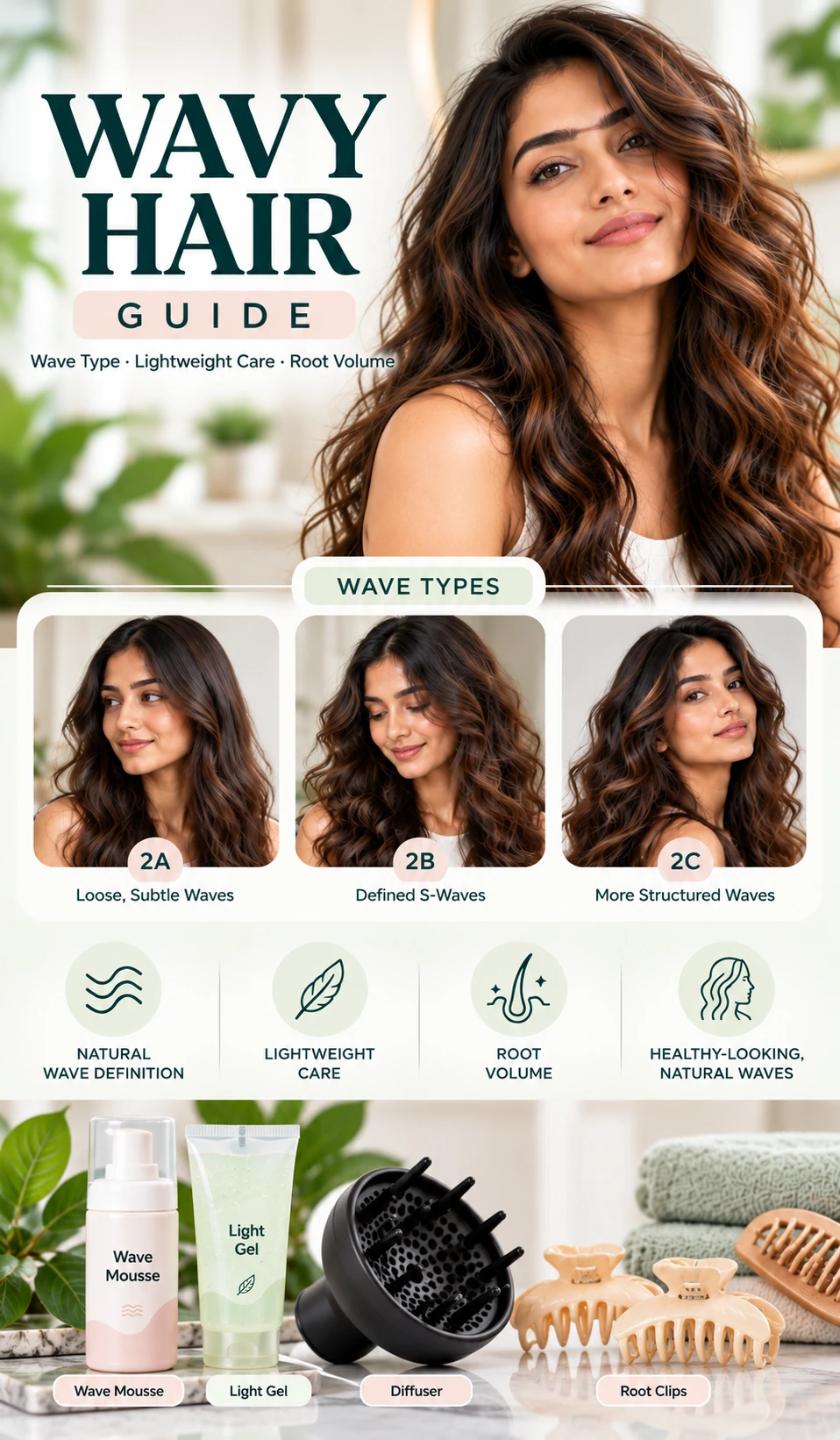
Quick Answer: How Do You Care for Wavy Hair?
Wavy hair generally does best with lightweight cleansing, conditioner kept off the roots, mousse or a small amount of light gel applied to damp hair, root clipping to combat flatness, and gentle drying. Wave type, porosity and how much weight your hair can carry all shape the specific routine — the most common mistake is using products formulated for curlier or coarser hair.
Search Intent Alignment
What You'll Learn on This Page
- How to identify your wave type, and why it varies day to day
- Why wavy hair is uniquely vulnerable to being weighed down by product
- How porosity changes which lightweight products actually work for you
- A full wash-day routine built around avoiding flatness
- The technique glossary: root clipping, scrunching, diffusing
- How to add volume at the roots without heat damage
- How to refresh waves between washes and protect them overnight
- When wave or scalp changes need a dermatologist rather than a new product
Understanding the Basics
Wavy Hair Sits Between Straight and Curly
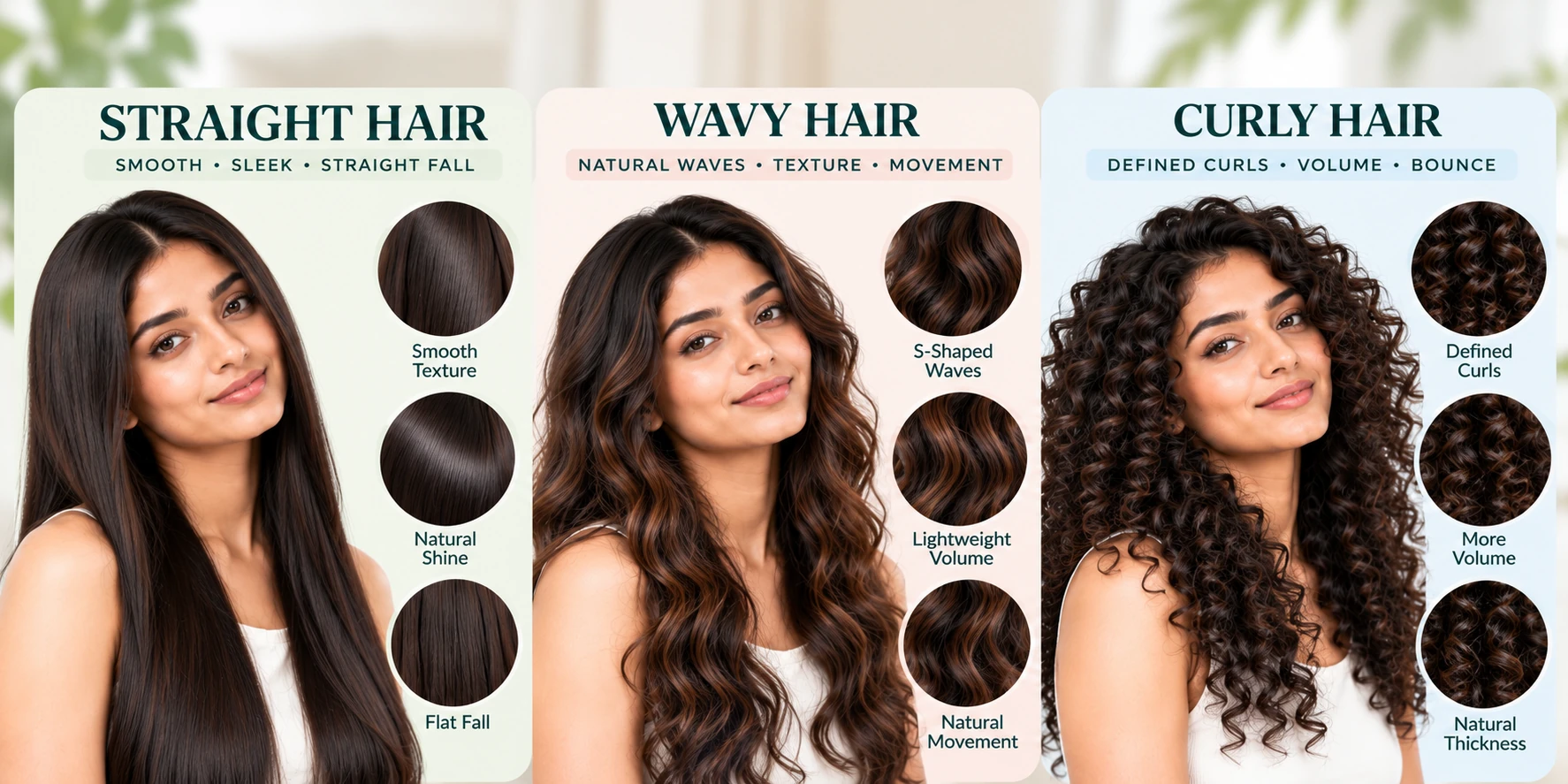
Wavy hair grows from a slightly oval hair follicle, giving it a loose S-shaped bend that's more defined than straight hair but looser and less structured than a true curl. This in-between structure means wave pattern is unusually sensitive to humidity, product weight, drying method and even how hair was slept on — it's completely normal for wave definition to look different day to day.
"Waves have less structure to hold their own shape than curls do. That's exactly why the lightest effective product usually outperforms the richest one."
Interactive Classification
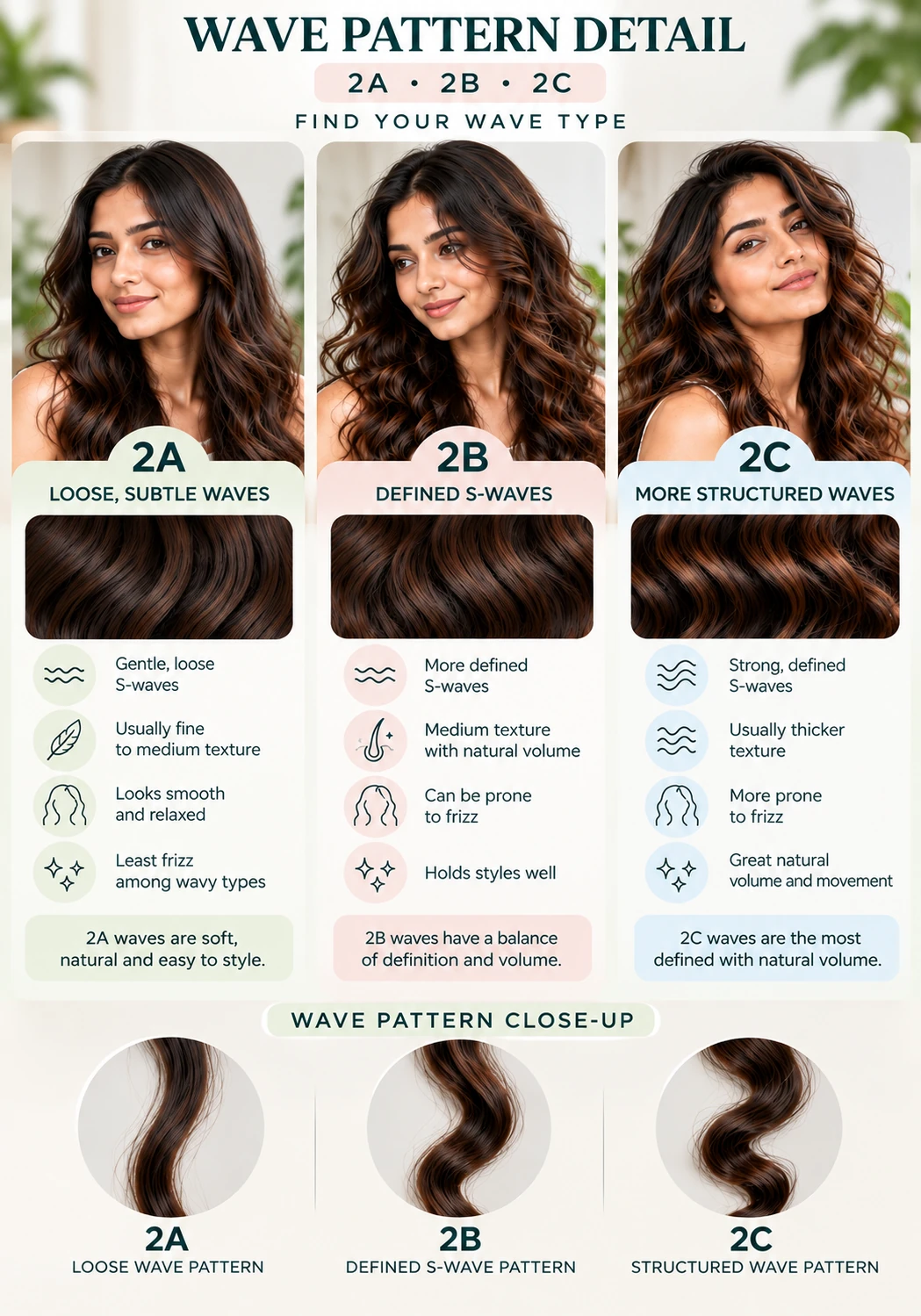
What's Your Wave Type?
Select the type closest to your natural, clean, product-free pattern. Many people have more than one type across their head — this is a general reference, not a rigid category.
Know the Difference
Wavy Sits on a Spectrum Between Straight and Curly
| Category | General Types | Common Traits |
|---|---|---|
| Straight | 1A–1C | No natural bend, oil travels easily down the shaft |
| Wavy | 2A–2C | Loose S-shaped bends, minimal shrinkage, easily weighed down |
| Curly | 3A–3C | Springy loops to tight corkscrews, moderate to high shrinkage |
Interactive Selector
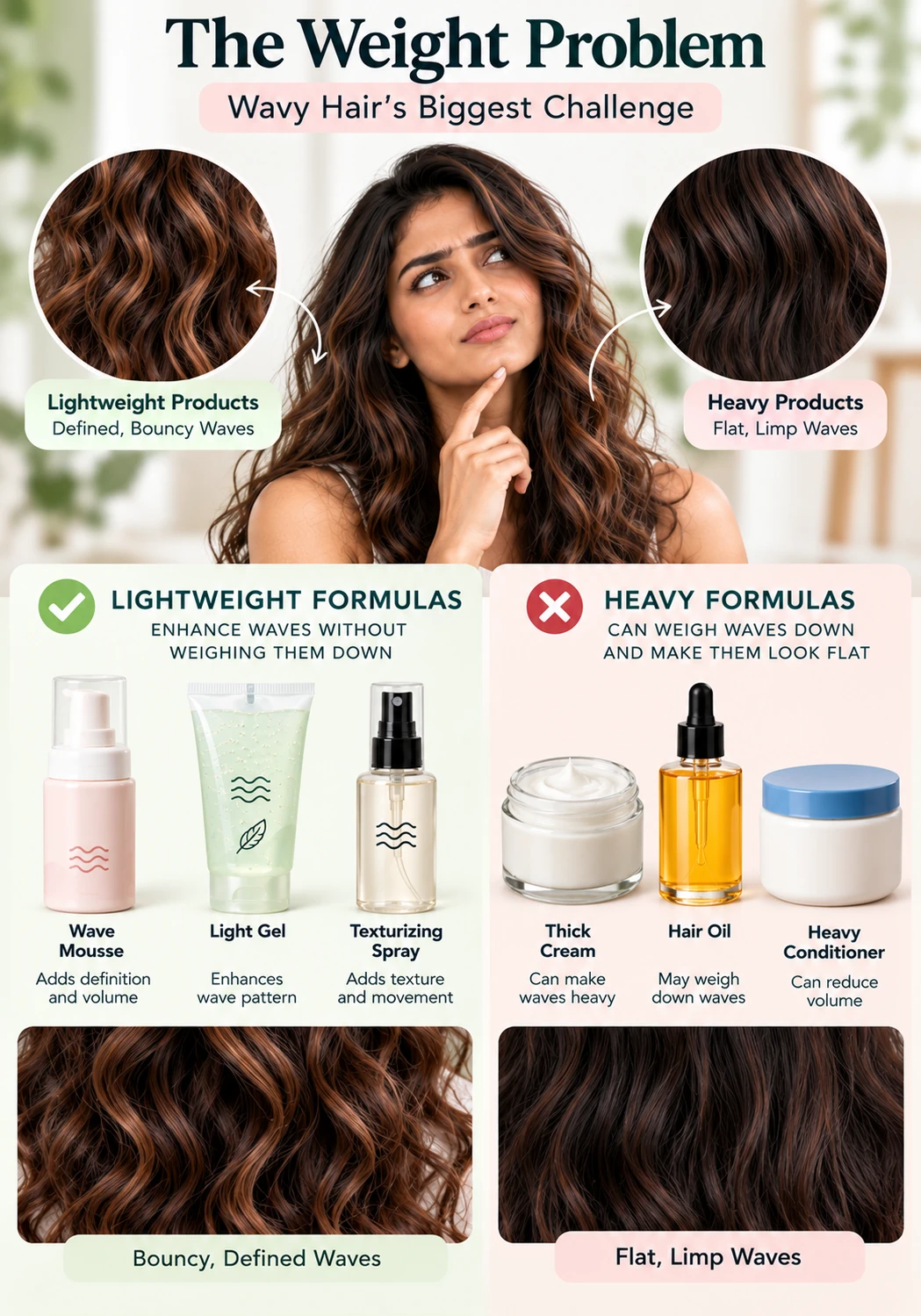
The Weight Problem: Wavy Hair's Biggest Challenge
Waves have less structure than curls to hold their own shape, so product weight matters more here than for almost any other texture. Select your hair's density to see how much product weight it can typically carry.
Porosity Awareness
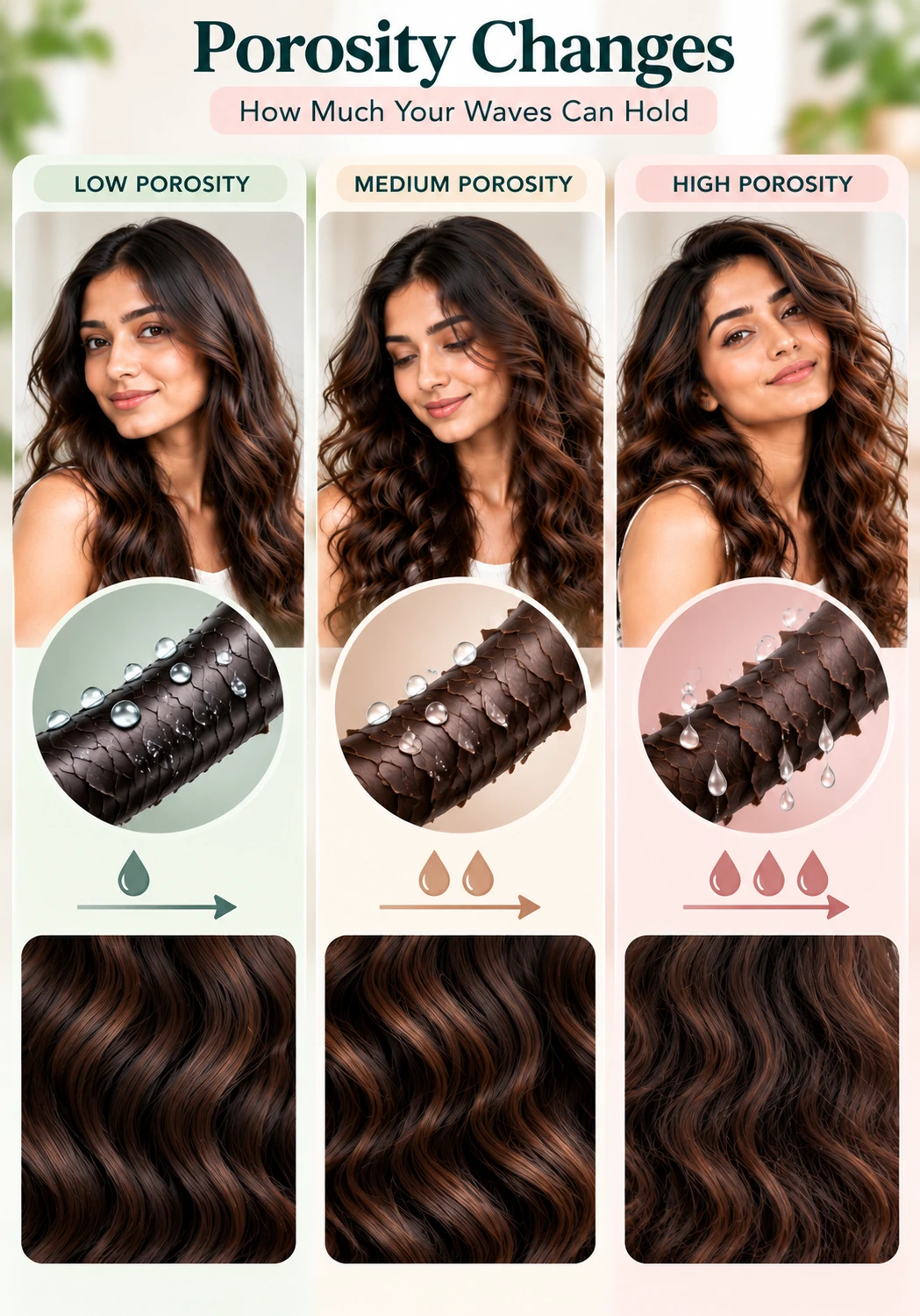
Porosity Changes How Much Your Waves Can Hold
High Porosity
- Absorbs moisture fast, loses it fast
- Often more prone to frizz
- Can usually handle slightly richer products without as much flattening
- Benefits from a light sealing step after moisture
Low Porosity
- Resists moisture absorption
- Products sit on the surface and weigh waves down fastest
- Needs the lightest formulas, applied to damp not soaking hair
- Prone to buildup if products are too rich
Build a Wave Routine Matched to Your Density and Porosity
Answer a few questions to get a suggested cosmetic-care routine. This does not diagnose scalp disease or replace a dermatology consult.
The AI Wave Routine Builder supports cosmetic and educational routing only. It cannot diagnose scalp conditions or guarantee results.
Structured Routine
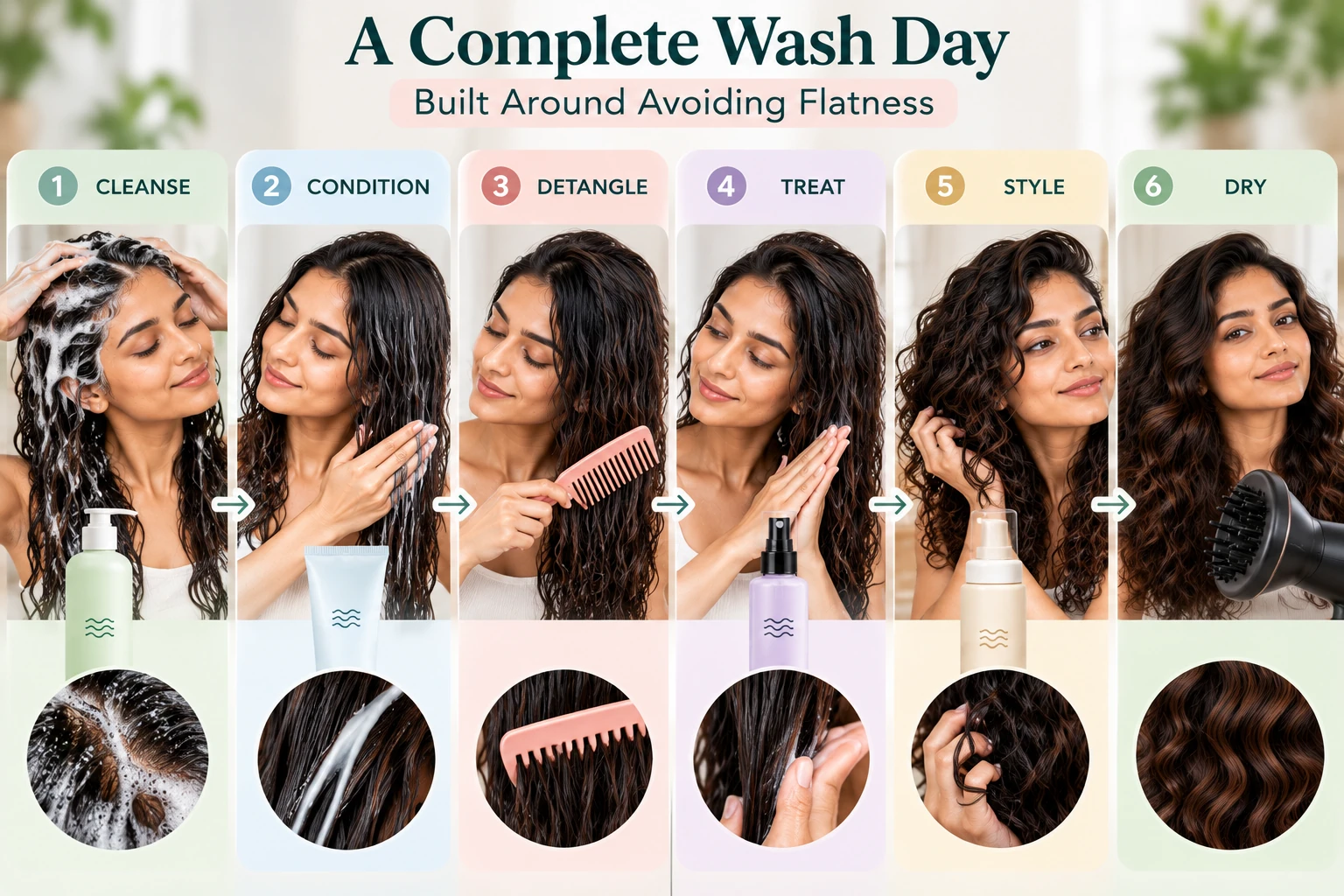
A Complete Wash Day, Built Around Avoiding Flatness
Lightweight Cleanse
Gentle shampoo focused on the scalp, nothing heavy or ultra-rich.
Condition Lengths Only
Lightweight to medium formula, mid-lengths to ends, never the roots.
Apply Styler to Damp Hair
Mousse or a small amount of light gel — damp, not soaking wet.
Scrunch Gently Upward
Encourage wave definition without heavy clumping.
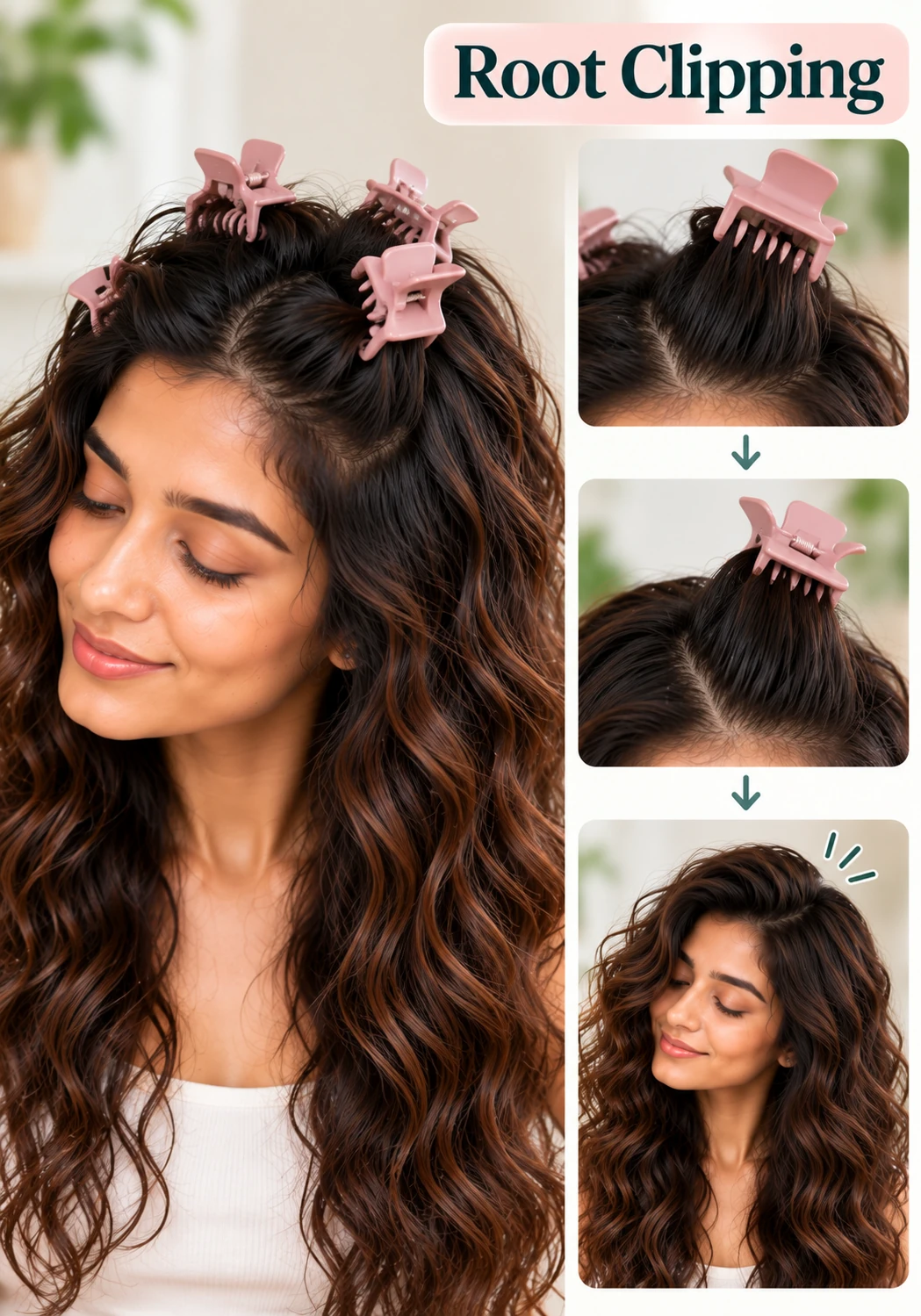
Clip Roots While Drying
Lift roots away from the scalp to combat flatness.
Diffuse or Air-Dry
Low heat, minimal touching, until fully dry.
Remove Clips and Shake Out
Gently release any product cast for soft, natural movement.
Cleansing Choices
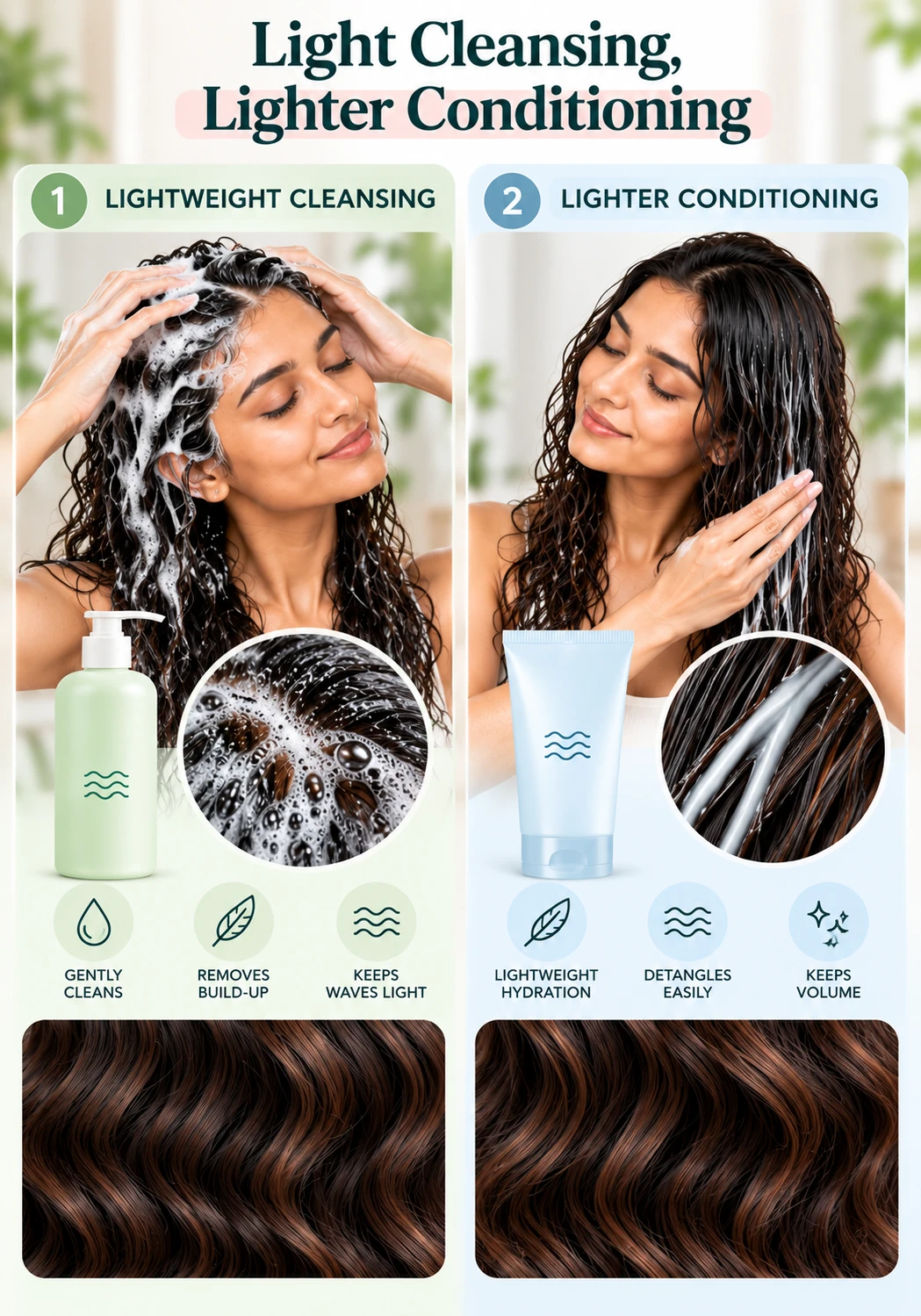
Light Cleansing, Lighter Conditioning
Shampoo
- Lightweight, gentle formula
- Avoid ultra-moisturising or rich formulas meant for curlier hair
- Focus application on the scalp
- Clarify occasionally if buildup is heavy
Conditioner
- Lightweight to medium, never the roots
- Enough for slip, not so much it weighs waves down
- Rinse thoroughly to avoid residue-driven flatness
"Co-washing works for some wavy hair, but many wavy textures actually do better with a proper gentle shampoo — co-washing alone can add unwanted weight without removing enough buildup."
Lightweight Styling
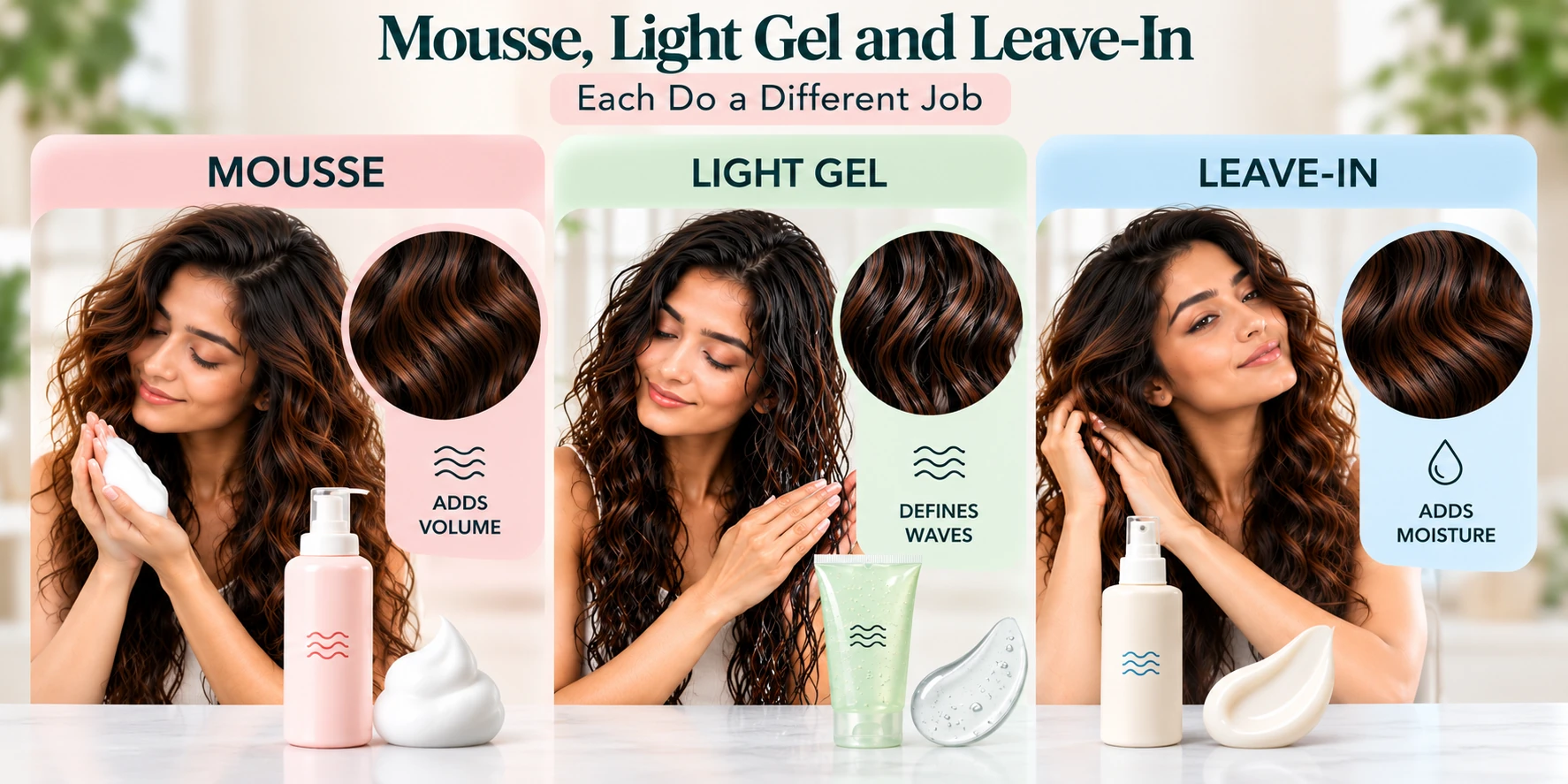
Mousse, Light Gel and Leave-In Each Do a Different Job
Role:
- Volume without weight
- Light hold
- Good for fine or 2A/2B waves
- Applied to damp hair before drying
Role:
- Frizz control
- More hold than mousse
- Use sparingly to avoid crunch or weight
- Best for 2B/2C waves needing definition
Role:
- Ongoing moisture without heaviness
- Helps with frizz and detangling
- Skip on very fine hair if it feels weighed down
Caution: avoid curl creams and heavy butters formulated for curlier or coarser textures — they're one of the most common causes of flattened, greasy-looking waves.
Technique Glossary
The Vocabulary of Wavy Hair Styling
Root Clipping
Placing clips at the roots while hair dries to lift them away from the scalp, then removing once dry.
Scrunching
Cupping and squeezing sections upward with product to encourage wave definition without heavy clumping.
Diffusing
Using a diffuser attachment on low heat to dry waves with more volume and less disturbance than regular blow-drying.
Shorter Plopping
A brief towel-wrap to absorb excess water — many wavy types use less time than curlier hair to avoid over-flattening.
Upside-Down Diffusing
Flipping your head while diffusing briefly to lift roots and add volume from underneath.
Wave Refreshing
A light water mist plus a small amount of leave-in or mousse to revive definition without a full wash.
Fixing Flatness
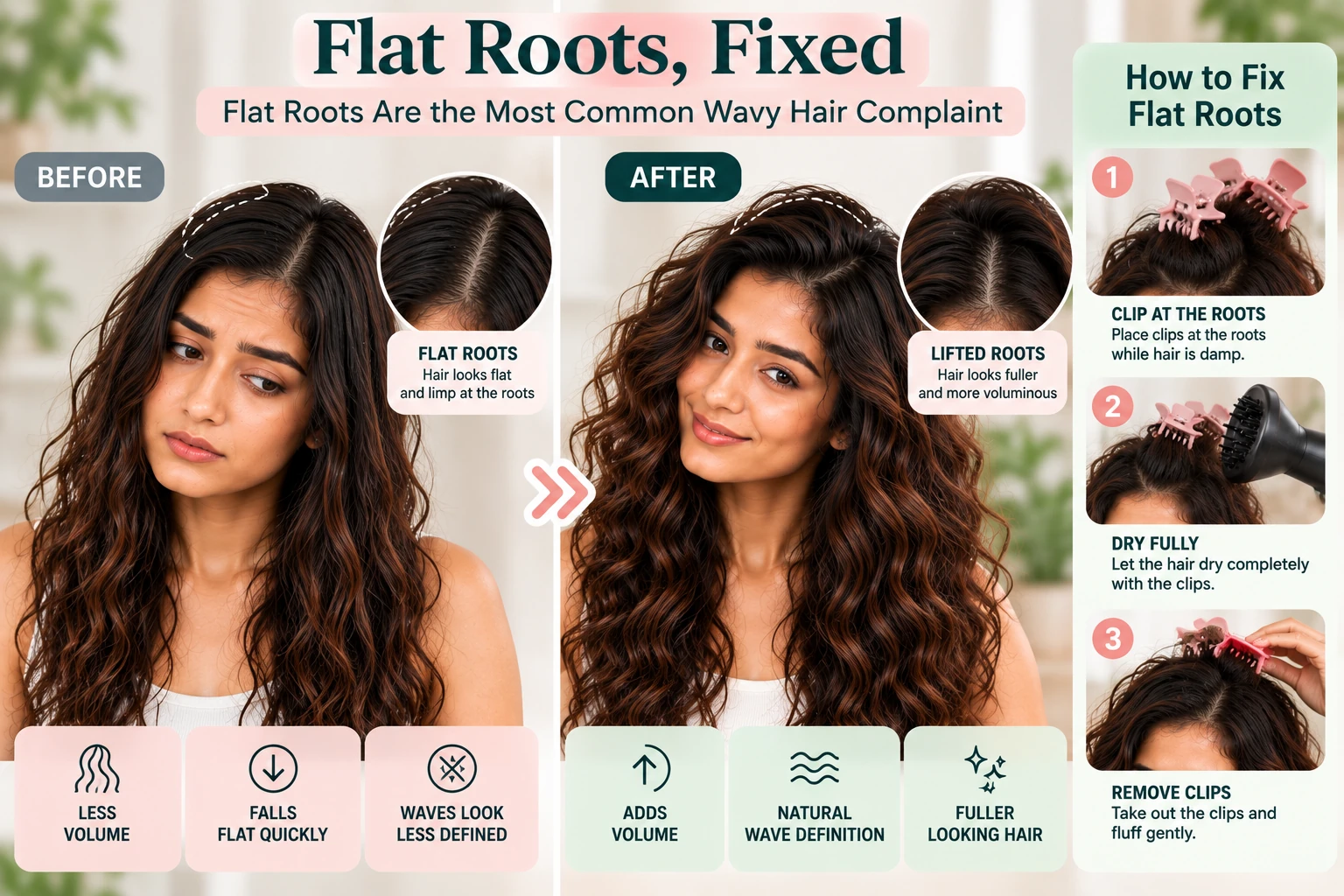
Flat Roots Are the Most Common Wavy Hair Complaint
Flat roots usually come from product weight, natural growth direction, or simply how wave pattern relaxes closest to the scalp compared to further down the strand.
What actually helps
- Root clipping while drying
- Mousse or a lightweight volumizing spray applied at the roots
- Upside-down diffusing briefly
- Avoiding heavy product anywhere near the scalp
- Sleeping in a way that doesn't flatten roots overnight
"If roots are flat every single day regardless of routine changes, it may be worth checking that density and scalp health are on track rather than assuming it's purely a styling issue."
Between Wash Days
Refresh Without Overloading With Product
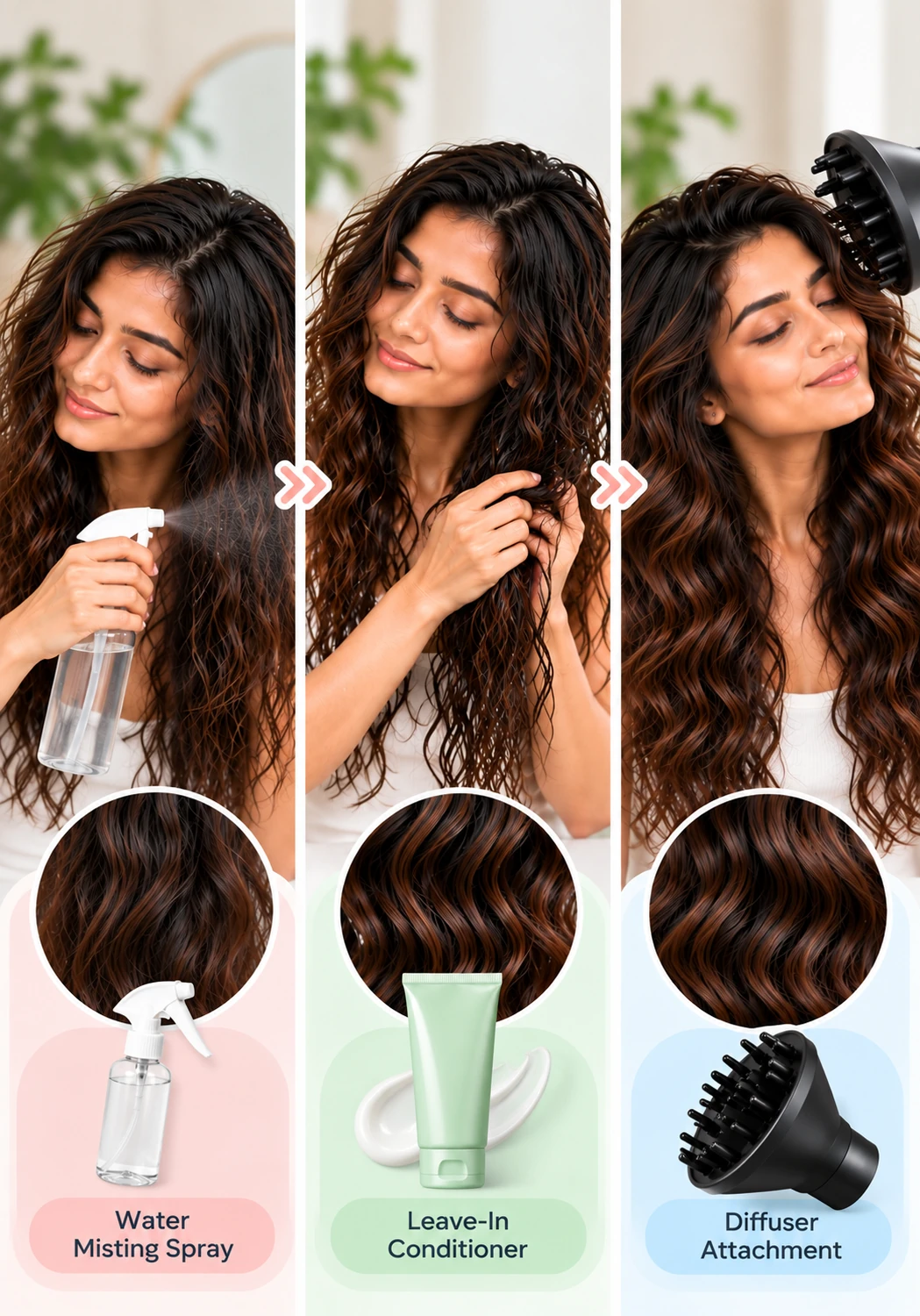
A light mist of water, followed by scrunching in a small amount of leave-in, mousse or a wave-refreshing spray, can revive definition between washes without a full wash or adding excess weight.
Refresh routine
- Mist lightly with water, section by section
- Add a small amount of leave-in or mousse only if needed
- Scrunch gently upward
- Diffuse briefly on low heat if roots feel damp
- Avoid over-refreshing, which builds up product fast on waves
Nighttime Care
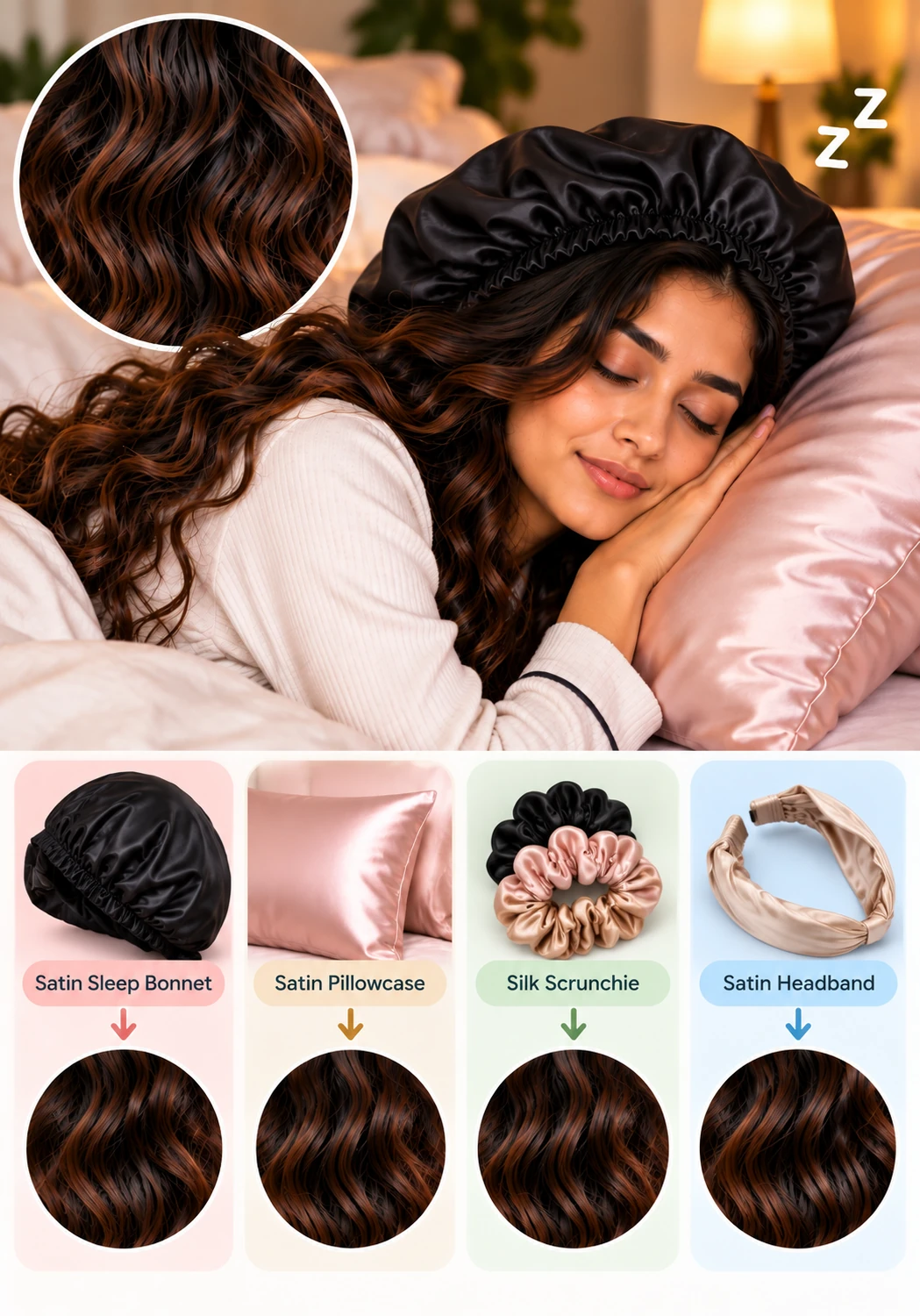
Protect Wave Pattern Without Over-Flattening It
Reduce friction
- Silk or satin pillowcase
- Silk or satin scarf or bonnet
- Avoid rough cotton fabric contact
Preserve shape
- Loose, low bun or braid rather than tight styles
- Avoid sleeping on fully soaking wet hair
- Avoid tight elastics that create dents or breakage
Processing Safety
Waves Are Easily Loosened by Heat and Chemical Stress
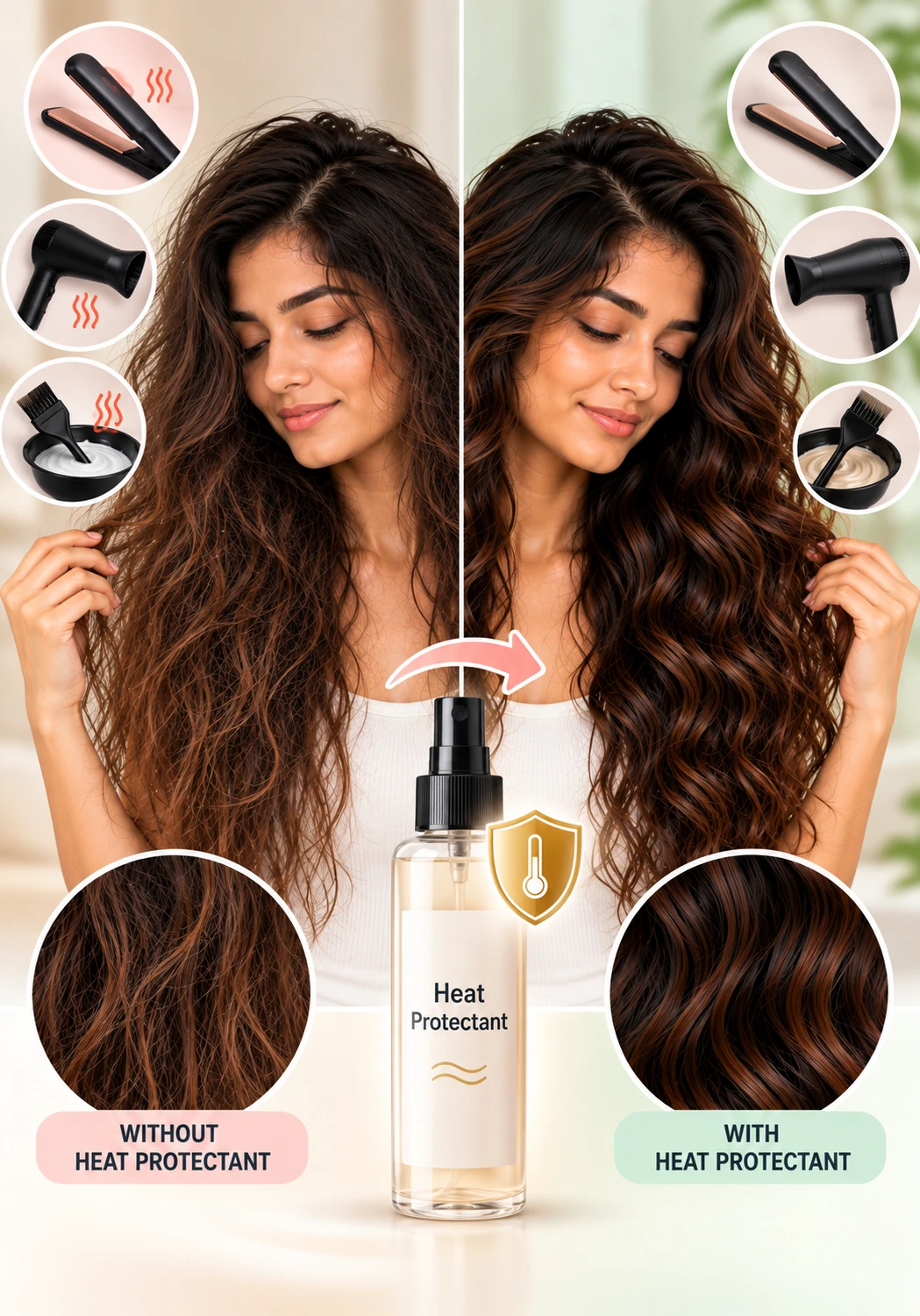
Since wave pattern already has less structure than curls, added heat or chemical processing carries real risk of loosening the pattern further, drying the shaft, and increasing frizz and breakage.
Heat styling rules
- Heat protectant every time
- Lowest effective temperature
- Reduce frequency
- Diffuse rather than straighten when possible
- Deep condition regularly if heat is used
Colour treatment rules
- Lightweight moisture care before and after
- Reduce processing frequency
- Professional guidance for wave-safe techniques
- Watch for increased dryness or frizz post-colour
Ecommerce
Shop Wavy Hair Products by Type and Density
Filter by wave type, product type, density and safety preferences.
*Claims are shown only when verified on the product database; unverified claims are not displayed.
Compare by Weight
Compare Wave Products by Weight and Hold
Compare up to four products on weight level, hold strength, porosity fit and more. Products are never labelled "best" without verified criteria.
| Attribute | Product A | Product B |
|---|---|---|
| Product type | Mousse | Light-hold gel |
| Weight level | Very light | Light to medium |
| Best density fit | Fine to medium | Medium to dense |
| Hold strength | Soft | Firm |
AI Tool
Build a Wave Routine Matched to Your Density and Porosity
The AI Wave Routine Builder above uses your inputs — wave type, density, porosity, main concern, wash frequency and heat use — to suggest a wash-day sequence and product weight priorities.
Track Realistically
Track Definition and Root Volume, Not Just One Good Hair Day
Track wave definition, frizz level, root volume, how quickly hair feels weighed down, scalp comfort, product buildup, wash frequency and technique changes.
Do Not Self-Manage These
Do Not Treat These Signs as Routine Wave Trouble
- Persistent scalp itching, redness or burning
- Flaking that doesn't improve with gentle care
- Sudden heavy shedding or patchy loss
- Scalp pain, pus, crusting or bleeding
- Roots that stay flat despite every routine change, especially with visible scalp
- Severe breakage despite good moisture care
- Signs of allergic reaction after a new product
Route to a dermatologist, the AI Hair Test, or relevant scalp-condition and density pages if any of these appear.
Avoid These
Mistakes That Flatten a Good Wave Routine
Expert Note
The Lightest Effective Product Usually Wins
"Wavy hair care is largely about restraint — the lightest product that still gives you the definition or hold you want will almost always outperform a richer one. Root clipping, gentle scrunching and minimal disturbance while drying matter as much as any single product. Persistent flatness despite routine changes, or unexplained scalp symptoms, deserve a dermatologist's opinion rather than another product swap."
Reviewed by Dr. Amit Agarkar, MD Dermatology — Hairsncares
Suggested Medical References
Where to Read More From Trusted Sources
This page reflects general dermatology and cosmetic hair-science understanding. For deeper reading on hair-shaft structure, wave pattern biology and scalp health, these are reputable starting points — search each organisation's site directly for the most current article, since we don't want to point you to a guessed or outdated link.
- American Academy of Dermatology (AAD)Patient guides on textured hair care, scalp health
- MedlinePlus (U.S. National Library of Medicine)Consumer-friendly overviews of hair and scalp conditions
- PubMedPeer-reviewed research on hair follicle shape and wave pattern biology
- NHS (UK National Health Service)Condition overviews for scalp conditions and when to seek care
These are reference categories, not endorsements of specific articles. Always check the publication date and consult a dermatologist for advice specific to you.
Frequently Asked Questions
Wavy Hair Guide: FAQs
Browse by category, or open any question directly.