Seborrheic Dermatitis: Overview
Dermatologist-led overview of seborrheic dermatitis and dandruff, including how they are treated.
View reference ›Salicylic Acid is used in some scalp-care products to support flake loosening, buildup removal and oily scalp routines. It can be useful in selected users, but overuse or wrong use may cause dryness, irritation or barrier disruption. It should be used carefully, especially on sensitive, inflamed or painful scalp, and it is not a hair regrowth medicine. Screen your scalp first with the AI Scalp Test. Results vary.
Illustrative summary only. This is education, not a diagnosis or prescription; results vary and depend on your situation.
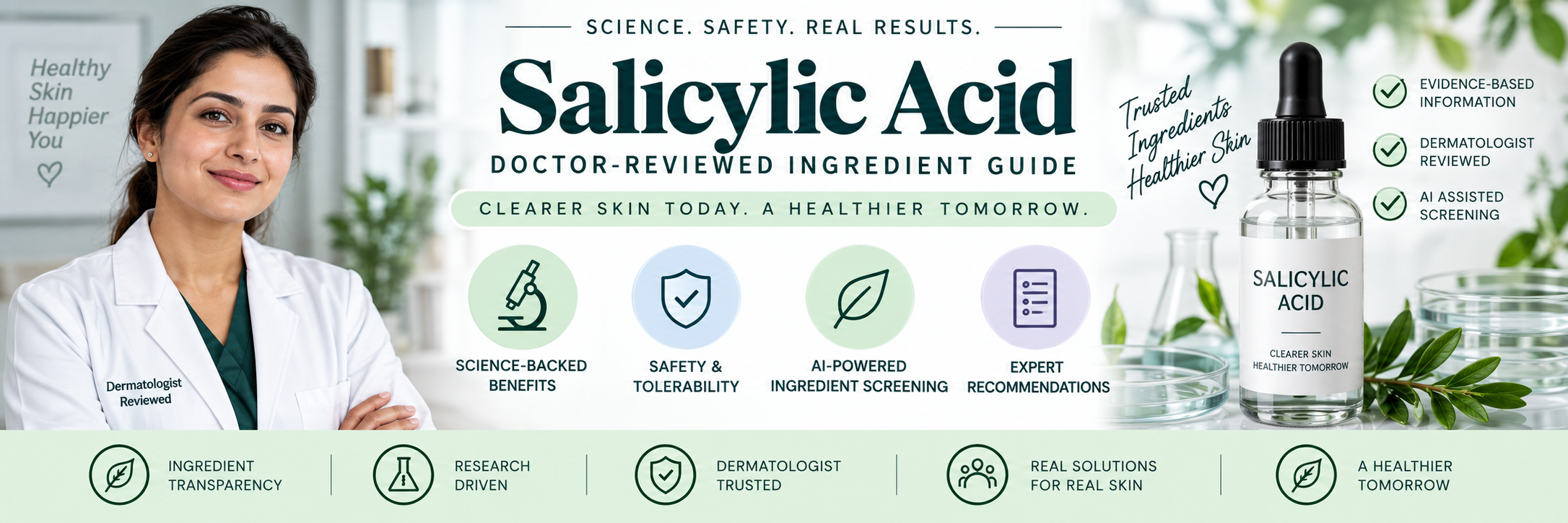
Salicylic Acid may help loosen flakes and reduce scalp buildup in suitable products, especially when flakes are adherent or the scalp is oily. However, it can irritate dry, sensitive, inflamed or infected scalp if overused. It is a beta-hydroxy acid / keratolytic exfoliant — used in some shampoos, scalp exfoliators, lotions or treatments to support flake loosening and buildup removal — with moderate cosmetic/scalp support that depends on concentration, formula and scalp tolerance. It is not a hair regrowth medicine and is not suitable for every scalp condition. Thick plaques, pain, pus, crusting, patchy hair loss or a child with scalp scaling need dermatologist evaluation, and those with aspirin/salicylate allergy should take care where medically relevant. So it can help the right scalp used carefully, but overuse is counterproductive, and red-flag symptoms call for a doctor. Screen with the AI Scalp Test, and see a doctor for thick plaques or red flags. Results vary.
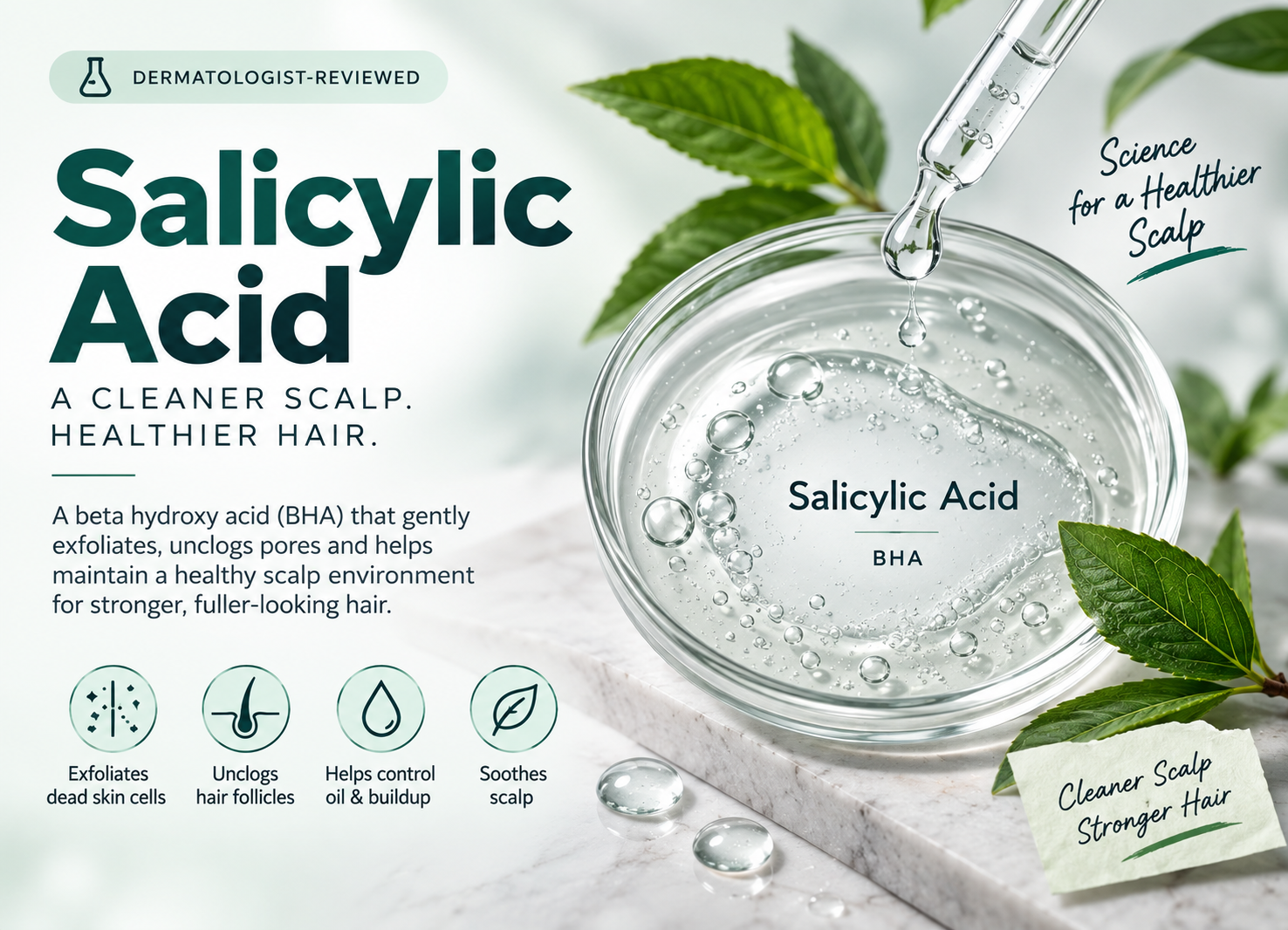
Salicylic Acid is a beta-hydroxy acid used in skincare and scalp-care products, where it acts as a keratolytic — it helps loosen and shed dead skin cells.
In scalp products, it may support exfoliation, flake loosening and buildup removal, and it can appear in shampoos, scalp exfoliators, lotions or treatments depending on the formula.
It is not a hair regrowth medicine. So it sits at the moderate scalp/cosmetic-support tier: helpful for certain flake and buildup patterns used carefully, but not a hair-loss treatment and not suitable for every scalp.
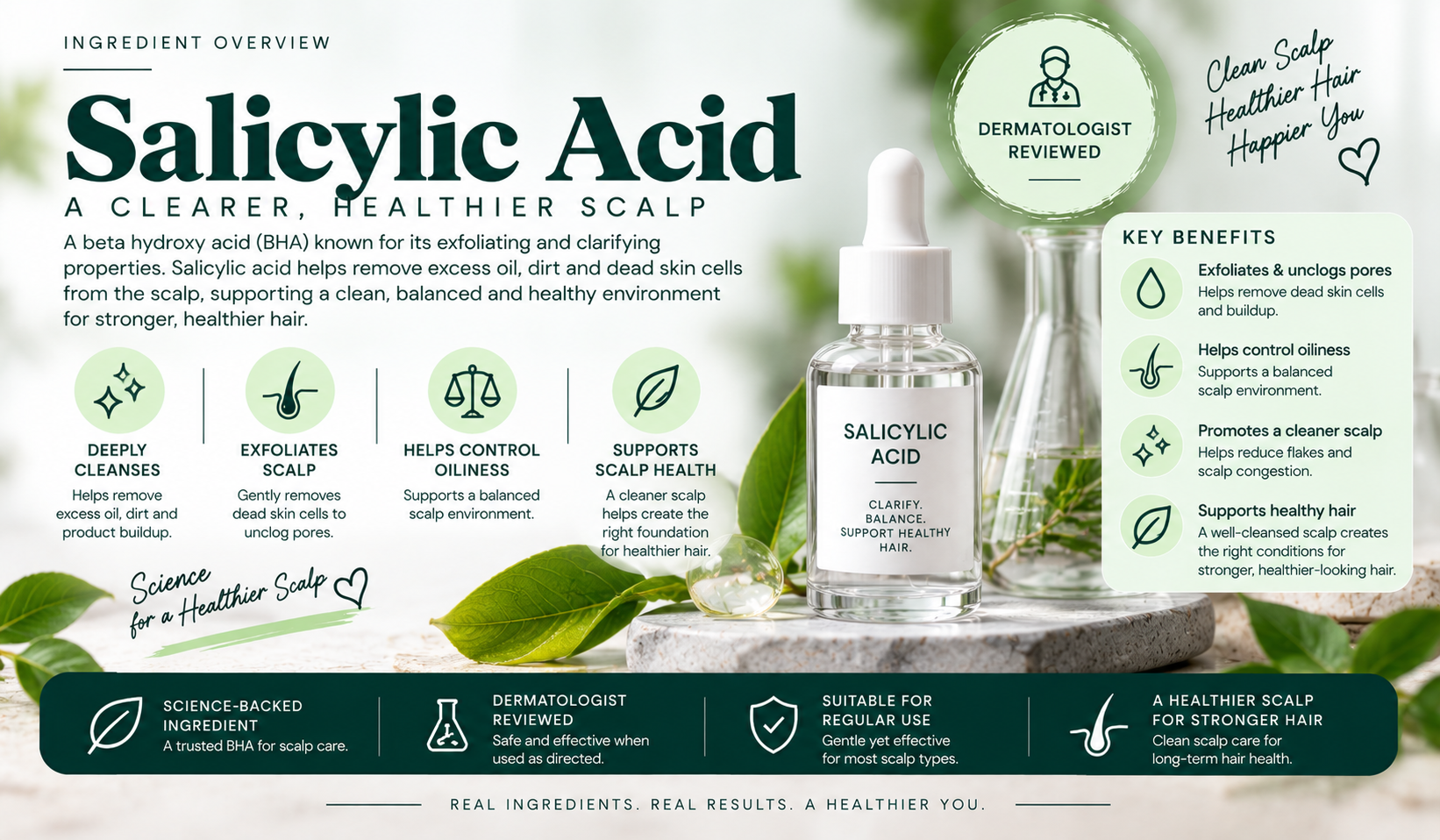
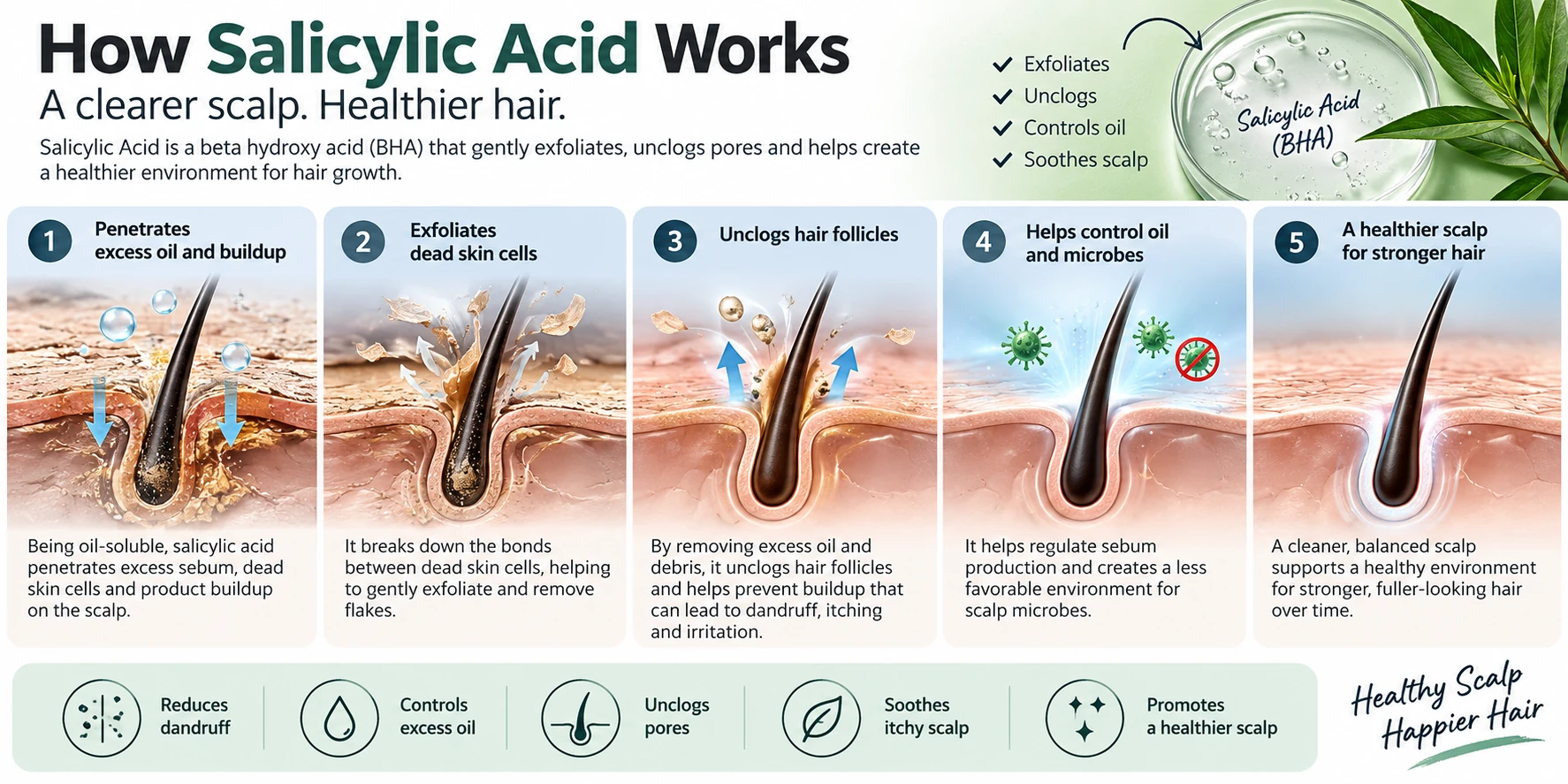
On the scalp, Salicylic Acid helps loosen dead skin cell buildup and reduce adherent flakes, which can make a flaky or buildup-prone scalp feel cleaner and smoother. It can support oily scalp / buildup routines.
It does not treat every cause of dandruff, and it does not replace antifungal or anti-inflammatory medical care when those are needed.
Overuse can worsen dryness or irritation rather than improve things — less is often more with exfoliating acids. So it is a surface-level, cosmetic exfoliating action, useful for buildup, not a treatment for scalp disease. Results vary.
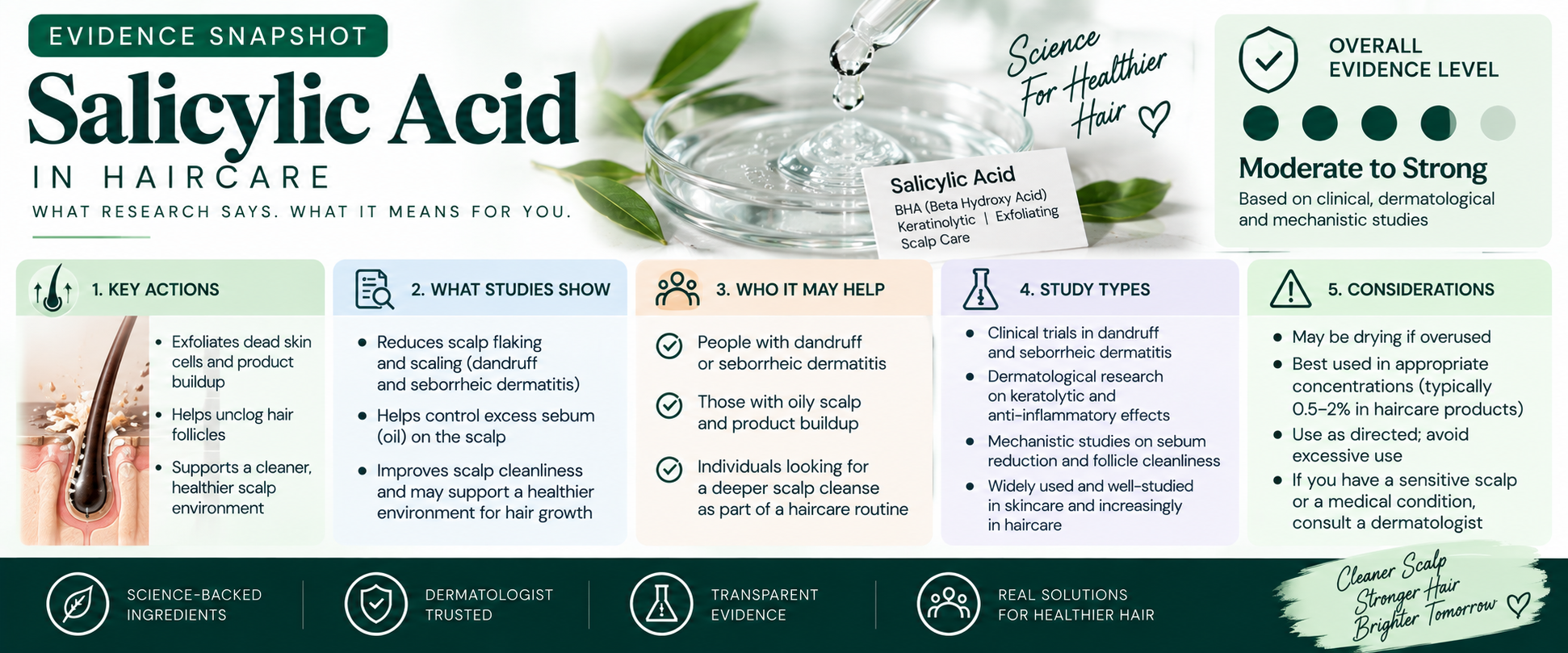
Loosens scalp and product buildup in a suitable formula.
Helps lift stuck-on, adherent flakes that ordinary washing leaves.
Suits oily, buildup-prone scalps as part of a routine.
For mild, tolerated flaking on non-sensitive scalps.
Helps clear residue from styling or layered products.
As a pre-shampoo scalp exfoliation step, used sparingly.
Follow the product label exactly and start slowly if your scalp is new to exfoliating actives — once or twice a week is a sensible start, building up only if tolerated. Avoid broken, inflamed or painful scalp, do not combine multiple exfoliating products at once, and avoid overuse, which causes dryness and irritation rather than better results. Support the scalp and hair with gentle, hydrating products if dryness occurs. Stop if burning, a rash or worsening happens, and see a doctor for thick plaques or red flags rather than exfoliating harder.
Not sure if this ingredient fits your situation? Screen the cause first.
Take AI Hair TestAsk a Hair Doctor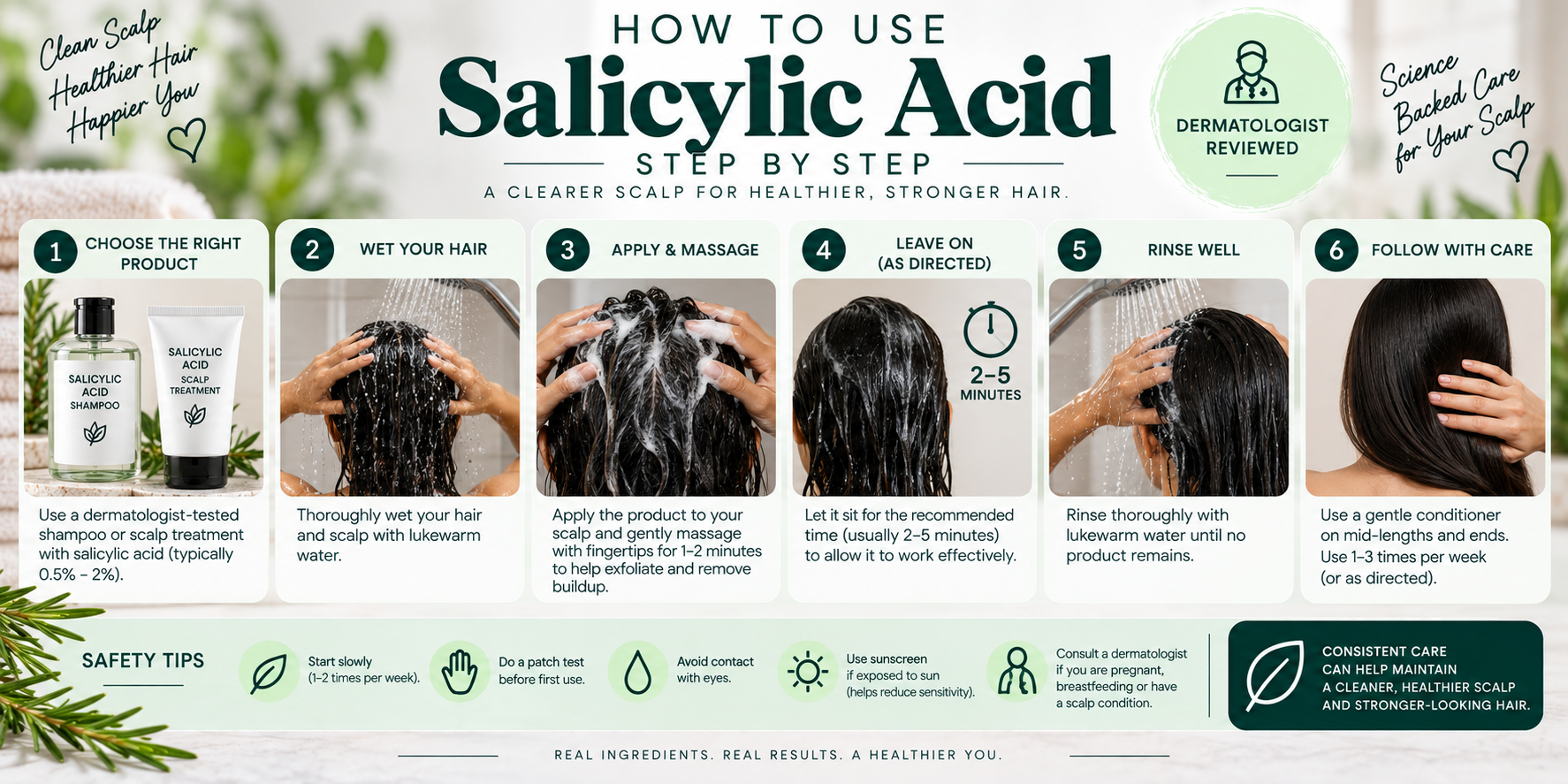
As an exfoliating acid, Salicylic Acid can cause local effects, especially with overuse or on dry, sensitive, broken or inflamed scalp.
Overuse and use on dry, sensitive or inflamed scalp are the main triggers for dryness, stinging, irritation and barrier disruption. Follow the label, start slowly, avoid active-stacking and broken skin, avoid the eyes, and take care with aspirin/salicylate allergy where relevant. Stop and seek advice if you get burning, a rash or worsening symptoms rather than continuing to exfoliate.
Scalp exfoliators and scalp-care products that may feature salicylic acid for buildup and adherent flakes. Concentration, prices, ratings and stock are dynamic placeholders from the database and official label.
Salicylic Acid is an exfoliating scalp-care ingredient, not a hair regrowth medicine and not for every scalp. Overuse or use on dry, sensitive or inflamed scalp can cause dryness, irritation or barrier disruption. Judge a product by its formula and your scalp's tolerance, and use it sparingly. Thick plaques, pain, pus, crusting, patchy loss or a child with scalp scaling need a doctor — not an exfoliant. We do not fabricate prices, concentrations, ratings, stock or reviews; these are dynamic placeholders from the official label and database. Results vary.
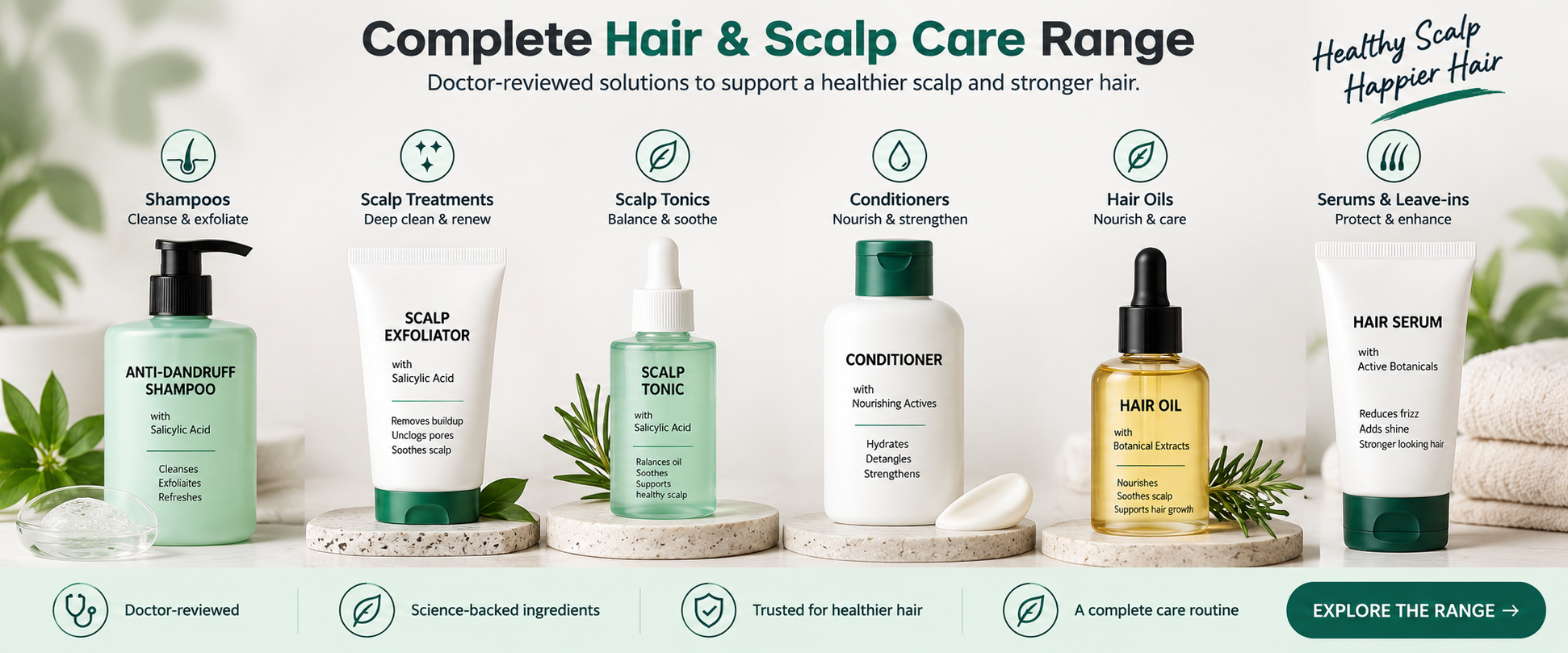
How this ingredient compares with similar options. It points to a pathway; it is not a diagnosis.
| Feature | Salicylic Acid | Ketoconazole | Zinc Pyrithione | Niacinamide |
|---|---|---|---|---|
| Category | Keratolytic / exfoliant | Antifungal | Anti-dandruff | Scalp-support (B3) |
| Main role | Loosens flakes / buildup | Targets Malassezia yeast | Flake control / comfort | Barrier, oil balance, comfort |
| Best for | Buildup / adherent flakes | Dandruff / seb-derm | Dandruff-prone scalp | Sensitive / comfort |
| Exfoliation role | Yes | No | No | No |
| Dandruff role | Partial (flakes) | Yes (yeast) | Yes | Comfort only |
| Oily scalp relevance | Good | Good | Good | Oil-balance support |
| Sensitive scalp caution | Higher; use cautiously | Possible irritation | Possible irritation | Often gentle |
| Use frequency | Sparingly / per label | Per label | Per label | Often suitable |
| Doctor guidance | Dry/inflamed/plaques → caution | Tinea / severe → doctor | Severe/recurrent → doctor | Cosmetic; minimal |
| Pathway | Scalp exfoliator | Ketoconazole shampoo | Anti-dandruff shampoo | Scalp serum / care |
Zinc Pyrithione, Ketoconazole and Salicylic Acid are more scalp-flake and dandruff/buildup focused. Niacinamide supports scalp comfort and barrier care. Peptides are more cosmetic hair/scalp support ingredients. The best ingredient depends on scalp type, symptoms, severity and whether red flags are present.
| Feature | Zinc Pyrithione | Salicylic Acid | Ketoconazole | Niacinamide | Peptides |
|---|---|---|---|---|---|
| Main category | Anti-dandruff | Keratolytic / exfoliant | Antifungal | Scalp-support (B3) | Cosmetic hair/scalp active |
| Evidence level | Moderate (scalp) | Moderate (scalp) | Moderate (scalp) | Moderate (scalp) | Limited–moderate |
| Best for dandruff | Yes (flakes/itch) | Adherent flakes / buildup | Yes (Malassezia) | Comfort after routine | Not its role |
| Best for flakes / buildup | Flakes / itch | Buildup / adherent flakes | Flakes / seb-derm | Limited | Not its role |
| Best for scalp comfort | Limited | Limited | Limited | Yes | Some (comfort) |
| Best for hair support | No | No | No | Scalp only | Cosmetic hair / shaft |
| Sensitive-scalp caution | Can dry / irritate | Higher (use cautiously) | Can dry | Often gentle | Low (local) |
| Doctor guidance | For severe / recurrent | Caution if dry / inflamed | For tinea / severe | Cosmetic; minimal | Cosmetic; minimal |
| Side-effect concern | Dryness / irritation | Dryness / stinging | Dryness / irritation | Low (local) | Low (local) |
| Product category | Anti-dandruff shampoo | Scalp exfoliator | Ketoconazole shampoo | Scalp serum / care | Hair / scalp serum |
"As a dermatologist, I consider Salicylic Acid useful for selected flake and buildup patterns, but not for every itchy or flaky scalp. It can irritate dry or inflamed scalp if overused, and I see people exfoliate harder when their scalp is already struggling, which makes things worse. Pain, pus, thick plaques, patchy loss or child scalp scaling require medical diagnosis, not stronger acids. Use it sparingly for genuine buildup on a tolerant scalp, and bring me the red flags — especially thick plaques, which can be psoriasis."
Thick plaques, pain, pus, crusting, patchy loss or a child with scalp scaling? See a doctor before exfoliating.
Consult Dr. Amit's TeamThese references are provided for patient education and do not replace a dermatologist's diagnosis or individual medical advice.
Dermatologist-led overview of seborrheic dermatitis and dandruff, including how they are treated.
View reference ›Patient-education summary of common causes of hair loss and when to seek medical care.
View reference ›Searchable index of peer-reviewed research on salicylic acid for the scalp.
View reference ›Independent systematic reviews assessing treatments for dandruff, seborrheic dermatitis and scalp conditions.
View reference ›
Question not answered here? Ask Dr Aria for general guidance, or book a consultation.
Ask Dr AriaConsult a DoctorSalicylic Acid is a useful scalp exfoliant for oily, buildup-prone or adherent-flake scalps, used carefully in a suitable product. But it is not a hair regrowth medicine, not for every scalp, and overuse causes dryness and irritation rather than better results. The smart move is to match it to a tolerant, buildup-prone scalp, start slowly, avoid overuse and active-stacking, and see a doctor for thick plaques, pain, pus, patchy loss or a child with scalp scaling. Use the AI Scalp Test to clarify your scalp situation. Results vary.
A clear, dermatologist-reviewed summary of where Salicylic Acid fits in hair fall, scalp care, hair-growth support or product selection — without exaggerated regrowth claims.
Results vary based on diagnosis, consistency, formulation and scalp condition.
 Salicylic Acid
Scalp exfoliant (keratolytic)
Flaky, scaly or product-buildup-prone scalp
Cosmetic / supportive (flaking & buildup)
Recommended if persistent or severe
Reviewed by: Dr. Amit Agarkar, MD Dermatology
Medical focus: Dermatology, trichology, hair loss, scalp disorders and hair restoration.
Last reviewed: 1 June 2026
Editorial promise: This page explains benefits, limitations, side effects and safe use without exaggerating hair-growth claims.
Prepared by the Hairsncares editorial team and medically reviewed by a dermatologist experienced in hair and scalp disorders.
Checked for ingredient role, evidence level, safety warnings, medical limitations and suitability for Indian haircare users.
To help you choose ingredients safely and understand when a dermatologist diagnosis matters more than trying products randomly.
| Parameter | Assessment | What it means |
|---|---|---|
| Evidence level | Cosmetic / supportive (flaking & buildup) | How strong the support is for this ingredient in hair or scalp care. |
| Best use case | Flaky, scaly or product-buildup-prone scalp | The situation in which it may genuinely help. |
| Not suitable for | Scalp pain, pus, crusting, bleeding, thick plaques, patchy loss, or a child's scaling scalp — see a doctor | When a dermatologist diagnosis is needed before use. |
| Expected timeline | Cosmetic scalp comfort over use; not a regrowth treatment | Results vary based on diagnosis, consistency, formulation and scalp condition. |
Pain, pus, crusting, bleeding, thick plaques or patchy loss need a dermatologist, not stronger self-treatment.
Product results should be selected based on scalp type, diagnosis, sensitivity, routine compatibility and dermatologist guidance where needed.
Find Products After AI Scalp TestSalicylic Acid may help in selected situations depending on its evidence level, diagnosis, formulation and consistency. It should not be treated as a guaranteed regrowth solution for every type of hair loss.
Timelines vary. Medicines and deficiency-based treatments may take months, while cosmetic oils or hydration ingredients may mainly improve feel, shine or manageability sooner.
Cosmetic ingredients may be used carefully, but medicines, persistent hair fall, patchy loss, scalp disease or sudden shedding need dermatologist evaluation.
Combination depends on scalp sensitivity, diagnosis, product type and whether the ingredient is cosmetic, supplement-based or prescription-guided.
People with allergies, irritation, active scalp disease, unclear diagnosis, pregnancy, breastfeeding or prescription-medicine concerns should check suitability before use.
Scalp-support ingredient with use depending on formulation, scalp type and symptoms. Not a hair regrowth medicine.
Salicylic Acid is a scalp-support ingredient.
It may help with loosening visible flakes and product/oil buildup — but it should not be treated as a cure for every hair or scalp concern.
Bottom line: use this guide to understand evidence, safety and product suitability, then take the AI Scalp Test or consult a dermatologist. Results vary.
Salicylic Acid is a keratolytic scalp-care exfoliant used for flakes and buildup. It is not a hair regrowth medicine.
Salicylic Acid may support scalp comfort, flakes or buildup depending on formulation, but overuse or wrong pairing may worsen dryness, irritation or barrier discomfort.
Salicylic Acid is a keratolytic — it helps loosen and lift flakes and buildup, which can make a scalp feel cleaner and help other actives reach the skin. But loosening flakes is not the same as treating the cause of dandruff or seborrhoea, and it does nothing for fungal or inflammatory disease on its own. Overusing it can over-exfoliate and leave the scalp dry, tight or irritated.
Pair sensibly within a routine; for persistent flaking screen with the AI Scalp Test and browse scalp shampoo.
Educational guidance, not a diagnosis. Results vary.
This guide is educational. For sudden, patchy, progressive or unexplained hair loss, or scalp pain, pus, crusting or thick plaques, screen with an AI tool or see a dermatologist.
Your cart is empty