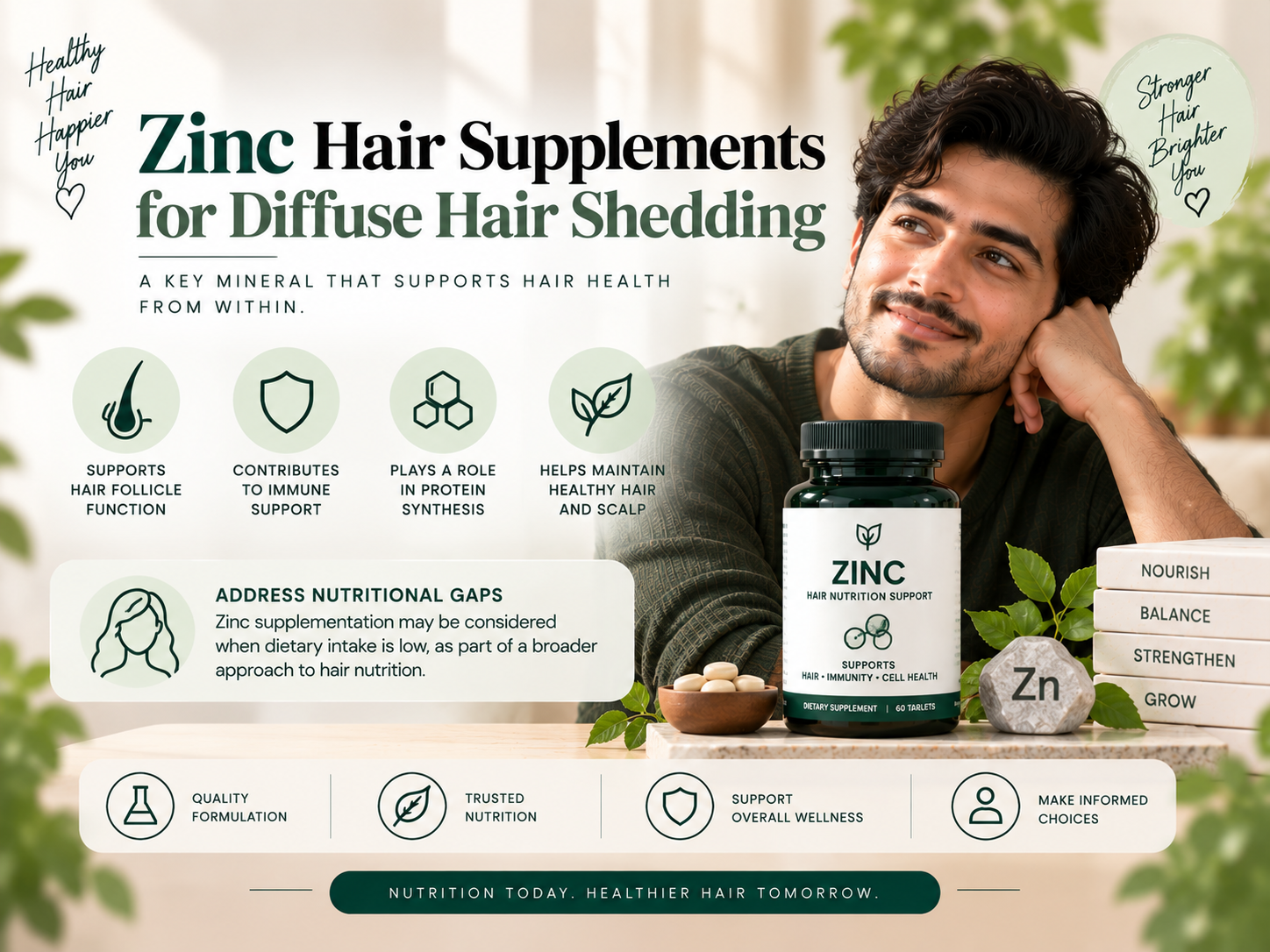
Zinc Hair Supplements for Diffuse Hair Shedding
Zinc is a trace mineral that supports hair, skin, nail, immune and wound-healing nutrition. It may be relevant when deficiency risk is suggested by diet pattern, poor intake, restricted diet, digestive issues, slow wound healing, skin symptoms or doctor-guided assessment. It is useful in selected users — not a universal hair-growth capsule.
Educational guidance only. Deficiency-risk history matters. Avoid long-term high-dose zinc without doctor guidance. Results vary. Check copper balance with prolonged use.
What You'll Learn on This Page
What Zinc is and why this trace mineral matters for hair, skin and immunity
Why Zinc is relevant in hair, skin, nail, immune and wound-healing nutrition
Who may benefit: poor intake, restricted diet, vegetarian pattern, digestive issues, skin/nail symptoms
Who should avoid blind high-dose zinc — copper imbalance, supplement stacking, normal zinc status
How zinc need is assessed — diet history, symptoms, serum zinc, copper status
Zinc vs other supplements — iron, biotin, vitamin D, B12, multivitamin
Safety, dose awareness and copper-balance caution — avoid excess, check stacking
When to consult a dermatologist instead of supplementing
✅ Best for
People with poor zinc intake, restricted diets, vegetarian/vegan patterns, digestive issues, skin/nail symptoms, slow wound healing or doctor-suspected zinc deficiency risk.
⚠️ Not a substitute for
Hair-loss treatment. Zinc supports trace mineral nutrition but does not treat pattern baldness, scarring alopecia, alopecia areata or hormonal hair loss.
Quick Answer: Does Zinc Help Hair Fall?
Zinc may support hair health when zinc deficiency risk is relevant — for example, poor intake, restrictive diet, vegetarian diet with low bioavailability, digestive issues, chronic illness, skin symptoms, slow wound healing or doctor-identified deficiency risk. It is not a universal hair-growth supplement and does not replace treatment for pattern hair loss, PCOS, thyroid hair fall, dandruff, alopecia areata or scarring hair loss.
What Is Zinc?
Zinc is an essential trace mineral required in small amounts. It supports normal cell growth, protein synthesis, immune function, skin health, wound healing, taste, smell and overall nutrition. Since hair follicles are active tissues, zinc deficiency can affect the hair and scalp environment in selected users.
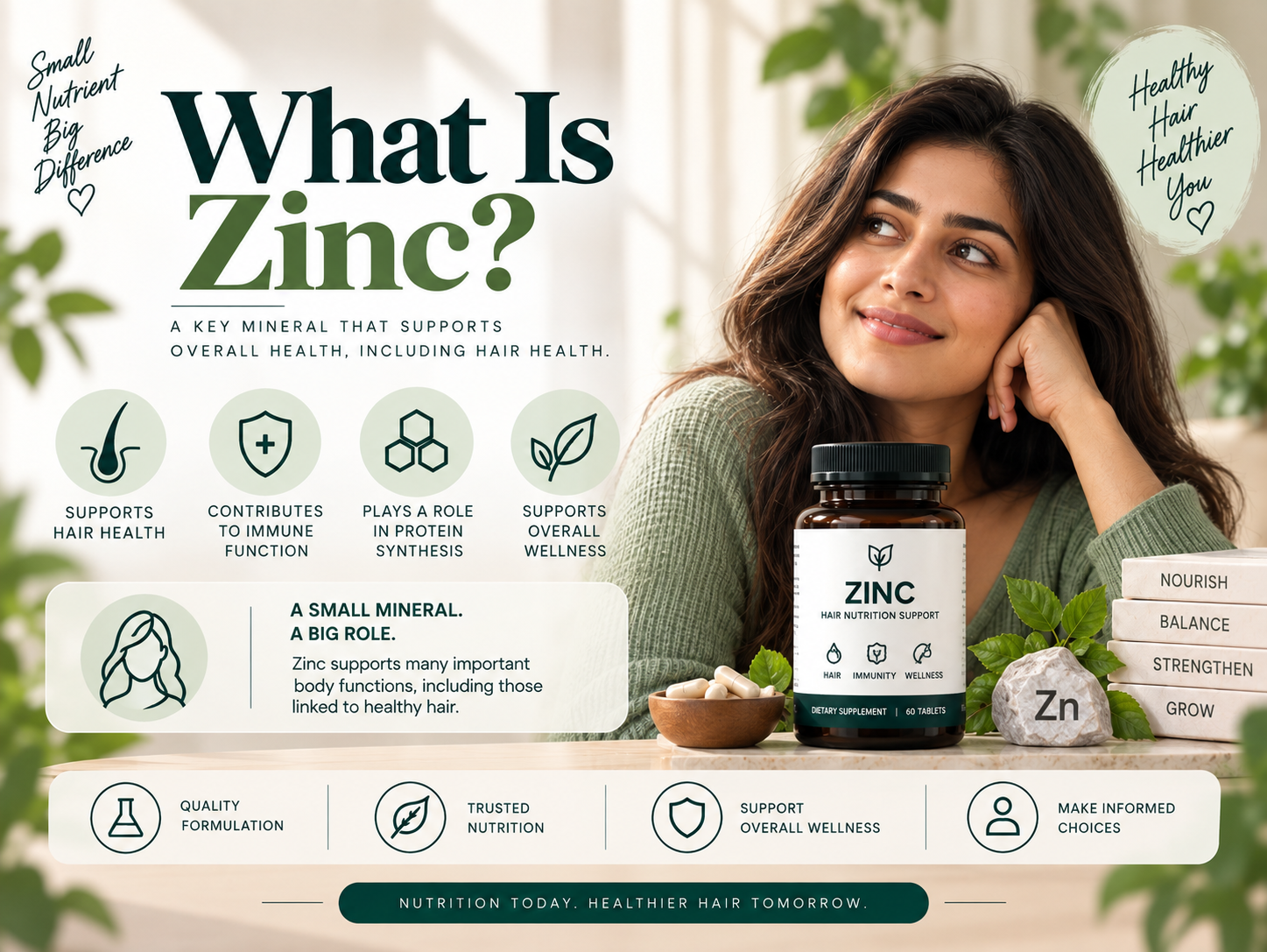
"Think of zinc like a small but important mineral switch. If your body does not have enough zinc, skin, immunity, wound healing and hair quality may suffer. But if your hair fall is due to DHT, PCOS, thyroid imbalance, postpartum change, dandruff inflammation or genetics, zinc alone will not solve the root cause."
"More zinc is not better. Long-term high-dose zinc can disturb copper balance and cause side effects."
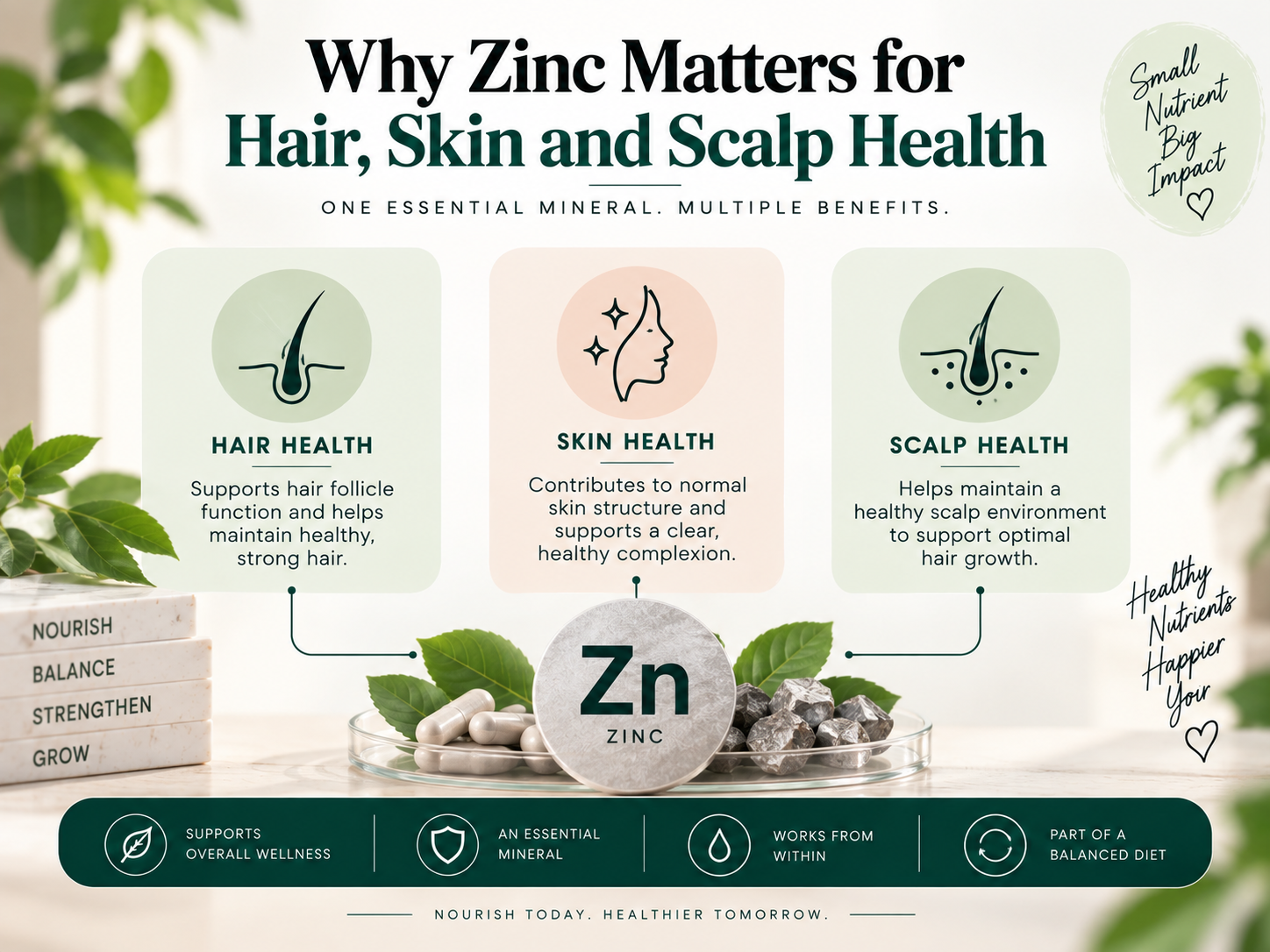
Why Zinc Matters for Hair, Skin and Scalp Health
Zinc supports many body functions linked to hair and skin health. It is involved in cell division, protein metabolism, immune regulation, skin repair and antioxidant defense. In hair fall workups, zinc may be considered when diet history, symptom history or deficiency risk suggests a possible role.
"Zinc is part of a complete nutrition picture. It should not be used as a shortcut for diagnosis."
Who May Actually Need Zinc Support?
Low Zinc Intake
Users with poor overall diet or low protein intake may have higher deficiency risk.
Digestive or Malabsorption Issues Pattern
Plant-heavy diets may contain phytates that reduce zinc absorption. Diet quality matters.
Restricted Diet or Crash Dieting
Low-calorie or repetitive diets can reduce zinc and other nutrient intake.
Digestive or Malabsorption Issues
Gut disease, chronic diarrhoea, bariatric surgery or malabsorption history may affect zinc status.
Skin Symptoms with Hair Concerns
Acne-prone skin, dermatitis-like symptoms, slow healing or brittle nails may prompt review.
Post-Illness or Recovery Phase
Poor appetite and reduced intake after illness may contribute to nutrition gaps including zinc.
Older Adults
Lower intake, absorption changes or chronic illness can influence zinc status in older users.
Doctor-Suspected Deficiency
Best use case: doctor identifies deficiency risk based on history, symptoms or testing.
"Zinc support works best when it corrects a real nutrition gap. It is not a cosmetic hair booster."
When Zinc Supplements Can Be Risky
Normal Diet + No Deficiency Risk
Random zinc may not improve hair and may create imbalance over time.
Long-Term High-Dose Zinc
Can affect copper absorption and may contribute to copper deficiency with prolonged use.
Chronic GI Symptoms
Many hair multivitamins already contain zinc. Avoid stacking without checking labels.
Iron + Zinc Stacking
High doses of multiple minerals can affect absorption and tolerance. Doctor guidance recommended.
Pregnancy or Breastfeeding
Use only doctor-approved doses during pregnancy and breastfeeding.
Kidney or Liver Disease
Complex medical history needs physician-guided dosing and monitoring.
Chronic GI Symptoms
Nausea, diarrhoea or abdominal symptoms may worsen with some zinc products.
Neurological / Anaemia Symptoms
Copper deficiency risk should be considered if high-dose zinc has been used for long periods.
How Zinc Need Is Assessed
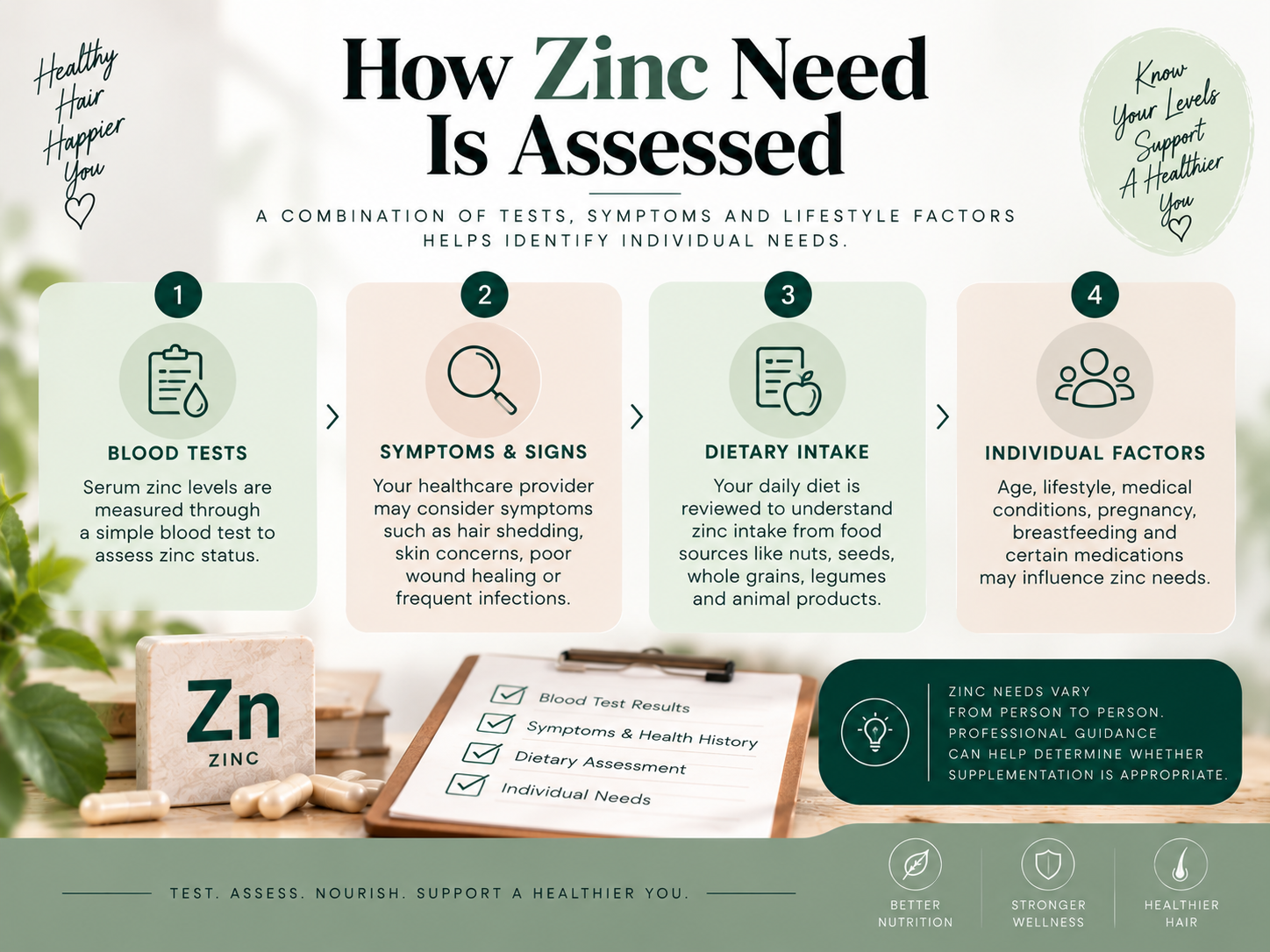
Detailed Diet History
Vegetarian/vegan review, protein intake, diet diversity
Skin, Nail & Wound Clues
Stored iron reserve — key marker for diffuse shedding evaluation
Serum Zinc (if relevant)
Circulating iron availability — fluctuates, needs context
Copper Status
Important if long-term high-dose zinc has been used
Serum Ferritin & Vitamin D
Often co-tested — multiple deficiencies may coexist
Vitamin D & B12
Often co-tested — diffuse shedding may involve multiple deficiencies
Thyroid Profile (TSH, T3, T4)
Thyroid imbalance is a common cause of diffuse shedding
Doctor Interpretation
Numbers alone are not diagnosis. Symptoms, history, CBC context matter
"Serum zinc can be affected by inflammation, timing and lab factors. The result should be interpreted with symptoms and clinical history."
Evidence Level: Trace Mineral Support Support
Zinc supplementation may support hair health when zinc deficiency, poor intake or deficiency risk is part of the health picture. It does not directly treat every hair fall condition. It does not reverse DHT-driven pattern hair loss, scarring alopecia, alopecia areata, untreated thyroid disease or untreated PCOS by itself.
Zinc Gluconate, Zinc Picolinate, Zinc Citrate & Other Forms
| Zinc Form | Common Use | User Experience | Important Note |
|---|---|---|---|
| Zinc Gluconate | Common supplement form | Widely available | Check total elemental zinc |
| Zinc Picolinate | Popular nutrition form | Often marketed for absorption | Still avoid excess dosing |
| Zinc Citrate | Common daily-use form | Usually well tolerated | Label dose matters |
| Zinc Sulfate | Medical or standard form | May cause GI upset in some | Use as directed |
| Zinc + Copper | Balance-focused formulas | Useful for long-term plans | Doctor-guided for high dose |
Zinc vs Other Hair Nutrition Ingredients
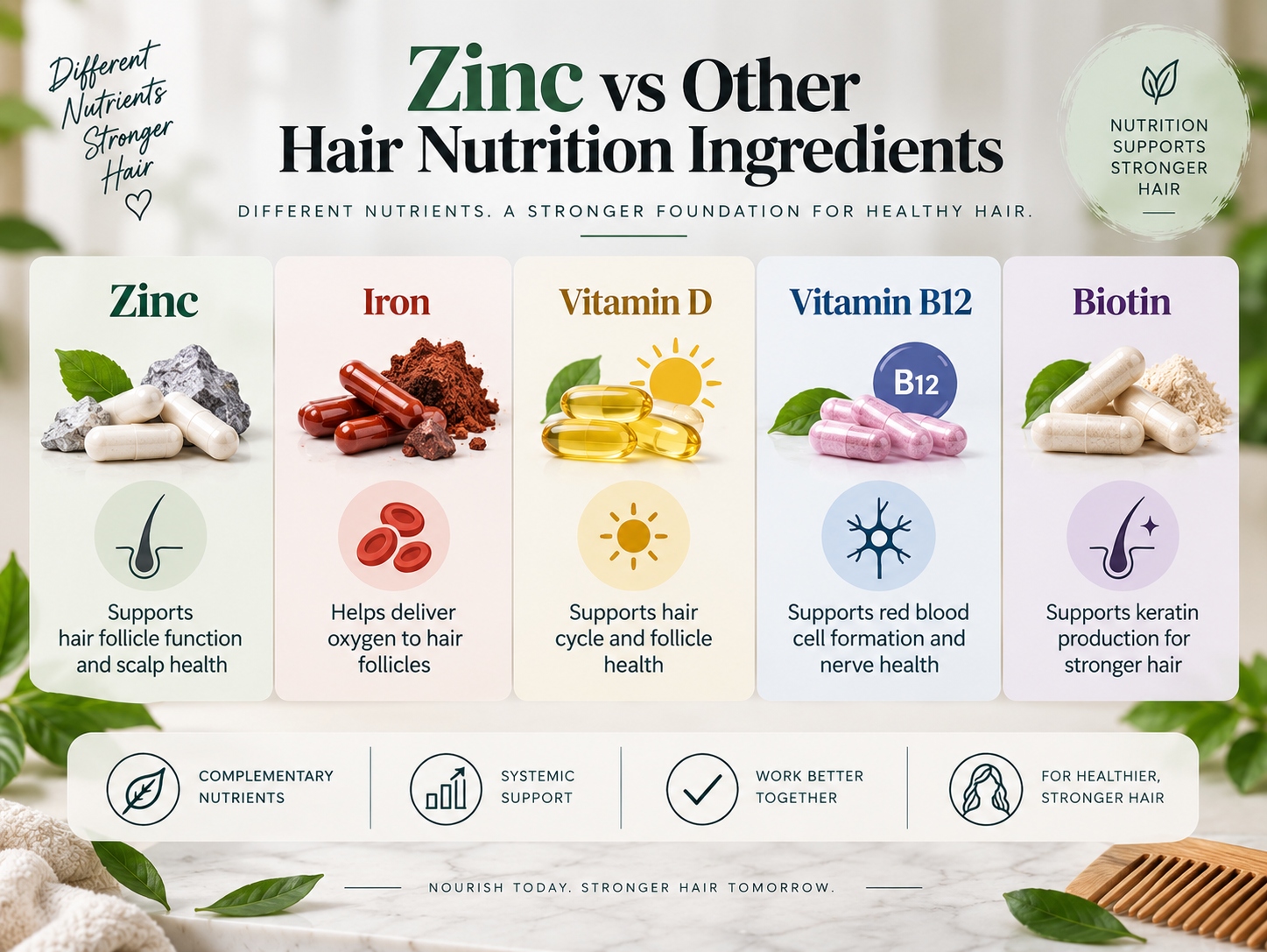
| Ingredient | Best For | Evidence Logic | Safety Note |
|---|---|---|---|
| Iron / Ferritin | Low ferritin, heavy periods, anaemia risk | Lab-test preferred | Not a regrowth shortcut |
| Biotin | True biotin deficiency or increased need | Deficiency-dependent | Can interfere with lab tests |
| Vitamin D | Confirmed low Vitamin D | Test-based | Avoid overdose |
| B12 | Vegetarian/vegan diet or low B12 risk | Deficiency-dependent | Test if symptoms/risk |
| Zinc | Confirmed deficiency | Deficiency-dependent | Excess affects copper balance |
| Amino Acids / Protein | Low protein intake, crash dieting | Nutrition support | Match diet and kidney/liver status |
| Multivitamin | Broad nutritional gaps | General support | Avoid stacking duplicate nutrients |
Zinc Support Is Not a Replacement for Hair-Loss Treatment
🩸 Zinc Hair Supplements
- Corrects zinc deficiency or deficiency-risk nutrition gap when relevant
- Supports hair, skin and immune nutrition
- May be part of diffuse shedding workup
- Does not block DHT
- Does not directly stimulate pattern hair regrowth
- Can cause imbalance if overused
🩺 Medical Hair-Loss Treatments
- Minoxidil supports regrowth in selected pattern hair loss
- Finasteride/Dutasteride affect DHT pathway
- Ketoconazole treats dandruff/seborrheic scalp
- PRP/GFC are clinic-based options
- Diagnosis decides treatment
"Do not use Zinc supplements to delay treatment for progressive pattern hair loss, patchy hair loss, scarring hair loss or inflammatory scalp disease."
Zinc Safety: Why Dose and Duration Matter
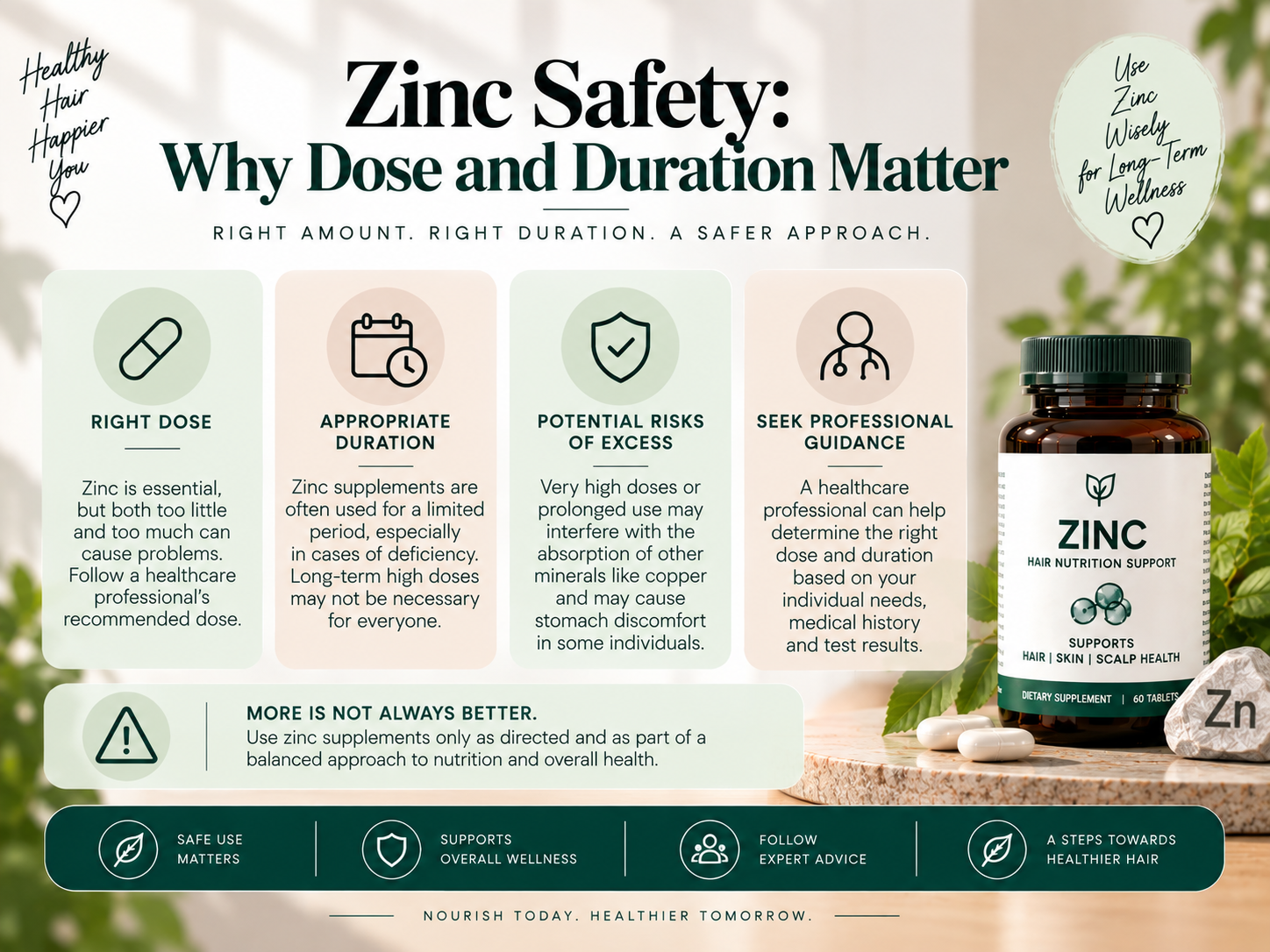
⚠️ Possible Side Effects of Excess Zinc
Nausea and stomach discomfort
Metallic taste and reduced appetite
Diarrhoea or vomiting in some users
Headache with excessive doses
Mineral imbalance with prolonged high-dose use
🚩 Copper-Balance Caution
Long-term high-dose zinc can interfere with copper absorption
Copper deficiency may contribute to anaemia-like symptoms, neurological symptoms and general health problems
Zinc should not be stacked across multiple supplements without checking total dose
Zinc can interact with some antibiotics, penicillamine and other medicines — check with doctor/pharmacist
How Long Before Zinc Correction May Help Hair?
Hair response is slow. If zinc deficiency or poor intake was contributing to shedding or poor hair quality, improvement depends on correcting the gap, improving overall nutrition and allowing the hair cycle to stabilise.
0–4 Weeks
Focus on tolerance, correct use and diet. Monitor side effects.
8–12 Weeks
Initial reassessment of shedding pattern, energy and symptoms.
3–6 Months
More meaningful hair-cycle evaluation. Repeat labs if doctor advises.
Beyond 6 Months
If no response, reassess diagnosis, thyroid, Vitamin D, B12, PCOS, scalp or pattern hair loss.
Shop Zinc Hair Support
Prices, stock and discounts are live from the catalogue. Check total zinc across all supplements.
Should You Take Zinc? Use AI Direction First
Our AI tool analyses your hair concern, diet pattern, skin/nail symptoms, supplement use and deficiency risk to provide educational guidance on whether zinc support may be relevant for you.
The AI tool is educational and does not diagnose, prescribe or replace a dermatologist or physician.
How Zinc Fits Into a Complete Hair Routine
Identify Pattern
Diffuse shedding, pattern thinning, patchy loss and breakage need different approaches.
Review Diet & Symptoms
CBC, ferritin and related tests if deficiency risk is present.
Check Overlap
Review multivitamins, gummies and hair supplements for existing zinc content.
Correct Safely
Use Zinc as per label or doctor-guided plan. Avoid long-term high-dose self-use.
Manage Scalp
Treat dandruff, oily scalp or inflammation separately.
Track Response
Monitor 8–12 weeks. Track shedding, skin, nails, wound healing.
Zinc Helps When the Deficiency-Risk Story Fits
Zinc may be important in selected users with poor intake, restricted diets, vegetarian or vegan patterns, digestive issues, skin symptoms, slow wound healing or doctor-suspected deficiency risk. But hair fall can also be caused by male pattern hair loss, female pattern hair loss, thyroid disease, PCOS, postpartum changes, low ferritin, low Vitamin D, low B12, stress, fever, dandruff inflammation, autoimmune disease or medication changes. Correct diagnosis comes before supplement selection.
Do Not Delay Doctor Review If You Notice These
Sudden heavy shedding
Patchy bald spots
Scalp pain, pus, crusting, redness or scaling
Hair fall with weight loss or fever
Hair fall after new medicine
Pregnancy or Breastfeeding or breastfeeding
Very heavy periods with fatigue
Severe fatigue or dizziness
No improvement after 8–12 weeks of appropriate care
Child or teenager hair loss
Suspected anaemia or mineral imbalance from supplement stacking
Related Pages
Medical & Authority References
1. NIH Office of Dietary Supplements — Zinc Fact Sheet for Health Professionals. ods.od.nih.gov
2. NIH Office of Dietary Supplements — Copper Fact Sheet for Health Professionals. IJDVL
3. Kil MS, Kim CW, Kim SS. Analysis of Serum Zinc and Copper Concentrations in Hair Loss. Ann Dermatol. 2013;25(4):405–409. PubMed
4. Almohanna HM, Ahmed AA, Tsatalis JP, Tosti A. The Role of Vitamins and Minerals in Hair Loss: A Review. Dermatol Ther (Heidelb). 2019;9(1):51–70. PubMed
Not Sure If Zinc Is Right for Your Hair Fall?
Zinc may help selected users with deficiency-risk patterns, skin-nail clues, poor intake or digestive-risk history, but it is not a universal hair-growth supplement. Start with AI guidance, diet-history review, supplement-label check or dermatologist consultation before buying high-dose zinc products.