Dermatologist Reviewed🟤 Thick Heavy Oil⚠️ Limited Regrowth Evidence
Castor Oil for Hair Thickness Support, Dry Lengths & Safe Use
A dermatologist-guided guide to using castor oil safely in hair routines — what it can and cannot do, how to dilute or blend it, who should avoid heavy castor oiling, and when hair fall needs medical evaluation.
⚠️Use Small Quantity. Castor oil is very thick — blend with lighter carrier oils, always patch test, and avoid oily or inflamed scalps. Limited clinical evidence for hair regrowth.
🟤 Castor Oil⚖️ Patch Test Required⚠️ Not a Minoxidil Replacement💧 Use Small Quantity🚫 Limited Regrowth Evidence🌿 Blend with Lighter Oil
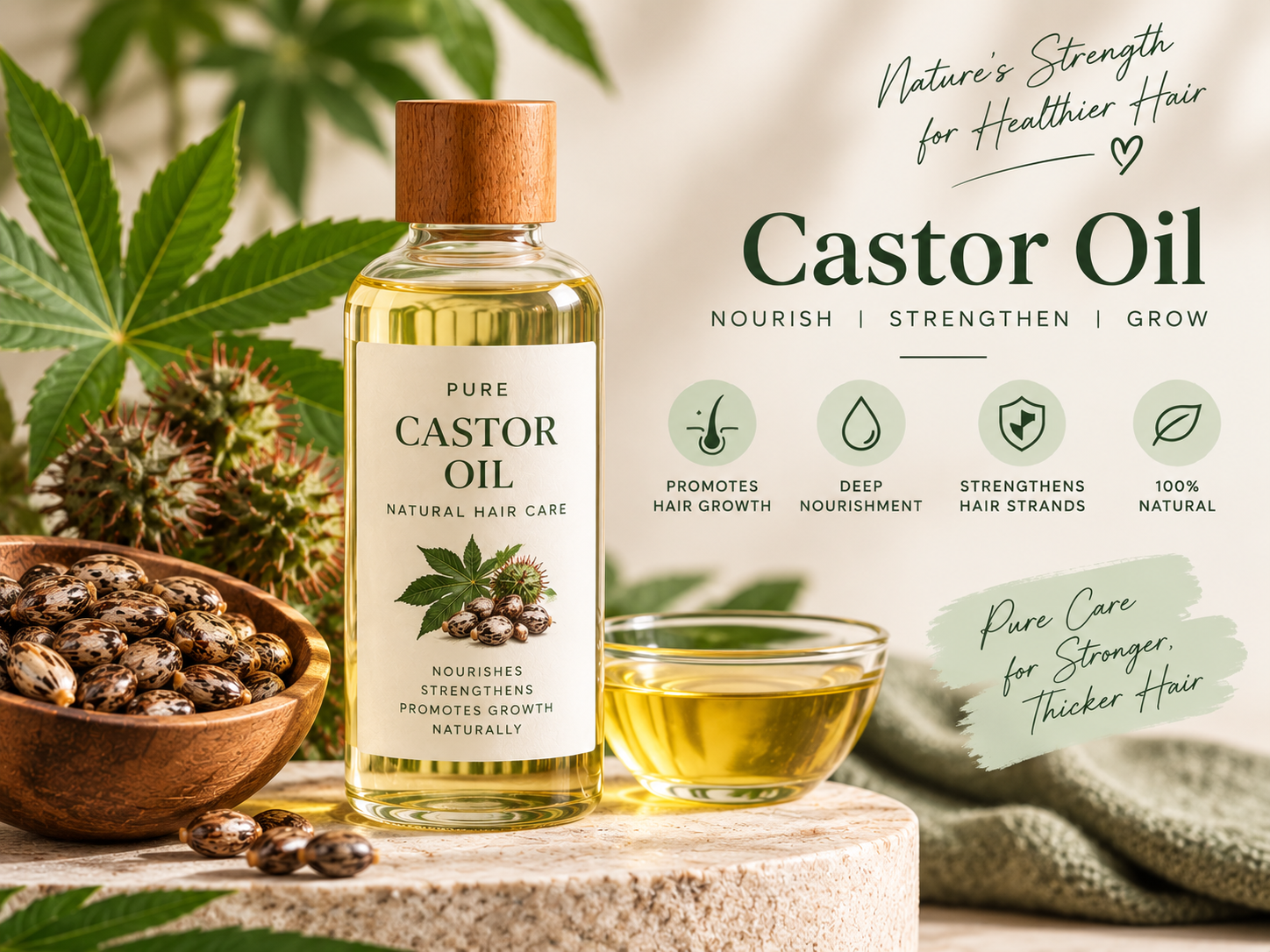
Castor Oil Hero · 720×540 · WebP
Dermatologist Reviewed
Reviewed by Dr. Amit Agarkar, MD Dermatology
Castor oil has long been used in traditional and cosmetic hair care. It is a very thick, viscous oil with ricinoleic acid as its primary component. While it is widely used for its perceived hair-thickening and moisturising properties, strong clinical evidence proving castor oil directly regrows hair is limited. This guide is designed to help you use castor oil appropriately — as a cosmetic supportive oil — and to understand when hair fall requires medical evaluation rather than topical oil routines.
What You’ll Learn on This Page
What castor oil can and cannot do — thickness vs regrowth
Warning signs that mean castor oil is clogging your follicles
Quick Answer
Does castor oil grow hair?
Castor oil is one of the most widely discussed natural oils in hair care, particularly for its perceived ability to support hair thickness and reduce hair fall. However, the scientific evidence is more nuanced. Unlike coconut oil — which has published studies supporting its role in reducing protein loss from hair shafts — castor oil lacks robust controlled clinical trial data proving it directly stimulates new hair growth.
Castor oil's thick, film-forming texture can coat the hair shaft and create the cosmetic appearance of thicker, shinier hair. This is a surface-level optical effect, not follicular stimulation. Its ricinoleic acid content is thought to have mild anti-inflammatory properties, but this does not translate to proven hair regrowth in clinical settings.
Verdict: Castor oil is a useful cosmetic hair oil for dry lengths, thickness appearance, and routine blending. It does not regrow hair, is not a replacement for minoxidil, and should not be used as a primary treatment for any medical hair loss condition. If you are losing hair, consult a dermatologist.
Castor oil is a thick, viscous oil rich in ricinoleic acid that coats hair strands and may create a temporary appearance of thickness. It does not stimulate new hair growth, cure hair loss, or treat medical scalp conditions. Due to its heavy consistency, it can clog follicles and worsen scalp acne if overused. Mix with a lighter carrier oil and always patch-test.
People with dry, coarse hair wanting a heavy-duty conditioning mask. Also popular for eyebrow and eyelash conditioning. Best as an occasional treatment, not daily use.
Not a Substitute For
Minoxidil, finasteride, or any FDA-approved hair regrowth treatment. Castor oil coats — it does not penetrate follicles or alter the hair growth cycle.
See a Dermatologist If
You notice folliculitis (red bumps on scalp), increasing hair fall after starting castor oil, or have seborrheic dermatitis. Heavy oils can worsen oily scalp conditions.
Castor Oil Benefits
What Castor Oil May Do for Your Hair
All benefits are cosmetic and supportive. Language reflects current evidence levels. Claims of hair regrowth are not supported by robust clinical data.
🌰
Thickness Appearance
Castor oil's thick, viscous texture coats the hair shaft, creating a visual effect of fuller, thicker hair. This is a surface cosmetic result rather than follicle stimulation — but can meaningfully improve how hair looks and feels.
🛡️
Hair Shaft Coating
The film-forming properties of castor oil help seal the hair cuticle, reducing moisture loss from the shaft. This can reduce brittleness and improve hair's resistance to environmental damage.
💧
Dry Length Support
For very dry, parched hair lengths — particularly in coarse, thick, or Afro-textured hair — castor oil applied in small quantities can provide significant softening and help restore a healthier appearance to ends.
✨
Shine Enhancement
The reflective properties of castor oil on the hair surface can improve light reflection, giving hair a richer, glossier appearance — particularly noticeable on dark or coarse hair.
🌿
Coarse Hair Manageability
Castor oil can reduce friction between hair strands in thick, coarse, or tightly textured hair, making detangling easier and reducing breakage during combing — especially when blended with a lighter carrier oil.
🔗
Sealant Oil Routine
Castor oil works well as the final sealing step in a LOC (Liquid-Oil-Cream) or LCO hair moisture routine, helping trap hydration in dry or curly hair lengths when used appropriately.
Castor oil's thick texture makes it one of the more problematic oils for incorrect use. Please read these safety points before beginning any castor oil routine.
🧴
Very Thick Texture
Pure castor oil is extremely thick and sticky. It can be very difficult to wash out, especially from finer hair. Always blend with a lighter carrier oil for easier application and removal.
🔴
Oily Scalp Risk
Applying castor oil to an oily scalp can significantly worsen sebum production, exacerbate seborrheic dermatitis, and trigger scalp acne or folliculitis. Avoid scalp application if your scalp is oily or dandruff-prone.
⚗️
Patch Test Required
Although castor oil allergy is uncommon, contact dermatitis has been reported. Always patch test on the inner wrist for 24 hours before scalp or hair application.
👁️
Avoid Eye Contact
When applying castor oil near the eyebrows or hairline, avoid direct eye contact. Castor oil in the eye can cause irritation and temporary blurred vision.
💊
Not for Inflamed Scalp
Do not use castor oil on inflamed, infected, acne-prone, or broken scalp skin. Heavy oiling on inflamed tissue can worsen folliculitis and may delay healing.
🚨
Stop If Shedding Increases
If you notice increased hair shedding after starting castor oil — especially during washing or removing the oil — stop use immediately and consult a dermatologist.
⚠️
Key Safety Rule: Do Not Use Heavy Castor Oiling on Inflamed, Infected or Oily Scalp
If your scalp is inflamed, acne-prone, infected, or consistently very oily, do not apply castor oil to the scalp without first consulting a dermatologist. Heavy oiling in these conditions can worsen scalp health, trigger folliculitis, and delay proper treatment.
If you are applying castor oil and notice increased itching, redness, pimples on the scalp, or worsening dandruff — stop immediately. These are not signs of “detox” or “purging.” They may indicate irritation, allergy, folliculitis or worsening of an existing scalp condition. Consult a dermatologist before resuming any oil application on an irritated scalp.
Safe Use Guide
How to Use Castor Oil for Hair Safely
Because castor oil is so thick, correct application technique is more important than with lighter oils. Follow these dermatologist-guided steps carefully.
• Castor + Jojoba (30:70) — For a lighter feel on normal-dry hair
• Castor + Argan (30:70) — For frizz control and shine
• Castor + pre-diluted Rosemary blend — Only if rosemary essential oil is already properly diluted in a carrier oil. Do not mix neat rosemary essential oil directly into castor oil.
1
Patch Test — 24 Hours
Apply a small amount of your castor oil or castor blend to the inner wrist. Leave 24 hours. Only proceed if no redness, itching or rash develops.
2
Blend with a Lighter Carrier Oil
Mix castor oil with coconut, jojoba, or argan oil. A 50:50 or 30:70 (castor:carrier) ratio works for most hair types. Pure castor oil can be very difficult to wash out of fine or thin hair.
3
Use a Small Quantity
A pea-sized to small coin-sized amount of castor oil in your blend is usually sufficient. Over-application leads to heavy buildup, greasiness, and may worsen scalp conditions.
4
Apply Mostly to Lengths
Focus application on the mid-lengths and ends. Apply to the scalp only if it is clearly dry and non-oily. Avoid heavy scalp coating.
5
Leave 30–45 Minutes
Start with a short contact time of 30–45 minutes. Avoid overnight use until you have confirmed your scalp tolerates castor oil well over several sessions.
6
Shampoo Thoroughly — Twice
Castor oil requires at least two rounds of shampooing to fully remove. Residue contributes to scalp buildup. Use a gentle but effective shampoo.
7
Track and Adjust
Monitor scalp and hair response after each use. If you experience buildup, itching, scalp acne, or increased shedding — stop and consult a dermatologist.
You experience scalp redness, burning, itching, pimples, unexpected hair shedding, or difficulty removing the oil despite shampooing. Consult a dermatologist before restarting any castor oil routine.
Expert Note
The most common mistake with hair oiling is leaving oil on for too long or sleeping with heavy oil overnight without proper washing the next morning. Prolonged scalp oil contact can clog follicles, attract dust and worsen dandruff in susceptible people. For most users, 30 minutes to 2 hours before washing is sufficient. Listen to your scalp, not social media trends.
Hair Type Suitability
Is Castor Oil Right for Your Hair Type?
🌿
Dry Coarse Hair
Castor oil works well for very dry, thick, coarse lengths. Blend with coconut or almond oil for easier application.
Excellent Match🌀
Curly or Frizzy Hair
Good for sealant-style use on curly or frizzy lengths. Apply to ends and mid-lengths to lock in moisture after hydrating products.
Good Match💧
Dry Scalp
Small amounts on a genuinely dry scalp may help, but use sparingly. Do not over-apply or use if scalp is sensitive to thick oils.
Use Sparingly🪶
Fine or Thin Hair
Castor oil is very heavy for fine hair. It can make thin hair limp and difficult to wash. Use very sparingly on ends only, or avoid altogether.
Use Very Sparingly💦
Oily Scalp
Not recommended. Heavy castor oil on an oily scalp can significantly worsen sebum buildup and scalp conditions.
Avoid on Scalp❄️
Dandruff / Seborrheic Dermatitis
Castor oil can aggravate active dandruff. Antifungal treatment must come before any heavy oiling routine.
Consult First🔴
Scalp Acne / Folliculitis
Do not apply castor oil to acne-prone or infected scalp skin. Heavy oils can worsen follicular occlusion.
Do Not Use💉
Post Hair Transplant
Do not use castor oil on a post-transplant scalp without explicit clearance from your hair transplant surgeon.
Doctor Clearance Required🚨
Active Hair Loss
Castor oil does not treat hair loss. If you are losing hair progressively, consult a dermatologist for proper evaluation and treatment.
Castor oil is one of the more restrictive oils in terms of scalp suitability. Our AI Hair Test identifies your scalp type, hair fall pattern, dandruff status, sensitivity history, and treatment background — and gives clear guidance on whether castor oil is appropriate for your specific situation.
This tool provides screening and product-direction guidance only. It does not diagnose, prescribe, or replace dermatologist advice.
AI Hair Test Dashboard · WebP
Shop the Collection
Shop Castor Oil Routines by Hair Goal
All products listed are cosmetic hair oils. Patch test required. Use only as directed — these are supportive cosmetic products, not hair loss treatments.
Products for this guide are being curated. Take the AI Hair Test for personalised picks meanwhile.
Strong clinical evidence proving castor oil directly regrows hair is limited. It is widely used as a cosmetic oil that may improve the appearance of hair thickness, shine, and dryness — but it is not a clinically proven treatment for androgenetic alopecia or any other medical hair loss condition.
No robust controlled trials have proven castor oil regrows hair. Its traditional and cosmetic use for hair is well established, but evidence for direct follicular stimulation or new hair growth is lacking. It should not replace medically indicated hair loss treatment.
Castor oil's thick, film-forming texture can coat the hair shaft and create the appearance of fuller, thicker hair. This is a cosmetic surface effect — not actual follicle stimulation or new hair growth — but can meaningfully improve how hair looks and feels.
Daily castor oil application is generally not recommended. Its thick texture can cause heavy buildup, attract dust and debris, block scalp pores, and make washing very difficult. Use 1–2 times weekly maximum as a pre-wash treatment blended with a lighter carrier oil.
Castor oil does not require dilution the way essential oils do, but blending it with a lighter carrier oil (coconut, jojoba, or argan) makes it significantly easier to apply, distribute through hair, and wash out. A 50:50 or 30:70 castor-to-carrier ratio is a good starting point.
No. Castor oil is very thick and is generally not suitable for oily scalps. It can worsen sebum buildup, aggravate seborrheic dermatitis, and trigger scalp acne or folliculitis. If your scalp is oily, use hair lengths only and avoid scalp application.
Heavy castor oiling can cause scalp buildup which, when washed aggressively, may result in mechanical hair breakage. Some individuals report increased shedding after heavy castor oil use. If you notice increased hair fall after starting castor oil, stop use and consult a dermatologist.
Castor oil is commonly applied to eyebrows as a traditional conditioning practice. Use a clean spoolie or cotton swab. Avoid eye contact. Patch test near the eyebrow area before regular use. There is limited clinical evidence for eyebrow regrowth from castor oil.
Castor oil can be combined with a pre-diluted rosemary essential oil blend. However, rosemary essential oil must always be diluted in a carrier oil first (never undiluted). Do not mix undiluted rosemary essential oil directly into castor oil as it may not disperse evenly. Consult a dermatologist if you have a sensitive scalp.
Consult a dermatologist if you experience progressive hair thinning, patchy hair loss, sudden heavy shedding, scalp pain, pus or folliculitis, severe dandruff, suspected PCOS or thyroid-related hair fall, postpartum hair loss, or if any hair concern does not improve with cosmetic care.
Still have questions about castor oil, hair loss, or your scalp?
Castor oil has traditional and cosmetic use behind it, but direct clinical evidence for hair regrowth is limited. Its benefits are better framed as lubrication, coating, shine, dryness support, and thickness appearance. All external links open in a new tab.
Castor oil is a cosmetic supportive hair oil. It does not diagnose, treat, cure or prevent any medical hair loss condition. It is not a drug, and strong clinical evidence for hair regrowth from castor oil is limited. This guide has been reviewed by Dr. Amit Agarkar, MD Dermatology. Consult a qualified dermatologist if you experience progressive hair thinning, bald patches, sudden shedding, painful scalp, scalp infection, severe dandruff, PCOS-related hair loss, thyroid-related hair loss, postpartum hair fall, or any concern that does not improve with cosmetic care. Do not substitute castor oil for medically prescribed hair loss treatment.
Hair Loss Treatment India — Free AI Hair Diagnosis & Dermatologist-Recommended Products
Minoxidil India — CDSCO-Approved Hair Regrowth Treatment
Free AI Hair Loss Diagnosis by Qualified Dermatologists
Best Anti Hair Fall Shampoo, Oil & Supplements in India
Male Pattern Baldness Treatment — Minoxidil & DHT Blocker Protocol