Excess sebum
Naturally oily scalps can tip into irritation and flaking that raises shedding.
An oily scalp with hair fall often reflects excess sebum, product buildup, or oily dandruff and seborrheic dermatitis irritating the scalp. Oiliness on its own is not the same as hair loss — but when greasy flakes, itching, a sticky scalp or increased shedding appear together, the scalp environment is worth assessing before reaching for products.
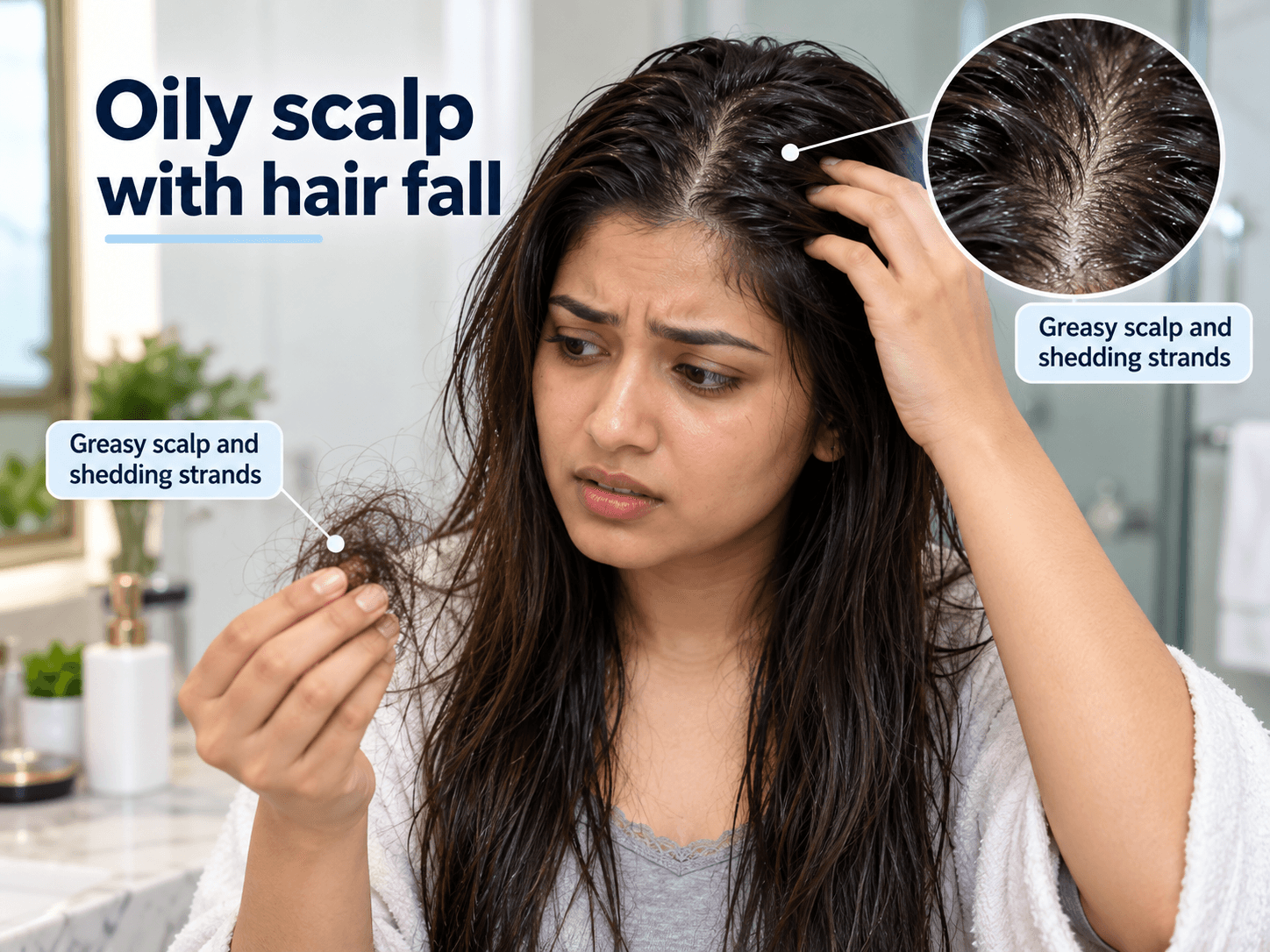
An oily scalp with hair fall may involve sebum, dandruff, buildup or product mismatch. Balance cleansing without over-drying.
Oily Scalp With Hair Fall is a symptom, not a final diagnosis. It may be related to root shedding, hair-shaft breakage, scalp inflammation, pattern thinning, patchy hair loss, product irritation or medical triggers.
The right next step depends on amount, duration, pattern, scalp symptoms, hairline, crown or parting changes, medical history, stress, illness, diet, hormonal clues and current products.
Bottom line: use this page to understand what the symptom may mean, what to track and which red flags matter, then take the AI Scalp Test or ask a dermatologist if it is severe, progressive or unclear. Results vary.
Oily scalp with hair fall may happen when excess sebum, product buildup, dandruff or seborrheic dermatitis irritates the scalp. Oiliness itself does not always mean hair loss, but oily flakes, itching, redness, a sticky scalp, increased shedding or crown thinning should be assessed before choosing products. An AI Scalp Analysis can help read the scalp.
Sebum is the scalp's natural oil. In moderation it protects; in excess, especially with the yeast involved in dandruff, it can tip into seborrheic dermatitis — an oily, flaky, sometimes red and itchy scalp that can increase shedding.
So the oil and the hair fall usually share a cause rather than one creating the other. Two everyday habits make it worse: layering heavy oils onto an already greasy scalp, and over-washing that triggers rebound oil. Balancing the scalp is the first move.
Oily-scalp shedding usually reflects one or more of these overlapping factors.
Naturally oily scalps can tip into irritation and flaking that raises shedding.
Greasy flakes and inflammation, a frequent partner of oily-scalp hair fall.
Heavy oils and styling residue trap flakes and irritate the scalp.
Both infrequent washing and over-washing can worsen oiliness and irritation.
Hormones, sweat and humid weather can increase sebum and scalp stress.
Oiliness can coexist with pattern thinning, which needs its own assessment.
Red-flag patterns should be examined by a dermatologist before trying any product — start with an online dermatologist consultation.
Educational, category-level directions matched to this symptom — not a bestseller list. Product availability is populated dynamically from the Hairsncares catalogue.
Balancing, clarifying cleansing for greasy, sticky scalps.
Explore category →Where oily flakes and itch accompany the oiliness.
Explore category →For oily seborrheic scalp, as label-directed.
Explore category →Lightweight scalp support without heavy oils.
Explore category →Targeted, non-greasy scalp-environment support.
Explore category →Where shedding persists after the scalp balances.
Explore category →Product category suggestions are educational. Avoid heavy oils on an already oily scalp, and do not over-cleanse, which can trigger rebound oiliness. Medicated shampoos should be used as label-directed or doctor-directed. Persistent shedding or scalp symptoms need dermatologist review. Results vary.
Cautious, evidence-led language applies: "may support", "where suitable", "where deficiency exists". Results vary; doctor guidance is recommended.
Oiliness, oily dandruff and seborrheic scalp look similar but need different care. The AI Scalp Analysis helps read your scalp and the AI Hair Test factors in shedding for a dermatologist-reviewed plan.
Upload clear scalp photos for a dermatologist-reviewed read of oiliness, flakes and redness.
The Routine Builder sets the right wash frequency, cleanser and lightweight care for a greasy scalp.
"An oily scalp that is also shedding confuses people, because the hair often looks greasy and limp, which reads as "weak". Usually the oiliness and the shedding share a cause — an oily, seborrheic, sometimes flaky scalp — rather than the oil itself pulling hair out. Two habits make it worse: piling heavy oils onto an already greasy scalp, and over-washing, which can trigger rebound oil. I aim to balance the scalp first; if shedding continues once it is calm, then we look harder for an underlying pattern or other cause."
A symptom needs context and does not confirm a diagnosis. Sudden, severe, patchy or progressive loss, or a painful, pus-filled, crusted or bleeding scalp, needs prompt medical review.
External links open in a new tab and are provided for general education; they are not endorsements and do not replace personalised medical advice.
Oiliness alone does not usually cause hair loss, but the conditions that often go with it — oily dandruff and seborrheic dermatitis — can inflame the scalp and increase shedding. Balancing and treating the scalp usually helps.
Excess sebum can accompany an irritated, flaky or seborrheic scalp, and that environment can raise shedding. The oil and the shedding often share a cause rather than one directly producing the other.
Heavy product or oil buildup can irritate the scalp and trap flakes, which may worsen itching and shedding. Gentle clarifying and avoiding heavy oils on an oily scalp usually helps more than adding more product.
A balancing or clarifying oily-scalp shampoo helps control grease, while an anti-dandruff or ketoconazole shampoo suits oily, flaky, seborrheic scalps. A scalp analysis helps match the right one.
Generally avoid adding heavy oils to an already oily scalp, as it can worsen buildup and flaking. If you like oiling lengths, keep it off the scalp and wash it out properly. Focus on balancing the scalp instead.
Yes — oily dandruff and seborrheic dermatitis commonly occur on oily scalps, since excess sebum can feed the yeast involved. This combination often causes greasy flakes, itching and increased shedding together.
Many oily scalps do well with more frequent, gentle washing, but over-washing can trigger rebound oil. The right frequency varies, so adjust to keep the scalp comfortable and clean — a routine builder can help.
Hormonal influences can increase sebum production, which is why oily scalp and related shedding sometimes track with hormonal changes. If you suspect a hormonal cause, assessment helps guide the right approach.
Ketoconazole, zinc pyrithione, salicylic acid and piroctone olamine help oily, flaky scalps, while niacinamide and lightweight serums support without adding grease. Avoid heavy oils if the scalp is already oily.
See a dermatologist if there is persistent oiliness with flaking, redness, pain or itching, ongoing or heavy shedding, crown thinning, or if scalp-care products have not helped after a few weeks.
Excess oil rarely causes hair fall directly, but the scalp conditions that come with it can. Balance oil and calm the scalp with these categories, and use the AI Hair Test to check the shedding.
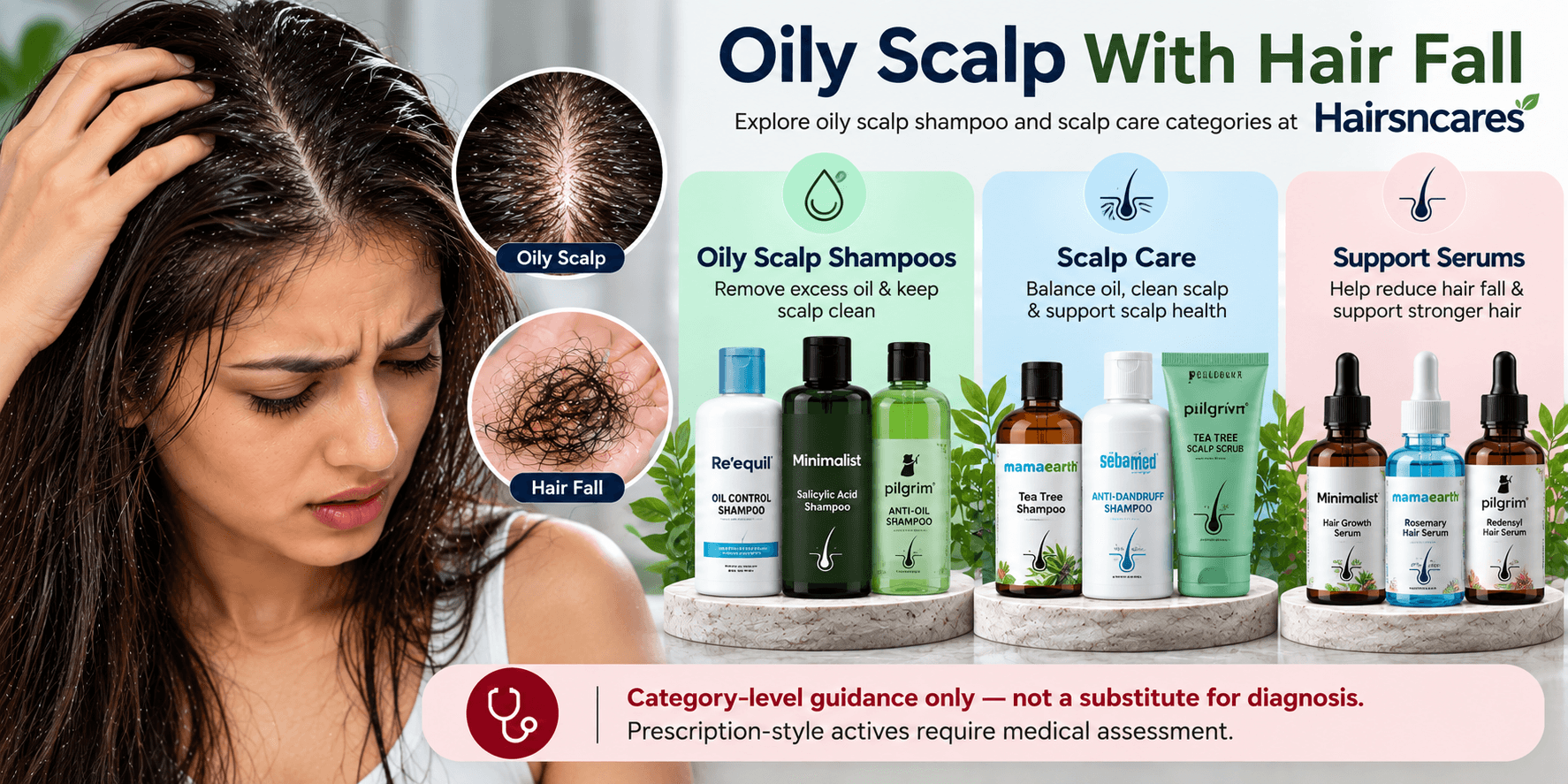
Clarifying, scalp-balancing washing for greasy roots and buildup.
Supports a calmer, less congested scalp environment.
The AI Hair Test helps separate scalp issues from true hair-fall triggers.
Your cart is empty