Scalp Circulation Support
Rosemary oil has been observed to promote blood flow to the scalp when massaged in, which may create a more nourishing environment for hair follicles. This is the mechanism proposed in clinical comparisons with minoxidil.
A dermatologist-guided resource on how to use rosemary oil safely — covering dilution ratios, scalp types, what it can and cannot do, side effects, and when to consult a hair doctor.
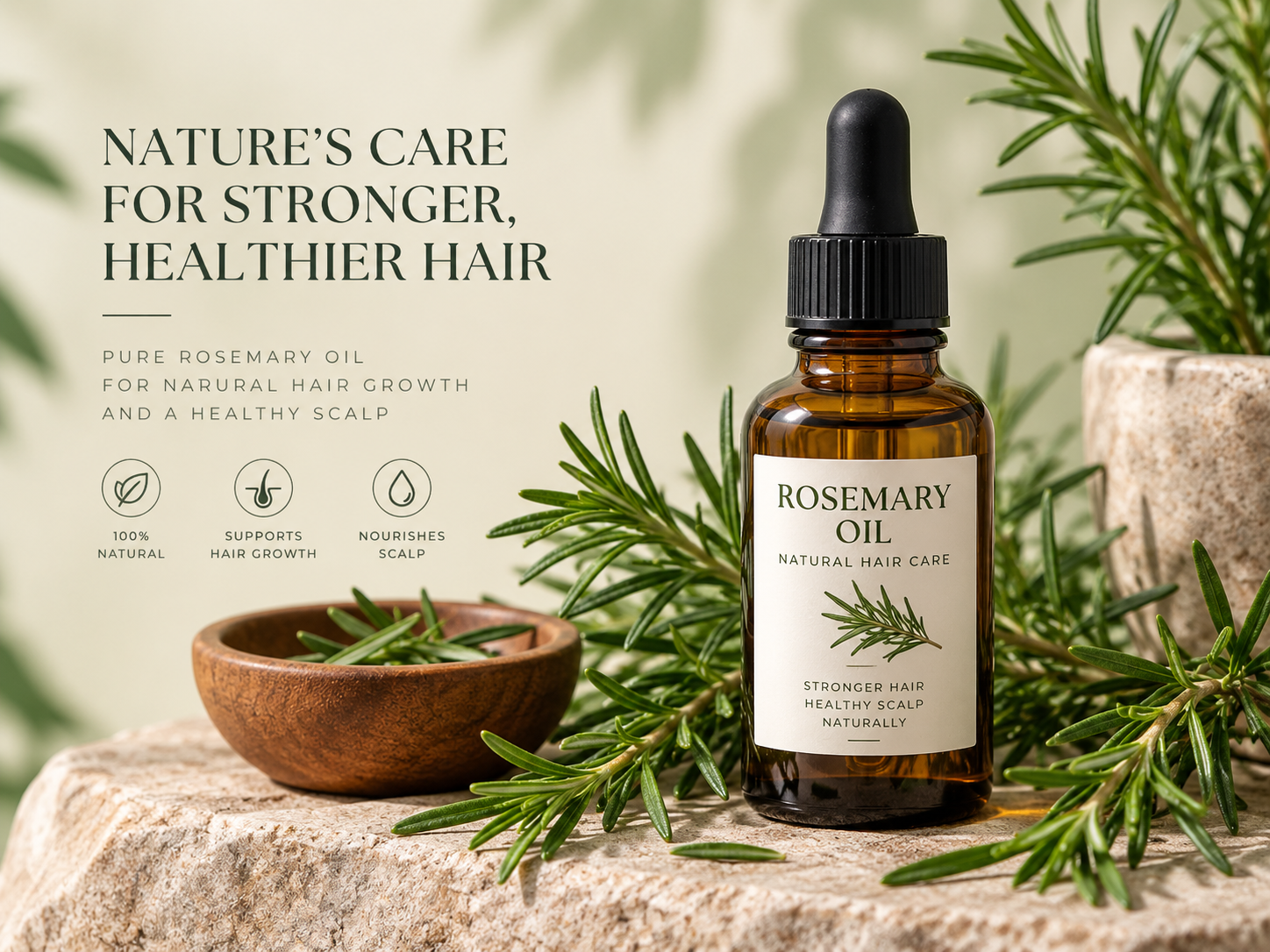

This rosemary oil guide is designed for educational and product-selection support only. All safety guidelines, dilution recommendations, and cautions reflect standard dermatology practice. This page does not replace clinical diagnosis, prescription treatment, or dermatologist consultation. If you have active hair loss, scalp disease, or any medical concern, consult a qualified hair doctor before beginning any topical routine.
What rosemary oil can and cannot do for hair growth
The 2015 minoxidil comparison study — context and limitations
Correct dilution ratios — rosemary is an essential oil, not a carrier
How to do a scalp patch test before using any essential oil
Rosemary oil vs minoxidil — why they are not interchangeable
Which hair loss types may respond and which will not
Safe carrier oils to blend with rosemary oil
Side effects — contact dermatitis, headaches, and contraindications
Rosemary oil is a popular cosmetic ingredient with emerging evidence suggesting it may support scalp health, reduce scalp inflammation, and provide antioxidant benefits during a hair care routine. A frequently cited 2015 clinical trial published in SKINmed Journal compared rosemary oil to 2% minoxidil in androgenetic alopecia and found comparable hair count improvements at six months — with less scalp itch in the rosemary group.
However, this was a single small-scale trial. Rosemary oil is not a clinically approved hair regrowth treatment. It is best understood as a supportive cosmetic oil that may complement a scalp wellness routine — not a replacement for medically indicated hair loss treatments.
Verdict: Rosemary oil may be a useful addition to a scalp massage routine when used correctly — diluted, patch tested, and alongside other dermatologist-guided interventions. It should never be positioned as a standalone hair regrowth solution.
Rosemary essential oil showed comparable results to 2% minoxidil in one 2015 study for androgenetic alopecia, but this single study does not make it a proven treatment. It must be diluted in a carrier oil (2–3 drops per tablespoon) — never apply undiluted to scalp. It may support hair growth routines as an adjunct but does not replace FDA-approved therapies. Avoid during pregnancy. Always patch-test first.
People with early-stage thinning who want a natural adjunct to their hair growth routine. Must be combined with a carrier oil and used consistently for 6+ months to evaluate.
Minoxidil 5%, finasteride, or dermatologist-guided treatment plans. One study is not clinical proof. Rosemary oil is a complementary option, not a primary therapy.
Hair loss is progressive, you notice Norwood/Ludwig pattern changes, or experience scalp burning after application. Essential oils can cause contact allergy — discontinue immediately if irritation occurs.
All benefits listed below are cosmetic and supportive in nature. Evidence levels vary. None of these claims constitute a guarantee of hair regrowth or medical treatment.
Rosemary oil has been observed to promote blood flow to the scalp when massaged in, which may create a more nourishing environment for hair follicles. This is the mechanism proposed in clinical comparisons with minoxidil.
Rosmarinic acid — a key compound in rosemary — has demonstrated anti-inflammatory activity in laboratory studies. This may help soothe minor scalp irritation when the oil is properly diluted.
Rosemary contains antioxidants including carnosic acid that may help protect scalp tissue from oxidative stress — a factor associated with accelerated hair follicle ageing in some research.
When blended into a carrier oil such as jojoba or argan, rosemary oil can contribute to a scalp massage oil that softens the skin barrier and reduces surface dryness in dry scalp conditions.
Some studies suggest rosemary oil possesses antimicrobial activity that may help manage minor scalp flora imbalances. It is not a treatment for seborrheic dermatitis or fungal scalp infections.
The act of scalp massage with a botanical oil is associated with stress reduction. Since stress is a known trigger for telogen effluvium (stress-induced hair shedding), this indirect benefit may matter.
Rosemary oil is an essential oil — highly concentrated plant extract. It must always be blended with a carrier oil before touching the scalp. These are the standard safe dilution guidelines from aromatherapy and dermatology practice.
6 drops of rosemary essential oil per 30ml (2 tablespoons) carrier oil. Recommended for first-time users, sensitive scalps, older adults, and anyone with a history of contact dermatitis.
12 drops of rosemary essential oil per 30ml carrier oil. The most commonly used ratio for healthy adult scalps with no known sensitivity. Always patch test first.
18 drops per 30ml. Only for experienced users with confirmed tolerance. Approaching this concentration increases risk of scalp irritation. Not recommended for regular use.
Coconut Oil · Argan Oil · Jojoba Oil · Sweet Almond Oil · Castor Oil (mix with lighter carrier) · Bhringraj Oil
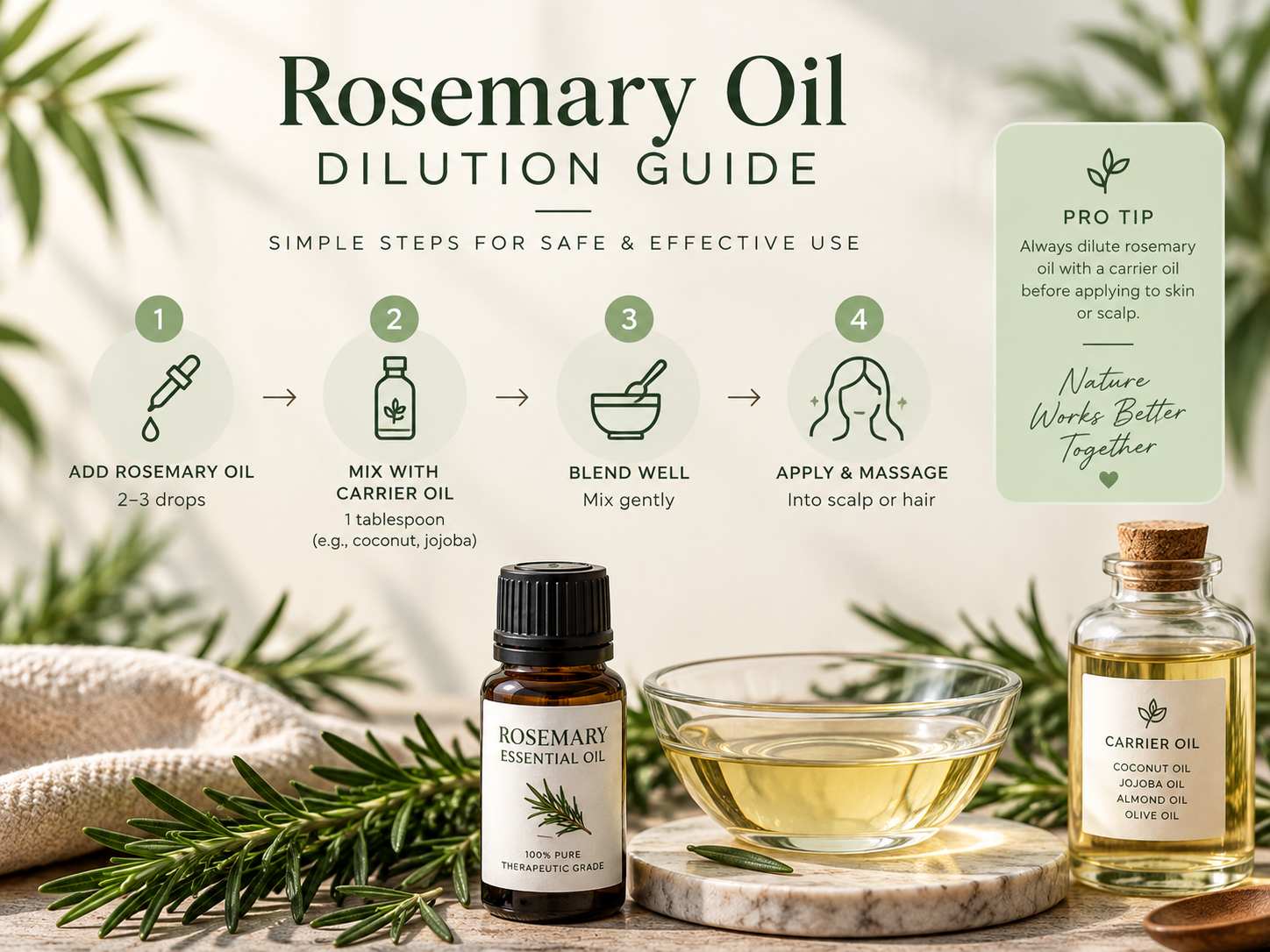
Undiluted rosemary essential oil applied directly to the scalp can cause chemical burns, severe contact dermatitis, prolonged redness, blistering, or long-term scalp sensitivity. No reputable dermatologist recommends direct application. If you have purchased a "rosemary hair oil" that is already pre-blended, check the label — pre-diluted products do not require further dilution, but patch testing is still required.
Rosemary blended in moisturising carriers like coconut or almond oil can support dry scalp hydration routines. Use 1–2% dilution, 1–2x weekly.
Good MatchIdeal for routine maintenance scalp massages. Use 2% dilution in a light carrier like jojoba. Pre-wash application, 2x weekly.
Excellent MatchUse in a light carrier oil (jojoba, argan) sparingly as a short-contact pre-wash treatment. Avoid overnight use. Heavy oils will worsen sebum production.
Use With CautionMild cases only. Active dandruff flares or seborrheic dermatitis require antifungal treatment — not oil application. Consult a dermatologist.
Caution / Consult FirstStart at 1% dilution only after a 24-hour patch test. Avoid if history of essential oil allergy or contact dermatitis. Stop immediately if any burning occurs.
Proceed CarefullyDo not use rosemary oil on scalps with active rash, psoriasis flare, fungal infection, folliculitis, or open wounds. Seek dermatologist care first.
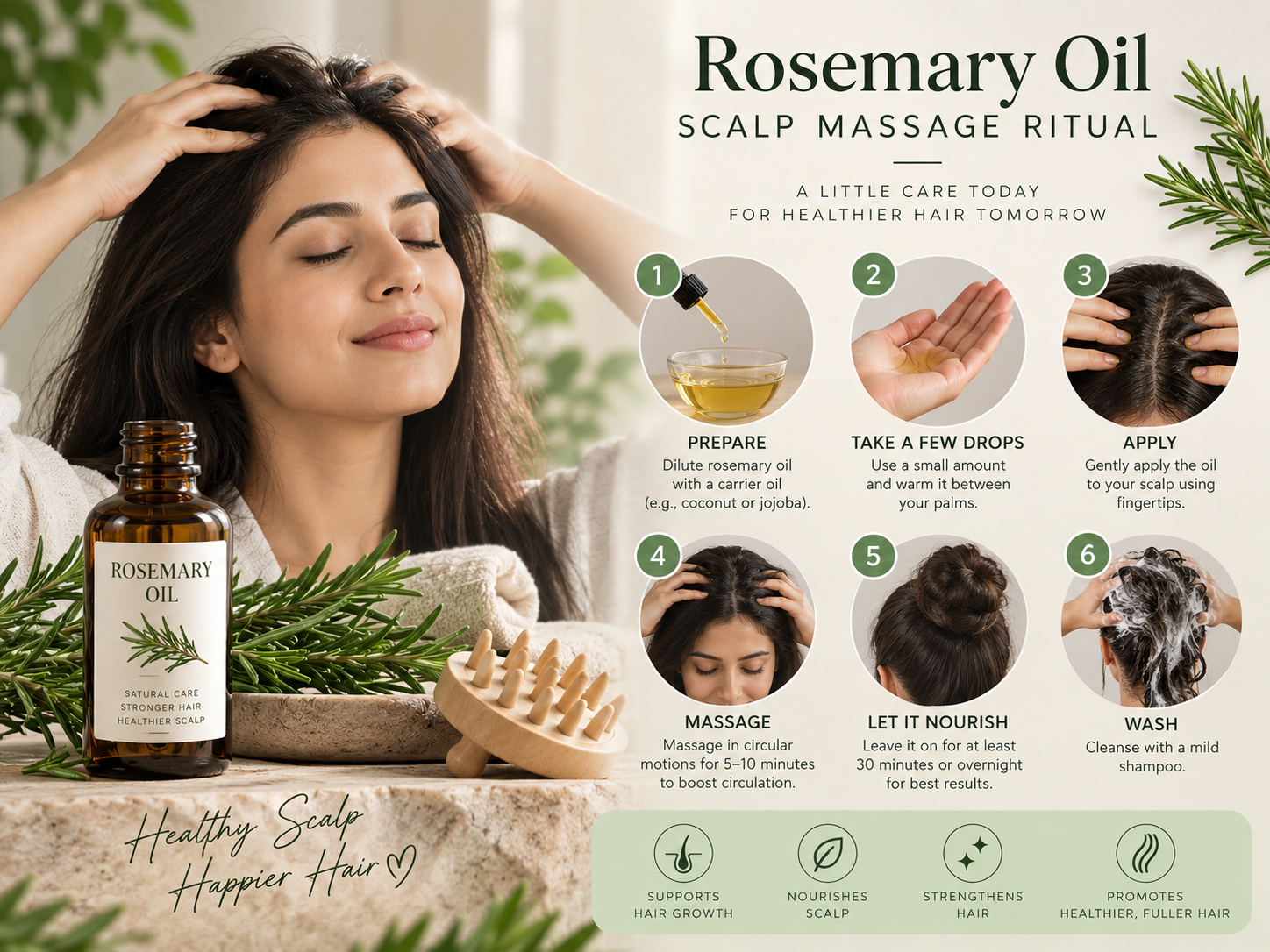
Not SuitableFollow these dermatologist-guided steps for a safe, effective rosemary oil scalp massage routine.
Mix 1 drop of rosemary essential oil in 1 teaspoon carrier oil. Apply to inner wrist or behind the ear. Leave for 24 hours. Only proceed if no redness, itching, swelling or rash develops.
Mix 6–12 drops (1–2%) of rosemary essential oil into 30ml of your chosen carrier oil. Warm slightly in palms. Prepare fresh before each use — do not store in dropper caps with metallic components.
Part hair into 4 sections. Apply drops directly to the scalp parting, not to the hair strands. Use a dropper for precision. Cover the full scalp or focus on the area of concern.
Using fingertips (not nails), massage in gentle circular motions across the scalp. This promotes absorption and increases local circulation. The massage itself is a proven part of the benefit.
Leave on for 30–60 minutes as a pre-wash treatment. For beginners, wash off after 30 minutes to assess tolerance. Avoid overnight use until tolerance is well established.
Shampoo twice to fully remove oil residue. Monitor your scalp after each session. If any burning, itching, or increased shedding occurs — stop and consult a dermatologist.
Discontinue use at the first sign of burning sensation, scalp redness, itching, swelling, rash, blistering, or unexpected increase in hair shedding. Consult a dermatologist before restarting any essential oil routine.
| Parameter | Rosemary Oil | Minoxidil |
|---|---|---|
| Category | Cosmetic supportive oil | Clinically approved drug (OTC/Rx) |
| Clinical Evidence | Emerging — limited trials, one notable 2015 RCT | Strong — decades of controlled clinical evidence |
| Regulatory Status | Unregulated cosmetic ingredient | FDA-approved hair loss drug |
| Mechanism | Proposed: circulation, anti-inflammatory, antioxidant | Proven: vasodilation, prolongs anagen growth phase |
| Use Case | Scalp massage, supportive routine | Androgenetic alopecia treatment |
| Replacement? | No — cannot replace minoxidil | Doctor-prescribed treatment |
| Side Effects | Scalp irritation, contact dermatitis if undiluted | Scalp irritation, temporary shedding, possible systemic effects (oral) |
| Combination Use | May be used alongside minoxidil after doctor approval | Doctor to advise on combining with topical oils |
Rosemary oil is not suitable for everyone. The following groups should avoid rosemary oil or consult a dermatologist before use.
Any active skin condition — folliculitis, fungal infection, psoriasis flare, or open sores — means rosemary oil is contraindicated. Seek medical treatment first.
Applying oils to an active seborrheic dermatitis flare can worsen symptoms by occluding pores and worsening Malassezia growth. Antifungal treatment is required first.
History of allergic reaction to any essential oil significantly raises risk of cross-reaction with rosemary. Patch test is insufficient protection — consult a dermatologist.
Essential oils carry higher risk of neurotoxic effects in young children. Rosemary oil is not recommended for children without paediatrician guidance.
Rosemary oil in cosmetic concentrations is generally considered low-risk but evidence is insufficient. Consult your obstetrician or dermatologist before use during pregnancy or lactation.
Do not apply rosemary oil or any essential oil blend to a transplanted scalp without explicit clearance from your hair transplant surgeon. Premature oil application can disturb graft healing.
Any sensation of burning, unexplained pain, or tenderness on the scalp is a medical symptom requiring professional evaluation before applying any topical product.
Some evidence suggests rosemary oil may lower seizure threshold. Consult a neurologist if you have epilepsy before beginning any essential oil routine.
Rosemary may interact with anticoagulant medications (blood thinners) and ACE inhibitors. Consult your doctor if you are on chronic medication before beginning any essential oil routine.
Answer a few quick questions and our AI Hair Test will help guide you towards the right scalp oil routine — and flag whether rosemary oil is appropriate for your specific scalp profile.
This tool is for screening and product-direction support only. It does not diagnose, prescribe, or replace dermatologist advice.

All products are pre-diluted and formulated for safe scalp application. A patch test is still required before first use.
Doctor-Reviewed Resources
Still have questions about rosemary oil and your scalp?
Still Confused? Ask a Hair Doctor →This guide draws on published research and reputable medical authority sources. All external links open in a new tab.
Panahi et al., 2015. SKINmed Journal. Randomised controlled trial comparing rosemary oil to minoxidil 2% in androgenetic alopecia over 6 months.
Official guidance on hair loss types, causes, and treatment approaches from the leading US dermatology professional body.
Comprehensive patient guidance on hair loss diagnosis, medical treatments, and self-care from the Mayo Clinic.
Clinical guidance on contact dermatitis and allergic reactions to essential oils, including identification and management.
US National Center for Complementary and Integrative Health guidance on essential oil safety, evidence, and risks.
Search PubMed-indexed research on rosemary, rosmarinic acid, scalp health, and androgenetic alopecia for the latest evidence.
Your cart is empty