💦
Oily Scalp Freshness
Diluted tea tree formulations or tea tree shampoos may help oily scalps feel cleaner, lighter and less greasy after use. This is a cosmetic freshness benefit — not a treatment for sebum overproduction or seborrheic conditions.
A dermatologist-guided guide to using tea tree oil safely in scalp routines — including dilution rules, oily scalp suitability, dandruff-prone care, side effects, product selection, and when itching or flaking needs medical evaluation.
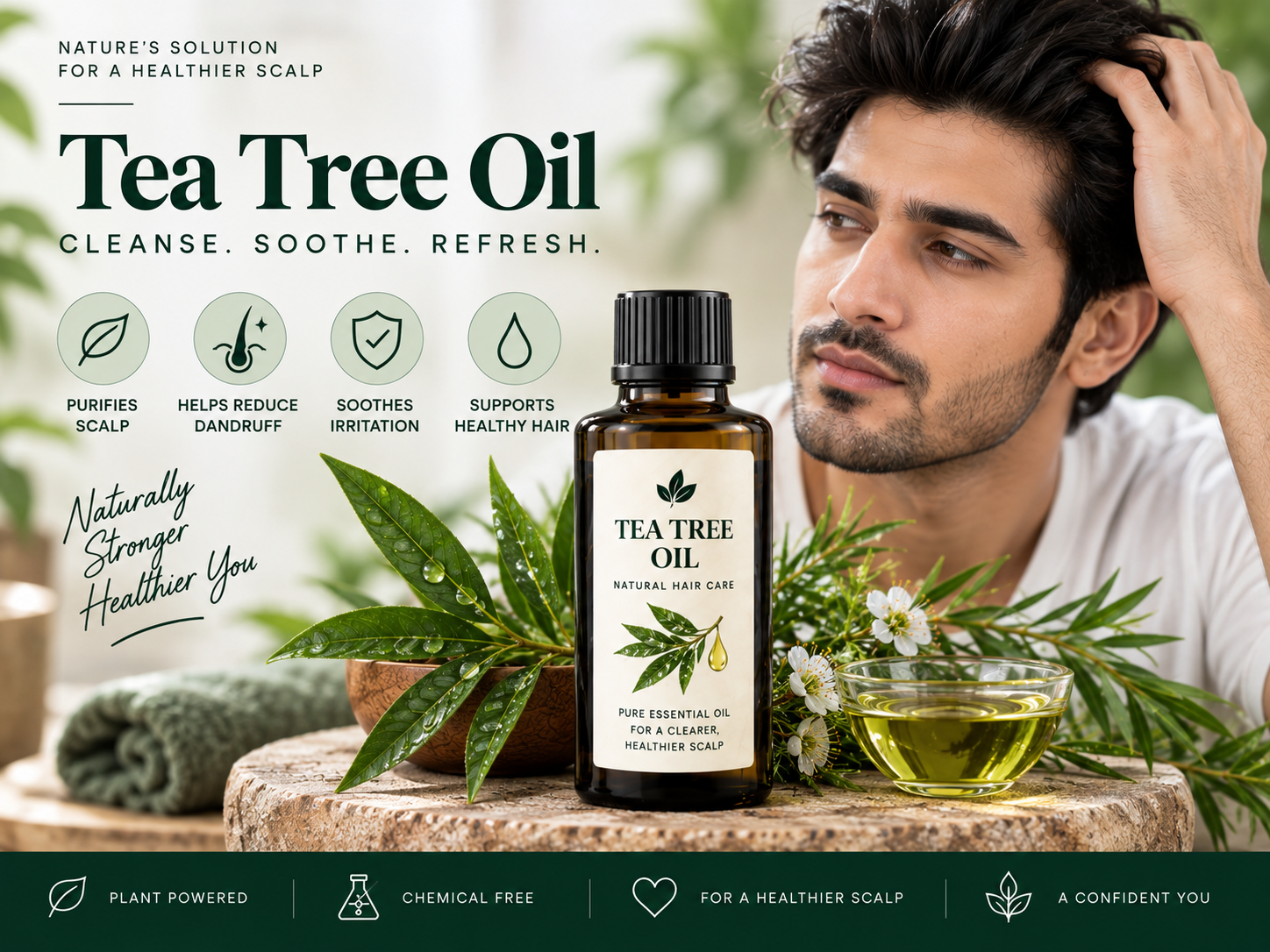

Tea tree oil is an essential oil derived from the leaves of Melaleuca alternifolia, commonly used in cosmetic scalp-care routines for oily, itchy or dandruff-prone scalp support. It may be incorporated into properly diluted formulations or professionally formulated shampoos, but it is not a substitute for medical diagnosis or dermatologist-prescribed anti-dandruff, antifungal or anti-inflammatory treatment. Tea tree essential oil can irritate the scalp significantly if used undiluted or overused — it should never be applied directly. People with sensitive scalp, eczema, psoriasis, seborrheic dermatitis, folliculitis, scalp acne, burning scalp, open wounds, severe dandruff, painful scalp, sudden shedding, recent hair transplant or recent scalp procedure should consult a dermatologist before use. This page is distinct from other hair oil pages in this series because tea tree oil is an essential oil — not a carrier oil — requiring dilution and specific safety precautions that do not apply to most traditional hair oils.
What tea tree oil can and cannot do for scalp health
Antifungal evidence — the dandruff study and its limits
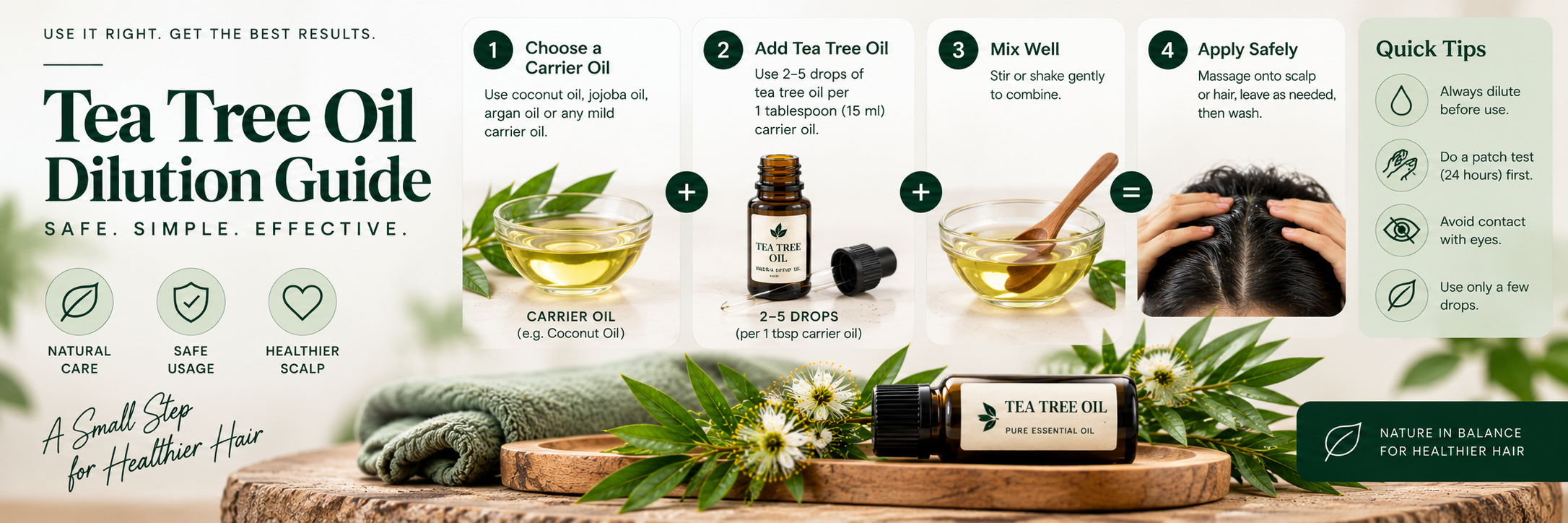
Correct dilution — tea tree oil must never be used neat
Tea tree oil vs neem oil for dandruff and itchy scalp
Which scalp conditions may benefit and which need medicine
How to add tea tree oil to your existing shampoo routine
Allergic reactions and sensitisation risks with essential oils
When OTC scalp care fails and you need prescription treatment
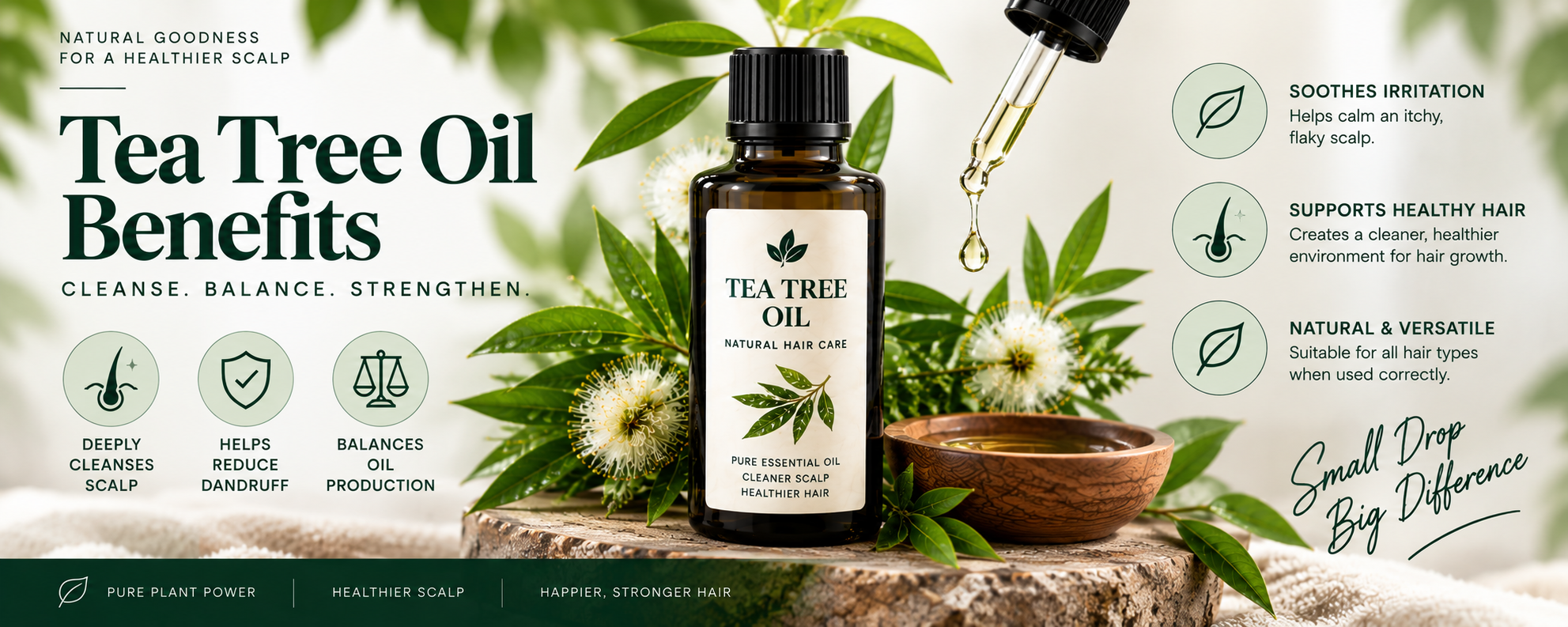
Tea tree oil occupies a different position from the carrier oils in this series. Rather than a traditional hair-conditioning or pre-wash oiling oil, tea tree is an essential oil used primarily as a scalp-care ingredient — most appropriately in properly formulated shampoos or professionally diluted scalp products. Its application is directed toward oily scalps, mildly itchy scalps and dandruff-prone scalp routines.
It may help the scalp feel cleaner, fresher and less oily when used correctly, but it is not a cure for dandruff, scalp infection or hair loss. The most important rules for tea tree oil are: always dilute, always patch test, and always prefer formulated products over raw essential oil. Persistent dandruff, severe itching or scalp inflammation requires professional evaluation — not cosmetic essential oil routines.
Verdict: Tea tree oil is a cosmetic scalp-care essential oil, most useful in formulated or diluted form for oily, mildly itchy or dandruff-prone scalp routines. It is not appropriate for dry, sensitive, inflamed or eczema-prone scalps. It is not a medical treatment for dandruff or any hair condition. Patch test is mandatory.
Tea tree (Melaleuca alternifolia) oil has documented antifungal properties and one clinical study showed a 5% tea tree shampoo reduced dandruff severity. It does not cure chronic seborrheic dermatitis, treat hair loss, or replace prescription antifungal shampoos. Must be diluted (2–3 drops per tablespoon of carrier oil or shampoo) — undiluted tea tree oil causes chemical burns. Patch-test 24 hours before use.
People with mild dandruff or oily, itchy scalps looking for a natural antimicrobial boost in their wash routine. Works best diluted into shampoo.
Ketoconazole shampoo, ciclopirox, or prescribed scalp treatments. Tea tree oil is a cosmetic adjunct for mild flaking, not a treatment for clinical dermatitis.
Dandruff persists beyond 4 weeks of use, scalp develops red patches or thick plaques, or you experience burning or blistering. These suggest a condition requiring medical management.
Tea tree oil is an essential oil — the only true essential oil in the Hairsncares hair oil series. This makes dilution and formulation non-negotiable. Unlike carrier oils, raw tea tree essential oil is too concentrated for direct scalp contact and must always be used in a properly diluted or pre-formulated product.
These are approximate cosmetic dilution guidelines. Exact drop sizes vary between essential oils and pipettes. For most users, commercially pre-formulated products are the safest option.
Undiluted tea tree essential oil can cause burning, redness, contact dermatitis, scalp dryness, flaking flare or severe allergic reaction. Do not apply near eyes or mouth. Do not ingest. If raw essential oil contacts the scalp accidentally, rinse thoroughly with water and a gentle shampoo and consult a dermatologist if irritation persists.
The most suitable scalp type for tea tree oil products. Properly diluted or formulated tea tree shampoos may help oily scalps feel cleaner and fresher. Still requires patch test.
Most Suitable — Patch Test FirstMay be tolerated in diluted or shampoo-formulated products for mild itching on oily scalps. Stop immediately if itching worsens or burning occurs.
Try Shampoo-Based — With CautionTea tree shampoos may support dandruff-prone scalp routines. However, active dandruff requires antifungal evaluation. Tea tree oil cannot cure dandruff.
Formulated Products OnlyHigh risk. Tea tree oil frequently causes irritation, burning or contact dermatitis on sensitive scalps. Consult a dermatologist before attempting any tea tree product.
Consult Dermatologist FirstNot suitable. Tea tree oil can worsen scalp dryness and trigger flaking on dry scalps. Dry scalp needs moisturising carrier oils, not essential oil products.
Not SuitableDo not use. Active scalp acne or folliculitis requires proper medical evaluation, not essential oil application, which may worsen the condition.
Do Not UseDo not use. Eczema and psoriasis are inflammatory conditions that can be significantly worsened by essential oil application. Consult a dermatologist.
Do Not UseNever apply any essential oil to a post-transplant scalp without surgeon clearance. Essential oils can irritate healing tissue and compromise graft survival.
Surgeon Clearance RequiredConsult a dermatologist first. Severe or inflammatory dandruff and seborrheic dermatitis require medical treatment — not cosmetic essential oil routines.
Medical Evaluation RequiredIf you are applying tea tree oil and notice increased itching, redness, pimples on the scalp, or worsening dandruff — stop immediately. These are not signs of “detox” or “purging.” They may indicate irritation, allergy, folliculitis or worsening of an existing scalp condition. Consult a dermatologist before resuming any oil application on an irritated scalp.
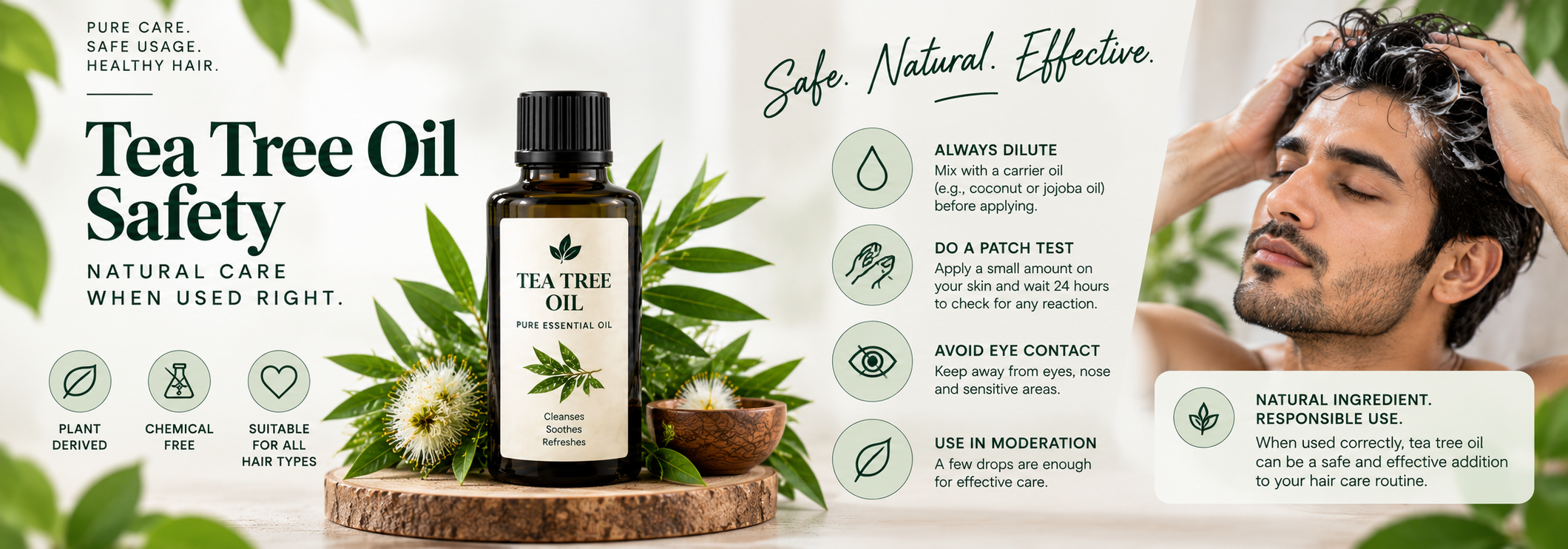
Tea tree is the only essential oil in the Hairsncares hair oil series — requiring stricter safety steps than any carrier oil. Follow these carefully before your first use.
⚠️ Critical: Do not combine tea tree oil with minoxidil, strong anti-dandruff products, scalp acids, steroid lotions or multiple essential oils without dermatologist guidance. Combining actives on a sensitive scalp increases the risk of severe irritation, burning and contact dermatitis significantly.
For most users, a tea tree-containing shampoo or pre-diluted scalp product is significantly safer than raw essential oil. Formulated products control concentration, exposure time and ingredient compatibility — reducing the risk of irritation from DIY dilution errors.
Apply a small amount of the diluted product or tea tree shampoo behind the ear or on the inner arm. Wait 24 hours. Do not proceed if redness, burning, itching, rash or dryness appears. Tea tree oil allergy is more common than most carrier oil allergies.
This is the most important rule. Tea tree essential oil must always be diluted before scalp contact. Even a small amount of raw essential oil applied directly can cause significant burning and contact dermatitis. There is no safe undiluted scalp application.
Begin with a rinse-off shampoo-based product rather than a leave-on scalp oil. Shampoo limits contact time, reducing irritation risk. If using a diluted scalp product, start with 10–15 minutes before rinsing rather than leaving it on.
Massage gently with fingertips. Do not scratch flakes or irritated scalp areas. Scratching breaks the skin barrier and significantly increases irritation and infection risk when essential oils are applied.
Do not combine tea tree products with minoxidil, strong anti-dandruff shampoos, scalp acids, steroid lotions or other essential oils in the same session without dermatologist guidance. Each combination increases unpredictable irritation risk.
Monitor your scalp closely for 24–48 hours after each use. Stop immediately if burning, itching, redness, rash, scalp dryness, flaking flare, or increased shedding occurs. Even mild worsening is a reason to stop.
If dandruff, itching or oily scalp persists despite consistent use of tea tree products, consult a dermatologist for proper diagnosis. Persistent dandruff may need prescription antifungal treatment — cosmetic oil products are not a substitute.
Burning, redness, rash, worsening itching, dryness, dandruff flare, or increased shedding occurs after tea tree oil product use. Do not increase concentration or frequency. Consult a dermatologist before any further use.
The most common mistake with hair oiling is leaving oil on for too long or sleeping with heavy oil overnight without proper washing the next morning. Prolonged scalp oil contact can clog follicles, attract dust and worsen dandruff in susceptible people. For most users, 30 minutes to 2 hours before washing is sufficient. Listen to your scalp, not social media trends.
| Oil | Type & Best For | Evidence | Scalp Suitability | Safety Note |
|---|---|---|---|---|
| Tea Tree Oil | Essential oil — oily, itchy and dandruff-prone scalp routines | Cosmetic scalp relevance; does not cure dandruff or grow hair | Oily scalp only; NOT for dry or sensitive scalp | Must dilute; patch test; irritation risk; not for inflamed scalp |
| Rosemary Oil | Essential oil — growth-support scalp ritual; must dilute | Emerging — one notable 2015 RCT; not a minoxidil replacement | Patch test; avoid active inflammation | Must dilute; not for dry or sensitive scalp |
| Coconut Oil | Carrier oil — dry/frizzy/coarse hair; pre-wash conditioning | Good — protein-loss reduction data | Not suitable for oily or dandruff-prone scalp | No dilution needed; avoid oily scalp |
| Black Seed Oil | Carrier oil — kalonji traditional haircare; scalp massage; dryness | Traditional use; limited human regrowth evidence | Patch test; avoid oily/inflamed/dandruff scalp | No dilution needed; patch test required |
| Amla Oil | Carrier oil — traditional Indian; shine; conditioning; pre-wash | Traditional; cannot reverse grey hair; limited regrowth evidence | Patch test; avoid oily/inflamed/dandruff scalp | No dilution needed; patch test required |
Persistent dandruff, itching, scalp disease or medical hair loss requires diagnosis and dermatologist-guided treatment — not cosmetic oil routines.

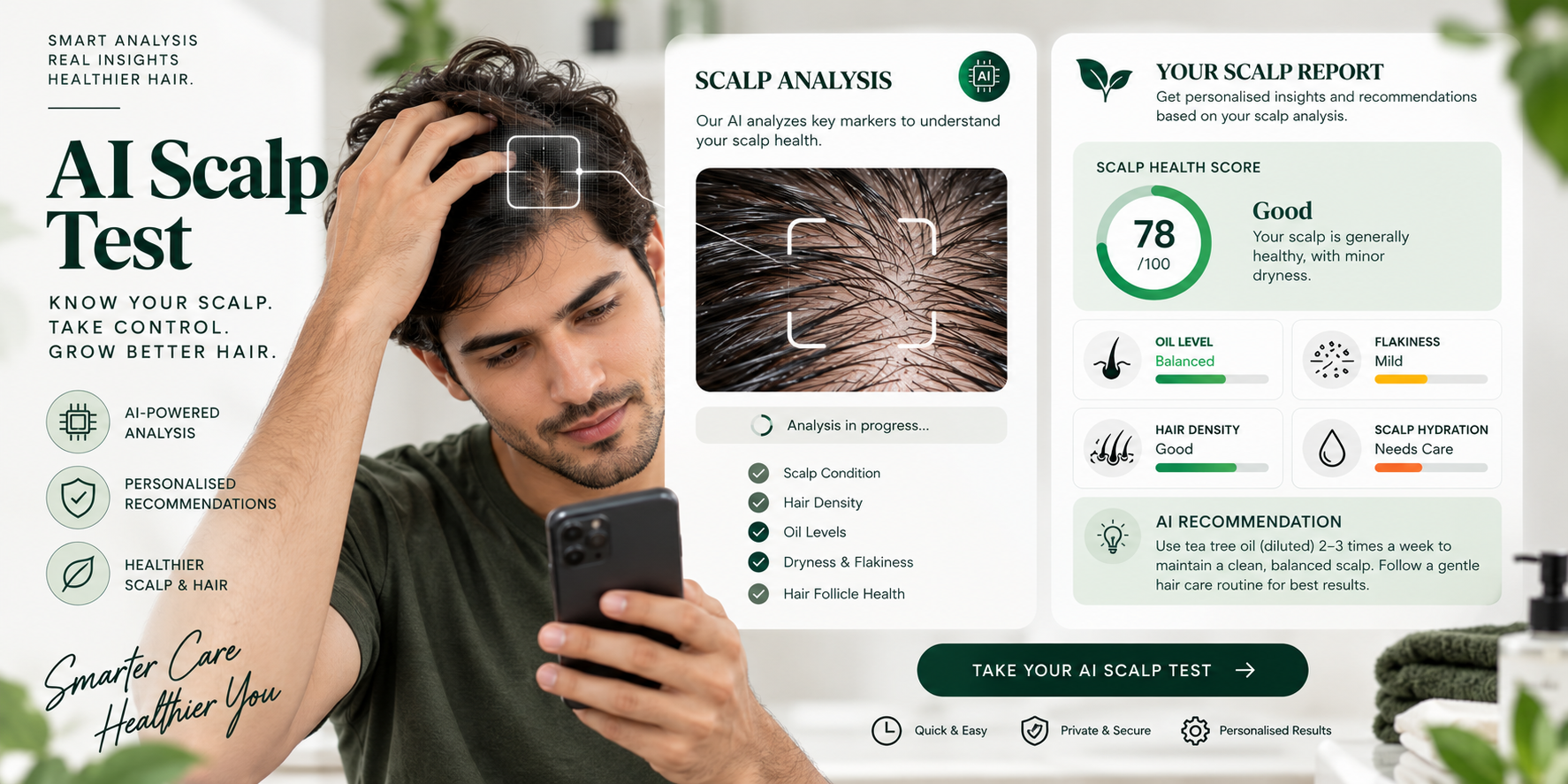
Before starting a tea tree oil routine, our AI Hair Test checks scalp oiliness, dandruff severity, itching, sensitivity, dryness, active inflammation, hair fall pattern, current treatments and scalp reaction history — to identify whether tea tree oil products are appropriate or likely to cause problems for your specific scalp profile.
This tool provides screening and product-direction guidance only. It does not diagnose, prescribe, or replace dermatologist advice. Persistent scalp conditions require medical evaluation.
All products are cosmetic scalp-care formulations. Patch test required before first use. Tea tree oil products are not medical treatments for dandruff, scalp infection or hair loss.
Doctor-Reviewed Resources
Still unsure whether tea tree oil is right for your scalp?
Ask a Hair Doctor →Tea tree oil has cosmetic scalp-care relevance and is used in formulated products for oily or dandruff-prone scalp routines. Raw essential oil use can irritate the scalp significantly and should not replace evidence-based dandruff or hair-loss treatments. All external links open in a new tab.
Search PubMed for peer-reviewed literature on Melaleuca alternifolia, tea tree oil, contact dermatitis from essential oils, seborrheic dermatitis treatment, and scalp cosmetic safety evidence to assess the current human evidence base directly.
Authoritative dermatology guidance on seborrheic dermatitis diagnosis and treatment — essential context for understanding when cosmetic scalp products are insufficient and medical treatment is required.
Clinical guidance on contact dermatitis and essential oil reactions — directly relevant for understanding the irritation and allergy risk of tea tree oil, particularly when used undiluted or on sensitive scalp types.
Authoritative clinical guidance on hair loss and scalp conditions — critical context for understanding the limits of cosmetic scalp care and when dermatologist evaluation is essential.
Tea tree oil is a cosmetic supportive essential oil ingredient used in scalp-care routines when properly diluted or in pre-formulated products. It does not diagnose, treat, cure or prevent medical hair loss, dandruff, seborrheic dermatitis, fungal infection, alopecia or any scalp disease. It should not replace ketoconazole, zinc pyrithione, selenium sulfide, prescription antifungal treatment, topical steroids, minoxidil, finasteride, dutasteride, PRP, GFC, hair transplant care or dermatologist consultation. This guide has been reviewed by Dr. Amit Agarkar, MD Dermatology. Consult a qualified dermatologist if you experience persistent dandruff, severe scalp itching, painful scalp, scalp infection, pus or folliculitis, bald patches, sudden shedding, PCOS-related hair fall, thyroid-related hair fall, postpartum hair loss, medication-related shedding or suspected alopecia. A patch test is required before any use. Never apply undiluted tea tree essential oil to the scalp. Do not ingest. Keep away from eyes.
Your cart is empty