Above the Fold
Quick Answer: How Do You Fix Dry Hair?
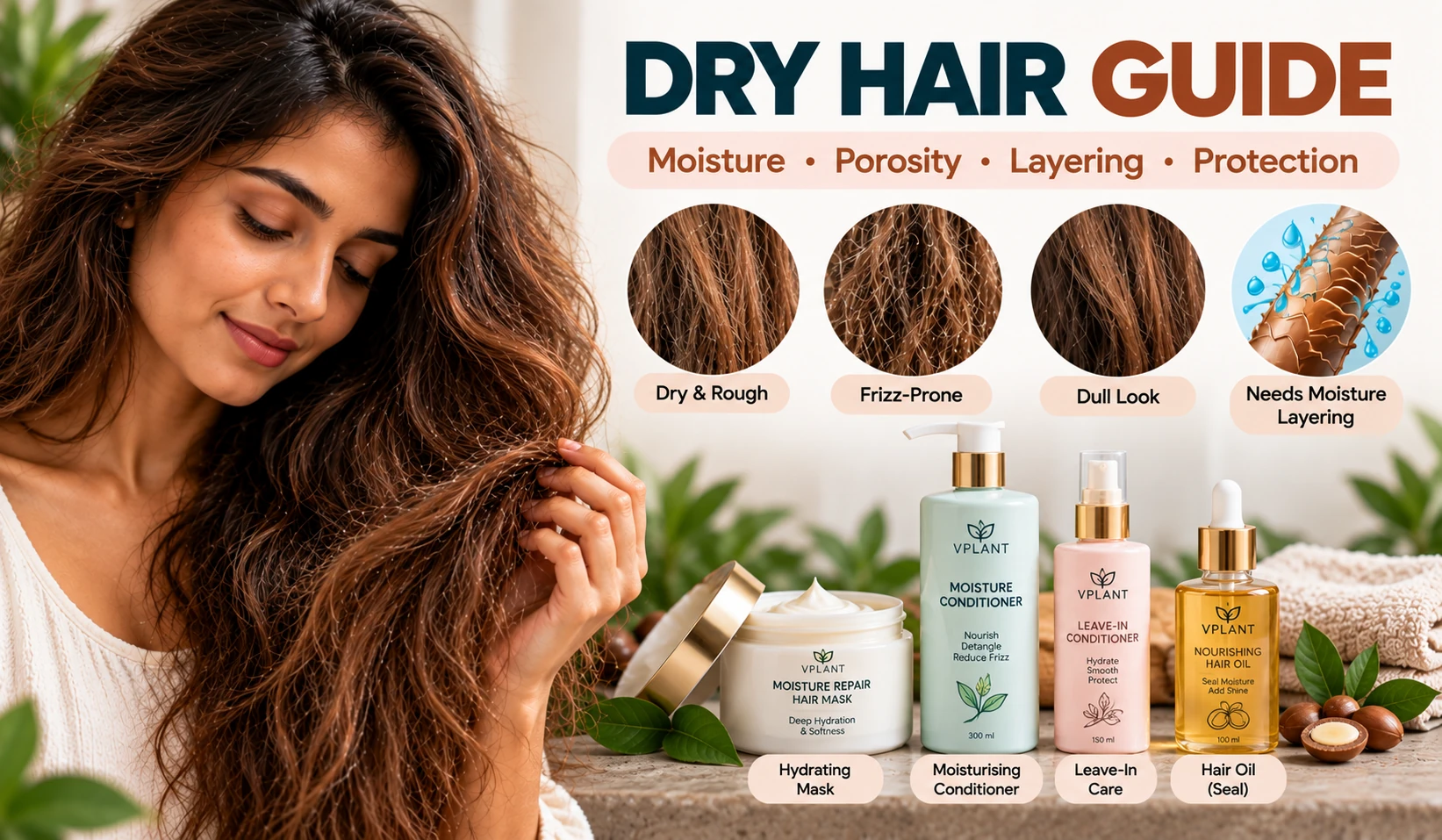
Dry hair generally needs gentle cleansing, rich conditioning, regular masks, leave-in moisture and a sealing step like oil or cream — layered in an order that matches your porosity. Overwashing, harsh shampoos, heat and hard water are common triggers. Persistent dryness with scalp symptoms needs a dermatologist check.
Search Intent Alignment
What You'll Learn on This Page
- What dry hair actually is, and how it differs from dehydrated or damaged hair
- What's really causing the dryness, from weather to hard water to overwashing
- How your porosity changes what moisture routine actually works
- How to layer moisture properly with the LOC and LCO methods
- How to choose oils, masks and leave-ins without overloading your hair
- How to protect moisture during heat styling and colour services
- Texture-specific guidance for curly, wavy and coily dry hair
- When dryness care isn't enough and a doctor visit is the next step
Understanding the Basics
Dry Hair Means the Shaft Isn't Holding Enough Moisture
Dry hair happens when the hair shaft lacks sufficient moisture and natural oils, making it look and feel rough, dull, brittle, frizzy, straw-like, tangled, lacking shine, or prone to static and flyaways. Dryness can be mild and cosmetic, or a sign of broader damage that needs a different approach.
"Dryness is a moisture problem first. If moisture alone doesn't fix the roughness, the shaft itself may be damaged and needs repair-focused care instead."
Know the Difference
Dry, Dehydrated and Damaged Hair Need Different Fixes
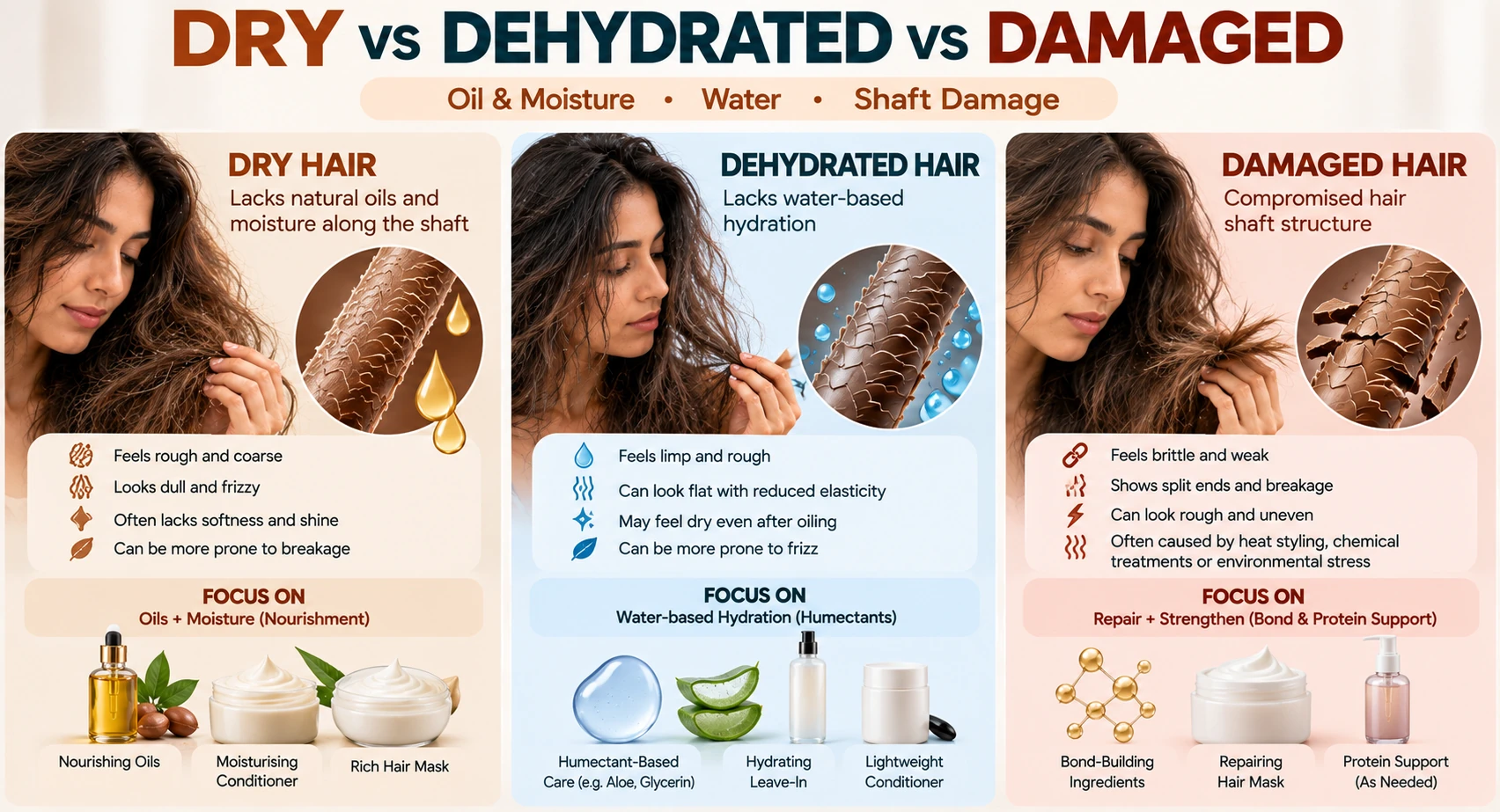
These three terms are often used interchangeably, but they point to different underlying issues and different solutions.
Dry Hair
Lacks natural oils along the shaft. Often improves steadily with consistent oil and moisture-based conditioning.
Best approach:
- Rich conditioner
- Regular oiling
- Reduced overwashing
Dehydrated Hair
Lacks water content specifically, and can occur even in oily-feeling hair. Responds best to water-based hydration first.
Best approach:
- Water-based leave-in
- Humectant-containing products
- Lighter sealing layer
Damaged Hair
The shaft structure itself is compromised from heat, chemicals or friction. Moisture alone may not fully resolve the roughness.
Best approach:
- Bond or protein support
- Reduced heat and chemical stress
- Trim plan for split ends
Understanding Causes
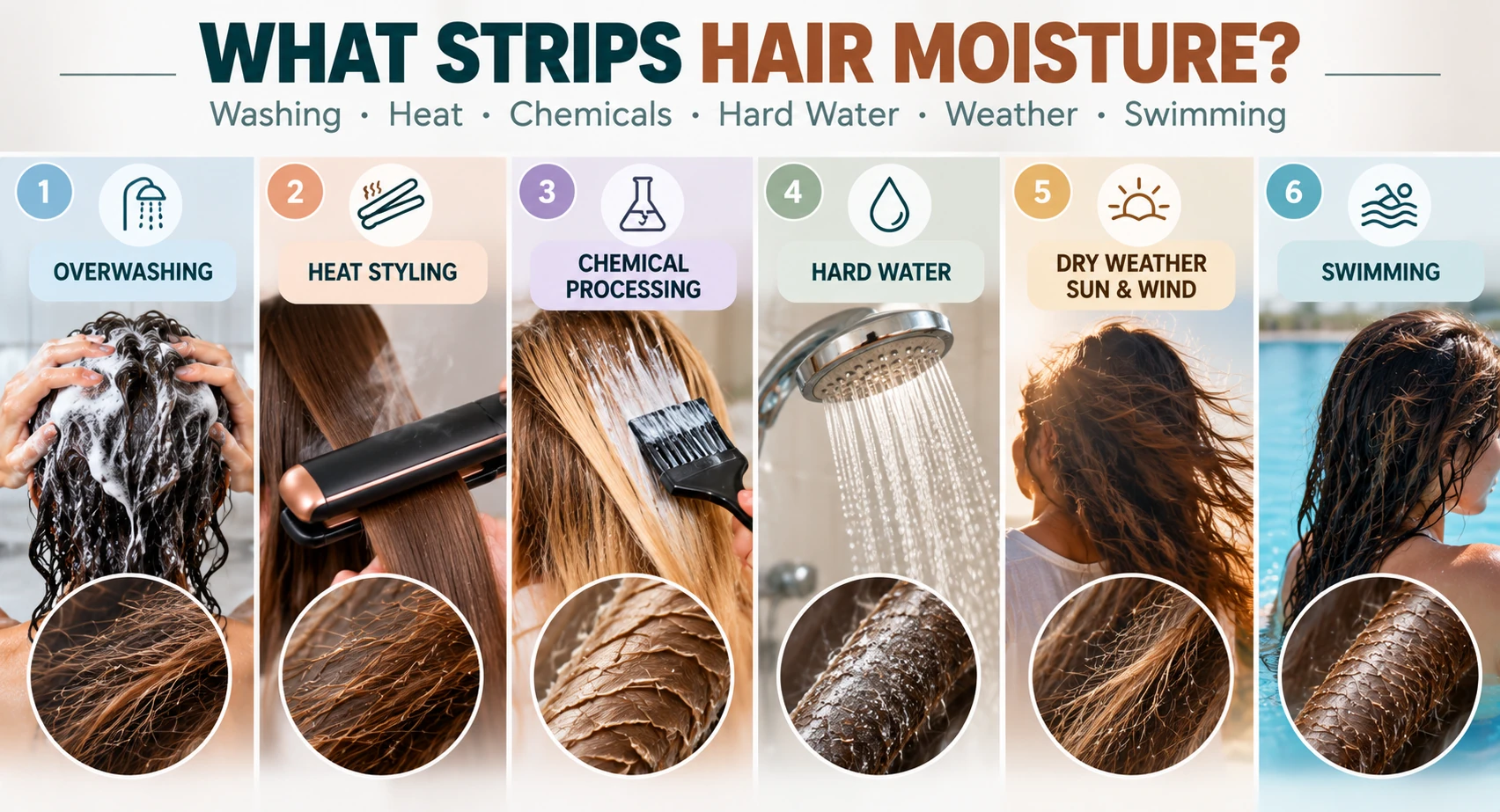
What Strips Moisture From Hair?
Overwashing
Frequent washing with harsh shampoo strips natural oils faster than the scalp replaces them.
Heat Styling
Hot tools evaporate shaft moisture and roughen the cuticle over time.
Bleach and Chemicals
Lightening and chemical processing raise porosity, making moisture harder to retain.
Hard Water
Mineral buildup coats the shaft and interferes with moisture absorption.
Weather
Low humidity, wind, sun and cold can all strip or reduce shaft moisture.
Swimming
Chlorine and saltwater both strip natural oils and hydration.
Ageing
Natural oil production can reduce gradually with age.
Low Porosity Buildup
Products may sit on the surface rather than absorbing into tightly-layered cuticles.
High Porosity Loss
Moisture absorbs quickly but escapes just as fast without a sealing step.
Interactive Selector
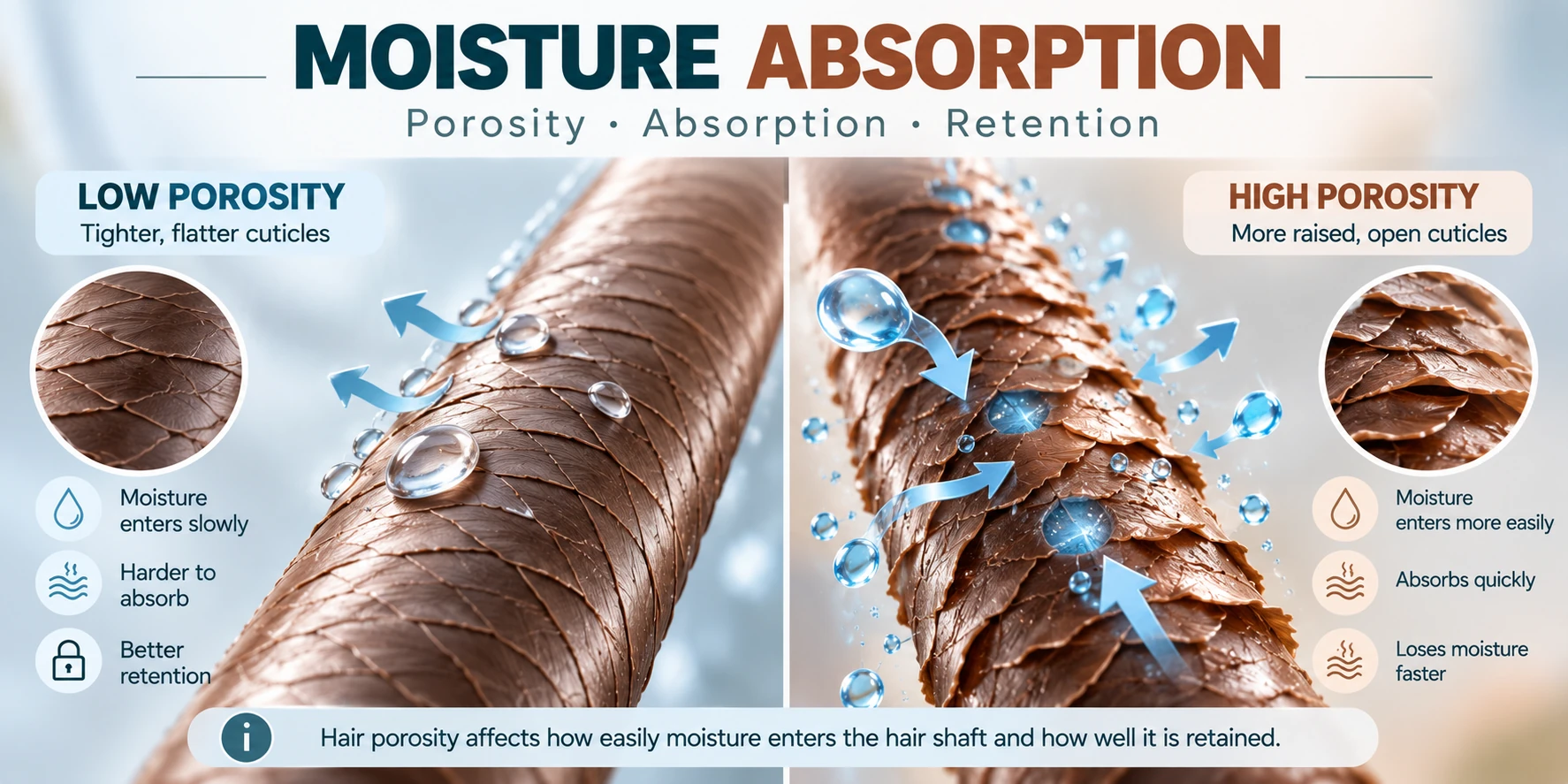
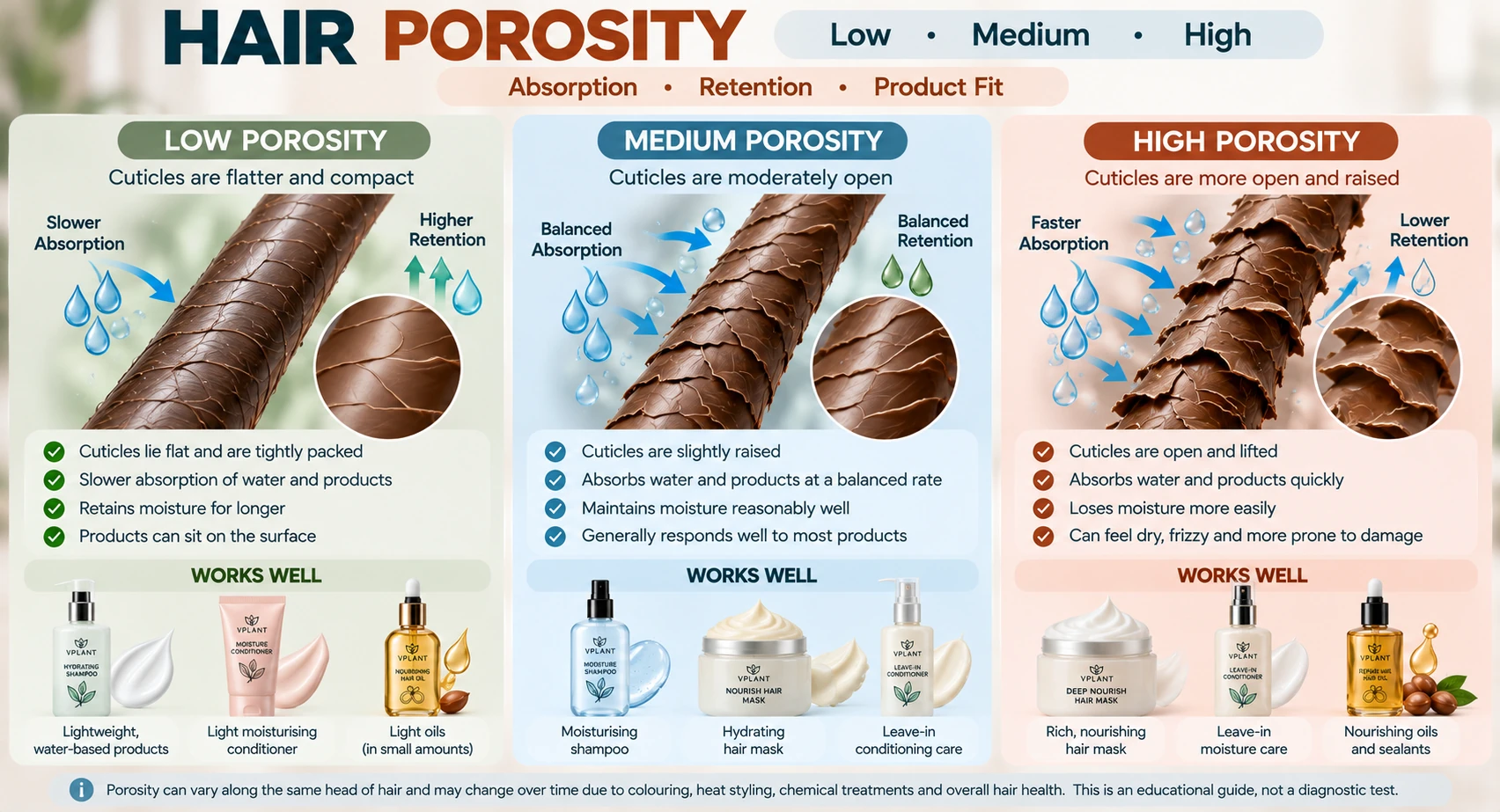
Your Porosity Changes What Actually Works
Select your porosity type to see a matched moisture approach. This is a self-assessment guide, not an exact measurement.
Low Porosity
Cuticle lies flat and tight. Water beads on the surface at first. Products can sit on top rather than absorbing.
Medium Porosity
Absorbs and retains moisture fairly well. Usually needs the least adjustment to a standard routine.
High Porosity
Cuticle is raised or gapped. Absorbs moisture fast but loses it just as quickly without sealing.
Personalised Routine
Build a Moisture Routine Based on Your Porosity and Hair Story
Answer a few questions to get a suggested cosmetic-care routine. This does not diagnose scalp disease or replace a dermatology consult.
The AI Dry Hair Routine Builder supports cosmetic routine planning only. It cannot diagnose scalp disease, repair damaged hair permanently or prescribe treatment.
Cleansing
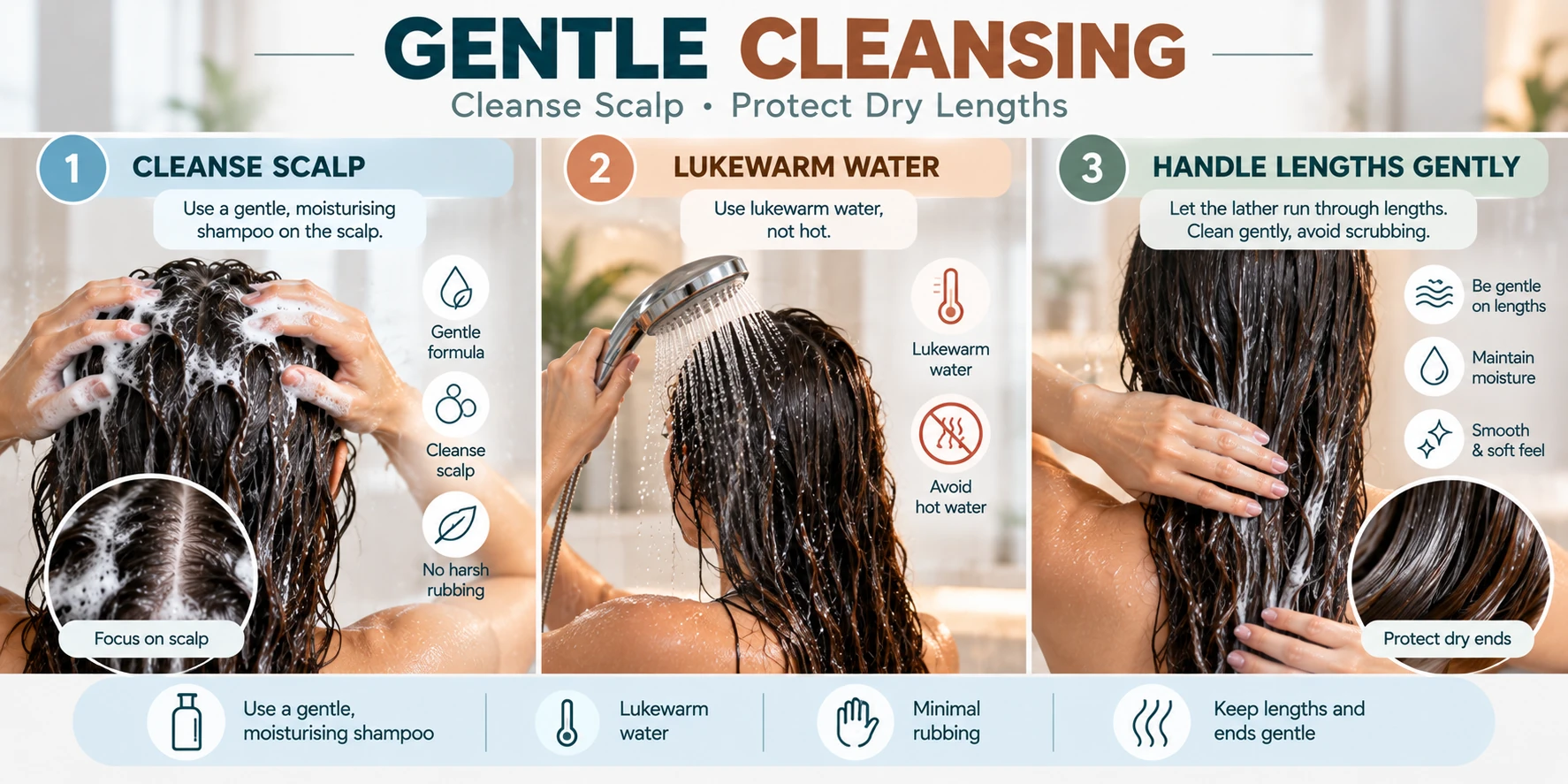
Cleanse Gently Without Stripping What Little Moisture Remains
Recommended categories
- Moisturising shampoo
- Sulphate-conscious formula
- Colour-safe shampoo if treated
- Co-wash occasionally for very dry or curly hair
- Clarifying shampoo only when buildup exists
Avoid
- Daily washing with harsh shampoo
- Hot water
- Over-clarifying
- Skipping conditioner
- Products designed purely for oil control
Deep Moisture
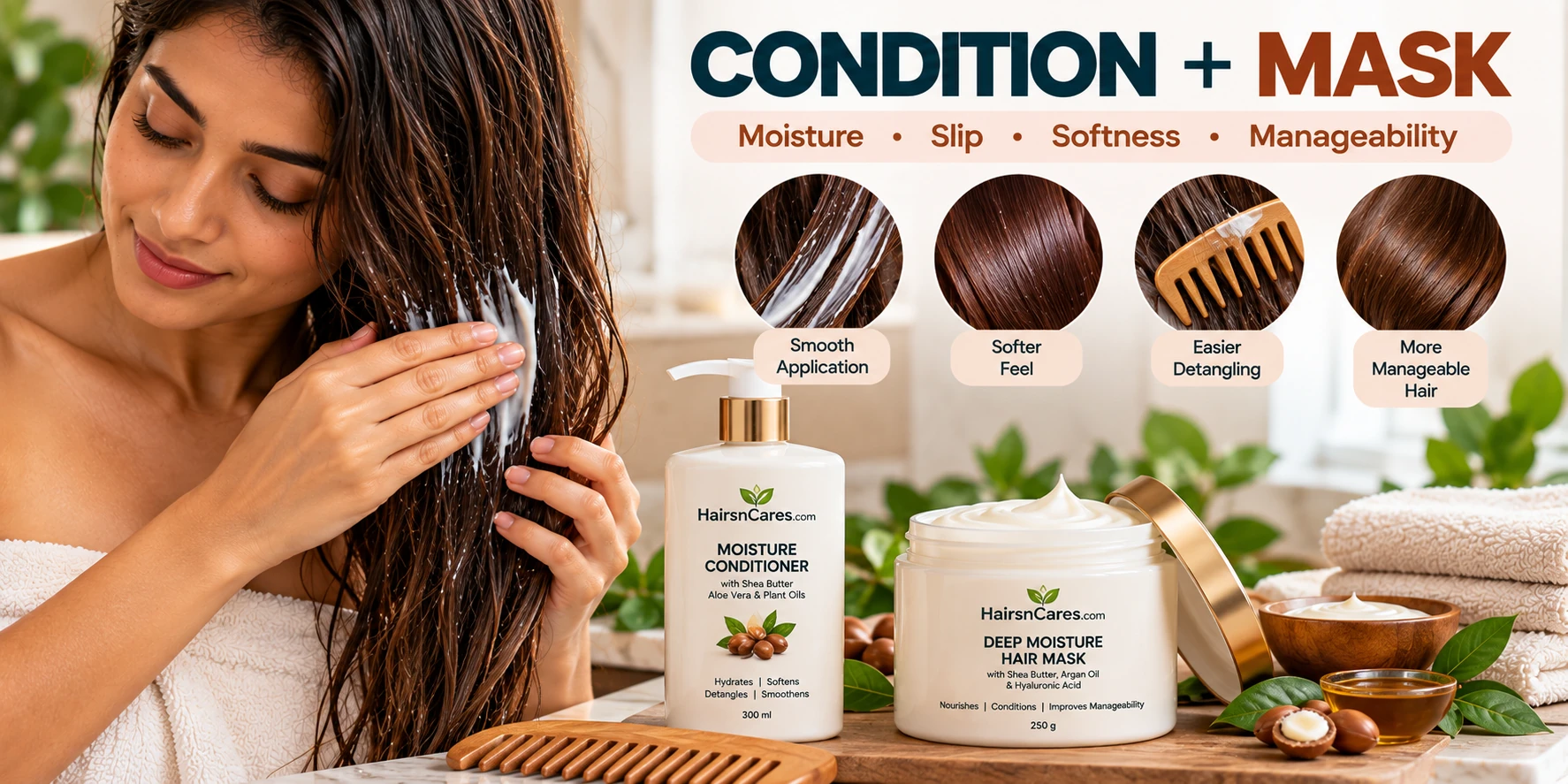
Conditioner Every Wash, Mask on a Schedule That Fits Your Hair
Conditioner rules
- Every wash, mid-lengths to ends
- Leave on for a few minutes
- Richer formula for coarse or high-porosity hair
- Lighter formula for fine or low-porosity hair
Mask rules
- Weekly to twice weekly depending on severity
- Apply with heat or steam for low porosity
- Balance moisture and protein based on how hair feels
- Rinse thoroughly to avoid buildup
Moisture Layering
Layer Moisture in the Right Order for Your Hair
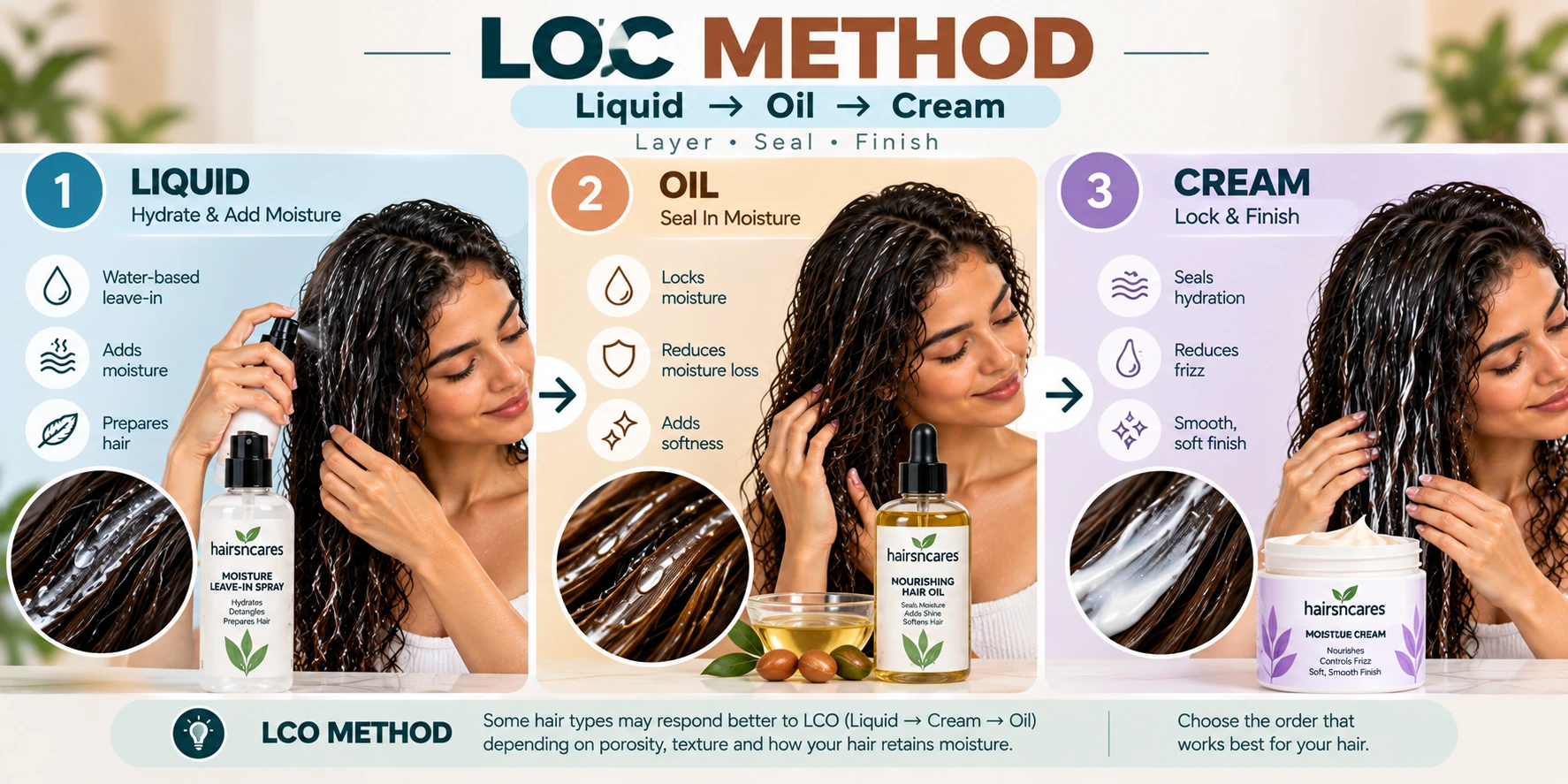
The LOC method (Liquid, Oil, Cream) and its variant LCO (Liquid, Cream, Oil) are layering approaches that help lock moisture into the hair shaft rather than letting it evaporate.
Liquid
Water or a water-based leave-in conditioner as the first moisture layer.
Oil
A lightweight to medium oil to help seal the moisture layer.
Cream
A cream or butter-based product to lock everything in and define style.
LCO variation: swapping the order to Liquid, Cream, then Oil often suits lower porosity or finer hair better, since a lighter final oil layer avoids excess weight. There's no single right order — it depends on how your specific hair responds.
Sealing Layer
Oil Seals Moisture — It Doesn't Replace It
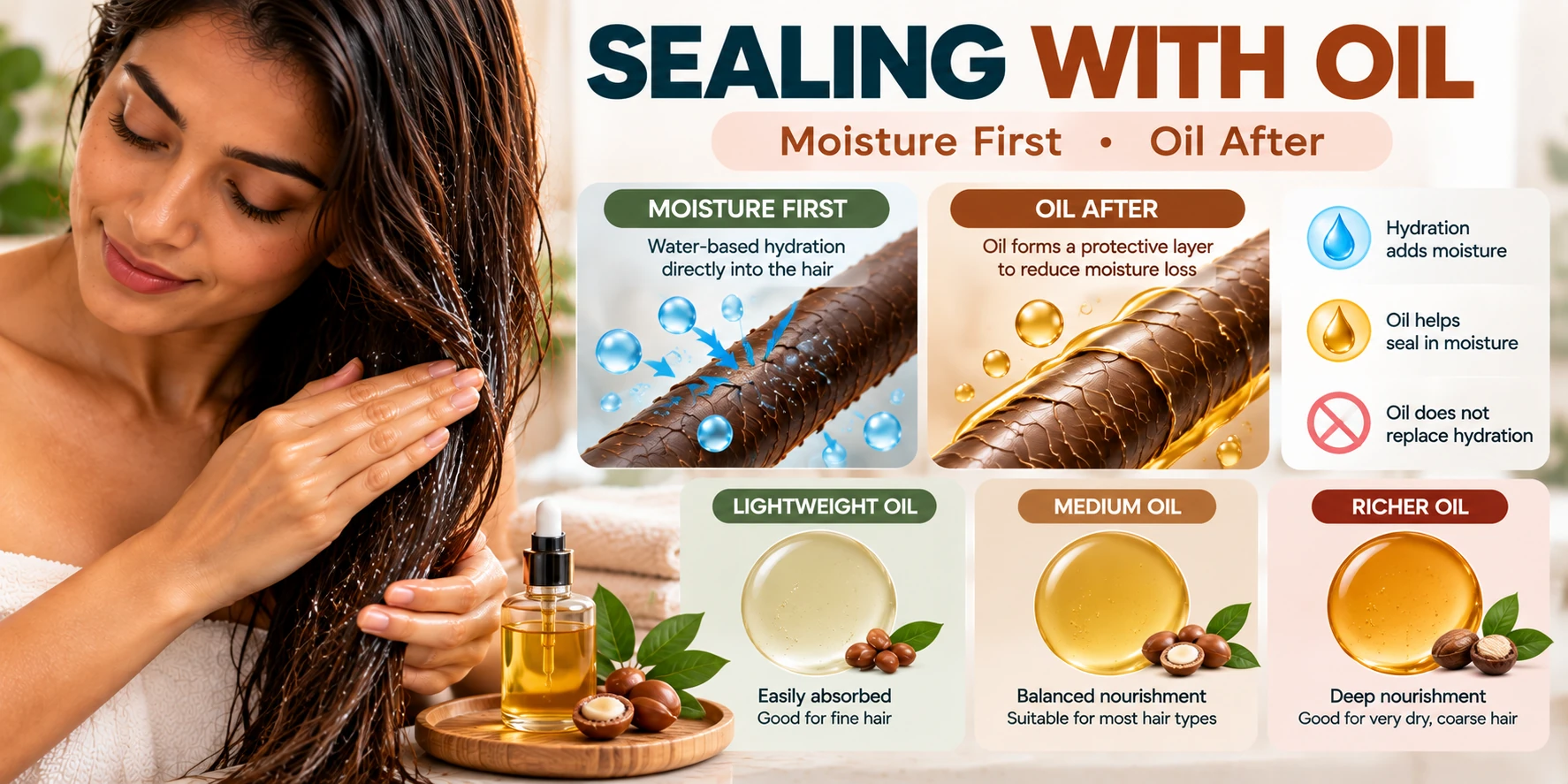
Oil works best as a sealant applied after water-based moisture, rather than as the sole hydration source. The right oil depends on hair thickness and porosity.
Lightweight Oils
Suit fine or low-porosity hair. Less likely to weigh hair down.
Medium Oils
Suit medium porosity and everyday sealing needs.
Rich Oils
Suit coarse or high-porosity hair that loses moisture quickly.
Pre-wash oiling can add a protective layer before cleansing; post-wash oiling on damp hair helps seal in moisture. Both approaches are valid depending on your hair's needs.
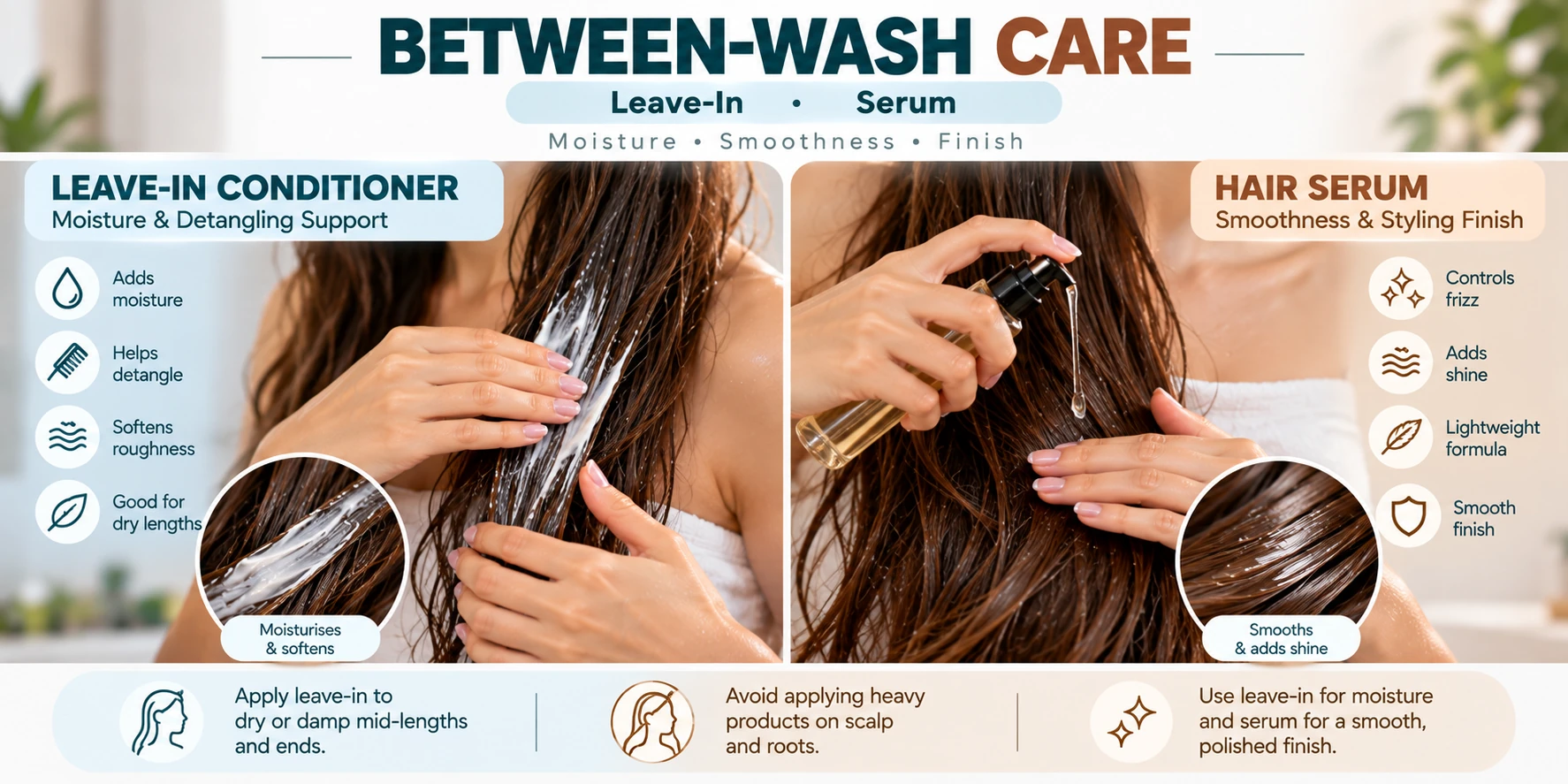
Between Washes
Extend Moisture Between Wash Days
Best for:
- Ongoing hydration
- Reduced friction
- Detangling support
- Curly or high-porosity hair
Best for:
- Shine
- Smoothing frizz appearance
- Styling finish
- Works best alongside moisture, not instead of it
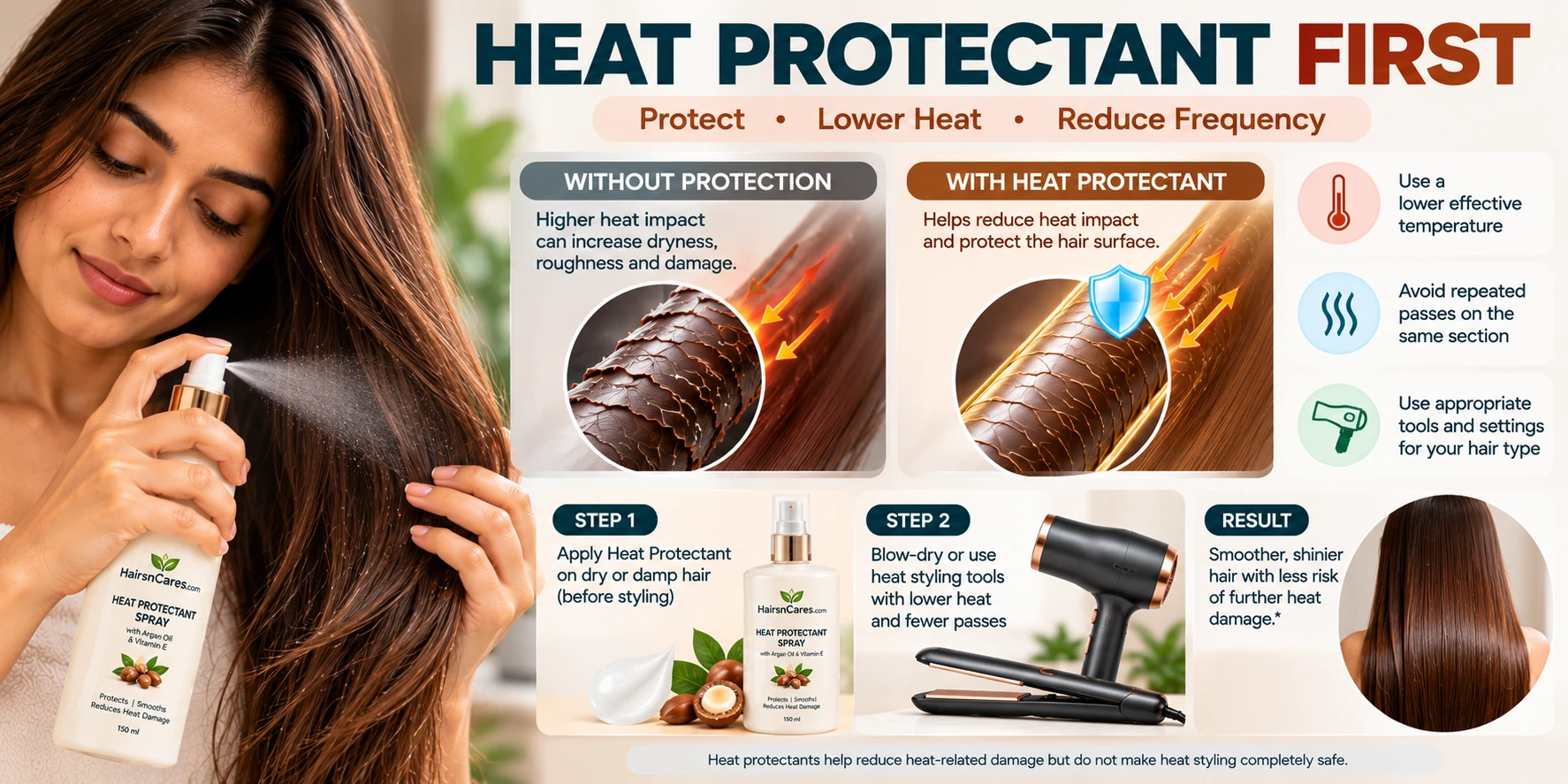
Styling Safety
Dry Hair Is More Vulnerable to Further Heat Damage
Rules
- Use heat protectant every time
- Lower effective temperature
- Reduce frequency
- Avoid repeated passes
- Never straighten soaking wet hair
- Deep condition regularly if heat is used often
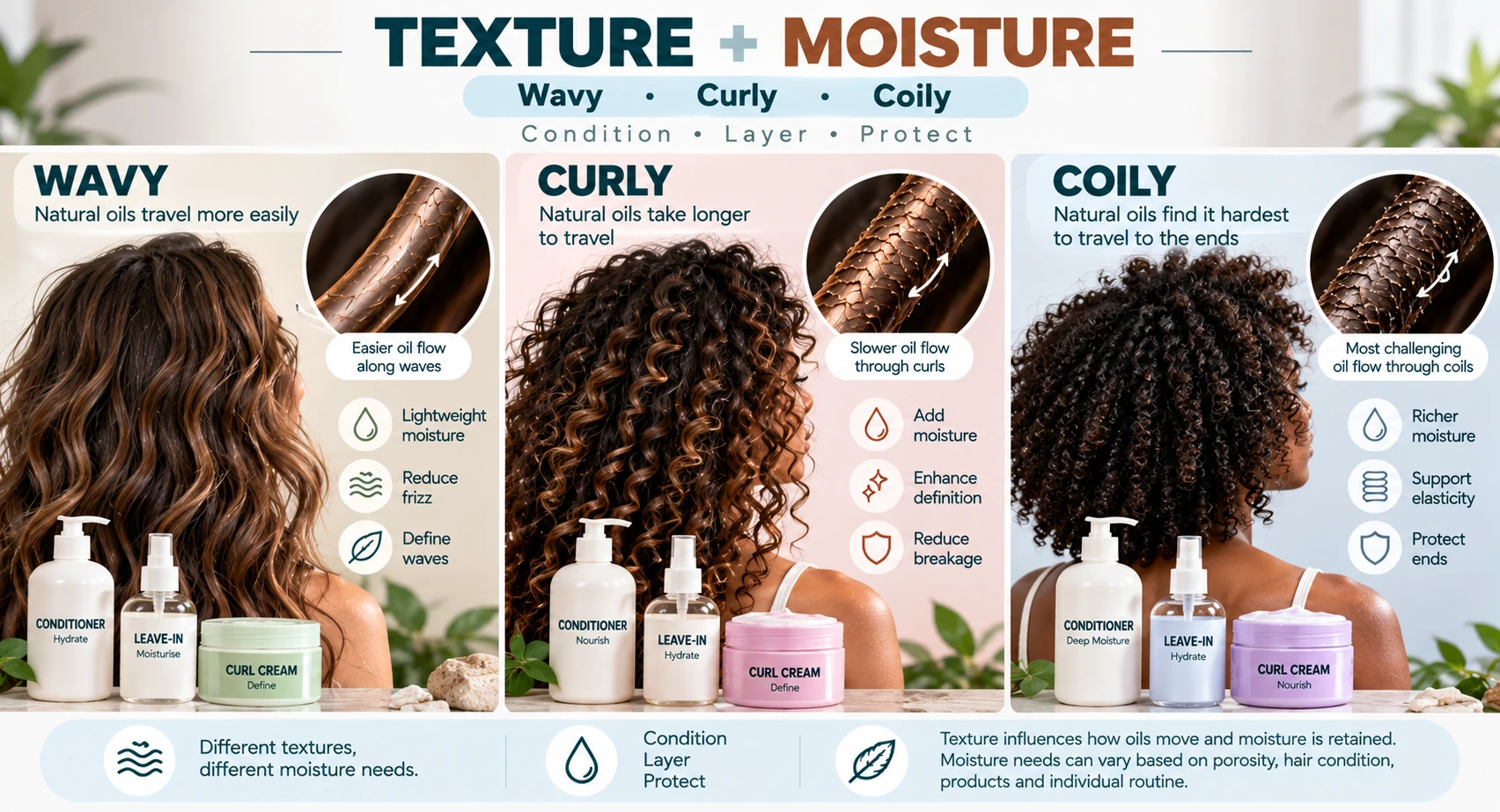
Texture-Specific Care
Curl Pattern Often Needs More Moisture, Not Less
Curly, wavy and coily hair often dries out faster because natural scalp oils have a harder time traveling down the curl pattern to the lengths and ends.
Routine
- Richer conditioner
- LOC or LCO method
- Gentle detangling with slip
- Leave-in and curl cream
- Reduced manipulation
- Satin or silk protection overnight
- Deep conditioning regularly
Colour and Moisture Together
Protect Colour and Moisture at the Same Time
Colour-treated hair often faces both dryness and fading at once. Colour-safe, moisturising formulas can support both goals simultaneously.
Routine
- Colour-safe shampoo and conditioner
- Reduce wash frequency where possible
- Deep conditioning masks
- Reduce heat exposure
- UV-aware products where verified
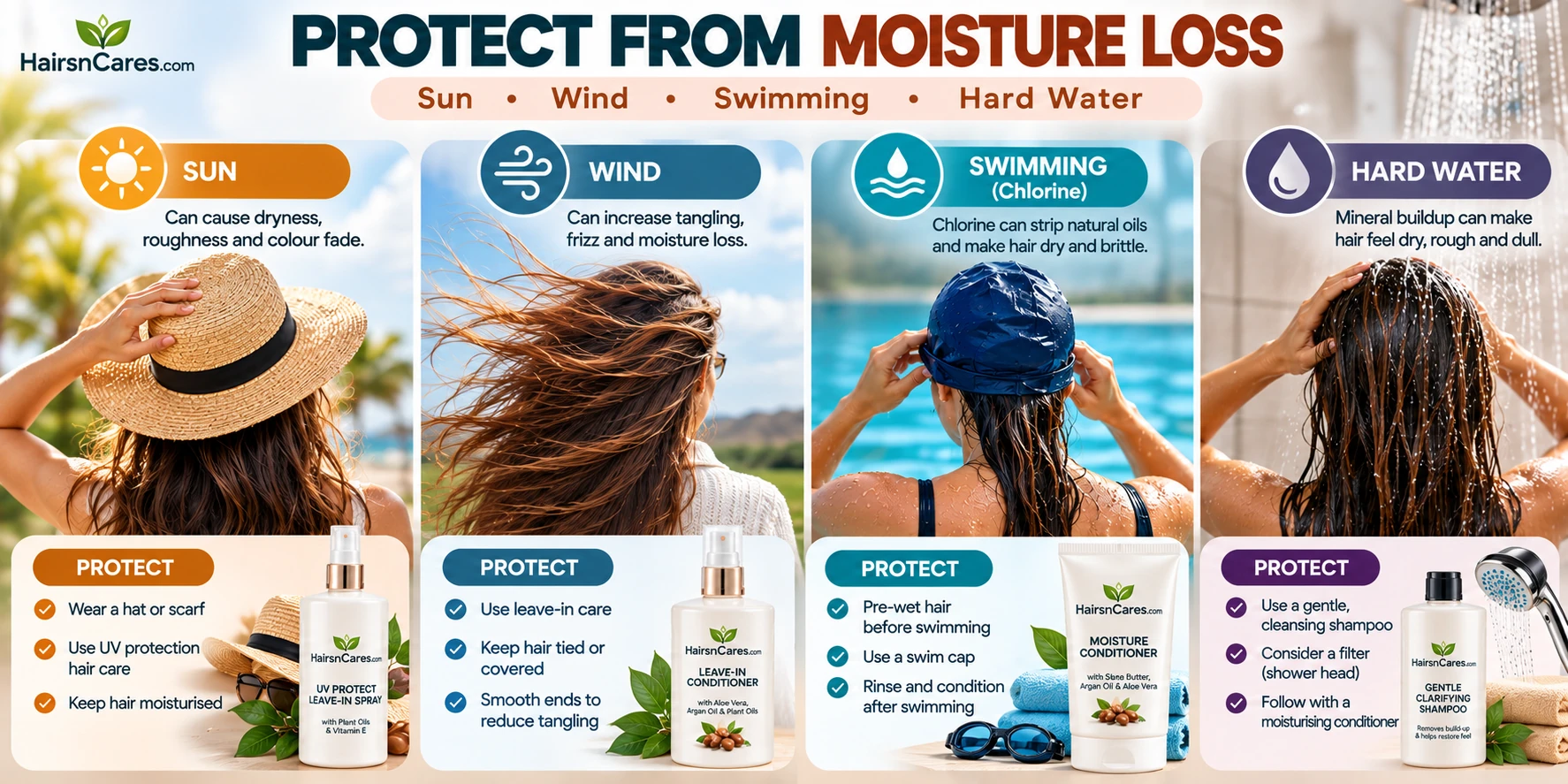
Environmental Protection
Protect Hair From External Moisture Loss
Weather
- Cover hair in strong sun or wind
- Use leave-in before outdoor exposure
- Increase moisture in dry or cold seasons
Hard Water
- Consider a shower filter where practical
- Occasional clarifying to remove mineral buildup
- Follow with extra conditioning after clarifying
Ecommerce
Shop Dry Hair Products by Porosity and Concern
Filter by concern, product type, porosity and safety preferences.
*Sulphate-free labels are shown only when verified on the product database; unverified claims are not displayed.
Compare by Porosity Fit
Compare Moisture Products by Porosity Fit
Compare up to four products on moisture level, sealing strength, porosity fit and more. Products are never labelled "best" without verified criteria.
| Attribute | Product A | Product B |
|---|---|---|
| Product type | Leave-in conditioner | Sealing oil |
| Best porosity fit | Low to medium | High |
| Weight | Lightweight | Medium to rich |
| Usage stage | After washing | Sealing step (LOC/LCO) |
AI Tool
Create Your Personal Moisture Plan
The AI Dry Hair Routine Builder above uses your inputs — porosity, severity, texture, chemical history and heat frequency — to suggest routine categories, a moisture-layering order and product priorities.
Track Realistically
Track Softness and Shine, Not Just How Hair Feels One Day
Track softness, frizz, shine, breakage, tangling, scalp comfort, wash frequency, mask use, oil use, heat frequency, and porosity-matched product changes.
Do Not Self-Manage These
Do Not Treat These Signs as Routine Dryness
- Persistent scalp flaking that doesn't improve
- Scalp pain, redness or burning
- Sudden hair fall alongside dryness
- Dryness with broader skin changes
- Severe dandruff or crusting
- Patchy hair loss
- Scalp pus or bleeding
- No improvement despite consistent moisture routine over months
Route to a dermatologist, the AI Hair Test, or the damaged hair guide if roughness persists despite good moisture care.
Avoid These
Mistakes That Keep Hair Dry
Expert Note
Moisture Care Works Best When It Matches Your Porosity
"Dry hair usually responds well to consistent, porosity-matched moisture care — the right shampoo, conditioner, sealing oil and layering order. But if hair stays rough and brittle despite good moisture care, the shaft itself may be damaged and needs a different approach. Persistent scalp symptoms alongside dryness should be assessed separately."
Reviewed by Dr. Amit Agarkar, MD Dermatology — Hairsncares
Suggested Medical References
Where to Read More From Trusted Sources
This page reflects general dermatology and cosmetic hair-science understanding. For deeper reading on hair-shaft moisture, porosity and scalp conditions, these are reputable starting points — search each organisation's site directly for the most current article, since we don't want to point you to a guessed or outdated link.
- American Academy of Dermatology (AAD)Patient guides on hair care, dryness and scalp health
- MedlinePlus (U.S. National Library of Medicine)Consumer-friendly overviews of hair and scalp conditions
- PubMedPeer-reviewed research on hair-shaft moisture, porosity and cuticle structure
- NHS (UK National Health Service)Condition overviews for scalp conditions and when to seek care
These are reference categories, not endorsements of specific articles. Always check the publication date and consult a dermatologist for advice specific to you.
Frequently Asked Questions
Dry Hair Guide: FAQs
Browse by category, or open any question directly — every answer stays on the cosmetic side of the line, with medical questions pointed to a doctor.