Above the Fold
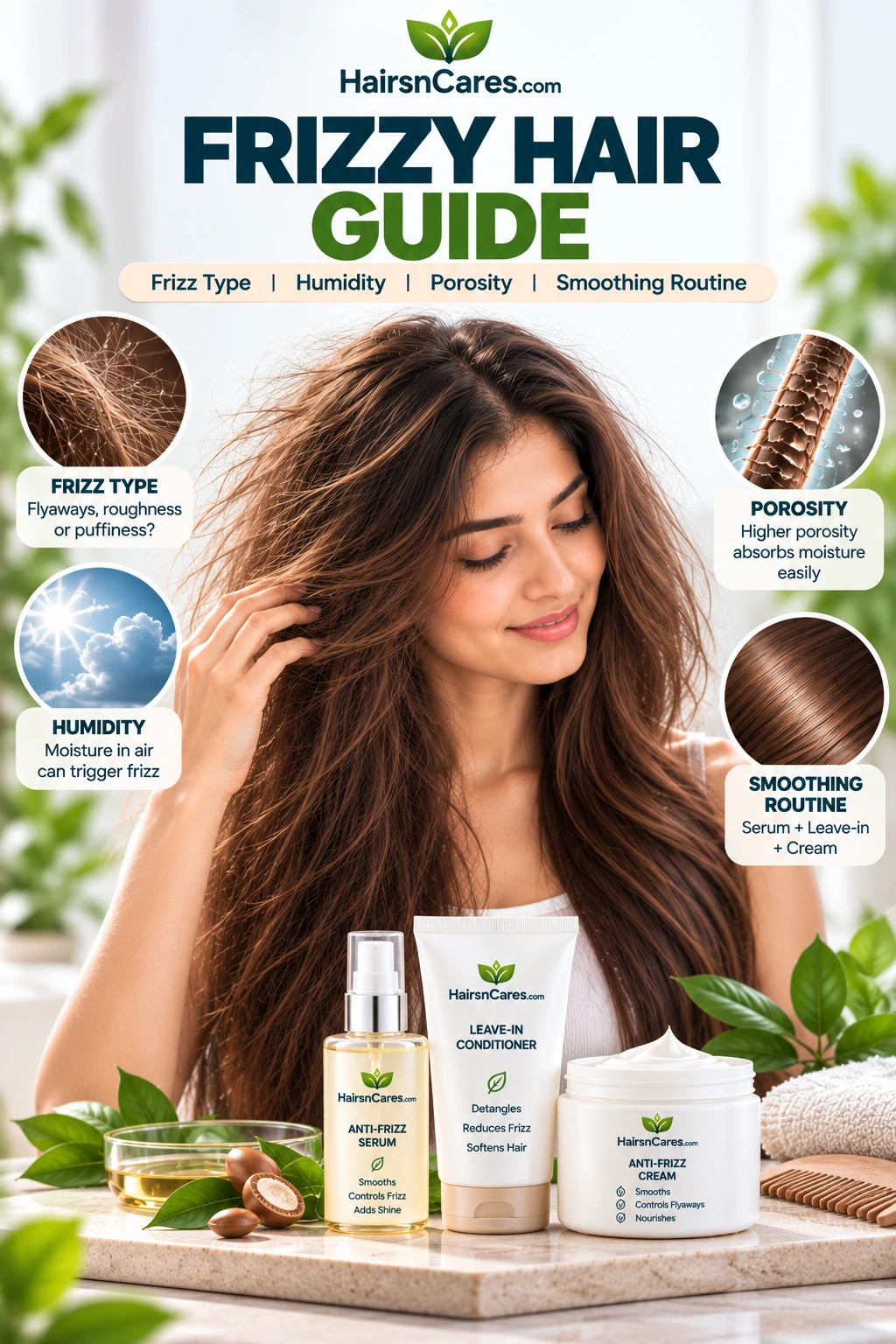
Quick Answer: How Do You Get Rid of Frizz?
Frizz is best controlled by identifying whether it's driven by humidity, dryness, damage or porosity, then matching your routine to that cause — moisture-rich conditioning, a sealing serum or cream, gentle drying technique, and heat protection. Frizz can be well-managed, but since it's influenced by weather, most people treat it as an ongoing routine rather than a one-time fix.
Search Intent Alignment
What You'll Learn on This Page
- What frizz actually is, and why the cuticle is the root cause
- How to tell humidity frizz, dryness frizz and damage frizz apart
- How porosity changes what frizz-control routine works for you
- How to choose between serum, cream, leave-in and mask
- Drying techniques that reduce frizz, including the plopping method
- Texture-specific guidance for curly, straight and wavy hair
- What keratin treatments actually do, and their trade-offs
- When persistent frizz points to damage that needs a different approach
Understanding the Basics
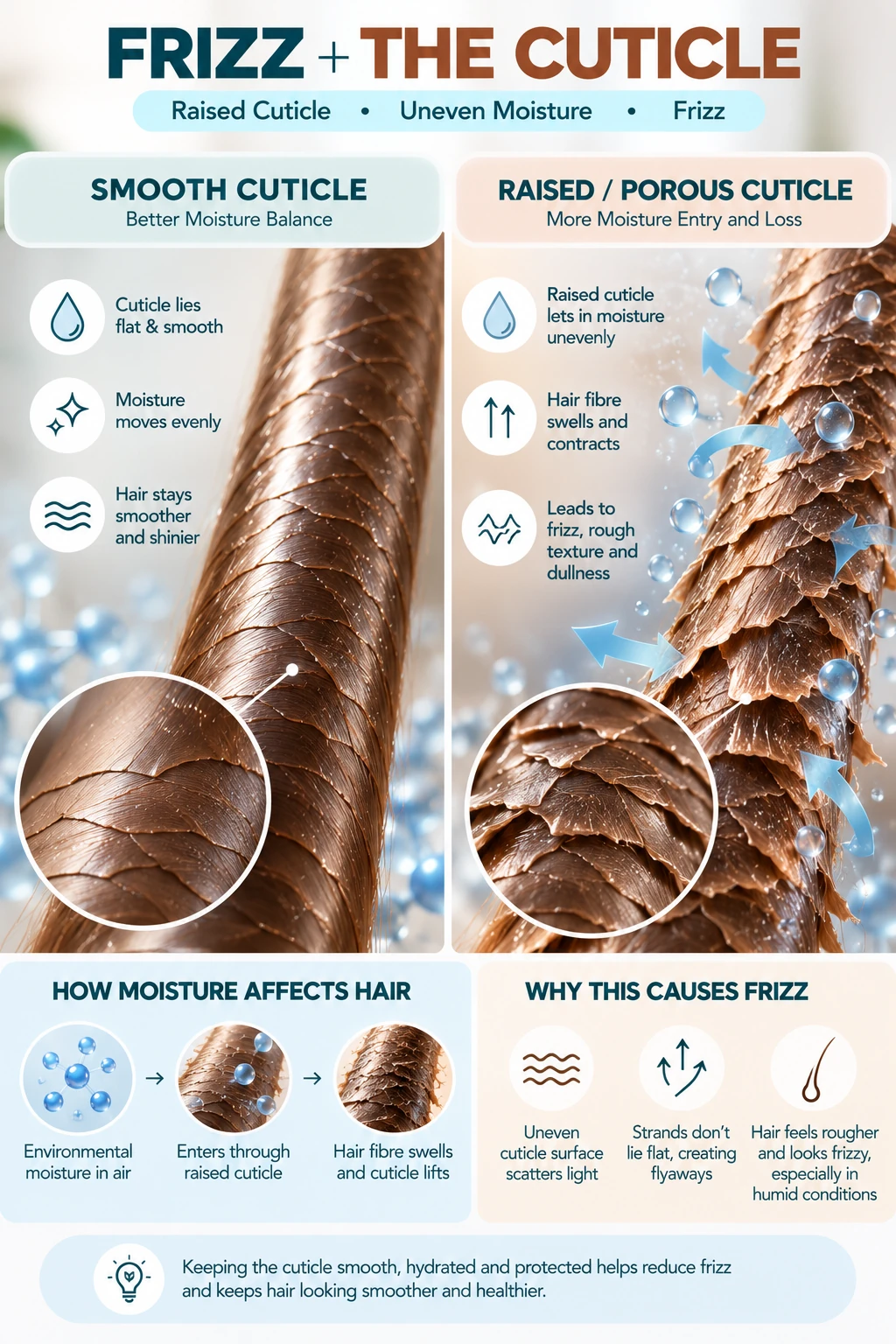
Frizz Starts With an Uneven Cuticle
Frizz happens when the hair's outer cuticle lifts and absorbs ambient moisture unevenly, causing strands to swell, separate and lift away from the main hair shape. It can look like a fluffy halo, flyaways, roughness, static, loss of curl definition, or a fuzzy texture that resists smooth styling.
"Frizz is a texture response, not a fixed trait. The same hair can look sleek one day and frizzy the next, depending on weather, porosity and how it was dried."
Know the Difference
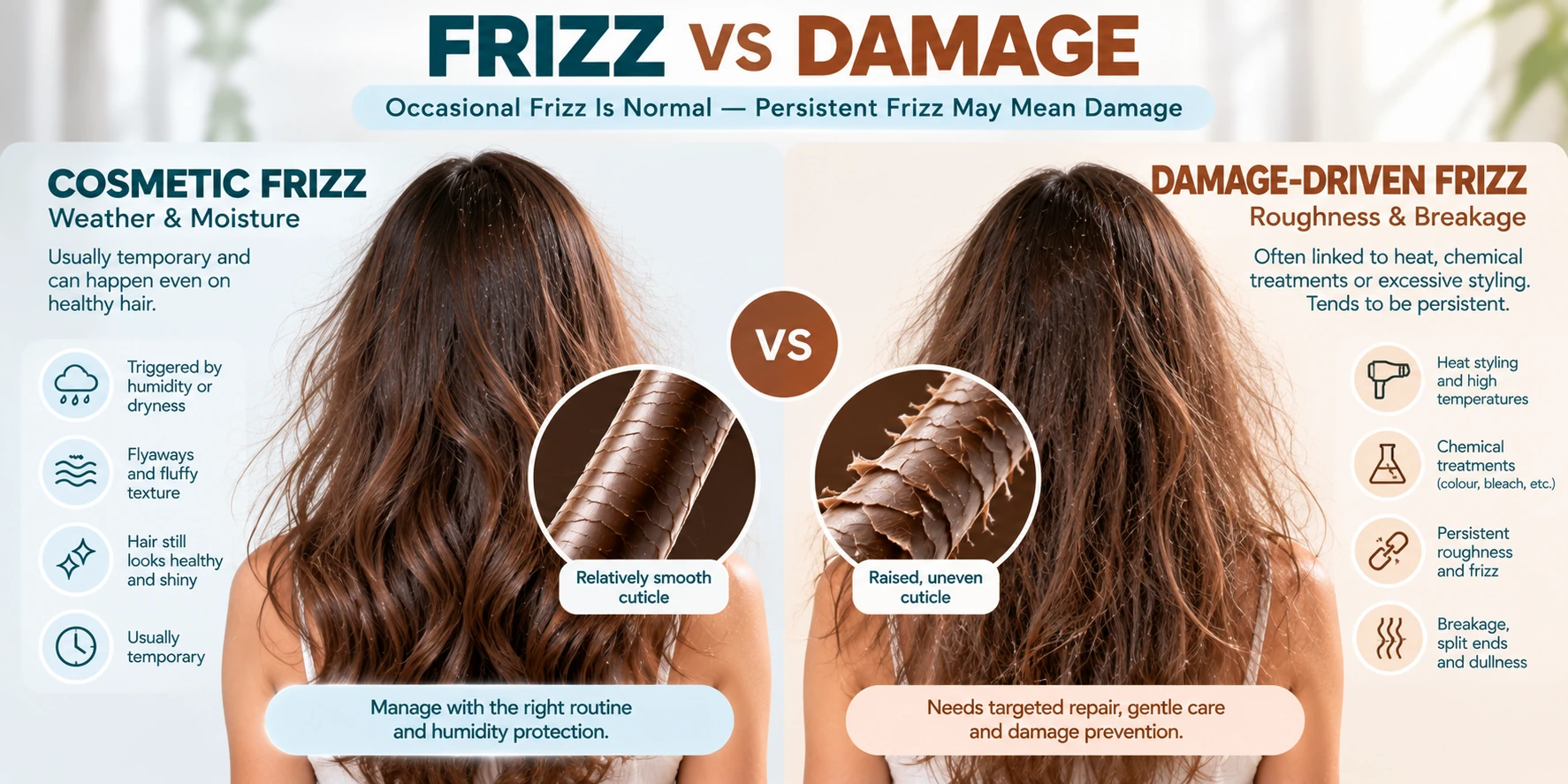
Occasional Frizz Is Normal — Persistent Frizz May Mean Damage
Healthy hair can still frizz in humidity or dryness. But frizz that doesn't respond to moisture, especially alongside roughness, breakage or dullness, often points to underlying damage that needs repair-focused care instead of just frizz control.
| Feature | Cosmetic Frizz | Damage-Driven Frizz |
|---|---|---|
| Response to moisture | Improves with conditioning | Persists despite good moisture care |
| Trigger | Humidity, weather, drying technique | Heat, bleach, chemical processing |
| Accompanying signs | Usually none | Roughness, breakage, dullness, split ends |
| Best approach | Frizz-control routine | Damage-repair routine |
Interactive Selector
What Kind of Frizz Are You Dealing With?
Select the pattern that matches your hair to see the likely cause and routine focus. This is a self-assessment guide, not a diagnosis.
Understanding Causes
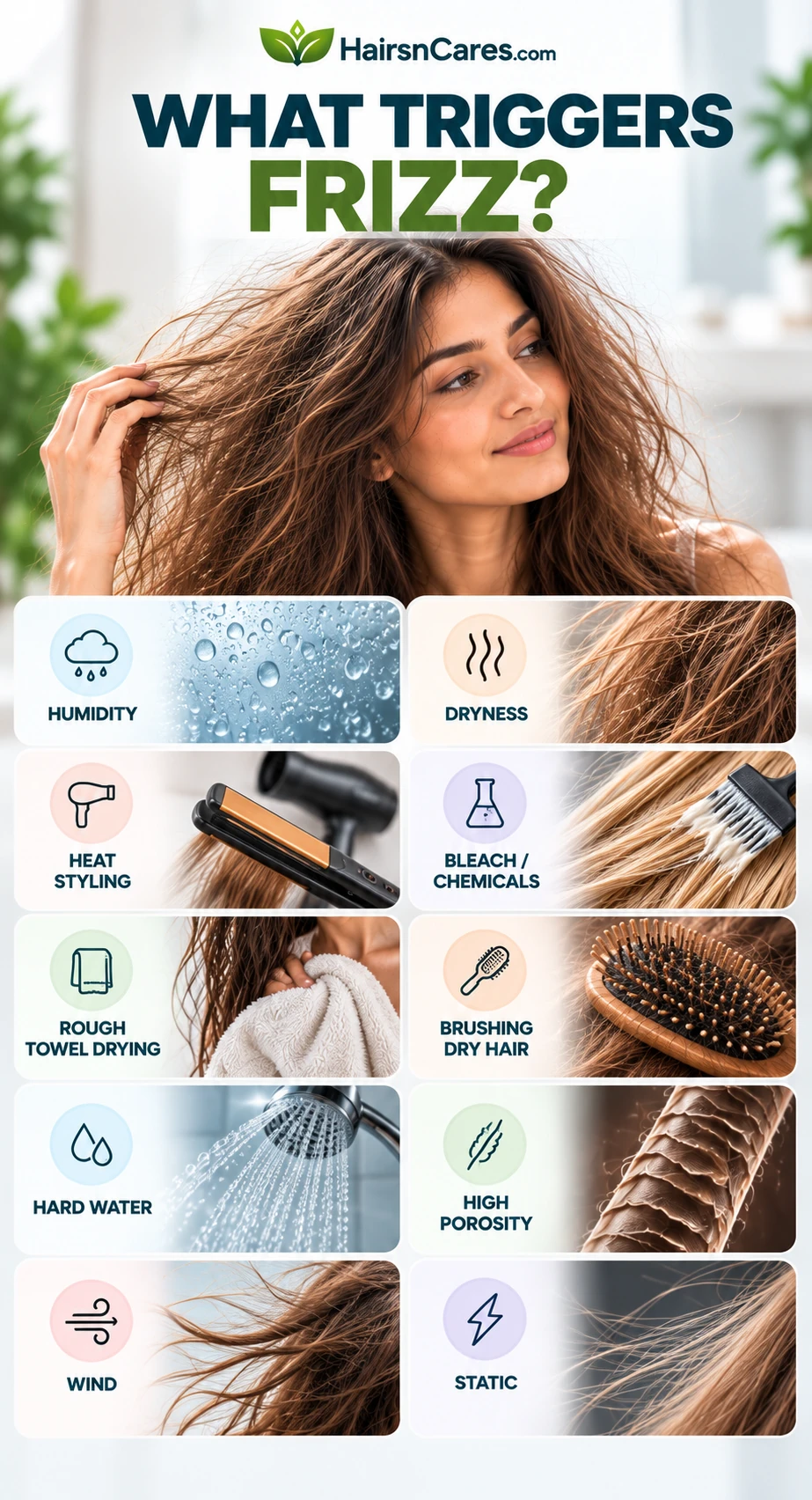
What Actually Triggers Frizz?
Humidity
A raised cuticle absorbs ambient moisture unevenly, swelling the strand.
Dryness
Low moisture and static cause strands to separate and stand away.
Heat Styling
Roughens the cuticle and evaporates shaft moisture over time.
Bleach and Chemicals
Raise porosity, increasing frizz alongside dryness and fragility.
Rough Towel Drying
Friction and rubbing lift the cuticle during drying.
Brushing Dry Hair
Breaks up natural clumping, especially in curly and wavy textures.
Hard Water
Mineral buildup can coat the shaft and roughen texture.
High Porosity
An open cuticle absorbs and loses moisture quickly.
Wind and Static
Dry air and friction create static-driven flyaways.
Porosity Awareness
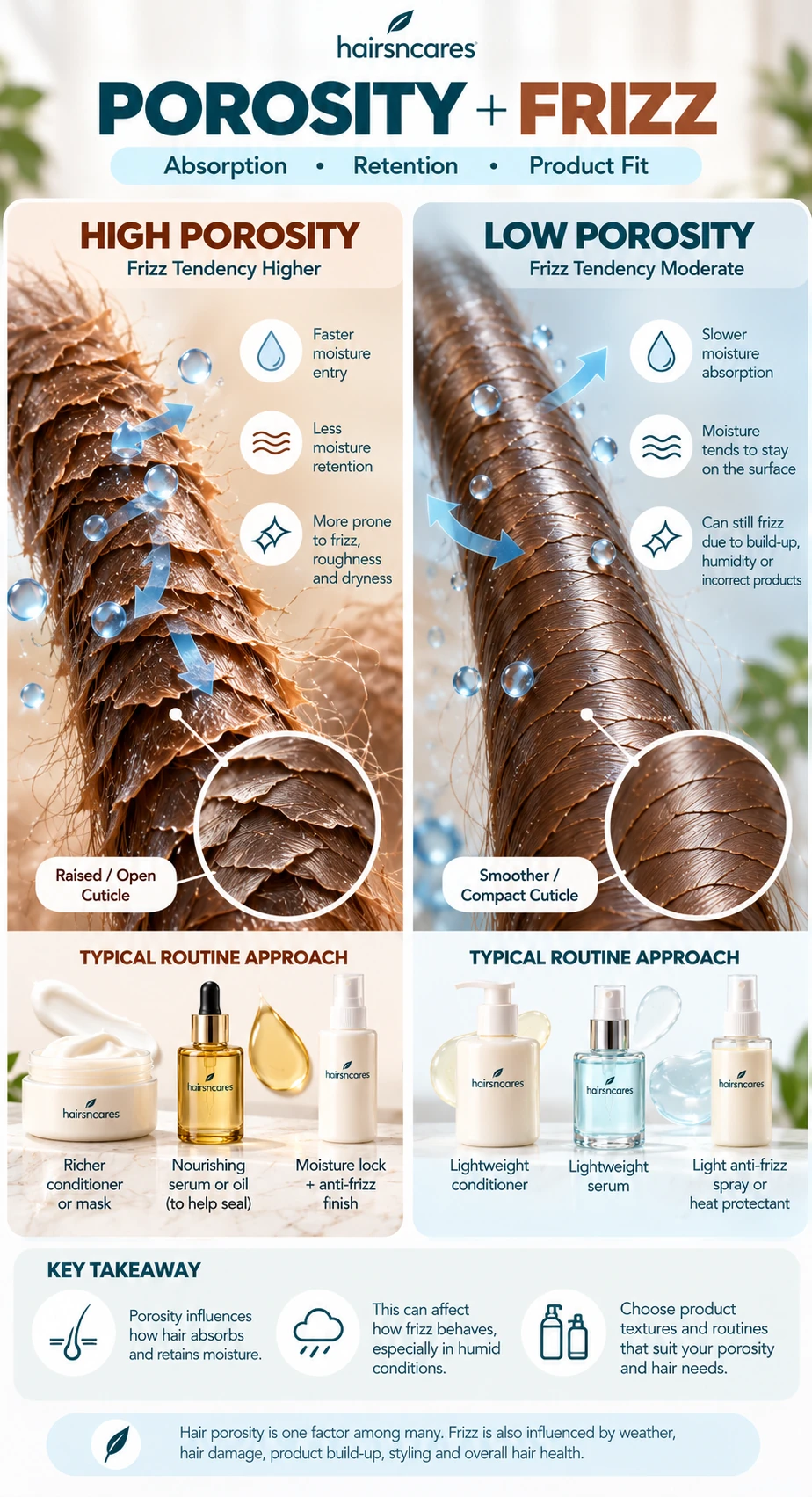
Porosity Changes How Frizz Behaves
High Porosity
- Absorbs moisture fast, loses it fast
- More prone to humidity frizz
- Needs richer sealing after moisture
- Benefits from leave-in plus oil or cream
Low Porosity
- Resists moisture absorption
- Frizz often from product sitting on the surface
- Needs lighter products applied with heat or steam
- Avoid heavy build-up-prone creams
Personalised Routine
Build a Frizz-Control Routine Matched to Your Cause
Answer a few questions to get a suggested cosmetic-care routine. This does not diagnose damage or replace a dermatology consult.
The AI Frizz Control Routine Builder supports cosmetic routine planning only. It cannot diagnose an underlying scalp or hair condition or prescribe treatment.
Cleansing & Conditioning
Moisture-Rich Cleansing Is the Foundation
Shampoo
- Moisturising, gentle formula
- Sulphate-conscious where suitable
- Colour-safe if treated
- Avoid over-cleansing
- Clarify only when buildup exists
Conditioner
- Rich, smoothing formula
- Applied generously to mid-lengths and ends
- Leave on for a few minutes
- Detangle while conditioner is in
Choosing Your Finish
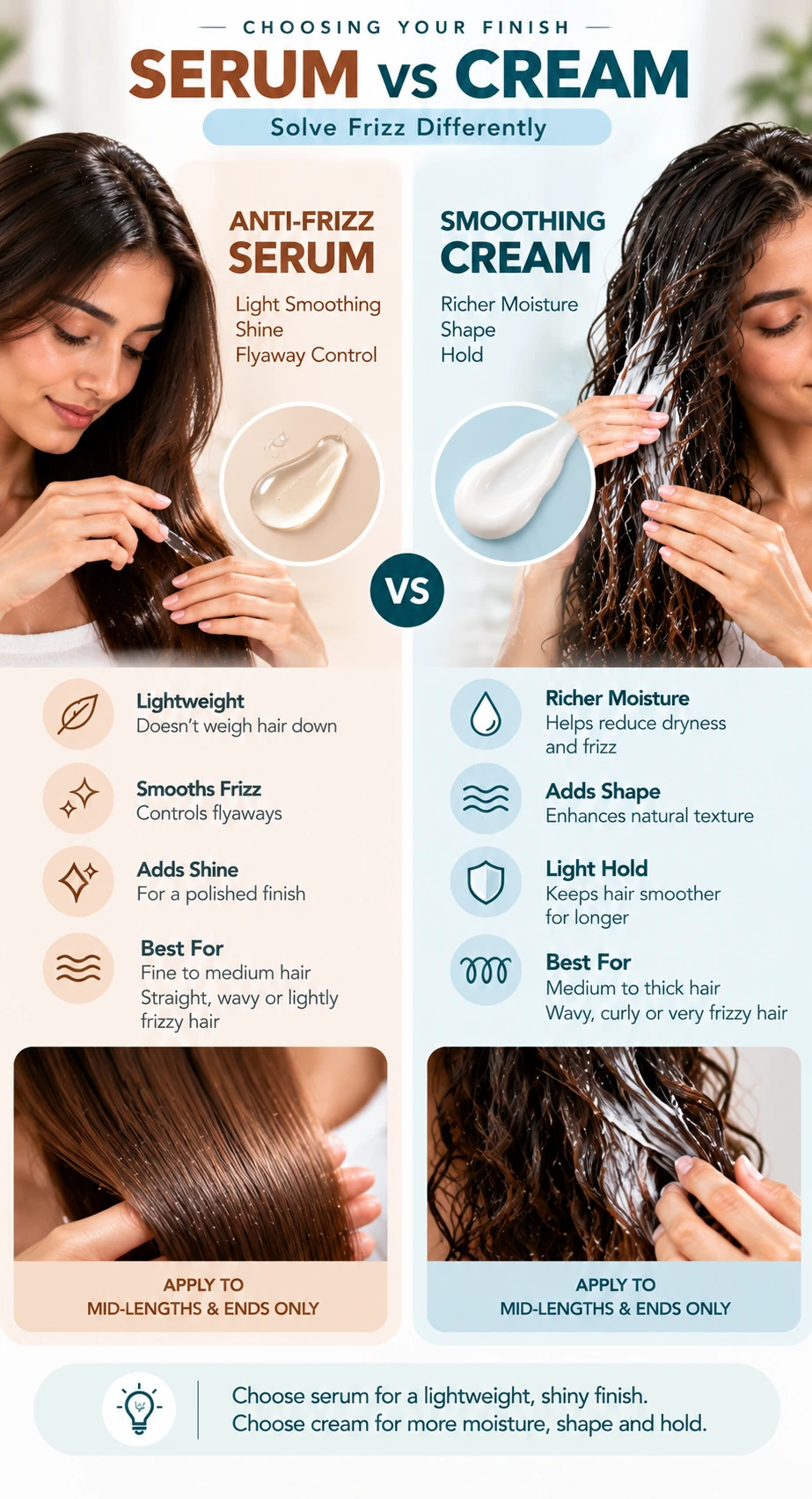
Serum and Cream Solve Frizz Differently
Best for:
- Fine or straighter hair
- A lighter touch
- Shine and flyaway smoothing
- Finishing step after styling
Best for:
- Coarser or curlier hair
- More hold and moisture
- Definition and shape
- Applied to soaking wet hair
"Neither is universally better — the right choice depends on your hair's thickness and how much hold you need."
Deeper Moisture Support
Leave-In Conditioner and Weekly Masking
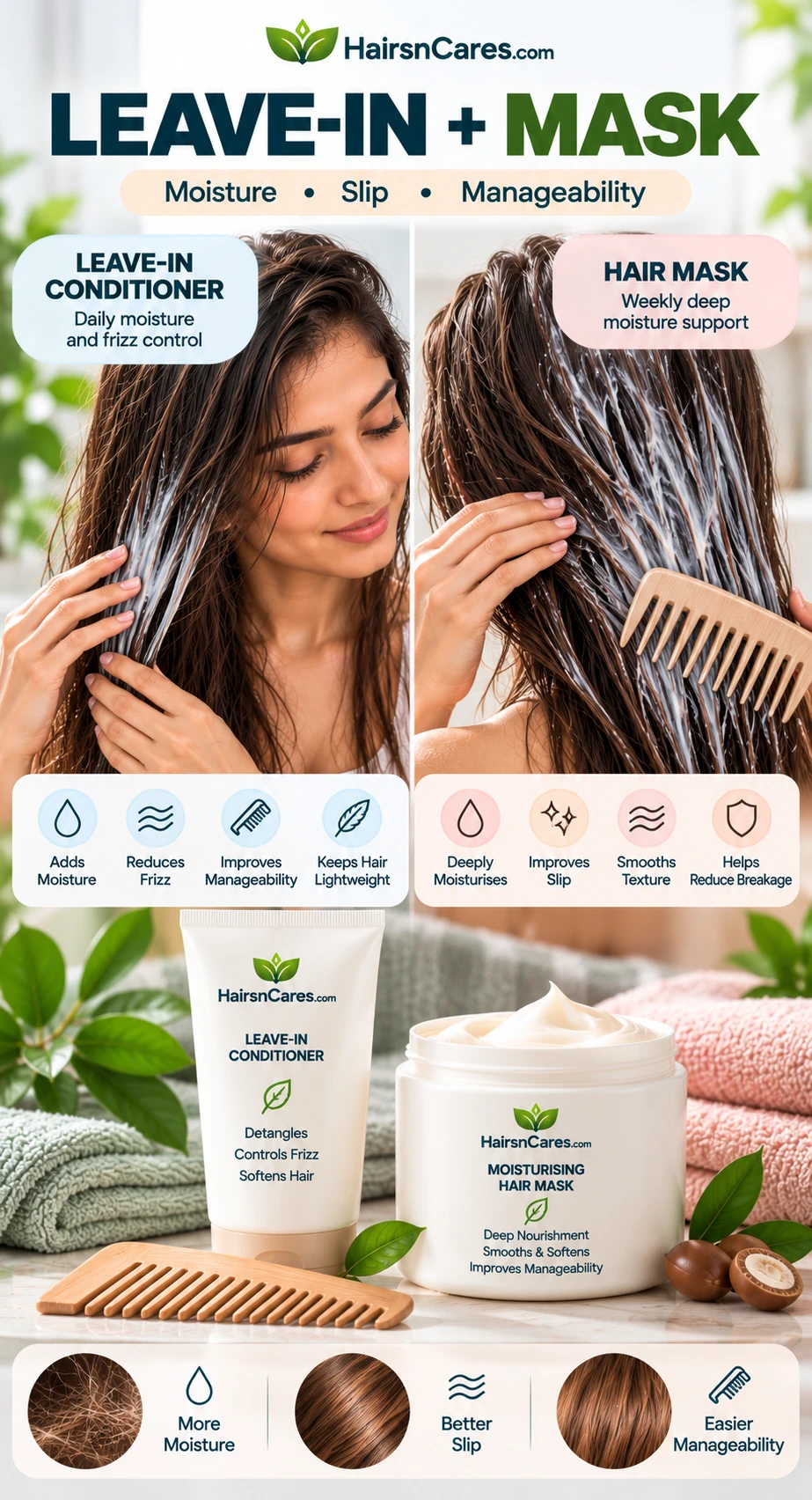
Leave-in conditioner provides ongoing moisture and a light seal between washes, which is especially helpful for frizz-prone hair. A moisturising mask used weekly to twice weekly can further smooth the cuticle and improve manageability over time, adjusted based on how hair responds.
After Washing
Apply leave-in to damp, detangled hair before any styling product.
Weekly
Use a moisturising mask in place of regular conditioner.
As Needed
Increase masking frequency in very dry or very humid seasons.
Heat Considerations
Heat Protectant Matters More on Frizz-Prone Hair
Frizzy hair is often more porous or fragile, so any heat styling should be paired with a heat protectant to limit additional cuticle damage. Straightening or blow-drying frizzy hair can be done safely at a controlled, lower temperature, but frequency should be reduced on already fragile hair.
Technique Matters
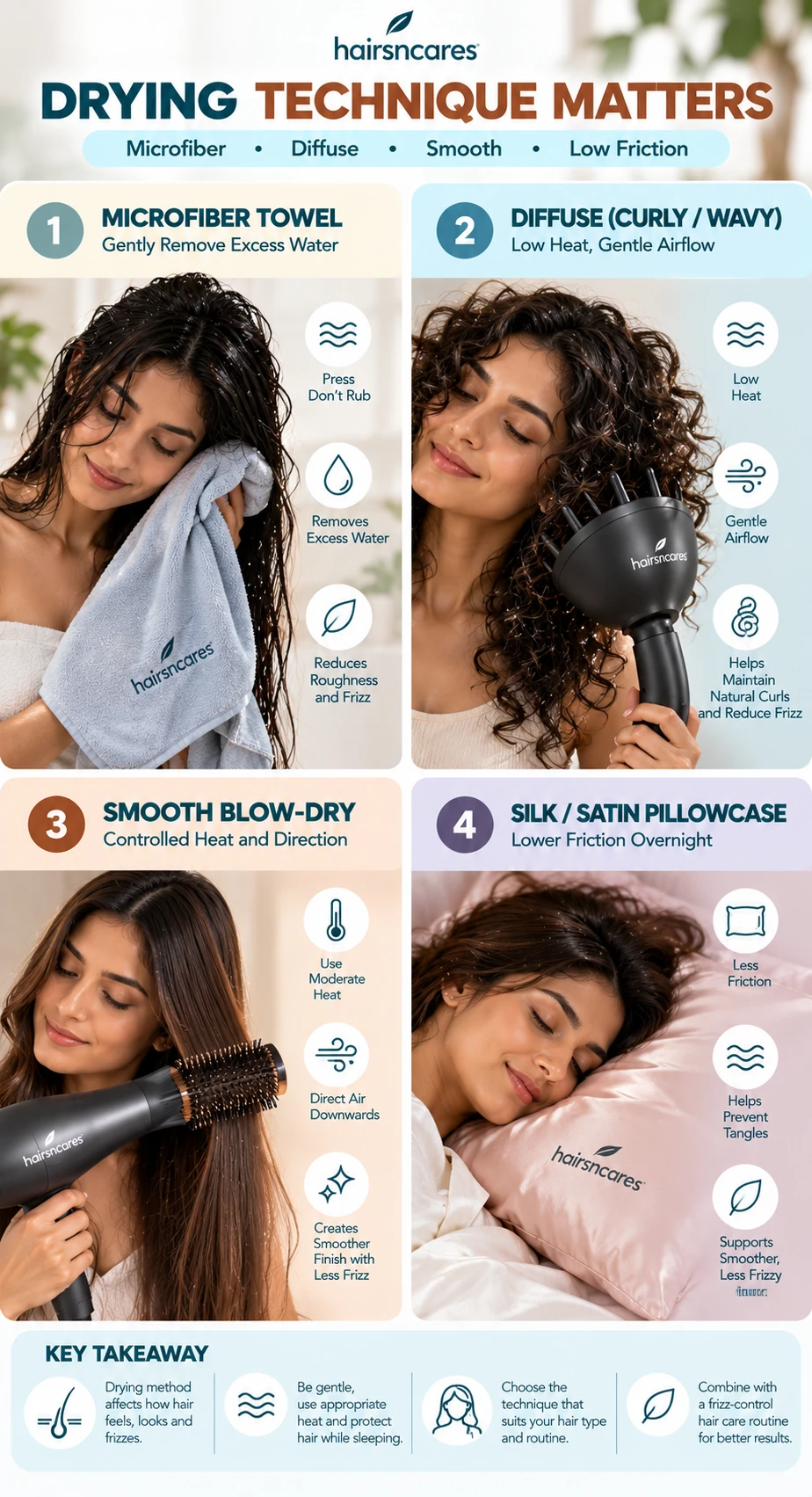
How You Dry Your Hair Affects Frizz
Microfiber Towel
Absorbs water gently, reducing the friction and cuticle-lifting a regular towel causes.
Diffusing
Lower heat setting dries curly or wavy hair with less disturbance, preserving natural clumping.
Smoothing Brush Blow-Dry
For straight hair, airflow following the cuticle direction helps seal it smooth.
Silk or Satin Pillowcase
Less overnight friction than cotton, reducing tangling and morning frizz.
Step-by-Step Technique
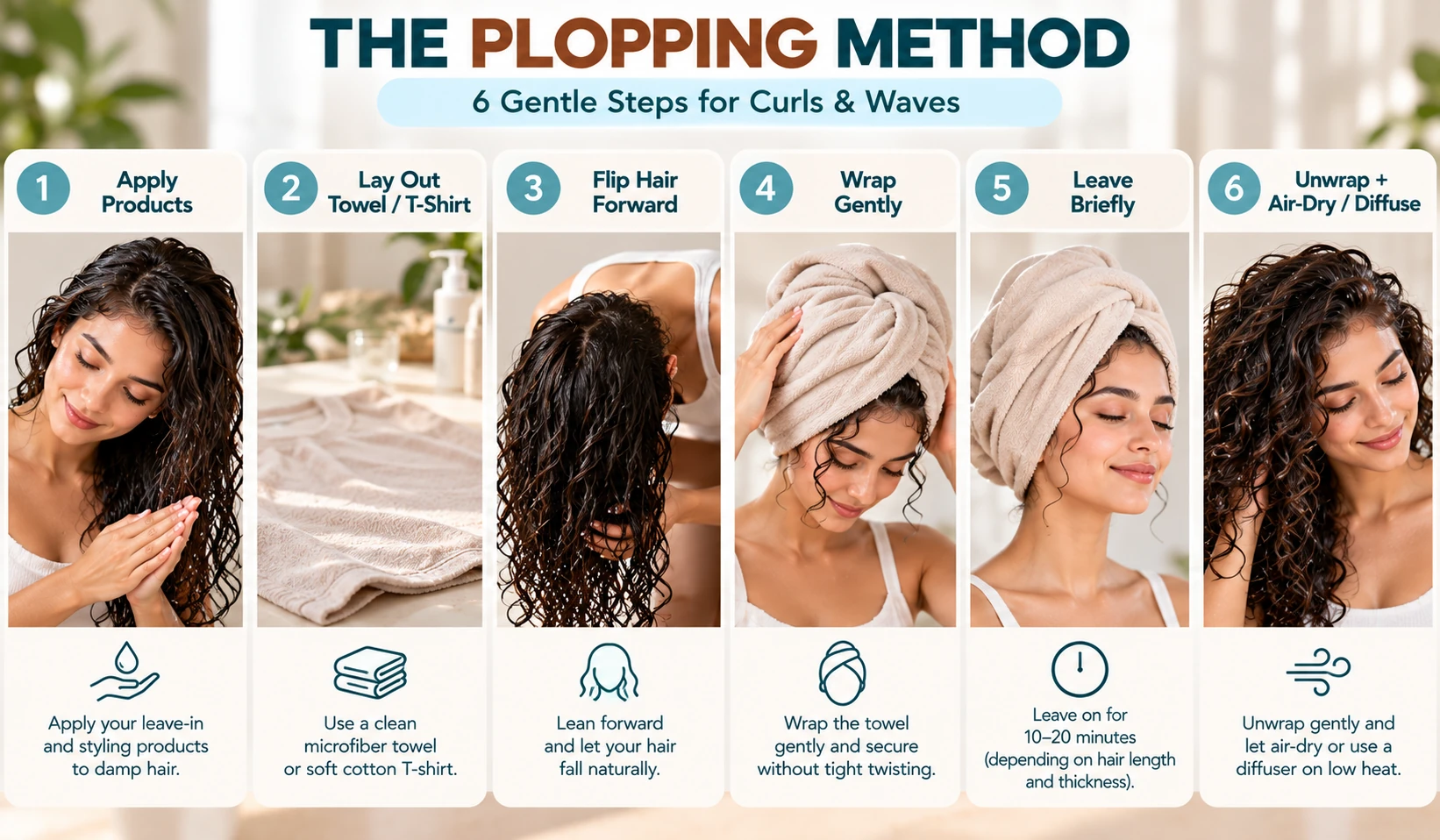
The Plopping Method
Plopping is a gentle drying technique for curly and wavy hair that absorbs excess water without disturbing curl pattern, commonly used to reduce frizz.
Apply Products First
Apply leave-in, cream or gel to soaking wet hair before plopping.
Lay Out the Fabric
Lay a microfiber towel or cotton t-shirt flat on a surface.
Flip Hair Forward
Bend forward and flip your hair onto the center of the fabric.
Wrap and Secure
Fold the fabric up and around your hair, securing gently without pulling tight.
Leave in Place
Leave for 10 to 20 minutes to absorb excess water.
Unwrap and Style
Gently unwrap and air-dry or diffuse the rest of the way, touching hair minimally.
Texture-Specific Guidance
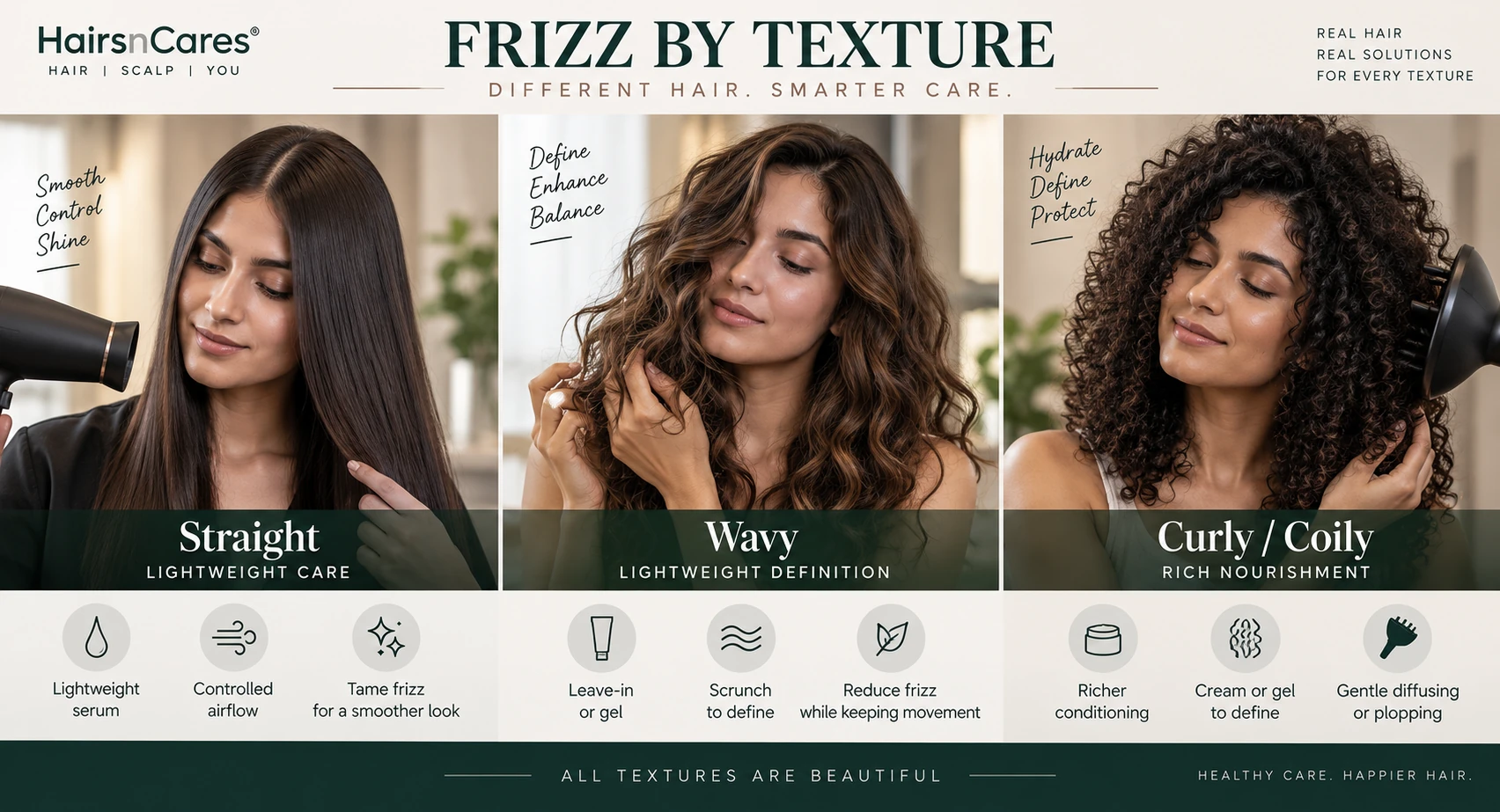
Frizz Management by Hair Texture
- Lightweight leave-in or serum
- Smoothing brush during blow-dry
- Heat protectant essential
- Airflow follows cuticle direction
- Leave-in plus light gel or cream
- Scrunch rather than brush once dry
- Diffuse on low heat
- Avoid touching hair while drying
- Rich conditioning is essential
- Cream or gel on soaking wet hair
- Plopping or diffusing preferred
- Minimal disturbance while drying
Chemical Smoothing Services
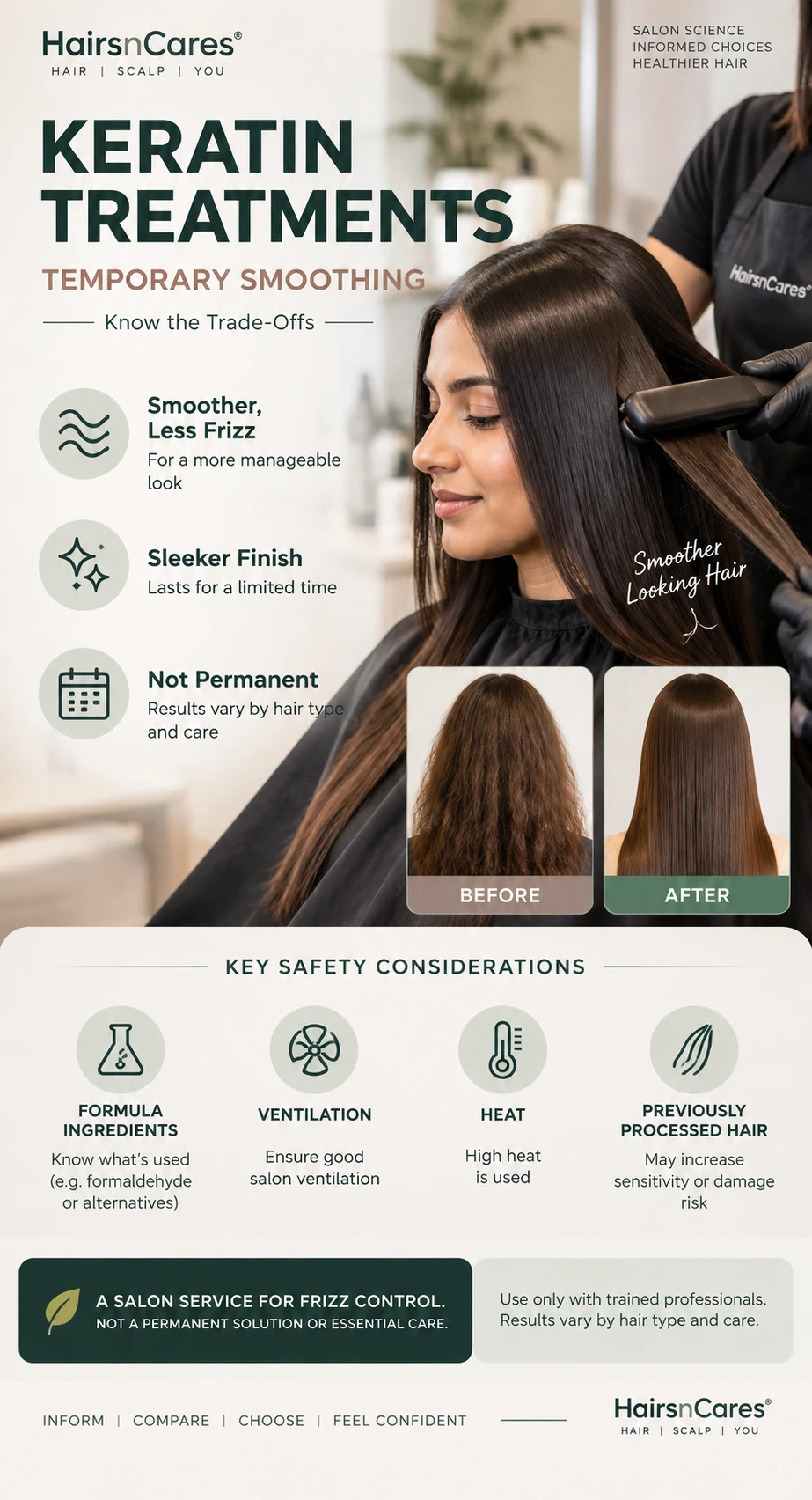
What Keratin Treatments Actually Do
Keratin treatments can temporarily smooth the hair shaft and reduce frizz for some people by coating and partially reshaping the cuticle under heat. They are a chemical service with their own considerations around formaldehyde-releasing ingredients, upkeep, and suitability, and should be discussed with a qualified professional rather than treated as a routine frizz-control step.
Shop the Routine
Frizz-Control Product Categories
Product suggestions are cosmetic category guidance, not individual prescriptions. Patch test new products and discontinue if irritation occurs.
Track Your Progress
How to Track Frizz Improvement
Frizz responds to routine changes gradually. Check in at consistent points rather than day to day, especially since weather affects results.
When to See a Doctor
Medical Red Flags Beyond Cosmetic Frizz
Frizz itself is cosmetic. But if it appears alongside these signs, a dermatologist review is worth considering rather than continuing with cosmetic frizz control alone.
- Frizz appearing with scalp itching, flaking or redness
- Sudden, unexplained changes in hair texture
- Frizz accompanied by noticeable hair thinning or shedding
- Hair changes alongside broader skin or health symptoms
- Hair that feels persistently rough or breaks despite good moisture care
Avoid These Missteps
Common Frizz-Control Mistakes
Frequently Asked Questions
Frizzy Hair: Common Questions Answered
Frizzy hair is hair where strands lift, curl or separate unevenly from the main shape, giving a fluffy, undefined or staticky appearance, usually because the outer cuticle is raised and absorbing moisture unevenly.
Common causes include humidity, dryness, damage from heat or chemicals, high porosity, rough handling, low moisture and a raised or roughened cuticle that lets hair absorb ambient moisture unevenly.
They're related but not identical. Dryness is a moisture deficiency, while frizz is the visual and textural result that can come from dryness, humidity, damage or porosity, sometimes all at once.
Not always. Healthy hair can still frizz in humidity or dryness, but persistent frizz that doesn't respond to moisture, especially with roughness or breakage, often points to underlying damage.
In humid conditions, hair with a raised cuticle absorbs excess moisture from the air unevenly, causing strands to swell and lift, which shows up as frizz and reduced style hold.
In dry or low-humidity conditions, hair can lose its own moisture and become static-prone, causing strands to separate and stand away from each other, which also reads as frizz.
Flyaways are usually shorter, finer, broken or new-growth hairs that don't have enough weight or length to lie flat, which is a milder and more localised pattern than all-over frizz.
Yes, high porosity hair has a more open cuticle that absorbs and loses moisture quickly, making it more prone to humidity-driven frizz than lower porosity hair with a tighter cuticle.
Yes, bleaching raises the cuticle and increases porosity, which commonly makes bleached hair more prone to frizz alongside dryness and fragility.
Yes, heat can roughen the cuticle and cause moisture loss, both of which are common contributors to increased frizz over time.
Yes, rough rubbing with a regular towel can lift the cuticle and create friction, which often increases frizz compared to gentler drying methods like a microfiber towel.
Yes, brushing dry hair, especially curly or wavy textures, can break up natural clumping and separate strands in a way that increases visible frizz.
Yes, both high humidity and very dry, windy conditions can trigger frizz, though through different mechanisms — moisture absorption versus moisture loss and static.
Yes, mineral buildup from hard water can coat the hair shaft and interfere with smoothness, sometimes contributing to a rougher, more frizz-prone feel.
Yes, curly and coily hair often has a more open cuticle structure and naturally lower moisture retention, making it generally more prone to frizz without consistent moisture care.
Yes, straight hair can absolutely frizz, particularly from humidity, damage, or dryness, even though frizz is often more visible in curl patterns.
Rich conditioning, leave-in and curl cream or gel applied to soaking wet hair, gentle scrunching or plopping, and minimal disturbance while drying all help manage frizz in curly hair.
Lightweight leave-in or serum, a smoothing brush during blow-drying with the airflow following the cuticle, and heat protectant can help manage frizz in straight hair.
A similar approach to curly hair works well but with lighter products — leave-in, a light gel or cream, and scrunching rather than brushing once dry.
A moisturising, gentle shampoo that doesn't strip natural oils generally works best, since over-cleansing can worsen dryness-driven frizz.
A rich, smoothing conditioner applied generously to mid-lengths and ends helps close the cuticle and add the slip needed to reduce frizz.
Leave-in conditioner isn't strictly necessary for everyone, but it's generally very helpful for frizz-prone hair, since it provides ongoing moisture and a light seal after washing.
A lightweight, smoothing serum applied to damp or dry hair can reduce the appearance of frizz and add shine, though the right formula depends on hair thickness and porosity.
Neither is universally better — cream tends to suit coarser or curlier hair needing more hold and moisture, while serum often suits finer or straighter hair needing a lighter touch.
Hair oil can help seal the cuticle and reduce frizz when applied to damp lengths and ends, though it works best as a finishing step rather than the primary moisture source.
Yes, silicones can coat the hair shaft and smooth the cuticle, which is why many anti-frizz serums use them, though buildup can occur with certain types if not cleansed periodically.
Silicones aren't inherently harmful, but heavier, non-water-soluble types can build up over time on some hair types if not balanced with regular cleansing or occasional clarifying.
Yes, a moisturising mask used regularly can help smooth the cuticle and improve manageability, which often reduces frizz alongside a consistent leave-in and sealing routine.
Frequency depends on severity and hair response, typically ranging from weekly to twice weekly, adjusted based on how hair feels rather than a fixed universal schedule.
Yes, if heat tools are used. Frizzy hair is often more porous or fragile, so heat protectant helps reduce additional cuticle damage that can worsen frizz over time.
Heat styling can be used with protection and a controlled, lower temperature, but frequency should be reduced on already frizz-prone or fragile hair to avoid worsening the underlying cause.
Yes, a microfiber towel absorbs water more gently than regular terry cloth, reducing the friction and cuticle-lifting that contributes to frizz during drying.
Yes, silk or satin creates less friction against hair overnight compared to cotton, which can help reduce tangling and morning frizz over time.
Yes, diffusing on a lower heat setting can dry curly or wavy hair with less disturbance than regular blow-drying, helping preserve natural clumping and reduce frizz.
Plopping is a gentle drying technique where wet hair is wrapped in a microfiber towel or t-shirt to absorb excess water without disturbing curl or wave pattern, which can reduce frizz.
Frizz can be significantly managed and reduced with the right routine, but since it's often influenced by weather and porosity, most people manage it as an ongoing routine rather than a one-time fix.
Keratin treatments can temporarily smooth the hair shaft and reduce frizz for some people, but they are a chemical service with their own considerations and should be discussed with a professional.
Persistent frizz that doesn't respond to moisture, especially alongside roughness, breakage or dullness, can be a sign of underlying damage that needs a repair-focused routine instead.
Frizz itself is cosmetic, but if it comes with scalp symptoms, sudden hair changes, or accompanies broader skin or health changes, a dermatologist review is worth considering.
An AI routine builder can suggest cosmetic frizz-control categories based on your hair type, porosity and environment, but it cannot diagnose an underlying scalp or hair condition.
Track frizz level in different weather conditions, styling longevity, softness and manageability at consistent checkpoints such as 2 weeks, 6 weeks and 3 months.
Medically Reviewed By
Dr. Amit Agarkar
MD Dermatology, Trichologist & Hair Transplant Surgeon. Founder of Vplant Advanced Hair Clinic and Hairsncares, with a clinical focus on hair and scalp health across diverse Indian hair types.
Ready to Start
Build a Routine That Matches Your Frizz
Use the AI Frizz Control Routine Builder to get a cosmetic routine matched to your frizz type, porosity and texture — then shop the categories that fit.