Hair Loss: Causes & Treatment
Dermatologist-led overview of how hair loss is evaluated and the evidence behind common treatments.
View reference ›Biotin (vitamin B7) is commonly used in hair supplements, but it is not necessary for everyone and does not cure every type of hair fall. It may support hair health when a deficiency or nutritional gap is relevant — otherwise extra biotin has limited benefit. Genuine deficiency is uncommon on a normal diet, and biotin can interfere with some blood tests. Hairsncares helps you understand whether biotin fits your pattern through AI screening and doctor-reviewed education. Check suitability with the AI Hair Test. Results vary and depend on deficiency status.
Illustrative summary only. This is education, not a diagnosis or prescription; results vary and depend on your situation.
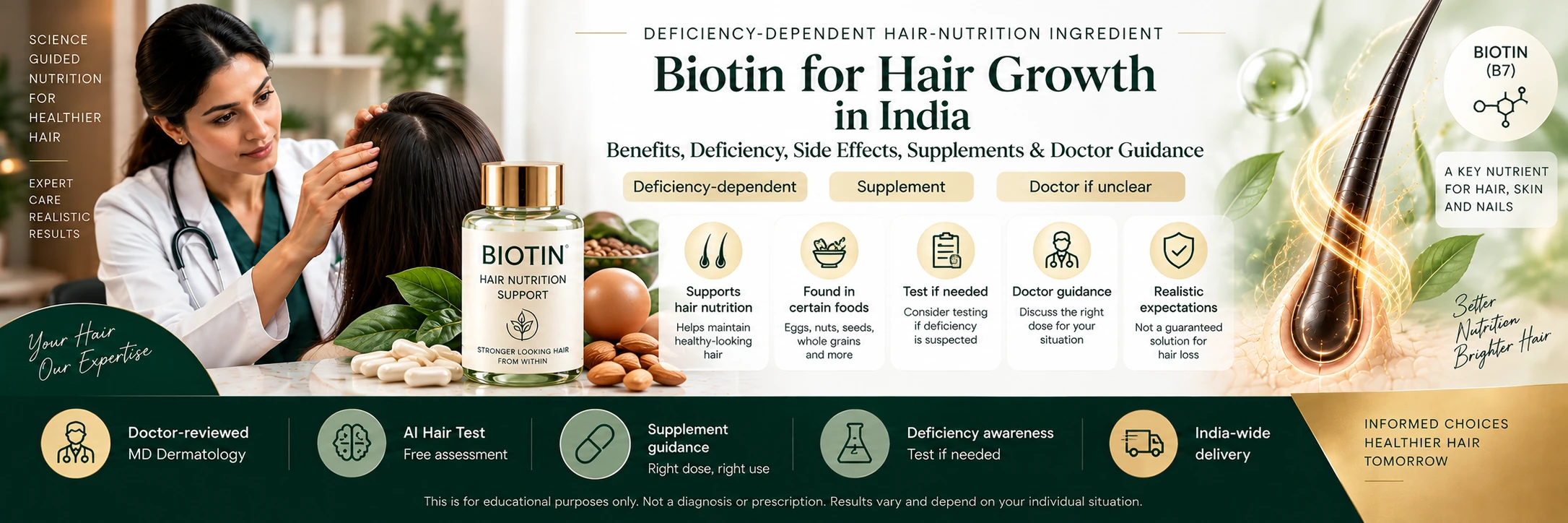
Biotin may help hair health when biotin deficiency or a nutritional gap is present, but it does not treat every type of hair loss. If your hair fall is due to pattern hair loss, thyroid disease, PCOS, iron deficiency, fungal infection, scarring alopecia or patchy loss, biotin alone is unlikely to help — those need their own diagnosis and treatment. Biotin is vitamin B7; it supports normal keratin-related processes when you are genuinely lacking it, but genuine deficiency is uncommon on a normal, varied diet, and in people who are not deficient the evidence that extra biotin grows hair is limited. It does not block DHT, treat scalp infection, or replace iron, vitamin D, B12 or thyroid evaluation — it is supportive, not a universal cure. Two practical cautions: more is not better (avoid stacking several biotin products), and biotin can interfere with some blood tests (including thyroid and certain heart tests), so tell your doctor and lab if you take it. The smart move is to find out why you are shedding — with the AI Hair Test and a doctor — rather than assuming biotin will fix it. Results vary and depend on deficiency status.
Biotin is vitamin B7, a water-soluble B vitamin that supports normal metabolism and keratin-related processes — which is why it is popular in hair, skin and nail supplements.
It is found in many everyday foods (eggs, nuts, seeds and more), and genuine biotin deficiency is uncommon in people on a normal, varied diet. The body needs only small amounts.
Hair supplements often include biotin, but more is not always better, and it sits at the "deficiency-dependent" tier: it tends to help mainly when a real shortfall exists, rather than being a universal hair-growth booster everyone needs to take.
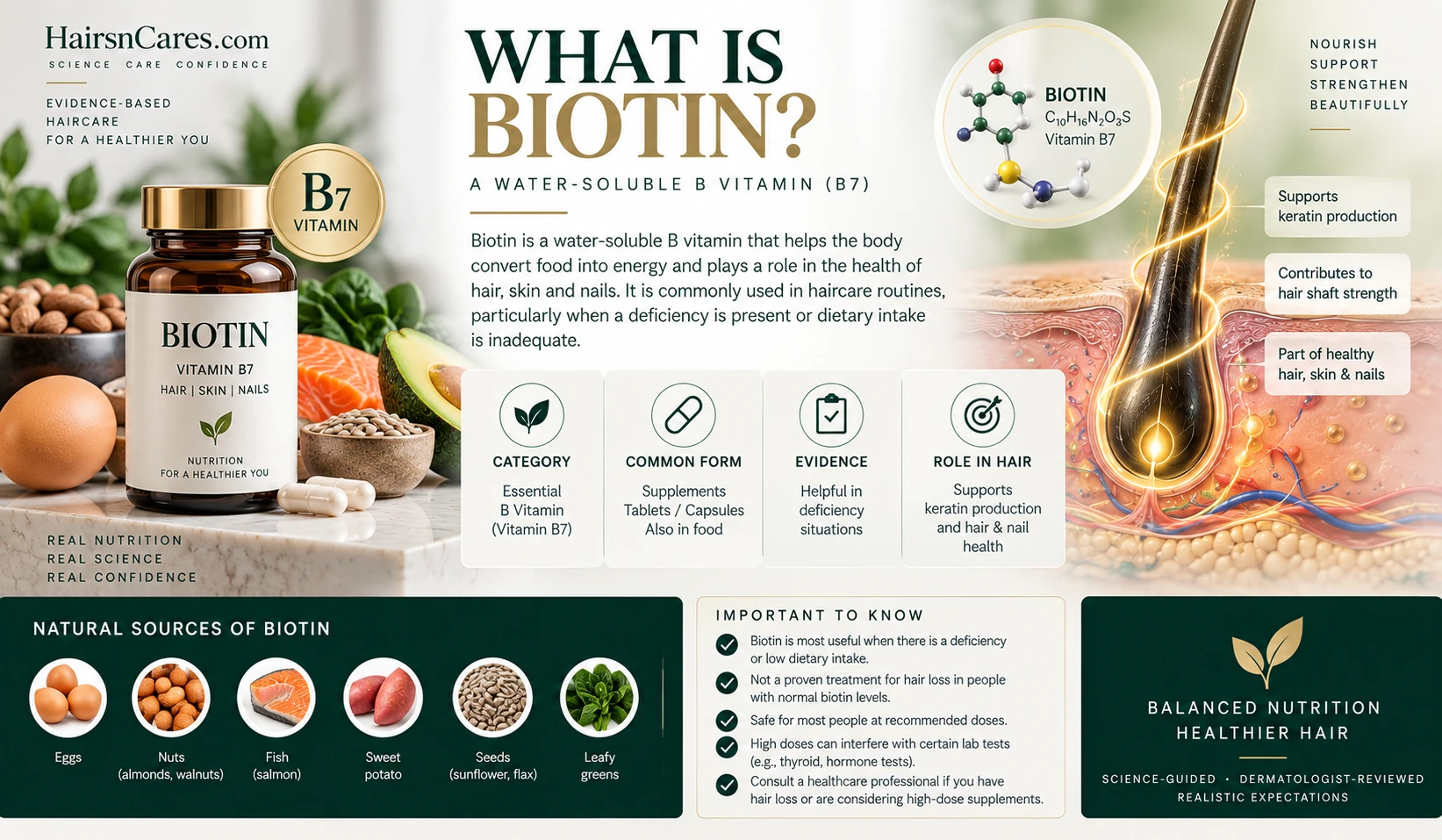
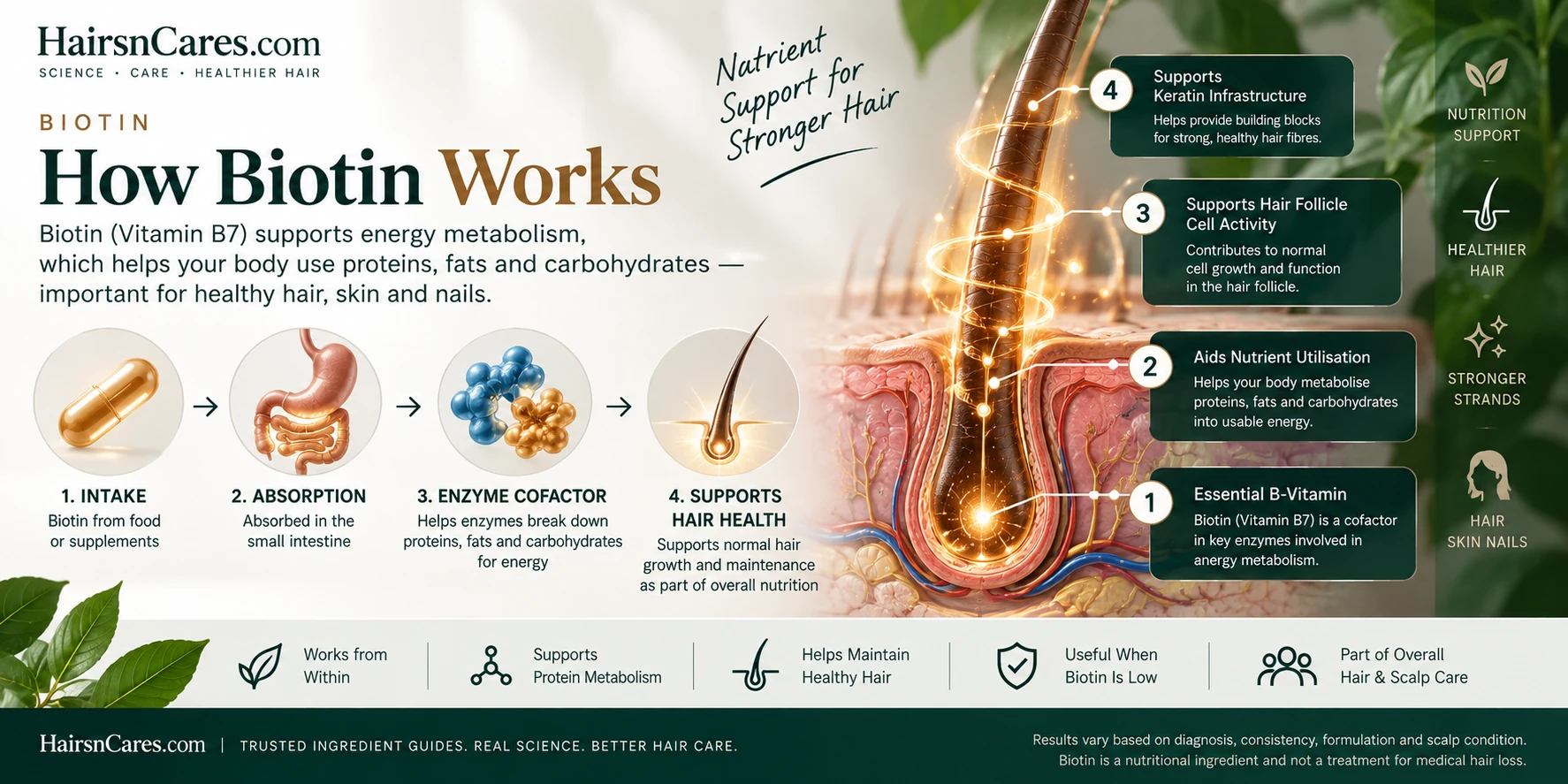
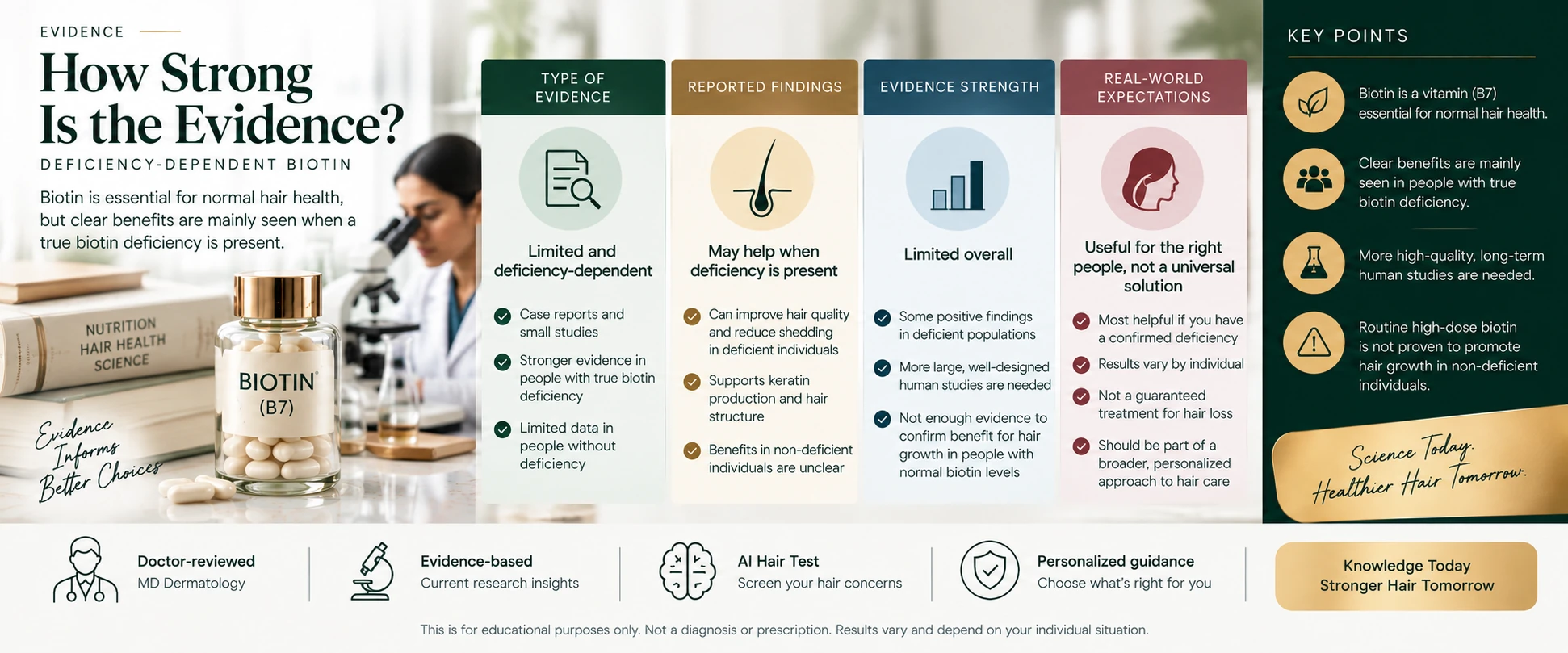
Biotin supports normal hair and nail health when a deficiency exists — correcting a genuine shortfall can help. Where there is no deficiency, adding more biotin has limited evidence of benefit for hair.
Importantly, biotin does not directly block DHT (so it does not treat pattern hair loss), does not treat scalp infection, and does not replace iron, vitamin D, B12 or thyroid evaluation.
It is supportive, not a universal hair-growth cure. So its role depends entirely on whether a real nutritional gap is driving your hair concern — which is why diagnosis matters more than simply taking it. Results vary and depend on deficiency status.
The clearest case — correcting a real, ideally confirmed, shortfall.
Where diet or screening suggests a genuine gap, often as part of broader nutrition.
Where diet may be a factor, alongside addressing other causes.
As part of a supplement plan a doctor has actually advised.
As one element of balanced nutrition, not a standalone hair cure.
Where the AI Hair Test or a doctor flags nutrition as relevant.
Follow the product label or your doctor's advice, and remember that more is not better. Avoid taking several biotin-containing products together, which can add up to high doses. Tell your doctor and lab before any blood tests, because biotin can interfere with results, including thyroid and certain heart tests. Do not use biotin as a substitute for diagnosis — if hair fall is chronic, consider a nutrition assessment and screening for common causes. Track any response over months, not days, and reconsider biotin if you are not actually deficient.
Not sure if this ingredient fits your situation? Screen the cause first.
Take AI Hair TestAsk a Hair Doctor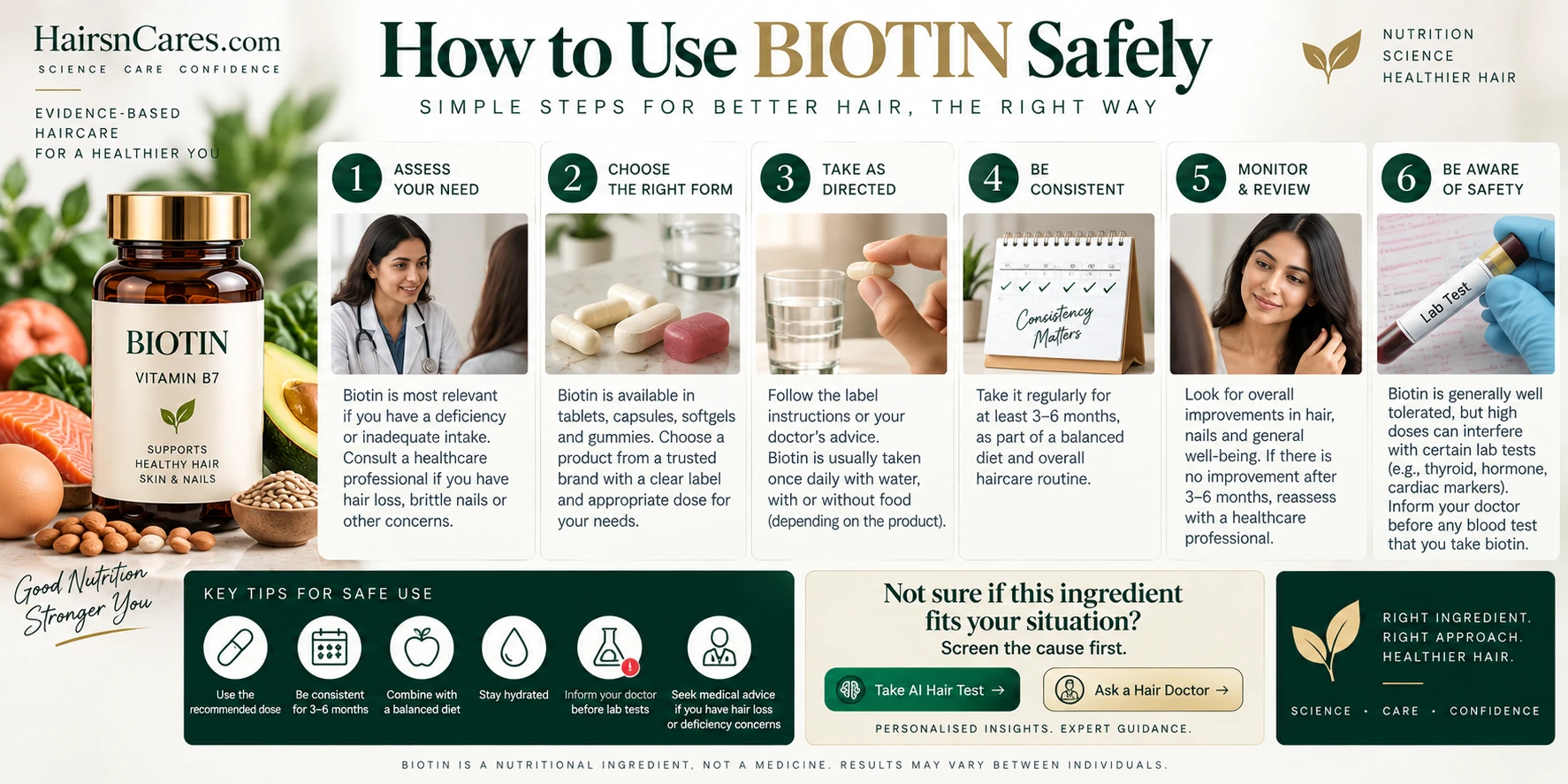
Biotin is usually well tolerated at normal supplemental amounts, but unnecessary or high-dose use carries practical downsides — the biggest being lab-test interference.
The most important issue is lab-test interference: biotin can give falsely high or low results on some blood tests (including thyroid and troponin heart tests), so tell your doctor and lab before testing — they may advise stopping it beforehand. Some users report acne-like breakouts or stomach upset, more so at higher doses. If you are not deficient, biotin may simply not help, so avoid high-dose or stacked products and review with a doctor.
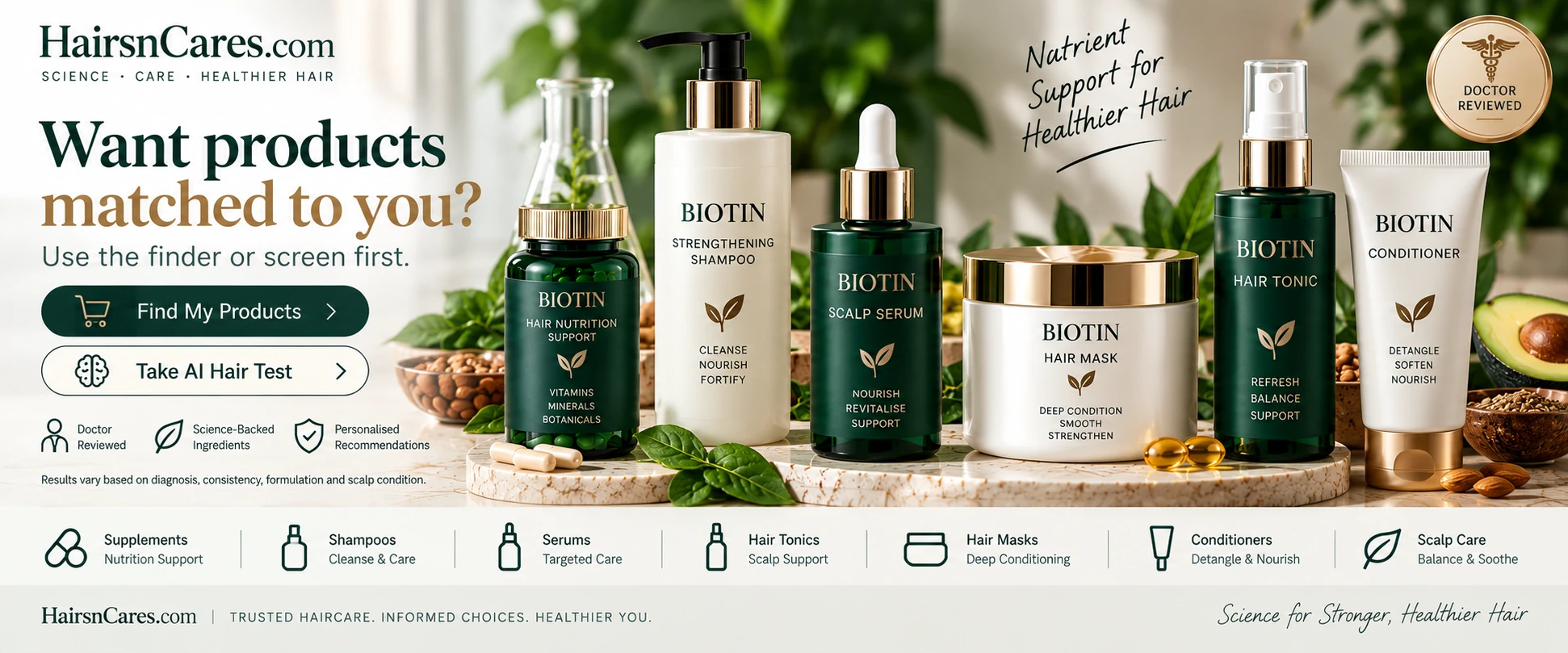
Biotin and broader nutrition-support options, best used where deficiency or a gap is relevant. Prices, ratings, stock and dosage are dynamic placeholders from the database and official label.
Biotin is deficiency-dependent and not necessary for everyone — it helps mainly where a genuine gap exists, and it does not cure pattern, thyroid, PCOS, iron-deficiency, fungal, scarring or patchy hair loss. Avoid stacking multiple biotin products, and tell your doctor and lab before blood tests, as biotin can interfere with results. The most targeted approach is to test for genuine deficiencies (iron, vitamin D, B12) and supplement what is actually needed. We do not fabricate prices, ratings, stock or reviews; these are dynamic placeholders from the official label and database. Results vary and depend on deficiency status.
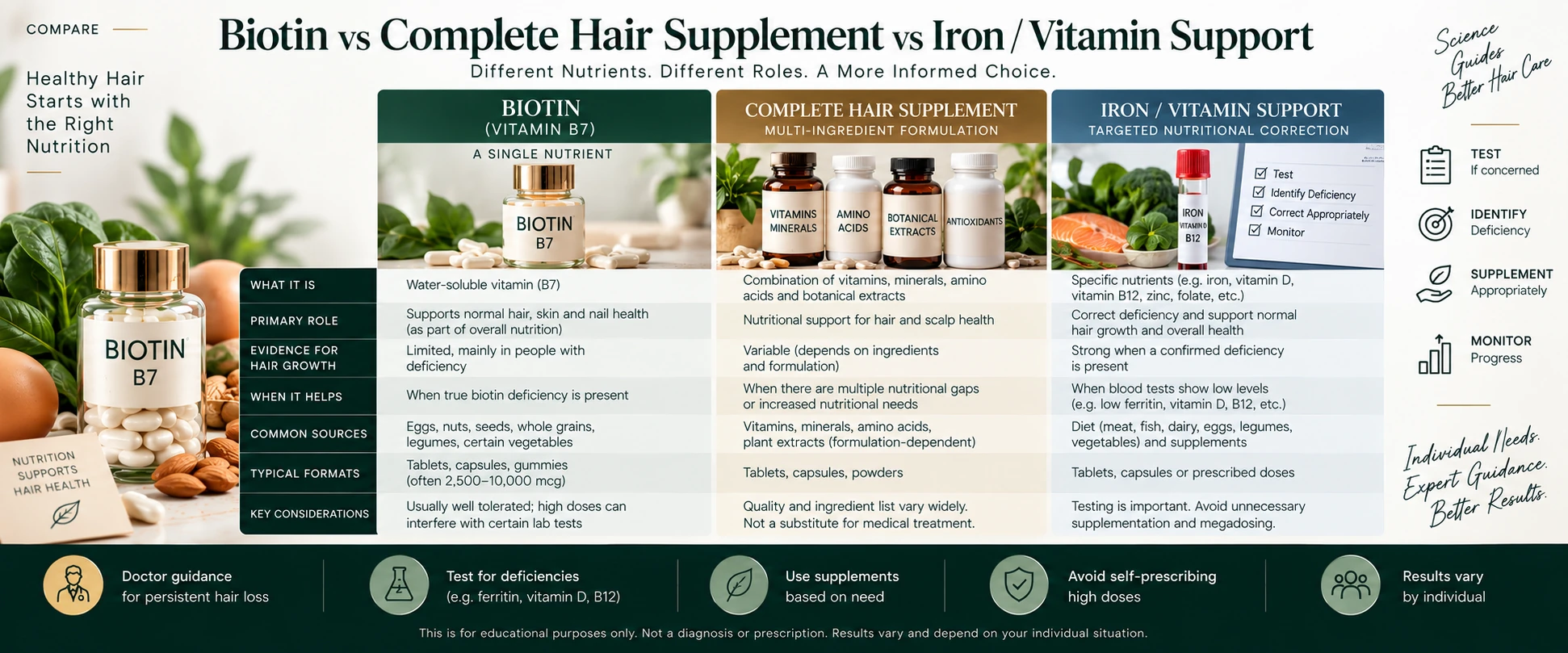
How this ingredient compares with similar options. It points to a pathway; it is not a diagnosis.
| Feature | Biotin | Complete Hair Supplement | Iron / Vitamin Support |
|---|---|---|---|
| Category | Single vitamin (B7) | Multi-nutrient blend | Targeted nutrient (iron/D/B12) |
| Best for | Genuine biotin gap | Broad nutritional gaps | Confirmed specific deficiency |
| Evidence | Deficiency-dependent | Deficiency-dependent | Strong where deficiency confirmed |
| Deficiency relevance | Only if biotin-deficient | If multiple gaps | If iron/D/B12 low on tests |
| Lab-test relevance | Can interfere — disclose | Check biotin content | Tests guide the dose |
| Doctor guidance | If unclear / on tests | If unclear / chronic | Test first |
| Not suitable for | Non-deficient expecting a cure | A substitute for diagnosis | Self-dosing without tests |
| Pathway | Biotin supplement | Hair supplement | Iron/vitamin support |
"As a dermatologist, I do not recommend biotin to every hair-fall patient automatically. It can be useful when deficiency or a nutritional gap is genuinely relevant, but many patients need evaluation for iron deficiency, vitamin D deficiency, thyroid imbalance, PCOS, pattern hair loss or scalp disease — conditions biotin will not fix. I also remind patients that biotin can skew blood-test results, so they must tell me and the lab before testing. The honest approach is to find the real cause and supplement only what is genuinely needed, rather than reaching for biotin by default."
Sudden, patchy or symptom-linked hair fall, or blood tests planned? See a doctor before relying on biotin.
Consult Dr. Amit's TeamThese references are provided for patient education and do not replace a dermatologist's diagnosis or individual medical advice.
Dermatologist-led overview of how hair loss is evaluated and the evidence behind common treatments.
View reference ›Patient-education summary of common causes of hair loss and when to seek medical care.
View reference ›Searchable index of peer-reviewed research on biotin and hair.
View reference ›Independent systematic reviews assessing the evidence behind hair-loss interventions.
View reference ›
Question not answered here? Ask Dr Aria for general guidance, or book a consultation.
Ask Dr AriaConsult a DoctorBiotin is a genuine hair-nutrition ingredient, but it is deficiency-dependent: it helps mainly when a real biotin gap exists, which is uncommon, and it does not cure pattern hair loss, thyroid, PCOS, iron-deficiency, fungal, scarring or patchy loss. More is not better, and biotin can interfere with blood tests — so avoid stacking products and always tell your doctor and lab. The smart move is to find out why you are shedding and supplement only what is genuinely needed, rather than defaulting to biotin. Check suitability with the AI Hair Test, and see a doctor for sudden, severe, patchy or symptom-linked hair fall. Results vary and depend on deficiency status.
A clear, dermatologist-reviewed summary of where Biotin fits in hair fall, scalp care, hair-growth support or product selection — without exaggerated regrowth claims.
Results vary based on diagnosis, consistency, formulation and scalp condition.
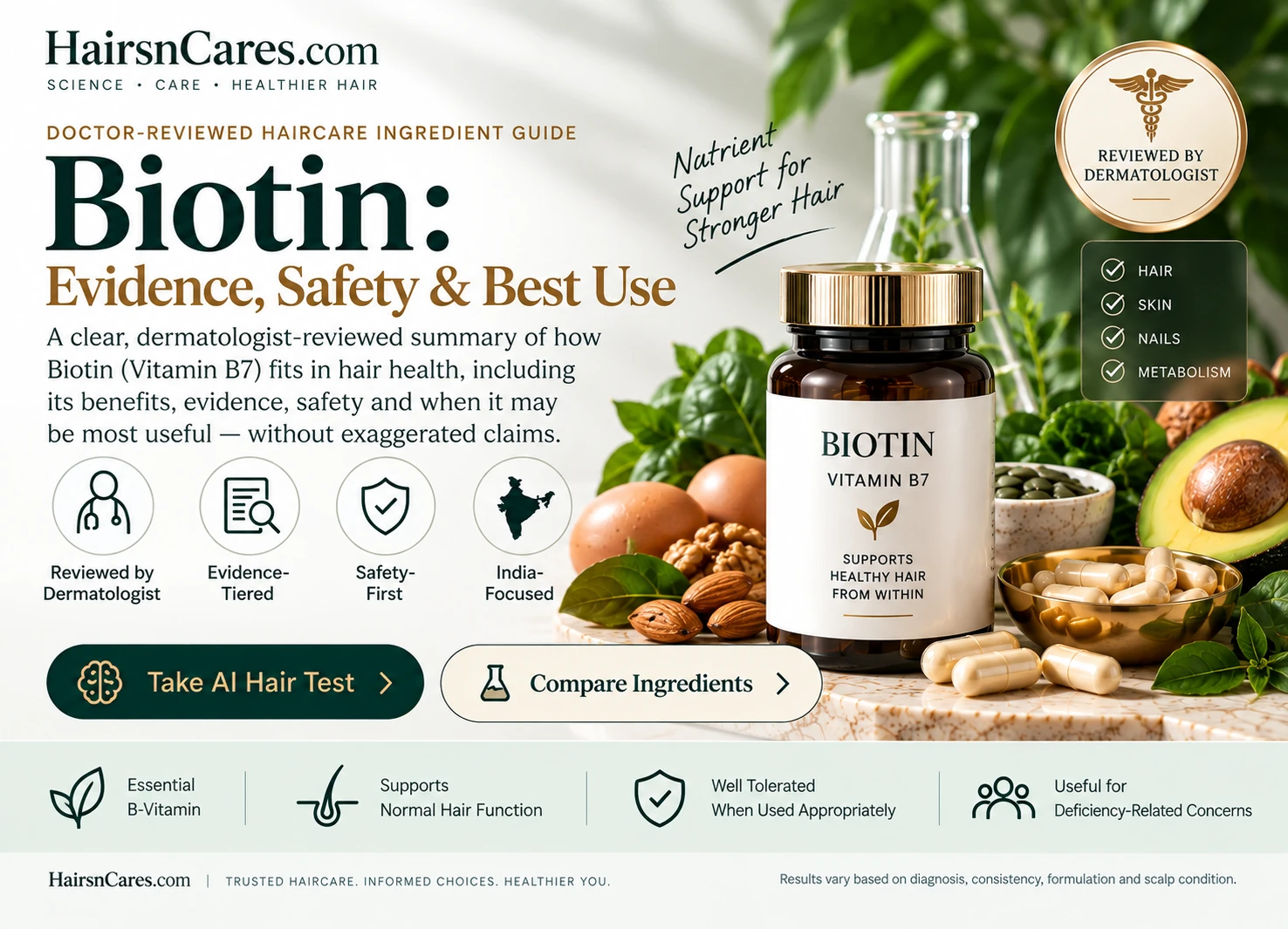 Biotin
Vitamin supplement
Biotin-deficiency-related shedding
Deficiency-dependent
Recommended to test before supplementing
Reviewed by: Dr. Amit Agarkar, MD Dermatology
Medical focus: Dermatology, trichology, hair loss, scalp disorders and hair restoration.
Last reviewed: 1 June 2026
Editorial promise: This page explains benefits, limitations, side effects and safe use without exaggerating hair-growth claims.
Prepared by the Hairsncares editorial team and medically reviewed by a dermatologist experienced in hair and scalp disorders.
Checked for ingredient role, evidence level, safety warnings, medical limitations and suitability for Indian haircare users.
To help you choose ingredients safely and understand when a dermatologist diagnosis matters more than trying products randomly.
| Parameter | Assessment | What it means |
|---|---|---|
| Evidence level | Deficiency-dependent | How strong the support is for this ingredient in hair or scalp care. |
| Best use case | Biotin-deficiency-related shedding | The situation in which it may genuinely help. |
| Not suitable for | People without deficiency expecting regrowth; those on lab monitoring (interference) | When a dermatologist diagnosis is needed before use. |
| Expected timeline | Only helps if a genuine deficiency exists; otherwise limited benefit | Results vary based on diagnosis, consistency, formulation and scalp condition. |
Product results should be selected based on scalp type, diagnosis, sensitivity, routine compatibility and dermatologist guidance where needed.
Find Products After AI Hair TestBiotin may help in selected situations depending on its evidence level, diagnosis, formulation and consistency. It should not be treated as a guaranteed regrowth solution for every type of hair loss.
Timelines vary. Medicines and deficiency-based treatments may take months, while cosmetic oils or hydration ingredients may mainly improve feel, shine or manageability sooner.
Cosmetic ingredients may be used carefully, but medicines, persistent hair fall, patchy loss, scalp disease or sudden shedding need dermatologist evaluation.
Combination depends on scalp sensitivity, diagnosis, product type and whether the ingredient is cosmetic, supplement-based or prescription-guided.
People with allergies, irritation, active scalp disease, unclear diagnosis, pregnancy, breastfeeding or prescription-medicine concerns should check suitability before use.
May help only when a real deficiency or nutritional gap exists. Not a universal hair-loss treatment.
Biotin is a deficiency-dependent nutrient/supplement.
It may help with hair support when a genuine biotin deficiency exists — but it should not be treated as a cure for all hair fall.
Bottom line: use this guide to understand evidence, safety and product type, then take the AI Hair Test or consult a dermatologist for medical hair loss. Results vary.
Biotin is vitamin B7, a dietary supplement. It may support hair only when a deficiency or nutritional gap is relevant, and it is not necessary for everyone.
High-dose biotin may interfere with some laboratory results, including certain thyroid and cardiac-related tests. Tell your doctor or lab before testing. Confirm a real deficiency or gap before long-term use, avoid stacking multiple supplements that overlap, and remember: more is not better — high doses add risk, not benefit.
True biotin deficiency is uncommon in people eating a varied diet, so most healthy adults do not need extra biotin for hair. It tends to help only when a real shortfall exists. Taking high doses "just in case" rarely adds visible benefit and can interfere with lab tests, and stacking several hair supplements that overlap raises that risk without improving results.
Compare in hair supplement vs biotin, browse hair supplements, and screen with the AI Hair Test.
Educational guidance, not a diagnosis. Results vary.
This guide is educational. For sudden, patchy, progressive or unexplained hair loss, or scalp pain, pus or scaling, screen with an AI tool or see a dermatologist.
Your cart is empty