🛡️
Sensitive Scalp Comfort
Primary indication. Scalp that feels easily irritated, tight or reactive after stronger shampoos — mild surfactant shampoo may support a more comfortable cleansing routine.
A dermatologist-guided guide to choosing mild surfactant shampoos safely — including gentle cleansing ingredients, sulfate-free and SLS-free positioning, daily-use routines, sensitive scalp suitability, under-cleansing risk and when scalp symptoms need medical evaluation.
What mild surfactant shampoos can and cannot do
SLS vs SLES vs sulphate-free — what the science actually says
How cocamidopropyl betaine and decyl glucoside compare as cleansers
Best scalp types for mild surfactant formulations
Mild shampoo vs medicated shampoo — when gentle is not enough
Colour protection and sulphate-free shampoos — real vs marketing
How to tell if your shampoo is actually gentle (check the label)
When scalp sensitivity signals a medical condition, not product sensitivity
This is the only formula-category page in the 17-page shampoo series. Every prior page focused on a single active molecule: ketoconazole, zinc pyrithione, salicylic acid, caffeine, niacinamide, panthenol, keratin, ceramide, tea tree (terpinen-4-ol), aloe vera (acemannan polysaccharide), apple cider vinegar (acetic acid). Mild surfactants is different — it is a class of cleansing agents, not a single compound. The micelle cross-section SVG (hydrophilic heads outward, hydrophobic tails inward) is unique: the only supramolecular structure in the series, representing how surfactants behave in solution rather than a molecular structure. See our mild surfactants ingredient guide →
The central clinical message for this page, unique in the series: sulfate-free does not automatically mean irritation-free, and sulfates are not automatically harmful for everyone. What determines shampoo suitability is the full formula — surfactant blend, concentration, pH, co-ingredients, fragrance, preservatives and scalp type — not a single ingredient label. An oily scalp user who switches to a sulfate-free shampoo because of marketing may end up with under-cleansed scalp, buildup, odour and increased dandruff risk. A dry scalp user who continues with a harsh sulfate formula because "it always worked" may experience unnecessary stripping. Matching formula to scalp type is the correct approach.
Mild surfactants shampoo is used in sensitive scalp, dry scalp, daily-use, curly hair, colour-treated hair and non-stripping cleansing routines. Mild surfactants — including isethionates, glucosides, sulphosuccinates, sarcosinates, betaines and amphoteric blends — are positioned as gentler cleansers compared to traditional SLS/SLES formulas. The most important dermatology message for this category: "sulfate-free" is a marketing label, not a medical guarantee. Sulfate-free formulas can still irritate due to other ingredients (cocamidopropyl betaine, fragrance, preservatives, glucosides) — and very oily scalp users may actually be under-cleansed by overly mild formulas, leading to buildup, odour and dandruff risk. Shampoo is a wash-off cleanser and does not treat dandruff, scalp disease or medical hair loss regardless of how mild the formula is.
Mild surfactant shampoos use gentler cleansing agents like cocamidopropyl betaine, decyl glucoside, or sodium cocoyl isethionate instead of SLS/SLES. They clean effectively with less lipid stripping, making them suitable for dry, sensitive, or colour-treated hair. They do not treat dandruff, cure scalp disease, or stop hair loss. Sulphate-free does not automatically mean better — it depends on your scalp type and needs.
People with dry, sensitive, colour-treated, or eczema-prone scalps who need effective cleansing without harsh stripping. Good for daily or alternate-day washing.
Medicated shampoos for dandruff, psoriasis, or seborrheic dermatitis. Switching to a mild shampoo does not treat underlying scalp conditions — it reduces irritation from the wash itself.
Scalp sensitivity persists despite using the gentlest shampoo available, you develop contact dermatitis, or flaking worsens. True scalp sensitivity may indicate an underlying condition.
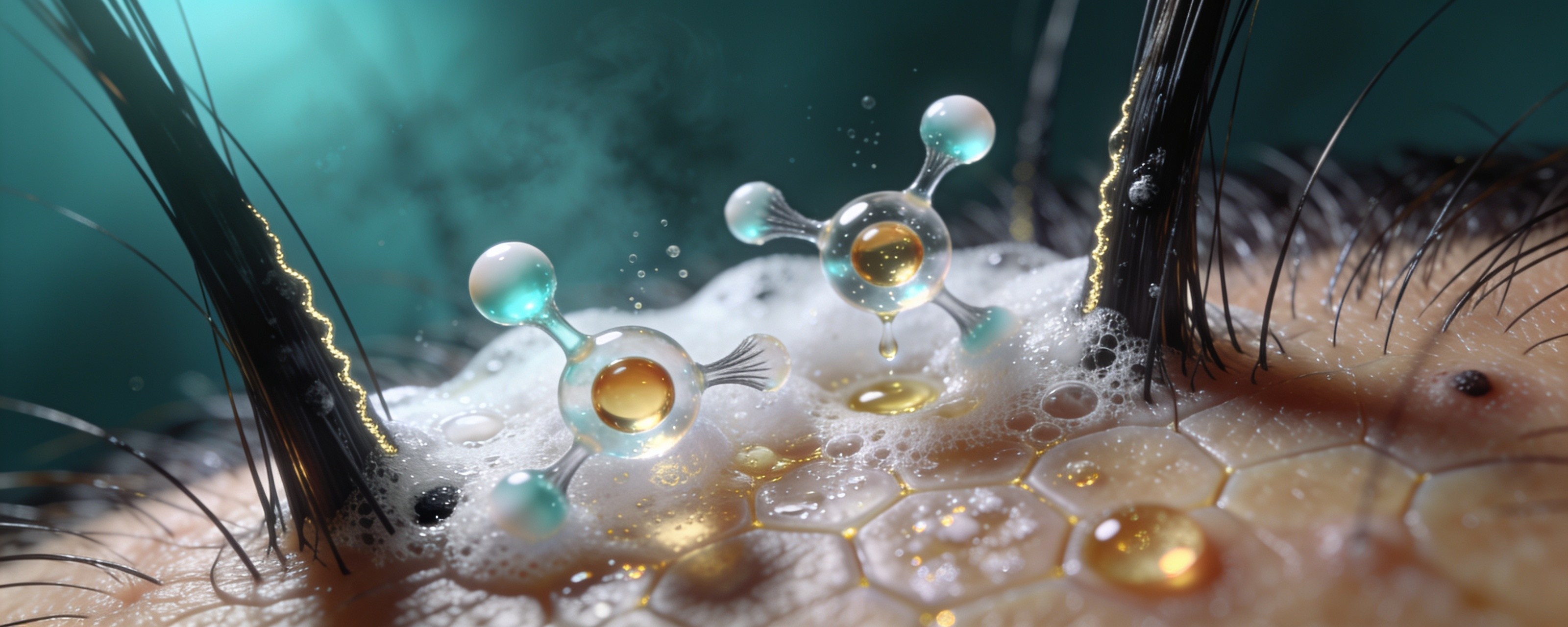
Surfactants are amphiphilic molecules — one end is hydrophilic (water-attracting), one end is hydrophobic (oil-attracting). In water, they self-assemble into micelles — spherical structures with hydrophilic heads facing water and hydrophobic tails facing inward, trapping oil and soil. This micelle structure is shown in the hero SVG: the only supramolecular structure in the 17-page series.
Mildness is not a property of a single ingredient — it emerges from the full formula: surfactant class and charge (anionic vs amphoteric vs non-ionic), concentration, pH, co-surfactants, conditioning polymers, fragrance and preservatives. A well-formulated SLS-containing shampoo may be gentler than a poorly formulated "sulfate-free" product in practice.
Mild surfactants cleanse well for normal, dry and sensitive scalps by removing sebum, sweat and light product residue without stripping. However, very oily scalp, heavy oiling routines, styling product buildup or greasy dandruff may not be adequately cleansed by very mild formulas — the under-cleansing risk is unique to this page in the series.
No matter how mild or active the formula, shampoo is rinsed off within minutes. It supports cleansing comfort and can carry active ingredients (the 16 prior series pages) to the scalp — but wash-off contact time limits its ability to treat medical scalp disease or address root-level hair loss.
These are the surfactant ingredients you may see on shampoo labels positioned as mild, gentle or sulfate-free. Ingredient names alone do not guarantee suitability — full formula, concentration, scalp type and frequency all matter.
The formula reality: Ingredient names on a label are not sufficient to predict individual tolerance. A formula with five mild surfactants plus fragrance, preservatives (e.g. methylisothiazolinone) and botanical additives may still cause contact dermatitis in a sensitive user. Conversely, a simple two-surfactant formula with SLS at low concentration and optimal pH may be well-tolerated. When selecting a shampoo, look at the full ingredient list, the formula's intended scalp type and your own tolerance history — not just the marketing label.
All benefits are cleansing-comfort and non-stripping-feel improvements. Mild shampoo does not treat medical scalp disease or hair loss.
Primary indication. Scalp that feels easily irritated, tight or reactive after stronger shampoos — mild surfactant shampoo may support a more comfortable cleansing routine.
May help users who feel tightness or dryness after harsh shampoos. Works best alongside reduced wash frequency — both changes together provide more comfort than either alone.
Often suitable for more frequent washing than strong cleansers. Most appropriate for normal-to-dry scalp types. Very oily scalps may still develop under-cleansing with daily mild washing.
Often used in curly hair routines and the "curly girl method" approach where avoiding harsh cleansing is important for curl definition and moisture retention.
Non-stripping mild formulas can extend colour longevity compared to harsh clarifying shampoos. Pair with conditioner for best colour protection.
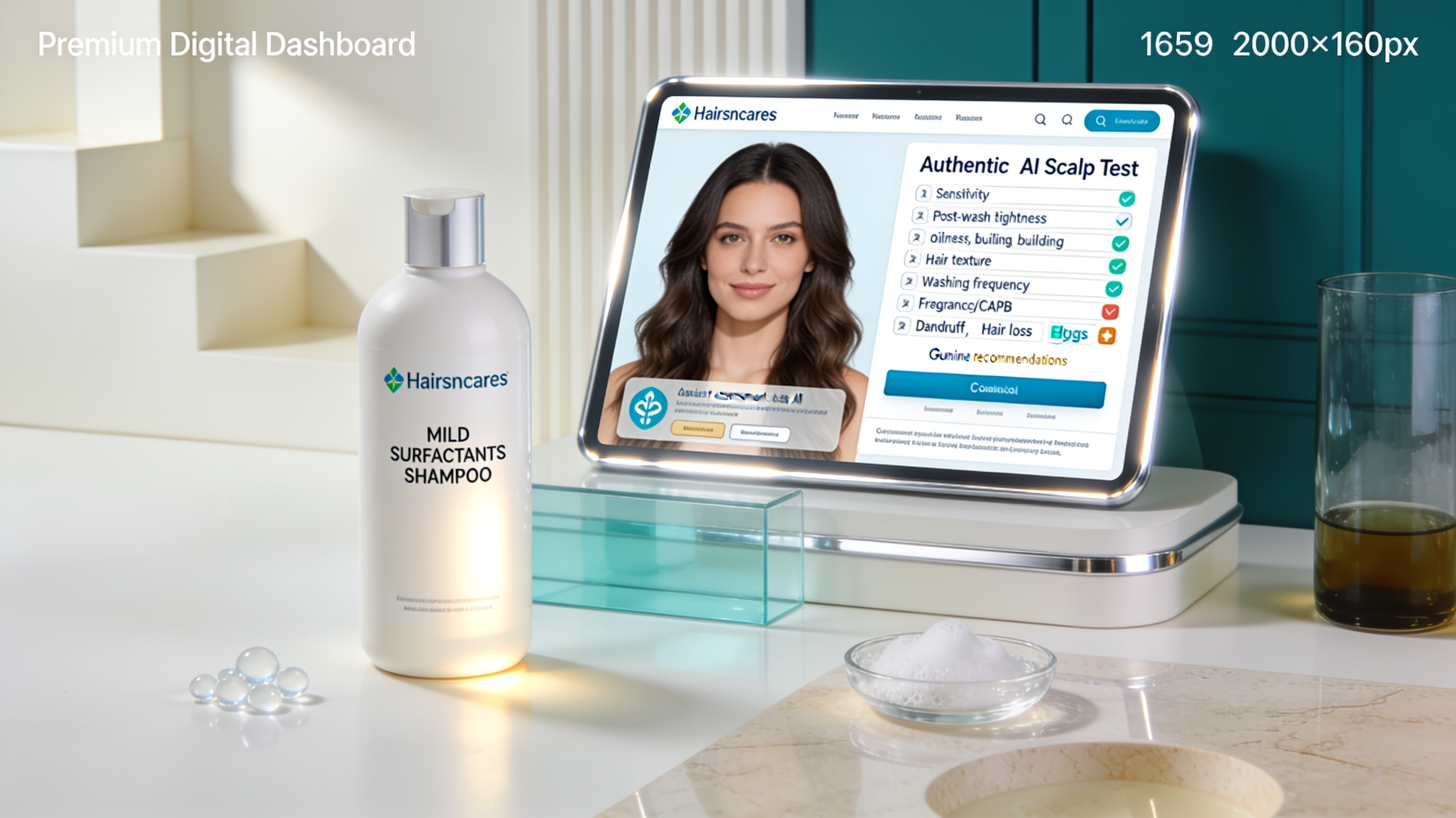
AI Scalp Test assesses sensitivity, oiliness, hair texture, dandruff and buildup to recommend mild surfactants, sulphate-free, anti-dandruff, clarifying or dermatologist care.
Many patients ask whether Mild Surfactants Shampoo alone can solve their hair concerns. The honest answer: shampoo is a wash-off product that stays on the scalp for a short time. It can support scalp cleanliness, comfort and gentle cleansing — but it cannot treat root-level hair loss, hormonal imbalance, nutritional deficiency or conditions that need prescription treatment. A good shampoo works best as part of a complete routine, not as a standalone cure.

Primary match. Scalp that feels easily irritated by stronger shampoos — mild surfactants provide gentler cleansing.
Best MatchDry scalp that feels tight or stripped after washing — mild surfactants avoid the over-stripping issue of harsh cleansers.
Good MatchUsers who wash their hair daily or multiple times per week benefit most from mild formulas that avoid cumulative stripping.
SuitableCurly and colour-treated hair types benefit from non-stripping cleansing to retain moisture, curl definition and colour longevity.
SuitableVery mild formulas may leave scalp feeling greasy, heavy or under-cleansed if the sebum production rate is high. May need occasional clarifying shampoo.
May Under-CleanseRegular application of heavy oils (coconut, castor, bhringraj) may not be adequately removed by very mild surfactants in a single wash.
Double Wash May Be NeededDandruff needs anti-dandruff actives. Mild shampoo cannot treat seborrheic dermatitis — using it instead of ketoconazole/zinc pyrithione delays effective treatment.
Anti-Dandruff FirstMedical evaluation required. No shampoo — however mild — addresses root-level hair loss.
See Doctor UrgentlyNo shampoo change without surgeon clearance on a post-transplant scalp.
Surgeon Clearance9-step guide — Step 8 (Monitor for Under-Cleansing) is unique to this page: the only page in the series where under-cleansing is a primary monitoring step. All prior pages monitored for over-irritation; this page adds the opposite risk.
Is your concern sensitivity, dryness, oiliness, dandruff, buildup, itch, frizz or hair fall? Mild surfactants suit sensitive, dry and normal scalp. Very oily scalp or heavy oiling may need stronger or medicated cleansing.
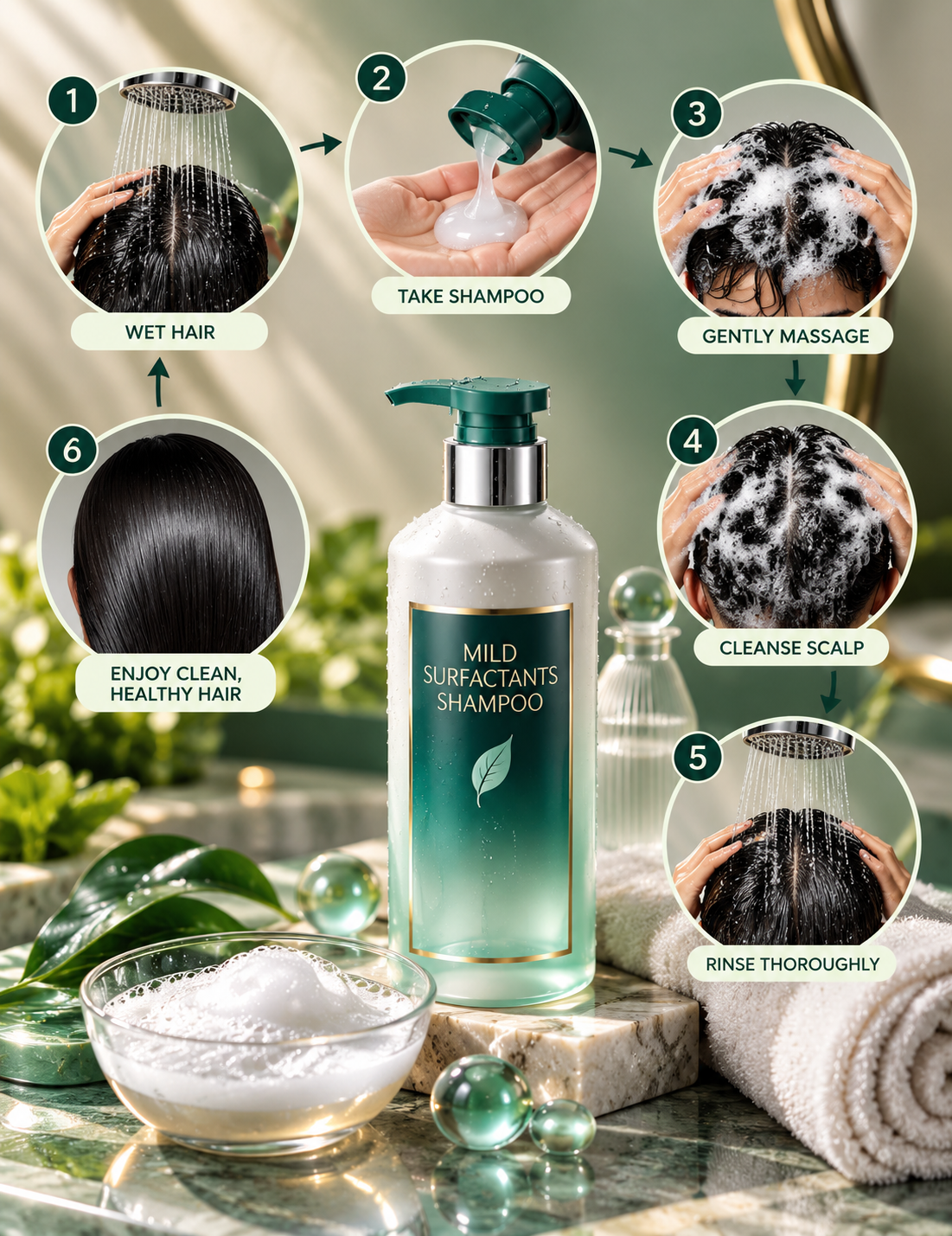
Use lukewarm water to fully wet scalp and hair. Lukewarm (not hot) water reduces oil stripping and helps distribute shampoo evenly.
Focus shampoo on scalp and roots where oil, sweat and buildup accumulate. Allow foam to run gently through lengths.
Use fingertips, never nails. Avoid aggressive scrubbing on sensitive scalp.
Remove all shampoo residue. Even mild surfactant products can cause irritation or heaviness if residue accumulates with repeated use.
Repeat wash only if scalp is very oily or has significant product buildup. Avoid unnecessary overwashing — but also avoid under-washing if scalp remains greasy or odorous after a single wash.
Apply conditioner to mid-lengths and ends if hair is dry, frizzy, curly or colour-treated. Apply to lengths only — not to scalp. Conditioner contributes more to hair texture than shampoo choice.
This step is unique to mild shampoo pages. If scalp remains oily, greasy, heavy, itchy, smelly or flaky after washing with mild shampoo, the formula is too gentle for your scalp type or oiling routine. Signs of under-cleansing: scalp greasy by next day, odour returns quickly, flakes worsen, scalp acne or folliculitis develops. Consider a stronger formula or occasional clarifying shampoo — and consult a dermatologist if symptoms persist.
Monitor scalp and hair condition over 4–6 weeks. Stop and consult a doctor if burning, rash, scalp pimples, worsening dandruff, bald patches or worsening hair fall appear.
Every other page in the 17-page series warns against over-irritation from strong actives. This page adds the opposite concern: mild shampoos may leave oily scalp users with insufficient cleansing, leading to sebum accumulation, scalp microbiome imbalance, odour, buildup and potentially increased dandruff risk. Matching shampoo strength to scalp oiliness is as important as matching it to scalp sensitivity.
SLS and SLES are effective cleansers. For oily, product-heavy or greasy-dandruff scalps, they may cleanse better than many sulfate-free alternatives. The choice should be based on scalp type, oiliness, hair texture and tolerance — not marketing labels alone.
Cocamidopropyl betaine (CAPB) is a documented contact allergen present in many "mild" and "sulfate-free" shampoos. If burning, rash or scalp pimples develop with mild formulas despite no sulfates, CAPB or other formula ingredients may be the cause — a dermatologist can confirm with patch testing.
The most common shampoo mistake is rushing the process. Apply to the scalp (not just hair lengths), massage gently with fingertips (never nails), follow the recommended contact time if it is a medicated shampoo, and rinse thoroughly. Incomplete rinsing is a leading cause of scalp irritation and product buildup that patients often blame on the shampoo itself.
Key principle: Follow your product label or dermatologist's advice. Do not choose shampoo based on marketing words alone ("natural," "mild," "chemical-free"). Choose based on your scalp type, oiliness, hair texture, symptoms and tolerance.
Sensitive scalp, daily use, non-stripping cleanse. May under-cleanse oily scalp.
Dry, curly, colour-treated hair. Gentler, but formula determines mildness.
Product buildup, heavy residue. Occasional use only.
Scalp scale and thick buildup. Keratolytic. Occasional medicated use.
Dandruff/seborrheic dermatitis. Antifungal. Not for daily gentle wash.
Mild-to-moderate dandruff maintenance. Anti-dandruff.
Oily scalp freshness, mild itch. Botanical (allergy caution).
Series closing note: This page is page 17 of 17 — the series baseline. The 16 preceding pages cover active ingredients (antifungals, keratolytics, barrier actives, botanicals, acids). This page covers the delivery vehicle — the surfactant system that gets every ingredient to the scalp. A well-chosen surfactant base matters: even the best active ingredient (ketoconazole, niacinamide, ceramide) is less effective if the formula it sits in is too stripping, too mild or poorly tolerated for the user's scalp type.
| Option | Best For | Main Role | Evidence Position | Key Caution |
|---|---|---|---|---|
| Mild Surfactants Shampoo | Sensitive, dry, normal scalp; daily use; curly and colour-treated hair | Gentle cleansing; non-stripping wash-off support | Well-established gentle cleansing rationale; evidence for reduced irritation vs harsh formulas in sensitive scalp types | May under-cleanse oily scalp; CAPB allergy possible; formula matters more than label |
| Sulphate-Free Shampoo | Dry, curly, colour-treated or frizz-prone hair | Cleansing without SLS/SLES; avoids potential irritation from harsh anionic surfactants | SLS-free has less irritation potential for some users; but full formula mildness varies widely | Not inherently gentler — depends on replacement surfactants; may still irritate |
| SLS/SLES Shampoo | Oily scalp, heavy product use, effective scalp cleansing | Strong anionic surfactant cleansing; efficient sebum and product removal | Effective cleansers; SLS has known irritation potential at high concentrations; SLES generally better-tolerated | Can be stripping for dry, curly or sensitive scalp at high concentration or frequency |
| Clarifying (ACV) Shampoo | Product buildup, hard-water feel, heavy residue | Acidic clarifying wash; removes buildup | Limited clinical evidence; useful for buildup but not scalp disease | Can dry or irritate; acid burn risk with raw ACV; occasional use only |
| Salicylic Acid Shampoo | Scalp buildup and thick adherent flakes | Keratolytic chemical exfoliation | Established keratolytic evidence for scale | Can dry sensitive scalp; not for eczema-prone |
| Ketoconazole Shampoo | Dandruff and seborrheic dermatitis — first-line | Antifungal; targets Malassezia yeast | Strong RCT evidence; medically recommended first-line | Not a daily gentle cleanser; not for product buildup |
| Mild Daily Shampoo | Balanced gentle cleansing for regular wash days | Non-active gentle cleanser; maintenance wash | No active ingredient; maintenance-only cleansing | Not for active scalp disease management |
| Dermatologist | Persistent scalp symptoms, dandruff, hair fall, inflammation | Diagnosis, cause identification and treatment planning | Gold standard when symptoms persist or worsen | Essential when scalp pain, pus, bald patches or hair fall occur |
All products are gentle wash-off cleansers — not treatments for dandruff, scalp disease or medical hair fall. Prices on individual product pages.
Our AI Scalp Test assesses sensitivity, oiliness, dandruff pattern, hair texture, buildup level and product tolerance to determine whether mild surfactants, clarifying shampoo, anti-dandruff actives or dermatologist evaluation is the right first step.
AI screening only. Does not diagnose, prescribe or replace dermatologist evaluation.
Stop immediately. May indicate contact irritation or allergy from CAPB, glucosides, fragrance, preservatives or other formula ingredients — even in "mild" formulas.
Stop and seek medical attention. Possible allergic contact reaction to shampoo ingredients.
If dandruff worsens on mild-only routine, anti-dandruff actives (ketoconazole, zinc pyrithione) are needed. Mild shampoo cannot treat active dandruff.
Folliculitis or contact reaction. Stop and consult a dermatologist.
Medical red flag. No shampoo — however mild — addresses root-level hair loss.
Rinse immediately with water. Seek medical attention if stinging persists.
These signs suggest mild surfactants shampoo is insufficient for your scalp type — you may need a stronger formula, medicated shampoo or a dermatologist consultation. Under-cleansing is the unique risk on this page.
If scalp feels greasy immediately after washing with mild shampoo, the formula is insufficient for your sebum production level.
Buildup from styling products, oils or residue that mild surfactants cannot remove — may need occasional clarifying shampoo.
Scalp odour from sebum, sweat and microbiome imbalance — signals under-cleansing. Stronger or medicated cleansing may be needed.
Under-cleansing allows sebum and Malassezia yeast to accumulate, worsening dandruff. Anti-dandruff actives needed.
Sebum and product buildup on scalp may worsen folliculitis. Stronger cleansing or medical treatment may be needed.
Heavy silicone, wax, gel or dry shampoo buildup may need clarifying or stronger surfactant cleansing.
Needs ketoconazole or anti-dandruff actives — not mild shampoo alone.
Possible psoriasis — medical diagnosis needed.
Medical red flag — see a dermatologist.
Urgent dermatologist evaluation.
Medical hair loss — needs diagnosis and cause-based treatment.
No shampoo change without surgeon clearance.
Hormonal hair fall needs medical evaluation.
Medical evaluation before any shampoo use.
If you notice increased itching, redness, burning, pimples on the scalp, or worsening flakes after using mild surfactant shampoo — stop immediately. These are not signs of “scalp detox” or “purging.” They may indicate irritation, allergy, contact dermatitis or worsening of an existing scalp condition. Consult a dermatologist before resuming.
Mild shampoo cures hair fall.
Mild shampoo supports cleansing comfort as part of a hair care routine. It does not treat root-level hair loss from androgenetic alopecia, hormonal causes or nutritional deficiency.
Sulfate-free means irritation-free.
Sulfate-free formulas can still irritate due to cocamidopropyl betaine (CAPB), glucosides, fragrance, preservatives or botanical additives — CAPB is a documented contact allergen.
All sulfates are bad.
SLS and SLES are effective cleansers that many oily scalp users tolerate and need. Suitability depends on formula, concentration, scalp type and frequency — not on "sulfate" as a blanket category.
Gentle shampoo cleans every scalp.
Very oily or buildup-prone scalps may be under-cleansed by very mild formulas — leading to greasiness, odour, buildup and worsened dandruff.
Natural surfactants are always safer.
Plant-derived surfactants (decyl glucoside, coco glucoside) can still irritate sensitive individuals. Natural origin does not guarantee safety for all users.
Sensitive scalp only needs mild shampoo.
Scalp sensitivity may originate from contact dermatitis, allergies, eczema, psoriasis, infection, dandruff, over-washing or product reactions — many of which require medical diagnosis and treatment, not just shampoo selection.
Doctor-Reviewed Resources
Still unsure whether mild surfactants shampoo is right for your scalp?
Ask a Hair Doctor →AAD clinical guidance on contact dermatitis — the framework for understanding how shampoo ingredients (including CAPB, fragrance and preservatives in "mild" formulas) can cause allergic or irritant reactions. Explains patch testing and allergen identification.
AAD guidance on dandruff/seborrheic dermatitis — establishing medicated anti-dandruff actives as first-line treatment and the clinical basis for why mild shampoo alone is insufficient for active dandruff management.
AAD evidence on hair loss evaluation — confirming that shampoo choice (mild or otherwise) is not a treatment for medical hair loss and when dermatologist evaluation is needed.
Search PubMed for peer-reviewed research on mild surfactants, shampoo irritation potential, cocamidopropyl betaine allergy, glucoside surfactant sensitivity and SLS/SLES comparative studies. The published literature on surfactant mildness supports a formula-level rather than ingredient-level approach to suitability.
Mild surfactants shampoo (gentle shampoo, mild shampoo, sulfate-free shampoo, sulphate-free shampoo, SLS-free shampoo, sensitive scalp shampoo) is a supportive wash-off cleanser used in sensitive scalp, dry scalp comfort, daily-use, frequent washing, curly hair, colour-treated hair and non-stripping cleansing routines. It does not diagnose, treat, cure or prevent dandruff, seborrheic dermatitis, eczema, psoriasis, scalp infection, folliculitis, medical hair loss, baldness, alopecia, PCOS-related hair fall, thyroid-related hair fall, postpartum shedding, nutritional deficiency hair fall or medication-related shedding. It should not replace ketoconazole, zinc pyrithione, selenium sulphide, salicylic acid, topical prescriptions, minoxidil, finasteride, PRP, GFC, nutritional correction, hair transplant care or dermatologist evaluation when indicated. Mild formulas can still irritate some users (notably via cocamidopropyl betaine, glucosides, fragrance or preservatives) and may under-cleanse very oily or buildup-prone scalps. Sulfate-free does not guarantee irritation-free. Use as per product label or doctor guidance. Stop if irritation, allergy symptoms, burning, rash, severe buildup or scalp worsening occurs. This guide has been reviewed by Dr. Amit Agarkar, MD Dermatology, Hairsncares.
AI Scalp Test assesses sensitivity, oiliness, dandruff pattern, hair texture and buildup to recommend mild surfactants, sulfate-free, clarifying, anti-dandruff actives or dermatologist evaluation as your best first step.
Your cart is empty