Accumulated shedding
Normal daily fall collected between washes, released together when you comb.
Seeing a clump of hair in the comb can be alarming, but hair fall while combing is often just the day's loose strands collecting together. The real question is whether the amount has truly increased, whether it is shedding from the root or breaking mid-shaft, and whether thinning or scalp symptoms are appearing alongside.
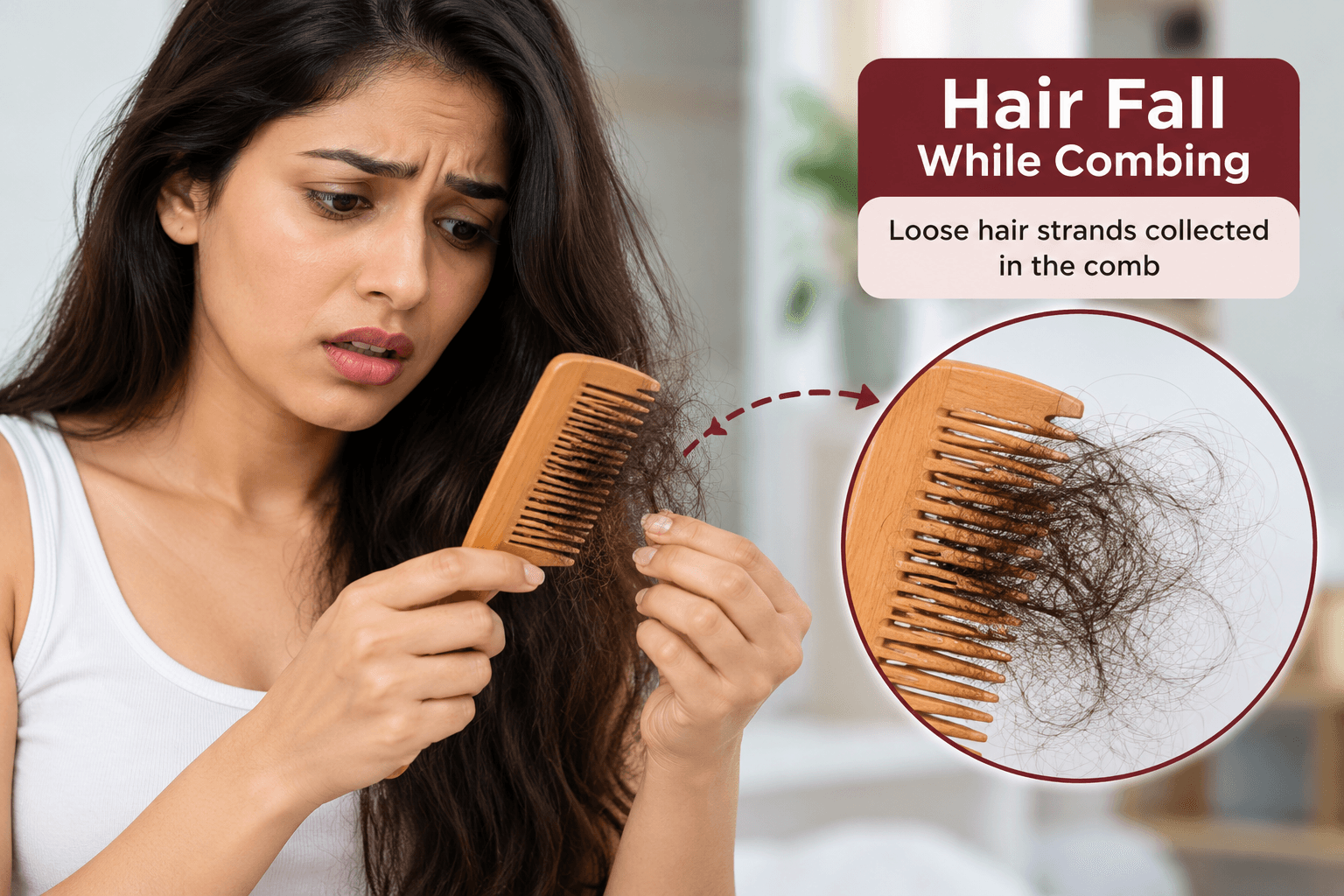
Combing hair fall may mix normal loose shedding with breakage from detangling friction. Amount, duration and strand type matter.
Hair Fall While Combing is a symptom, not a final diagnosis. It may be related to root shedding, hair-shaft breakage, scalp inflammation, pattern thinning, patchy hair loss, product irritation or medical triggers.
The right next step depends on amount, duration, pattern, scalp symptoms, hairline, crown or parting changes, medical history, stress, illness, diet, hormonal clues and current products.
Bottom line: use this page to understand what the symptom may mean, what to track and which red flags matter, then take the AI Hair Test or ask a dermatologist if it is severe, progressive or unclear. Results vary.
Hair fall while combing can be normal because loose telogen hairs often collect during brushing or detangling. It becomes more concerning if the amount suddenly increases, persists for weeks, comes with thinning, dandruff, itching, pain, clumps, bald patches or visible scalp changes. If you are unsure, a quick AI Hair Test can help you tell normal shedding from a real change.
Between washes, hairs that have naturally shed stay tangled within the rest of your hair. When you finally comb or brush, they all release at once — so the comb can hold several days of normal shedding in a single, alarming-looking clump.
Combing can also create mechanical breakage if hair is dry, tangled or handled roughly. That is a different problem from root shedding, and it responds to gentler technique and conditioning rather than cause-based treatment.
Combing hair fall usually reflects one or more of these — some are about shedding, others about breakage.
Normal daily fall collected between washes, released together when you comb.
Forcing a comb through knots snaps strands mid-shaft, especially fine or dry hair.
Wet hair is fragile; harsh combing when wet increases breakage.
Heat, colour and chemical treatments weaken the shaft and raise breakage.
Trigger-based shedding makes the comb noticeably fuller for a few months.
Dandruff, inflammation or nutritional gaps can increase shedding while combing.
| What you see in comb | More likely hair fall | More likely breakage |
|---|---|---|
| Full-length strands | Yes | Less likely |
| Short uneven pieces | Less likely | Yes |
| White bulb | Root shedding | Usually absent |
| Split ends / frizz | Possible overlap | Strong clue |
| Visible density loss | Needs assessment | May occur if severe damage |
Small technique changes often reduce combing breakage more than any product.
Small technique changes often reduce combing breakage more than any product.
Combing hair fall is heavy or sudden, persists for weeks, or comes with thinning, bald patches, scalp pain, redness or flakes that do not settle with gentle care.
Educational, category-level directions matched to this symptom — not a bestseller list. Product availability is populated dynamically from the Hairsncares catalogue.
For genuine root-level shedding noticed during combing.
Explore category →Reduces tangles and friction so combing causes less breakage.
Explore category →Leave-in slip and strand support for easier detangling.
Explore category →For dry, damaged hair that breaks during combing.
Explore category →Gentle cleansing that keeps hair softer and less brittle.
Explore category →Biotin, iron and amino acids where deficiency exists.
Explore category →Product category suggestions are educational. If combing hair fall is mostly breakage, a repair-and-protect routine helps; if it is root shedding, the cause matters more than the comb. Take the AI Hair Test or consult a dermatologist if hair fall is heavy or persistent. Results vary.
Cautious, evidence-led language applies: "may support", "where suitable", "where deficiency exists". Results vary; doctor guidance is recommended.
The amount in your comb is only half the story. The AI Hair Test factors in strand appearance, duration, scalp condition and history to map a likely cause and a dermatologist-reviewed next step.
The Routine Builder pairs the right cleansing and conditioning steps with gentle detangling habits to reduce combing breakage.
Counting strands daily creates anxiety. Log weekly check-ins and photos instead to spot real trends.
"A comb full of hair is one of the most common reasons people first worry about hair loss — and one of the most misread. Loose hairs accumulate between washes and all release together when you finally comb, so the pile looks dramatic without being abnormal. Before changing products, I ask patients to notice whether the strands are full-length with a bulb (shedding) or short and broken (damage), and whether the scalp itches or flakes. That single observation usually points to the right fix."
A symptom needs context and does not confirm a diagnosis. Sudden, severe, patchy or progressive loss, or a painful, pus-filled, crusted or bleeding scalp, needs prompt medical review.
External links open in a new tab and are provided for general education; they are not endorsements and do not replace personalised medical advice.
Combing dislodges hairs that have already shed from the follicle but stayed trapped in the hair. It can also cause breakage if hair is tangled, dry or handled roughly. So a comb can show both natural shedding and mechanical breakage.
There is no exact comb count, but overall daily shedding of roughly 50–100 strands is typical, and more can collect if you comb only once a day or after several days. A sudden, sustained jump is what matters.
No. Much of it is normal cycling hair released during grooming. It only suggests a problem when the amount clearly increases over weeks, or appears with thinning, scalp symptoms or clumps.
Wet hair is more elastic and fragile, so harsh combing of tangled wet hair can cause breakage. Detangling gently from the ends upward, ideally with conditioner and a wide-tooth comb, reduces this.
Full-length strands, sometimes with a white bulb, suggest shedding from the root. Short, uneven pieces without a bulb suggest breakage. Our comparison guide explains the difference.
A wide-tooth comb is gentler for detangling and creates less friction and breakage than a fine-tooth comb on knotted hair. Detangle from the ends first and avoid forcing the comb through tangles.
Yes. Dandruff and scalp inflammation can worsen shedding, and scratching adds breakage, so you may notice more hair while combing. Treating the scalp often reduces the hair fall.
No — not combing does not stop shedding; the hairs are already shed and simply accumulate. Comb gently and normally. Avoiding combing only delays seeing the strands, not the loss itself.
Conditioners, leave-in serums and repair masks improve slip and strength so hair breaks less during detangling. If the issue is root shedding rather than breakage, the cause needs assessing instead.
See a dermatologist if combing hair fall is heavy or sudden, persists for weeks, or comes with thinning, bald patches, scalp pain, redness or flakes that do not settle with gentle care.
Hair on the comb is often a mix of normal shedding and mechanical stress. Reduce friction first, then support the roots — these dermatologist-reviewed categories help, alongside the AI Hair Test.
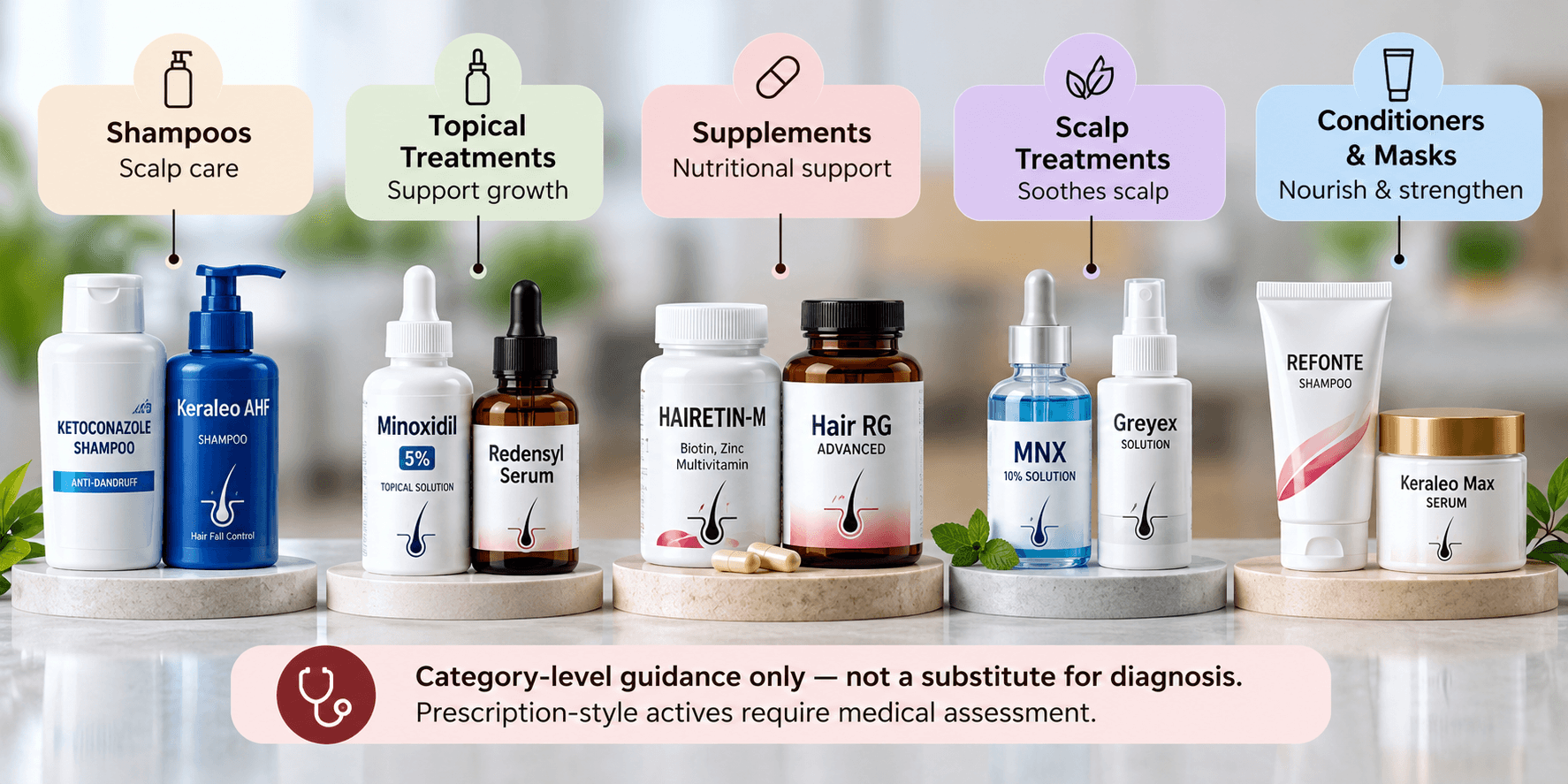
Mild washing plus serum to ease detangling and reduce pull-out.
Category-level fall-control and supplement support where appropriate.
If shedding feels heavier than usual, the AI Hair Test routes you to the right next step.
Your cart is empty