Accumulated shedding
Several days of naturally shed hair releasing together under water.
Watching strands gather around the drain can be unsettling, but hair fall while washing is often just several days of loose hairs releasing together under water and shampoo. Some extra shedding on wash days is expected. What matters is whether it is sudden, heavy, lasting for weeks, or paired with scalp symptoms or visible thinning.
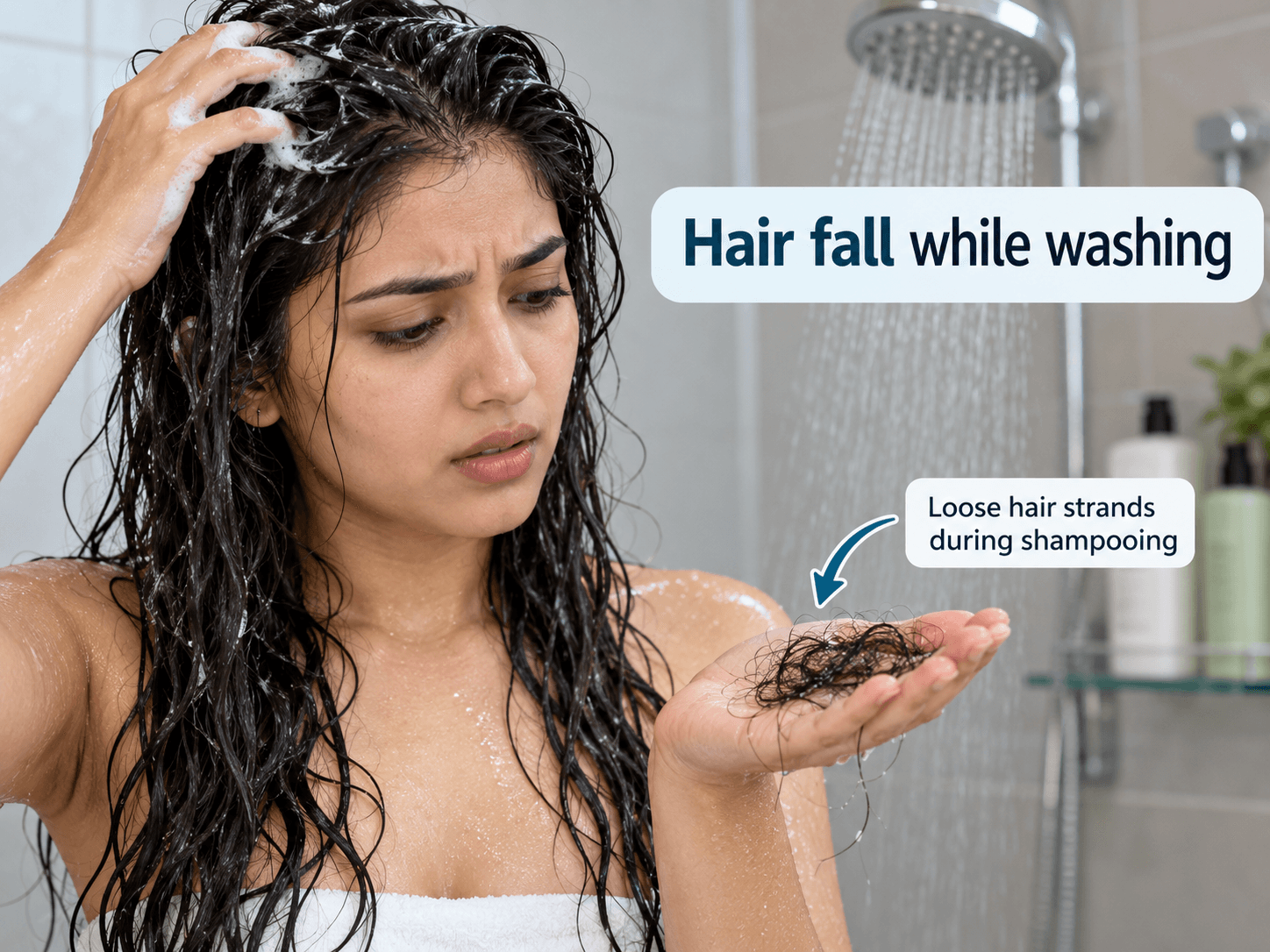
Washing often releases accumulated loose hairs, which can look alarming. Amount, duration and scalp symptoms give the real picture.
Hair Fall While Washing is a symptom, not a final diagnosis. It may be related to root shedding, hair-shaft breakage, scalp inflammation, pattern thinning, patchy hair loss, product irritation or medical triggers.
The right next step depends on amount, duration, pattern, scalp symptoms, hairline, crown or parting changes, medical history, stress, illness, diet, hormonal clues and current products.
Bottom line: use this page to understand what the symptom may mean, what to track and which red flags matter, then take the AI Hair Test or ask a dermatologist if it is severe, progressive or unclear. Results vary.
Hair fall while washing is often noticed because loose hairs release together during shampooing and rinsing. Some extra shedding on wash days can be normal. It needs attention if hair fall is sudden, heavy, continues for weeks, comes with scalp itching, flakes, pain, clumps, bald patches or visible thinning. A scalp analysis or AI Hair Test can clarify the cause.
Washing combines several things that release shed hair at once: water flow, scalp massage and the slip of shampoo and conditioner. Hairs that detached over the previous days but stayed tangled all come free together, so the drain looks dramatic.
Wash-day shedding is therefore often normal, and tends to look heavier the longer you go between washes. The pattern over weeks — not the size of a single shower's pile — is what tells you whether something has truly changed.
Wash-day hair fall can come from grooming mechanics, the products you use, or the state of your scalp.
Several days of naturally shed hair releasing together under water.
Stripping cleansers and very hot water can irritate and dry, raising breakage.
Aggressive scrubbing, towel-rubbing and immediate brushing add breakage.
Inflammation increases shedding; scratching adds damage. See dandruff.
Buildup or irritation can both worsen wash-day hair fall.
Underlying shedding or thinning shows up clearly on wash days.
Gentler wash-day technique often reduces both breakage and irritation.
Gentler wash-day technique often reduces both breakage and irritation.
Red-flag patterns should be examined by a dermatologist before trying any product — start with an online dermatologist consultation.
Educational, category-level directions matched to this symptom — not a bestseller list. Product availability is populated dynamically from the Hairsncares catalogue.
Gentle cleansing for sensitive or shedding-prone scalps.
Explore category →Supports the scalp where shedding is the main concern.
Explore category →For flakes and itching that worsen wash-day shedding.
Explore category →For persistent dandruff or seborrheic scalp, as label-directed.
Explore category →Reduces tangling and post-wash breakage.
Explore category →Soothing support for irritated or imbalanced scalps.
Explore category →Product category suggestions are educational. Wash-day shedding driven by scalp inflammation often improves once the scalp is treated; root-level or pattern shedding needs cause-based assessment. Medicated shampoos should be used as label-directed or doctor-directed. Severe scalp signs need dermatologist review. Results vary.
Cautious, evidence-led language applies: "may support", "where suitable", "where deficiency exists". Results vary; doctor guidance is recommended.
Switching shampoos randomly can make things worse. The AI Hair Test and scalp analysis map your wash-day shedding, scalp condition and history to a likely cause and a dermatologist-reviewed next step.
Flakes, oiliness and redness are easier to assess visually. Upload clear scalp photos for a dermatologist-reviewed read.
The Routine Builder sets the right shampoo frequency, water temperature and conditioning steps for your scalp type.
"The drain after a wash is where many people first confront hair loss, and the volume almost always looks worse than it is — several days of normal shedding arrive in one rinse. Before anyone changes shampoo, I want to know two things: how often they wash (longer gaps mean bigger wash-day piles) and whether the scalp itches, flakes or hurts. A scalp problem driving the shedding is very treatable, but it needs to be identified rather than masked with whatever shampoo is trending."
A symptom needs context and does not confirm a diagnosis. Sudden, severe, patchy or progressive loss, or a painful, pus-filled, crusted or bleeding scalp, needs prompt medical review.
External links open in a new tab and are provided for general education; they are not endorsements and do not replace personalised medical advice.
Water, massage and shampoo dislodge hairs that have already shed but stayed tangled in your hair. They release together during washing, so the amount looks large even when overall shedding is normal.
Wash-day shedding is usually higher than other days, especially if you wash every few days, because several days of loose hair come out at once. A consistent, growing increase is what suggests a real change.
A harsh or unsuitable shampoo can irritate the scalp and worsen breakage, but shampoo rarely causes true root-level hair loss on its own. Matching the shampoo to your scalp type usually helps more than avoiding washing.
Very hot water can dry and irritate the scalp and make hair more brittle, which may increase breakage. Lukewarm water is gentler. Hot water is not a common cause of root-level shedding by itself.
Not usually. Most wash-day hair has already completed its cycle and detached; washing simply releases it. Genuine root weakening points to causes like deficiency, hormonal or pattern factors, which need assessment.
It depends on your scalp: a gentle sulfate-free shampoo suits sensitive scalps, while dandruff-prone scalps may need an anti-dandruff or ketoconazole shampoo used as directed. A scalp analysis helps match it.
Yes. Dandruff and seborrheic dermatitis inflame the scalp and can increase shedding, and scratching adds breakage. Treating the scalp condition often reduces the wash-day hair fall.
Not necessarily. Washing less just lets more loose hair accumulate, so the next wash looks worse. Wash at a frequency that keeps your scalp comfortable and clean for your scalp type.
Use lukewarm water, a suitable gentle shampoo, massage rather than scrub, condition the lengths, and avoid rough towel-drying and immediate harsh brushing. Treat any scalp condition driving the shedding.
See a dermatologist if wash-day shedding is sudden or heavy, persists for weeks, or comes with flakes, itching, pain, redness, bald patches or visible thinning that does not settle with gentle care.
Shedding in the shower is often normal collection of already-loose hairs — but a sudden rise can signal telogen effluvium or another trigger. Use gentle care and the AI Hair Test to check.
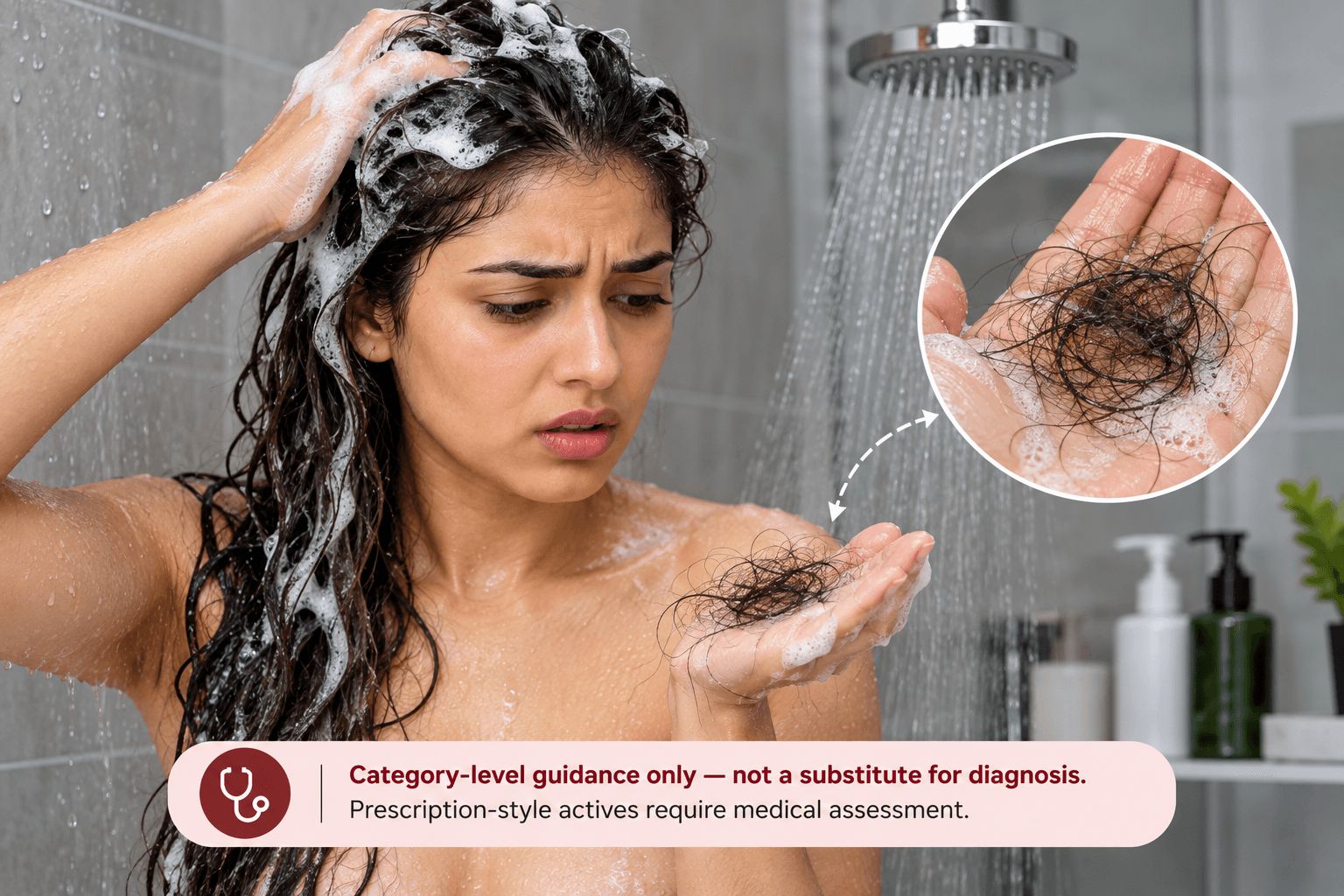
Lower-irritation washing for a calmer scalp and less wash-day stress.
Category-level support if shedding is persistently above your normal.
The AI Hair Test helps you judge whether wash-day shedding is within range.
Your cart is empty