Hair Loss: Causes & Treatment
Dermatologist-led overview of how hair loss is evaluated and the evidence behind common treatments.
View AAD reference ›A widening parting, less volume on top, a thinner ponytail — but your hairline still intact? That's the classic picture of female pattern hair loss, the most common cause of thinning in women. It's driven by genetics and how your follicles respond to hormones, and it tends to be gradual and progressive if left alone. The honest part: it's manageable, not curable — the goal is to protect and support the density you have, ideally starting early. Thyroid and iron can add to it, so assessment matters. Hairsncares helps you confirm the pattern and act sensibly.

Illustrative sample only. AI screening helps guide decisions and does not replace a dermatologist's diagnosis.
Female pattern hair loss (female androgenetic alopecia) is the most common cause of thinning in women. It's driven by genetics and the sensitivity of certain follicles to androgens: over time, affected follicles miniaturise and make finer, shorter hairs. The classic pattern is a widening parting and reduced volume over the crown, while the frontal hairline is usually kept — different from diffuse shedding or a receding hairline. Can it be fixed? There's no outright cure, but it's manageable: doctor-guided options and supportive care can slow it and help maintain or improve density, especially when started earlier. The realistic goal is to protect the hair you have, not promise full regrowth. Thyroid and iron problems commonly add to it, so a dermatologist usually checks those too. Results vary.
Female pattern hair loss is usually progressive but manageable. It needs realistic expectations and doctor-guided treatment planning.
AI Summary
Female Pattern Hair Loss is part of the women's hair-loss spectrum. It may overlap with shedding, thinning, hormonal changes, nutritional gaps, scalp symptoms, female pattern loss or life-stage triggers.
The correct next step depends on pattern, duration, age, periods, pregnancy or breastfeeding status, weight changes, stress, scalp symptoms, medical history, current medicines and previous product use.
Bottom line: use this page for education and screening direction — it does not diagnose or prescribe. Take the AI Hair Test for structured screening and consult a dermatologist when symptoms are progressive, severe, patchy, painful or medically complex. Results vary.
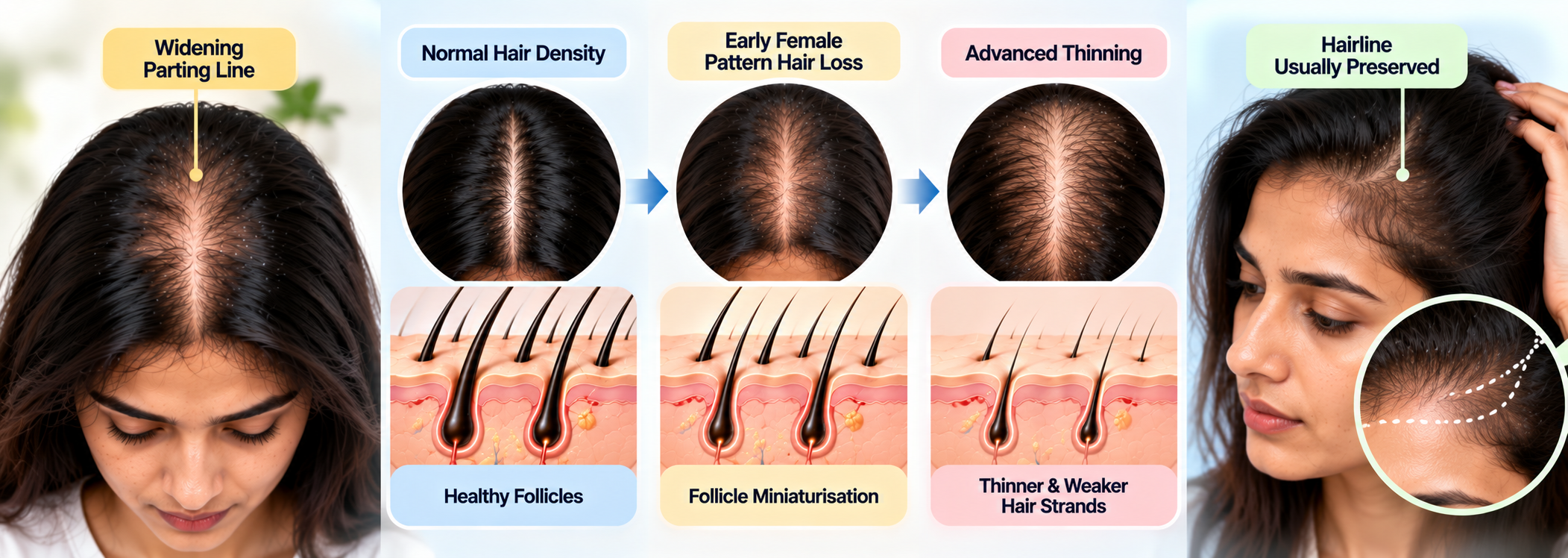
Female pattern hair loss — also called female androgenetic alopecia — is the most common cause of thinning in women. It's driven by a genetic predisposition and the sensitivity of certain follicles to androgens (hormones both men and women have). Over time, affected follicles miniaturise: they shrink and produce progressively finer, shorter hairs.
The hallmark is a gradually widening parting and reduced volume over the crown and top, while the frontal hairline is usually preserved — which helps distinguish it from a receding hairline or whole-scalp diffuse shedding. It's typically a slow change, not sudden patches.
The honest message: there's no outright cure, because it reflects an ongoing genetic and hormonal process — but it's manageable. Doctor-guided options and supportive care can slow it and help maintain or improve density, especially started earlier. The realistic goal is to protect the density you have, not to promise full regrowth. Because thyroid and iron problems commonly add to it, a dermatologist usually checks those too.
Widening parting or thinner crown? Check whether it fits a female pattern.
Check My PatternFemale pattern hair loss has a recognisable look. These features help tell it apart from diffuse shedding and other causes.
A gradually widening parting
Reduced volume over the crown / top
Frontal hairline usually preserved
Finer, shorter hairs over time
A thinner, smaller ponytail
Gradual change, not sudden patches
Often a family history of thinning
Onset can be any adult age
No bald patches or scarring (reassuring)
Recognise these? Screen them and see what's likely driving it.
Screen My SymptomsFemale pattern hair loss is genetic and hormonal at its core, with other factors able to add to it. Mapping them guides assessment.
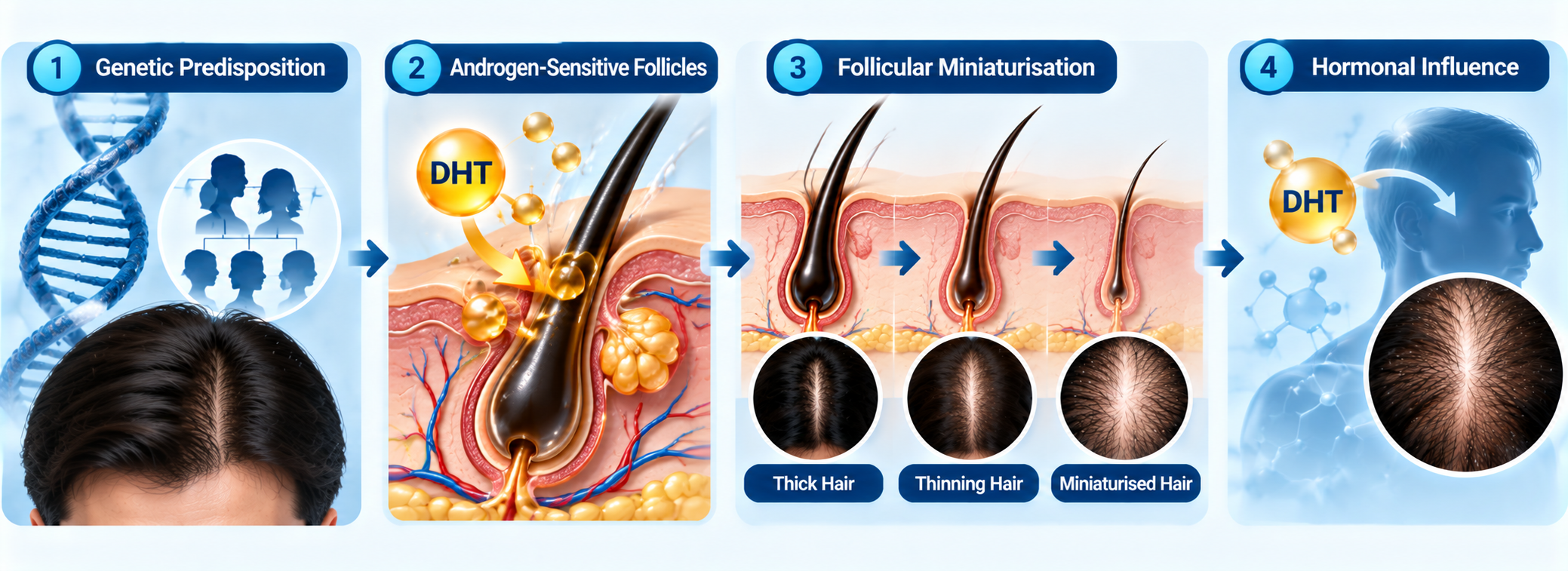
A family tendency makes certain follicles susceptible.
Driver: core factor
Some follicles react to normal androgen levels.
Driver: core factor
Affected follicles shrink and make finer, shorter hairs.
Result: thinning
Menopause can bring it out or accelerate it.
Effect: more visible
Androgen-related conditions can be associated.
Action: assess hormones
Coexisting problems can worsen the picture.
Action: test both
Want your factors mapped? The checker weighs pattern against overlaps.
Map My FactorsFemale thinning shows up in two main ways — and they can coexist. Telling them apart guides what helps.
| Feature | Female pattern hair loss | Diffuse shedding |
|---|---|---|
| Where | Crown / top, widening parting | Evenly across the whole scalp |
| Hairline | Usually preserved | Usually preserved |
| Onset | Gradual, progressive | Often after a trigger or overlap |
| Main driver | Genetic & hormonal | Thyroid, iron, stress, illness |
| Outlook | Manageable, not usually cured | Often improves once cause is treated |
| Best step | Dermatologist assessment | Blood tests + treat the cause |
Many women have a mix of both — pattern thinning with a layer of diffuse shedding from a thyroid or iron problem. That's exactly why a dermatologist examination plus thyroid and iron tests are so useful: they clarify which dominates and what will help most.
Not sure which fits you? Screen your thinning for a clearer picture.
Screen NowFemale pattern hair loss is usually a slow change. Knowing the arc helps set realistic expectations and act earlier.
The parting looks a little wider and volume dips slightly on top. It's easy to miss, but this is the best time to assess and start supportive care.
The widening parting and reduced crown volume become more noticeable, while the hairline stays. A dermatologist can confirm the pattern.
Because it's progressive, thinning tends to continue slowly if nothing is done, which is why earlier doctor-guided care helps protect density.
With assessment, any thyroid or iron issue corrected, and doctor-guided care, many women maintain or improve density. Results vary; full regrowth isn't guaranteed.
Want to track changes objectively? Set a photo baseline today.
Start TrackingSeveral causes can mimic or add to pattern thinning. A dermatologist checks for these as part of the assessment.
Want these checked properly? A dermatologist can confirm and test thyroid and iron.
See a DoctorScreen FirstGradual pattern thinning deserves assessment, ideally earlier. These features especially warrant a dermatologist rather than self-treating. Prescription options are doctor decisions.
Volumising, density-supportive care for pattern thinning. These support the hair and scalp; they do not cure female pattern hair loss or replace dermatologist assessment. Prescription items are doctor-guided.

Gentle supportive care for thinning and shedding.
Where deficiency is confirmed, under medical advice.
Not sure which fits you? The Product Finder matches support to your result.
Open Product FinderBrowse Women'sSample selection. Prices, ratings and availability shown are placeholders.
We're curating the right supportive products for this concern. In the meantime, browse the full Hairsncares shop or take the AI Hair Test for a tailored match.
Browse all productsThese products offer gentle, volumising, supportive care for the hair and scalp during female pattern thinning, used alongside doctor-guided care. They support density and appearance; they do not cure female pattern hair loss, do not change the underlying genetic and hormonal process, and do not replace dermatologist assessment, blood tests or diagnosis. No product or supplement is guaranteed to regrow hair. Prescription medicines, hormones, anti-androgens and Minoxidil are doctor decisions and should not be self-started; some are avoided in pregnancy or breastfeeding. Iron and vitamin products should be used only when deficiency is suspected or confirmed and under medical guidance. Pregnancy, breastfeeding and trying to conceive need doctor review. Prescription (Rx) items require a valid prescription. Prices, ratings and availability are placeholders to be populated dynamically. Results vary.
Where to go next for supportive care — matched to women's hair-loss needs. These categories support hair and scalp health; they do not cure female pattern hair loss or replace dermatologist assessment.
Female pattern hair loss is best managed with dermatologist assessment and doctor-guided care, but volumising supportive haircare helps protect the density you have. Pick the pathway that fits — and remember iron and vitamin products should be used only when deficiency is suspected or confirmed, under medical guidance.
The main gateway for female shedding, thinning, a widening parting, chronic hair fall and hair strength support — the core pathway for volumising, supportive care in female pattern thinning.
Explore ›A related hormonal hair-loss pathway for women with irregular periods, acne, facial hair, androgen sensitivity or PCOS-like symptoms — relevant because pattern loss involves androgen-sensitive follicles.
Explore ›A related life-stage pathway for postpartum shedding and women's diffuse hair fall comparison, useful when a temporary shedding phase overlaps with pattern thinning. Choose pregnancy- and breastfeeding-safe options under medical advice.
Explore ›An important pathway when deficiency adds to thinning — low iron, low ferritin, low vitamin D, low B12 or fatigue-related shedding. Use only after doctor evaluation confirms a need.
Explore ›Medical safety: These products support hair and scalp health. They do not cure female pattern hair loss, do not replace dermatologist assessment, blood tests, hormone evaluation or medical diagnosis, and prescription options are doctor decisions. Iron and vitamin products should be used only when deficiency is suspected or confirmed and under appropriate medical guidance. Pregnancy, lactation, trying to conceive, thyroid disease and chronic medical conditions need doctor review. Results vary.
A gentle, volumising routine that supports density while you get assessed. Use active or prescription items only under medical guidance, and avoid them in pregnancy or breastfeeding unless a doctor advises.

Use the AI checker to see if it fits a female pattern.
A dermatologist can confirm the diagnosis.
Ask about thyroid and ferritin, which can coexist.
Set realistic, density-protecting goals together.
Volumising shampoo for body; don't over-wash.
Lightweight conditioner on lengths, not roots.
Density-support serum as directed.
Gentle handling; avoid tight styles and excess heat.
Adequate protein supports the hair cycle.
Correct confirmed low iron under medical advice.
Varied diet supports overall hair health.
Supplement deficiencies you've actually confirmed.
Discuss evidence-based options once pattern loss is confirmed.
Any prescription, hormone or Minoxidil decision is your doctor's.
Doctor-guided options need steady, ongoing use.
Photograph density monthly to monitor progress.
Want a routine built around your result? Generate a personalised plan in minutes.
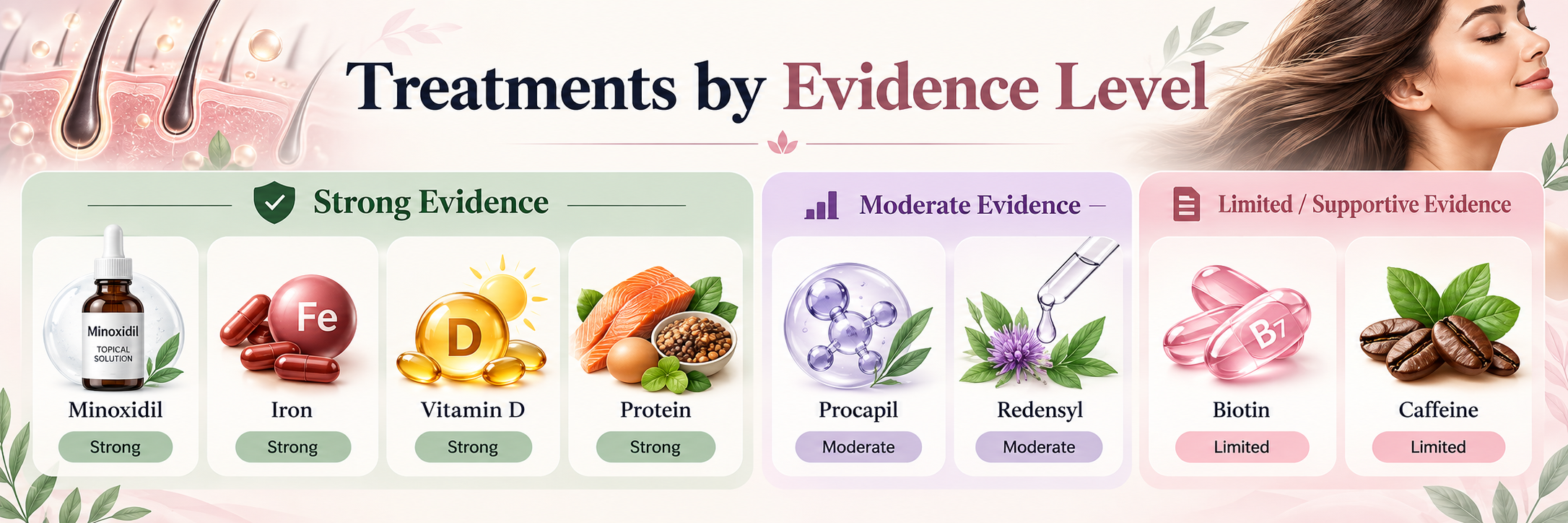
Build My RoutineEvidence labels are a simple guide: strong, moderate, supportive or mainly cosmetic. Rx marks prescription items; the rose tag flags pregnancy/lactation caution. None of these cure the underlying pattern.
Pregnancy, breastfeeding & trying to conceive note: Minoxidil, anti-androgens and other prescription options are doctor decisions and are generally avoided in pregnancy or breastfeeding unless a doctor advises. Take supplements only on medical advice, and discuss any plans for pregnancy with your doctor before starting treatment.
An evidence-based option a dermatologist may discuss; supports density with consistent use.
Best for: confirmed female pattern loss.
Caution: prescription/doctor-guided; not in pregnancy/breastfeeding.
Related productsConsidered by dermatologists in selected women; individual medical decision.
Best for: doctor-selected cases.
Caution: prescription only; not without supervision; pregnancy caution.
Discuss with a doctorCorrecting confirmed low iron helps an overlapping cause.
Best for: confirmed low ferritin.
Caution: take only after testing; excess is harmful.
Related productsDeficiency is linked to increased shedding.
Best for: confirmed deficiency.
Caution: correct after testing; avoid excess.
Related productsHair is largely protein; adequate intake supports growth.
Best for: low intake.
Caution: aim for a balanced diet first.
Related productsLow B12 can contribute to shedding.
Best for: confirmed low B12.
Caution: test before supplementing.
Related productsA mineral involved in hair tissue health.
Best for: confirmed low zinc.
Caution: excess can be harmful; test first.
Related productsA B-vitamin involved in hair structure.
Best for: confirmed deficiency.
Caution: limited benefit without deficiency; can affect lab tests.
Related productsA common topical haircare ingredient.
Best for: supportive cosmetic use.
Caution: evidence is limited.
Related productsA cosmetic complex studied for follicle support.
Best for: supportive density.
Caution: supportive, not a cure.
Related productsA cosmetic active marketed for density.
Best for: supportive density.
Caution: evidence is limited.
Related productsA botanical with some small-study interest.
Best for: supportive cosmetic use.
Caution: patch test; dilute; can irritate.
Related products"Female pattern hair loss is the thinning I see most, and the conversation I value most is the honest one. There's no cure, because it's genetic and hormonal — but it is manageable, and the women who do best are the ones who come in early, before a lot of density is lost. So I confirm the pattern, check the thyroid and the iron because they so often sit on top of it, and we talk through realistic, doctor-guided options. I never want anyone starting prescription medicines or Minoxidil on a guess, especially around pregnancy. Protect what you have, start sooner, and keep expectations grounded."
Thinning bothering you? Book an assessment and a realistic plan.
Consult Dr. Amit's TeamCurated supportive combinations to use alongside doctor-guided care. Timelines are general estimates; results vary and are not guaranteed.
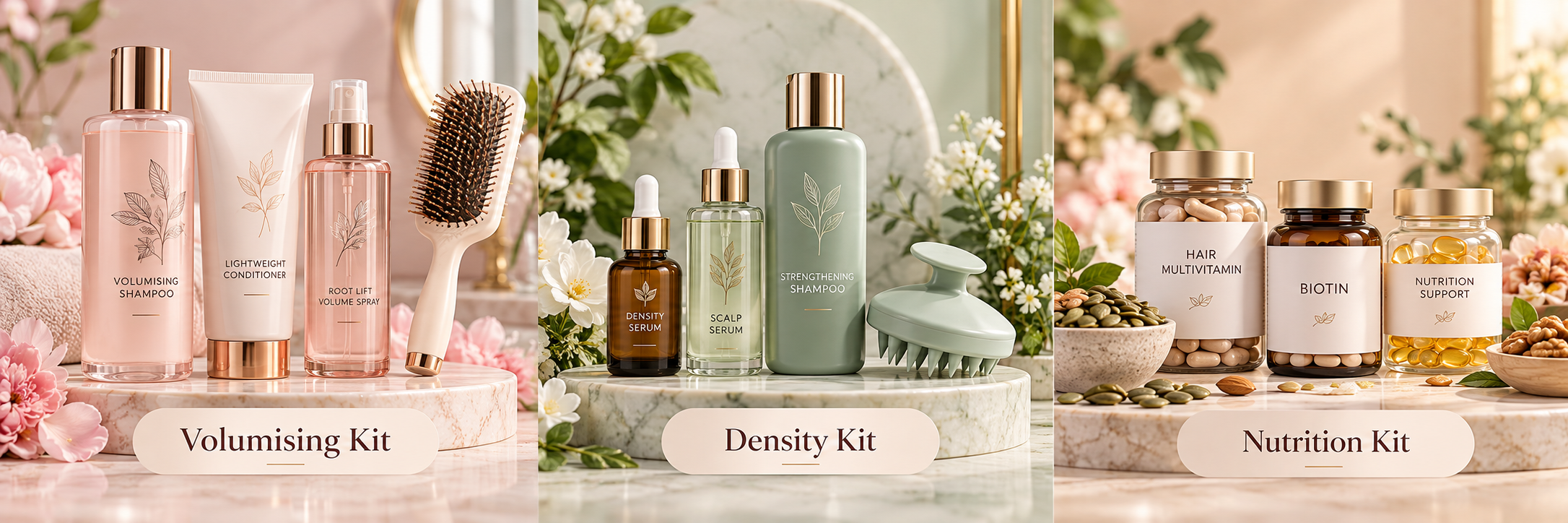
Curated kits for this concern aren't ready just yet. Browse the full Hairsncares shop to build the routine that fits your needs.
Browse all productsPrefer a kit tailored to you? Build a custom plan from your screening result.
Build a Custom KitTake the CheckerTracking your parting width and crown density over months shows whether supportive care and any doctor-guided treatment are protecting density — and keeps expectations realistic.
These references are provided for patient education and do not replace a dermatologist's diagnosis or individual medical advice.
Dermatologist-led overview of how hair loss is evaluated and the evidence behind common treatments.
View AAD reference ›Patient-education summary of genetic, DHT-driven pattern hair loss in women and men.
View MedlinePlus reference ›Searchable index of peer-reviewed research on female pattern (androgenetic) hair loss.
Search PubMed ›Independent systematic reviews assessing the evidence behind hair-loss interventions.
View Cochrane Library ›Short-term shedding without pain, patches or rapid thinning can be tracked with photos and routine consistency.
Use the AI Hair Test to organise symptoms, triggers, pattern and next-step direction. It does not diagnose or prescribe.
PCOS, thyroid symptoms, heavy periods, postpartum shedding, menopause thinning, deficiency signs or medication-related shedding need medical context.
Patchy loss, pain, pus, crusting, bleeding, a scarring-looking scalp, sudden severe shedding, or teenage hair loss with illness needs prompt evaluation.
If you are pregnant, breastfeeding or trying to conceive, do not self-start Minoxidil, hormonal medicines, anti-androgens, Finasteride, Dutasteride or high-dose supplements. Product and medicine safety must be reviewed by a qualified doctor.
Postpartum shedding is often temporary, but severe, persistent, patchy or painful hair loss should be checked.

Question not answered here? Ask Dr Aria for instant guidance or book a consultation.
Ask Dr AriaConsult a DoctorA widening parting and thinner crown, with your hairline kept, usually points to female pattern hair loss — the most common cause of thinning in women. It's manageable, not curable, and earlier action protects density best. Use the Hairsncares AI Pattern Hair Loss Checker to confirm the pattern, support your hair with gentle volumising care, and see a dermatologist for a realistic, doctor-guided plan.
A clear, dermatologist-reviewed overview of Female Pattern Hair Loss — what it is, the evidence behind treatment options, and the red flags that mean a doctor should look first. No exaggerated regrowth claims.
Results vary based on diagnosis, consistency, formulation and scalp condition.
Premium concern visual slot · 720×520 WebP
Pattern (androgenetic) thinning in women — usually a widening parting and diffuse thinning over the crown
Women, often increasing around and after menopause
Minoxidil has evidence for female pattern thinning and is doctor-guided; other options exist
Recommended — confirm the pattern and check other causes
Reviewed by: Dr. Amit Agarkar, MD Dermatology
Medical focus: Dermatology, trichology, hair loss, scalp disorders and hair restoration.
Last reviewed: 1 June 2026
Editorial promise: This page explains causes, treatment evidence, limitations and safe next steps without exaggerating hair-growth claims.
Prepared by the Hairsncares editorial team and medically reviewed by a dermatologist experienced in hair and scalp disorders.
Checked for accuracy of causes, treatment evidence, safety warnings, limitations and suitability for Indian users.
To help you understand this concern and choose safe next steps, and to know when a dermatologist diagnosis matters most.
| Parameter | Assessment | What it means |
|---|---|---|
| What it is | Pattern (androgenetic) thinning in women — usually a widening parting and diffuse thinning over the crown | The nature of this concern in plain terms. |
| Who it affects | Women, often increasing around and after menopause | The people in whom it is most commonly seen. |
| Best-evidence options | Minoxidil has evidence for female pattern thinning and is doctor-guided; other options exist | Where the strongest support lies — most are doctor-guided. |
| When to see a doctor | Sudden, patchy or rapidly worsening loss; signs of hormonal or thyroid disease | Situations needing diagnosis before any treatment. |
| Expected timeline | Months; benefit maintained only with continued use | Results vary based on diagnosis, consistency, formulation and scalp condition. |
Rule out iron deficiency, thyroid and hormonal causes; sudden or patchy loss needs a doctor before treatment.
Product results should be selected based on diagnosis, scalp type, sensitivity, routine compatibility and dermatologist guidance where needed.
Find Products After AI Hair TestPattern (androgenetic) thinning in women — usually a widening parting and diffuse thinning over the crown. The exact cause should be confirmed, because look-alike conditions are treated differently.
Minoxidil has evidence for female pattern thinning and is doctor-guided; other options exist. Most effective options are doctor-guided, and results depend on diagnosis, consistency and realistic expectations.
Months; benefit maintained only with continued use.
For sudden, patchy, painful or unexplained loss, yes — see a dermatologist before treating. A suitability screen helps you understand likely causes.
Sudden, patchy or rapidly worsening loss; signs of hormonal or thyroid disease — these need evaluation before any product or medicine.
Your cart is empty