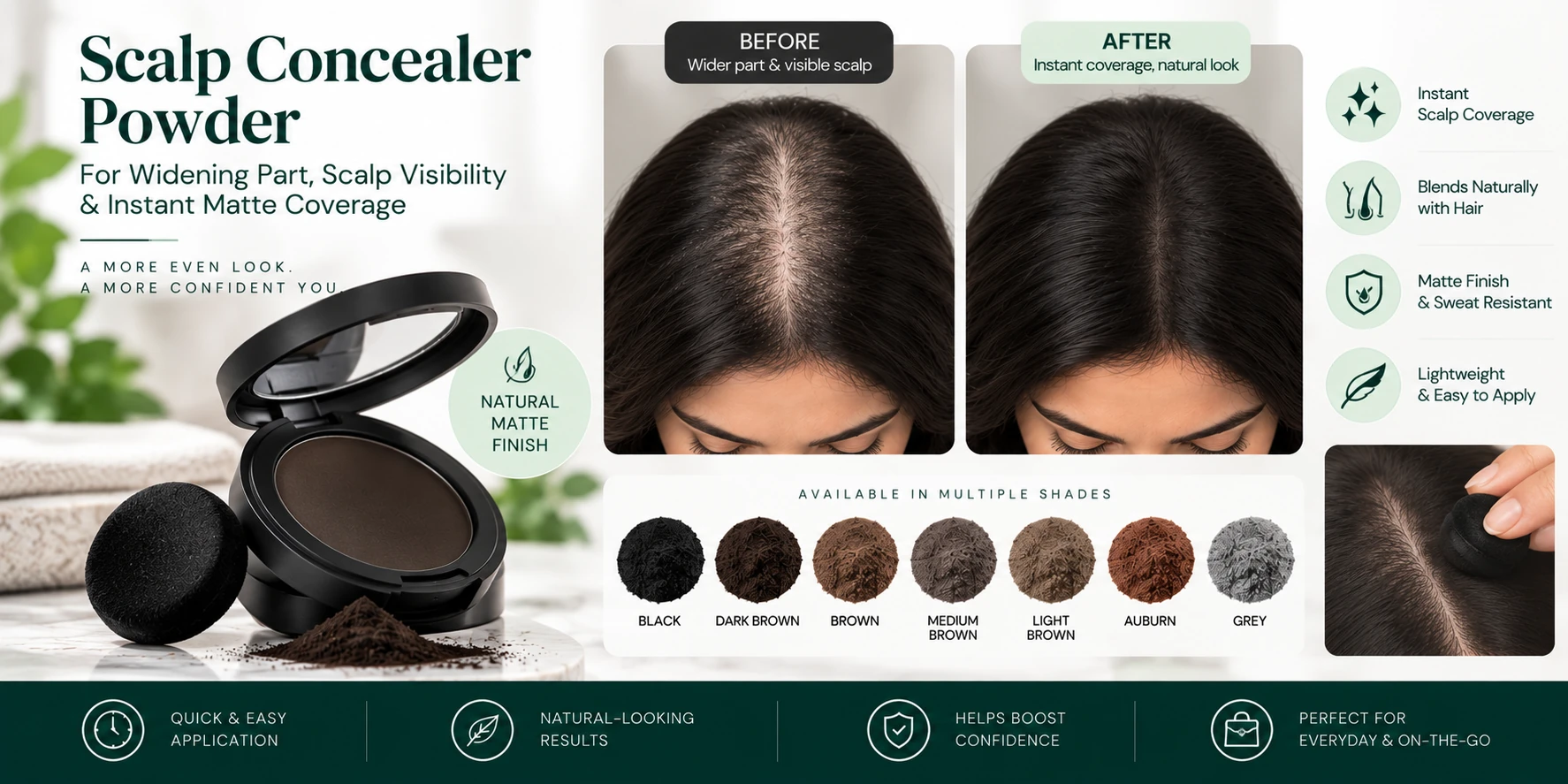
Myth
Scalp concealer powder regrows hair
Fact
Scalp concealer is temporary cosmetic scalp coverage only. It has no effect on follicle activity, hair growth or hair loss progression.
Scalp Veil Concealer Atelier · Hairsncares
A dermatologist-guided hair cosmetic guide for widening part visibility, scalp shine-through, low-density parting, crown scalp contrast and photo-ready confidence — with shade matching, precision application, wash-out safety and AI product matching.
Scalp concealer powder is temporary. Results depend on shade match and application technique. It does not regrow hair or treat any form of hair loss. Consult a dermatologist for progressive widening part.
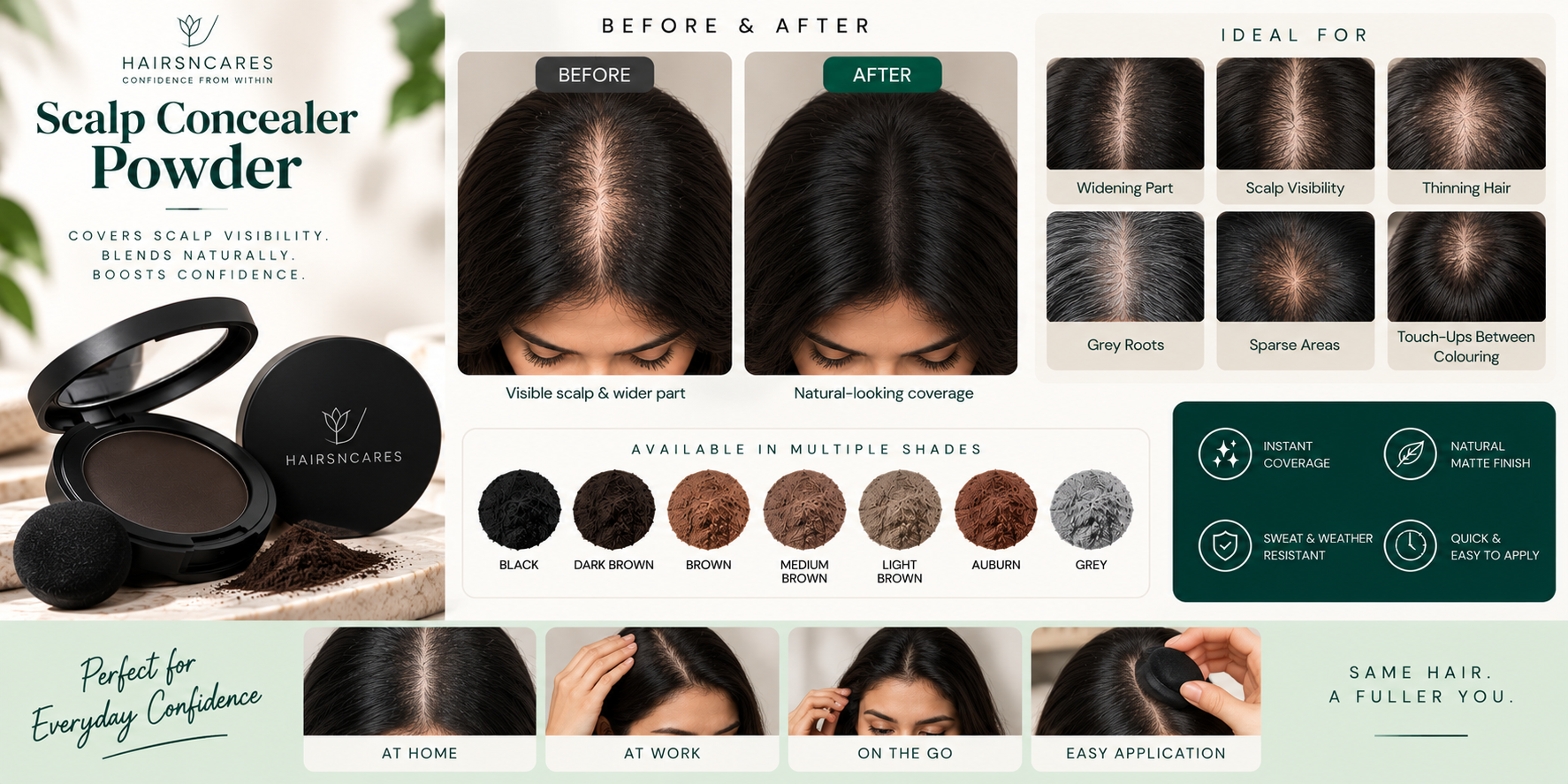
Shade Range
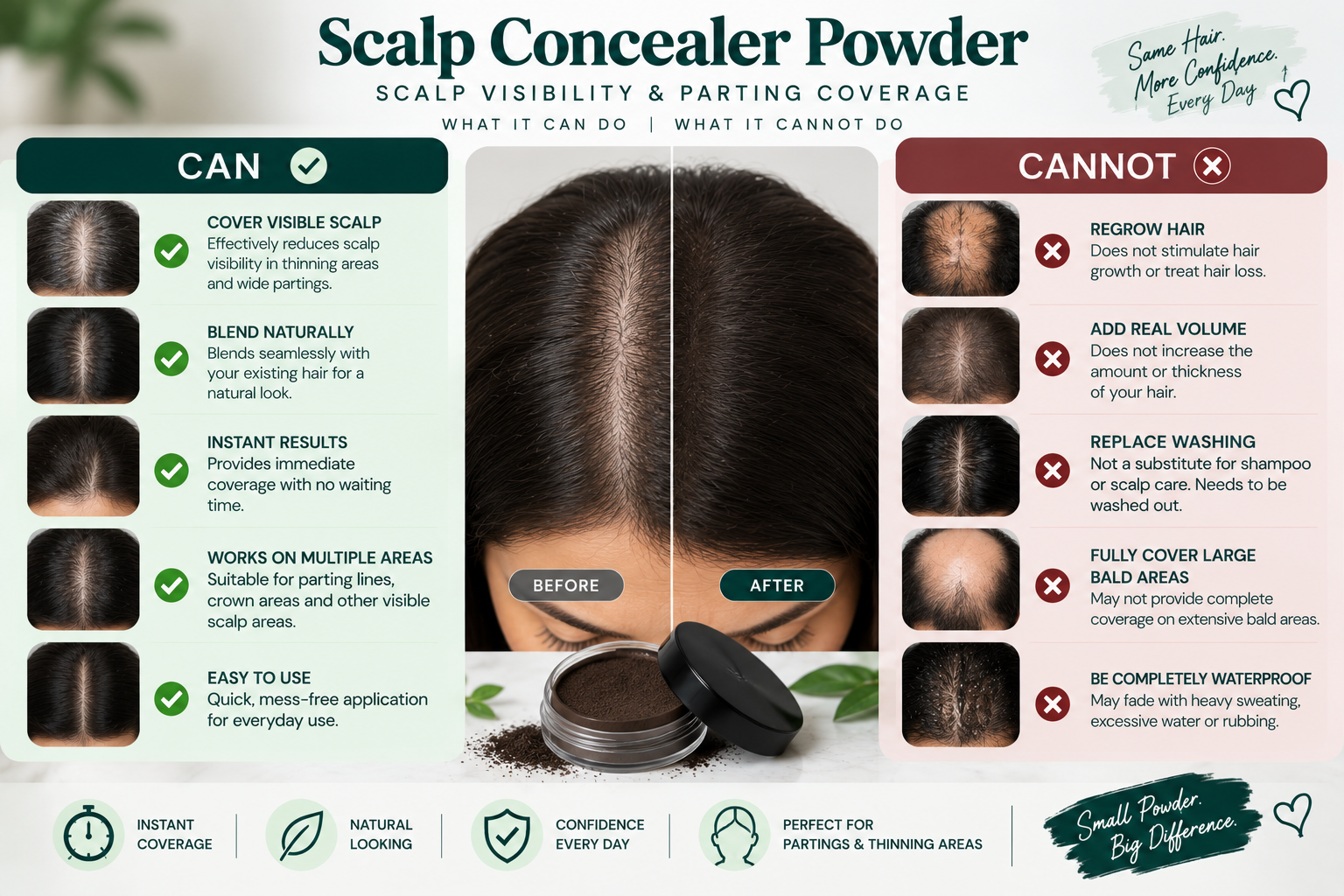
What scalp concealer does — reduces visible scalp through widening part, crown and shine-through areas
Who benefits most — widening parting, crown scalp visibility, diffuse thinning appearance
Application technique for natural scalp-to-hair blending without caking or patchiness
Shade matching guide — choosing the right scalp concealer shade for Indian skin tones
Scalp concealer vs hair fibers vs hairline concealer — which coverage suits you
Safety, buildup risk, wash-out and when visible scalp needs medical evaluation
People with widening parting, scalp shine-through or crown visibility wanting instant cosmetic scalp coverage.
A hair loss treatment. Concealer reduces scalp visibility but does not regrow hair or treat underlying causes.
Parting is widening rapidly, scalp is painful, hair fall is progressive or accompanied by other symptoms — see a dermatologist.
Featured Snippet Answer
Scalp concealer powder — also called scalp coverage powder, scalp camouflage powder or hair makeup compact — is best for widening part visibility, scalp shine-through and low-density areas where the scalp looks too visible. It is applied directly to scalp skin or parting line to reduce contrast and create a matte coverage effect. It is temporary, washes out with shampoo and does not treat hair fall or regrow hair.
Dermatologist-Reviewed
Scalp concealer powder is a cosmetic coverage product used to reduce visible scalp contrast, parting shine-through and low-density appearance. It is especially helpful for widening part visibility, female pattern hair loss appearance, diffuse low-density zones and event-ready confidence when used correctly. Unlike hair fibers, scalp concealer covers scalp skin directly so it can work even when hair density is very low.
Scalp concealer powder is not a medical treatment. It does not treat androgenetic alopecia, female pattern hair loss, alopecia areata, telogen effluvium, scarring alopecia, nutritional deficiency or hormonal hair loss.
⚠️ Avoid applying scalp concealer on irritated, wounded, inflamed, infected, painful, sunburned or recently transplanted scalp. Wash out properly to reduce buildup risk. Stop if itching, burning, pimples, redness, rash or worsening flakes occur.
Ask Dr. Amit About Widening PartCosmetic Reality
Suitability Guide
Coverage Intelligence
A widening part looks more visible because the contrast between scalp colour and hair colour increases. Scalp concealer powder reduces this contrast by adding temporary matte colour to scalp skin. Unlike hair fibers, it covers scalp directly — so it works even when hair density is very low.
Scalp looks brighter than hair, making the part appear wider. Concealer reduces this light contrast.
Concealer powder creates a soft matte scalp veil, reducing shine-through and adding coverage depth.
A brush or compact applicator allows targeted part-line tapping without over-coverage.
Best result from soft blending into surrounding root zone — not a visible paint line along the part.
For low-density crown areas with some existing hair, add hair fibers over concealer for dual coverage.
Shade Intelligence
Match to your root colour — not hair ends. Test under natural daylight and phone camera. Shade match is the single most important factor for a natural-looking parting.

Application Tutorial
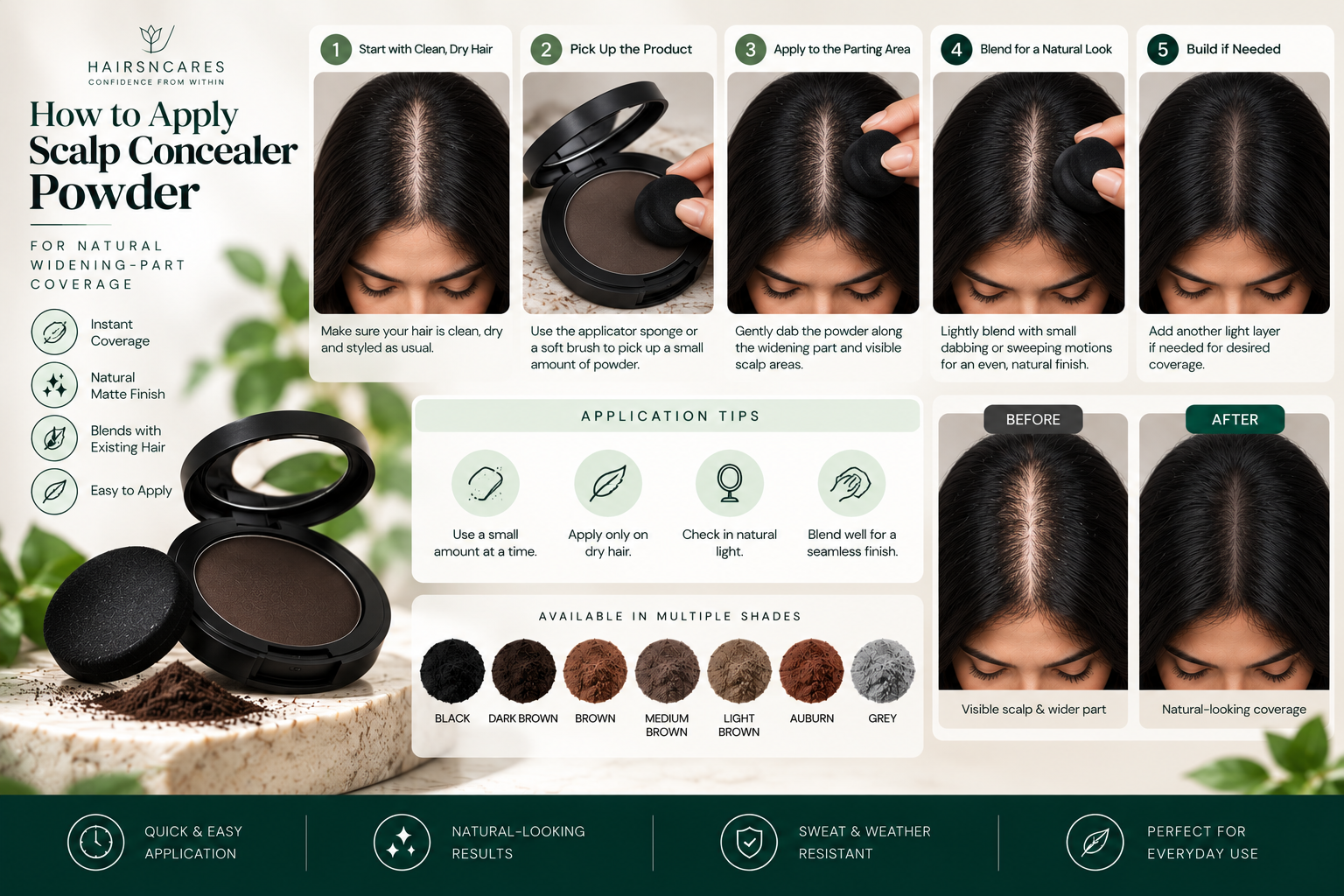
10 dermatologist-guided steps for a natural matte parting with no harsh lines.
Apply only on clean, fully dry scalp. Damp, oily or sweaty scalp causes powder to clump and look patchy.
Never apply on wet or recently washed damp scalp.
Set your normal parting before applying concealer so the coverage aligns with your natural part line.
Match root colour. Test under natural daylight. Check with phone camera and mirror to confirm accuracy.
Use a precision brush, compact sponge or applicator. Pick up a small amount — less product, more control.
Tap gently along the widening part. Do not drag — tapping gives softer, more natural scalp coverage.
Avoid inhalation and eyes during powder application.
Blend softly into the surrounding root zone so the coverage does not look like a painted stripe.
Layer slowly. Do not overapply — too much powder looks chalky, harsh or artificial along the parting.
The result should look soft and matte, not dark or obvious. Check under natural light and camera flash.
Use a compatible light setting mist for events. Avoid heavy sticky sprays on scalp.
Remove with shampoo to prevent buildup. Do not leave scalp powder overnight repeatedly.
Shop Scalp Concealer
Dermatologist-curated selection for widening part, scalp visibility and parting coverage. Price available on product page. Patch-test before first use.
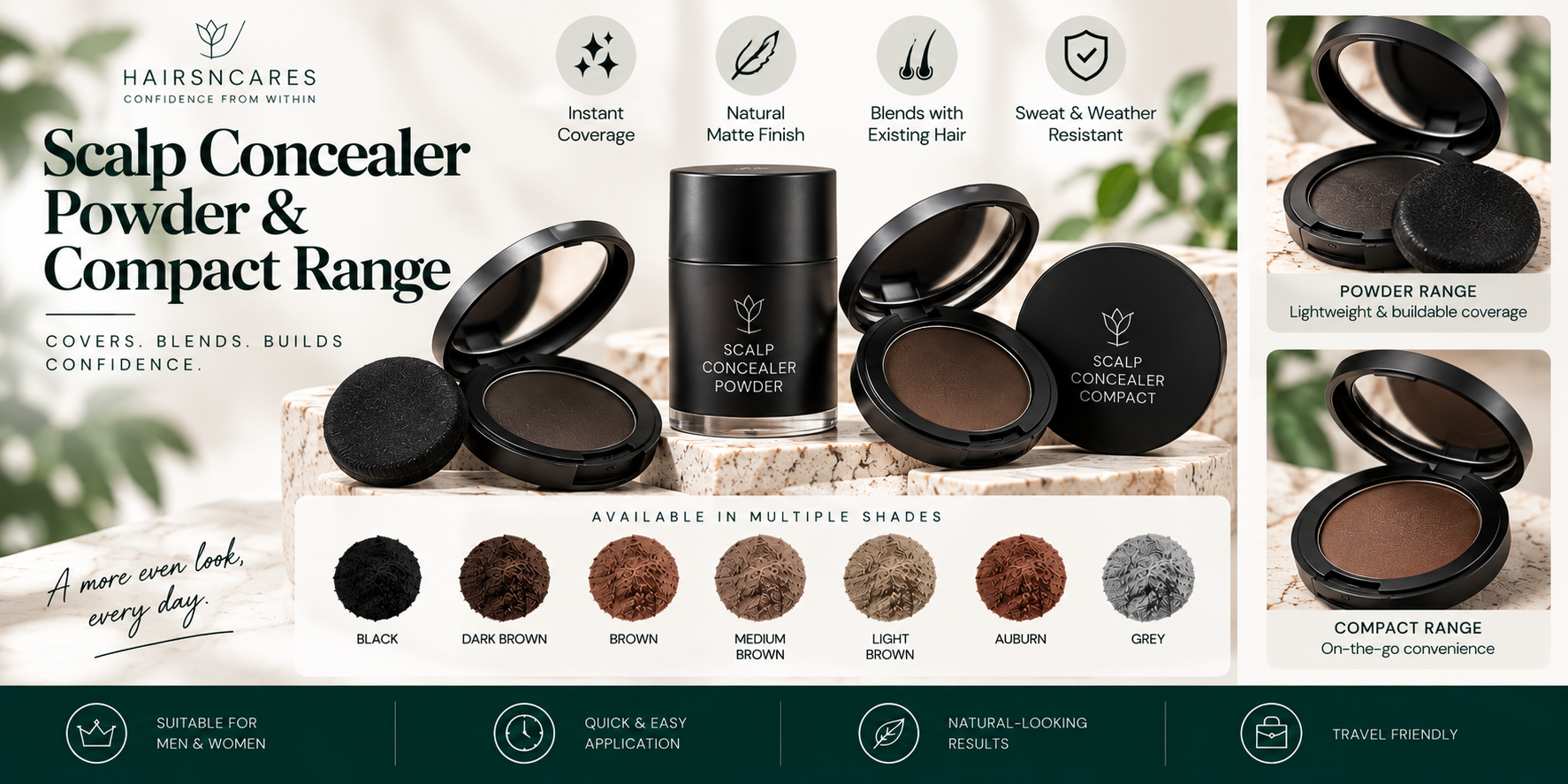
Scalp Coverage Kits
Product Comparison

Medical Context
Scalp concealer powder may be used with minoxidil, but timing matters. Apply minoxidil first to clean dry scalp. Allow it to fully dry and absorb. Only then style hair and apply concealer.
⚠️ Do not trap wet minoxidil under powder buildup. Stop if itching, flakes, burning or redness worsens. Do not use concealer to hide worsening hair loss without diagnosis.
Ask About Minoxidil + Scalp ConcealerDo not use scalp concealer powder during post-transplant healing without explicit surgeon clearance. Healing scalp and grafts are vulnerable to irritation, infection, buildup and mechanical disturbance from product application.
⚠️ Post-transplant scalp is healing. Product application near new grafts risks infection or graft disturbance. Always confirm with your surgical team.
Hair Transplant InformationAI-Powered Matching
Matches your root colour, scalp tone, parting contrast and grey percentage to recommend the best scalp concealer shade and backup option.
Start AI Shade Finder →Identifies the right scalp concealer format — powder, compact, brush kit — based on parting concern, scalp type, event need and coverage goal.
Start AI Product Finder →Identifies whether your widening part concern is cosmetic coverage or medical hair loss — and when dermatologist consultation is needed.
Take AI Hair Test →Checks scalp sensitivity, buildup tendency, folliculitis risk and reactivity — so you know if your scalp is safe for powder application.
Check Scalp Safety →Builds a personalised scalp concealer routine — shade, format, minoxidil sequencing, fiber add-on and event-ready finishing steps.
Build My Routine →Event-Ready Coverage
Natural matte finish, small amount. Test shade under office lighting before committing.
High-control compact, precision brush. Trial well before the event day — never first use on the day.
Scalp concealer + fibers + setting mist if suitable. Check under camera lighting before the shoot.
Use with caution. Sweat can move powder. Trial with compatible setting spray before relying on it.
Use compatible setting support and avoid touching hair. Not waterproof — carry touch-up kit.
Check shade under flash before events — too-dark powder may look harsh or unnatural in photos.
Safety Guide
Myths vs Facts
Scalp concealer powder regrows hair
Scalp concealer is temporary cosmetic scalp coverage only. It has no effect on follicle activity, hair growth or hair loss progression.
Scalp concealer stops hair fall
Scalp concealer does not treat the cause of shedding or thinning. For hair fall, consult a dermatologist for diagnosis-based evaluation.
Scalp concealer and hair fibers are the same
Scalp concealer covers scalp skin directly. Hair fibers cling to existing hair strands. Different mechanisms, different best-use scenarios — can be combined.
Any shade will work
Shade match is the most critical factor for a natural result. Test under natural daylight and camera flash. Wrong shade makes the parting look painted or obvious.
More powder looks more natural
Overapplication looks chalky, harsh or painted. Build coverage gradually in light layers for the most natural matte finish.
Scalp concealer does not need washing out
Proper wash-out is essential to reduce buildup, irritation and follicle congestion risk. Wash with shampoo after each use.
Scalp concealer is safe on irritated scalp
Avoid use on wounded, inflamed, infected, sunburned, painful or reactive scalp. Stop if any irritation, burning or rash occurs after use.
Scalp concealer replaces minoxidil
Scalp concealer is cosmetic coverage. Minoxidil is a medical hair growth treatment for suitable candidates under dermatologist guidance. Different purposes.
Widening part is only a cosmetic issue
Progressive widening part may indicate female pattern hair loss or other medical causes. Consult a dermatologist if the part is widening progressively.
Hair cosmetics mean no need for dermatologist care
Progressive thinning, scalp symptoms or sudden hair fall always require dermatologist evaluation. Cosmetic coverage does not address the underlying medical cause.
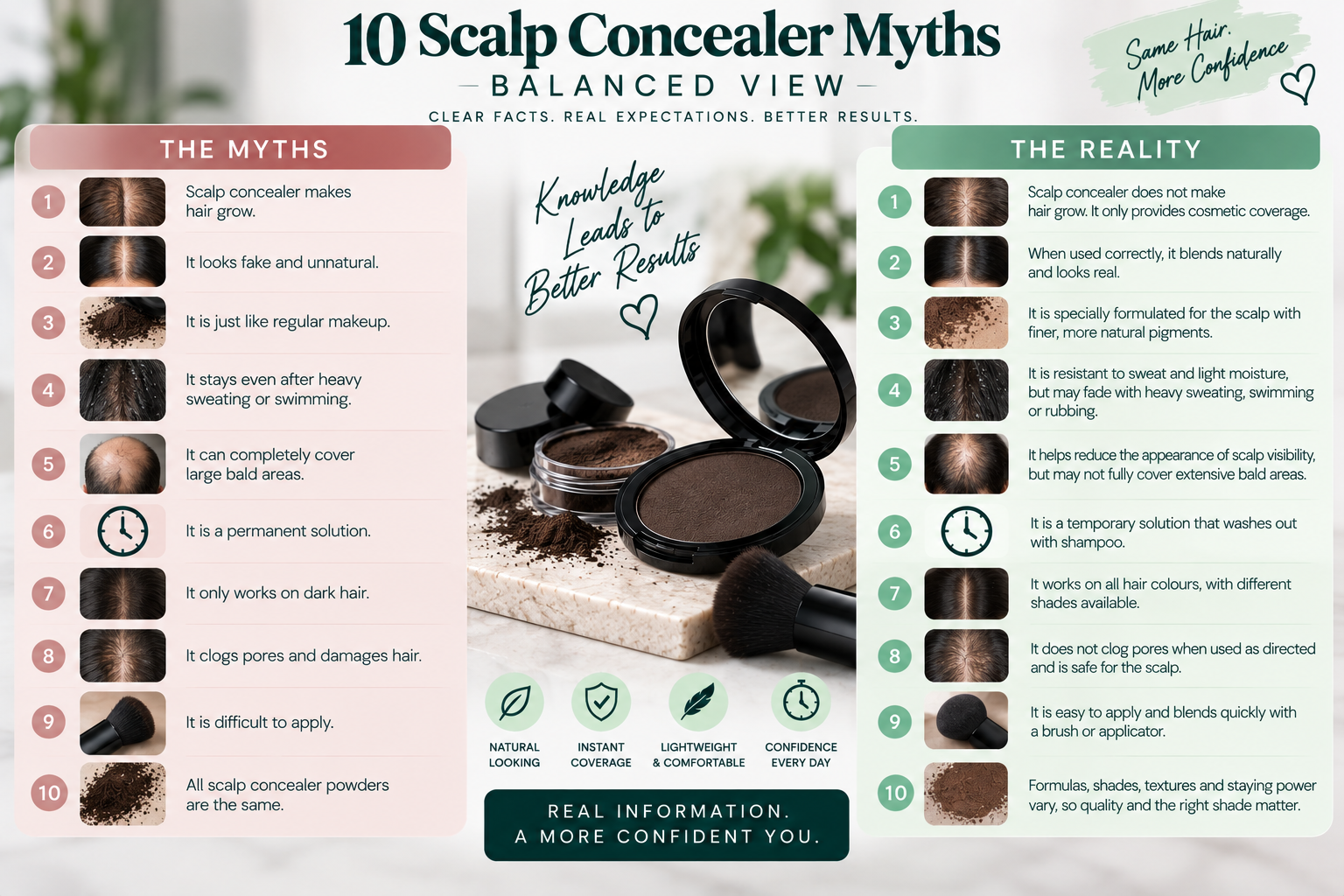
When Cosmetics Are Not Enough
These signs indicate medical evaluation is needed. Scalp concealer cannot address these situations.
Stop scalp concealer and consult if after use:
Expert Answers
Still unsure? Take the AI Hair Test to understand whether you need cosmetic confidence or medical evaluation.
Evidence Base
Explore More
Your Parting Confidence Starts Here
Scalp concealer powder can instantly reduce visible parting contrast — when the shade matches and the scalp is dry and healthy. Let AI match your shade and kit, or speak to Dr. Amit Agarkar if your widening part is progressively worsening.
Your cart is empty