Above the Fold
Quick Answer: How Do You Manage High Density Hair?
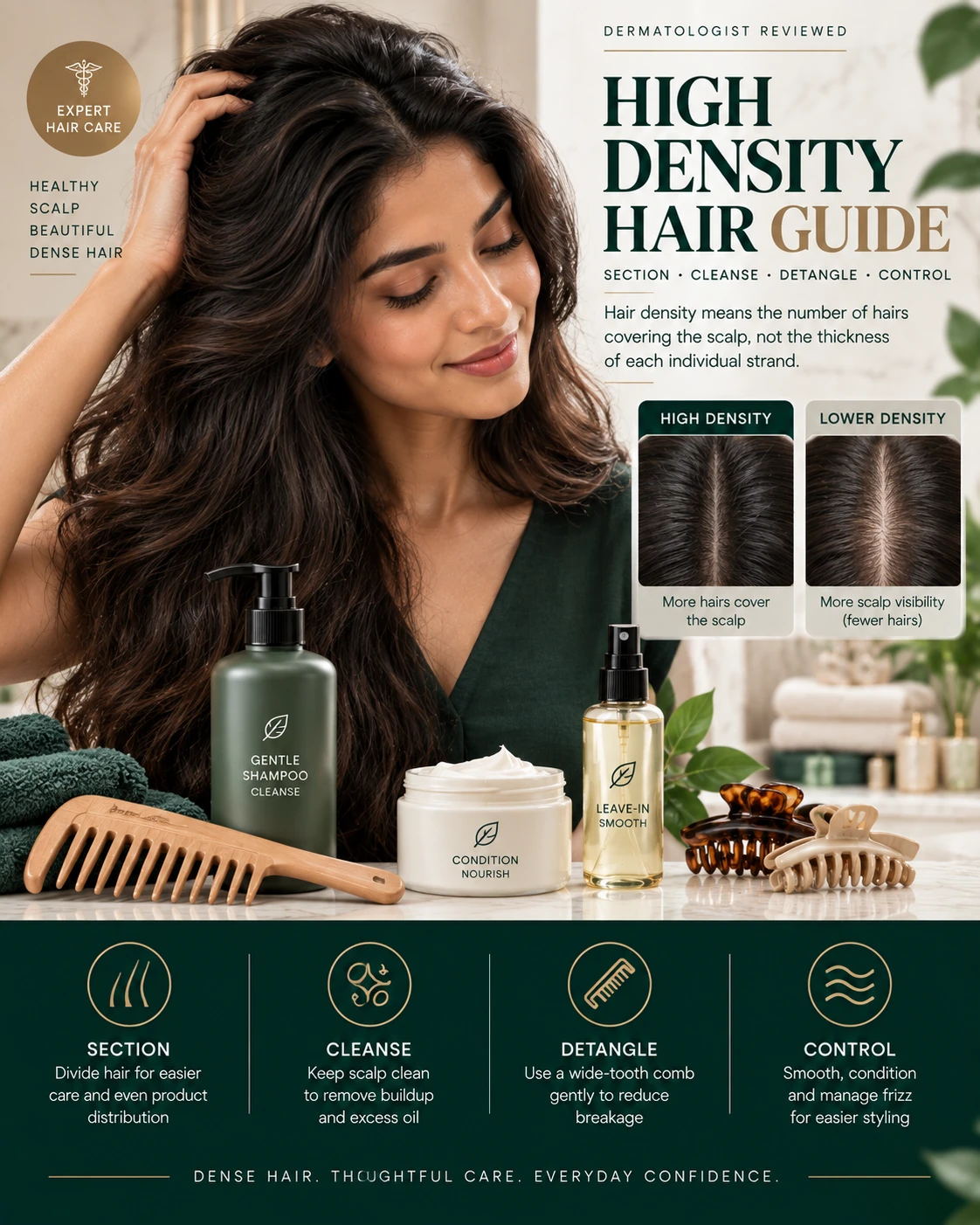
High density hair is best managed with sectioning, thorough scalp cleansing, conditioner through the lengths, gentle detangling, frizz control, proper drying and buildup prevention. The goal is not to reduce density, but to make full hair easier to wash, style, dry and maintain.
Search Intent Alignment
What You'll Learn on This Page
- What high density hair means, and how it differs from thickness and texture
- How to identify your density and strand-thickness combination
- How to reach the scalp properly through dense coverage
- A sectioned wash-day routine that actually cleanses the scalp
- How to detangle without breakage, and control frizz without flattening fullness
- How to dry dense hair efficiently and comfortably
- Product and haircut strategies for fine, coarse and curly dense hair
- When shedding or scalp symptoms need medical review rather than routine changes
Understanding the Basics
High Density Means More Hair Covering the Scalp
High density hair means many hair strands grow close together over a scalp area. This often creates a fuller appearance, less visible scalp, heavier sections, a thicker-looking ponytail, more volume, more tangling, slower wash days, slower drying, more product distribution challenges, and more scalp cleansing difficulty.
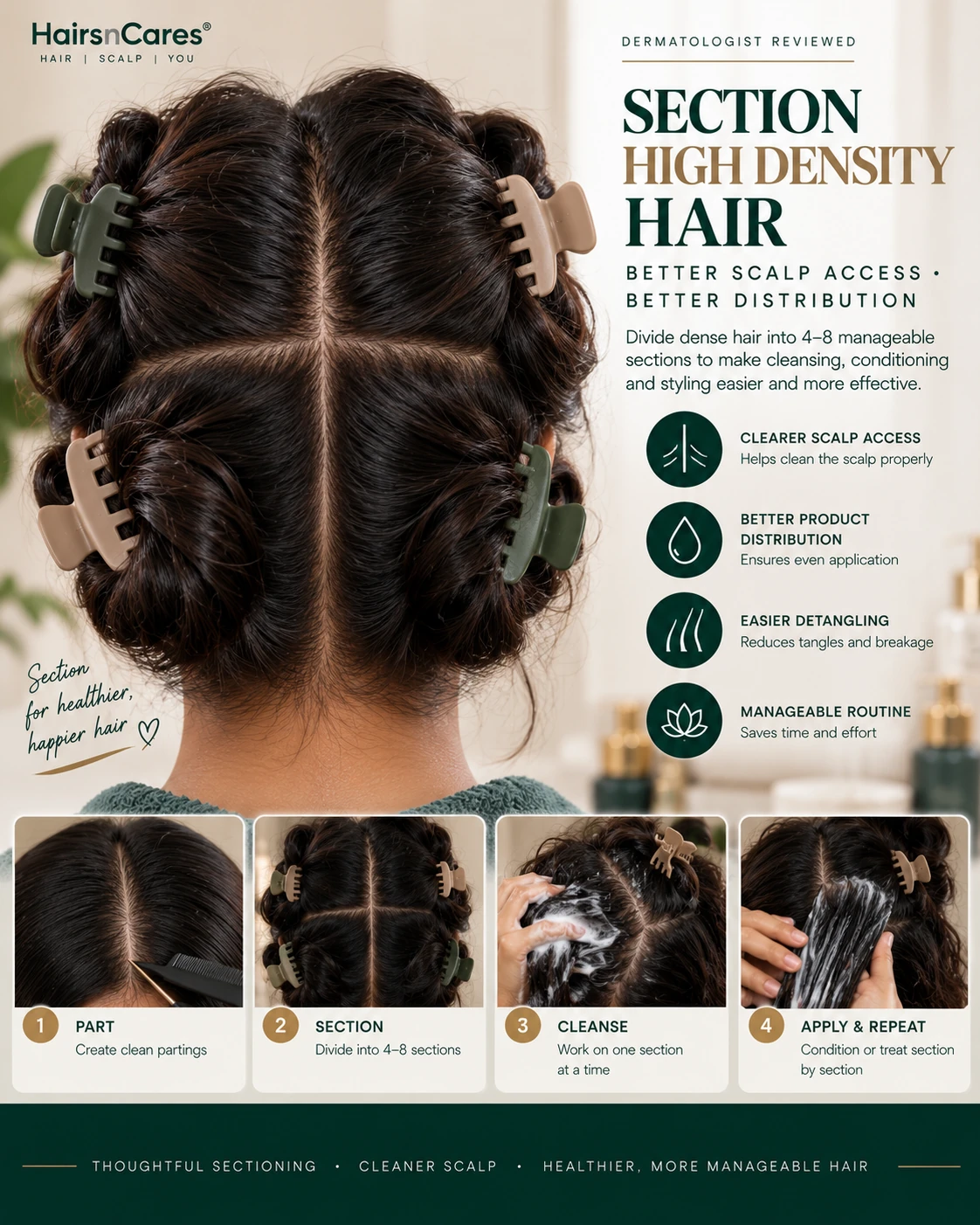
"High density does not always mean coarse hair. Dense hair can be fine, medium or coarse depending on strand thickness."
Know the Difference
Density, Thickness and Texture Are Different
High density hair is different from thick hair. Density describes how many hairs cover the scalp. Thickness describes the diameter of each individual strand. A person can have high density with fine strands, medium strands or coarse strands.
| Term | Meaning | Main Clue | Routine Need |
|---|---|---|---|
| High Density Hair | Many hairs per scalp area | Full coverage, heavy sections | Sectioning and scalp access |
| Thick Hair | Larger strand diameter | Individual strand feels strong or wide | Richer conditioning |
| Coarse Hair | Rougher or stronger strand feel | Less smooth texture | Moisture and smoothing |
| High Volume Hair | Hair expands outward | Puffiness or fullness | Shape and frizz control |
| Curly Dense Hair | Many strands plus curl pattern | Shrinkage, tangles, volume | Slip, sectioning and moisture |
Interactive Checklist
Do You Have High Density Hair?
Tap the signs that match your hair. This is a self-assessment guide, not a diagnosis.
Cleansing Fundamentals
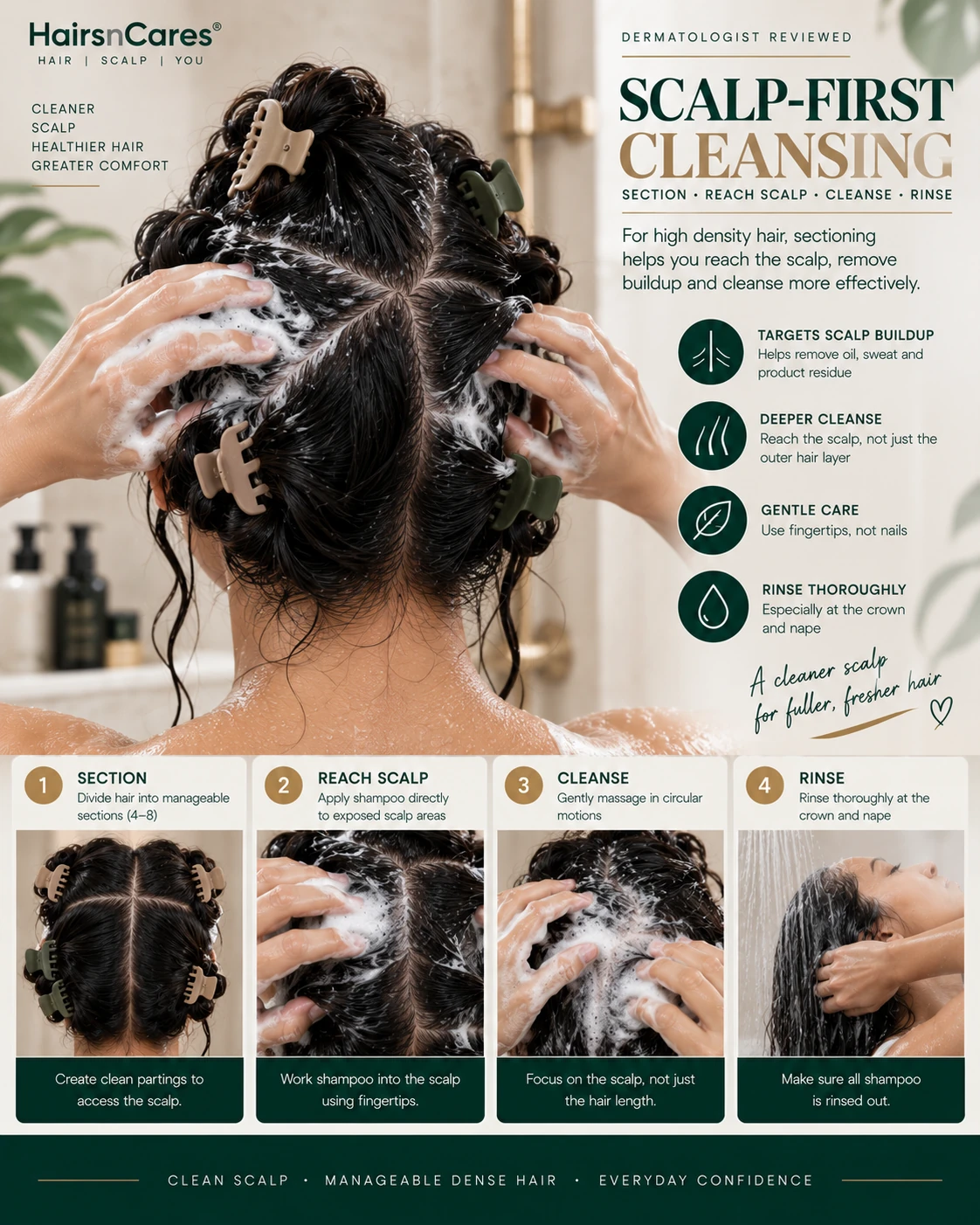
Dense Hair Needs Scalp-First Cleansing
In high density hair, the scalp may be harder to reach. Sweat, oil, dead skin, pollution and product buildup may stay trapped if shampoo is applied only to the top layer.
Scalp access tips
- Divide hair into sections before washing
- Apply shampoo directly to scalp zones
- Use fingertips, not nails
- Rinse thoroughly
- Cleanse behind ears, crown and nape
- Repeat shampoo only when buildup is heavy
- Avoid conditioner on oily scalp unless product is meant for scalp use
- Dry scalp properly after washing
"Clean scalp first, beautiful lengths second."
Structured Routine
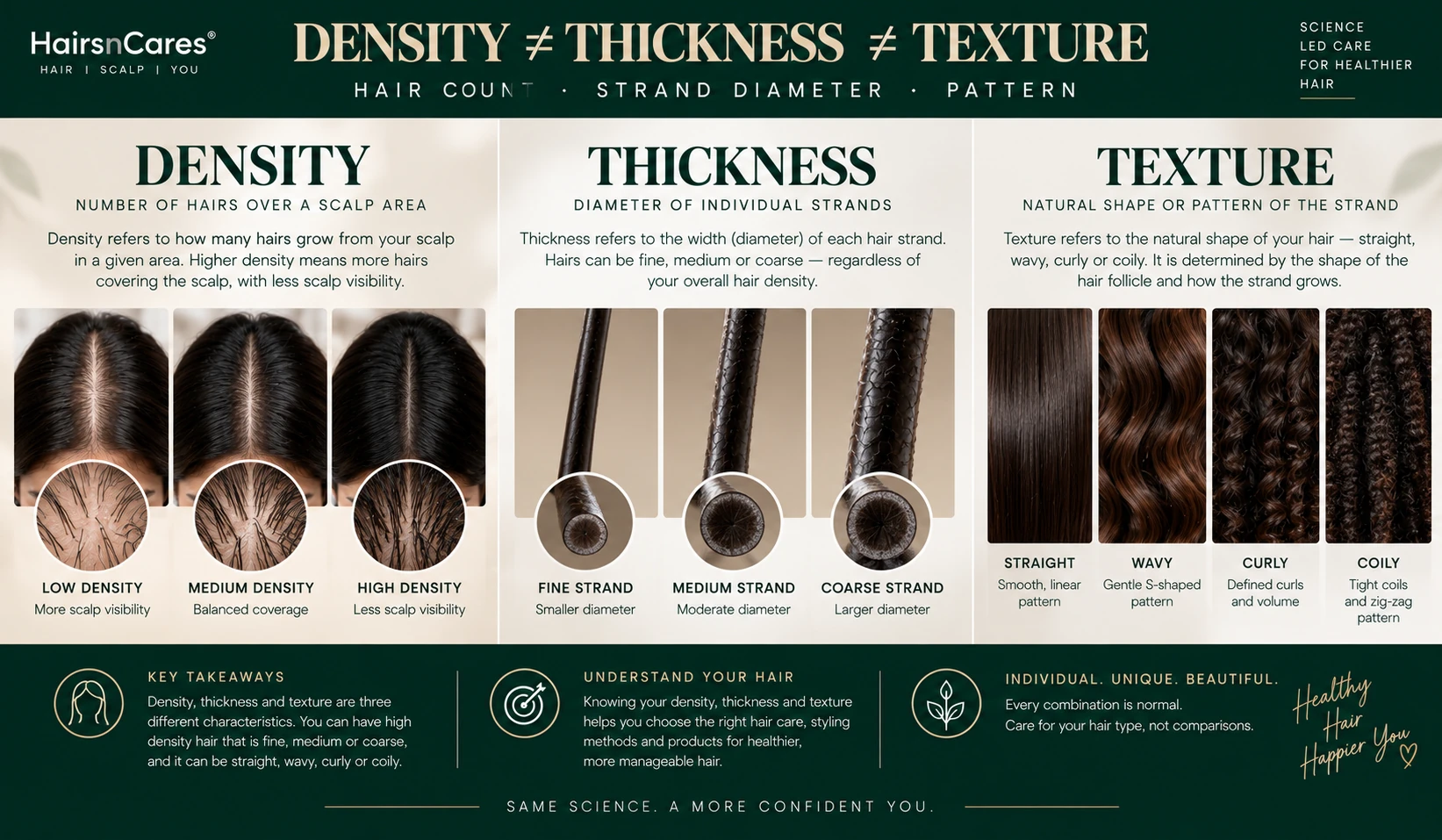
A Sectioned Wash Day Works Better Than a One-Step Wash
Pre-Wash Detangle
Detangle gently, remove loose shed hairs, use fingers or a wide-tooth comb, avoid ripping through knots.
Section the Hair
Divide into 4–8 sections depending on length and density. Clip sections loosely, keeping access to the scalp.
Shampoo the Scalp
Apply shampoo to the scalp, massage each zone, rinse thoroughly, and repeat only if needed.
Condition the Lengths
Apply conditioner from mid-lengths to ends, using enough product for each section. Avoid heavy roots if the scalp is oily.
Detangle With Slip
Detangle while conditioner is present if suitable, working from ends upward.
Rinse Completely
Check the crown and nape for residue, rinsing in sections.
Dry Properly
Squeeze water gently, use a microfiber towel, dry the scalp and roots, and avoid sleeping with wet dense hair.
Choose by Scalp Type
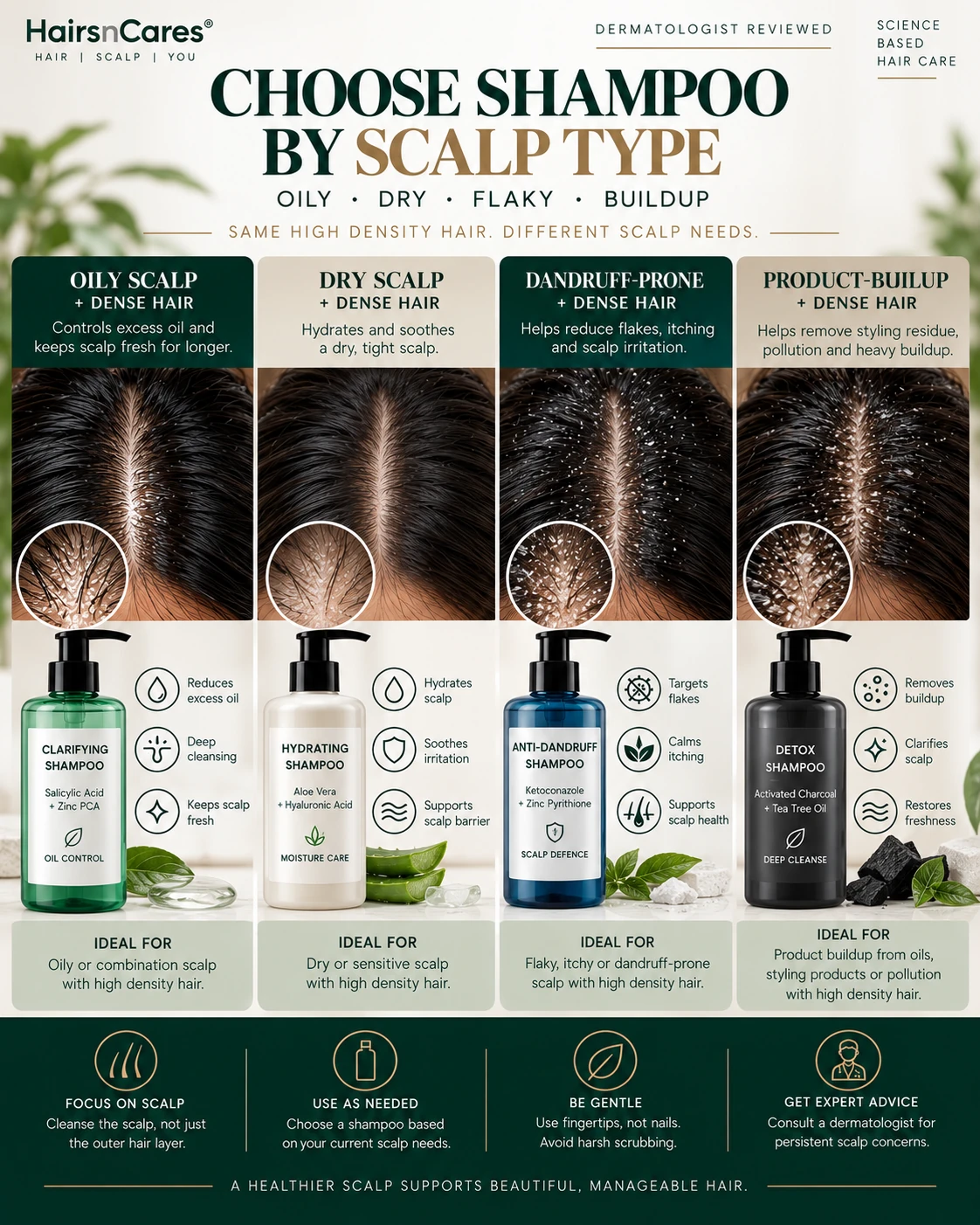
Choose Shampoo by Scalp Type, Not Just Hair Volume
Needs
- Effective scalp cleansing
- Buildup control
- Lightweight routine
Avoid
- Heavy scalp oils
- Conditioner on roots
- Overusing dry shampoo
Needs
- Gentle shampoo
- Less aggressive cleansing
- Scalp comfort
Avoid
- Harsh daily washing
- Hot water
- Scratching
Needs
- Anti-dandruff pathway
- Proper contact with scalp
- Thorough rinsing
Avoid
- Heavy oils on flaky scalp
- Masking dandruff with styling products
Needs
- Occasional clarifying shampoo
- Residue removal
- Simplified product routine
Avoid
- Clarifying too often
- Adding more masks without cleansing
Conditioning Strategy
Dense Hair Needs Enough Conditioner — but Not Random Product Overload
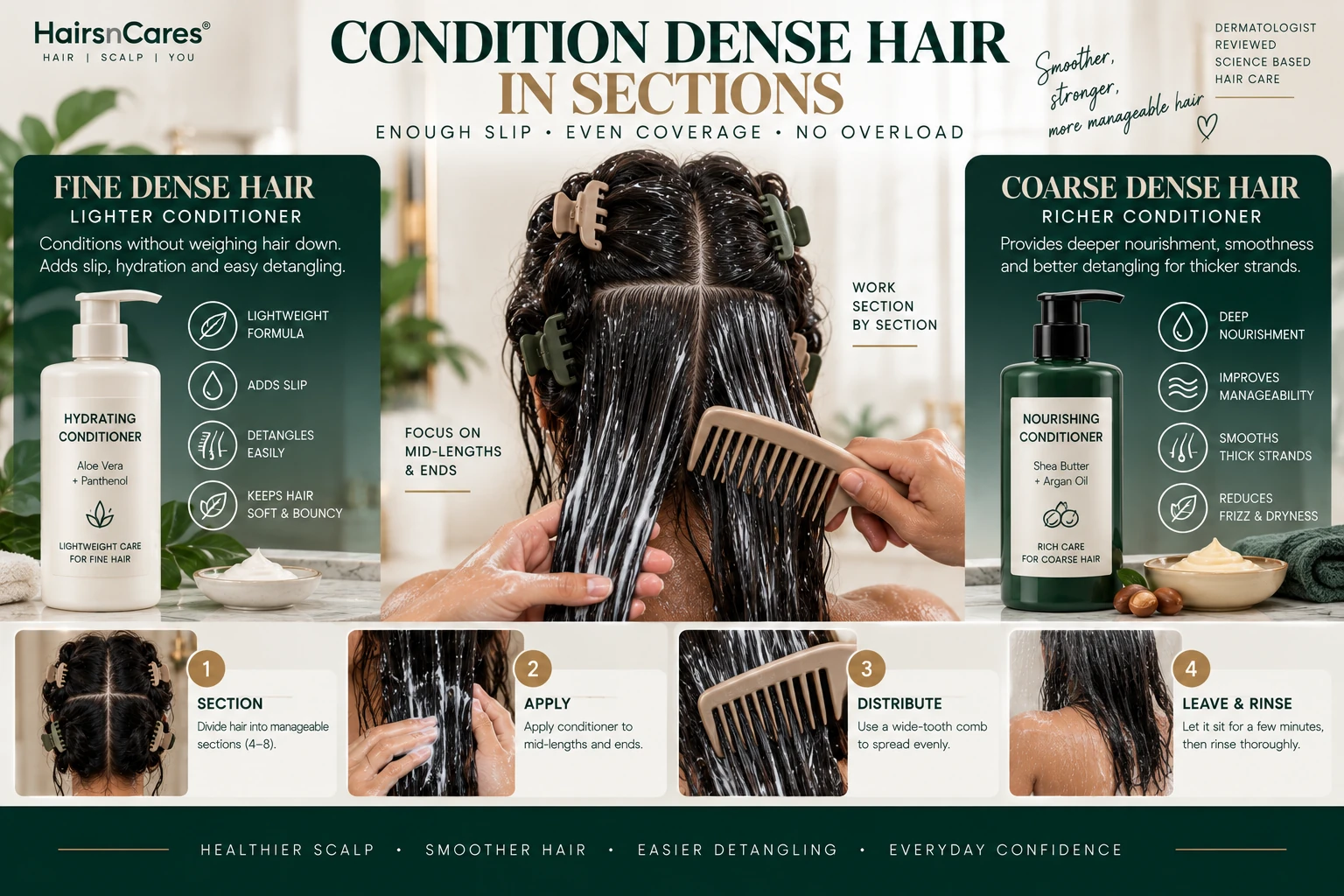
High density hair often needs more conditioner because there is more hair to cover, but product should be distributed section by section.
Conditioner rules
- Apply to lengths and ends
- Section hair for even coverage
- Use slip for detangling
- Rinse thoroughly
- Fine dense hair needs lighter conditioner
- Coarse dense hair may need richer conditioner
- Oily scalp users should avoid heavy roots
Hair mask rules
- Use when dryness, frizz, roughness or damage exists
- Apply through sections
- Avoid excessive protein if hair becomes stiff
- Clarify if masks create buildup
- Adjust frequency by hair response
Strategy Over Force
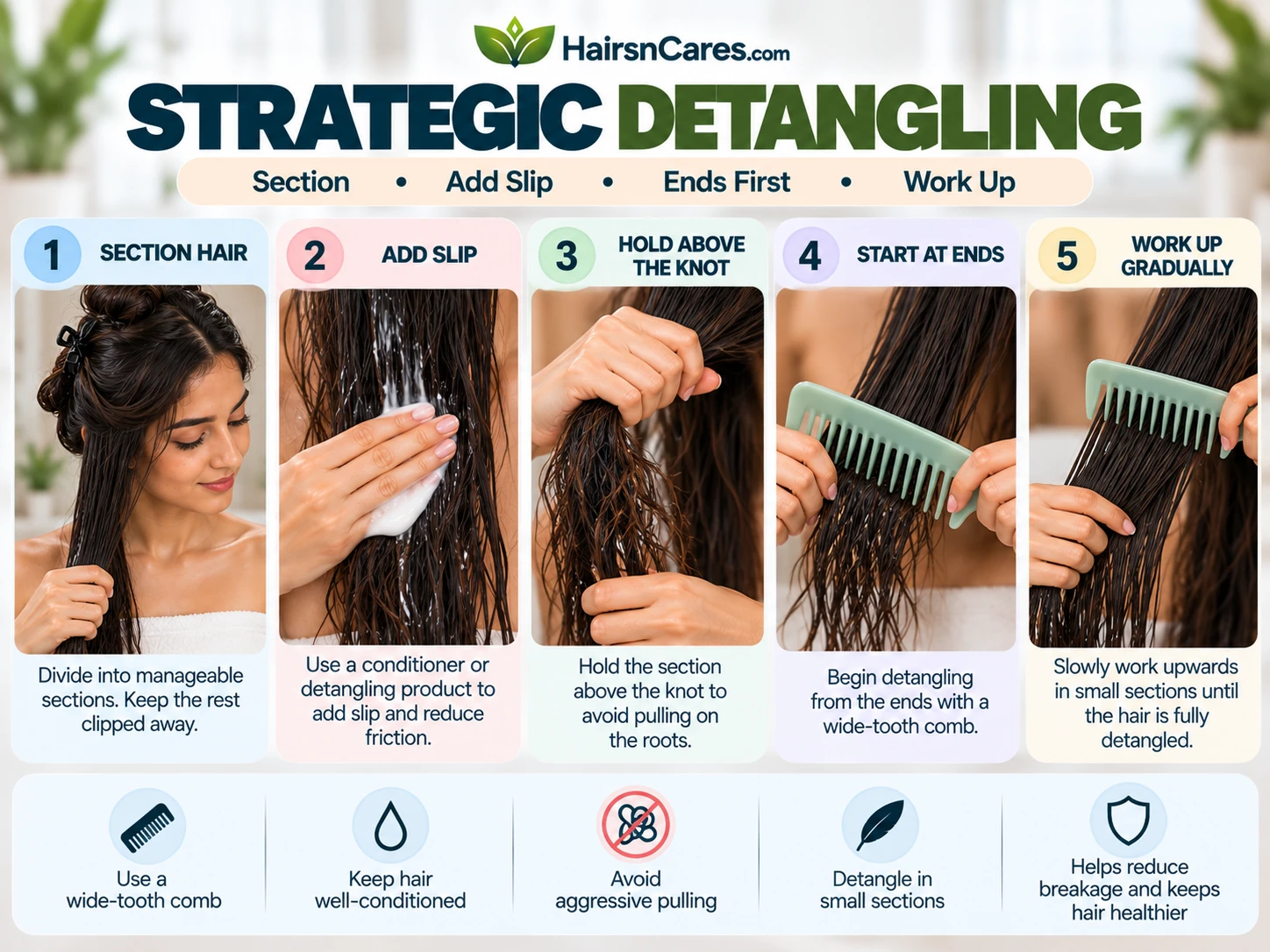
More Hair Means More Knotting — Detangle With Strategy
- Detangle before wash if hair tangles easily
- Use conditioner or slip
- Start from ends
- Hold the section above the knot
- Use wide-tooth comb or detangling brush
- Work in sections
- Do not rip through dry knots
- Avoid aggressive brushing when wet if hair is fragile
- Use leave-in for curly or high-friction hair
- Trim split ends that repeatedly knot
Detangling danger signs
Snapping, pain, scalp pulling, matting, hair breaking in clumps, knots near the scalp, or severe tangling after a chemical treatment — ease off and reassess your approach if any of these occur.
Control Without Flattening
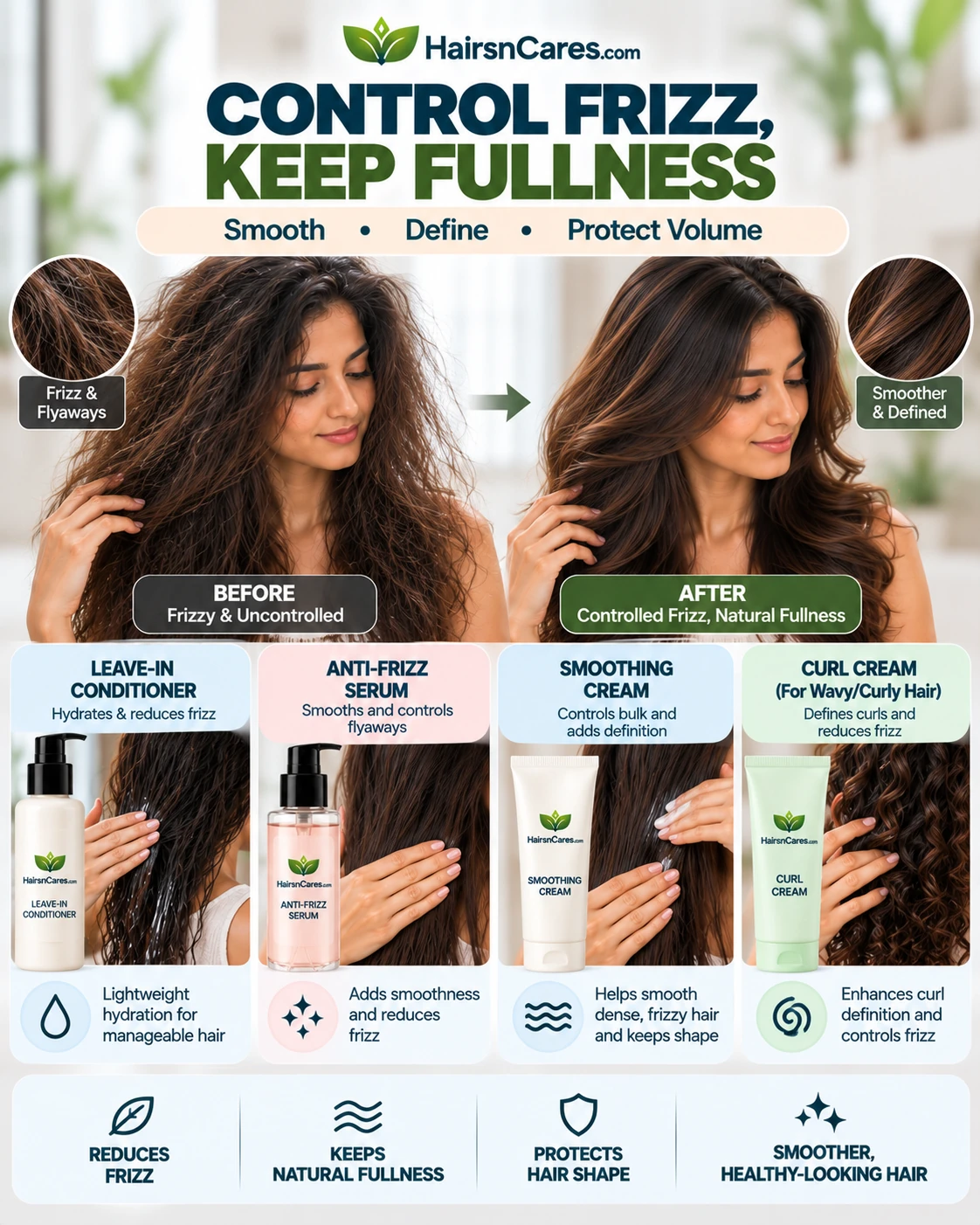
Control Expansion Without Flattening Fullness
Dense hair may become frizzy or puffy because of humidity, dryness, high porosity, curl or wave pattern, rough cuticle, friction, heat damage, lack of leave-in, or towel rubbing.
Leave-In Conditioner
Anti-Frizz Serum
Smoothing Cream
Curl Cream
Also consider: lightweight oil on ends, a humidity shield where verified, microfiber towel, and satin or silk friction reduction. Heavy smoothing isn't the right answer for every dense-hair user.
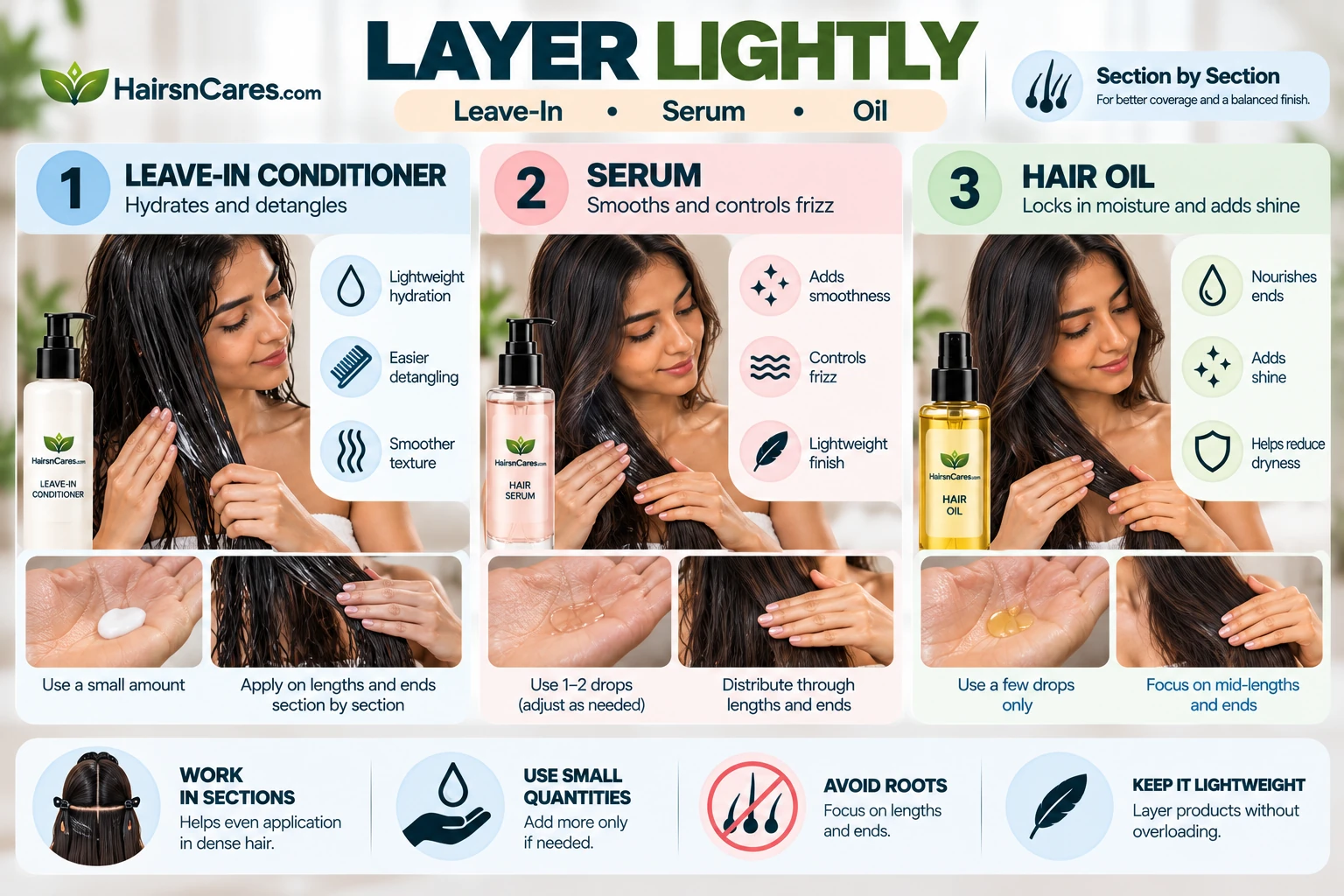
Layer Lightly
Layer Products Lightly and Section by Section
Best for:
- Shine
- Smoothing
- Flyaways
- Polished finish
Caution: use oil mainly on lengths and ends; heavy scalp oil may worsen oily scalp or dandruff; patch test if sensitive; oils do not treat root hair loss; avoid over-layering oil, serum and cream if hair becomes greasy.
Smart Drying
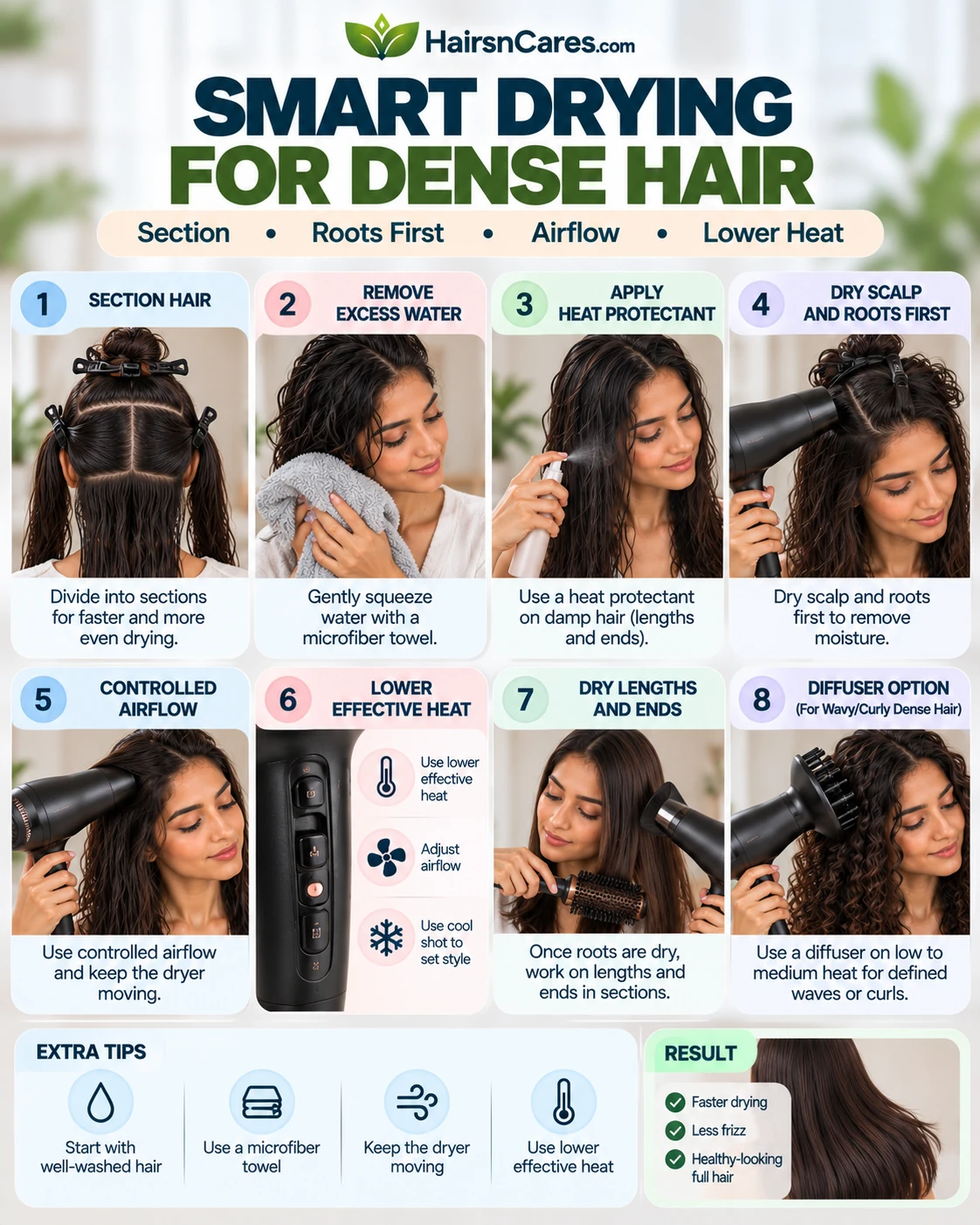
Slow Drying Needs a Smart Drying Plan
High density hair may take longer to dry because water stays trapped between layers. Prolonged dampness can feel uncomfortable and may worsen scalp odour, buildup or irritation in some users.
Drying principles
- Squeeze water gently after rinsing
- Use microfiber towel or soft cotton
- Section hair while drying
- Dry roots and scalp first
- Use airflow rather than excessive heat
- Use heat protectant when blow-drying
- Avoid sleeping with wet dense hair
- Avoid tying wet dense hair tightly
- Use a diffuser for curls and waves
- Use a lower effective heat setting
Helpful products/tools
- Quick-dry towel
- Detangling spray
- Heat protectant
- Diffuser
- Lightweight leave-in
- Dryer with controlled heat
- Wide-tooth comb
Texture-Specific Care
Dense Texture Needs Slip, Sections and Shape
Dense curly, wavy and coily hair may experience shrinkage, bulk, tangles, frizz, slow drying, uneven product distribution, scalp access difficulty and product buildup.
Routine focus
- Sectioned cleansing
- Conditioner with slip
- Leave-in
- Curl cream or gel where suitable
- Detangling in sections
- Diffuser or air-dry strategy
- Shape-enhancing haircut
- Avoid rough towel drying
Lightweight Control
Fine Strands + High Density Need Lightweight Control
A person can have many hairs on the scalp, but each strand may be fine. This combination can look full but still become flat, oily or easily weighed down.
Routine
- Lightweight shampoo
- Lightweight conditioner
- Avoid heavy masks too often
- Apply conditioner to lengths only
- Use light leave-in
- Avoid heavy oils
- Root lift if flat
- Clarify occasionally if buildup occurs
Richer Conditioning
Coarse Dense Hair Often Needs Richer Conditioning
Coarse or thick high-density hair may feel heavy, dry, rough, frizzy, hard to detangle, slow to dry and difficult to section.
Routine
- Moisturising shampoo
- Richer conditioner
- Mask when needed
- Leave-in or cream
- Serum or oil on ends
- Detangling support
- Controlled drying
- Shape-focused haircut
Shape Strategy
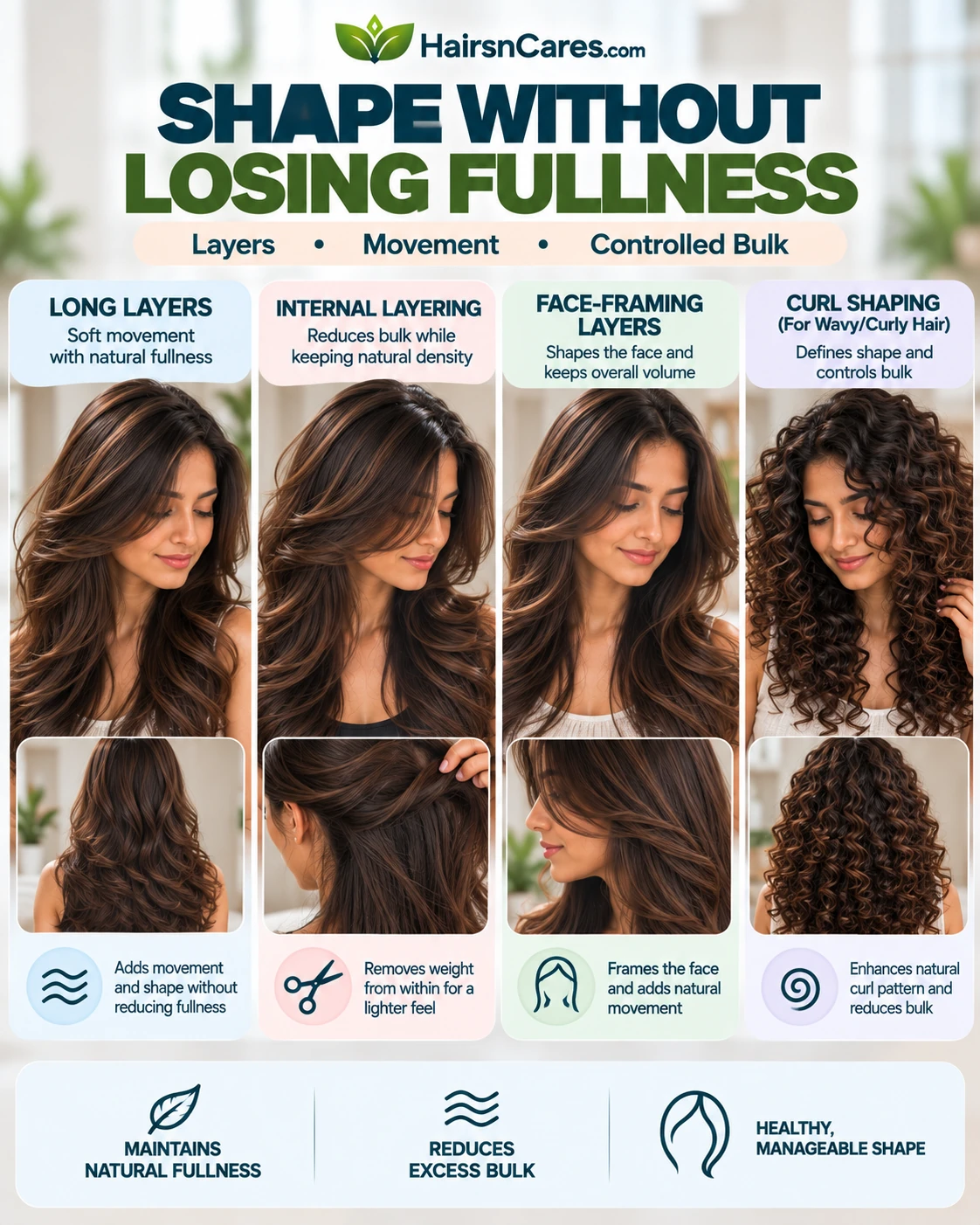
Shape Reduces Bulk Without Reducing Beauty
- Long layers
- Internal layering
- Face-framing layers
- Curl-shaping cuts
- De-bulking carefully
- Avoiding excessive thinning shears where frizz-prone
- Avoiding blunt heavy cuts if hair feels too bulky
- Avoiding over-layering if ends become sparse
- Crown shape planning
- Nape bulk management
"The goal is controlled movement, not making dense hair look thin."
Consider a stylist consultation for: very dense curls, heavy triangular shape, post-chemical damage, uneven bulk, or severe tangling.
Hidden Scalp Concerns
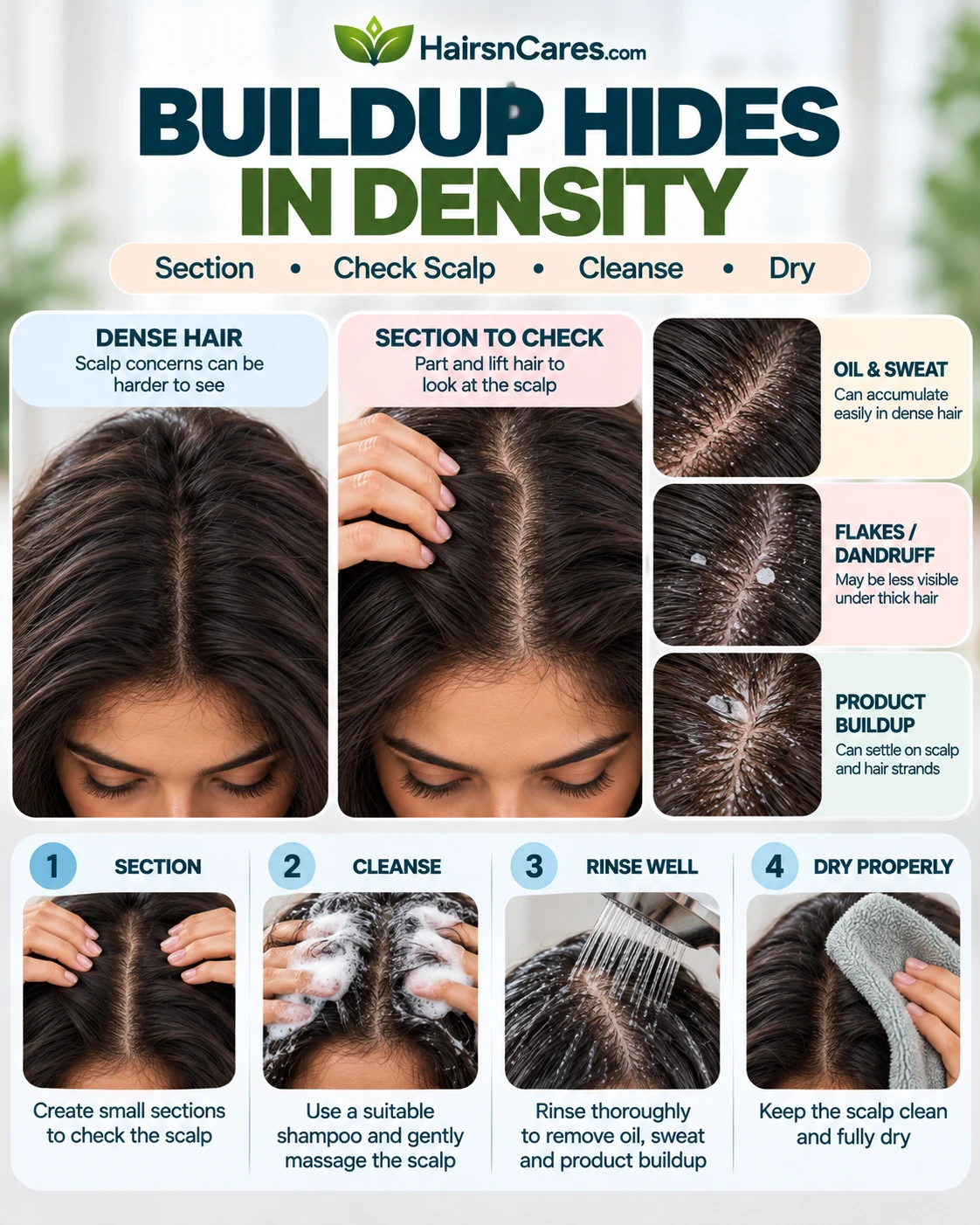
Dense Hair Can Hide Scalp Problems
Scalp concerns may be missed because dense hair covers the scalp. Watch for itching, flakes, oiliness, odour, sticky roots, sore scalp, dandruff patches, redness, bumps, crusting, painful follicles, or buildup after heavy products.
Routine pathway
- Section the scalp
- Cleanse properly
- Use anti-dandruff shampoo when needed
- Rinse thoroughly
- Dry scalp
- Avoid heavy oil during active dandruff
- See a dermatologist if symptoms persist
Realistic Expectations
Dense Hair Can Make Normal Shedding Look Dramatic
People with high density hair may notice more shed hairs simply because they have more hair. Shed hair may also collect during detangling and wash day.
Medical review is needed if:
- Shedding suddenly increases
- Shedding lasts for months
- Density visibly reduces
- Part or crown changes
- Patchy loss appears
- Scalp symptoms occur
- Hairline changes
- Systemic symptoms exist
"Do not panic from one wash-day hairball. Track pattern, duration and density change."
Ecommerce
Shop High Density Hair Products by Scalp, Texture and Routine Need
Filter by concern, product type, hair texture and safety preferences.
*Claims are shown only when verified on the product database; unverified claims are not displayed.
Compare by Routine Need
Compare Dense-Hair Products by Routine Need
Compare up to four products on scalp suitability, detangling support, frizz control and more. Products are never labelled "best" without verified criteria.
| Attribute | Product A | Product B |
|---|---|---|
| Product type | Detangling spray | Rich hair mask |
| Best for | Tangling / breakage | Dryness / roughness |
| Buildup risk | Product information not confirmed | Product information not confirmed |
| Rinse-out vs leave-in | Leave-in | Rinse-out |
Personalised Routine
Build a Density-Smart Routine Based on Your Hair Type
Answer a few questions to get a suggested cosmetic-care routine. This does not diagnose scalp disease or replace a dermatology consult.
The AI High Density Hair Routine Builder supports cosmetic routine planning only. It cannot diagnose scalp disease, hair loss or prescribe treatment.
Track Realistically
Track Manageability, Scalp Comfort and Shedding Separately
Track wash-day time, drying time, scalp cleanliness, itch, flakes, oiliness, odour, tangling, frizz, softness, roughness, breakage, shedding, product buildup, conditioner use, mask use, heat use, haircut changes and scalp symptoms.
Photo rules
- Same lighting
- Same wash-day stage
- Same product condition
- Scalp photos where symptoms exist
- Do not compare wet and dry volume
Do Not Self-Manage These
High Density Hair Still Needs Review When Symptoms Appear
- Sudden heavy shedding or patchy hair loss
- Scalp pain, pus, crusting or bleeding
- Severe redness or severe dandruff
- Persistent itching or scalp odour with irritation
- Painful bumps or tender follicles
- Matted hair with pain
- Hairline changes or visible density reduction
- Eyebrow or body hair loss
- Fever or illness-related shedding
- Recent medication change
- No improvement despite scalp cleansing
Route to a dermatologist, the AI Hair Test, AI Scalp Analyser, the scalp condition page, the dandruff page, or the hair-loss page as needed.
Avoid These
Mistakes That Make Dense Hair Harder to Manage
Who Helps With What
Who Helps With What?
Dermatologist
- Scalp symptoms
- Dandruff
- Folliculitis
- Dermatitis
- Sudden shedding
- Patchy hair loss
- Scalp treatment safety
Hair Stylist
- Sectioning haircut
- Bulk control
- Curl shaping
- Layering
- Blow-dry technique
- Detangling methods
Trichology / Haircare Advisor
- Routine mapping
- Product layering
- Wash frequency
- Buildup review
- Progress tracking
Physician
- Systemic symptoms
- Fever or illness-related shedding
- Nutritional deficiency suspicion
- Thyroid or anaemia concerns
Expert Note
High Density Hair Needs Access, Not Aggression
"High density hair can look naturally full and luxurious, but routine problems usually come from poor sectioning, incomplete scalp cleansing, tangling, slow drying or product buildup. The best approach is scalp access, controlled conditioning, gentle detangling, appropriate drying and product selection based on strand thickness and scalp type. Sudden shedding or scalp symptoms should be reviewed separately."
Reviewed by Dr. Amit Agarkar, MD Dermatology — Hairsncares
Suggested Medical References
Where to Read More From Trusted Sources
This page reflects general dermatology and cosmetic hair-science understanding. For deeper reading on hair density, scalp cleansing, dandruff and hair breakage, these are reputable starting points — search each organisation's site directly for the most current article, since we don't want to point you to a guessed or outdated link.
- American Academy of Dermatology (AAD)Patient guides on scalp care, dandruff and hair breakage
- MedlinePlus (U.S. National Library of Medicine)Consumer-friendly overviews of scalp and hair conditions
- PubMedPeer-reviewed research on hair shaft structure, seborrhoeic dermatitis and folliculitis
- NHS (UK National Health Service)Condition overviews for scalp conditions and when to seek care
These are reference categories, not endorsements of specific articles. Always check the publication date and consult a dermatologist for advice specific to you.
Frequently Asked Questions
High Density Hair Guide: FAQs
Browse by category, or open any question directly — every answer stays on the cosmetic side of the line, with medical questions pointed to a doctor.