Hair Loss: Causes & Treatment
Dermatologist-led overview of how hair loss is evaluated and the evidence behind common treatments.
View AAD reference ›A receding hairline most often reflects pattern hair loss at the temples and front, where DHT-sensitive follicles miniaturise. But it can also be a normal maturing hairline, traction alopecia from tight hairstyles, or — less commonly in women — frontal fibrosing alopecia. Because the right action depends on the cause, checking it comes first. Hairsncares helps you screen your hairline with an AI hairline checker and guides you toward dermatologist-reviewed products, a routine and the right referral.
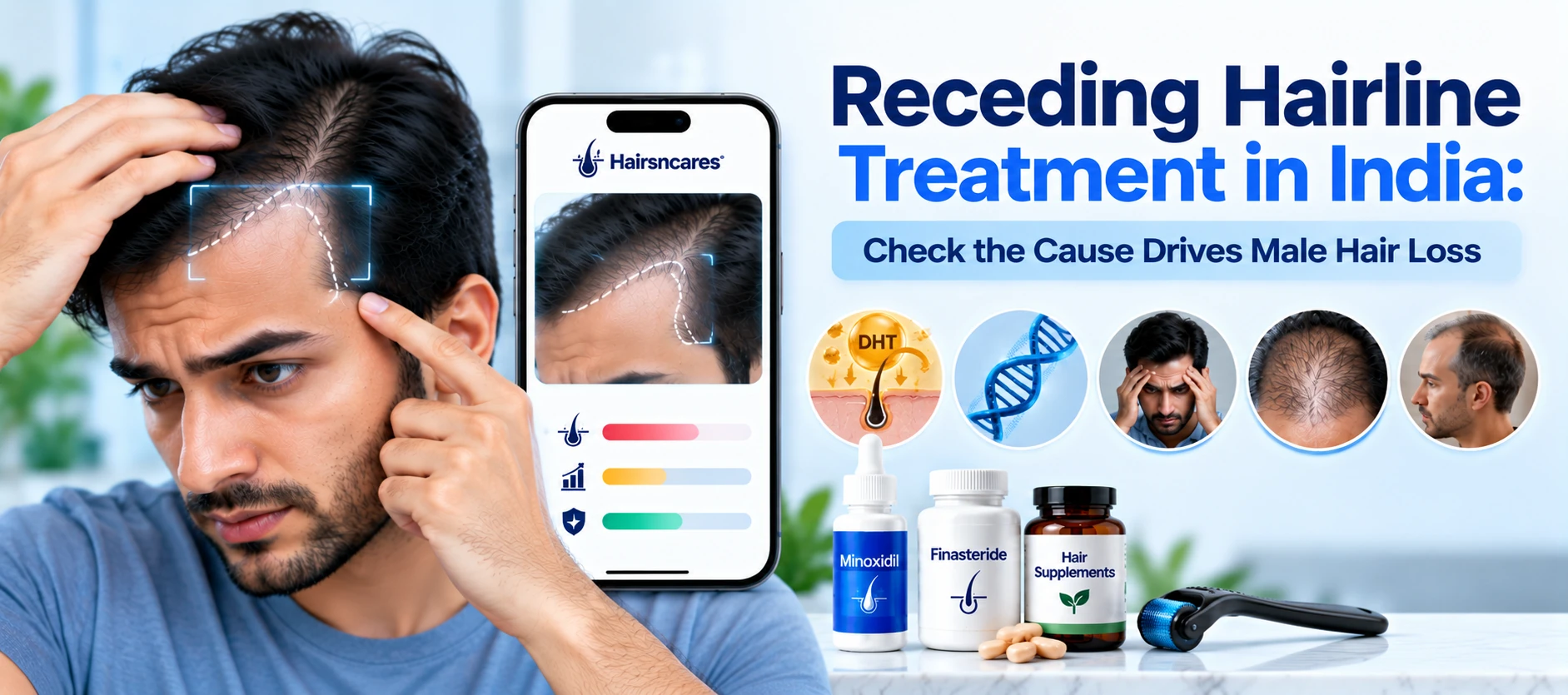
Illustrative sample only. AI screening helps guide product choice and does not replace a dermatologist's diagnosis.

For a receding hairline caused by pattern hair loss, the best-evidenced options are topical Minoxidil and, for men, oral Finasteride, used under dermatologist guidance, often with supportive serums and a healthy scalp. The frontal hairline can be harder to regrow than the crown, so early treatment matters most. First, though, confirm the cause — a mature hairline, traction alopecia and frontal fibrosing alopecia are treated very differently. Start with an AI hairline check and a dermatologist assessment before any prescription.
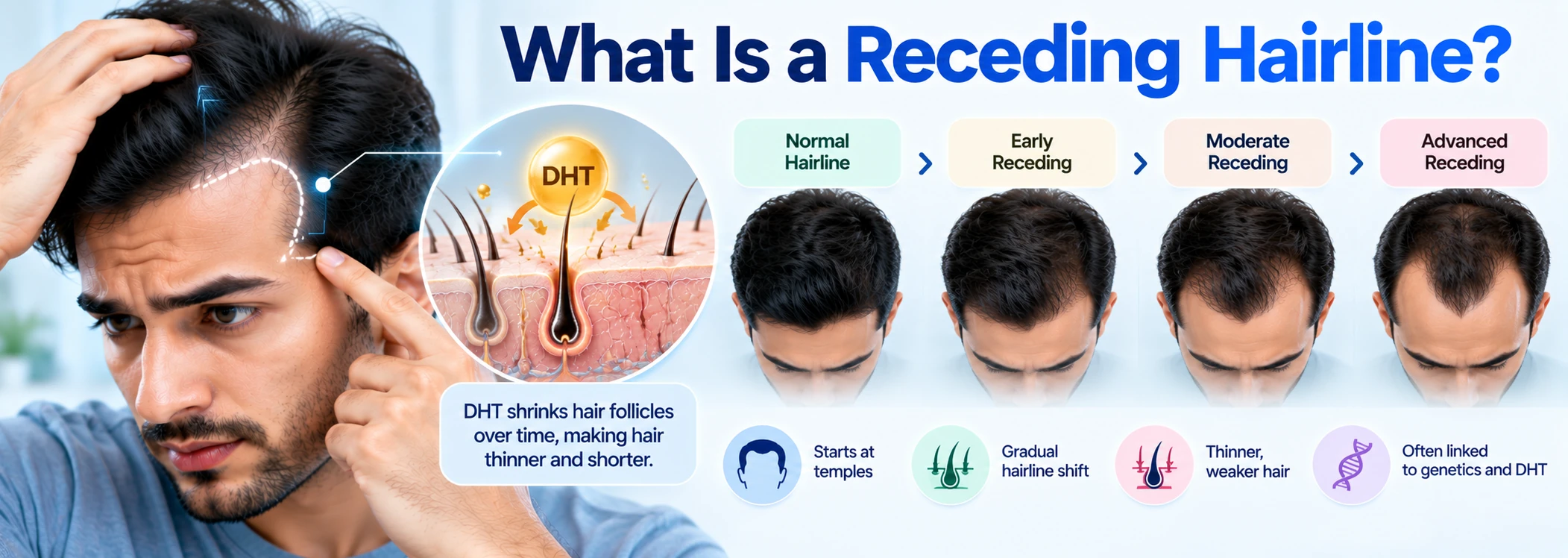
A receding hairline is a backward movement of the frontal or temporal hairline. In most men it is the earliest visible sign of androgenetic (pattern) hair loss, where DHT-sensitive follicles at the hairline gradually miniaturise, often creating an M-shaped recession at the temples and a higher front.
But a receding hairline is not always pattern balding. A modest backward shift in the late teens or twenties can be a normal maturing hairline. Tight hairstyles can cause traction alopecia at the hairline and temples. And in women especially, frontal fibrosing alopecia — a scarring condition — can push the hairline back and needs prompt dermatologist care. Because these are treated very differently, identifying the cause is the first step.
| Aspect | What it means for a receding hairline |
|---|---|
| Most common cause | Pattern hair loss (men) |
| Typical look | M-shape; temple & frontal recession |
| Other causes | Mature hairline, traction alopecia, FFA |
| Scale | Norwood (front-weighted) |
| Frontal regrowth | Often harder than the crown |
| First step | Confirm the cause |
Mature hairline or pattern recession?
Learn MoreThese signs point toward a receding hairline and help separate pattern recession from other causes.
Recession at the temples (M-shape)
Higher frontal hairline than before
Finer, shorter hairs at the front edge
Loss of density just behind the hairline
Gradual change over months to years
Family history of pattern hair loss
Recession where hair is pulled tightly (traction)
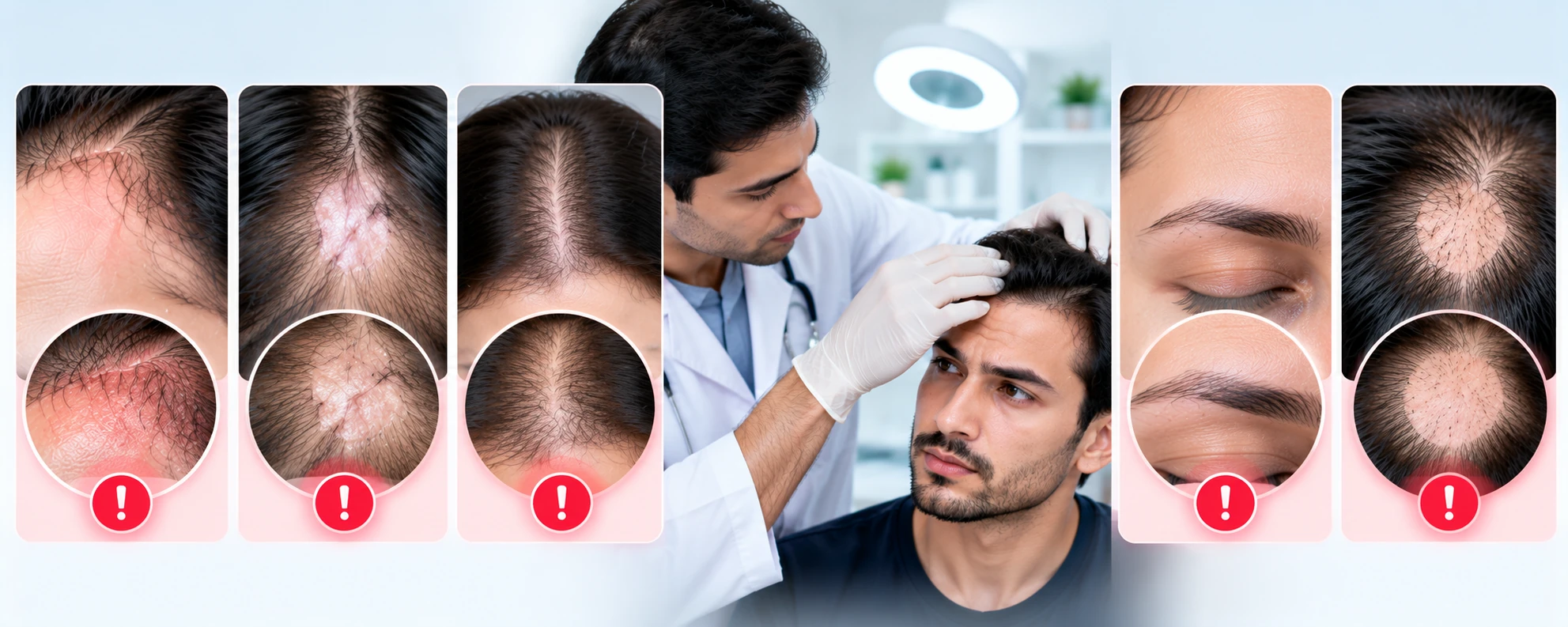
Redness, scaling or scarring at the hairline (see a doctor)
Eyebrow thinning with frontal loss in women (see a doctor)
Recognise these signs?
Learn More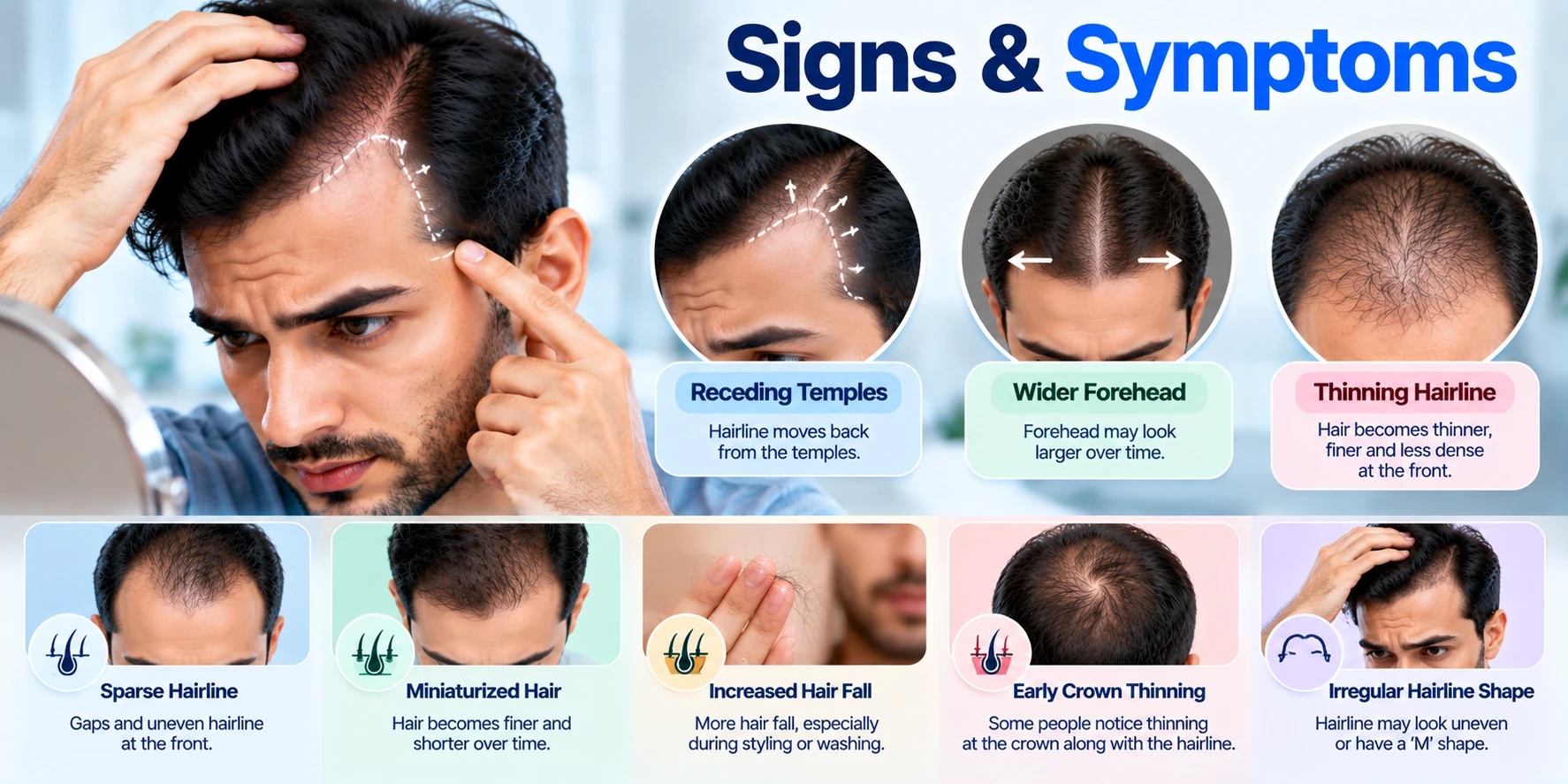
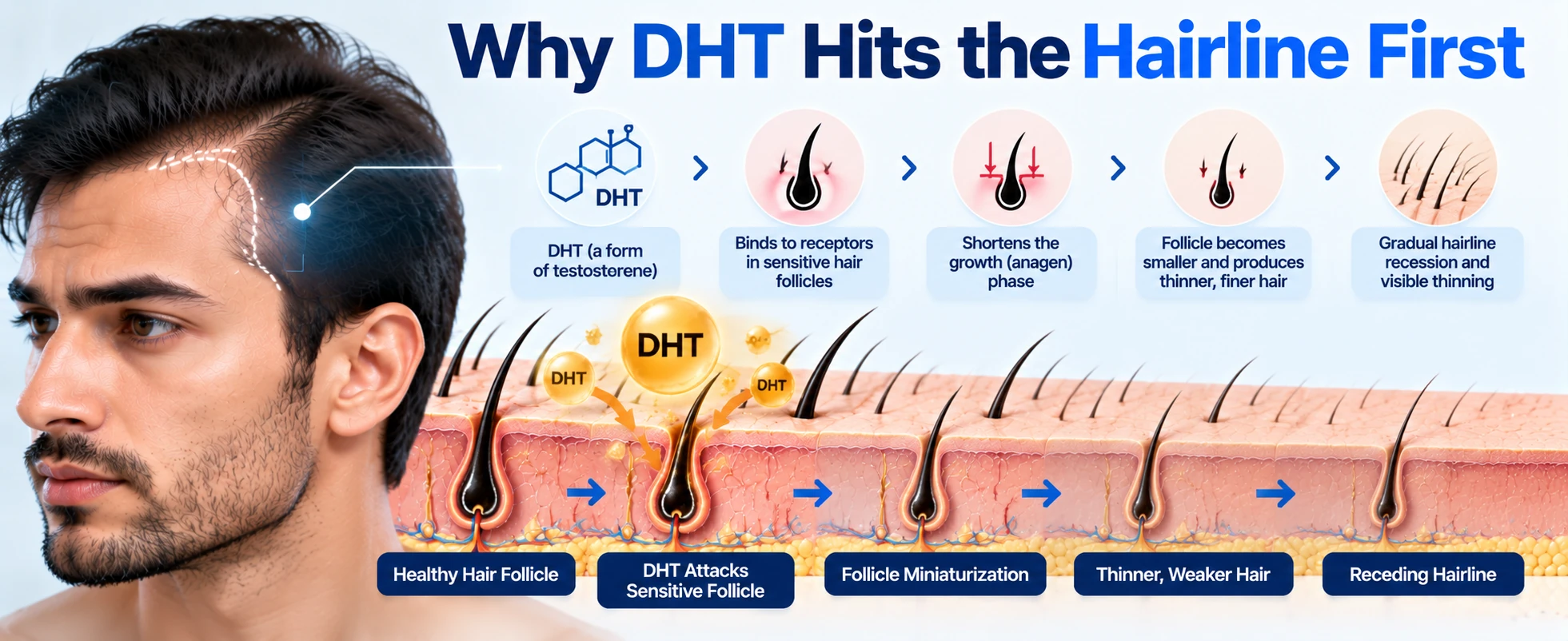
In pattern hair loss, follicles at the temples and frontal hairline are often among the most sensitive to DHT (dihydrotestosterone). DHT binds to receptors in these follicles and gradually shortens their growth phase, so with each hair cycle they miniaturise — producing finer, shorter hairs until the hairline visibly moves back.
This is why recession often starts at the temples and creates the familiar M-shape, and why the frontal hairline can be harder to regrow than the crown: once frontal follicles are substantially miniaturised or lost, medical treatment may slow further loss and support some recovery, but full restoration of the original hairline is not guaranteed.
Treatments work along this pathway: Finasteride (in men) lowers DHT to reduce the driver, while Minoxidil supports the growth phase. Because the underlying sensitivity is genetic, treatment manages the process and is long term — and starting early protects more of the hairline.
Want this explained for your hairline?
Learn MorePattern recession is graded on the Norwood scale. This simplified, educational guide is not a clinical grading; an assessment is more accurate.
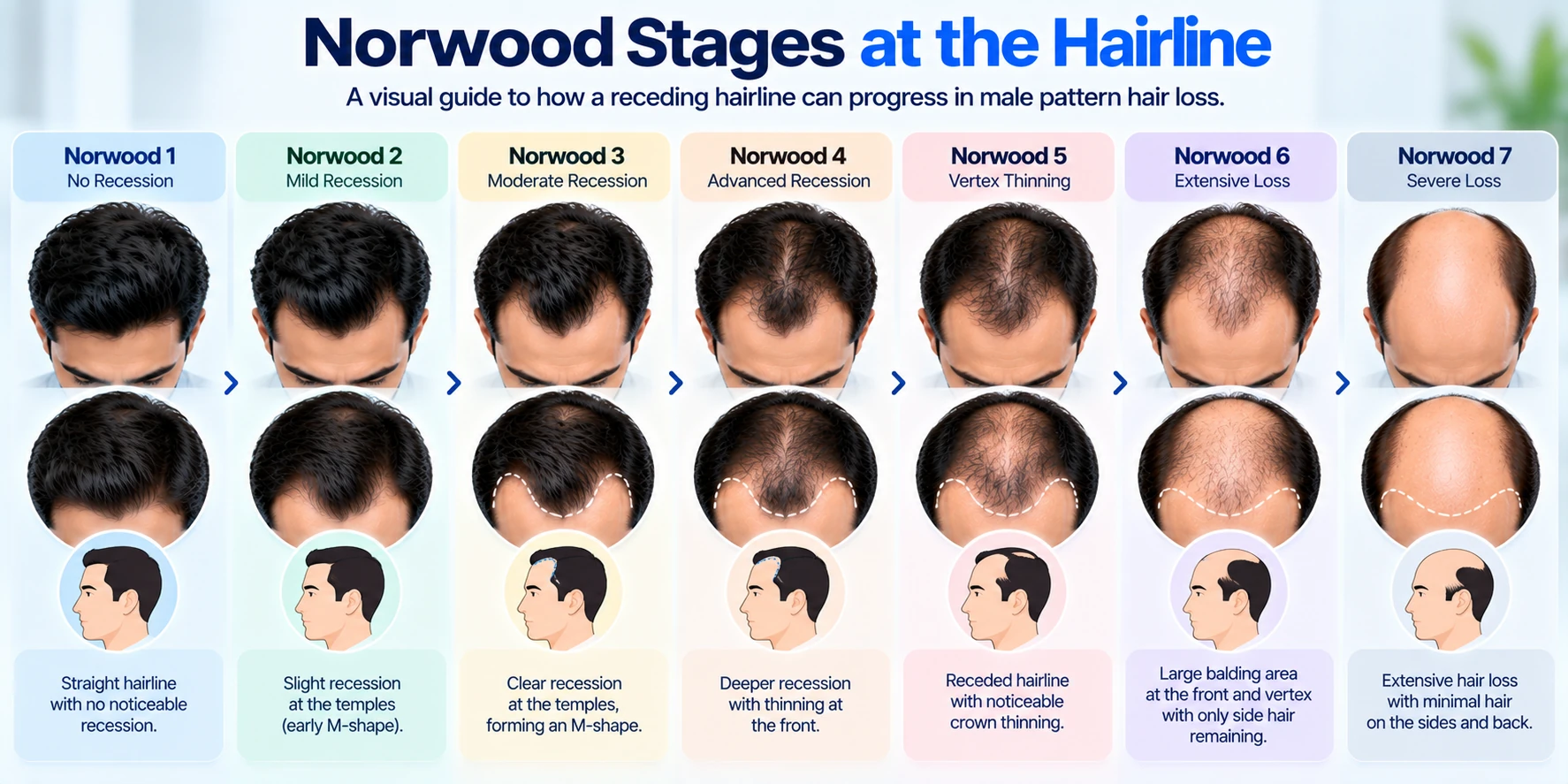
Wondering which stage you're at?
Learn MoreThese look similar but mean different things — and one (FFA) needs urgent care.
| Feature | Mature hairline | Pattern recession | Traction alopecia | Frontal fibrosing alopecia |
|---|---|---|---|---|
| Who | Young men, normal | Men (mainly) | Tight-style wearers | Mainly women |
| Pattern | Slight, even shift | M-shape, progressive | Where hair is pulled | Band-like frontal recession |
| Progresses? | Usually settles | Yes, over years | If tension continues | Yes; scarring |
| Scalp | Normal | Normal | May be tender | Redness/scarring; brow loss |
| Action | Monitor | Treat early | Reduce tension early | See dermatologist promptly |
Not sure which pattern you have? The cause finder weighs your pattern and symptoms.
Take Hairline CheckerPattern Loss GuideIdentifying which applies to you guides the right treatment — and some causes need prompt medical care.
Not sure it's DHT? A dermatologist can confirm and rule out other causes.
Screen My Hairline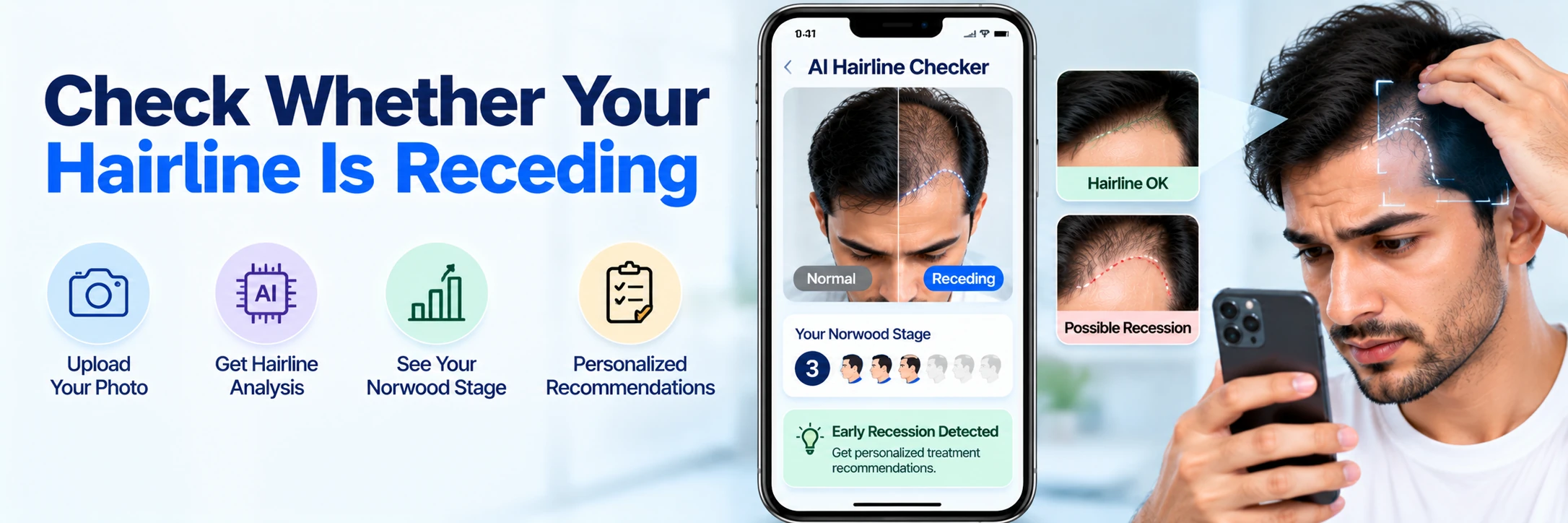
Most hairline recession is pattern loss, but some causes need prompt care — especially redness, scarring or frontal recession with eyebrow loss in women. Please see a doctor if any of the following apply.
These support a receding hairline alongside dermatologist guidance. Prescription items are doctor-guided; supportive products do not cure pattern recession.

Lowers DHT in men; doctor-guided, not for women who may conceive.
Saw palmetto and similar; discuss with your doctor.
Not sure which fits you? The Product Finder matches options to your pattern.
Open Product FinderBrowse AllSample selection. Prices, ratings and availability shown are placeholders.
Final product suitability depends on diagnosis, sex, age, scalp condition, pregnancy/lactation status, medical history, current medicines, and doctor guidance where required. Supportive products do not cure genetic hairline recession, and no product guarantees regrowth; the frontal hairline can respond less than other areas. Prescription (Rx) items including Minoxidil, Finasteride, Dutasteride and Ketoconazole require a valid prescription from a Registered Medical Practitioner and are doctor-guided. Finasteride and Dutasteride are not used by women who are or may become pregnant. Minoxidil is generally not recommended during pregnancy or breastfeeding without medical advice.
Before adding to cart, confirm your pattern and likely cause.
Check My Hairline FirstShop All Products
Choose the routine closest to your situation. Use active or prescription items only under dermatologist guidance, and avoid them in pregnancy or breastfeeding unless a doctor advises.

Gentle growth-support shampoo on wash days.
Supportive serum along the temples and frontal edge.
Healthy scalp care; balanced nutrition.
Front-on hairline photos; book an assessment if it keeps receding.
Gentle cleanse; take prescribed Finasteride as directed (if suitable).
Doctor-guided topical Minoxidil to the hairline if prescribed.
Maintain consistency; report side effects to your doctor.
Review hairline density and tolerance with your dermatologist.
Avoid tight ponytails, buns and braids that pull the hairline.
Loosen extensions and clips; reduce constant tension.
Watch for redness, scaling or tenderness — see a doctor if present.
Track the hairline; early action protects it best.
Style for coverage; apply hairline fibres for instant cover.
Cleanse off fibres; continue your serum / treatment.
Combine cosmetic cover with the underlying treatment plan.
Track real hairline density separately from cosmetic cover.
Want a routine built around your result?
Build My RoutineEvidence labels are a simple guide: strong, moderate, supportive or mainly cosmetic. Rx marks prescription items; the rose tag flags pregnancy/lactation caution.

Pregnancy & breastfeeding note: Minoxidil is generally not recommended in pregnancy or breastfeeding. Finasteride and Dutasteride must not be used or handled by women who are or may become pregnant. Always speak to a doctor before any active treatment.
Supports the growth phase; best-evidenced topical, though the front responds less than the crown.
Best for: men & women, assessed
Caution: doctor-guided; consistent long-term use; not in pregnancy/breastfeeding.
Related productsLowers DHT; strong evidence for male pattern recession.
Best for: men, after assessment
Caution: prescription only; possible side effects; not for women who may conceive.
Related productsA stronger DHT-lowering option, used selectively under specialist care.
Best for: selected men, specialist-led
Caution: prescription only; doctor-guided; not for women who may conceive.
Related productsAn antifungal shampoo that also supports a healthy scalp.
Best for: oily, flaky scalp with recession
Caution: follow directed frequency; ask a doctor if pregnant/nursing.
Related productsA cosmetic complex studied for supporting follicles.
Best for: early recession
Caution: supportive, not a replacement for proven actives.
Related productsA cosmetic active marketed for density.
Best for: early recession support
Caution: evidence is limited compared with Minoxidil.
Related productsA botanical marketed for DHT / androgen support.
Best for: supportive use, doctor-discussed
Caution: limited evidence; avoid in pregnancy; ask your doctor.
Related productsA common topical haircare ingredient.
Best for: supportive cosmetic use
Caution: evidence is limited.
Related productsA botanical with some small-study interest.
Best for: supportive cosmetic use
Caution: patch test; dilute; can irritate sensitive scalps.
Related productsA B-vitamin involved in hair structure.
Best for: confirmed deficiency
Caution: limited benefit without deficiency; can affect lab tests.
Related productsLow iron can add to thinning around the hairline.
Best for: confirmed low iron
Caution: take only under medical guidance after testing.
Related productsCling to existing hair to mask a thin hairline instantly.
Best for: appearance on the day
Caution: cosmetic only; does not treat recession.
Related products"A receding hairline is usually pattern hair loss, but I never assume. In a young man it may simply be a maturing hairline that needs no treatment. In someone with tight hairstyles I look for traction. And in a woman with frontal recession and thinning eyebrows, I think about frontal fibrosing alopecia, which we must not miss because early care matters. Once the cause is clear, pattern recession responds best to early, consistent, doctor-guided treatment — and the frontal edge rewards patience."
Want your hairline assessed?
Learn MoreCurated supportive combinations. Timelines are general estimates; results vary and are not guaranteed.

Prefer a kit tailored to you? Build a custom kit from your screening result.
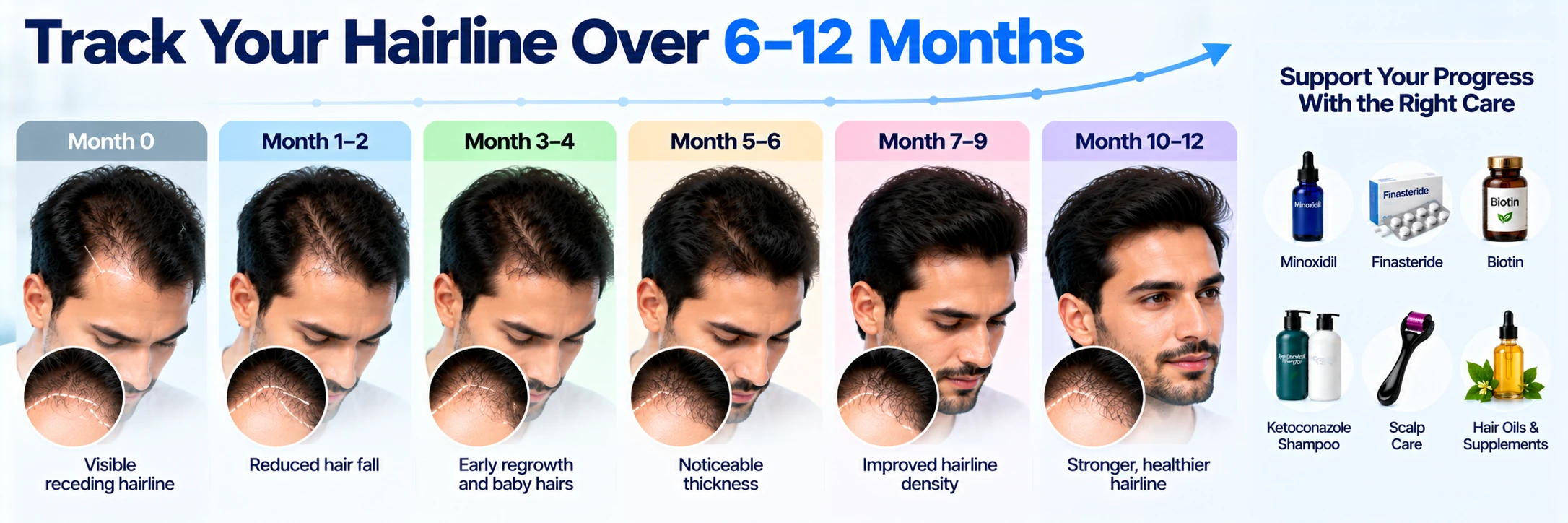
Build a Custom KitTake Hairline CheckHairline treatment is long term and slow, and the front responds gradually, so consistent same-angle photos are the clearest way to judge whether you are holding or improving.
These references are provided for patient education and do not replace a dermatologist’s diagnosis or individual medical advice.
Dermatologist-led overview of how hair loss is evaluated and the evidence behind common treatments.
View AAD reference ›Patient-education summary of genetic, DHT-driven pattern hair loss in men and women.
View MedlinePlus reference ›Searchable index of peer-reviewed research on hair loss.
Search PubMed ›Independent systematic reviews assessing the evidence behind hair-loss interventions.
View Cochrane Library ›
Question not answered here? Ask Dr Aria for instant guidance or book a consultation.
Ask Dr AmitConsult a DoctorA receding hairline responds best to early, consistent, doctor-guided treatment — once you know the cause. Take the Hairsncares AI Hairline Checker to compare mature vs receding, build a supportive routine, and get the dermatologist assessment needed before any prescription.
A clear, dermatologist-reviewed overview — what it is, the evidence behind treatment options, and the red flags that mean a doctor should look first. No exaggerated regrowth claims.
Results vary based on diagnosis, consistency, formulation and scalp condition.
Premium concern visual slot · 720×520 WebP
Backward movement of the frontal or temporal hairline, often early pattern loss
Adults, commonly men; can be an early sign of androgenetic alopecia
Hairline responds less to Minoxidil than the crown; Finasteride and procedures may be considered, doctor-guided
Recommended — confirm the cause
Reviewed by: Dr. Amit Agarkar, MD Dermatology
Medical focus: Dermatology, trichology, hair loss, scalp disorders and hair restoration.
Last reviewed: 1 June 2026
Editorial promise: This page explains causes, treatment evidence, limitations and safe next steps without exaggerating hair-growth claims.
Prepared by the Hairsncares editorial team and medically reviewed by a dermatologist experienced in hair and scalp disorders.
Checked for accuracy of causes, treatment evidence, safety warnings, limitations and suitability for Indian users.
To help you understand this concern and choose safe next steps, and to know when a dermatologist diagnosis matters most.
| Parameter | Assessment | What it means |
|---|---|---|
| What it is | Backward movement of the frontal or temporal hairline, often early pattern loss | The nature of this concern in plain terms. |
| Who it affects | Adults, commonly men; can be an early sign of androgenetic alopecia | The people in whom it is most commonly seen. |
| Best-evidence options | Hairline responds less to Minoxidil than the crown; Finasteride and procedures may be considered, doctor-guided | Where the strongest support lies — most are doctor-guided. |
| When to see a doctor | Sudden, patchy or scarring hairline change, which needs evaluation first | Situations needing diagnosis before any treatment. |
| Expected timeline | Months; the hairline is often slower to respond than the crown | Results vary based on diagnosis, consistency, formulation and scalp condition. |
A sudden, patchy or scarring hairline change needs a dermatologist before any treatment.
Product results should be selected based on diagnosis, scalp type, sensitivity, routine compatibility and dermatologist guidance where needed.
Find Products After AI Hair TestBackward movement of the frontal or temporal hairline, often early pattern loss. The exact cause should be confirmed, because look-alike conditions are treated differently.
Hairline responds less to Minoxidil than the crown; Finasteride and procedures may be considered, doctor-guided. Most effective options are doctor-guided, and results depend on diagnosis, consistency and realistic expectations.
Months; the hairline is often slower to respond than the crown.
For sudden, patchy, painful or unexplained loss, yes — see a dermatologist before treating. A suitability screen helps you understand likely causes.
Sudden, patchy or scarring hairline change — these need evaluation before any product or medicine.
Often pattern-related, but can also be a mature hairline, traction alopecia or frontal fibrosing alopecia. Cause confirmation matters.
This page provides educational guidance. The AI checker can screen patterns, but diagnosis and any prescription decision need a dermatologist. Results vary.
Stable, mild change without progressive temple miniaturisation.
Progressive temple recession, finer frontal hairs and family history.
Linked to tight hairstyles, pulling, braids, buns or accessories.
Needs urgent dermatologist review — especially women with eyebrow loss or a shiny frontal scalp.
A mature hairline settles slightly back in early adulthood and then stays stable — that's normal, not balding. Pattern recession is different: it keeps progressing at the temples, the frontal hairs get finer, and there's often a family history. Two causes must not be missed: traction alopecia from tight, repeated pulling (man-buns, tight ponytails) which is reversible early but scarring if ignored, and frontal fibrosing alopecia, a scarring condition that needs urgent dermatologist review, especially in women with eyebrow loss or a shiny, band-like frontal scalp.
Confirming the cause changes everything about next steps. Screen with the AI Hairline Checker, see male pattern baldness, and read DermNet on traction alopecia.
Answer a few questions about your hairline, crown, shedding, family history, scalp symptoms and product use. This is a screening aid, not a diagnosis — sudden, patchy, scarring or painful loss needs a dermatologist.
Your cart is empty