🔩
Damage Repair Routine Support
Keratin/amino acid shampoo can anchor a damage repair routine for colour-treated, heat-styled or chemically processed hair — particularly when paired with a repair conditioner and weekly mask.
A dermatologist-guided guide to using keratin and amino acid shampoos safely — including when they support damaged hair, breakage, frizz and roughness routines, protein overload risk, side effects, product selection, and when hair fall needs medical evaluation.
What keratin and amino acid shampoos can and cannot do
How hydrolysed keratin coats vs penetrates the hair shaft
Best hair types for keratin shampoo — damaged, frizzy, or fine
Keratin shampoo vs ceramide vs panthenol shampoo compared
Formaldehyde concerns — keratin treatments vs keratin shampoos
How often to use without protein overload
Why keratin shampoo cannot replace a professional keratin treatment
When hair damage needs professional assessment, not another product
These terms describe a spectrum of the same ingredient category in haircare. Keratin is the structural protein that makes up 90% of hair's composition. Amino acids are the molecular building blocks of keratin and all proteins. "Protein shampoo" and "hair repair shampoo" are consumer names for formulas containing hydrolysed keratin, hydrolysed silk, wheat protein, rice protein, soy protein or specific amino acids (like arginine, cystine, lysine). All these terms appear on product labels for the same category of hair-shaft support shampoo. See our keratin ingredient guide → | Amino acids guide →
Protein overload is the key safety concern unique to this ingredient category — not seen in niacinamide, panthenol or biotin shampoos. When too much protein is deposited on the hair shaft, it reduces flexibility. Signs: hair feels stiff, straw-like, brittle or snaps more easily after protein products. More common in fine hair, low-porosity hair and curly/coily hair. If this occurs: stop protein-heavy products, switch to moisture-focused care, and allow hair to recover before reintroducing protein. More on breakage vs hair fall →
Keratin and amino acid shampoos are commonly used in damaged-hair, frizzy-hair, chemically treated, colour-treated, heat-damaged and breakage-prone routines. They may support hair shaft smoothness, shine, strength feel and manageability depending on formulation. The central point for users considering these shampoos: they work on hair shaft cosmetics — not on hair follicle biology. They cannot regrow hair, treat scalp disease or correct nutritional deficiencies. A unique safety consideration for this category is protein overload — overuse of protein-heavy products, especially on fine, low-porosity or curly hair, can make hair feel stiffer and actually more prone to breakage. If hair fall is sudden, progressive, patchy or associated with scalp symptoms, dermatologist evaluation is more important than any shampoo change.
Keratin and amino acid shampoos deposit hydrolysed protein fragments onto the hair surface, temporarily filling gaps in the cuticle and reducing frizz. They do not permanently restructure hair, treat hair loss, or cure scalp conditions. Unlike salon keratin treatments, these shampoos do not contain formaldehyde. Best for frizzy, damaged, or colour-treated hair. Overuse can cause protein overload in fine hair.
People with frizzy, damaged, or colour-treated hair seeking a smoothing, strengthening wash. Best for medium-to-thick textures. Fine hair should alternate with a moisturising shampoo.
Professional keratin treatments, deep protein reconstructors, or medical hair loss therapy. Shampoo-deposited keratin is cosmetic and temporary — it washes out.
Hair breakage continues despite protein products, you notice progressive thinning, or scalp problems accompany the damage. Persistent breakage may indicate nutritional deficiency or hormonal issues.
Keratin is the structural protein of hair (90% of the hair shaft). Hydrolysed keratin in shampoo consists of broken-down keratin fragments small enough to deposit on the cuticle surface. They coat and temporarily fill gaps in damaged cuticles — improving feel, smoothness and light reflection. Amino acids serve a similar role as the smallest building blocks of proteins.
Damaged hair has raised, rough cuticle scales that increase friction, frizz and optical dullness. Keratin/amino acid shampoos may temporarily smooth these scales during washing, reducing frizz and improving shine feel. This is a cosmetic effect renewed with each wash — not a structural repair that persists without ongoing conditioning.
Breakage (shaft fracture mid-length) and hair fall (shedding from the root) look similar in the shower but require completely different responses. Keratin shampoo is relevant for breakage from mechanical stress, heat or chemical damage. Root-level shedding — hair with a white bulb at the end, or visible thinning at the scalp — needs medical diagnosis, not protein shampoo.
Protein overload occurs when excess protein coats the cuticle so heavily that hair loses flexibility. Affected hair feels stiff, straw-like, rigid in curls, or snaps more easily — the opposite of what protein was intended to do. This is more common with fine hair, low-porosity hair and curly/coily hair, and resolves by switching to moisture-focused products and reducing protein frequency.
All benefits are cosmetic hair shaft improvements within the wash-off context. Best results require pairing with conditioner, hair mask and leave-in care.
Keratin/amino acid shampoo can anchor a damage repair routine for colour-treated, heat-styled or chemically processed hair — particularly when paired with a repair conditioner and weekly mask.
For hair breaking mid-shaft from mechanical damage, chemical treatment or heat, protein shampoo may reduce the cosmetic appearance of breakage by temporarily reinforcing the cuticle surface.
Keratin's cuticle-smoothing effect may reduce frizz and improve light reflection — making hair appear glossier and more manageable when part of a full post-wash routine.
Smoother cuticle surface from protein deposition improves the optical feel of dull or rough hair — more light is reflected from a smoother surface, contributing to apparent shine.
Colour-treated and heat-damaged hair tends to have more cuticle damage and porosity. Protein shampoo may temporarily fill porous cuticle gaps for a smoother post-wash feel — particularly in sulphate-free formulations designed for colour-safe use.
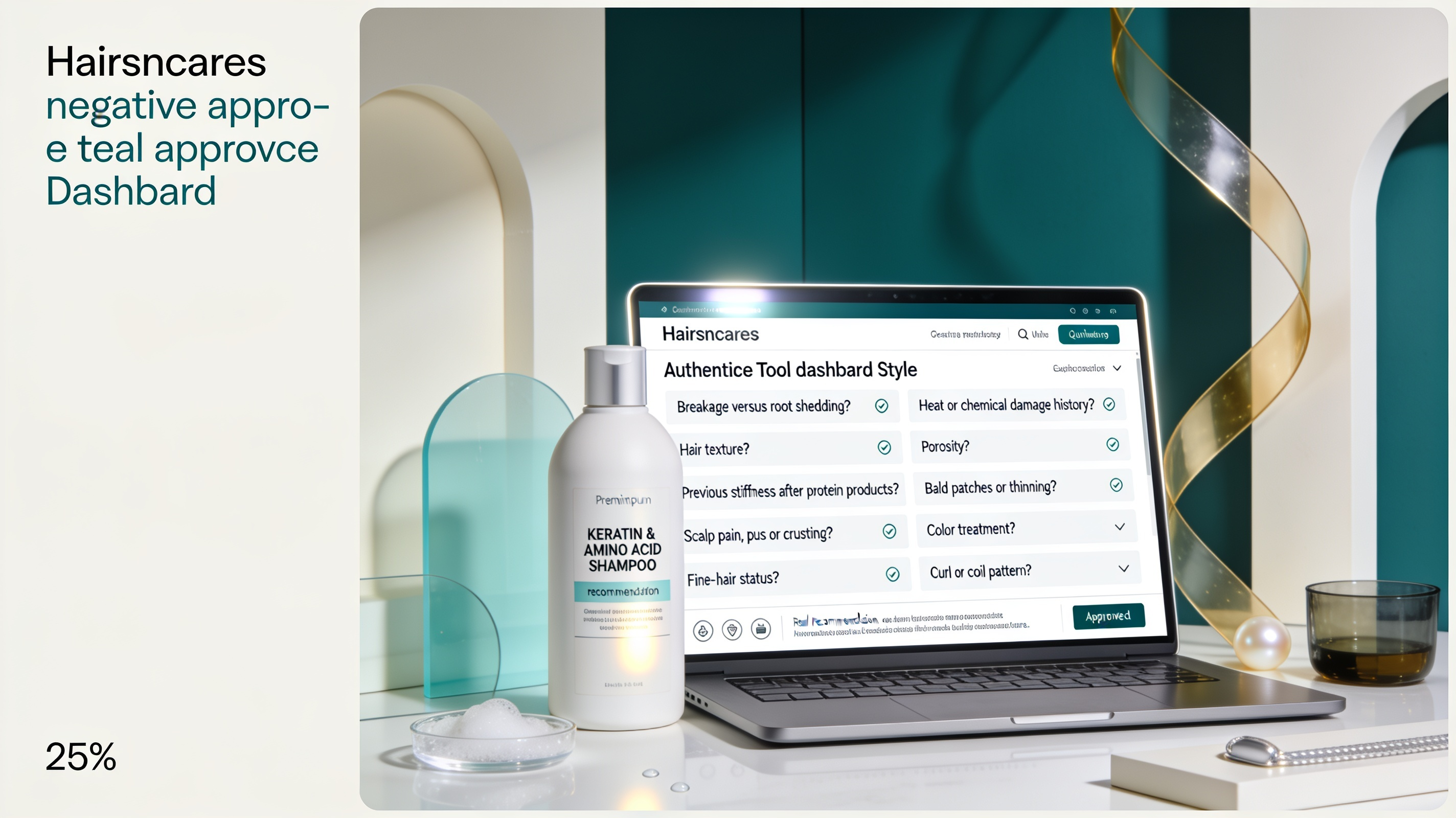
AI Hair Test distinguishes breakage from shedding, assesses damage severity, hair texture and protein sensitivity to recommend whether keratin shampoo, panthenol, sulphate-free or anti-dandruff actives best match your hair concern.
Many patients ask whether Keratin & Amino Acids Shampoo alone can solve their hair concerns. The honest answer: shampoo is a wash-off product that stays on the scalp for a short time. It can support scalp cleanliness, comfort and fibre support — but it cannot treat root-level hair loss, hormonal imbalance, nutritional deficiency or conditions that need prescription treatment. A good shampoo works best as part of a complete routine, not as a standalone cure.

Primary match. Hair damaged by bleaching, chemical relaxers, heat styling or rough handling — the cuticle-smoothing and temporary protein-fill effect is most relevant here.
Best MatchCoarse, frizzy or rough hair with cuticle damage typically benefits from protein-smoothing formulas. Pair with conditioner and leave-in for full routine frizz reduction.
Good MatchColour-treated hair is more porous and prone to protein loss. Gentle sulphate-free keratin formulations suit colour-treated hair — check label for colour-safe designation.
Good MatchHair that has been bleached, relaxed, permed or frequently heat-styled typically has sufficient porosity to benefit from protein shampoo without overload risk from moderate use.
SuitableFine hair is more prone to protein overload — stiffness and flatness from excess protein deposition. Choose lightweight amino acid formulations and monitor response carefully.
Protein Overload RiskLow-porosity hair resists protein entry but accumulates surface protein buildup more easily — leading to stiffness without the intended cuticle-filling benefit. Less frequent use or amino acid formulas preferable.
Use CautiouslyCurly and coily hair can experience protein overload leading to curl rigidity and stiffness. Protein-moisture balance is critical. Amino acid formulas or alternating with moisture-focused shampoos reduces risk.
Balance With MoistureMedical evaluation needed. Keratin/amino acid shampoo cannot address alopecia areata, androgenetic alopecia, telogen effluvium or any root-level hair loss.
See DoctorNo shampoo change without surgeon clearance on a post-transplant scalp.
Surgeon ClearanceThis 9-step guide has two structural features unique to keratin pages: Step 1 asks users to identify breakage vs hair fall (shared with biotin page but specifically protein-damage focused), and Step 7 introduces Protein Overload monitoring — a caution absent from all other pages in the series.
Broken hairs are shorter, mid-length strands without a white bulb. Shedding hairs typically have a white bulb at the root end. Keratin shampoo is most relevant for breakage from damage. If you see hairs with white bulbs, thinning at the scalp or patchy loss, medical evaluation is more important than any shampoo change.
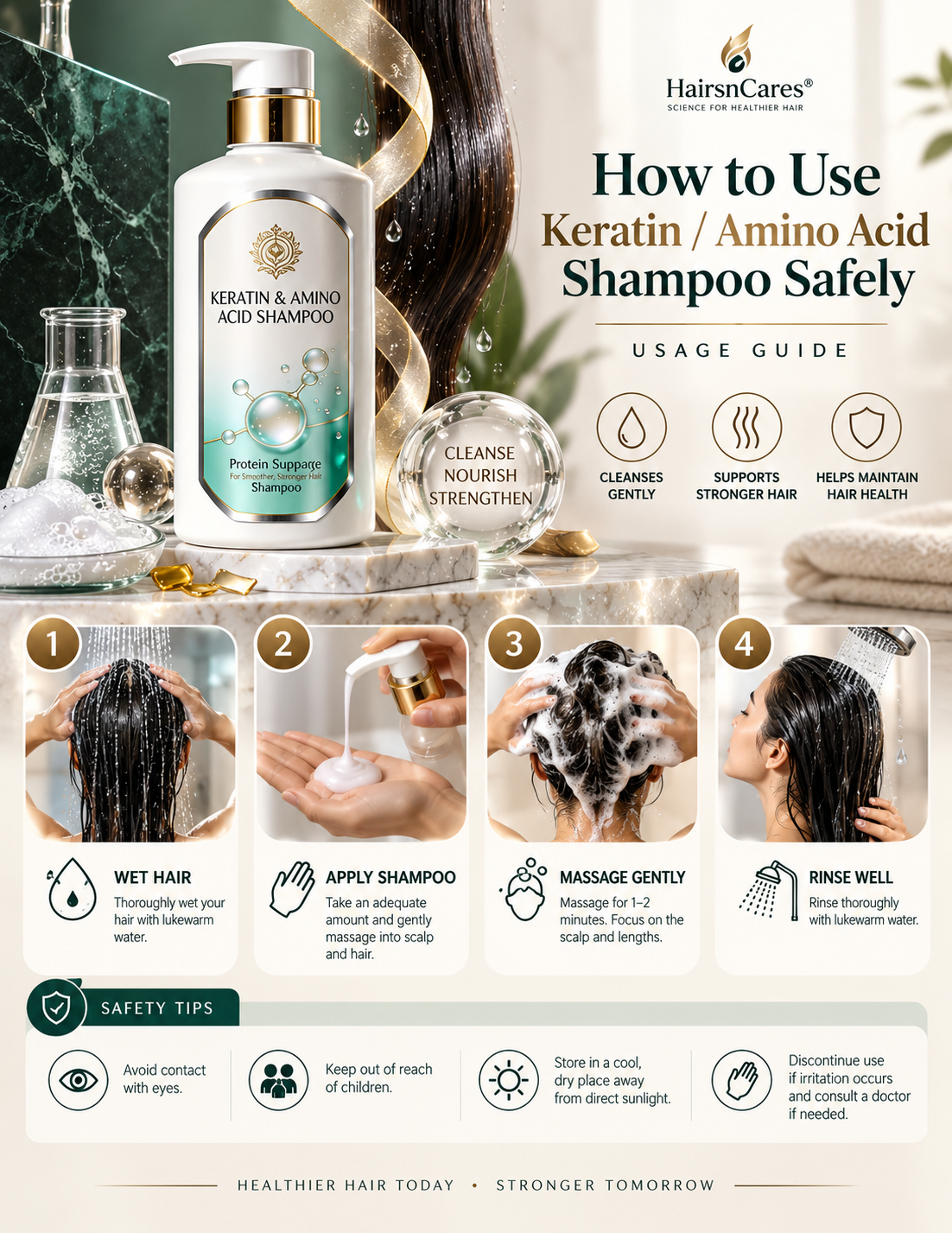
Use lukewarm water to wet both scalp and hair thoroughly. Hot water worsens cuticle damage on already-compromised hair.
Focus shampoo on scalp and roots. Allow foam to run gently through damaged lengths rather than scrubbing shampoo through fragile ends, which increases mechanical breakage.
Use fingertips, never nails. Aggressive rubbing of damaged hair worsens tangling and breakage from friction.
Remove all shampoo residue. Protein and keratin buildup from incomplete rinsing can paradoxically increase stiffness and roughness.
Apply conditioner to mid-lengths and ends after every wash. For damaged hair, conditioner and hair mask are more impactful than shampoo choice. Conditioner has longer contact time and higher conditioning-agent concentration. Without conditioner follow-up, even the best keratin shampoo leaves damaged hair underserved.
This step is unique to protein-category shampoos. If hair starts feeling stiff, straw-like, rigid in curls or snaps more easily after starting keratin/protein products, reduce protein product frequency immediately. Switch to moisture-focused conditioner and allow 2–4 weeks of moisture-only care before reintroducing protein products at lower frequency.
Damaged hair needs conditioner, weekly hair mask, leave-in serum, heat protection and gentle drying — not shampoo alone. Shampoo cleanses; the post-wash routine does the repair work.
Monitor over 6–8 weeks. Stop and consult a doctor if burning, rash, scalp pimples, worsening hair fall, bald patches or worsening protein overload signs appear. Continued breakage despite correct technique may indicate damage severity requiring professional assessment or bond repair treatment beyond shampoo alone.
If 2+ boxes are checked: stop protein products and switch to moisture-focused care for 2–4 weeks.
Keratin shampoo may temporarily seal the appearance of split ends by coating the frayed fibre. The only permanent solution is trimming. Products claiming permanent split end repair are referring to temporary cosmetic fill effects.
Burning, rash, swelling, worsening hair fall, new bald patches, scalp pain, pus, or protein overload signs (stiffness, brittleness, increased snapping). Consult a dermatologist before resuming.
The most common shampoo mistake is rushing the process. Apply to the scalp (not just hair lengths), massage gently with fingertips (never nails), follow the recommended contact time if it is a medicated shampoo, and rinse thoroughly. Incomplete rinsing is a leading cause of scalp irritation and product buildup that patients often blame on the shampoo itself.
Key principle: Follow your product label or dermatologist's advice. Frequency varies by scalp oiliness, hair texture, damage level and protein sensitivity. Overuse of protein-rich shampoos risks protein overload. Balance with moisture-focused products.
Damaged, frizzy, rough hair. Protein-heavy. Overload risk for fine/low-porosity hair.
Gentler protein support. Broader hair types. Less overload risk than keratin-heavy formulas.
Hydration and softness. No protein overload risk. Better for pure dryness.
Weak/breakage-prone hair. Cosmetic strength support. No protein overload risk.
Dry, curly, colour-treated hair. Low-stripping. No active repair ingredient.
Most important for damaged lengths. More contact time than shampoo.
Medical hair loss treatment. Applied after rinsing. Not a shampoo.
Protein-moisture balance: For damaged hair routines, protein (keratin shampoo) and moisture (panthenol conditioner, hydrating mask) must be balanced. Protein-only routines lead to stiffness and overload. Moisture-only routines leave fragile hair without structural support. A balanced routine alternates or combines both. AI Hair Test can assess which your hair currently needs more.
| Option | Best For | Main Role | Evidence Position | Key Caution |
|---|---|---|---|---|
| Keratin Shampoo | Damaged, frizzy, rough, breakage-prone, colour/heat-treated hair | Protein-deposit cuticle smoothing and wash-off repair support | Established cosmetic efficacy; wash-off limitations; protein overload risk with overuse | Protein overload risk in fine, low-porosity and curly hair; not for root hair fall |
| Amino Acid Shampoo | Mild damage, dullness, softness and gentle repair support | Gentler protein wash-off support for broader hair types | Consumer cosmetic positioning; less overload risk than heavy keratin formulas | Still protein-category; monitor for stiffness in protein-sensitive hair |
| Panthenol Shampoo | Dry hair, frizz feel, hydration and softness | Humectant moisture-film depositing; no protein | Established humectant conditioning in haircare; no protein overload risk | May feel heavy on fine/oily hair; conditioner still more important for dry lengths |
| Biotin Shampoo | Weak-feeling hair and breakage-prone routine | Cosmetic hair shaft strength positioning; no protein | Consumer cosmetic; no protein overload risk; cannot correct biotin deficiency | Wash-off limitation; not for root hair fall |
| Sulphate-Free Shampoo | Dry, curly, colour-treated or frizz-prone hair | Gentle low-stripping cleansing; no active repair ingredient | Good for preserving natural oils and colour; no protein overload risk | May not cleanse oily scalp; no structural repair active |
| Conditioner / Hair Mask | Damaged lengths, frizz, detangling — core of repair routine | Longer contact; stronger conditioning than shampoo | Most evidence for actual damaged hair texture improvement; more important than shampoo | Apply to lengths only — not scalp; essential companion to keratin shampoo |
| Bond Repair Treatment | Severely chemically damaged hair (bleached, relaxed, permed) | Targets disulphide bond repair beyond shampoo | Newer category with growing evidence for severe chemical damage; stronger than shampoo | Not a hair-regrowth treatment; cosmetic structural repair at shaft level |
| Dermatologist | Breakage with scalp disease, shedding, thinning, sudden hair fall | Diagnosis-first approach for any medical hair concern | Gold standard when cosmetic approach fails or medical cause is suspected | Essential when hair fall is progressive, patchy or associated with medical symptoms |
Series-unique note: This is the only page in the series with a protein overload caution in the VS table and comparison framework. No other shampoo ingredient category (niacinamide, panthenol, biotin, caffeine, anti-dandruff actives) carries a risk of worsening the condition it is intended to treat through excess use.
All products are supportive wash-off shampoos. Not standalone treatments for hair fall, scalp disease or medical hair concerns. Monitor for protein overload signs — reduce frequency if stiffness occurs. Prices on individual product pages.
Our AI Hair Test distinguishes breakage from root shedding, assesses damage severity, hair texture, protein sensitivity and scalp condition to recommend whether keratin shampoo, amino acid shampoo, panthenol, sulphate-free or anti-dandruff actives are the most appropriate next step.
AI screening only. Does not diagnose, prescribe or replace dermatologist evaluation.
Stop immediately. May indicate contact reaction to formaldehyde-derivative preservatives in some keratin formulas, or fragrance/surfactant allergy. Consult before resuming.
Swelling of scalp, face or eyes — stop and seek medical attention. Possible allergic reaction to shampoo ingredients.
Hair fall worsening significantly after starting any new shampoo — stop and consult. The underlying cause needs evaluation. Protein overload can also increase breakage mimicking shedding.
May indicate folliculitis or product reaction on scalp. Stop and see a dermatologist before resuming.
Medical red flags requiring urgent dermatologist evaluation. Keratin shampoo cannot address any root-level hair loss cause.
Rinse immediately with water. Note: some keratin formulas may contain preservatives that are eye irritants. Seek medical attention if irritation persists.
If any of these appear after starting keratin/protein products, reduce protein frequency and switch to moisture-focused care for 2–4 weeks before reintroducing.
The most common early sign of protein overload — hair loses its natural flexibility and feels rigid rather than soft.
Excess protein coating makes hair feel rough, stiff and straw-like despite using a conditioning product.
Protein-overloaded hair becomes brittle — it loses elasticity and snaps more easily under tension, paradoxically worsening the breakage it was meant to address.
Curly and coily hair is particularly vulnerable — protein overload makes curls stiff, clumped or poorly defined instead of bouncy and flexible.
Fine hair may feel weighed down, limp or flat after protein-heavy product use — the opposite of the volume feel expected.
If hair feels progressively rougher with continued protein product use rather than smoother, this indicates cumulative overload buildup.
Needs medical evaluation, not shampoo rotation.
Density reduction at crown, partition or temples — dermatologist diagnosis needed.
Urgent evaluation — alopecia areata, scarring or tinea.
Androgenetic alopecia or traction — medical evaluation and planning needed.
Medical red flag — not a shampoo-switching indication.
Normal but needs timeline understanding and evaluation if severe.
Hormonal hair fall needs hormonal evaluation, not protein shampoo.
Possible folliculitis or scalp infection — medical treatment needed urgently.
If you notice increased itching, redness, burning, pimples on the scalp, or worsening flakes after using keratin shampoo — stop immediately. These are not signs of “scalp detox” or “purging.” They may indicate irritation, allergy, contact dermatitis or worsening of an existing scalp condition. Consult a dermatologist before resuming.
Keratin shampoo regrows hair.
Keratin shampoo supports hair shaft cosmetics — smoothness, frizz and breakage feel. It cannot stimulate hair follicles, which are beneath the scalp surface and unaffected by wash-off products.
Keratin shampoo permanently repairs split ends.
It may temporarily seal the appearance of split ends by coating the fibre. Split ends cannot be permanently repaired by any product — the only permanent solution is trimming.
More protein is always better for damaged hair.
Protein overload is a well-recognised issue in haircare. Excess protein reduces hair flexibility, making strands brittle and more prone to breakage — the opposite of the intended effect. Protein-moisture balance is key.
Amino acid shampoo can stop root hair fall.
Amino acid shampoo operates at the hair shaft surface level. Root-level hair fall from androgenetic alopecia, hormonal causes, nutritional deficiency or scalp disease needs medical diagnosis and cause-based treatment.
Frizz and hair fall are the same problem.
Frizz is a hair shaft texture condition (cuticle roughness, moisture imbalance). Hair fall is root-level shedding. They may coexist but need different approaches. Keratin shampoo addresses frizz. Medical evaluation addresses root-level hair fall.
Damaged hair only needs a repair shampoo.
Damaged hair needs conditioner (most important), weekly hair mask, leave-in serum, heat protection, gentle styling and reduced heat exposure — not shampoo alone. Shampoo cleanses; the post-wash routine does the actual repair work.
Doctor-Reviewed Resources
Still unsure whether keratin shampoo is right for your hair concern?
Ask a Hair Doctor →Use real authority URLs only. All external links open in a new tab.
AAD clinical guidance on hair shaft damage from heat styling, chemical treatment and mechanical stress — the foundation for understanding what keratin and amino acid shampoos are designed to address, and their limitations.
AAD guidance on frizzy hair — one of the primary conditions addressed by keratin shampoo. Establishes frizz as a hair shaft condition (cuticle roughness and humidity sensitivity) rather than a medical diagnosis.
AAD evidence on hair loss types and medical evaluation — establishing the framework that keratin/amino acid shampoo operates on hair shaft cosmetics (breakage), not on follicle-level hair loss requiring medical treatment.
Search PubMed for peer-reviewed literature on keratin in haircare, hydrolysed protein deposition, hair shaft damage and repair, protein overload effects, amino acid conditioning and cosmetic hair fibre science.
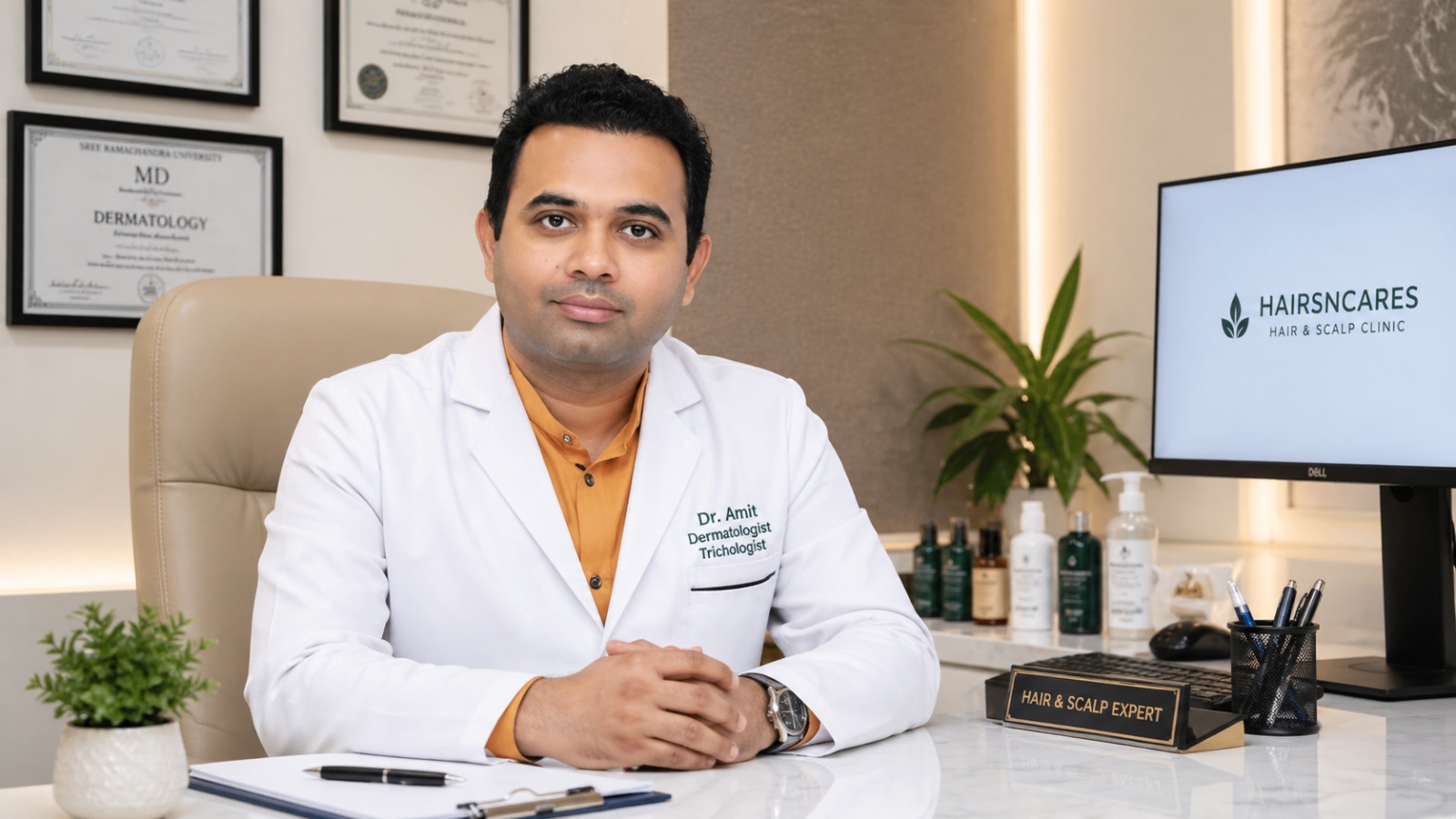
Keratin and amino acid shampoos (protein shampoo, hair repair shampoo, strengthening shampoo, damage repair shampoo) are supportive wash-off shampoos used in damaged hair, frizzy hair, rough hair, dull hair, colour-treated hair, chemically treated hair and breakage-prone routines. They do not diagnose, treat, cure or prevent medical hair loss, baldness, alopecia, dandruff, seborrheic dermatitis, eczema, psoriasis, scalp infection, PCOS-related hair fall, thyroid-related hair fall, postpartum shedding, nutritional deficiency hair fall or medication-related shedding. They cannot permanently repair split ends or reverse severe chemical damage. Overuse may cause protein overload — stiffness, brittleness and increased breakage — particularly in fine, low-porosity and curly hair. They should not replace conditioner, hair masks, leave-on treatments, bond repair care, anti-dandruff actives, minoxidil, finasteride, PRP, GFC, nutritional correction, hair transplant care or dermatologist evaluation when indicated. Use as per product label or doctor guidance. Stop if irritation, allergy symptoms, protein overload signs or scalp worsening occurs. This guide has been reviewed by Dr. Amit Agarkar, MD Dermatology, Hairsncares.
The AI Hair Test distinguishes hair shaft breakage from root shedding, assesses damage severity, protein sensitivity and scalp condition to recommend whether keratin shampoo, amino acid shampoo, panthenol or dermatologist evaluation is your most appropriate next step.
Your cart is empty