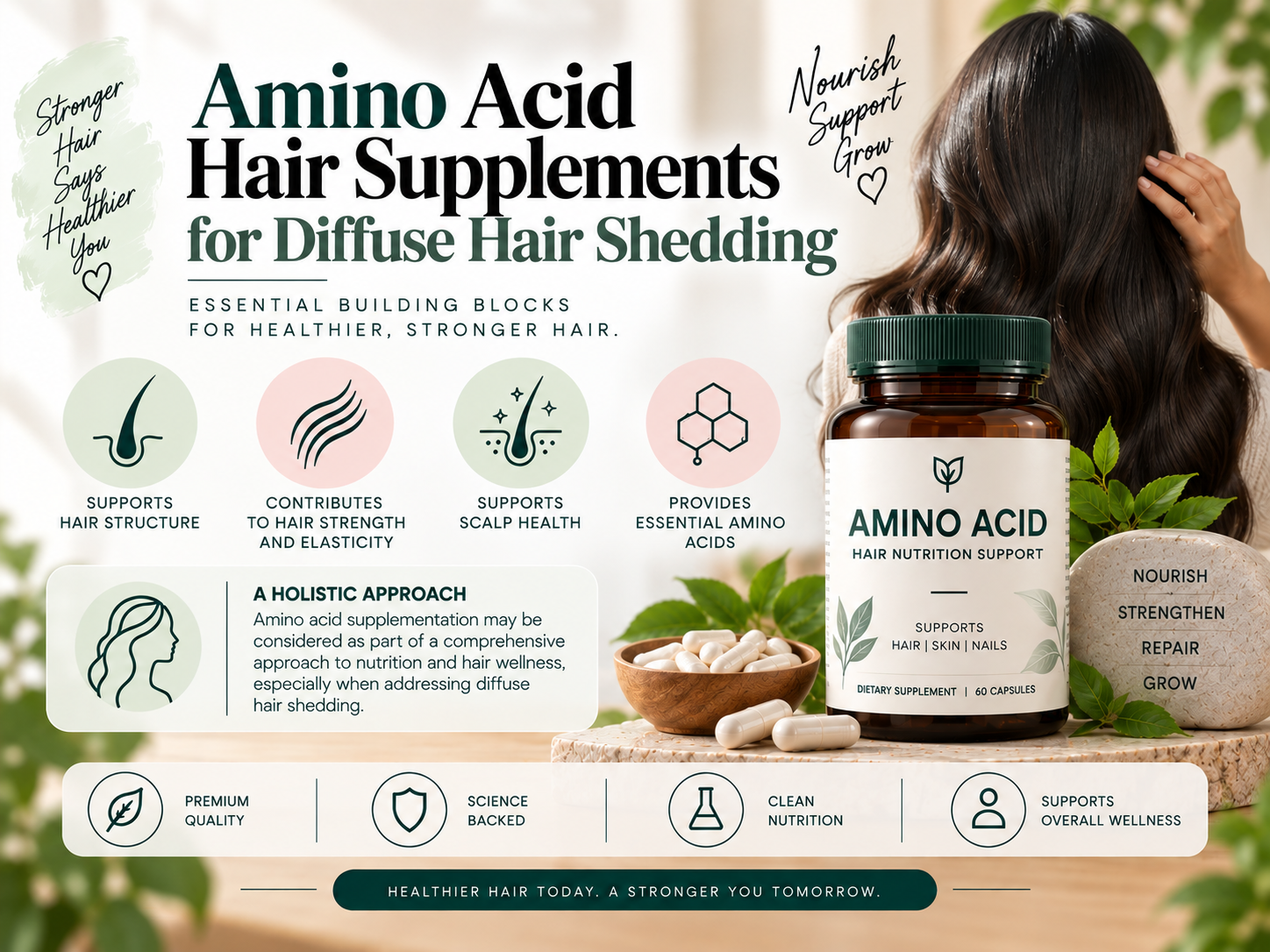
Amino Acid Hair Supplements for Diffuse Hair Shedding
Amino acids such as L-cysteine, L-methionine and other protein building blocks support protein-dependent hair structure. They may be relevant when dietary protein is genuinely low, after crash dieting, during recovery phases, or when brittle hair and breakage-prone hair-fiber concerns exist. They are supportive nutrition — not a medical hair regrowth treatment.
Educational guidance only. Amino acids are supportive nutrition for protein-dependent hair structure. Results vary. Most useful when protein intake is genuinely low.
What You'll Learn on This Page
What amino acids are and why hair structure depends on protein building blocks
Why L-cysteine and L-methionine are commonly used in hair supplements
Who may benefit: low protein intake, crash dieting, vegetarian diet, brittle hair, recovery
Who should be cautious: pattern hair loss, kidney/liver disease, supplement stacking
Diet and protein intake review — food-first approach before supplements
Amino acids vs protein vs collagen vs biotin — which supports what
Safety, supplement stacking and dose awareness — avoid overlapping protein products
When diagnosis matters more than protein supplements
✅ Best for
People with genuinely low protein intake, crash dieting history, brittle breakage-prone hair, recovery nutrition needs or doctor-identified protein/nutrition gaps.
⚠️ Not a substitute for
Medical hair-loss treatment. Amino acids support protein-building nutrition but do not treat pattern baldness, scarring alopecia, alopecia areata or hormonal hair loss.
Quick Answer: Do Amino Acids Help Hair Growth?
Amino acids may support hair quality and protein-dependent hair structure when dietary protein or specific amino-acid intake is genuinely low. L-cysteine and L-methionine are commonly used in hair supplements because hair is protein-rich and depends on keratin-building nutrition. However, amino acids are not a medical regrowth treatment and cannot replace diagnosis-based care for pattern hair loss, sudden shedding, patchy loss, PCOS, thyroid hair fall or scarring alopecia.
What Are Amino Acids?
Amino acids are the building blocks of proteins. The body uses amino acids to build and repair tissues, enzymes, hormones, muscles, skin and hair-related structural proteins. Hair shafts are mainly made of keratin, a protein that depends on amino-acid availability. Some amino acids are essential (must come from food), others are non-essential or conditionally essential.
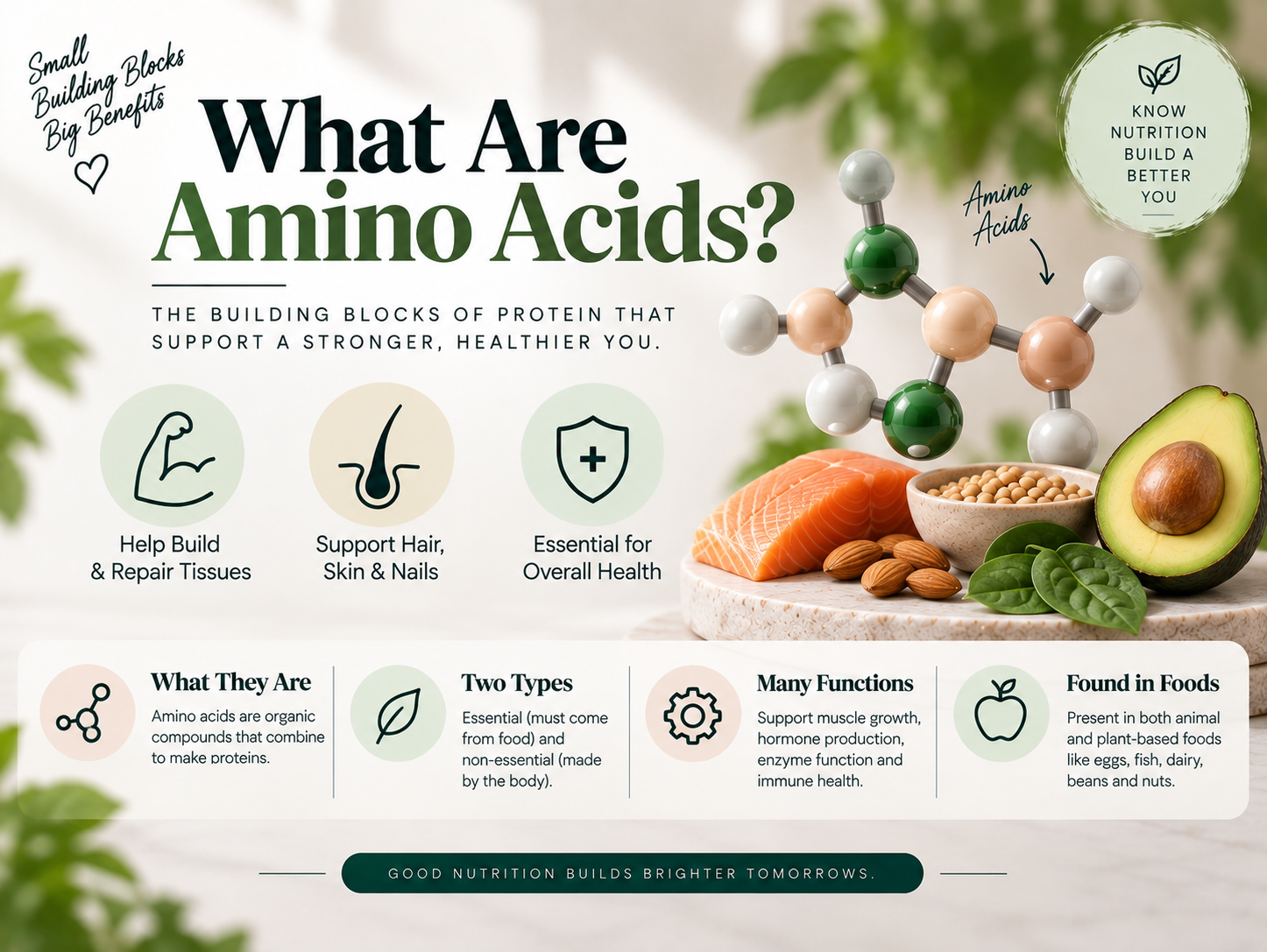
"Think of amino acids like bricks in a protein wall. If the bricks are missing because protein intake is low, hair structure may become weaker. But if hair fall is due to DHT, PCOS, thyroid imbalance, postpartum shedding, dandruff inflammation, low ferritin or genetics, amino acids alone will not treat the root cause."
"Amino acids are supportive nutrition — not corrective treatment for diagnosed hair loss."
Why Hair Needs Protein Building Blocks
Hair shafts are protein-rich structures. Keratin, the main structural protein of hair, depends on amino-acid availability. When overall protein intake is low, the body may prioritise vital organs over hair. In selected users, low protein intake can contribute to poor hair quality, brittle hair, breakage, slower recovery from shedding and weak hair-fiber appearance.
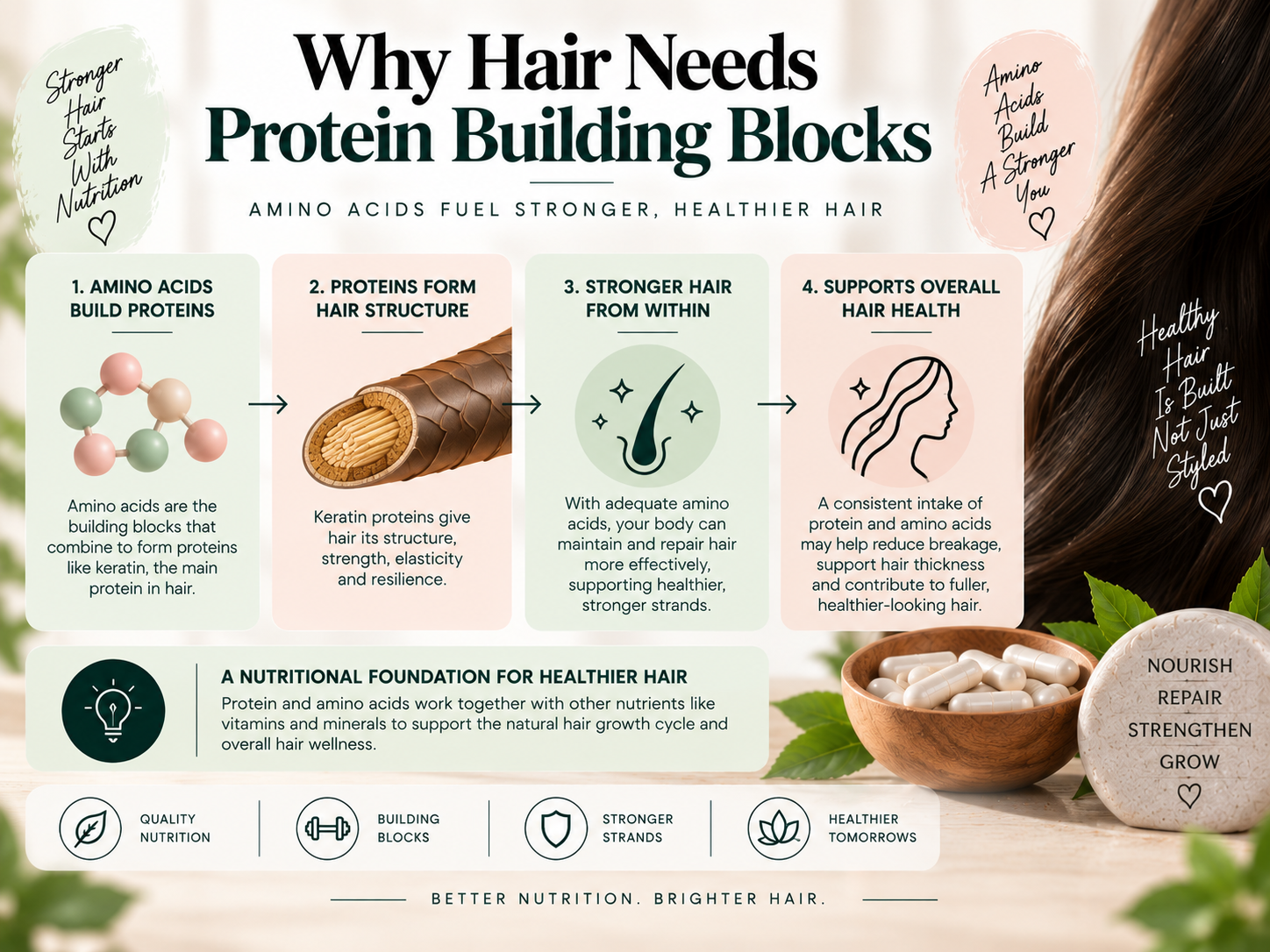
"Protein support helps only when protein or amino-acid intake is actually a limiting factor."
Who May Actually Need Amino Acid Hair Support?
Low Dietary Protein Intake
Users with low protein intake may benefit from nutrition review and protein-building support.
Crash Dieting or Rapid Weight Loss
Low calorie and low protein intake can trigger shedding and weaken hair-fiber quality.
Vegetarian Diet with Poor Protein Planning
Vegetarian diets can be healthy, but protein quality and total intake must be planned.
Brittle Hair and Breakage-Prone Hair
Amino acids may support hair-fiber nutrition when breakage coexists with low protein intake.
Post-Illness Recovery
Poor appetite and reduced intake after illness can create protein and nutrition gaps.
Gym / Fitness Users with Shedding
Users dieting aggressively or cutting calories may need protein review before supplements.
Elderly or Low Appetite Users
Lower intake, absorption issues or chronic illness may increase protein-nutrition risk.
Doctor-Suspected Nutritional Hair Fall
Best use case: dermatologist or physician identifies protein/nutrition gap as relevant to hair.
"Amino acid supplements should support a nutrition plan — not replace proper meals."
When Amino Acids May Not Be the First Answer
Pattern Hair Loss
Hairline recession, crown thinning or widening part needs diagnosis-based care, not protein capsules.
Sudden Heavy Shedding
Needs trigger identification before buying supplements. Diagnosis comes first.
Kidney Disease
Protein and amino acid supplementation should be medically supervised in kidney disease.
Liver Disease
Supplement use should be doctor-guided in liver conditions.
Pregnancy or Breastfeeding
Use only doctor-approved products during pregnancy and breastfeeding.
Existing Protein Supplement Use
Avoid stacking protein powders, collagen, amino acids and multivitamins without review.
High Protein Diet Already
If protein intake is adequate, extra amino acids may not improve hair.
Patchy Hair Loss
May require urgent dermatologist evaluation. Do not delay with supplements.
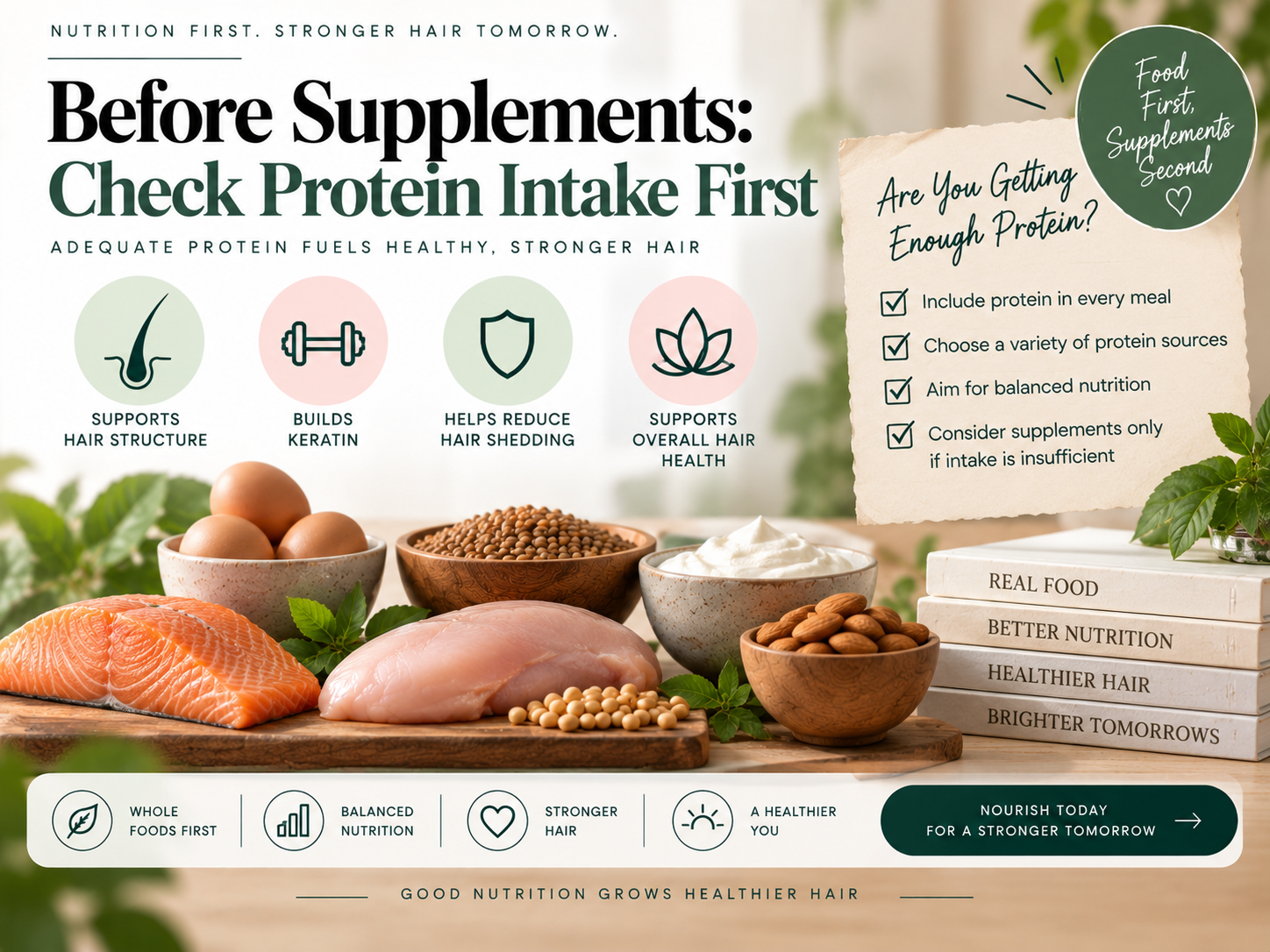
Before Supplements: Check Protein Intake First
Daily Protein Servings
How many protein-rich meals do you eat daily?
Diet Pattern
Vegetarian, vegan or mixed — protein quality and planning matter
Protein-Rich Foods
Eggs, dals, paneer, soy, dairy, fish — how often do they feature?
Weight Loss History
Have you lost weight rapidly or been on extreme calorie restriction?
Brittle Nails / Fatigue
Signs of broader nutrition gaps including iron, B12, Vitamin D or thyroid?
Vitamin D & B12
Often co-tested — diffuse shedding may involve multiple deficiencies
Thyroid Profile (TSH, T3, T4)
Thyroid imbalance is a common cause of diffuse shedding
Doctor Interpretation
Numbers alone are not diagnosis. Symptoms, history, CBC context matter
"Food-first protein correction is preferred where possible. Supplements are useful when diet alone is insufficient or difficult."
Evidence Level: Protein Building Blocks Support
Amino acid supplements may support hair structure when low protein intake, poor diet quality or nutrition gaps are genuinely relevant. They do not directly treat every hair fall condition. They do not reverse DHT-driven pattern hair loss, scarring alopecia, alopecia areata, untreated thyroid disease or untreated PCOS by themselves.
L-Cysteine vs L-Methionine: Why They Appear in Hair Formulas
| Amino Acid | Type | Hair Formula Role | Important Note |
|---|---|---|---|
| L-Cysteine | Sulfur-containing amino acid | Keratin-support positioning | Supportive, not curative |
| L-Methionine | Essential sulfur-containing | Protein-building support | Must come from diet/supplement |
| L-Lysine | Essential amino acid | Nutrition support formulas | Diet context matters |
| Taurine | Amino acid-like compound | Supportive formula ingredient | Evidence should be cautious |
| Complete Blend | Mixed amino acids | Broad support when protein is low | Not needed if diet is adequate |
Amino Acids vs Other Hair Nutrition Ingredients
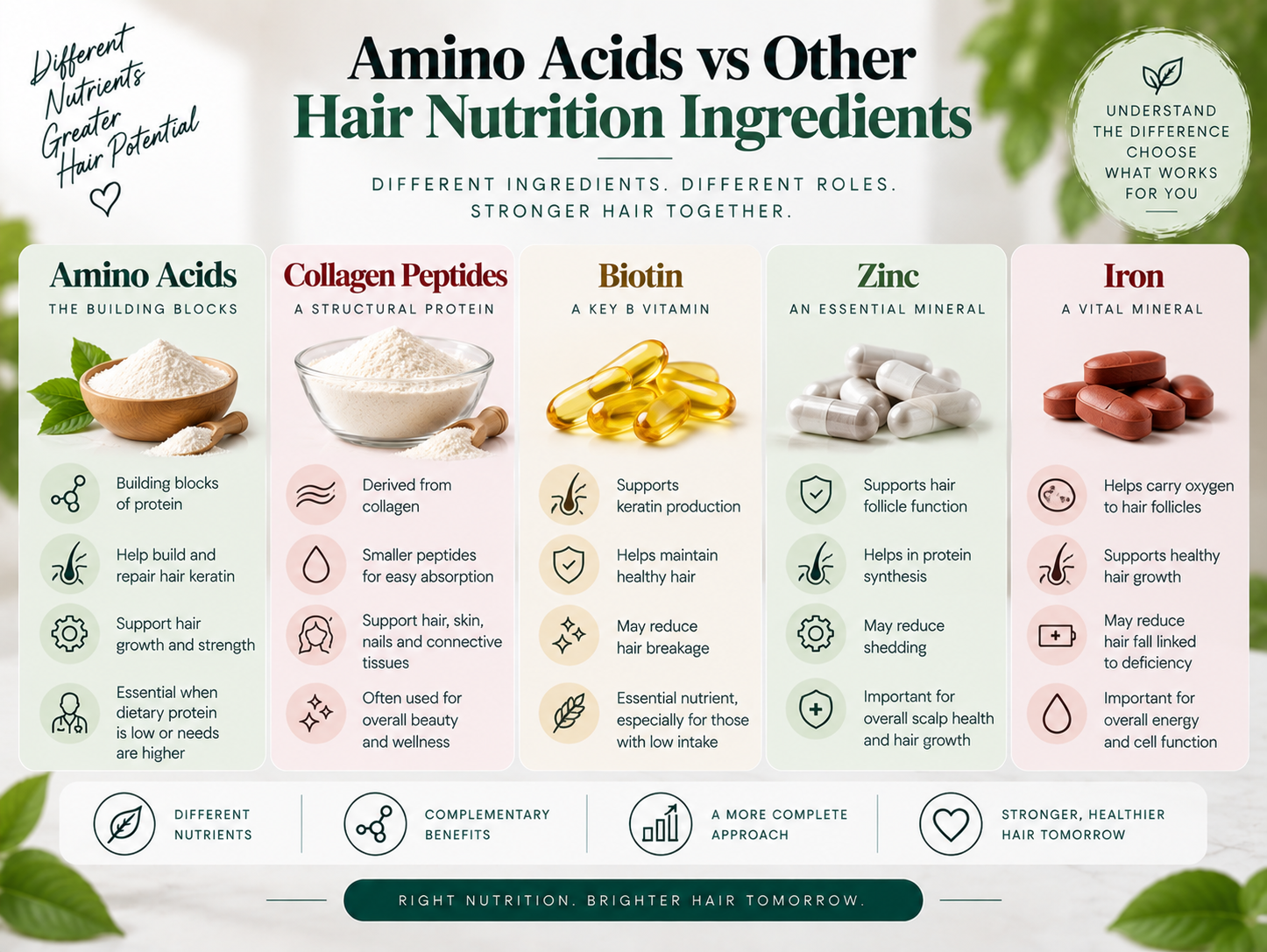
| Ingredient | Best For | Evidence Logic | Safety Note |
|---|---|---|---|
| Iron / Ferritin | Low ferritin, heavy periods, anaemia risk | Lab-test preferred | Results vary |
| Biotin | True biotin deficiency or increased need | Deficiency-dependent | Can interfere with lab tests |
| Vitamin D | Confirmed low Vitamin D | Test-based | Avoid overdose |
| B12 | Vegetarian/vegan diet or low B12 risk | Deficiency-dependent | Test if symptoms/risk |
| Zinc | Confirmed deficiency | Deficiency-dependent | Excess affects copper balance |
| Amino Acids / Protein | Low protein intake, crash dieting | Nutrition support | Match diet and kidney/liver status |
| Multivitamin | Broad nutritional gaps | General support | Avoid stacking duplicate nutrients |
Amino Acids Are Not a Replacement for Medical Hair-Loss Treatment
🩸 Amino Acid Hair Supplements
- Supports protein-dependent hair structure
- Best when protein intake is low
- May help brittle hair and breakage context
- Supports recovery nutrition
- Does not block DHT
- Does not directly stimulate follicles like medical treatment
🩺 Medical Hair-Loss Treatments
- Minoxidil supports regrowth in selected pattern hair loss
- Finasteride/Dutasteride affect DHT pathway
- Ketoconazole treats dandruff/seborrheic scalp
- PRP/GFC are clinic-based options
- Diagnosis decides treatment
"Do not use amino acid supplements to delay treatment for progressive thinning, bald patches, scarring hair loss or inflammatory scalp disease."
Amino Acid Supplement Safety: What Users Should Know
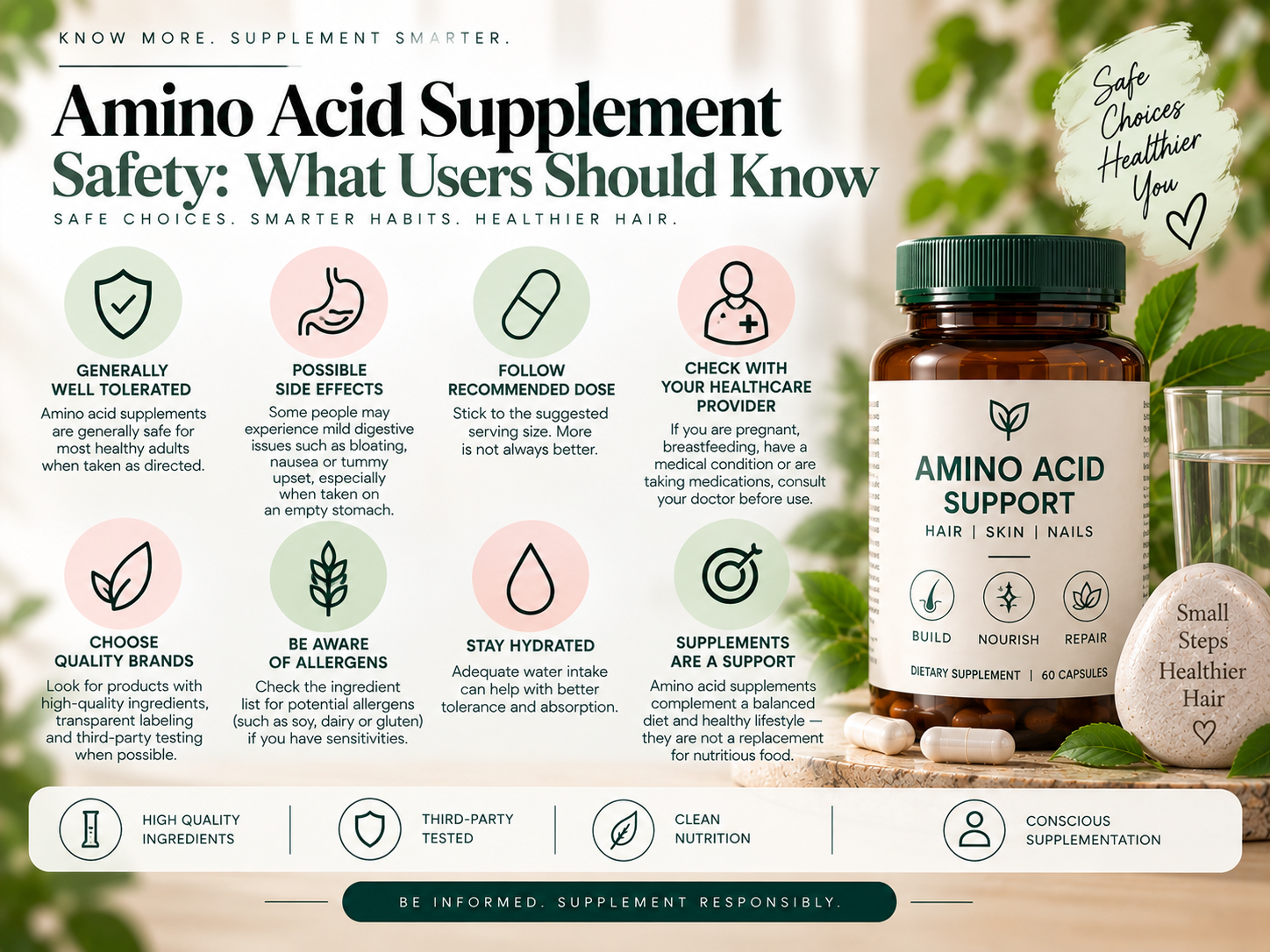
⚠️ Possible Side Effects
Stomach discomfort or nausea
Bloating or taste intolerance
Headache or loose stools in some formulas
Acne flare in some supplement stacks
Overlap with protein powders or gym supplements
🚩 Avoid Supplement Stacking
Many hair multivitamins, collagen products, protein powders and gummies already contain amino acids
Users should check labels before adding a separate amino acid supplement
Kidney and liver disease need doctor-guided protein supplementation
Pregnancy, breastfeeding, eating disorders and complex medical history need medical guidance
How Long Before Amino Acid Support May Show Results?
Hair response is slow. If low protein intake was contributing to weak hair, breakage or diffuse shedding, improvement depends on consistent nutrition correction and hair-cycle timing.
0–4 Weeks
Focus on tolerance, correct use and diet. Monitor side effects.
8–12 Weeks
Initial reassessment of shedding pattern, energy and symptoms.
3–6 Months
More meaningful hair-cycle evaluation. Repeat labs if doctor advises.
Beyond 6 Months
If no response, reassess diagnosis, thyroid, Vitamin D, B12, PCOS, scalp or pattern hair loss.
Shop Amino Acid Hair Supplements
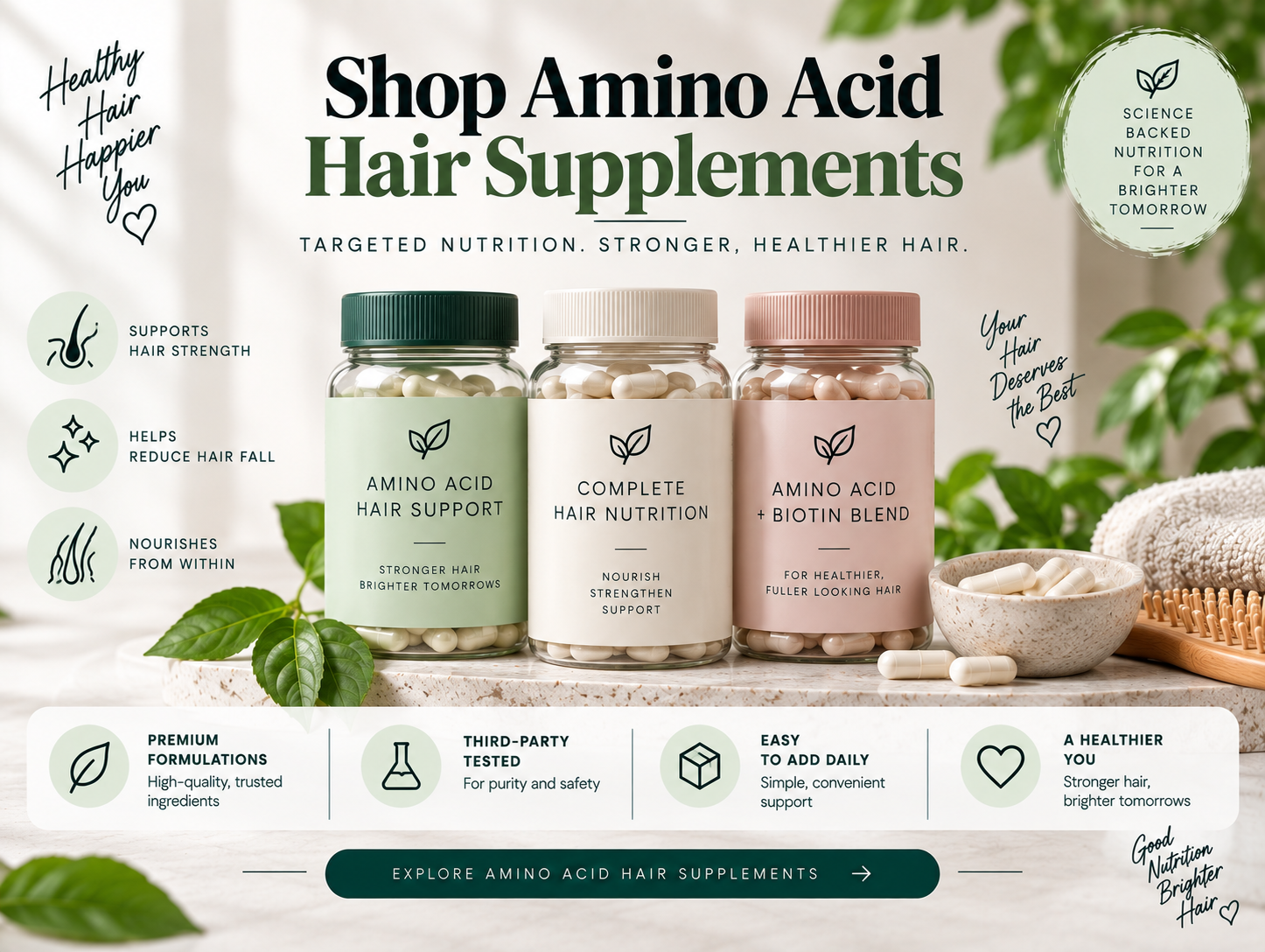
Prices, stock and discounts are live from the catalogue. Check protein intake before adding supplements.
Do You Need Amino Acid Support? Use AI Direction First
Our AI tool analyses your hair concern, diet pattern, protein intake, breakage patterns and supplement use to provide educational guidance on whether amino acid support may be relevant for you.
The AI tool is educational and does not diagnose, prescribe or replace a dermatologist or physician.
How Amino Acids Fit Into a Complete Hair Routine
Identify Problem
Separate shedding, thinning, breakage, frizz and brittle hair.
Check Protein Intake
CBC, ferritin and related tests if deficiency risk is present.
Rule Out Red Flags
Sudden, patchy, painful or progressive loss needs doctor review first.
Use as Support
Use amino acids per label. Do not stack multiple protein formulas blindly.
Manage Scalp
Treat dandruff, oily scalp or inflammation separately.
Track Response
Monitor hair-fiber quality, breakage, nail strength over 8–12 weeks.
Amino Acids Help When Protein Is the Missing Link
Amino acids such as L-cysteine and L-methionine can support protein-dependent hair structure when dietary protein intake is genuinely low or nutrition recovery is needed. But hair loss has many causes: male pattern hair loss, female pattern hair loss, thyroid disease, PCOS, postpartum shedding, low ferritin, low Vitamin D, low B12, low zinc, stress, fever, dandruff inflammation, autoimmune disease or medication changes. Correct diagnosis and diet history come before supplement selection.
Do Not Delay Doctor Review If You Notice These
Sudden heavy shedding
Patchy bald spots
Scalp pain, pus, crusting, redness or scaling
Hair fall with weight loss or fever
Hair fall after new medicine
Pregnancy or Breastfeeding or breastfeeding
Very heavy periods with fatigue
Severe fatigue or dizziness
No improvement after 8–12 weeks of appropriate care
Child or teenager hair loss
Eating disorder or extreme dieting
Related Pages
Medical & Authority References
1. Guo EL, Katta R. Diet and hair loss: effects of nutrient deficiency and supplement use. Dermatol Pract Concept. 2017;7(1):1–10. PMC
2. Rushton DH. Nutritional factors and hair loss. Clin Exp Dermatol. 2002;27(5):396–404. PubMed
3. Goldberg LJ, Lenzy Y. Nutrition and hair. Clin Dermatol. 2010;28(4):412–419. PubMed
4. Almohanna HM, Ahmed AA, Tsatalis JP, Tosti A. The Role of Vitamins and Minerals in Hair Loss: A Review. Dermatol Ther (Heidelb). 2019;9(1):51–70. PubMed
Not Sure If Amino Acids Fit Your Hair Goal?
Amino acids can support protein-dependent hair structure when dietary protein is low or nutrition recovery is needed, but they are not a medical treatment for hair loss. Start with AI guidance or dermatologist review if your main concern is shedding, thinning, bald patches or progressive density loss.