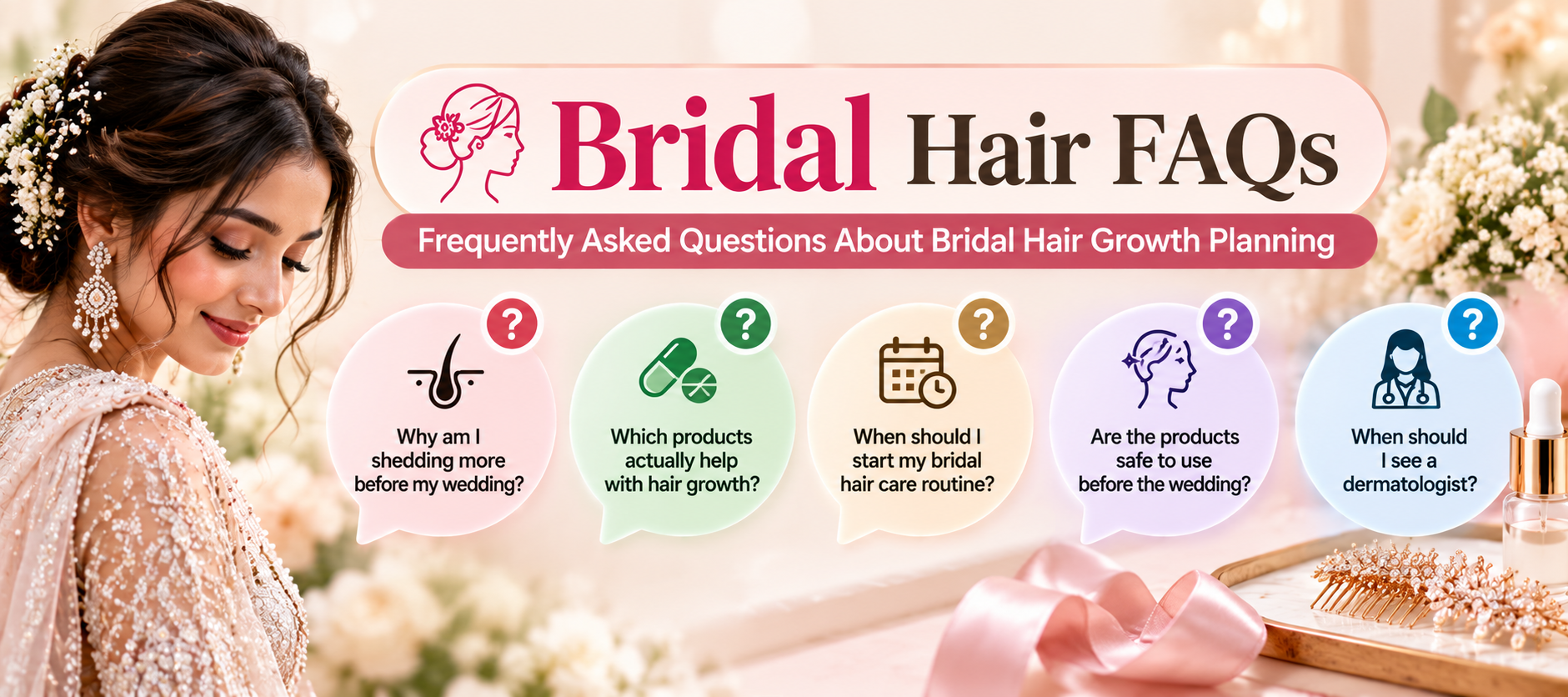
Bridal Hair Growth Plan: A Realistic, Doctor-Aware Timeline
Dreaming of fuller, healthier hair for your wedding day? The honest truth helps you most: hair grows slowly, so the secret is starting early and supporting your hair safely — not chasing overnight miracles. The biggest wins are reducing shedding, nourishing your hair, and protecting what you have. And one firm rule: don't crash diet to fit an outfit — rapid weight loss is one of the commonest triggers of pre-wedding shedding. Hairsncares helps you build a realistic timeline for the months you have, flag any shedding causes, and know when to see a dermatologist. No growth is guaranteed by a fixed date — but a sensible plan goes a long way.
Illustrative sample only. AI planning helps guide decisions and does not replace a dermatologist's diagnosis. It does not guarantee hair growth before a wedding.
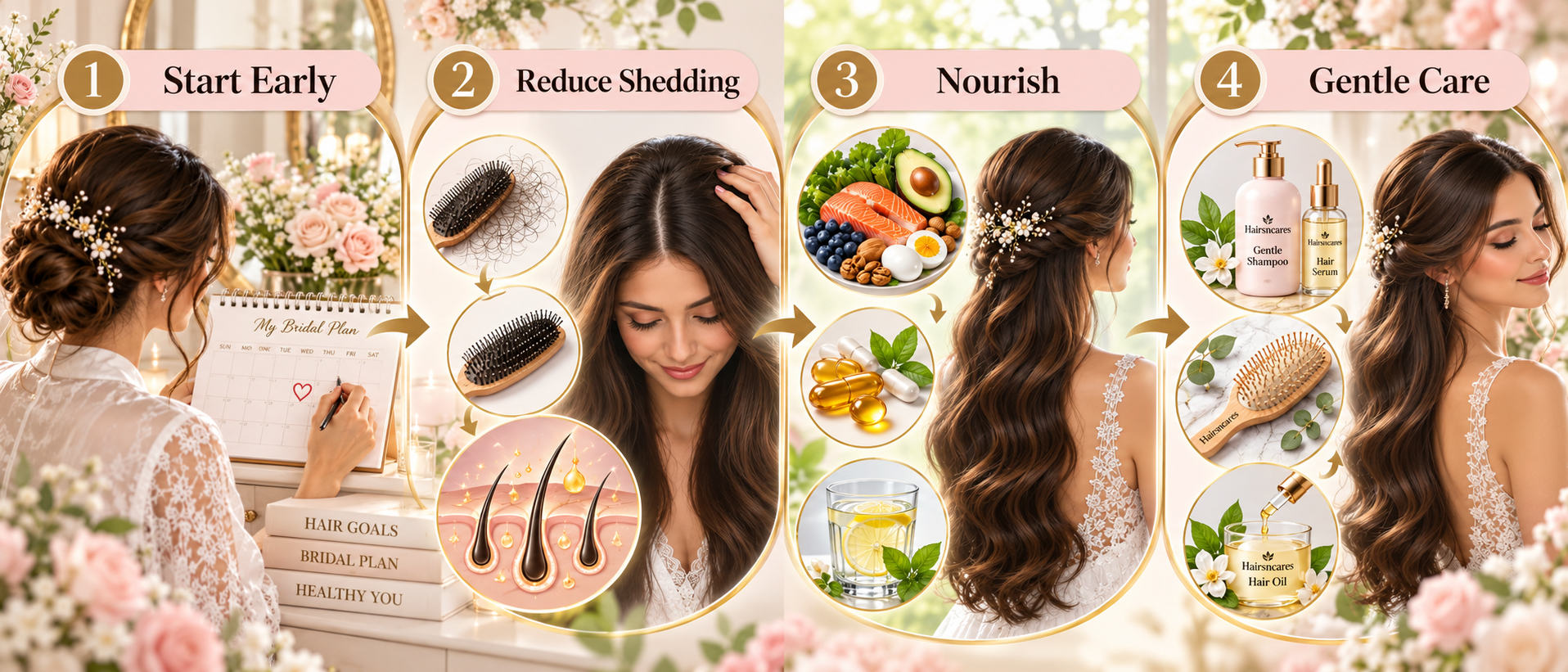
StartEarly
NourishDon't crash
ProtectGentle care
AssessIf shedding
⚡
AI bridal plannerrealistic timeline
🩺
Doctor-reviewedwomen's hair guidance
💎
Start-early focusno false promises
🥗
No crash dietsprotects your hair
🚚
India-widedelivery
Quick Answer
Can I grow my hair before my wedding — and how do I plan it?
You can support healthier, fuller-looking hair, but how much length or density you gain depends on time, your hair's natural growth rate, and the cause of any shedding — so no specific result can be guaranteed by a fixed date. Hair grows only about a centimetre a month, which is why the single best move is to start early, ideally six to twelve months out. The most reliable wins: reduce shedding by addressing its cause, nourish your hair with balanced nutrition and adequate protein, correct any confirmed deficiency (like low iron) under medical advice, manage stress, and use gentle supportive care. Crucially, don't crash diet — rapid weight loss is a leading trigger of telogen-effluvium shedding that can surface two to three months later, right around the wedding. If shedding is significant, see a dermatologist early. Results vary.
Doctor-Reviewed Women's Hair Loss GuideBridal Hair Growth Plan
Bridal hair planning should be realistic, early and safe. Avoid crash diets, false regrowth promises and last-minute aggressive treatments.
AI Summary
Bridal Hair Growth Plan in Simple Terms
Bridal Hair Growth Planis part of the women's hair-loss spectrum. It may overlap with shedding, thinning, hormonal changes, nutritional gaps, scalp symptoms, female pattern loss or life-stage triggers.
The correct next step depends on pattern, duration, age, periods, pregnancy or breastfeeding status, weight changes, stress, scalp symptoms, medical history, current medicines and previous product use.
Bottom line: use this page for education and screening direction — it does not diagnose or prescribe. Take the AI Hair Test for structured screening and consult a dermatologist when symptoms are progressive, severe, patchy, painful or medically complex. Results vary.
The Basics
What a Bridal Hair Plan Really Is
Section image
A good bridal hair planisn't a miracle promise — it's a realistic, doctor-aware roadmap to present your hair at its healthiest and fullest on the day. Because hair grows only about a centimetre a month, the plan works best with time, which is why starting early (ideally six to twelve months ahead) matters most.
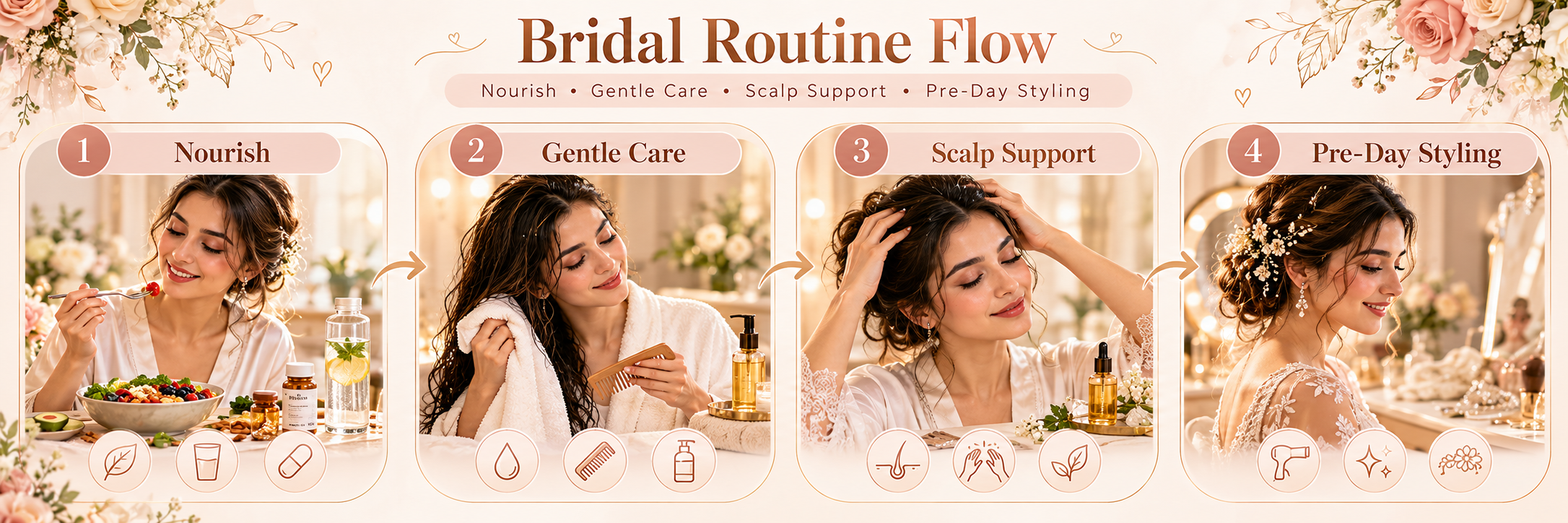
The plan has four sensible pillars: reduce shedding by finding and addressing its cause; nourish the hair with balanced nutrition and adequate protein; protect what you have with gentle, supportive care; and assess any significant or persistent loss with a dermatologist in good time.
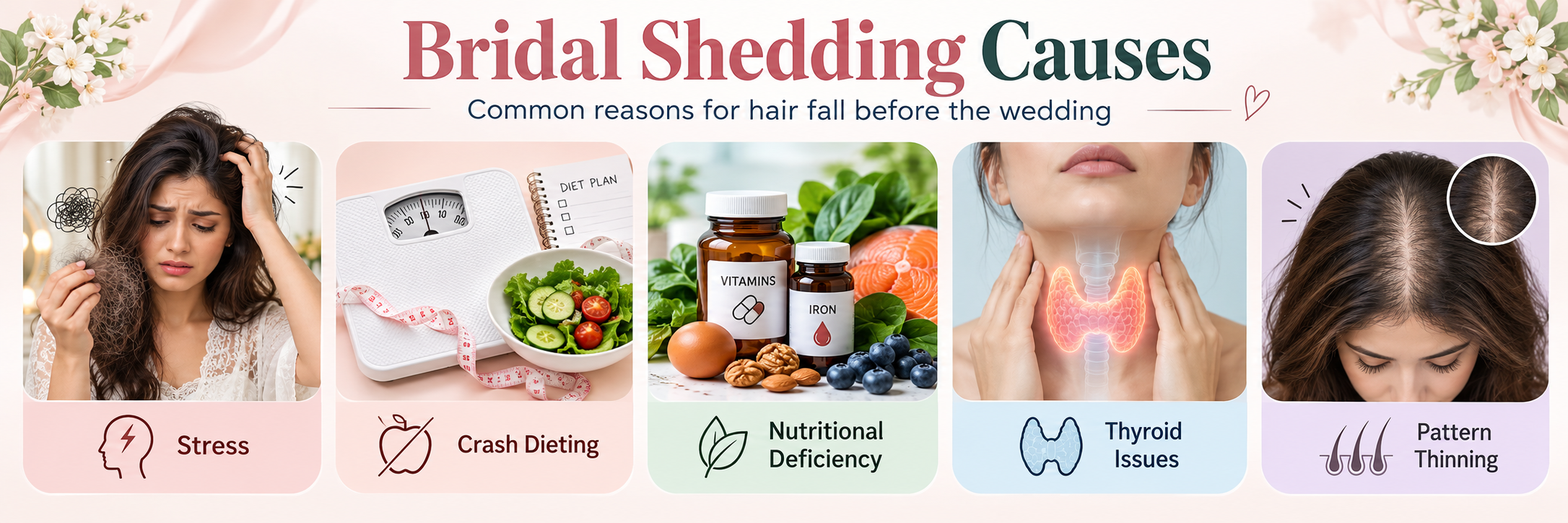
Just as important is what a good plan avoids: crash dieting and rapid weight loss to fit an outfit (a leading trigger of pre-wedding shedding), harsh last-minute treatments, and unproven products promising overnight results. There is no way to guarantee regrowth by a fixed date — but a steady, sensible plan genuinely helps, and results vary.
Got a date in mind? Build a realistic plan for the months you have.
Condition, shine and styling; protect what you have
Gentle care, no crash diets, professional styling
Whatever your timeline, the rules are the same: start now, don't crash diet, be gentle, and get significant shedding assessed. The closer the date, the more the focus shifts from new growth to protecting and presenting the hair you have. No timeline can guarantee a specific result.
How long do you have? Get a realistic plan for exactly that window.
A sensible arc when you have several months. Adapt it to your own window with the planner.
12–9
Foundations
Assess & nourish
See a dermatologist if shedding or thinning is a concern, get any tests (ferritin, vitamin D, thyroid), correct deficiencies under advice, and build balanced nutrition. No crash diets.
9–6
Build the routine
Gentle & consistent
Settle into a gentle supportive routine and good scalp care. Any doctor-guided active treatment is best started here, with time to assess and ride out any initial shedding.
6–3
Optimise
Condition & density
Focus on condition, shine and protecting density. Keep nutrition steady, manage stress, and avoid harsh chemical treatments or tight styles that stress the hair.
3–0
Final months
Protect & present
Protect what you have, do styling trials early, nourish the lengths, and avoid risky last-minute treatments. Photograph progress and keep things gentle for the day.
Want this mapped to your date? The planner builds your month-by-month arc.
Most bridal shedding is supportable, but some situations deserve a dermatologist — and earlier is better, so there's time before the day. Prescription treatments are doctor decisions.
Section image
⚠
Red-flag symptoms — when to see a doctoralt: "Heavy shedding, widening parting, bald patches, crash-diet illness" · 900×240 WebP
Heavy or persistent shedding
Thinning over the crown / a widening parting
Any bald patches or scalp scarring
Scalp itching, scaling, redness or pain
Crash dieting and feeling unwell
Fatigue, weight or temperature changes (thyroid)
Pale skin, breathlessness or heavy periods (iron)
Irregular periods, acne or excess hair (hormonal)
Before starting any prescription treatment or Minoxidil
Hair loss causing significant distress before the wedding
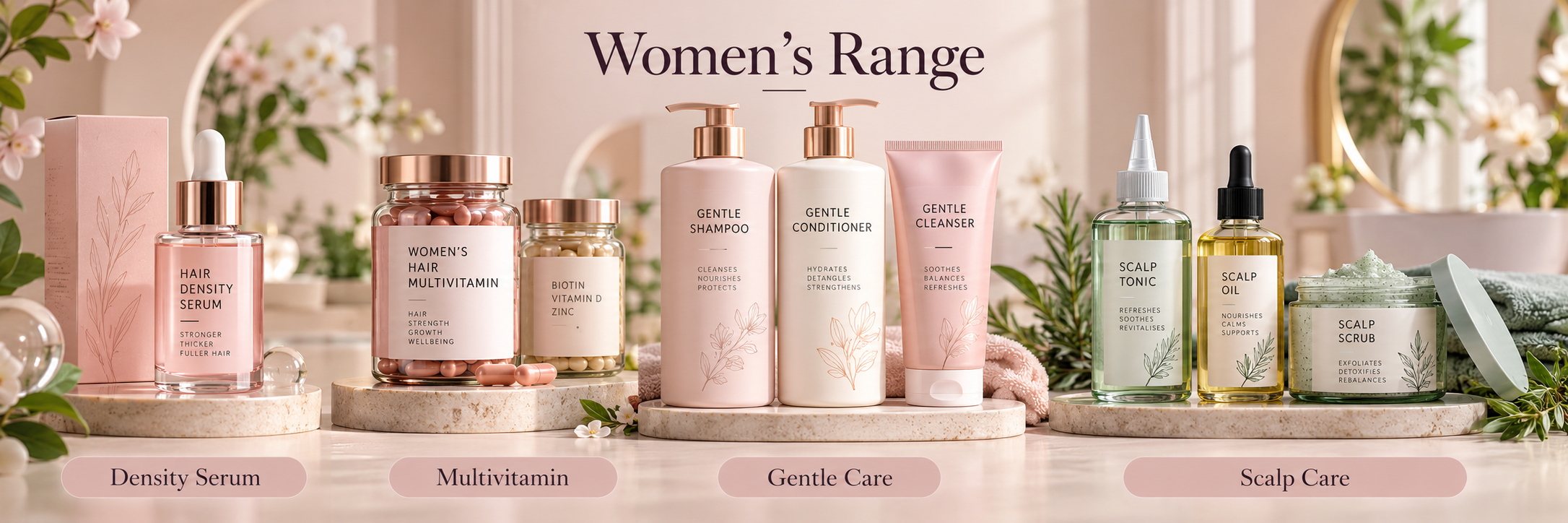
Supportive, gentle care to nourish and protect your hair as part of a realistic plan. These support condition and density; they do not guarantee growth before the wedding or replace medical assessment. Iron and vitamin products are for use only when deficiency is confirmed, under medical advice.
These products offer gentle, supportive care to nourish and protect the hair and scalp as part of a realistic bridal plan, alongside balanced nutrition and doctor-aware care. They support condition and density and appearance; they do not guarantee hair growth before a wedding, do not work overnight, and do not replace medical assessment, blood tests or diagnosis. No product or supplement is guaranteed to regrow hair. Crash dieting and rapid weight loss should be avoided, as they trigger shedding. Iron and vitamin products should be used only when deficiency is suspected or confirmed and under medical guidance. Prescription medicines and Minoxidil are doctor decisions, take months to act, can cause initial shedding, and are generally avoided in pregnancy or breastfeeding without medical advice.
Before adding to cart, build your timeline so your spend actually helps.
Where to go next for supportive care — matched to women's hair-loss needs. These categories support hair and scalp health; they do not guarantee growth before a wedding or replace medical assessment.
For Brides
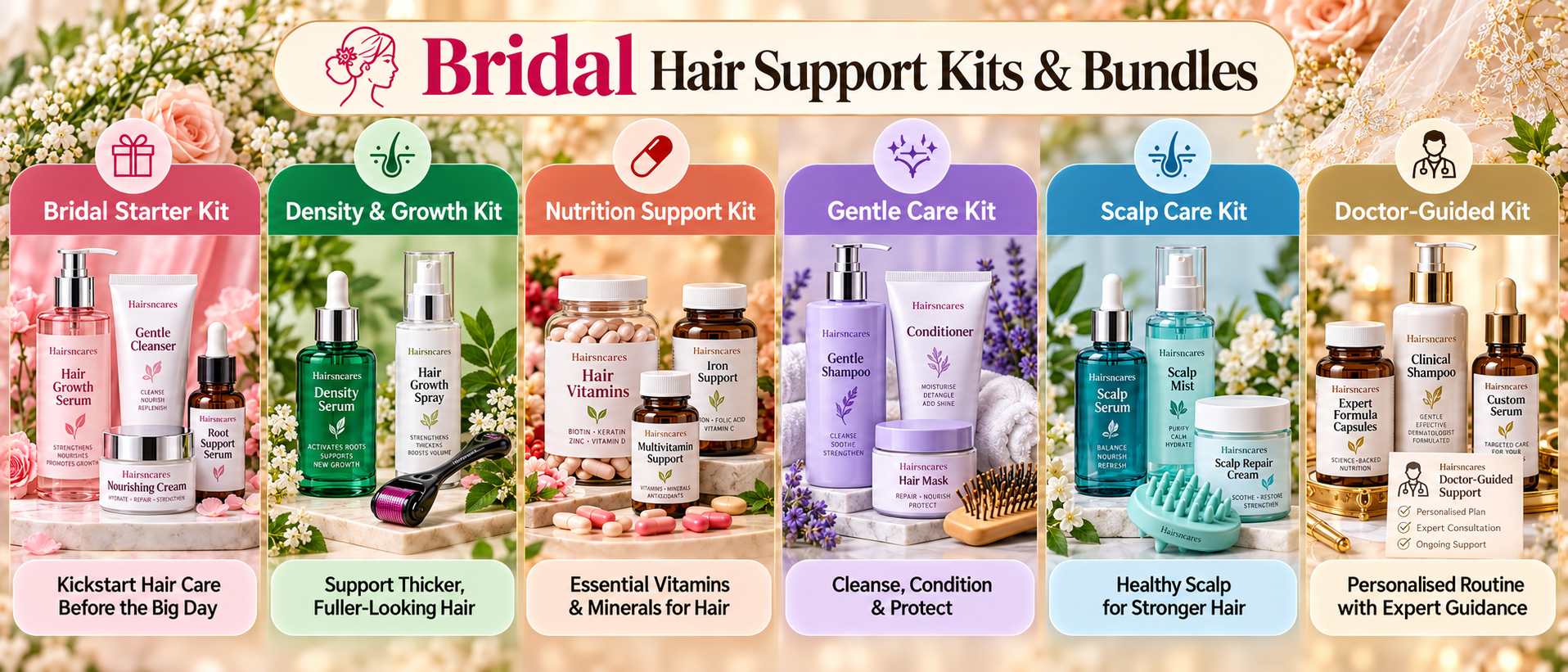
Choose Your Support Pathway
A bridal plan is most effective with balanced nutrition, gentle care and addressing any shedding cause. Pick the pathway that fits — and remember iron and vitamin products should be used only when deficiency is suspected or confirmed, under medical guidance.
👩
Women's Hair Fall Support
/products/women-hair-fall/
The main gateway for female shedding, thinning, weak hair, bridal hair fall support and hair strength — the core pathway for supportive, gentle care in a bridal plan.
An important pathway when a deficiency adds to shedding — low iron, low ferritin, low vitamin D, low B12 or fatigue-related shedding, especially if dieting has been involved. Use only after doctor evaluation confirms a need.
A related hormonal hair-loss pathway for women with irregular periods, acne, facial hair, androgen sensitivity or PCOS-like symptoms that may underlie thinning. Add a doctor evaluation note.
A related women's life-stage pathway, useful as an internal comparison for diffuse shedding rather than a direct bridal match. Add pregnancy and breastfeeding caution; supplements on medical advice.
Medical safety: These products support hair and scalp health. They do not guarantee growth before a wedding, do not work overnight, and do not replace medical assessment, blood tests or diagnosis. Avoid crash dieting, which triggers shedding. Iron and vitamin products should be used only when deficiency is suspected or confirmed and under appropriate medical guidance. Pregnancy, lactation, thyroid disease and chronic medical conditions need doctor review. Prescription treatments are doctor decisions. Results vary.
Build a Habit
A Realistic Bridal Hair Routine
Gentle, consistent care that supports your hair over the months you have. Use active or prescription items only under medical guidance, and avoid them in pregnancy or breastfeeding unless a doctor advises.
Section image
Protein
Adequate protein supports the hair cycle.
No crash diet
Eat enough; manage weight gradually if at all.
Test & correct
Fix confirmed iron or vitamin D under advice.
Hydrate
Balanced meals and water support condition.
Wash
Gentle or volumising shampoo; don't over-wash.
Condition
Strengthening conditioner for shine and slip.
Detangle
Be gentle; avoid harsh brushing when wet.
Protect
Heat protection; avoid tight, pulling styles.
Scalp
Keep the scalp clean and comfortable.
Serum
Supportive density serum as directed.
Stress
Sleep and stress management help the hair cycle.
Doctor-guided
Any active or Rx only with a dermatologist.
Trial run
Test styling well before the day.
No risky chems
Avoid new harsh treatments close to the date.
Nourish lengths
Masks and oils for shine and manageability.
Photograph
Track progress monthly toward the day.
Want a routine built around your date? Generate a personalised plan in minutes.
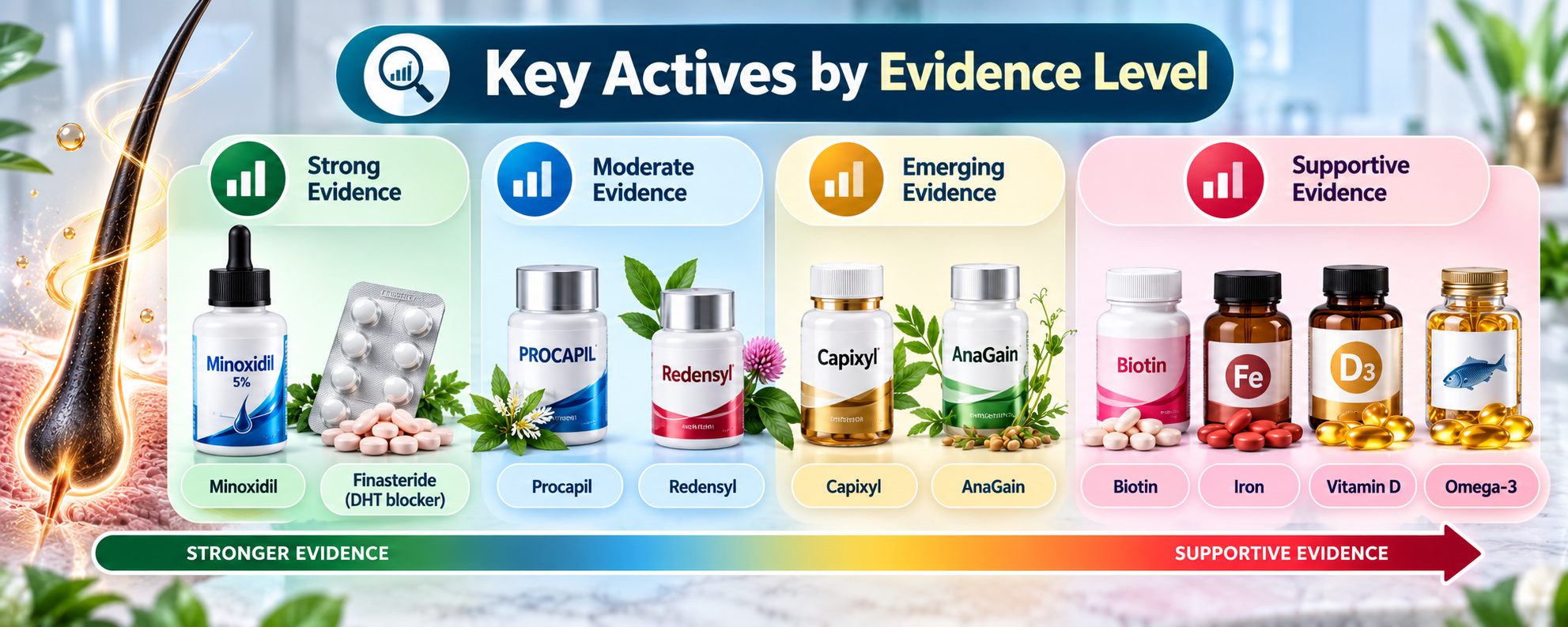
Evidence labels are a simple guide: strong, moderate, supportive or mainly cosmetic. Rx marks prescription items; the rose tag flags pregnancy/lactation caution. None of these work overnight.
Section image
🤰
Pregnancy & breastfeeding note: If you are or may become pregnant, choose pregnancy-appropriate items and take supplements only on medical advice. Minoxidil and other prescription treatments are doctor decisions and are generally avoided in pregnancy or breastfeeding. Never crash diet to prepare for a wedding, and discuss any treatment plan with your doctor.
Balanced nutrition & protein
Strong (foundation)
Adequate calories and protein are the foundation of healthy hair growth.
"Brides often come to me a few weeks before the wedding wanting fuller hair by the day, and I have to be kind but honest: hair grows about a centimetre a month, so there's no overnight fix. The single biggest mistake I see is crash dieting to fit an outfit — it's one of the most reliable ways to trigger shedding two or three months later, right on the wedding day. So my advice is simple: start early, eat properly, treat any real deficiency we find, be gentle with your hair, and if there's significant shedding, let me look at it with time to spare. Done early and sensibly, a plan really does help."
Reviewed by Dr. Amit Agarkar, MD DermatologyDermatologist & Hair Specialist · Last reviewed 1 June 2026
Planning your wedding hair? Book an early assessment for a realistic plan.
Tracking shedding, density and condition over the months to your wedding shows whether your plan is working — and keeps expectations realistic and stress low.
Section image
📈
Progress tracking — months to the weddingalt: "Tracking shedding, density and condition over months before a wedding" · 900×200 WebP
Short-term shedding without pain, patches or rapid thinning can be tracked with photos and routine consistency.
Screen
Take the AI Hair Test
Use the AI Hair Test to organise symptoms, triggers, pattern and next-step direction. It does not diagnose or prescribe.
Doctor Review
Medical Cause Possible
PCOS, thyroid symptoms, heavy periods, postpartum shedding, menopause thinning, deficiency signs or medication-related shedding need medical context.
Urgent
Do Not Delay
Patchy loss, pain, pus, crusting, bleeding, a scarring-looking scalp, sudden severe shedding, or teenage hair loss with illness needs prompt evaluation.
Questions
Frequently Asked Questions
Section image
How far in advance should I start a bridal hair plan?
As early as you can, ideally six to twelve months before the wedding, because hair grows slowly, at roughly a centimetre or so a month, and there are no overnight fixes. Starting early gives time to correct any deficiency, settle any shedding, build a gentle supportive routine, and see a dermatologist if needed. If your date is closer, a plan still helps you protect the hair you have and present it at its best, but the realistic goal becomes supporting condition and styling rather than significant new growth. No plan can guarantee regrowth by a fixed date, and results vary.
Can I really grow my hair before my wedding?
You can support healthy growth and improve condition, but how much length or density you gain depends on time, your hair's natural growth rate and any underlying cause of shedding, so no specific result can be guaranteed by a fixed date. The most reliable wins are reducing shedding by addressing its cause, nourishing the hair well, and improving how healthy and full the hair looks through good condition and styling. Starting early maximises what is possible, while last-minute crash approaches tend to backfire and cause more shedding.
Will crash dieting before my wedding affect my hair?
Yes, and not in a good way. Crash dieting, very low-calorie plans and rapid weight loss are a common trigger for telogen effluvium, a diffuse shedding that often appears two to three months later, which could land right around the wedding. Sudden drops in calories, protein and nutrients stress the hair cycle. Instead of crash dieting, aim for balanced, adequate nutrition with enough protein, iron and overall calories. If you want to manage weight before the wedding, do it gradually and sensibly, ideally with proper guidance, to protect your hair.
What helps bridal hair the most in the months before?
The biggest wins are reducing shedding by addressing its cause, nourishing the hair with balanced nutrition and adequate protein, correcting any confirmed deficiency such as low iron or vitamin D under medical advice, managing stress, and using gentle, supportive haircare with good scalp care. Avoiding crash diets and harsh treatments protects the hair you have. Styling and condition also make a visible difference on the day. These steps support healthier, fuller-looking hair rather than guaranteeing dramatic new growth, and starting early gives them time to work.
Should I take hair supplements before my wedding?
Supplements help mainly where there is a genuine deficiency, such as low iron or vitamin D, which is best confirmed by testing, and a hair multivitamin may offer general supportive nutrition. They are not a guaranteed growth booster and do not replace balanced eating. High doses of vitamins or iron should not be taken without testing and medical advice, as excess can be harmful. The most useful approach is to eat well, test and correct any real deficiency under guidance, and treat supplements as support rather than a magic pre-wedding fix.
Is stress before the wedding causing my hair to shed?
It can be. Significant stress, which weddings certainly bring, is a recognised trigger for telogen effluvium, a temporary diffuse shedding that typically shows up two to three months after the stressful period. The reassuring part is that this type of shedding is usually temporary and recovers once things settle. Managing stress, sleeping well, eating properly and gentle supportive haircare all help. If shedding is heavy or persistent, or if you are worried, a dermatologist can check for other contributing causes such as deficiency or thyroid problems.
Can I use Minoxidil or prescription treatments before my wedding?
Only under medical guidance. Minoxidil and other prescription treatments are doctor decisions, are mainly used for pattern hair loss rather than short-term bridal goals, take months to show effect and need ongoing use, and Minoxidil can cause an initial increase in shedding before it settles, which is not ideal close to a wedding. They are generally avoided in pregnancy or breastfeeding without medical advice. If you have ongoing thinning you want to address, see a dermatologist well ahead so any treatment can be started and assessed safely rather than rushed.
How long does it take to see a difference in my hair?
Because hair grows slowly, visible change takes time. Reducing shedding by addressing its cause can show within a couple of months, while noticeable improvement in density or length usually takes several months, since hair grows around a centimetre a month. Condition and shine can improve sooner with good care. This is exactly why starting early matters and why last-minute fixes do not work. A realistic plan focuses on steady, supportive progress over the months you have, and results vary from person to person.
What should I avoid before my wedding for my hair?
Avoid crash dieting and rapid weight loss, which trigger shedding; very harsh chemical treatments or back-to-back colouring close to the date; tight hairstyles that pull on the hairline; excessive heat styling without protection; and unproven last-minute products that promise overnight results. Also avoid starting strong prescription treatments at the last minute without a dermatologist, since some cause initial shedding. Instead, be gentle, eat well, and give your hair steady, supportive care. If in doubt about a treatment, check with a professional before the big day.
Could my pre-wedding hair fall be from a deficiency?
It is possible. Low iron, low vitamin D and other deficiencies are common in women and cause diffuse shedding, and they can be made worse by dieting before a wedding. Because the symptoms overlap with stress shedding and other causes, a doctor may check ferritin, vitamin D and thyroid function to see what is contributing. Correcting a confirmed deficiency under medical advice can help the hair recover, so if your shedding is significant, testing is more useful than guessing or taking supplements blindly.
Should I see a dermatologist as part of my bridal plan?
It is worth it if your shedding is significant or persistent, if you have noticed thinning over the crown or a widening parting, if there are signs of a hormonal or thyroid issue, or if you simply want a professional, realistic plan. A dermatologist can confirm the cause, check for deficiency or thyroid problems, and advise safe, doctor-guided options with enough lead time. Seeing one early in your planning gives the most flexibility, whereas leaving it late limits what can safely be done before the wedding.
What is a realistic bridal hair routine?
A realistic routine is gentle and consistent: a mild or volumising shampoo and a suitable conditioner, a supportive serum if you wish, careful detangling, and protection from excessive heat and tight styles. Alongside this, balanced nutrition with adequate protein, correction of any confirmed deficiency under medical advice, stress management and good sleep support the hair cycle. Keep treatments simple and proven rather than chasing trends close to the date. Begin early so the routine has time to help, and track progress with photos. Results vary.
Can supplements alone give me bridal-ready hair?
No. Supplements support the hair mainly when they correct a genuine deficiency, but they cannot on their own guarantee bridal-ready hair or replace good nutrition, gentle care and addressing the cause of any shedding. They are one supportive part of a broader plan that includes eating well, not crash dieting, managing stress, and getting significant shedding assessed. Relying on supplements alone, especially in high doses without testing, is neither effective nor safe, so treat them as support within a sensible, doctor-aware plan.
Should I take an AI check before buying products?
It helps. The AI Bridal Hair Planner can set a realistic timeline for the months you have, flag likely shedding causes such as stress, crash dieting or deficiency, and suggest sensible supportive steps and when to see a dermatologist, so you spend wisely rather than buying products blindly. It supports planning and screening only and does not replace a dermatologist's diagnosis or guarantee growth before the wedding. Understanding your situation first makes any products you choose far more likely to help.
Is bridal hair fall permanent?
Usually not. Much pre-wedding shedding is a temporary telogen effluvium driven by stress, crash dieting or deficiency, and it recovers once the trigger is addressed, although recovery is gradual because hair grows slowly. It is more likely to persist if there is an underlying cause such as female pattern thinning or an untreated thyroid or iron problem. If shedding continues or you notice a pattern of thinning, a dermatologist can assess what is going on, so it is worth getting checked rather than assuming it is only temporary.
When should I be concerned about my bridal hair fall?
Be concerned and see a doctor if shedding is heavy or persistent, if you notice thinning over the crown or a widening parting, if there are bald patches, scalp symptoms or scarring, or if you have signs of a thyroid, iron or hormonal problem. Also seek help if you have been crash dieting and feel unwell, or if hair loss is causing significant distress before the wedding. Earlier assessment gives more options and reassurance, and most causes of bridal shedding can be supported or treated when addressed in good time.
Question not answered here? Ask Dr Aria for instant guidance or book a consultation.
Beautiful wedding hair comes from a realistic, early plan — not overnight promises. Reduce shedding, nourish your hair, protect what you have, and skip the crash diets. Use the Hairsncares AI Bridal Hair Planner to build a timeline for the months you have, spot any shedding causes, and know when to see a dermatologist. No growth is guaranteed before the day, but a sensible plan makes a real difference.
Medical disclaimer.Hairsncares provides educational and product guidance support. AI planning and screening help guide decisions but do not replace a dermatologist's diagnosis, blood tests or medical evaluation. A bridal hair plan supports healthier, fuller-looking hair through reducing shedding, balanced nutrition, gentle care and addressing any cause; no hair growth is guaranteed before a wedding, hair grows slowly, and results vary. Crash dieting, extreme fasting and rapid weight loss should be avoided, as they are common triggers of shedding; no product or supplement is guaranteed to regrow hair or cure hair loss. Iron and vitamin products should be used only when deficiency is suspected or confirmed and under medical guidance, and high-dose vitamins or iron should not be taken without testing. Prescription medicines such as Minoxidil are doctor decisions, take months to act, can cause initial shedding, and are generally avoided in pregnancy or breastfeeding without medical advice. Significant or persistent shedding, bald patches, scalp symptoms, or signs of thyroid, iron or hormonal problems need a doctor. Pregnancy, breastfeeding and chronic medical conditions need doctor review. Prescription (Rx) items require a valid prescription. Results vary.
Doctor-Reviewed Hair-Loss Guide
Bridal Hair Growth Plan: Causes, Treatment Options & When to See a Doctor
A clear, dermatologist-reviewed overview of Bridal Hair Growth Plan — what it is, the evidence behind treatment options, and the red flags that mean a doctor should look first. No exaggerated regrowth claims.
A routine, not a quick fixStart months aheadTreat any real hair loss medically and earlyAvoid crash diets or harsh treatments before the day
Results vary based on diagnosis, consistency, formulation and scalp condition.
🩺
Bridal Hair Growth Plan
Premium concern visual slot · 720×520 WebP
Quick Summary
Bridal Hair Growth Plan at a Glance
What it is
A planned, realistic routine to improve hair and scalp condition ahead of a wedding
Who it affects
People preparing for a wedding who want healthier-looking hair
Treatment evidence
Cosmetic care improves condition over time; genuine hair loss needs diagnosis, not a rushed routine
Doctor guidance
Recommended — start early and treat any real hair loss medically
Medical Review & Editorial Transparency
Reviewed for Safety, Evidence & Honest Claims
🩺
Reviewed by: Dr. Amit Agarkar, MD Dermatology
Medical focus: Dermatology, trichology, hair loss, scalp disorders and hair restoration.
Last reviewed: 1 June 2026
Editorial promise: This page explains causes, treatment evidence, limitations and safe next steps without exaggerating hair-growth claims.
Content Transparency
Who, How & Why This Guide Was Created
Who created this guide?
Prepared by the Hairsncares editorial team and medically reviewed by a dermatologist experienced in hair and scalp disorders.
How was it reviewed?
Checked for accuracy of causes, treatment evidence, safety warnings, limitations and suitability for Indian users.
Why was it created?
To help you understand this concern and choose safe next steps, and to know when a dermatologist diagnosis matters most.
Treatment & Evidence
Treatment & Evidence Overview for Bridal Hair Growth Plan
Parameter
Assessment
What it means
What it is
A planned, realistic routine to improve hair and scalp condition ahead of a wedding
The nature of this concern in plain terms.
Who it affects
People preparing for a wedding who want healthier-looking hair
The people in whom it is most commonly seen.
Best-evidence options
Cosmetic care improves condition over time; genuine hair loss needs diagnosis, not a rushed routine
Where the strongest support lies — most are doctor-guided.
When to see a doctor
Sudden or significant hair loss close to the date — see a doctor early
Situations needing diagnosis before any treatment.
Expected timeline
Plan several months ahead; cosmetic improvements are gradual, not overnight
Results vary based on diagnosis, consistency, formulation and scalp condition.
Next Steps & Safety
Sensible Next Steps vs See a Doctor First
Sensible next steps
Screen the likely cause with the AI Hair Test before buying products
Use doctor-guided, evidence-based options with realistic expectations
Track monthly photos and review progress with a clinician
See a doctor first if
Hair loss is sudden, severe, patchy, painful or with scalp infection.
You are pregnant, breastfeeding, a teenager, or using prescription medicines.
You have an unclear diagnosis, scarring hair loss, fungal infection or active scalp disease.
Avoid crash diets, harsh chemical treatments and untested products before the wedding; sudden hair loss needs a doctor, not a rushed routine. This page is general education, not a diet plan.
Treatments & Ingredients
Treatments & Ingredients for Bridal Hair Growth Plan
What Bridal Hair Growth Plan can look like and how it is assessed.
📊
Treatment options and where the evidence is strongest.
🛡️
Red flags that mean a dermatologist should look first.
Quick Answers
Quick Answers About Bridal Hair Growth Plan
What causes Bridal Hair Growth Plan?
A planned, realistic routine to improve hair and scalp condition ahead of a wedding. The exact cause should be confirmed, because look-alike conditions are treated differently.
Can Bridal Hair Growth Plan be treated?
Cosmetic care improves condition over time; genuine hair loss needs diagnosis, not a rushed routine. Most effective options are doctor-guided, and results depend on diagnosis, consistency and realistic expectations.
How long does treatment take?
Plan several months ahead; cosmetic improvements are gradual, not overnight.
Do I need a diagnosis first?
For sudden, patchy, painful or unexplained loss, yes — see a dermatologist before treating. A suitability screen helps you understand likely causes.
When should I see a doctor urgently?
Sudden or significant hair loss close to the date — see a doctor early — these need evaluation before any product or medicine.