Hair Loss: Causes & Treatment
Dermatologist-led overview of how hair loss is evaluated and the evidence behind common treatments.
View AAD reference ›If you notice more hair in the comb at the same time each year — often through the monsoon and into autumn — you're not imagining it. The hair cycle naturally varies through the year, and humidity, sweat, sun and scalp conditions can add to it. Mild seasonal shedding is usually temporary and settles in weeks to a couple of months. But it would be wrong to assume seasonal shedding never needs treatment: heavier or lasting loss can have another cause. Hairsncares helps you tell mild-and-seasonal from something worth checking.
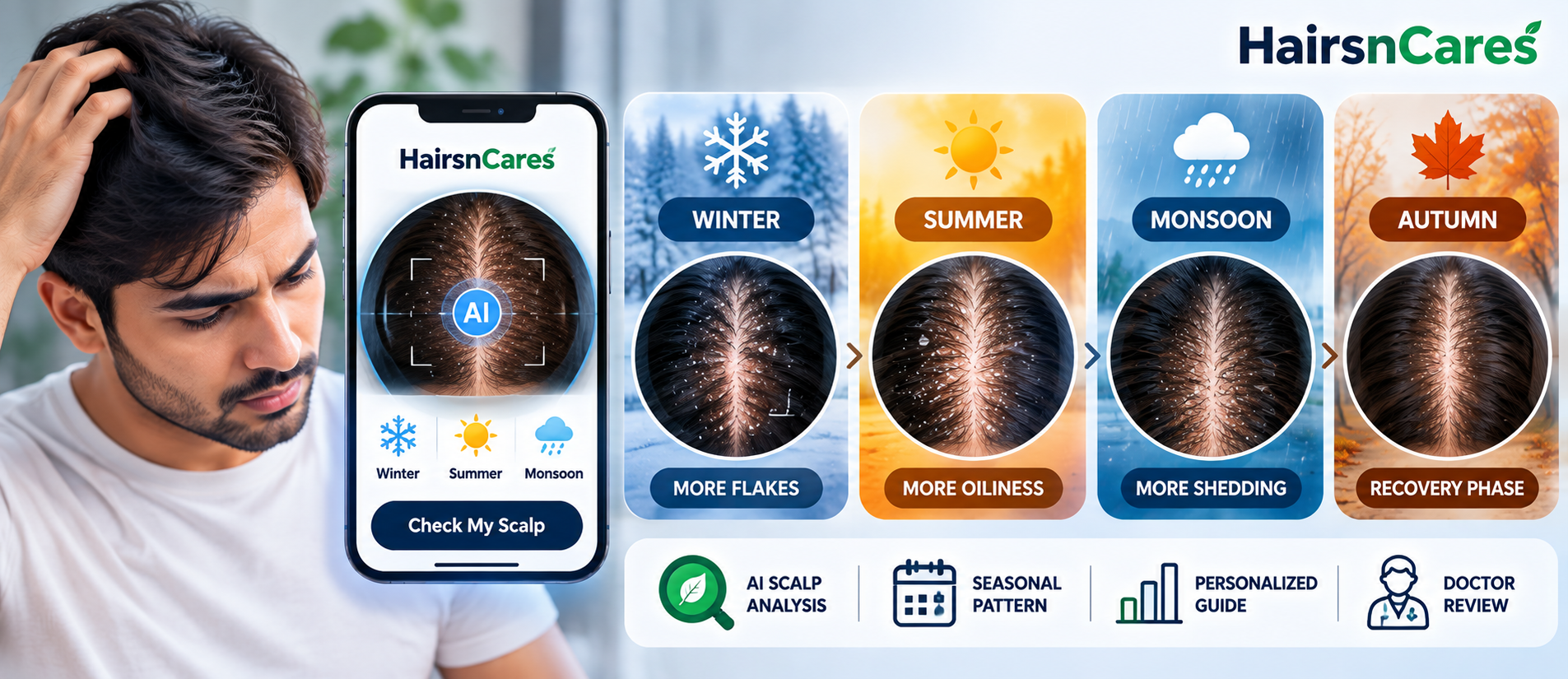
Illustrative sample only. AI screening helps guide decisions and does not replace a dermatologist's diagnosis.
A mild, temporary rise in shedding at a particular time of year is common — the hair cycle naturally varies, and in India shedding often increases during and after the monsoon, helped along by humidity, sweat and scalp issues like dandruff. This kind of shedding is usually self-limiting and settles within weeks to a couple of months, so supportive scalp care and patience are often all that's needed. But "seasonal" doesn't mean "ignore it": if shedding is heavy, lasts longer than a couple of months, recurs strongly, or comes with bald patches or scalp symptoms, it may not be simply seasonal and deserves a dermatologist's check. Use the AI guide to compare your pattern, then support your hair — or get assessed if it doesn't fit.
Seasonal shedding is often mild and temporary, but heavy, persistent or patchy loss needs review.
AI Summary
Seasonal hair fall is one possible hair-loss pattern or trigger. The right next step depends on whether hair is shedding from the root, breaking from the shaft, thinning in a pattern, falling suddenly, persisting for months or appearing in patches.
This page is educational and screening-oriented. It does not diagnose, prescribe or guarantee results. Use the AI Hair Test to organise symptoms, and consult a dermatologist if symptoms are severe, persistent, patchy, painful or progressive.
Best next step: identify the pattern, check likely triggers, review red flags, then choose a routine, product pathway or doctor consultation safely.
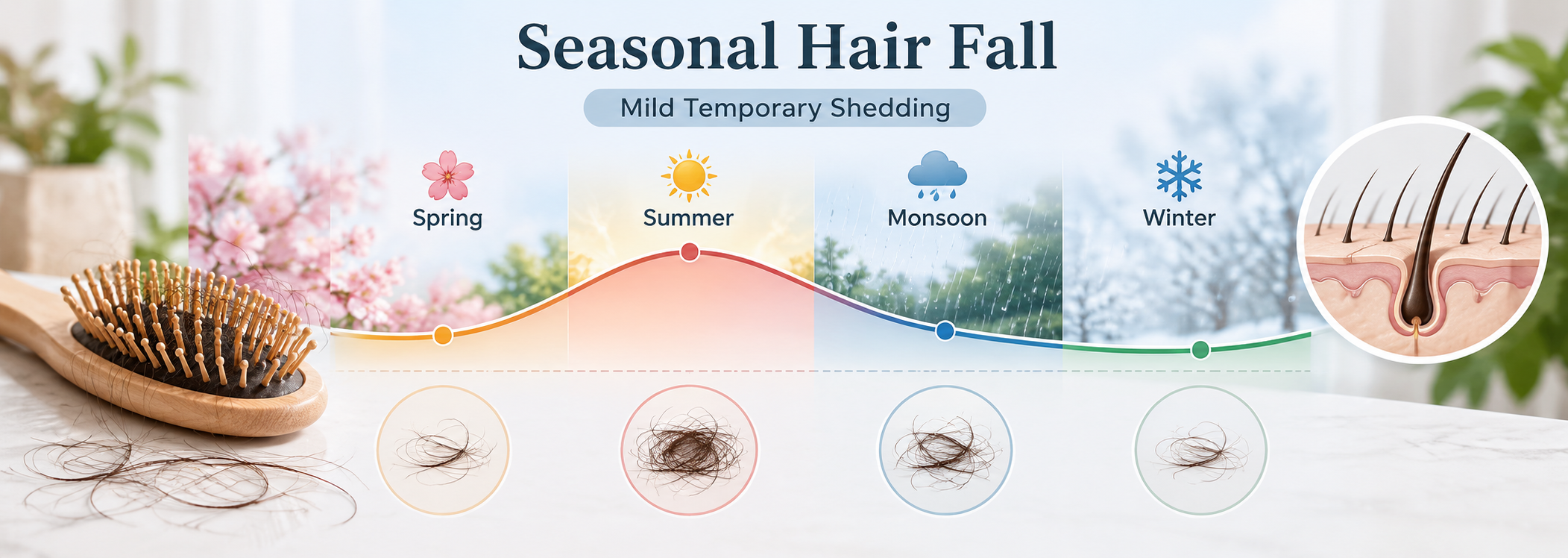
Seasonal hair fall is a mild, temporary increase in shedding that tends to happen at a certain time of year. Many people notice it in late summer to autumn, and in India often during and after the monsoon. It's thought to reflect natural variation in the hair growth cycle, along with seasonal factors like humidity, sweat, sun exposure and scalp conditions.
The reassuring part is that seasonal shedding is usually self-limiting — it settles within weeks to a couple of months as the season changes, and overall density stays broadly stable across the year. The follicles are healthy; this is a phase, not permanent loss.
That said, "seasonal" should never be a reason to ignore hair fall. If shedding is heavy rather than mild, lasts longer than a couple of months, keeps worsening, or comes with bald patches or scalp symptoms, it may not be purely seasonal — and that deserves a dermatologist's check. The skill is telling mild-and-seasonal from something more.
| Aspect | What it means |
|---|---|
| Distribution | Diffuse, all over |
| Timing | Same season each year |
| Severity | Mild increase — not dramatic |
| Duration | Weeks to ~2 months, then settles |
| Follicle damage? | Usually none — density recovers |
| First step | Scalp care + patience; assess if heavy |
Shedding more this season? Check whether it fits a mild seasonal pattern.
Check My PatternThese features fit mild seasonal shedding. If your shedding doesn't match, see the red-flag section below.
More shedding around the same time each year
A mild, diffuse increase — not dramatic
Spread over the whole scalp, not in patches
Settles within weeks to a couple of months
Overall density stays broadly stable year to year
Often worse in humid or monsoon months
No bald patches or scarring
No widening parting or receding hairline
Otherwise feeling well in yourself
Signs match? Confirm with the guide and get seasonal-care tips.
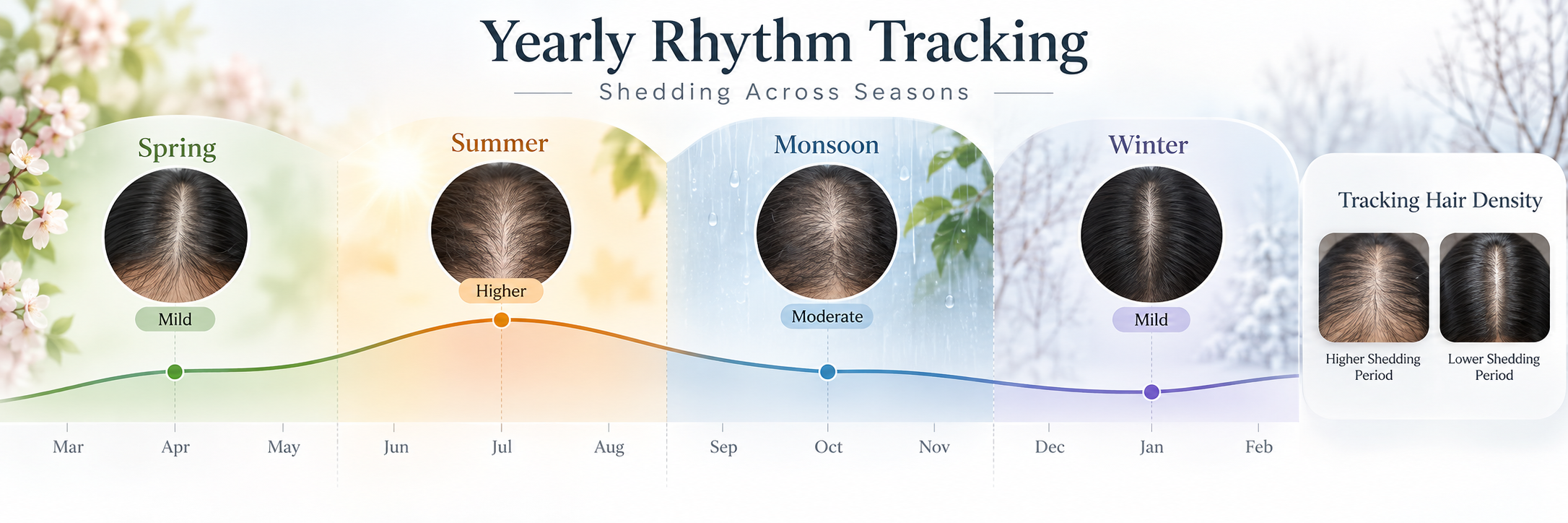
Confirm My PatternA general picture — patterns vary between people. Use it to spot your own rhythm.
Strong sun, heat and sweat can dry hair and stress the scalp. Sun protection and gentle hydration help.
High humidity, damp hair and sweat can worsen dandruff and increase shedding for many people. Scalp hygiene matters most now.
A commonly reported peak in shedding. Usually mild and self-limiting; support the hair and be patient.
Cold, dry air can leave hair and scalp dry. Conditioning and moisture support comfort.
Want to track your seasonal rhythm? Set a baseline and watch it over the year.
Start Tracking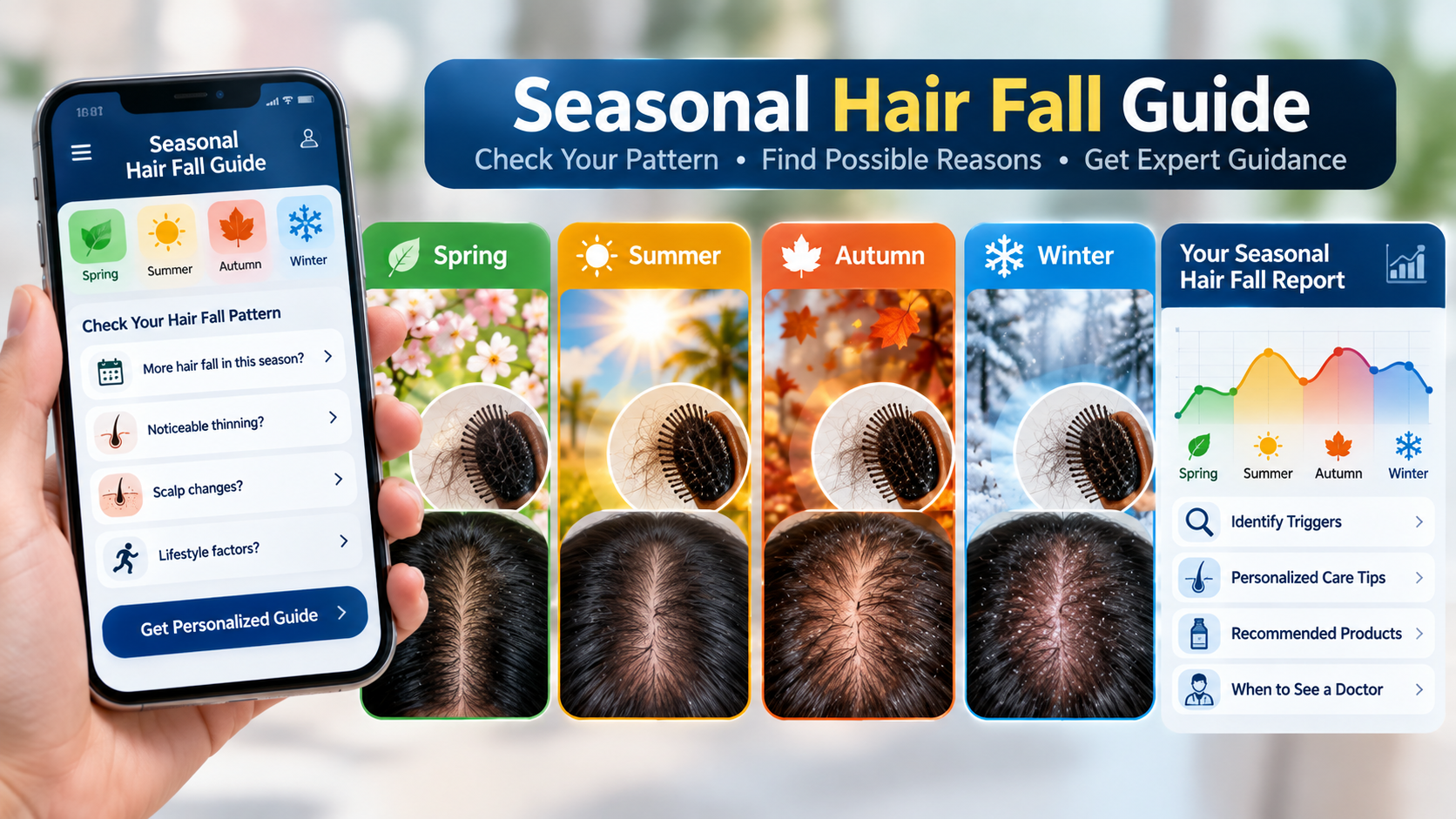
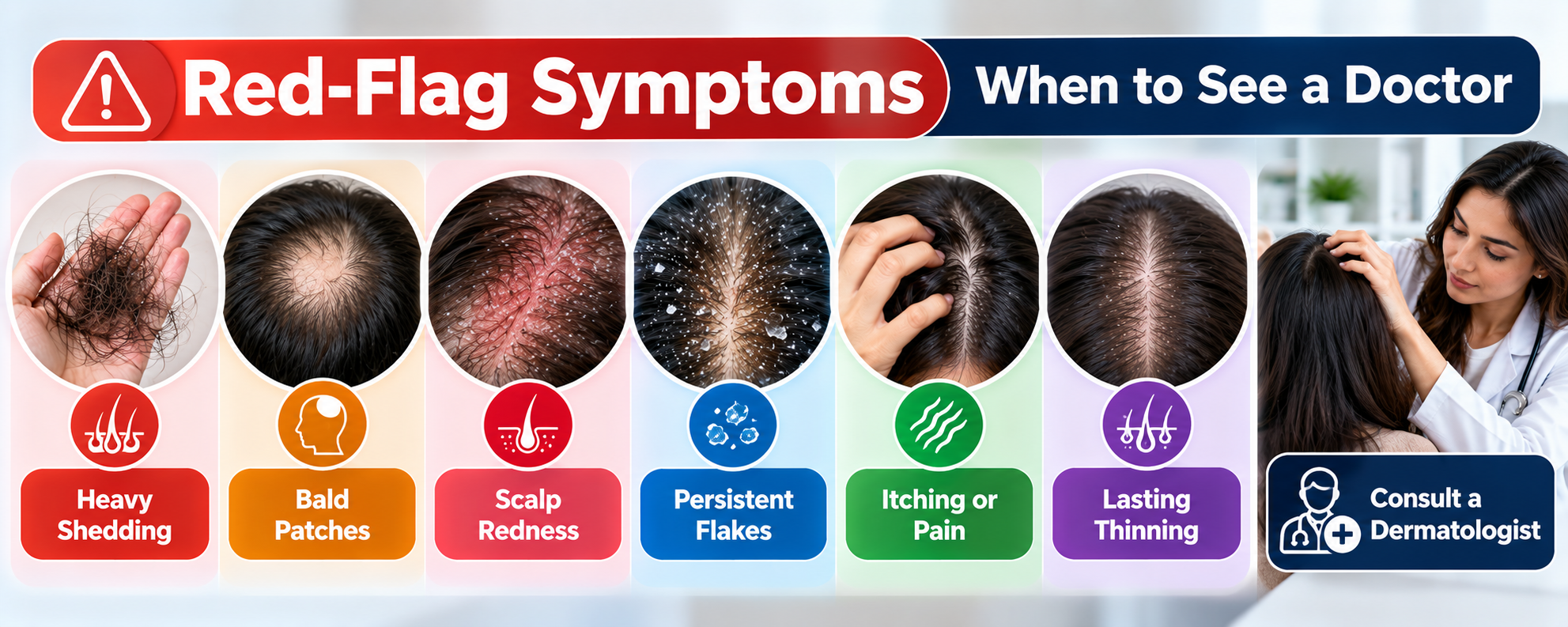
Mild seasonal shedding is usually fine — but seasonal isn't a reason to ignore hair fall. Please see a dermatologist if any of the following apply.
Mostly scalp-care and gentle support to see your hair through a shedding season. Supportive products do not treat medical causes, and prescription items are doctor-guided.
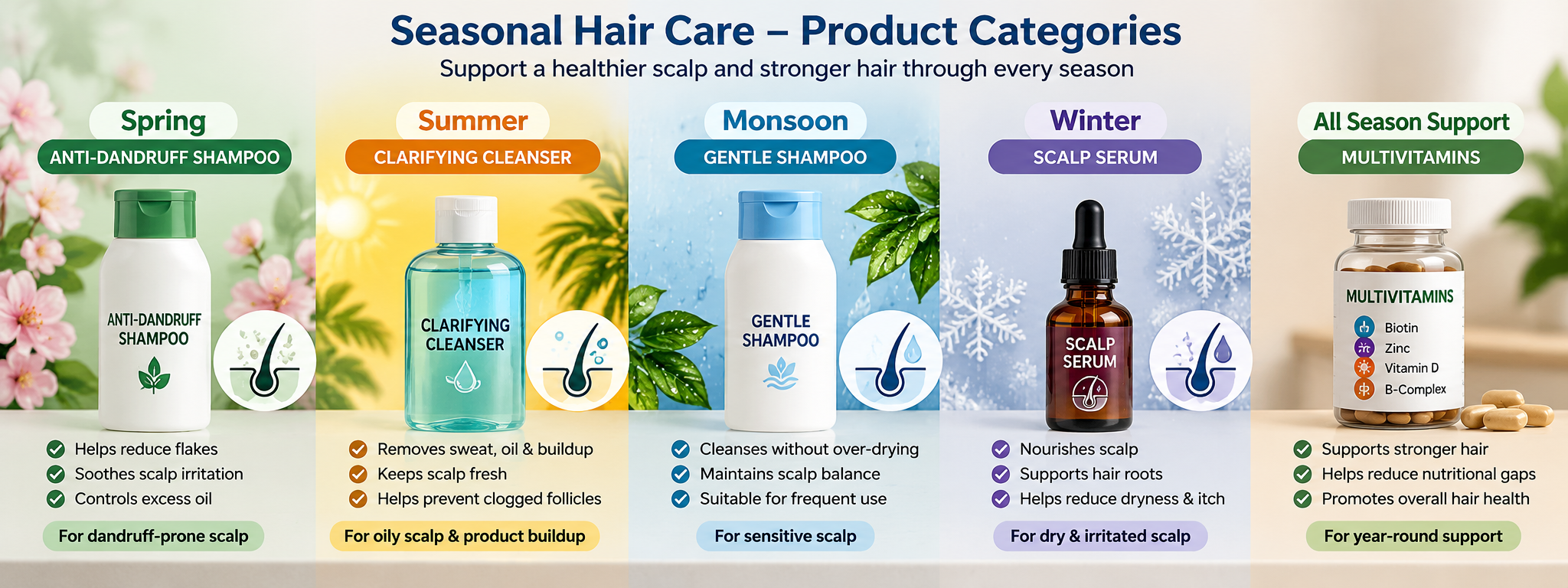
Not sure which fits you? The Product Finder matches care to your result.
Open Product FinderBrowse Scalp CareSample selection. Prices, ratings and availability shown are placeholders.
These products offer supportive scalp and hair care to see your hair through a seasonal shedding phase. They do not treat medical causes of hair loss such as deficiency, thyroid problems or pattern loss, and no product or supplement is guaranteed to regrow hair. Supplements help mainly where a deficiency is confirmed by testing. If shedding is heavy, lasts beyond a couple of months, recurs strongly, or comes with scalp problems or other symptoms, see a dermatologist rather than relying on products. Prices, ratings and availability are placeholders to be populated dynamically. Results vary.
Before adding to cart, confirm your shedding fits a mild seasonal pattern.
Check FirstShop Scalp CareAdjust care to the season. Use medicated or prescription items only as directed, and ask a doctor before active treatments in pregnancy or breastfeeding.

Cleanse regularly; use an anti-dandruff shampoo if flaky or itchy.
Don't leave hair damp for long; dry the scalp properly.
A light scalp serum for comfort if needed.
Keep combs, towels and pillowcases clean.
Balanced, protein-adequate meals through the season.
Stay well hydrated, especially in heat.
A general hair multivitamin if your diet is limited.
If shedding seems more than mild, ask about iron and vitamin D.
Avoid tight styles and excess heat in humid weather.
Wide-tooth comb; gentle from the ends up.
Shield hair from strong sun and chlorine.
Loose tie or silk pillowcase to reduce friction.
Note when shedding rises and when it settles.
Check density against the same time last year.
Give mild seasonal shedding a few weeks to settle.
See a doctor if it's heavy, lasting or patchy.
Want a routine built around your result? Generate a personalised plan in minutes.
Build My RoutineFor seasonal shedding, scalp-care ingredients matter most. Evidence labels are a simple guide. The rose tag flags pregnancy/lactation caution; Rx marks prescription items.

Most gentle scalp-care is fine, but check medicated shampoos with a doctor. Avoid Minoxidil in pregnancy or breastfeeding unless a doctor advises, and take supplements only on medical advice.
A common anti-dandruff active for flaky, itchy scalp.
Best for: monsoon dandruff.
Caution: follow directed use.
Related productsAntifungal shampoo for dandruff and seborrhoeic scalp.
Best for: stubborn flaky scalp.
Caution: directed frequency; ask a doctor if pregnant/nursing.
Related productsHelps clear flakes and build-up from the scalp.
Best for: scaly, oily scalp.
Caution: can dry the scalp if overused.
Related productsA botanical used for scalp freshness.
Best for: mild scalp upkeep.
Caution: patch test; dilute; can irritate.
Related productsSoothing support for scalp comfort.
Best for: scalp comfort.
Caution: cosmetic support.
Related productsConditions and adds moisture to hair.
Best for: dry seasonal hair.
Caution: cosmetic conditioning.
Related productsSoothes and cools an irritated scalp.
Best for: hot, itchy scalp.
Caution: patch test for sensitivity.
Related productsA common topical haircare ingredient.
Best for: supportive use.
Caution: evidence is limited.
Related productsA B-vitamin involved in hair structure.
Best for: confirmed deficiency.
Caution: limited benefit without deficiency; can affect lab tests.
Related productsLow iron can add to shedding (not strictly seasonal).
Best for: confirmed low iron.
Caution: test before supplementing.
Related productsDeficiency is linked to shedding.
Best for: confirmed deficiency.
Caution: correct after testing.
Related productsFor pattern loss, not seasonal shedding; doctor-guided.
Best for: overlapping pattern loss.
Caution: prescription; not in pregnancy/breastfeeding.
Related productsScalp playing up this season? Match the right scalp care, or get checked if it's stubborn.
Use the GuideAll Ingredients"Lots of patients tell me their hair sheds more in the monsoon or autumn, and for most of them it's mild, it settles, and they don't need much beyond good scalp care and patience. I'm happy to reassure them. What I won't do is wave away every complaint as 'just seasonal'. If the shedding is heavy, drags on past a couple of months, comes back harder each year, or the scalp is angry and itchy, that's not simply the season — that's worth examining. Treat mild seasonal shedding kindly; get the rest checked."
Shedding more than mild? Book a dermatologist assessment.
Consult Dr. Amit's TeamCurated supportive sets for the season. Timelines are general estimates; results vary and are not guaranteed.
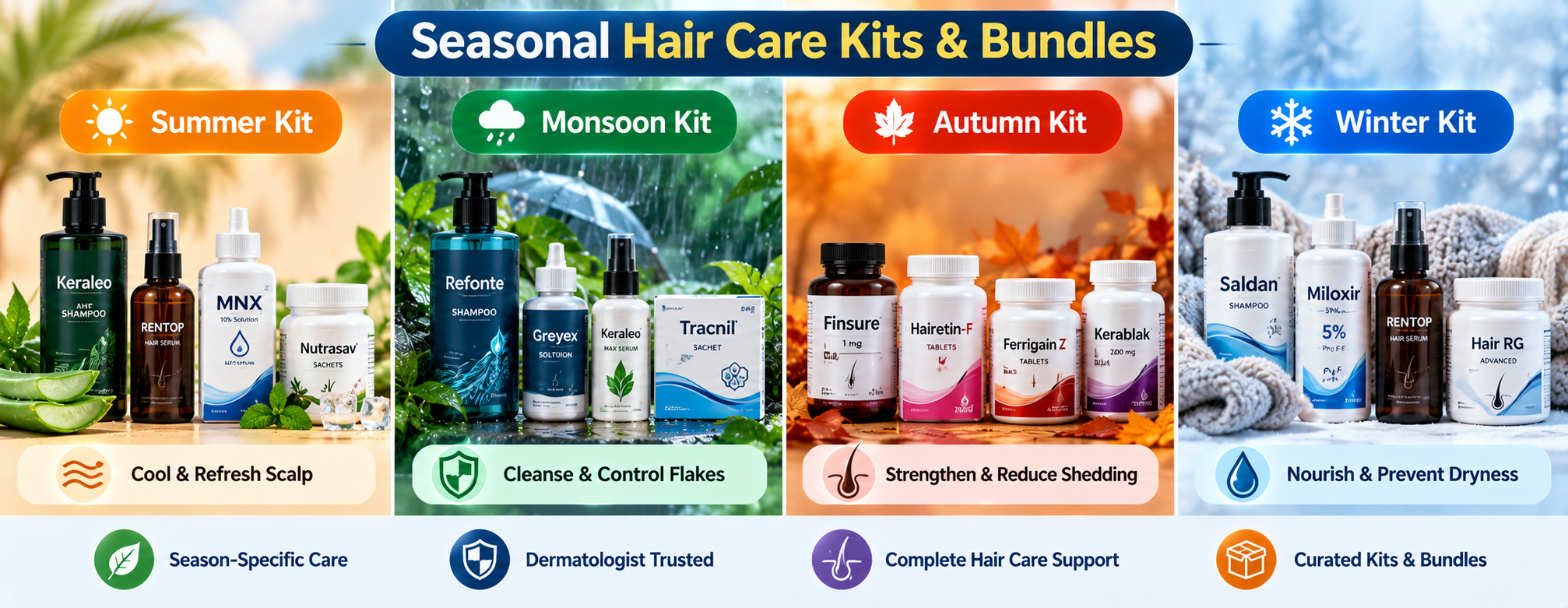
Prefer a kit tailored to you? Build a custom plan from your screening result.
Build a Custom KitTake the GuideSeasonal shedding makes sense once you see the yearly rhythm. Tracking shows whether your shedding rises and settles on cue — or whether it's drifting beyond a mild seasonal pattern.
These references are provided for patient education and do not replace a dermatologist's diagnosis or individual medical advice.
Dermatologist-led overview of how hair loss is evaluated and the evidence behind common treatments.
View AAD reference ›Patient-education summary of common causes of hair loss and when to seek medical care.
View MedlinePlus reference ›Searchable index of peer-reviewed research on seasonal hair shedding.
Search PubMed ›Independent systematic reviews assessing the evidence behind hair-loss interventions.
View Cochrane Library ›Diagnosis Pathway
Hair loss treatment should start by identifying the pattern. Pattern thinning, diffuse shedding, patchy loss, sudden shedding and hair breakage need different next steps.
May suggest androgenetic alopecia or DHT-related pattern hair loss. Often gradual and progressive.
Androgenetic Alopecia →May relate to telogen effluvium, deficiency, thyroid, illness, stress, postpartum phase or diffuse pattern loss.
Diffuse Hair Thinning →Often follows a trigger weeks to months earlier, but sudden shedding should not be dismissed if severe or persistent.
Sudden Hair Fall →Persistent shedding needs cause-finding: chronic TE, thyroid, deficiency, medicines, hormones or pattern loss.
Chronic Hair Fall →Patchy loss may be alopecia areata, fungal infection or scarring alopecia and should be dermatologist-led.
Patchy Hair Loss →Breakage is shaft damage, not root shedding. It needs damage repair and styling changes, not root-hair-fall treatment.
Breakage vs Hair Fall →Cause Map
DHT-related follicle miniaturisation causing gradual pattern thinning in men and women.
Read Guide →Diffuse shedding after triggers such as fever, COVID, stress, childbirth, surgery, dieting or deficiency.
Read Guide →Iron, vitamin D, thyroid and nutritional issues can contribute to diffuse shedding and chronic hair fall.
Supplement Safety →Round bald patches need dermatologist diagnosis because causes and treatments differ greatly.
Patchy Hair Loss →Stress, rapid weight loss, illness, smoking and alcohol may contribute, but rarely act alone.
Stress Hair Loss →Breakage from heat, chemicals, friction or styling is different from root hair fall.
Breakage vs Hair Fall →Red Flags
Short-term shedding after a known trigger can be tracked with photos, routine consistency and symptom notes.
Use the AI Hair Test to organise pattern, duration, triggers, scalp symptoms and next-step direction.
Hair fall lasting more than 6 months, worsening crown thinning, a widening parting or unclear shedding needs evaluation.
Patchy loss, scalp pain, pus, crusting, bleeding, scarring-looking skin, sudden severe shedding or child scalp scaling needs prompt medical review.
Timeline
Fever, COVID, stress, surgery, childbirth, crash dieting or major illness may push hairs into the shedding phase.
Shedding may become noticeable after a delay, often once the original trigger already feels over.
Supportive care, trigger correction, nutrition and scalp comfort help recovery, but timelines vary.
Heavy, persistent, patchy or progressive loss should be checked rather than assumed harmless.
Assessment
Low ferritin can contribute to diffuse shedding. Iron should be taken only after testing and doctor advice.
Thyroid imbalance can cause diffuse shedding and needs medical management, not hair products alone.
Vitamin D, protein intake and nutritional history may matter, especially after dieting or illness.
Dermoscopy or scalp examination helps separate pattern loss, shedding, inflammation, fungal causes and scarring risks.
When It's Not Just Seasonal
Many people notice a mild, temporary increase in shedding at certain times of year, which often settles on its own. But heavy, persistent or patchy loss, or shedding with scalp symptoms, should not be brushed off as 'just seasonal' and deserves screening and, if needed, a doctor.
AI-Guided Next Step
Screen hair fall pattern, duration, triggers, scalp symptoms and next-step direction.
Take AI Hair Test →Explore product directions based on cause, scalp type and safety needs after screening.
Find Products →Build a realistic routine for shedding, pattern thinning, scalp support or breakage.
Build Routine →Track shedding, density, parting, crown and treatment response over time.
Track Progress →Product & Routine Pathway
Supportive shampoos, serums and routines for shedding-related concerns. Products do not cure hair loss.
View Hair Fall Products →Cosmetic serums, deficiency-guided supplements and selected doctor-guided active pathways.
View Growth Products →For dandruff, itching, oiliness or inflammation-linked shedding, scalp care may be the first step.
View Scalp Care →If the issue is shaft snapping rather than root shedding, focus on damage repair and styling changes.
View Damage Care →Explore More
External links open in a new tab for education. They are not endorsements and do not replace a consultation.
The monsoon is when many people in India notice the most shedding. Humidity, sweat and damp hair create conditions where dandruff and scalp irritation flare more easily, and scratching an itchy scalp adds to hair fall. Seasonal cycle variation can sit on top of this.
The most useful response is good scalp hygiene: wash regularly with a gentle or anti-dandruff shampoo as needed, avoid leaving hair damp for long, dry the scalp properly, and keep combs and towels clean. Eat well, handle hair gently, and don't panic-switch products. If the scalp becomes very itchy, flaky, red or sore, or shedding is heavy, that points beyond simple seasonal shedding — a dermatologist can check for scalp conditions that need specific treatment.
Monsoon scalp acting up? Shop gentle, scalp-friendly care for humid months.
Shop Scalp CareDandruff GuideThe key is severity and duration. Use this to judge whether to simply support your hair or get it checked.
| Feature | Likely seasonal | Worth getting checked |
|---|---|---|
| Severity | Mild increase | Heavy shedding |
| Duration | Weeks to ~2 months | More than 2–3 months |
| Pattern | Diffuse, all over | Patchy or focal |
| Density over year | Broadly stable | Visibly reducing |
| Scalp | Comfortable / mild dandruff | Very itchy, scaly, sore |
| Other symptoms | None | Fatigue, weight or period changes |
| Action | Support & patience | Dermatologist assessment |
On the fence? The guide compares your pattern and flags what needs care.
Compare My PatternSee a DermatologistNext Step
Hair loss can come from pattern thinning, telogen effluvium, deficiency, thyroid, stress, post-viral shedding, rapid weight loss, scalp inflammation, patchy alopecia or hair shaft breakage. Start with screening, then choose the right routine or doctor review.
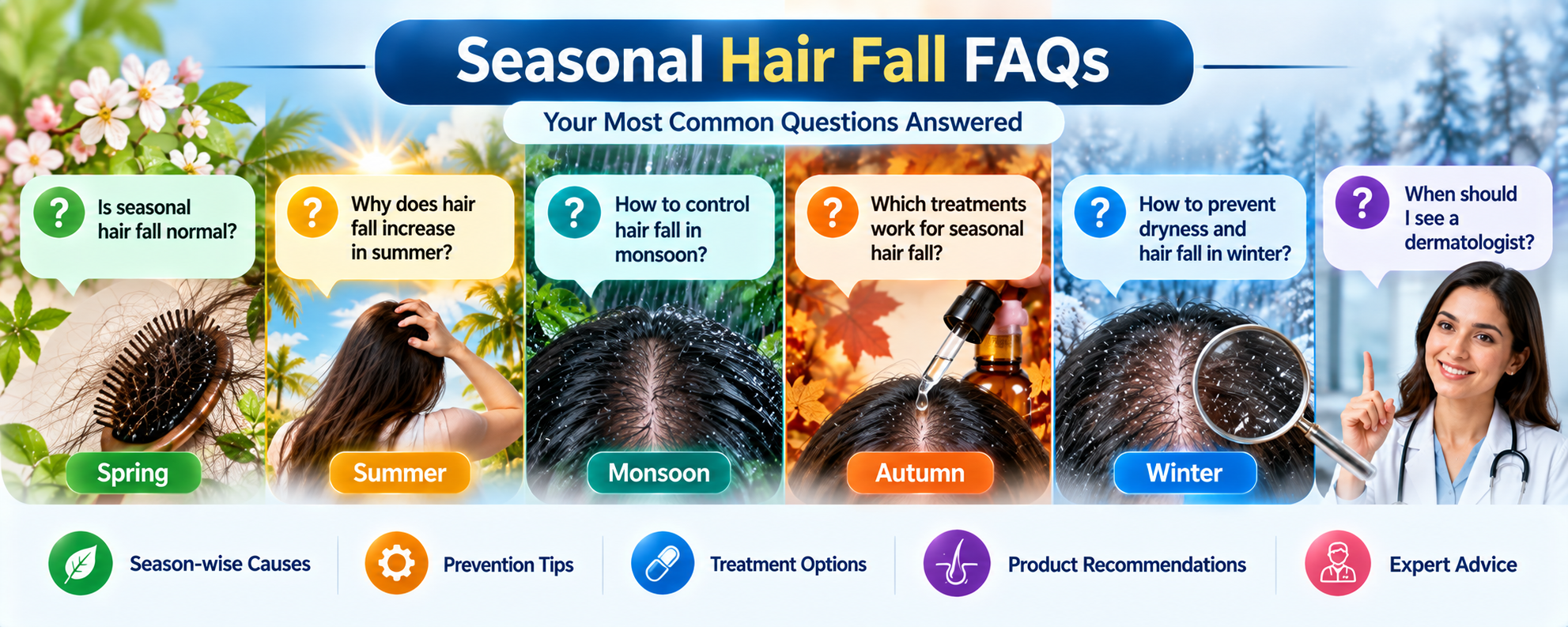
Question not answered here? Ask Dr Amit for instant guidance or book a consultation.
Ask Dr AmitConsult a DoctorA mild rise in shedding through the monsoon or autumn is usually nothing to fear — support your scalp and it settles. But seasonal isn't a free pass to ignore hair fall. Use the Hairsncares AI Seasonal Hair Fall Guide to check whether your pattern is mild-and-seasonal or worth a closer look, then care for your hair through the season.
A clear, dermatologist-reviewed overview of Seasonal Hair Fall — what it is, the evidence behind treatment options, and the red flags that mean a doctor should look first. No exaggerated regrowth claims.
Results vary based on diagnosis, consistency, formulation and scalp condition.
Premium concern visual slot · 720×520 WebP
A mild, temporary increase in shedding that some people notice at certain times of year
People noticing more shedding in particular seasons
Usually a normal, self-limiting variation; reassurance is often enough
Optional unless heavy or persistent
Reviewed by: Dr. Amit Agarkar, MD Dermatology
Medical focus: Dermatology, trichology, hair loss, scalp disorders and hair restoration.
Last reviewed: 1 June 2026
Editorial promise: This page explains causes, treatment evidence, limitations and safe next steps without exaggerating hair-growth claims.
Prepared by the Hairsncares editorial team and medically reviewed by a dermatologist experienced in hair and scalp disorders.
Checked for accuracy of causes, treatment evidence, safety warnings, limitations and suitability for Indian users.
To help you understand this concern and choose safe next steps, and to know when a dermatologist diagnosis matters most.
| Parameter | Assessment | What it means |
|---|---|---|
| What it is | A mild, temporary increase in shedding that some people notice at certain times of year | The nature of this concern in plain terms. |
| Who it affects | People noticing more shedding in particular seasons | The people in whom it is most commonly seen. |
| Best-evidence options | Usually a normal, self-limiting variation; reassurance is often enough | Where the strongest support lies — most are doctor-guided. |
| When to see a doctor | Heavy, persistent or patchy loss, which is not just seasonal | Situations needing diagnosis before any treatment. |
| Expected timeline | Usually settles within weeks to a couple of months | Results vary based on diagnosis, consistency, formulation and scalp condition. |
If shedding is heavy, persists beyond a couple of months, or is patchy, it is unlikely to be just seasonal and should be assessed.
Product results should be selected based on diagnosis, scalp type, sensitivity, routine compatibility and dermatologist guidance where needed.
Find Products After AI Hair TestA mild, temporary increase in shedding that some people notice at certain times of year. The exact cause should be confirmed, because look-alike conditions are treated differently.
Usually a normal, self-limiting variation; reassurance is often enough. Most effective options are doctor-guided, and results depend on diagnosis, consistency and realistic expectations.
Usually settles within weeks to a couple of months.
For sudden, patchy, painful or unexplained loss, yes — see a dermatologist before treating. A suitability screen helps you understand likely causes.
Heavy, persistent or patchy loss, which is not just seasonal — these need evaluation before any product or medicine.
Your cart is empty