Hair Loss: Causes & Treatment
Dermatologist-led overview of how hair loss is evaluated and the evidence behind common treatments.
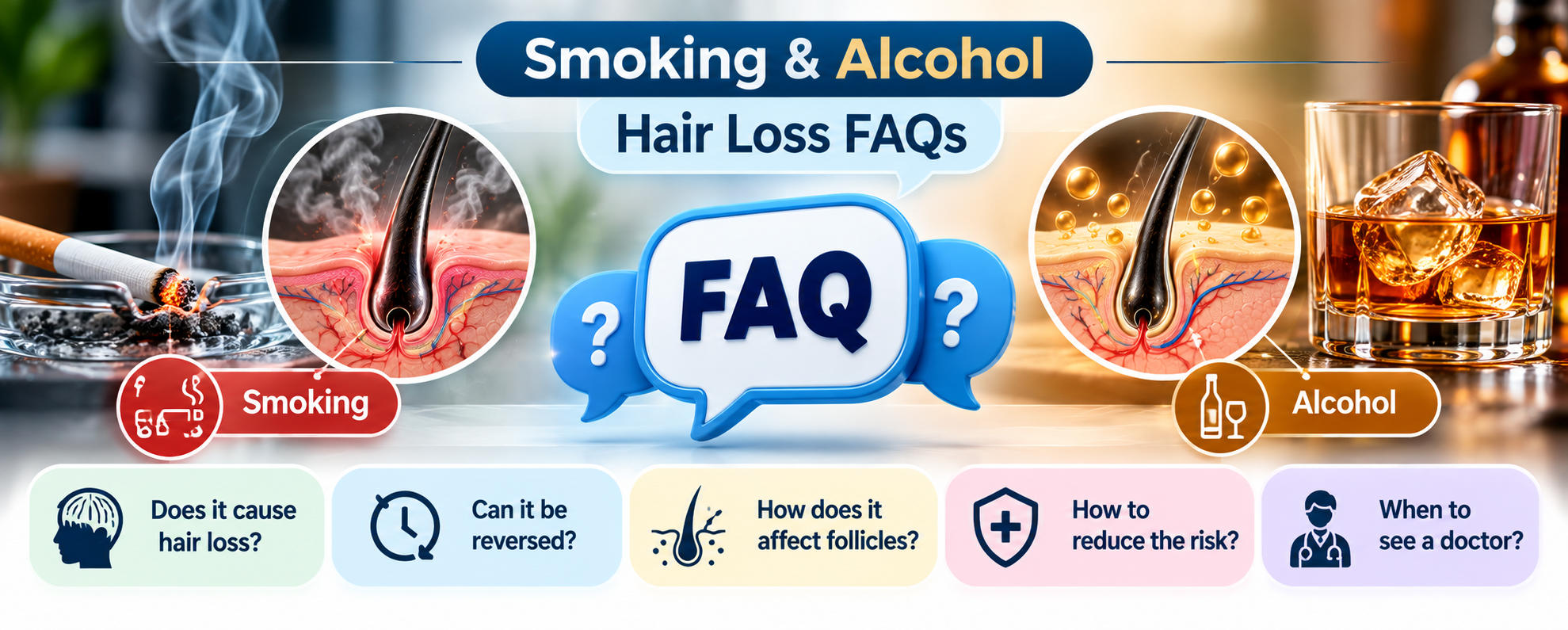
View AAD reference ›Wondering if your cigarettes or weekend drinks are costing you hair? The balanced truth: smoking and alcohol are contributing factors, not guaranteed causes. Smoking is linked to oxidative stress and reduced blood flow; heavy drinking can affect nutrition, sleep and the liver — all of which may influence hair. But plenty of smokers and drinkers keep their hair, and when loss happens it usually involves other causes too, like genetics or deficiency. No lectures here. Cutting back may support your hair and health — though it won't automatically regrow hair. Hairsncares helps you see the whole picture.
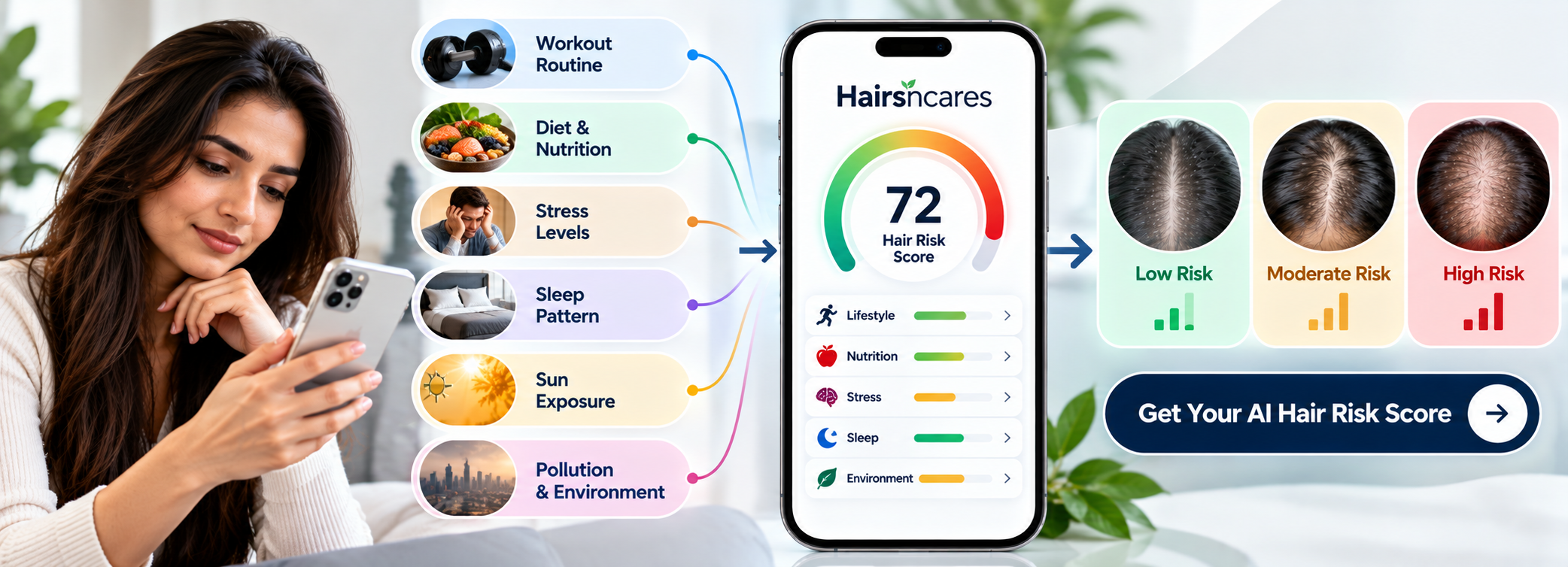
Illustrative sample only. Lifestyle factors are contributors, not verdicts. AI screening does not replace a dermatologist's diagnosis.
They're best understood as <em>contributing factors</em> rather than guaranteed causes. Smoking is associated with oxidative stress and reduced blood flow, which may affect the follicle environment; heavy or regular drinking can affect nutrition (zinc, iron, B vitamins), sleep, stress and, in heavy use, the liver — all of which may influence hair quality and shedding. But many smokers and drinkers don't lose hair, and when loss happens it usually involves other causes too, especially genetics (pattern hair loss) and deficiency. So cutting back may support your hair and overall health, but it won't automatically regrow hair, and results vary. The most useful step is to see the whole picture — lifestyle plus other causes — ideally with a dermatologist.
Smoking and alcohol may contribute through oxidative stress, circulation and nutrition, but they are not guaranteed causes of hair loss.
AI Summary
Smoking and alcohol hair loss is one possible hair-loss pattern or trigger. The right next step depends on whether hair is shedding from the root, breaking from the shaft, thinning in a pattern, falling suddenly, persisting for months or appearing in patches.
This page is educational and screening-oriented. It does not diagnose, prescribe or guarantee results. Use the AI Hair Test to organise symptoms, and consult a dermatologist if symptoms are severe, persistent, patchy, painful or progressive.
Best next step: identify the pattern, check likely triggers, review red flags, then choose a routine, product pathway or doctor consultation safely.
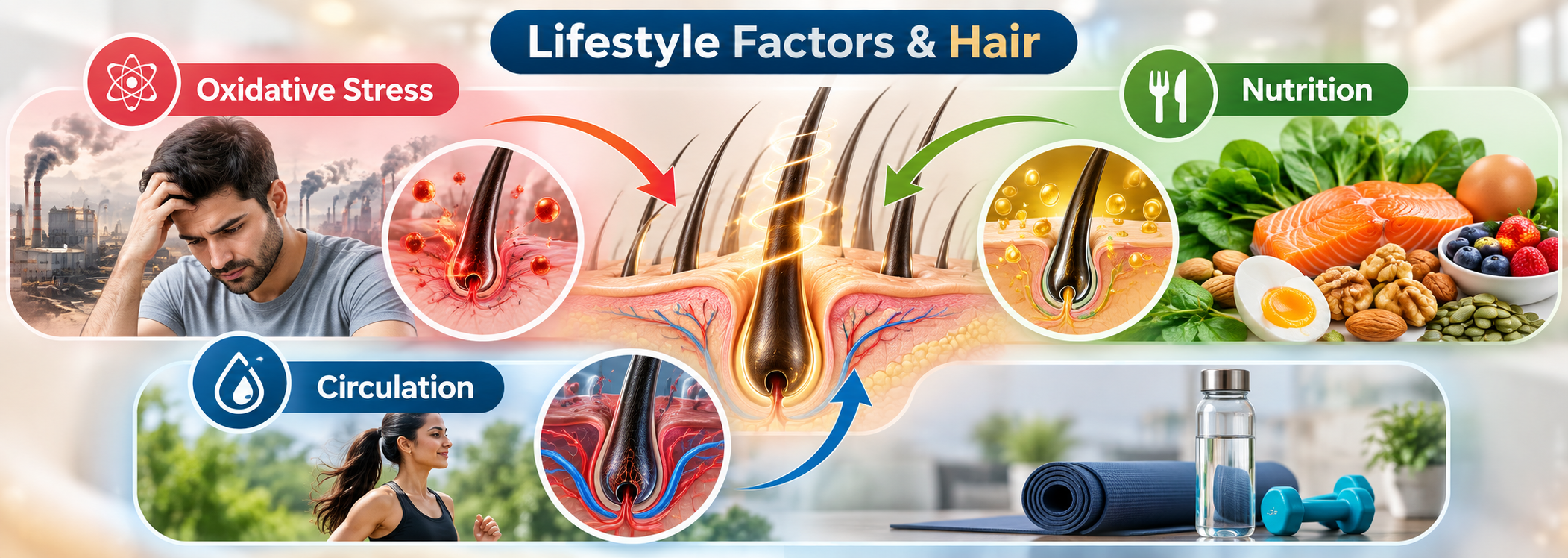
It helps to set expectations honestly: smoking and alcohol are contributing factors, not guaranteed causes of hair loss. Many people who smoke or drink keep a full head of hair, and many people who do neither still experience thinning. When hair loss does occur, these habits usually add to other causes rather than acting alone.
Smoking is associated with oxidative stress (harmful molecules that may stress follicle cells) and reduced blood flow, which could affect how well the scalp is supplied. Heavy alcohol use can affect nutrition — lowering zinc, iron and B vitamins — and disturb sleep and general health, all of which may influence hair quality and shedding.
The balanced takeaway, without any judgement: reducing smoking and heavy drinking may support your hair and overall health, but it won't automatically regrow hair, and results vary. The most useful move is to look at the whole picture — lifestyle plus genetics, deficiency and other causes — ideally with a dermatologist.
| Aspect | What it means |
|---|---|
| Type of factor | Contributing, not deterministic |
| Smoking mechanism | Oxidative stress, reduced scalp blood flow |
| Alcohol mechanism | Nutritional gaps, sleep, liver (heavy use) |
| Typical picture | Adds to other causes (genetics, deficiency) |
| If you cut back | Supports hair & health; won't auto-regrow |
| First step | Screen lifestyle + assess other causes |
Curious how your habits fit in? Get a balanced lifestyle read in 90 seconds.
Get My Risk ScoreLifestyle-linked hair changes are usually subtle and mixed with other causes. These features help guide assessment.
Gradually increased everyday shedding
Hair feeling duller or weaker than before
Diffuse thinning rather than patches
Heavy smoking over many years
Regular heavy alcohol use
A restricted or unbalanced diet alongside
Poor sleep and high stress
Possible coexisting pattern hair loss
No bald patches or scarring (reassuring)
Recognise these? Screen them and get a tailored next step.
Screen My SymptomsBecause lifestyle is rarely the whole story, these more common drivers of hair loss should be considered too.
Want these checked properly? A dermatologist can assess and test where needed.
See a DermatologistScreen FirstLifestyle effects are usually gradual and reversible where they relate to nutrition or stress — but expectations should be realistic.
Long-term smoking or heavy drinking may gradually add to follicle stress and nutritional gaps, often alongside other causes.
You may notice more everyday shedding or duller hair, usually mixed with genetics, age and other factors rather than one clear trigger.
Reducing smoking and heavy drinking, with better nutrition and sleep, may help shedding linked to these factors settle over months.
Improvement is possible but not guaranteed; lifestyle change supports hair and health rather than regrowing hair on its own. Underlying causes need their own care.
Want to track changes objectively? Set a photo baseline today.
Start TrackingLifestyle factors are contributors, not verdicts — and genetics often matters more. Supporting these areas may help your hair and health, but does not guarantee regrowth. Results vary.
A general, judgement-free guide to how lifestyle factors may relate to your hair, alongside the bigger drivers. Not a diagnosis.
Heavy, long-term smoking adds more oxidative stress.
May contributeHeavy use affects nutrition and sleep more than moderate use.
May contributeBalanced, nutrient-rich eating supports hair.
Supports hairGood sleep and managed stress help.
Supports hairUsually the bigger driver of lasting thinning.
Assess this tooLow iron or vitamins may matter more than habits.
Test & correctIllustrative only. This is general education, not a personal medical assessment, and lifestyle factors are presented as contributors rather than guaranteed causes. AI screening helps guide decisions and does not replace a dermatologist's diagnosis. Results vary.
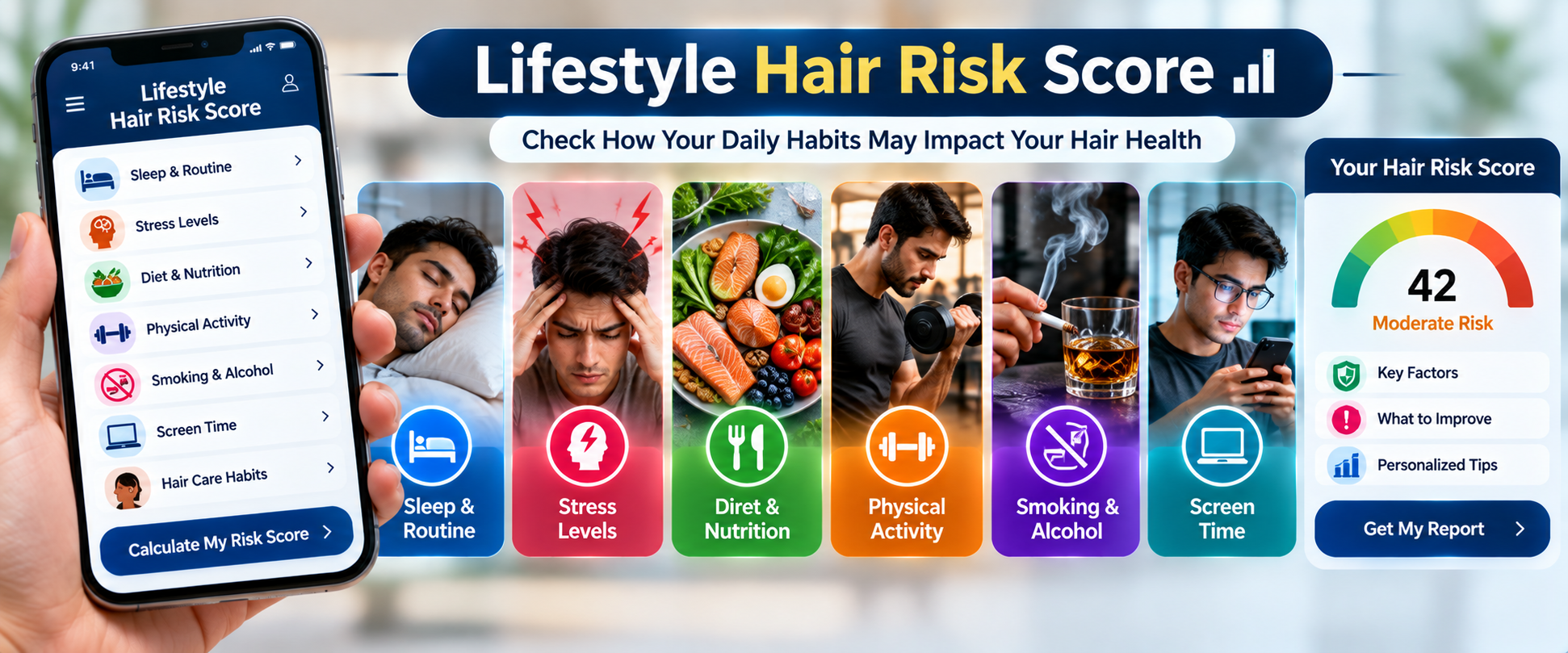
No judgement — just clear guidance. Reviewing lifestyle is worthwhile, but these features point to causes that need proper assessment rather than lifestyle change alone.
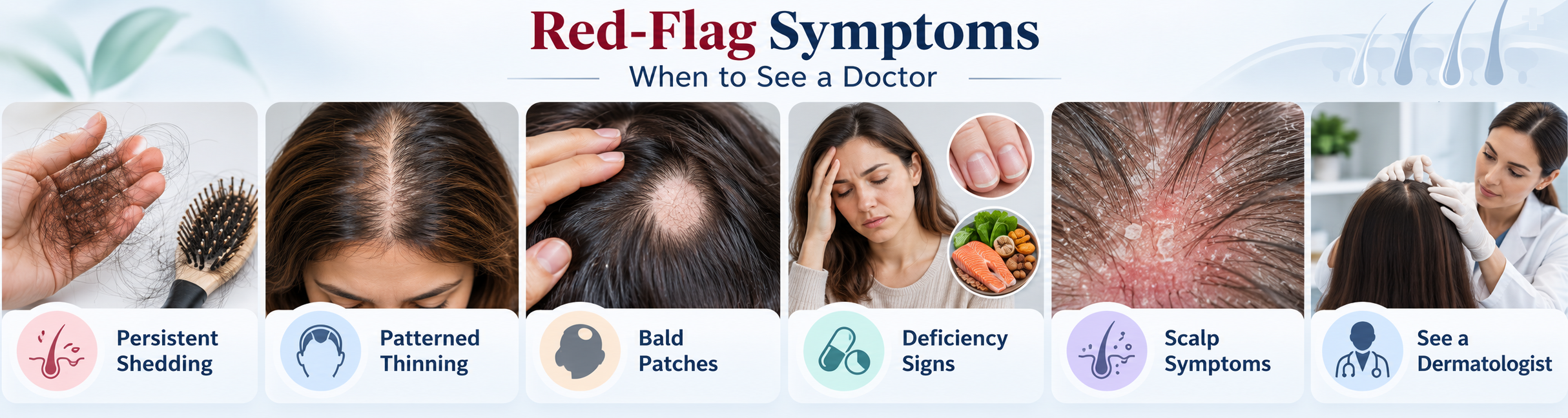
Antioxidant- and nutrition-supportive care that complements healthier habits. These support the hair and scalp; they do not treat medical causes, and prescription items are doctor-guided.
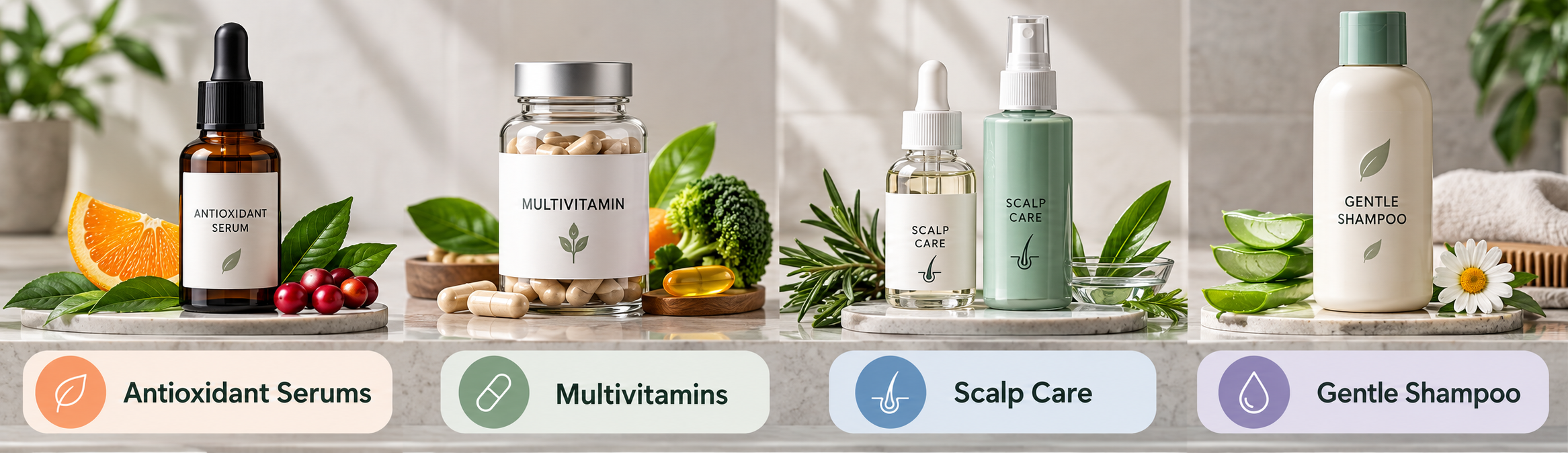
Where deficiency is confirmed, under medical advice.
Not sure which fits you? The Product Finder matches support to your result.
Open Product FinderBrowse AllSample selection. Prices, ratings and availability shown are placeholders.
These products offer antioxidant- and nutrition-supportive care that complements healthier lifestyle habits. They do not treat the medical causes of hair loss such as pattern hair loss, deficiency or thyroid disease, and no product or supplement is guaranteed to regrow hair. Reducing smoking and heavy drinking may support hair and overall health but does not automatically regrow hair, and results vary. Supplements help mainly where a deficiency is confirmed by testing. If shedding is noticeable or persistent, patterned, patchy, or comes with scalp symptoms, see a dermatologist rather than relying on products or lifestyle change alone. Prescription (Rx) items require a valid prescription and are doctor-guided. Prices, ratings and availability are placeholders to be populated dynamically. Results vary.
Before adding to cart, see how much lifestyle versus other causes is at play.
Check FirstShop All ProductsA judgement-free routine that supports your hair and overall health while you review lifestyle factors. Use active or prescription items only under dermatologist guidance, and avoid them in pregnancy or breastfeeding unless a doctor advises.
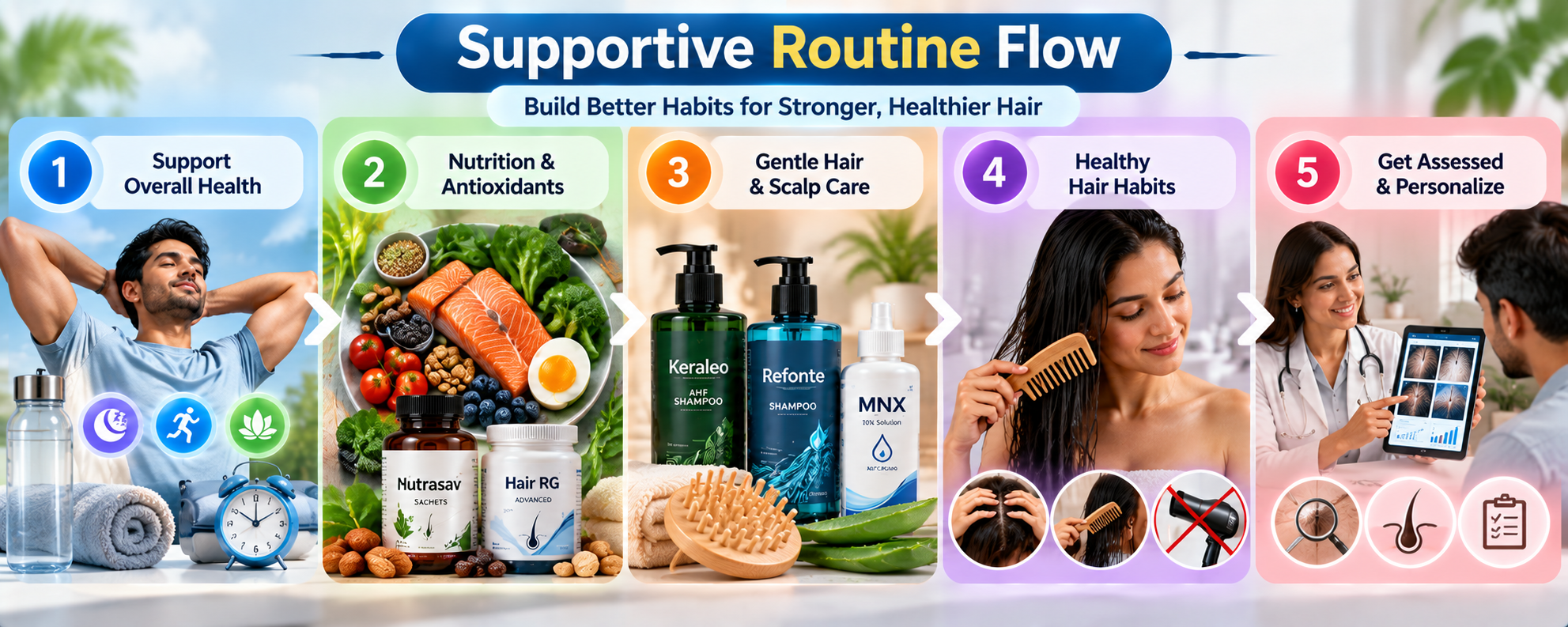
Reducing smoking and heavy drinking supports overall health and may help hair.
Use quit-smoking or alcohol-reduction support if you want it — no pressure, no shame.
Prioritise regular, good-quality sleep.
See this as supporting hair and health, not a guaranteed regrowth fix.
Plenty of fruit, vegetables and balanced meals for antioxidants and nutrients.
Keep protein and iron adequate, especially with heavy alcohol use.
Ask a doctor to check iron, B vitamins and other levels if shedding.
Correct confirmed deficiencies; avoid high-dose antioxidants without advice.
Gentle shampoo; antioxidant or supportive serum if you wish.
Keep the scalp clean and healthy.
Avoid harsh chemicals, tight styles and excess heat.
Silk pillowcase and soft ties reduce breakage.
Use the lifestyle risk score for a balanced read.
See a dermatologist if shedding is persistent or patterned.
Underlying causes such as pattern loss need their own care.
Photograph monthly to monitor objectively.
Want a routine built around your result? Generate a personalised plan in minutes.
Build My RoutineEvidence labels are a simple guide: strong, moderate, supportive or mainly cosmetic. Rx marks prescription items; the rose tag flags pregnancy/lactation caution.
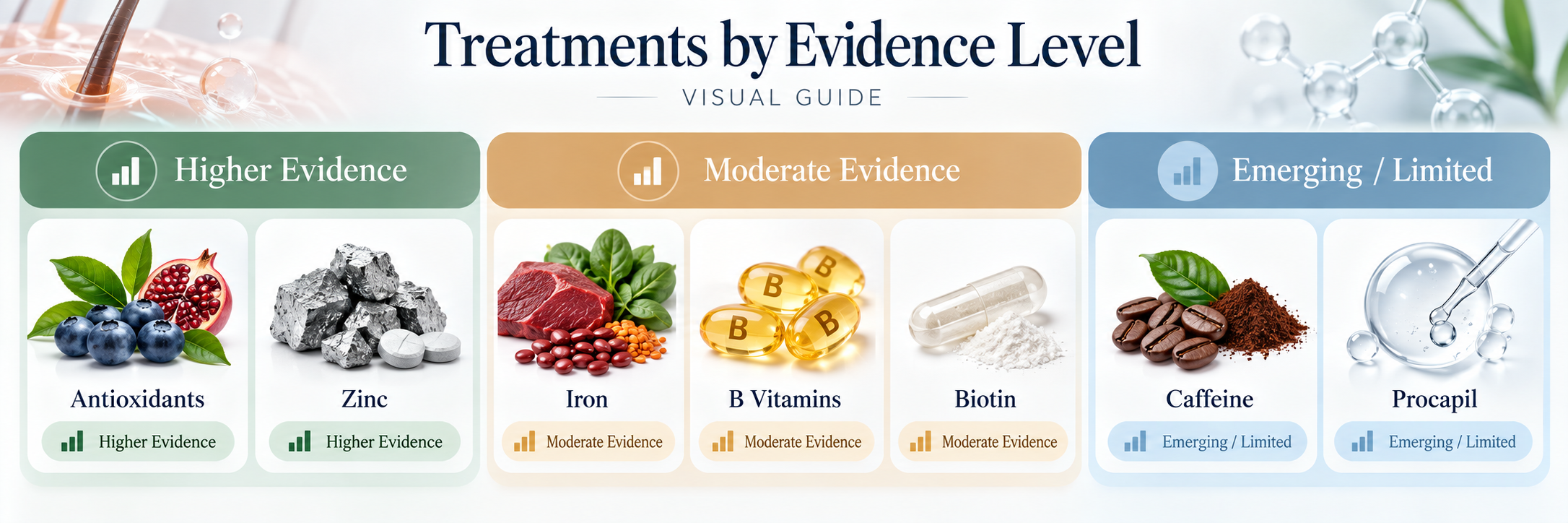
Smoking and alcohol should be avoided in pregnancy for many health reasons. Avoid Minoxidil in pregnancy or breastfeeding unless a doctor advises, and take supplements only on medical advice.
Low iron, sometimes linked to heavy alcohol use, contributes to shedding.
Best for: confirmed low ferritin.
Caution: take only after testing.
Related productsDeficiency is linked to increased shedding.
Best for: confirmed deficiency.
Caution: correct after testing.
Related productsHeavy alcohol use can lower zinc, which matters for hair.
Best for: confirmed low zinc.
Caution: excess can be harmful; test first.
Related productsHeavy drinking can lower B vitamins involved in hair health.
Best for: confirmed deficiency.
Caution: test before supplementing.
Related productsAntioxidant-rich nutrition is sensible given the oxidative-stress link.
Best for: general support.
Caution: not a cure; avoid high-dose supplements without advice.
Related productsA B-vitamin involved in hair structure.
Best for: confirmed deficiency.
Caution: limited benefit without deficiency; can affect lab tests.
Related productsAn antioxidant that also supports iron absorption.
Best for: alongside iron.
Caution: supportive role.
Related productsAdequate protein supports healthy hair.
Best for: low intake.
Caution: balance the whole diet.
Related productsA common topical haircare ingredient.
Best for: supportive cosmetic use.
Caution: evidence is limited.
Related productsA cosmetic complex studied for follicle support.
Best for: supportive density.
Caution: supportive, not a cure.
Related productsA botanical with some small-study interest.
Best for: supportive cosmetic use.
Caution: patch test; dilute; can irritate.
Related productsFor pattern loss, not lifestyle factors alone; doctor-guided.
Best for: diagnosed pattern loss.
Caution: prescription; not in pregnancy/breastfeeding.
Related productsThinking about supplements? Test for deficiencies and get assessed first.
Ask a DermatologistAll Ingredients"People ask me to confirm that smoking or drinking is 'why' they're losing hair. I keep it honest and judgement-free: these are contributing factors, not the verdict. They can add to follicle stress and affect nutrition, but the bigger driver of lasting thinning is usually genetics. So I'm glad when someone uses hair as a reason to cut back — it's wonderful for overall health — but I'm careful never to promise the hair will simply grow back. We look at the whole picture, check iron and the scalp, and treat the real cause. Cut back for your health; let your hair be a happy bonus."
Shedding persistent or patterned? Book a dermatologist assessment.
Consult Dr. Amit's TeamCurated supportive combinations. Timelines are general estimates; results vary and are not guaranteed.

Prefer a kit tailored to you? Build a custom plan from your screening result.
Build a Custom KitTake the Risk ScoreTracking your habits alongside shedding and density helps you and your doctor see what's actually changing — and keeps expectations realistic about what lifestyle change can and can't do.
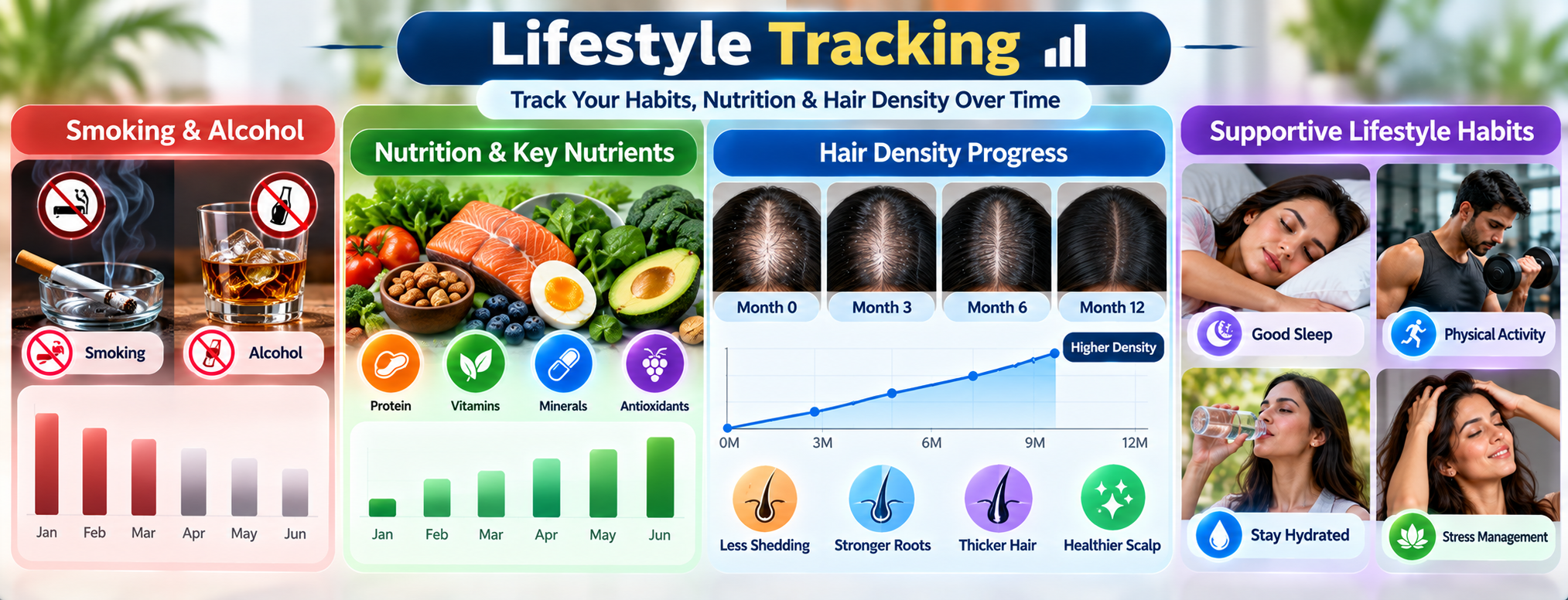
These references are provided for patient education and do not replace a dermatologist's diagnosis or individual medical advice.
Dermatologist-led overview of how hair loss is evaluated and the evidence behind common treatments.
View AAD reference ›Patient-education summary of common causes of hair loss and when to seek medical care.
View MedlinePlus reference ›Searchable index of peer-reviewed research on smoking, alcohol and hair loss.
Search PubMed ›Independent systematic reviews assessing the evidence behind hair-loss interventions.
View Cochrane Library ›Diagnosis Pathway
Hair loss treatment should start by identifying the pattern. Pattern thinning, diffuse shedding, patchy loss, sudden shedding and hair breakage need different next steps.
May suggest androgenetic alopecia or DHT-related pattern hair loss. Often gradual and progressive.
Androgenetic Alopecia →May relate to telogen effluvium, deficiency, thyroid, illness, stress, postpartum phase or diffuse pattern loss.
Diffuse Hair Thinning →Often follows a trigger weeks to months earlier, but sudden shedding should not be dismissed if severe or persistent.
Sudden Hair Fall →Persistent shedding needs cause-finding: chronic TE, thyroid, deficiency, medicines, hormones or pattern loss.
Chronic Hair Fall →Patchy loss may be alopecia areata, fungal infection or scarring alopecia and should be dermatologist-led.
Patchy Hair Loss →Breakage is shaft damage, not root shedding. It needs damage repair and styling changes, not root-hair-fall treatment.
Breakage vs Hair Fall →Cause Map
DHT-related follicle miniaturisation causing gradual pattern thinning in men and women.
Read Guide →Diffuse shedding after triggers such as fever, COVID, stress, childbirth, surgery, dieting or deficiency.
Read Guide →Iron, vitamin D, thyroid and nutritional issues can contribute to diffuse shedding and chronic hair fall.
Supplement Safety →Round bald patches need dermatologist diagnosis because causes and treatments differ greatly.
Patchy Hair Loss →Stress, rapid weight loss, illness, smoking and alcohol may contribute, but rarely act alone.
Stress Hair Loss →Breakage from heat, chemicals, friction or styling is different from root hair fall.
Breakage vs Hair Fall →Red Flags
Short-term shedding after a known trigger can be tracked with photos, routine consistency and symptom notes.
Use the AI Hair Test to organise pattern, duration, triggers, scalp symptoms and next-step direction.
Hair fall lasting more than 6 months, worsening crown thinning, a widening parting or unclear shedding needs evaluation.
Patchy loss, scalp pain, pus, crusting, bleeding, scarring-looking skin, sudden severe shedding or child scalp scaling needs prompt medical review.
Timeline
Fever, COVID, stress, surgery, childbirth, crash dieting or major illness may push hairs into the shedding phase.
Shedding may become noticeable after a delay, often once the original trigger already feels over.
Supportive care, trigger correction, nutrition and scalp comfort help recovery, but timelines vary.
Heavy, persistent, patchy or progressive loss should be checked rather than assumed harmless.
Assessment
Low ferritin can contribute to diffuse shedding. Iron should be taken only after testing and doctor advice.
Thyroid imbalance can cause diffuse shedding and needs medical management, not hair products alone.
Vitamin D, protein intake and nutritional history may matter, especially after dieting or illness.
Dermoscopy or scalp examination helps separate pattern loss, shedding, inflammation, fungal causes and scarring risks.
Lifestyle Context
Smoking and alcohol may affect hair through oxidative stress, circulation, inflammation, sleep and nutrition, and reducing them benefits overall health. But they are not guaranteed causes of hair loss, and stopping them does not guarantee regrowth, so other causes should still be considered.
AI-Guided Next Step
Screen hair fall pattern, duration, triggers, scalp symptoms and next-step direction.
Take AI Hair Test →Explore product directions based on cause, scalp type and safety needs after screening.
Find Products →Build a realistic routine for shedding, pattern thinning, scalp support or breakage.
Build Routine →Track shedding, density, parting, crown and treatment response over time.
Track Progress →Product & Routine Pathway
Supportive shampoos, serums and routines for shedding-related concerns. Products do not cure hair loss.
View Hair Fall Products →Cosmetic serums, deficiency-guided supplements and selected doctor-guided active pathways.
View Growth Products →For dandruff, itching, oiliness or inflammation-linked shedding, scalp care may be the first step.
View Scalp Care →If the issue is shaft snapping rather than root shedding, focus on damage repair and styling changes.
View Damage Care →Explore More
External links open in a new tab for education. They are not endorsements and do not replace a consultation.
Next Step
Hair loss can come from pattern thinning, telogen effluvium, deficiency, thyroid, stress, post-viral shedding, rapid weight loss, scalp inflammation, patchy alopecia or hair shaft breakage. Start with screening, then choose the right routine or doctor review.
Question not answered here? Ask Dr Amit for instant guidance or book a consultation.
Ask Dr AmitConsult a DoctorSee the whole picture, without the guilt. Smoking and alcohol are contributing factors, not verdicts — and cutting back supports your hair and health, even if it won't regrow hair on its own. Use the Hairsncares AI Lifestyle Hair Risk Score to weigh your habits against other causes, support your hair sensibly, and get assessed if shedding is persistent.
A clear, dermatologist-reviewed overview of Smoking, Alcohol & Hair Loss — what it is, the evidence behind treatment options, and the red flags that mean a doctor should look first. No exaggerated regrowth claims.
Results vary based on diagnosis, consistency, formulation and scalp condition.
Premium concern visual slot · 720×520 WebP
How smoking and heavy alcohol use may worsen hair health through circulation, nutrition and oxidative stress
People who smoke or drink heavily and are concerned about their hair
Linked to poorer hair health; reducing them supports general and hair health
Lifestyle change helps; medical causes still need review
Reviewed by: Dr. Amit Agarkar, MD Dermatology
Medical focus: Dermatology, trichology, hair loss, scalp disorders and hair restoration.
Last reviewed: 1 June 2026
Editorial promise: This page explains causes, treatment evidence, limitations and safe next steps without exaggerating hair-growth claims.
Prepared by the Hairsncares editorial team and medically reviewed by a dermatologist experienced in hair and scalp disorders.
Checked for accuracy of causes, treatment evidence, safety warnings, limitations and suitability for Indian users.
To help you understand this concern and choose safe next steps, and to know when a dermatologist diagnosis matters most.
| Parameter | Assessment | What it means |
|---|---|---|
| What it is | How smoking and heavy alcohol use may worsen hair health through circulation, nutrition and oxidative stress | The nature of this concern in plain terms. |
| Who it affects | People who smoke or drink heavily and are concerned about their hair | The people in whom it is most commonly seen. |
| Best-evidence options | Linked to poorer hair health; reducing them supports general and hair health | Where the strongest support lies — most are doctor-guided. |
| When to see a doctor | Assuming lifestyle alone explains significant or patchy loss | Situations needing diagnosis before any treatment. |
| Expected timeline | Gradual; general health and hair benefit over time | Results vary based on diagnosis, consistency, formulation and scalp condition. |
Reducing smoking and heavy drinking supports overall and hair health; significant or patchy loss still needs a medical diagnosis.
Product results should be selected based on diagnosis, scalp type, sensitivity, routine compatibility and dermatologist guidance where needed.
Find Products After AI Hair TestHow smoking and heavy alcohol use may worsen hair health through circulation, nutrition and oxidative stress. The exact cause should be confirmed, because look-alike conditions are treated differently.
Linked to poorer hair health; reducing them supports general and hair health. Most effective options are doctor-guided, and results depend on diagnosis, consistency and realistic expectations.
Gradual; general health and hair benefit over time.
For sudden, patchy, painful or unexplained loss, yes — see a dermatologist before treating. A suitability screen helps you understand likely causes.
Assuming lifestyle alone explains significant or patchy loss — these need evaluation before any product or medicine.
Your cart is empty